Inside of the Blue Ice Drill tent, drillers Tanner Kuhl (left) and Elizabeth Morton (right) work with graduate students Austin Carter, Jacob Morgan and postdoctoral fellow Sarah Shackleton in Antarctica in 2019.John Higgins
The oldest ice on Earth probably is hiding somewhere in Antarctica, because this frozen continent holds ice that’s hundreds of thousands and even millions of years old. Scientists are hoping to find it.
But even the scientists hunting for old ice aren’t sure how long the very oldest ice might have stuck around, saysJohn Higgins, a geochemist at Princeton University.
“Would I be surprised at this point if we had 5-million-year-old ice?” asks Higgins. “I mean, I’d be surprised, but not it’s not unfathomable.”
One group has alreadyclaimedto have found 8-million-year-old ice in…
The Idaho Department of Fish and Game are investigating a poaching case where a cow and calf moose were found on Moscow Mountain near Hatter Creek.
According to IDFG the remains were found on December 20. It is believed both moose were killed earlier the same day.
No moose hunting seasons were open at the time and no hunting seasons exist for cow moose throughout the Clearwater region due to concerns regarding moose populations levels.
Officials said evidence suggests multiple people may have been involved with killing the moose.
Brucella infection, orbrucellosis,was once a lot more common. Many animals in the wild can carry these bacteria, as can livestock. In some countries, a common name for the disease was “goat fever”—highlighting a very common symptom and animal source. Other common signs of infection include sweating, fatigue, and weight loss…
More than 10,000 people in the U.S. died from COVID-19 in the time between when Donald Trump blew up the stimulus bill and when hefinally signed it. No, he doesn’t care about that.
The millions of people desperate for unemployment assistance, along with millions more in peril of eviction are nowhere on his mind, either.
The economic crash that would have come after a simultaneous stimulus bill collapse, an eviction eruption and agovernment shutdownin the middle of a pandemic? Not of concern.
Uncompromised, uncompromising news
Get reliable, independent news and commentary delivered to your inbox every…
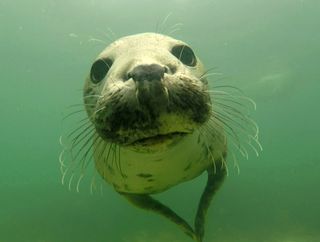
With a novel coronavirus devastating the world since the spring, the year 2020 has been difficult. Still, even in these hard times, some moments of joy crept through — and some of them were sparked by awe-inspiring scientific discoveries and phenomena. From the incredible efforts of scientists to develop a COVID-19 vaccine in record time to clapping seals and swimming dinosaurs, here are 10 ways that science made a sucky year suck less.
COVID-19 vaccines
(Image credit: Photo By BSIP/Universal Images Group via Getty Images)
This year, scientists across the globe undertook a massive and unprecedented effort to develop vaccines to fight the novel coronavirus; and they did so on unprecedented timescales. Less than a year after the mysterious cluster of pneumonia-like illnesses in…
This year, scientists uncovered some of the Earth’s most well-kept secrets. They found hidden rivers, chunks of lost continents and remnants of ancient rainforests, and they delved into the planet’s ancient history using cutting-edge technologies. Who knows what they’ll unearth next! While we wait to find out, here are 10 of the geological discoveries that rocked our world in 2020.
Historic supereruption at Yellowstone
(Image credit: National Park Service)
The Yellowstone hotspot lurks beneath the national park’s geysers and hot springs, and about 9 million years ago, the volcano exploded in two historic supereruptions, scientists found. After analyzing ancient volcanic rock tracts and volcanic deposits in the region, the team uncovered evidence of two previously unknown eruptions, which they named the McMullen Creek supereruption and the Grey’s Landing supereruption. The Grey’s Landing eruption shattered records as the largest eruption of the Yellowstone hotspot ever detected; about 8.72 million years ago, the eruption covered roughly 8,900 square miles (23,000 square kilometers) of what is now southern Idaho and northern Nevada with volcanic debris.
Monstrous blobs near Earth’s core are bigger than we thought
(Image credit: Doyeon Kim/University of Maryland)
Continent-size blobs of rock sit at the boundary of Earth’s solid mantle and liquid outer core, and now, scientists think they might be bigger than we ever imagined. By previous estimates, the two largest blobs would measure 100 times taller than Mount Everest if pulled to the planet’s surface. But after studying decades of seismic data from earthquakes, scientists now estimate that the big blob beneath the Pacific Ocean may actually be far more monstrous. For instance, one newfound structure along the edge of the blob measured more than 620 miles (1,000 kilometers) across.
Lost islands in the North Sea withstood massive tsunami
(Image credit: Shutterstock)
Roughly 8,000 years ago, a tsunami struck a plain between Great Britain and the Netherlands, submerging most of the region. But research suggests that some islands may have withstood the tsunami, providing a home to Stone Age humans for thousands of years. Though they remained above water for some time after the tsunami, rising sea levels eventually submerged the islands about 1,000 years later. Scientists learned the lost islands had survived the tsunami only after collecting sediment from the seafloor near the eastern English estuary of the River Ouse. RECOMMENDED VIDEOS FOR YOU…CLOSEhttps://imasdk.googleapis.com/js/core/bridge3.432.0_en.html#goog_2057940813Volume 0% PLAY SOUND
The Earth’s solid inner core — a 1,500-mile-wide (2,442 kms) ball of iron — likely formed about 1 billion to 1.3 billion years ago, scientists estimate. By recreating the conditions found in the core on a teeny, tiny scale, the team was able to calculate how long it would take for a blob of molten iron to build up to the core’s current size. The time window of roughly 1 billion years lines up nicely with historic fluctuations in the planet’s magnetic field, which grew significantly stronger between 1 billion and 1.5 billion years ago. The crystallization of the inner core may have provided this boost of magnetism, since the process would have released heat into the liquid outer core; heat drives a churning motion in the liquid that then powers the magnetic field.
Look Closer: Shouldn’t Have Taken This Wedding Pic
Read MorePromoted by WordSa
About 150 million years ago, a now-lost continent broke up into enormous fragments — and one big chunk was recently discovered lurking under Canada. Scientists made the discovery while studying a type of diamond-bearing volcanic rock called kimberlite, which had been collected from nearly 250 miles (400 km) beneath Baffin Island in northern Canada. The mineral chemistry of the kimberlite matched that of the long-lost continent, making the sample location the deepest point where evidence of the continent had ever been found.
This year, scientists discovered massive rivers of cold, salty water that flow from the Australian coast out into the deep ocean. The rivers, which researchers found using autonomous underwater vehicles, form when shallow waters near the coast lose heat during the winter. Evaporation during the summer months makes this shallow water saltier than deep water, so when it cools, the dense, salty water sinks and snakes through the ocean as an underwater river. These rivers span thousands of miles and carry nutrients, plant and animal matter and pollutants out into the ocean.
(Image credit: J. McKay/Alfred-Wegener-Institut; Creative Commons licence CC-BY 4.0)
Antarctica might be the last place you’d expect to find remnants of an ancient rainforest, but that’s exactly what scientists found under the western side of the continent. The forest’s remains were discovered in a sediment core drilled from a seabed near Pine Island Glacier. A layer of sediment within the core stood out from the rest, as its color clearly differed from those around it; upon closer inspection, scientists found ancient pollen, spores, bits of flowering plants and a network of roots within the layer. The sample dated back 90 million years, to the mid-Cretaceous period, when the now-frozen Antarctic had a much milder climate.
A seabed that once lined the bottom of the Pacific Ocean was found buried hundreds of miles beneath China, where it continues to descend toward the Earth’s mantle transition zone. The slab of rock once sat atop the oceanic lithosphere, the outermost layer of Earth’s surface, but was pushed downward when it collided with a neighboring tectonic plate, in what’s called a subduction event. Scientists had never detected a subduction event so deep beneath the planet surface, at depths ranging between 254 to 410 miles (410 to 660 km) underground.
Scientists digitally reconstructed a tectonic plate and showed that its movement likely gave rise to an arc of volcanoes in the Pacific Ocean some 60 million years ago. In the past, some geophysicists argued that the plate, known as Resurrection, never existed. But if it did exist, the plate would have been pushed beneath Earth’s crust tens of millions of years ago; so using computer reconstruction, scientists reversed that motion, virtually pulling it and other ancient plates back to the surface. They found that Resurrection would have fit in like a perfect puzzle piece, just east of two plates called Kula and Farallon, and that its edge matches up with ancient volcanic belts in Washington State and Alaska.
The first detached coral reef discovered in more than 100 years stands taller than the Empire State Building. Measuring 1,640 feet (500 meters) high from base to tip, the tower of coral stands freely near the rest of the Great Barrier Reef off the coast of Australia. The blade-like structure measures 1 mile (1.5 km) wide at its base and its peak sits about 130 feet (40 m) below the sea’s surface.
LikeThe Atlantic? Subscribe toThe Atlantic Daily, our free weekday email newsletter.Editor’s Note:The Atlanticis making vital coverage of the coronavirus available to all readers. Find the collectionhere.
Updated at 5:28 p.m. ET on September 13, 2020.
Army ants willsometimes walk in circles until they die. The workers navigate by smelling the pheromone trails of workers in front of them, while laying down pheromones for others to follow. If these trails accidentally loop back on themselves, the ants aretrapped. They become a thick, swirling vortex of bodies thatresembles a hurricaneas viewed from space. They march endlessly until they’re felled by exhaustion or…
Nestled amid butterscotch-scented Ponderosa pines in Idaho’s backcountry one sunny, summer day in 1991, Suzanne Stone scooped her hands around her chin and let out an “Ahwooooo.” Stone, now an expert in wolf restoration heading the International Wildlife Coexistence Network, was then an intern at the United States Fish and Wildlife Service (USFWS). After she sent two boisterous wolf howls rippling through nearby meadows, she listened curiously for a reply. Instead, a bullet from a distant rifle whistled just above her and her supervisor’s heads. Steve Fritts, a leading wolf scientist at USFWS, hurried Stone back to their car before reporting what happened. Hunting was legal in the area, but firing at federal employees—even unknowingly—was not. Federal investigators later traced the shot to a hunting outfitter hundreds of yards away.
“I knew then what wolves were facing in the backcountry,” she says. For nearly three decades, wolf populations in Idaho have been on the rise, pitting local communities and powerful interest groups against each other, a situation that plays out in many areas across the country where wolves exist. Hunters contend that wolves have fully recovered and now deplete elk and deer populations while some ranchers argue wolves need to be killed to keep livestock alive. Conservationists, on the other hand, say that the apex predators contribute vitally to a healthy ecosystem and are still functionally extinct in about 85 percent of their historic range.
With gray wolves set to lose their federal protection when delisting takes effect in January, individual states have resorted to patching together their own terms for management, making it easier for people to hunt them in some states. But hunting will likely stunt wolf recovery and destabilize ecosystems already hobbled by their scarcity. Wolves regulate coyote populations, preventing the latter group from hunting pronghorn antelope; wolves pick off weak, rather than healthy, prey, leading to stronger deer and elk herds; and they keep wild herbivores from overgrazing, rippling benefits down to the soil. For these reasons, biologists have been trying to convince ranchers and policymakers that nonlethal methods, both old and new, should be used to reduce livestock conflicts and keep wolf populations stable or growing.
Wolves were nearly wiped out from the lower 48 by 1960, but numbers rebounded after Congress passed the Endangered Species Act in 1973 and scientists reintroduced the predators to Yellowstone National Park and Idaho in 1995. Hunting ramped up between 2008 and 2012 when the USFWS delisted gray wolves in Idaho, Montana, and Wyoming, in part to protect livestock from attack. But that tactic may have been counterproductive. Research from the Carnivore Coexistence Lab at the University of Wisconsin Madison has shown that killing gray wolves actually leads to three times more livestock attacks, a finding supported by behavioral studies elsewhere. “The wolf pack is a family,” says Adrian Treves, who runs the lab. They cooperate to defend territory and raise pups. When one is killed, the destabilizing effect ripples through the pack. Reproductive age goes down, and naive juvenile attacks on livestock go up, according to Colleen St. Clair, a biologist at the University of Alberta.
Ranchers’ fears also run deeper than just slain cows. Even if livestock don’t die, wolves may chase or stress cattle enough that many lose weight, get trampled or injured. “I have major concerns about [wolves],” says Megan Brown, a cattle rancher in northern California who has encountered bears and wolves on her property. “I’ve noticed this happening slightly more now that the wolves are back.” (In 2011, California confirmed its first wild wolf sighting in 87 years.)
One newly proven tactic to discourage wolf-cattle conflicts is to keep an abundant population of the predators’ natural prey. Wolves prefer eating native wild animals, and depleted deer or elk populations nudge them toward abundant sheep and cattle. “Predators are always facing this cost benefit ratio,” St. Clair says. “When they choose to try to prey on livestock, it’s because they are in a situation where that’s their best option.” She suggests that planting deer or elk carcasses in wolf habitats or imposing stricter hunting limits could increase prey populations. Since doing so could also grow predator numbers, both approaches are contentious.
A tried-and-true change some ranchers have made is to keep their herds disease-free and haul dead livestock far from the rest. Wolves are exceptionally sensitive to weakened prey. “It’s like ringing the dinner bell and saying, ‘Come on in there’s a feast here’,” says Stone. Once the scent of a carcass lures them near a herd, healthy livestock become more vulnerable. Moving bone piles and carcasses far from the herd “may be the single best action” to prevent wolf predation on livestock from happening in the first place, according to the Oregon Department of Fish and Wildlife. This approach, while effective, adds costs to ranching and requires some to manage land differently than they have for generations.
It’s also not going to be a cure-all; ranchers can’t bury or haul thousand-pound carcasses from some remote pastures in the dead of winter, and healthy herds need protection too. Since wolves have evolved to be shy around unfamiliar things, a common strategy is to scare them away with devices called nonlethal deterrents. A centuries’ old example comes from Polish hunting practices: fladry is a perimeter of tightly spaced colorful flags. The configuration is not a physical barrier, but the narrow spacing between flags still throws wolves off. Hunters previously used fladry to funnel wolves into an ambush area, but scientists now champion the tool to spare them. In one instance, a biologist used fladry around a carcass visited by wolves. A hungry carnivore leapt over a nearby barbed wire fence “like it wasn’t even there,” but didn’t cross the fladry.
Since wolf reintroduction in 1995, scientists have gathered much evidence showing that random blasts of colorful light, noise or motion can also protect livestock enclosures by keeping wolves on edge. Stone recalls one wolf getting blasted with Van Halen. “It was one of our Wildlife Services guys’ favorite albums, and it was very hard rock,” she says. The frightened wolf fled further than any other in her experience. Ranchers also scare away wolves using strobe lights and starter pistols. Stone, who has used countless deterrents in her 30 years of experience, even reported success with inflatable tubemen—those giant grinning effigies that dance unpredictably, often around used car lots. She assembled a pair on an Oregon hobby farm in 2018 where wolves had eaten llamas, and wolves have still not returned, she says.
Nonlethal deterrent devices have limitations, though. Some require electricity and all only protect enclosed areas—two deal-breakers for herds grazing open pastures. Even in ideal scenarios, wolves eventually tease out empty threats. “Animals are incredibly smart,” says St. Clair. “Their lives depend on figuring out which of these dangers are real dangers.” Targeting multiple senses with a rotating library of deterrents staves off their pattern recognition, but habituation remains a major consideration.
Recent research suggests that tricking carnivores into thinking livestock is disgusting food, can condition, rather than scare them. The approach includes developing microcapsules with nauseating chemicals that ranchers would plant in carcasses as bait for curious carnivores. Making an animal vomit triggers an association with what they just ate, ironing a crease into a primitive subsection deep in the brain. So if a wolf eats a carcass laced with this flavorless capsule, it would start to steer clear of dead steer. This “conditioned disgust” aversion showed promising results in a 2009 study on captive wolves, but the method hasn’t been tested widely in wild wolves.
Recognizing animal cognition inevitably leads to appreciating individual differences between wolves. “We know that individuals vary in their ingenuity—their determination to get through our defenses, their tendency to repeat and cause multiple problems,” Treves says.
The environmental nonprofit Resolve and AI company CVEDIA recently announced WildEyes, a field camera that reportedly recognizes different individuals. “It’s a perfect example of how technology is catching up with the new paradigm of coexistence-type work,” says Stone. WildEyes can automatically alert ranchers of worrisome individuals in the area, or set off deterrents to scare the wolves away. The new technology has been tested on Tibetan wolves, but has not been used in the United States.
According to Stone, one rancher in Montana is testing a tool that monitors livestock heart rates to detect distress—a sort of Fitbit for ungulates. When the device senses stressed livestock, it alerts the rancher that a predator may be close. And other ranchers are also supercharging classic deterrents. Turbofladry combines fladry with electric fences, and works well for smaller enclosed herds.
While some ranchers try new methods, others have stuck with a couple of old standbys that scientists still encourage. Range riders, people paid to travel alongside free-grazing herds on horseback or ATV, can cover more area than electric fences usually surround. In addition to just supervising cattle, range riders encourage wolf-resistant behaviors: grazing as a dense cluster, keeping newborns with moms and moving injured cattle to safety. And guardian dogs, such as Great Pyrenees, can also travel with livestock beyond fence lines. A 2010 study from Central Michigan University proved their ability to dramatic reduce wolf activity, protecting sheep, goats and cattle. At several cattle farms randomly assigned guardian dogs, wolf visits dropped from about once per month to zero visits in three years. Brown says, however, that ranchers with many acres need many dogs—each costing thousands to feed and maintain.
“Every part of this is about having the right tool and using it the right way,” says Stone, pointing out that some ranches require multiple tactics at once. In 2017, Stone published findings from a seven-year case study comparing sheep killings in a lethally controlled area to one protected by range riders, turbofladry, guardian dogs and other nonlethal deterrents. The nonlethal controls led to 3.5 times fewer dead sheep—just .02 percent of the total population.
Switching from lethal to nonlethal measures widely, however, is tough without more buy-in from government and ranchers. More than half of ranchers surveyed in one study wanted to learn more about nonlethal techniques, but funding to foster that desire is lagging. Some states, such as Oregon, do provide grants to help cover costs for nonlethal controls though. When Colorado welcomes wolves back after passing a reintroduction bill in November, Stone hopes policymakers will learn from that evidence, and encourage the suite of nonlethal solutions for protecting livestock and wolves, rather than the lethal measures which endanger both.
For now, the best approach to deter gray wolves’ from attacking livestock is to combine multiple nonlethal methods, and encourage biologists and ranchers to keep innovating. “People often want a silver bullet: they buy this technique, they install it, it works forever,” says St. Clair. “It’ll never be like that. Animals will always be testing, especially animals as smart as wolves.”
Promising new studies suggest the long elusive technology may be capable of producing electricity for the grid by the end of the decade
A rendering of Sparc, a nuclear fusion reactor currently under development. Scientists behind Sparc hope it will be capable of producing electricity for the grid by 2030.Photograph: T Henderson/CFS/MIT-PSFC/WikimediaOscar SchwartzMon 28 Dec 2020 05.00 EST
If all goes as planned, the US will eliminate all greenhouse gas emissions from its electricity sector by 2035 – an ambitious goal set by President-elect Joe Biden, relying in large part on a sharp increase in wind and solar energy generation. That plan may soon get a boost from nuclear fusion, a powerful technology that until recently had seemed far out of reach.
Researchers developing a nuclear fusion reactor that can generate more energy than it consumes have shown in a series of recentpapersthat their design…


 ‘A miracle has happened:’ Senior center resident watches her partner get vaccineClick to expand

 © Photo: Carlos Giusti (AP)A feral Vietnamese pot-bellied pig spotted in San Juan, Puerto Rico.

 (Image: © Dr. Ben Burville)