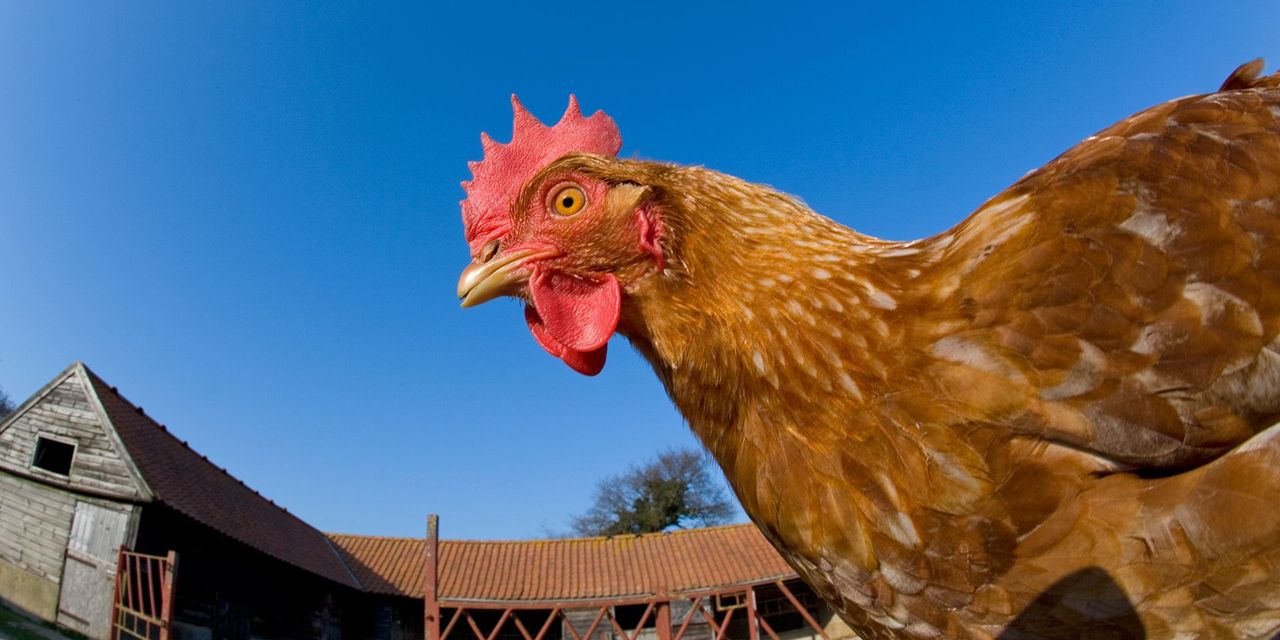
Despite what you might think, chickens are not stupid

Chickens may be capable of "mental time travel" (Credit: Ernie Janes/naturepl.com)

Chickens have a reputation for being profoundly dumb, but in fact they are remarkably intelligent and may even be empathic

  • By Colin Barras

11 January 2017

Reputation: Chickens are dumber than your average bird – little more than walking meat factories with a talent for laying tasty eggs

Reality: The world’s most common bird is actually intelligent, and perhaps even sensitive to the welfare of its peers – which might raise some uncomfortable ethical questions for the farming industry
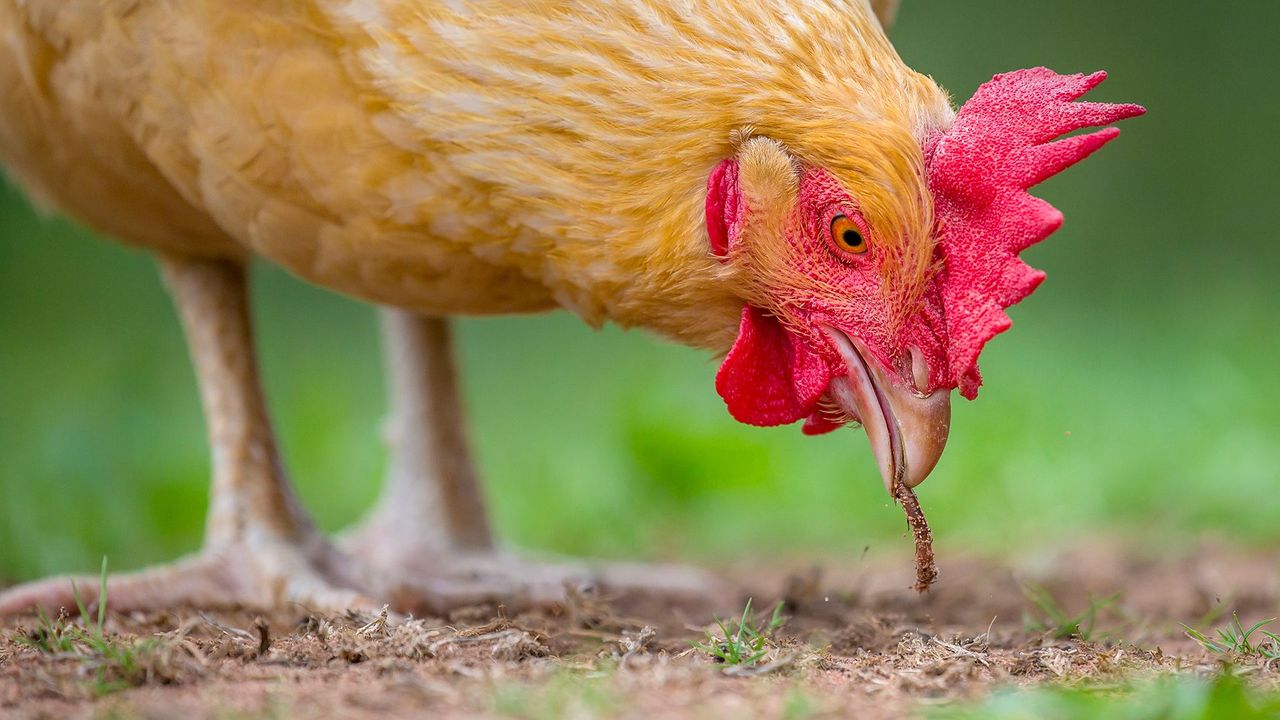
How much brain does pecking at seeds even take? (Credit: Klein & Hubert/naturepl.com)

How much brain does pecking at seeds even take? (Credit: Klein & Hubert/naturepl.com)

There is something odd about chickens. Globally they number more than 19 billion, making them one of the most abundant vertebrate species on the planet. Yet many people have little or no contact with the birds – at least, not while they are alive.

Chickens can count, show some level of self-awareness, and even manipulate one another

That has led to some strange assumptions about chickens. According to some studies, people can struggle even to see them as typical birds. They are, in fact, reasonably representative of the galliformes, a bird group that also includes turkeys, partridges and pheasants.

It is also common for people to view chickens as unintelligent animals that lack the complex psychological characteristics of “higher” animals like monkeys and apes. This is a view reinforced by some depictions of chickens in popular culture, and one that might help people feel better about eating eggs or chicken meat produced by intensive farming practices.

But chickens are, in fact, anything but dumb.

Heihei, from Moana, is unbelievably stupid (Credit: Entertainment Pictures/Alamy)

Heihei, from Moana, is unbelievably stupid (Credit: Entertainment Pictures/Alamy)

They can count, show some level of self-awareness, and even manipulate one another by Machiavellian means. In fact, chickens are so smart that even a limited amount of exposure to the living birds can crush longstanding preconceptions.

I never thought that chickens would be intelligent enough and learn quite so quickly

For a study published in 2015, Lisel O’Dwyer and Susan Hazel ran a class for undergraduates at the University of Adelaide, Australia. As a way to learn about psychology and cognition, the students performed experiments that involved training chickens.

Before the class began, the students completed a questionnaire. Most said they had previously spent little time with chickens. They viewed them as simple creatures, unlikely to feel boredom, frustration or happiness.

After just two hours training the birds, the students were far more likely to appreciate that chickens can feel all three of these emotional states.

“Chickens are a lot smarter than I originally thought,” commented one student on a follow-up questionnaire. Another said: “I never thought that chickens would be intelligent enough and learn quite so quickly.”
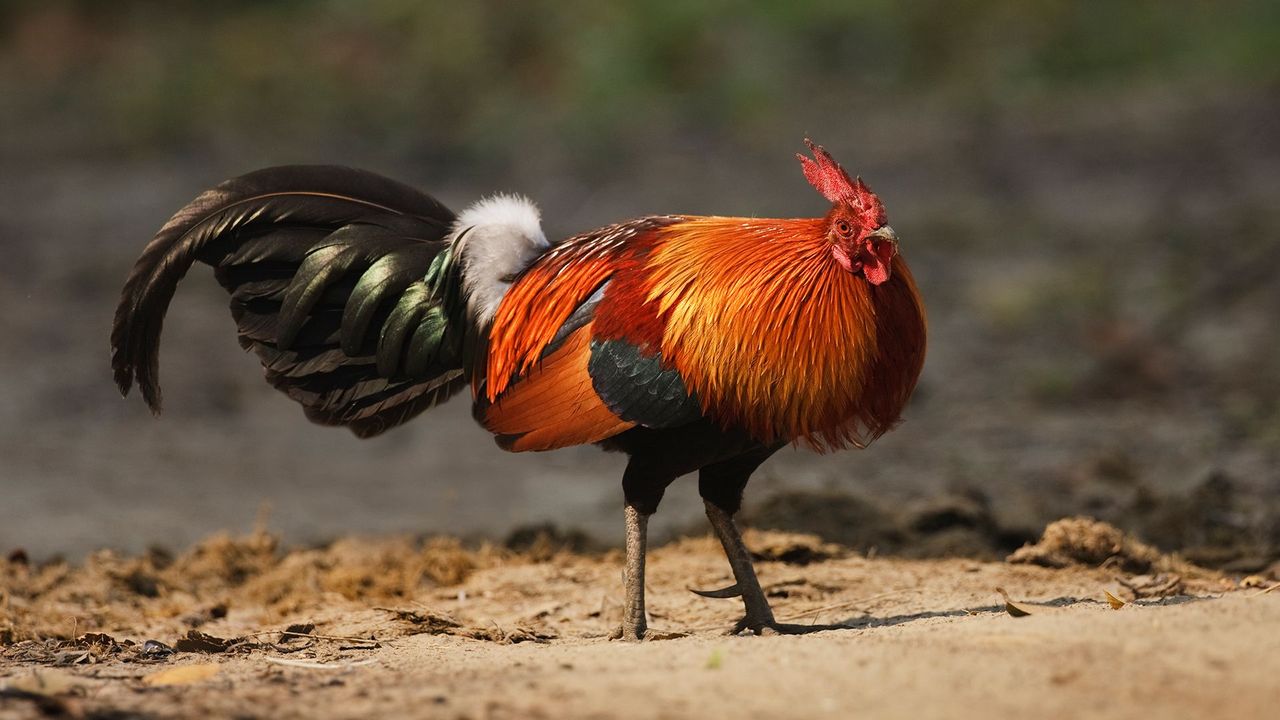
A male junglefowl, chickens's closest wild relative (Credit: Tony Heald/naturepl.com)

A male junglefowl (Gallus gallus), domestic chickens’s closest wild relative (Credit: Tony Heald/naturepl.com)

In as-yet-unpublished research, O’Dwyer has replicated this study with workers in the poultry industry, and found the same results. “Basically we had two quite different social groups and found the same [initial] attitudes and the same attitude change in both,” she says.

The researchers have shown that chickens can count and perform basic arithmetic

She now plans to study whether these experiences have any impact on people’s eating habits – for instance, whether they shift to eating chicken reared in ways that they believe to be more ethically acceptable.

O’Dwyer’s study is just one of many picked out by Lori Marino of the Kimmela Center for Animal Advocacy in Kanab, Utah, as part of a scientific review of chicken cognition published in January 2017.

“The paper is part of a joint venture between Farm Sanctuary and The Kimmela Center, called The Someone Project,” says Marino. “The aim of the Project is to educate the public about who farmed animals are from the scientific data.”

Marino says the scientific evidence shows clearly that chickens are not as unaware and unintelligent as many people assume.
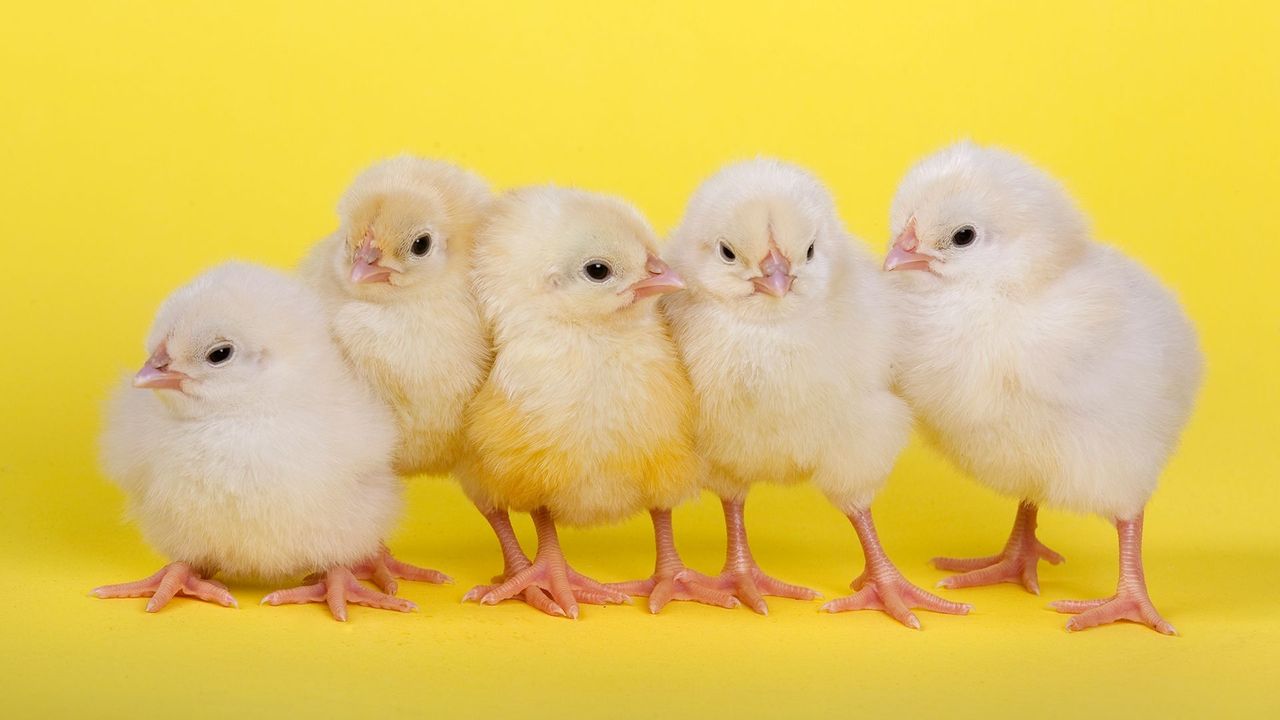
Newly-hatched chicks have remarkable skills (Credit: Ernie Janes/naturepl.com)

Newly-hatched chicks have remarkable skills (Credit: Ernie Janes/naturepl.com)

Take, for instance, a suite of papers published over the last decade by Rosa Rugani at the University of Padova, Italy, and her colleagues. Working with newly-hatched chicks, the researchers have shown that chickens can count and perform basic arithmetic.

Chickens may also have some ability to perform “mental time travel”

The chicks were raised from hatching with five objects – the plastic containers from Kinder Surprise eggs. After a few days, the scientists took the five objects and, in full view of the chicks, hid three behind one screen and two behind a second screen. The chicks were more likely to approach the screen hiding more of the objects.

A follow-up experiment tested the chicks’ memory and ability to add and subtract. After the objects had been hidden behind the two screens, the scientists began transferring objects between the two screens, in view of the chicks. The chicks seemed to keep track of how many objects were behind each screen, and were still more likely to approach the screen that hid the larger number of objects.

Chickens have a strong grasp of numerical tasks from a young age, even if they have limited experience, says Rugani.
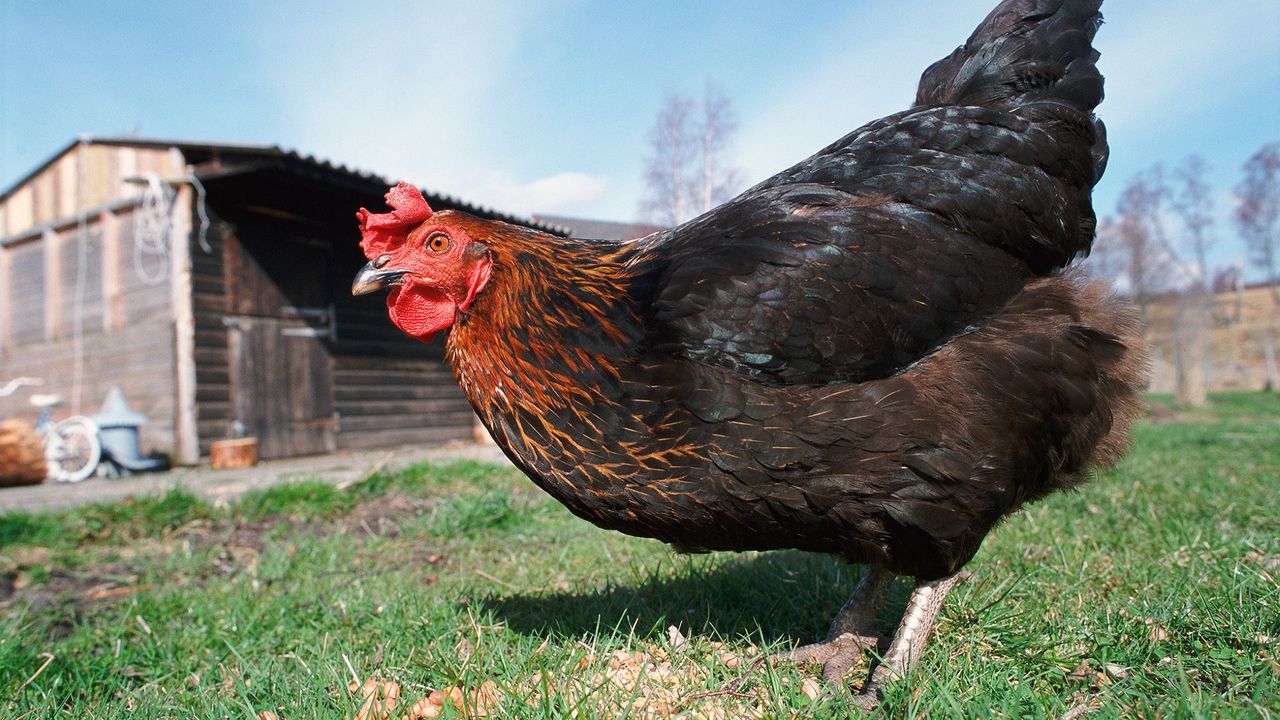
This chicken has a first-rate mind (Credit: Pete Cairns/naturepl.com)

This chicken has a first-rate mind (Credit: Pete Cairns/naturepl.com)

She thinks that might be true of higher animals in general, rather than chickens in particular. “These abilities would help animals in their natural environment, for example to reach a larger amount of food, or to find a larger group for social companionship,” she says.

If a male chicken foraging for food finds a particularly tasty morsel, he will often try to impress nearby females by performing a dance

Chickens may also have some ability to perform “mental time travel” – that is, to imagine what will happen in the future – to secure a larger amount of food, according to a 2005 study led by Siobhan Abeyesinghe, then at the University of Bristol, UK.

Abeyesinghe gave chickens the option of pecking one key, which would give brief access to food after a two-second delay, or pecking a second key that gave prolonged access to food after a six-second delay.

The birds were significantly more likely to peck at the second key, which offered a greater food reward but after a longer delay time. In other words, they showed self-control – a trait that some biologists think hints at a degree of self-awareness.

Chickens are also socially complex.
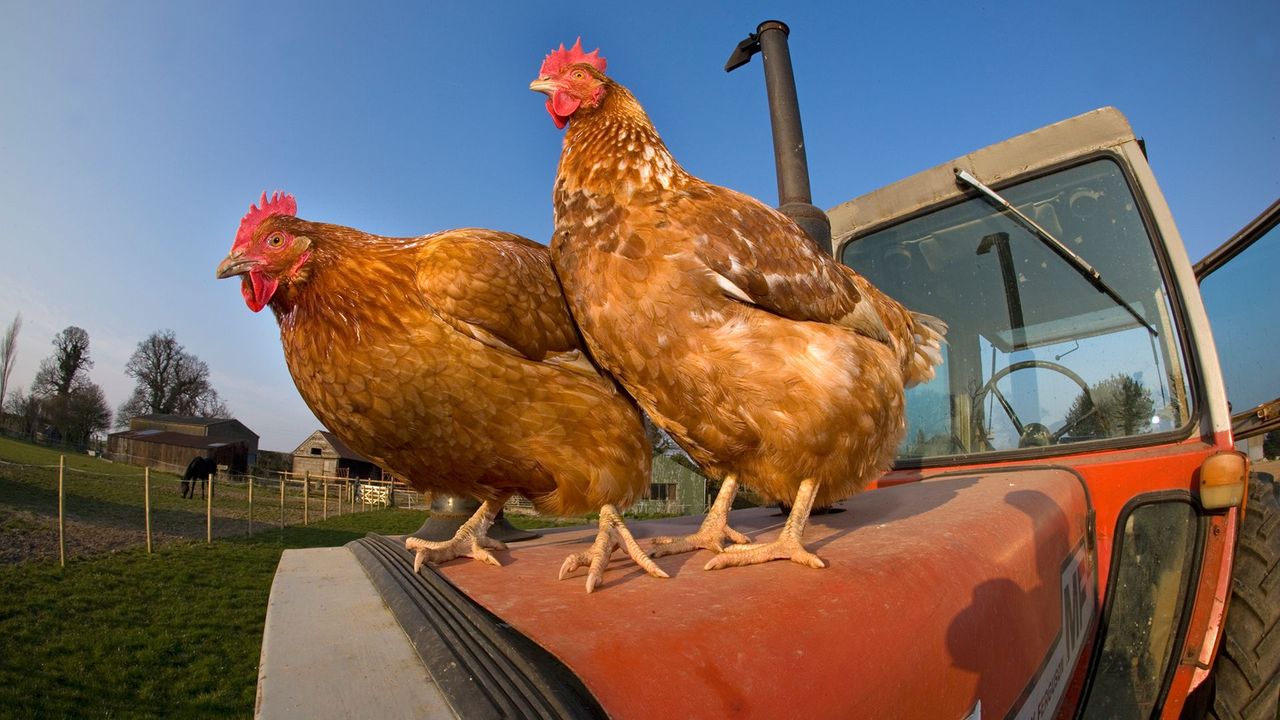
Chickens have intricate social lives (Credit: Ernie Janes/naturepl.com)

Chickens have intricate social lives (Credit: Ernie Janes/naturepl.com)

Some studies suggest the birds can appreciate how the world must appear to their peers, and that they can use this information for personal advantage.

Females quickly wise up to males who perform this sort of deception too often

If a male chicken foraging for food finds a particularly tasty morsel, he will often try to impress nearby females by performing a dance while making a characteristic food call.

However, subordinate males that perform this song-and-dance routine risk being noticed and attacked by the dominant male. So if the dominant male is nearby, the subordinate often performs his special dance in silence, in a bid to impress females without the dominant male noticing.

Meanwhile, some males may try to trick females into approaching by making the characteristic food calls even when they have not found anything worth crowing about. Unsurprisingly, females quickly wise up to males who perform this sort of deception too often.

There are even some hints that chickens may show a rudimentary form of empathy for each other.
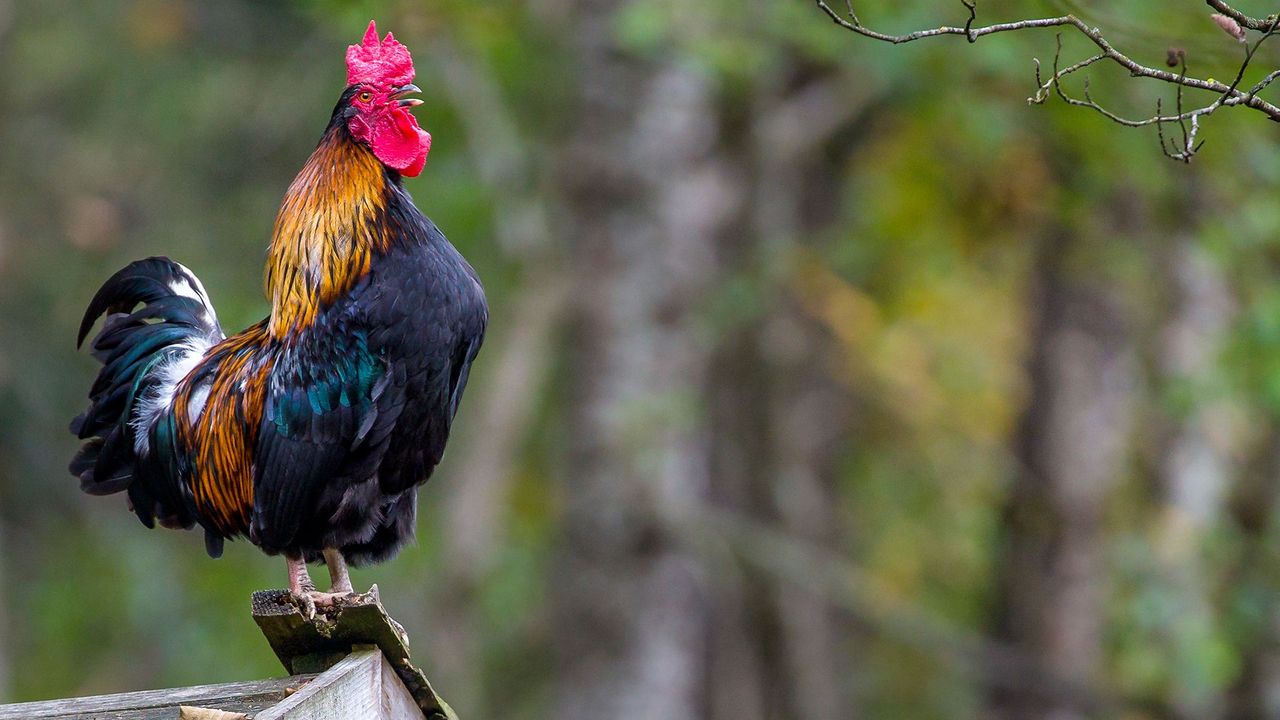
Chickens can be very communicative (Credit: Klein & Hubert/naturepl.com)

Chickens can be very communicative (Credit: Klein & Hubert/naturepl.com)

In a series of studies over the last six years, Joanne Edgar at the University of Bristol, UK and her colleagues have studied how hens react when they see their chicks having air puffed at them – something the hens have learned, from personal experience, is mildly unpleasant.

Hens can respond to their personal knowledge of the potential for chick discomfort

When the chicks were puffed, the hens’ hearts began to race and they called more frequently to the chicks. However, they did not do so if the air was puffed near the chicks without actually disturbing them.

In a study published in 2013, the hens learned to associate one coloured box with the uncomfortable air puff and a second coloured box with safety – no air puff. The hens again showed signs of concern when chicks were placed in the “dangerous” box, even if the chicks never actually experienced an air puff and remained oblivious to the peril.

This suggests that hens can respond to their personal knowledge of the potential for chick discomfort, rather than simply reacting to signs of distress in the youngsters.
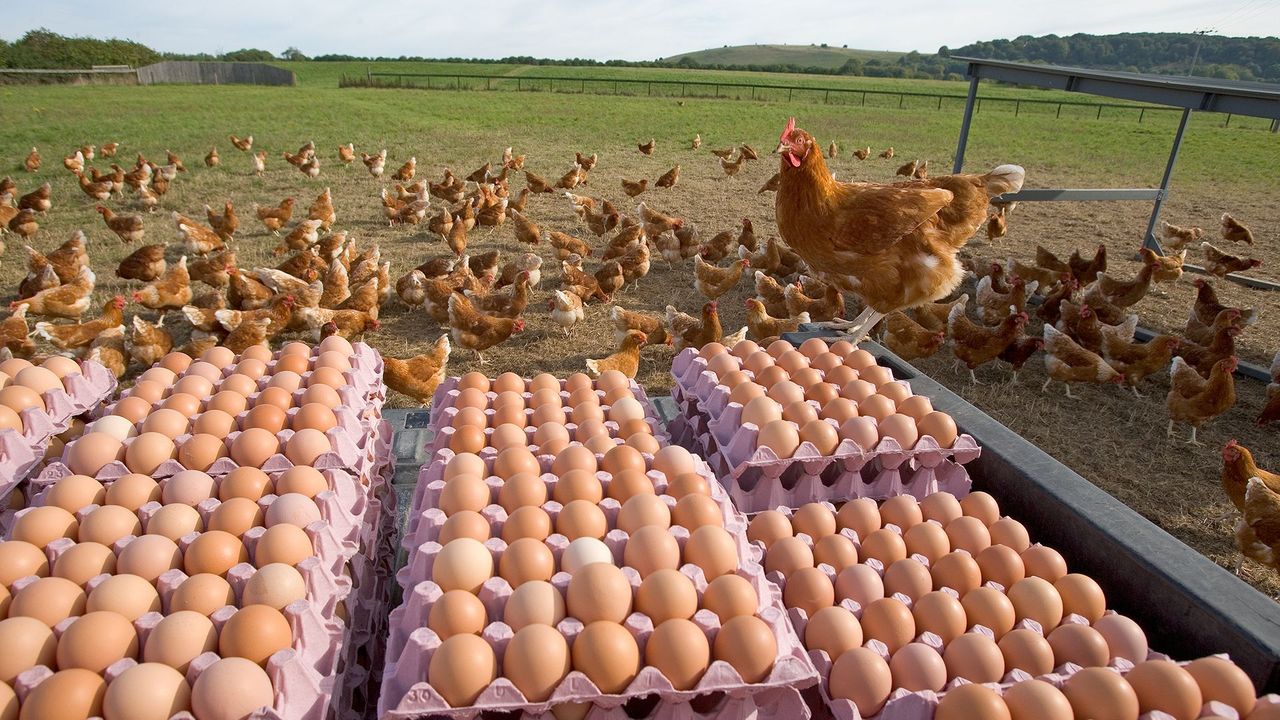
Chickens are farmed in many countries (Credit: Ernie Janes/naturepl.com)

Chickens are farmed in many countries (Credit: Ernie Janes/naturepl.com)

The research is ongoing, says Edgar. “We have not yet established whether the behavioural and physiological responses in hens observing their chicks in mild distress are indicative of an emotional response, or are simply akin to arousal or interest.”

When the chicks were puffed, the hens’ hearts began to race and they called more frequently to the chicks

If it does turn out that chickens can show empathy when other birds are in distress, that could raise serious questions about the way farmed chickens are reared.

“There are numerous situations where all farm animals are exposed to the sights, sounds and smells of other individuals showing signs of pain and distress,” says Edgar. “It is important to determine whether their welfare might be reduced at these times.”

Marino also thinks it may be time to discuss these questions. “The perception of chickens [as unaware and unintelligent] is driven in part by the motivation to dismiss their intelligence and sensibilities because people eat them,” she says.

The uncomfortable truth about chickens is that they are far more cognitively advanced than many people might appreciate. But it remains to be seen whether consumers who are armed with this knowledge change their shopping habits at the meat counter.

Why the 1918 Flu Pandemic Never Really Ended

DEC 11, 2020

DAVE ROOS

https://www.history.com/news/1918-flu-pandemic-never-ended?fbclid=IwAR1y33ohHyd63g5VXPkoSH5mvh5gVbpiyQHX5lrQD26dDJ36k0Un9FacH6M

An unthinkable 50 to 100 million people worldwide died from the 1918-1919 flu pandemic commonly known as the “Spanish Flu.” It was the deadliest global pandemic since the Black Death, and rare among flu viruses for striking down the young and healthy, often within days of exhibiting the first symptoms. In the United States, the 1918 flu pandemic lowered the average life expectancy by 12 years.

What’s even more remarkable about the 1918 flu, say infectious disease experts, is that it never really went away. After infecting an estimated 500 million people worldwide in 1918 and 1919 (a third of the global population), the H1N1 strain that caused the Spanish flu receded into the background and stuck around as the regular seasonal flu.

But every so often, direct descendants of the 1918 flu combined with bird flu or swine flu to create powerful new pandemic strains, which is exactly what happened in 1957, 1968 and 2009. Those later flu outbreaks, all created in part by the 1918 virus, claimed millions of additional lives, earning the 1918 flu the odious title of “the mother of all pandemics.”

LISTEN: HISTORY This Week: The Deadliest Pandemic in Modern History

Deadly Virus Struck in Three Waves

https://www.history.com/player/1438417475961?autoplay=true

WATCH: The 1918 Flu Was Deadlier Than WWI

Jeffrey Taubenberger was part of the pioneering scientific team that first isolated and sequenced the genome of the 1918 flu virus in the late 1990s. The painstaking process involved extracting viral RNA from autopsied lung samples taken from American soldiers who died from the 1918 flu, plus one diseased lung preserved in the Alaskan permafrost for nearly 100 years.https://2bff80fb56695aa3a1845bcbabb4ac36.safeframe.googlesyndication.com/safeframe/1-0-37/html/container.html

Now chief of the Viral Pathogenesis and Evolution Section at the National Institutes of Health (NIH), Taubenberger explains that genetic analyses of the 1918 flu indicate that it started as an avian flu and represented a completely new viral strain when it made the leap to humans shortly before 1918. Lab tests of the reconstructed 1918 virus show that in its original form, the virus’s novel encoded proteins made it 100 times more lethal in mice than today’s seasonal flu.

The 1918 pandemic struck in three distinct waves over a 12-month period. It first appeared in the spring of 1918 in North America and Europe largely in the trenches of World War I, then reemerged in its deadliest form in the fall of 1918, killing tens of millions of people worldwide from September through November. The final wave swept across Australia, the United States and Europe in the late winter and spring of 1919.

But did the 1918 flu simply “go away” after that third wave? Absolutely not, says Taubenberger.

READ MORE: Why the Second Wave of the 1918 ‘Spanish Flu’ Was So Deadly

Virus Mutates Into Seasonal Flu

1918 flu pandemic
A man receives a shave from a barber wearing a mask during the ongoing flu pandemic, Chicago, Illinois, 1918.Chicago Sun-Times/Chicago Daily News Collection/Chicago History Museum/Getty Images

Since the whole world had been exposed to the virus, and had therefore developed natural immunity against it, the 1918 strain began to mutate and evolve in a process called “antigenic drift.” Slightly altered versions of the 1918 flu reemerged in the winters of 1919-1920 and 1920-1921, but they were far less deadly and nearly indistinguishable from the seasonal flu.

“The 1918 flu definitely lost its real virulence by the early 1920s,” says Taubenberger.

But what’s truly incredible, according to genetic analyses, is that the same novel strain of flu first introduced in 1918 appears to be the direct ancestor of every seasonal and pandemic flu we’ve had over the past century.

“You can still find the genetic traces of the 1918 virus in the seasonal flus that circulate today,” says Taubenberger. “Every single human infection with influenza A in the past 102 years is derived from that one introduction of the 1918 flu.”

Welcome to the Pandemic Era

The 1918 flu pandemic was by far the deadliest flu outbreak of the 20th and 21st centuries to date, but it wasn’t the only one to qualify as a pandemic. Even with the advent of the first seasonal flu vaccines after World War II, the flu virus has proven capable of some unexpected and deadly genetic tricks.

In a normal flu season, vaccine scientists can track the most active viral strains and produce a vaccine that protects against changes in the human flu virus from year to year. But every so often, viral genes from the animal kingdom enter the mix.

GettyImages-515581890

9GALLERY9 IMAGES

PHOTOS: Innovative Ways People Tried to Protect Themselves From the Flu

“If one animal is infected with two different influenza viruses at the same time,” says Taubenberger, “maybe one virus from a bird and another from a human, those genes can mix and match to create a brand new virus that never existed before.”

That’s what happened in 1957 when the 1918 flu, which is an H1N1 virus, swapped genes with another bird flu giving us the H2N2 pandemic, which claimed a million lives worldwide. It happened again in 1968 with the creation of the so-called “Hong Kong Flu,” an H3N2 virus that killed another million people.

The so-called “Swine Flu” pandemic of 2009 has an even deeper backstory. When humans became infected with the 1918 pandemic flu, which was originally a bird flu, we also passed it on to pigs.

“One branch of the 1918 flu permanently adapted to pigs and became swine influenza that was seen in pigs in the US every year after 1918 and spread around the world,” says Taubenberger.

READ MORE: 5 Hard-Earned Lessons From Past Pandemics

In 2009, a strain of swine flu swapped genes with both human influenza and avian influenza to create a new variety of H1N1 flu that was “more like 1918 than had been seen in a long time,” says Taubenberger. Around 300,000 people died from the 2009 flu pandemic.

All told, if 50 to 100 million people died in the 1918 and 1919 pandemic, and tens of millions more have died in the ensuing century of seasonal flus and pandemic outbreaks, then all of those deaths can be attributed to the single and accidental emergence in humans of the very successful and stubborn 1918 virus.

“We’re still living in what I would call the ‘1918 pandemic era’ 102 years later” says Taubenberger, “and I don’t know how long it will last.”

READ MORE: See all pandemic coverage here.

Hunter ticketed for killing deer in Conn., bringing it over N.Y. state line to brother’s shed

Exposing the Big Game's avatarCommittee to Abolish Sport Hunting Blog

https://www.newyorkupstate.com/outdoors/2020/12/hunter-ticketed-for-killing-deer-in-conn-bringing-it-over-ny-state-line-to-brothers-house.html

Updated Dec 10, 2020; Posted Dec 10, 2020

Confiscated deer
A DEC environmental conservation officer poses with a confiscated buck that was killed in Connecticut and brought over the NY state line in violation of N.Y.’s chronic wasting disease regulations.

Facebook ShareTwitter Share208sharesByDavid Figura | dfigura@nyup.com

A hunter was ticketed recently by state conservation officers for killing a deer in Connecticut and bringing the carcass over the N.Y state line to his brother’s shed in violation of this state’s Chronic Wasting Disease regulations.

The incident was reported in the state Department of Environmental Conservation’s weekly report of incidents involving state conservation officers. All information below was supplied by the DEC.

Connecticut Deer Seized to Protect Against CWD Spread – Dutchess County

“On Dec. 4, a DEC environmental conservation officer (ECO) questioned a hunter about details of a buck he had posted on a social media site. The hunter reported that the…

View original post 121 more words

Breaux Bridge man cited for deer hunting violations

Exposing the Big Game's avatarCommittee to Abolish Sport Hunting Blog

items.[0].image.alt

Louisiana Wildlife and Fisheries

By:KATC NewsPosted at5:21 PM, Dec 11, 2020and last updated3:21 PM, Dec 11, 2020

https://www.katc.com/news/st-martin-parish/breaux-bridge-man-cited-for-deer-hunting-violations

Louisiana Department of Wildlife and Fisheries enforcement agents cited a Breaux Bridge man for alleged night hunting violations in St. Martin Parish.

Agents say they cited 56-year-old Wallace Vicknair of Breaux Bridge on December 9 for taking an antlerless deer during illegal hours and hunting on Deer Management Assistance Program (DMAP) lands without a permit from the owner/lessee.

LDWF says they received a complaint that Vicknair was on a DMAP property near Henderson in possession of an antlerless deer. Agents responded to the property and could not find Vicknair, but they located a harvested antlerless deer that was shot with a rifle.

Agents made contact with Vicknair on an adjacent property where he admitted to killing the deer the night before at approximately 10:00 p.m. Agent seized Vicknair’s .30-06 Remington…

View original post 69 more words

A Cautionary Tale

Exposing the Big Game's avatarCommittee to Abolish Sport Hunting Blog

An Animal Rights Article from All-Creatures.org

Share on Facebook

FROMDee Farmer
December 9, 2020 Facebook post

https://www.all-creatures.org/articles2/ar-cautionary-tale.html

A cautionary tale…bloody chronicles…call it what you will… A message from a hunter-murdered deer.

Deer

dead Deer

A cautionary tale…bloody chronicles…call it what you will…

I am long dead, & gone.

It was a gorgeous morning. The sun rays laid golden upon crisp flora kissed by a cold autumnal night. I spent my time around a marsh tucked deep away by the grace of a densely wooded, shale cliff. I was watching a chipmunk scurrying around, when I suddenly got an acorn tooth.

You know the deep gnaw of desire you get when you just gotta have something crunchy and bitter?
I listened to some crows chasing off the pair of ravens that live in the tallest evergreen tree. I stopped to sniff a branch that was hanging down and found all the smells familiar. The chicory and…

View original post 769 more words

Fighter charged with animal cruelty over attempted bobcat sale

Exposing the Big Game's avatarThe Extinction Chronicles

Tim Bissell4 hrs ago


Fighter charged with animal cruelty over attempted bobcat sale (msn.com)

There’s a Sheep Hidden In A Sea of Santa Clauses. Can You Spot It?Pelosi joins calls for VA secretary’s ousterFighter charged with animal cruelty over attempted bobcat sale

[CW: The following story describes alleged incidents of animal cruelty]a cat sitting on a table: FILE PHOTO-A pet bobcat in Melissa, TX. Picture taken on September 23, 2018. © Photo credit should read Adam Gray / Barcroft Media via Getty Images / Barcroft Media via Getty Imag…FILE PHOTO-A pet bobcat in Melissa, TX. Picture taken on September 23, 2018.

According to the Houston ChronicleJovidon Sorbon, 33, has been arrested and charged with a misdemeanour cruelty to non-livestock animals. in connection to allegations that he trapped a wild bobcat and attempted to sell it on Craigslist for $1,000.

Investigators got wind of Sorbon after concerned individuals noticed someone was trying to sell a bobcat online. The Craigslist ad, allegedly set up by Sorbon, read…

View original post 307 more words

The Next Pandemic Could Come From an American Factory Farm

https://www.vice.com/en/article/g5bjjb/the-next-pandemic-could-come-from-an-american-factory-farm

“If you have several thousand hogs packed in together and they’re all genetically largely the same, that selects for the most virulent pathogens.”VKBy Valerie KipnisJHBy Joe HillDecember 11, 2020, 1:40pm

In the dead of night, four animal rights activists prepare to break into an industrial-scale pig farm in central California. They write lawyers’ phone numbers on their bodies with a Sharpie, their cell phones are locked away in signal-blocking cases to protect them from being tracked. After a 30-minute trek through almond groves under moonlight, they arrive at the pigpens and take out their gear: hazmat suits, N95 masks, flashlights. ADVERTISEMENT

They’re here to collect nasal and fecal samples to find the source of the next potential global pandemic. 

These activists are part of Direct Action Everywhere, or DxE, a global grassroots network fighting for animal rights with some pretty intense tactics. The group gained notoriety for breaking into America’s industrial farms and publishing graphic footage of animal cruelty online, but the coronavirus pandemic has given them a whole new cause. 

Now, rather than just filming conditions in farms, they’re testing the animals for signs of the next zoonotic virus—viruses like COVID-19, H1N1, the bird flu, and others that jump from animals to humans, and which have killed more than 2 million people around the globe since 1991.

“The reality is the fact that these places, these unnecessary disease factories are existing; that is where the risk comes from,” Lewis Bernier, the team’s leader, told VICE News. “We have been warning about the threat of pathogens from animal agriculture, and from pig farms especially, for many years now.” 

Industrial-scale farming is a system of agriculture that produces low-cost, uniformly-packaged foods, like pork—the kind you see in most supermarkets across the country. The highly efficient and lucrative system originated in the United States but is now used worldwide. But this infrastructure is also a near-perfect breeding ground for novel viruses, of which at least 60 percent are zoonotic.ADVERTISEMENT

“If I wanted to design a means to select for the most dangerous pathogens imaginable, I would probably do it along the lines of how hog farms are actually operated now,” said Robert Wallace, author of “Dead Epidemiologists: On the Origins of COVID-19” and “Big Farms Make Big Flu: Dispatches on Influenza, Agribusiness, and the Nature of Science.” “If you have several thousand hogs packed in together and they’re all genetically largely the same, that selects for the most virulent pathogens that are possible.” 

It’s happened before: In the late 1990s, chicken coops in East Asia and Southeast Asia fostered the evolution of the bird flu, which still infects humans to this day. In 2009, H1N1, or the swine flu, was traced back to a factory farm in North Carolina. The bug is estimated to have killed up to half a million people worldwide. And according to Wallace, there are at least a dozen more emergent and re-emergent farm and foodborne pathogens circulating around the world. 

Wallace argues that the industrial farming model, which puts genetically similar livestock into tight quarters, is the perfect habitat for viruses to evolve, mutate, and multiply. And pigs, which can catch and pass viruses from birds and humans, pose an especially daunting risk to America’s meat supply.   

“As we continue to grow out at this scale, we only increase the likelihood that such an event [a pandemic] will happen,” Wallace said.ADVERTISEMENT

Much like other parts of America’s agribusiness, the $23.4 billion pork industryis growing and consolidating at a staggering rate. Since 1980, the number of U.S. hog farms has dropped by nearly 90 percent, while the total number of hogs has increased by more than 50 percent since 1997.

In 1997, the average U.S. hog farm was home to 3,600 pigs, but by 2012, the last year figures were available, that number had grown to 6,100 pigs, according to Food and Water Watch. 

As pig farms have gotten bigger, recent successive administrations have rolled back regulations and safeguards designed to help prevent viruses from emerging. In 2019 alone, under the Trump administration, at least four major rules were proposed or finalized–the Meat and Poultry Labeling rule, the Uninspected Inedible Meat Products rule, the Livestock Carcass Labeling rule, and the Hog Carcass Cleaning rule. 

“The public health situation went down quite a lot when the Trump administration came in,” said Dr. Pat Basu, the former chief veterinarian for the USDA Food Safety and Inspection Service, who left the USDA soon after in protest. 

Then, in late 2019, the United States Department of Agriculture approved the New Swine Slaughter Inspection System—a voluntary program that would effectively shift the responsibility of physically checking and sorting meat from USDA-qualified inspectors to plant workers, whose training would be at the discretion of plant owners. The USDA claimed that the new process would save the industry almost $8.7 million a year. ADVERTISEMENT

If plant workers caught a bad hog carcass, they could flag that to federal inspectors, who would still be in plants but just on a lesser scale. The new rule would also lift the maximum cap on line speeds, or how quickly meat was processed. The combination of faster-moving lines and less-trained workers sorting bad meat alarmed consumer advocates and food safety groups. 


“Their goal was to reduce 40 percent of the inspection force,” Dr. Basu said. “I was afraid of the FSIS [Food Safety Inspection Service] handing over the inspection—the laws that govern it, mandate it—to the industry. And I thought that was a disaster waiting to happen.” 

But representatives from America’s largest pork lobbying group, the National Pig Producers Council (NPPC), believe that the new changes all stand to improve the industry. 

“I think the intent of the new swine inspection system is really not less people but using the people that you have in a smarter, better way to tasks that they’ve identified that really have big food safety impacts,” said Dr. Dan Kovich, veterinarian and the NPPC’s director of Science and Technology. “There’s virtually no other food that’s under continuous inspection like meat and poultry is.”


Back in California, the DxE activists took nasal swabs and fecal samples from five hogs and mailed them to a laboratory at UCDavis. Days later, the lab results came back. They showed traces of Proteus bacteria as well as E-coli, but nothing akin to a viral pathogen that could be the cause of the next pandemic. For Lewis, this didn’t come as much of a surprise. In previous raids, he said he found more-concerning pathogens, like Porcine Deltacoronavirus and antibiotic-resistant bacteria.

“So this really is a tiny sample size,” Lewis told us. “Negative results are not a pass. It doesn’t let us know that this is not happening there. And especially because, we, as private individuals, only have the resources to test for a few diseases every time we run these samples.” 

When asked if this was all worth it––the raids, the legal risks, the testing, the lackluster results––Lewis was quick to answer. 

“I think it is worth it to do the testing, because when we find results, it’s even more damning because our sample sizes are so small. But I also think that this is not a solution. I do not think that me and my four person team going into these facilities is going to prevent the next pandemic. The only way to do that is to shut down the system of industrial animal agriculture.”

ANIMAL AGRICULTURE IS IMMORAL

12 December 2020


An Anthology

Sailesh Rao, Editor

Cover design by Suzanne King

A Climate Healers Publication (2020)

Reviewed by Karen Davis, PhD, President of United Poultry Concerns

https://upc-online.org/alerts/201212_animal_agriculture_is_immoral-an_anthology.html

Dedicated to all of the animals with whom we share this beautiful planet, and to all of the children who will inherit the consequences of our choices.

Animal Agriculture is Immoral is a collection of short scholarly essays assembled in the wake of the coronavirus pandemic to explore the question of animal production and consumption through the lens of social and religious history and contemporary information about the state of the planet and the moral implications of how we treat each other and our fellow forms of life. Contributors ask, “How much horror do we want to contribute to this world?” Why do we subject innocent, defenseless creatures to “such cruelty, anguish, and grief”? Can we create “a new normal of compassion and care for everyone – animals and the planet included”?

Many of us have hoped that the global coronavirus pandemic that erupted into public consciousness in early 2020 would awaken people to the myriad dangers posed by global animal agriculture and the immorality of this massively destructive system in which billions of land animals and aquatic animals suffer in surrealistic misery and filth. The coronavirus responsible for covid-19 originated in Chinese “wet” markets, where wild and domestic birds, mammals, reptiles, fishes and virtually every creature that can be caught or raised jostle together in squalid shops where customers pick out animals and all manner of carnage to consume.

But it isn’t just them. The exact same squalor characterizes the industrialized confinement buildings and slaughter complexes, commonly called factory farms, that arose in the 20th-century United States and Europe to replace traditional farming. Factory farms pollute the planet and spread diseases, including novel zoonotic diseases and strains of old pathogens that infect the animals and the humans who handle and consume them and their “products.”

One difference between factory farms and live animal markets superficially is that the live animal markets, situated in ethnic neighborhoods in U.S. cities and elsewhere, hide nothing, whereas factory farms hide everything that takes place before the final products appear in restaurants and supermarkets, “sanitized” and dissociated from the living creatures whose suffering, however invisible, is incorporated into every bite and swallow.

Even so, with the Internet, we can no longer assume that mainstream people “don’t know.” The growth of vegans/vegetarians and vegan/vegetarian food products in the past 20 years can be traced in large part to Internet revelations and social media. By contrast, if you follow the mainstream media, you will not learn from them what animals or their slaughterers go through. Rather, you will hear about “meatpackers,” and “poultry processors” and “essential workers” and “euthanasia” – a rhetoric signaling the corporate advertisers to whom these outlets are beholden.

Animal Agriculture is Immoral cites religious bases for a vegan world, particularly in ancient Hebrew teachings. A Muslim contributor makes a passionate plea to people to “be brave and advocate for a transition from animal agriculture to horticulture.” These pleas for justice, compassion and a cared-for planet reflect sorrow for the Earth and its creatures in our contemporary world. Contributors, including myself and UPC projects manager Hope Bohanec, maintain that “supremacy” doctrines – not just White Supremacy but the arrogant speciesist belief in Human Supremacy – are a curse. The question is whether we care enough to change or whether we’re content to continue down our dark path and drag every living soul down with us.

– Karen Davis

ANIMAL AGRICULTURE is IMMORAL book cover

UPC Announcement

ANIMAL AGRICULTURE is IMMORAL
an anthology

Edited by Sailesh Rao

.

Animal Agriculture is Immoral includes two contributions from United Poultry Concerns:

“Employing Euphemism to Falsify the Fate of Farmed Animals,”
by UPC President Karen Davis, PhD

“A New Normal: The Anti-Speciesism Imperative in the Post Covid-19 World,”
by UPC Projects Manager Hope Bohanec

.

ANIMAL AGRICULTURE is IMMORAL – $10

ORDER

Also available on Amazon.

New Report Shows Top Billionaires’ Wealth Skyrocketing During Pandemic

Jeff Bezos, Bill Gates, Elon Musk and Mark Zuckerberg
Jeff Bezos, Bill Gates, Elon Musk and Mark Zuckerberg have seen stock prices for their companies soar since the pandemic began, making them “centi-billionaires” worth over $100 billion each.

BYMike Ludwig, TruthoutPUBLISHEDDecember 11, 2020SHARE

The net wealth enjoyed by the richest billionaires in the United States has ballooned since the beginning of the pandemic, according to a new report. Meanwhile, millions of households are struggling to put food on the table and pay rent as COVID-19 deaths and infections surge nationwide, underscoring our nation’s vast inequality.

The collective wealth of the 651 richest billionaires has increased by over $1 trillion since March 18, roughly when states began issuing shutdown orders, according to a new analysis of Forbes financial data by Americans for Tax Fairness and the Institute for Policy Studies. The combined net worth of the richest people in the U.S. totaled $4 trillion this week — more than four times the $908 billion price tag of an economic relief package that has taken center stage in the Senate as Congress struggles to strike a bipartisan deal before the end of year.

A stock market surge combined with more people staying at home has been a boon for tech companies and their CEOs. Familiar names in tech top the report’s list of the richest people getting richer: Jeff Bezos of Amazon, Bill Gates of Microsoft, Mark Zuckerberg of Facebook and Elon Musk of Tesla. The four men have seen stock prices for their companies soar since the pandemic began, making them “centi-billionaires” worth over $100 billion each.

Then there is Dan Gilbert, chairman of Quicken Loans, a company specializing in short and long-term personal loans and home mortgages. As people struggle to pay their bills, Gilbert’s wealth has grown 543 percent from $6.1 billion to $41.8 billion, the second highest increase among billionaires after the net increase enjoyed by Ernest Garcia II, who makes his fortune selling used cars.

The economy looks much different to the rest of us. Millions of people have lost jobs during the pandemic and food and housing insecurity have skyrocketed to crisis levels. Across the country, images of cars lined up for miles to receive food donations have illustrated the severity of the crisis.

More than 1 in 10 adults sometimes or often do not have enough money for food, according estimates based on federal Census data. Last month, more than half of the country worried about affording food as the holidays approached. About 34 percent of the country — roughly 83 million adults — report difficulty paying for basic expenses such as food, medical bills and mortgage payments. An estimated 40 percent of children live in homes that are either behind on rent or facing food hardship, and rates of food insecurity are even higher among families of color.The collective wealth of the 651 richest billionaires has increased by over $1 trillion since March 18.

At least 12 million people are now behind on rent, and housing activists are fighting evictions across the country despite a federal moratorium on evictions set to expire at the end of the month.

“As tens of millions of Americans suffer from the health and economic ravages of this pandemic, a few hundred billionaires add to their massive fortunes,” said Frank Clemente, executive director of Americans for Tax Fairness, in a statement. “Their pandemic profits are so immense that America’s billionaires could pay for a major COVID relief bill and still not lose a dime of their pre-virus riches.”

Meanwhile, layoffs appear to be on the rise alongside the surge in new COVID-19 cases, which topped 218,667 nationally on Wednesday. Another 1.3 million people filed new unemployment claims last week, bringing initial claims to their highest point since September, according to the Economic Policy Institute.

People who have relied on unemployment insurance since the pandemic began are seeing their incomes dwindle as benefits run dry. If Congress fails to pass a relief package before year-end deadlines, 12 million people will lose their unemployment benefits after Christmas. As of November 14, 20 million people were collecting unemployment nationally, according to the Labor Department. Nearly 98,000 businesses have closed permanently.

On Thursday, the Washington Post reported that negotiations over another relief package in Congress are on the verge of collapse. Democratic House Speaker Nancy Pelosi warned talks could extend beyond Christmas, when multiple programs provided by the stimulus package passed in March are set to expire.

A $908 billion bipartisan proposal at the center of the negotiations would not provide a second round of stimulus checks to all taxpayers. The proposal would extend emergency unemployment benefits until March with a $300 weekly bonus, potentially helping millions of households from falling off a fiscal cliff. However, there is currently not enough Republican support in the Senate to pass the stopgap relief package, according to reports.

The relief package would also provide $160 billion in relief for state and local governments, along with $25 billion in housing assistance for renters, although housing advocates say at least $100 billion is needed. Democrats hope a final deal will include an extended moratorium on evictions. Without relief, an estimated 30 to 40 million people could lose their homes, according to the National Low Income Housing Coalition.At least 12 million people are now behind on rent, and housing activists are fighting evictions across the country.

Clemente said the $1 trillion in new wealth enjoyed by the 651 top billionaires could provide relief to the entire country. Indeed, $1 trillion is double the two-year budget gap faced by all state and local governments, according to the report.

“Their wealth growth is so great that they alone could provide a $3,000 stimulus payment to every man, woman and child in the country, and still be richer than they were 10 months ago,” Clemente said.

The report on wealth gains among billionaires received favorable review from the fact-checkers at PolitiFact. On the campaign trail, President-elect Joe Biden claimed billionaires “in this country are seeing their wealth increase by $800 billion” during the pandemic, a statement PolitiFact rated “mostly true” based on the report.

Biden campaigned on raising taxes on the wealthy, and Clemente said he must make good on that promise after entering the White House on January 20.

“Joe Biden won a tax-fairness mandate in November,” Clemente said. “We look forward to working with him and Congress to deliver on that mandate by taxing the massive wealth of these billionaires.”

US COVID Deaths Top American World War II Casualties

Exposing the Big Game's avatarThe Extinction Chronicles

Inmates from El Paso County detention facility load bodies wrapped in plastic into a refrigerated temporary morgue trailer in a parking lot of the El Paso County Medical Examiner's office on November 16, 2020, in El Paso, Texas.
Detainees from El Paso County Detention Facility load bodies wrapped in plastic into a refrigerated temporary morgue trailer in a parking lot of the El Paso County Medical Examiner’s office on November 16, 2020, in El Paso, Texas.

BYChris Walker,TruthoutPUBLISHEDDecember 11, 2020SHAREShare via FacebookShare via TwitterShare via Email

A white lower-case t on a black background
https://truthout.org/articles/us-covid-deaths-top-american-world-war-ii-casualties/?eType=EmailBlastContent&eId=cf1ffc88-cd38-4fb5-bbdf-14915253de79

The United States passed a grim milestone this week, as the death toll from coronavirus exceeded the number of Americans killed in combat during World War II.

As of Friday morning, the U.S. has recorded292,747 deaths from COVID-19. According to the Department of Veterans Affairs, the number of U.S. combat deaths in the Second World Warwas 291,557.

Notably, deaths from the coronavirus pandemic have only been recorded for the past year, while U.S. involvement in World War II lasted around four years.

The country’s coronavirus numbers surpassed the combat death…

View original post 399 more words
