Boston Celtics center Enes Kanter (11) stands on the court during the first half of an NBA basketball game against the Washington Wizards, Monday, Jan. 6, 2020.
Boston Celtics center Enes Kanter is now shifting to a plant-based diet, adding animal rights to his advocacy with an emphasis on factory farming. Being in the NBA bubble granted Kanter free time to do his homework on intensive animal farming, he told Boston Public Radio on Monday.
“When they put us in the NBA bubble, we had nothing to do but just stay in our room, so it was the first time I became very curious about where our food comes from,” he said. “I started to research about all the factory farms where our meat comes from, and learning that animals are abused and workers are abused just shocked me.”
Kanter drew inspiration from fellow pro athletes who are vegans, like New England Patriots quarterback Cam Newton and the Williams sisters, he added. “[Many] trainers say if you don’t eat meat you’re not going to get faster, you’re not going to get stronger, or heal faster,” he said. “But everything was just so wrong, I learned after all the studying I did, and there’s been so much inspiration out there.”
While he’s not a full-on vegan yet, Kanter says he’s working hard to lessen his meat consumption. “Once you do your research, you see it’s not just about not eating meat, but you learn how factory farms abuse animals and workers,” he said. “Three times a day, you get to vote what kind of world you want to live in.”
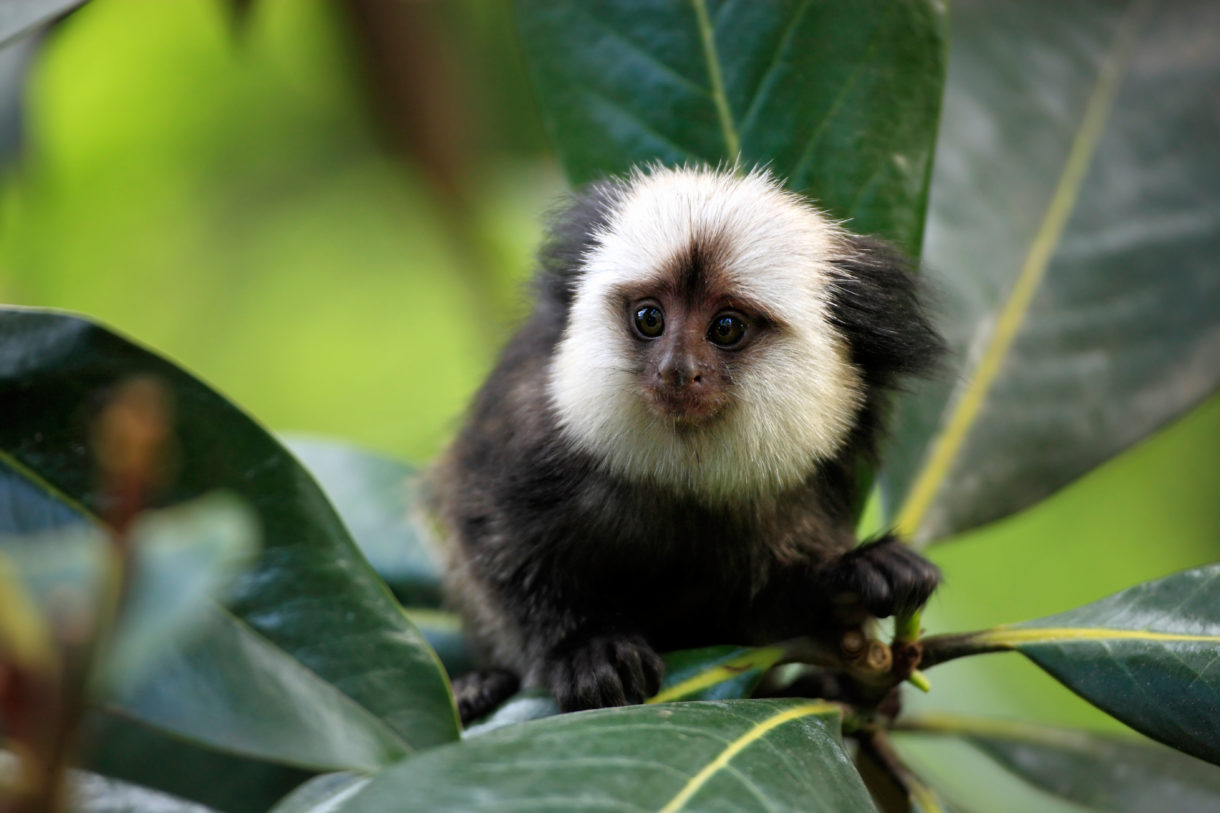
In order to be sold as pets, infant monkeys are pulled from their mothers for sale to the pet trade. Photo by Picture Press/Alamy Stock Photo
A backyard breeder of primates who has been on our radar for years was in the news this week for an incident that defies all common sense. Michael Poggi, who runs his operation from his home in Florida, charged a man $150 in August for a “full contact experience” with an adult leopard in his possession. According to an investigative report by Florida officials, Poggi agreed to let the victim, Dwight Turner, go inside the leopard’s cage to “play with it, rub its belly and take pictures.” The leopard attacked Turner, biting him on the head and the ear.
Turner underwent multiple surgeries for his critical injuries. Poggi was charged by the state of Florida with a misdemeanor for keeping wildlife in an unsafe condition and for allowing full contact with an extremely dangerous animal.
Our wildlife team began tracking Poggi years ago because of his backyard primate breeding business. While this aspect escaped the attention of the media reporting on the leopard incident, it is just as concerning because of the public safety and animal welfare problems involved.
In order to be sold as pets, infant monkeys are pulled from their mothers for sale to the pet trade. Poggi advertises baby marmosets on the internet for prices as high as $5,900, with “financing available”. Records show that in 2014, Poggi sold a six-week-old marmoset monkey to a Massachusetts couple for $3,500. A year later, the monkey was confiscated by the Massachusetts Department of Fish and Game because keeping a pet monkey in the state is illegal.
Poggi also offers close encounters with wild animals as well as takes animals off-site to birthday parties and other events.
As cute as they are, primates like marmosets and capuchin monkeys are not pets. Even the smallest primates are incredibly strong and can inflict serious injuries with their teeth and nails, including puncture wounds, severe lacerations and infections. Experts also agree that keeping primates can be extremely traumatic to the animals. Marmosets, for instance, like all primates, are intelligent and emotionally complex animals who need to be with their mothers for an appropriate amount of time and around their own kind to develop normally.
As veterinarian Kevin Wright, director of conservation, science and sanctuary at the Phoenix Zoo in Arizona points out, when kept in homes, primates are almost certain to become mentally disturbed. “The animal will never be able to fit in any other home. Never learn how to get along with other monkeys. And, more often than not, will end up with a lot of behavioral traits that are self-destructive.”
We have seen first-hand the suffering primates endure in captivity. Many of the primates at our Cleveland Amory Black Beauty Ranch have been rescued from the exotic pet trade, including Willie, a pig tailed macaque, and Jackie, a capuchin monkey. Jackie had been a pet for 20 years and was living in a large bird cage in someone’s home for much of her life when she was seized by Louisiana authorities. Willie came to us 20 years ago after he bit his owner.
There have been 540 documented safety incidents involving captive primates in the United States since 1990, and more than half have been attributed to primates kept as pets. Zoonotic diseases – caused by germs that spread between people and animals – are also a concern. Human cold sores, according to Wright, can kill smaller monkeys like marmosets and tamarins. Macaques can carry herpes B, a potentially fatal virus to humans, infecting them through bites or scratches.
Approximately 25 states now prohibit keeping some or all primate species as pets, but these laws have limitations. Primates continue to be easily available from backyard breeders like Poggi and on the internet, so anyone who wants to keep a monkey as a pet can easily buy one.
The Humane Society of the United States and the Humane Society Legislative Fund are supporting bills in Congress that would stop the exploitation of primates and big cats. The Captive Primate Safety Act, S. 2562/H.R. 1776, would make it difficult for individuals not qualified to handle primates to buy and keep them as pets. The bill, introduced by Sen. Richard Blumenthal, D-Conn., and Reps. Earl Blumenauer, D-Ore., and Brian Fitzpatrick, R-Pa., would prohibit the interstate and foreign commerce of these animals for the exotic pet trade. It would not impact zoos, universities or wildlife sanctuaries. The Big Cat Public Safety Act, S. 2561/H.R. 1380, introduced by Sen. Blumenthal and Reps. Mike Quigley, D-Ill., and Rep. Brian Fitzpatrick, R-Pa., would ban the possession of big cat species like tigers, lions and leopards by unqualified individuals, and it would prohibit poorly run animal exhibitions from allowing public contact with big cats.
Please contact your members of Congress and urge them to pass these bills, ending the suffering of thousands of primates and big cats across the United States who are now in the hands of people who should never be allowed to have them.
Sara Amundson is president of the Humane Society Legislative Fund.
Rock legend Ted Nugent appears in a new video urging Colorado voters to reject Proposition 114 on their ballots this year.Courtesy of the Stop the Wolf PAC
North Carolina, Florida and Ohio are key bellwethers in determining the election outcome between President Donald Trump and Democrat Joe Biden, according to GOP pollster Frank Luntz.
“If Donald Trump wins all three of them, he’s going to be in this,” Luntz told CNBC on Election Day.
However, Luntz said Tuesday that “if Biden wins even one of those three, it’s Biden’s presidency.”
WATCH NOWVIDEO05:52GOP pollster explains how swing voters feel heading into Election Day
Longtime GOP pollster and political strategist Frank Luntz told CNBC on Tuesday he will be closely watching the results in North Carolina, Florida and Ohio, describing the trio of states as key bellwethers in determining theelectionoutcome between PresidentDonald Trumpand Democratic nomineeJoe Biden.close dialogEveryone will cover the electionWe cover what it means
President Donald Trump criticized the FBI on Sunday for announcing an investigation into some of his supporters in Texas for harassing and endangering the lives of passengers on a Joe Biden campaign bus last week — an action that may have been inspired in part by the president’s own son just a couple of days prior.
Video on social media showed motorists, many with Trump 2020 flags or other insignia demonstrating their support for the president, surrounding a Biden for president campaign bus on a Texas interstate highway on Friday. The drivers shouted profanities toward the bus riders and attempted to slow the bus down to a complete stop.
The bus ended up slowing to 20 miles per hour at one point on the highway. Other videos shared online revealed more violent behavior, including a Trump-aligned pickup truck appearing to ram itself into the side of a vehicle that was escorting the Biden bus.
Uncompromised, uncompromising news
Get reliable, independent news and commentary delivered to your inbox every day.
After the video appeared on social media, the president tweeted out his support for his supporters who surrounded the bus, displaying an edited video that omitted their more violent acts. “I LOVE TEXAS!” Trump said on Twitter Saturday.
Later, the FBI announced that it was looking into the matter.
“FBI San Antonio is aware of the incident and investigating,” FBI spokesperson Michelle Lee said to CNN.
The announcement prompted the president to complain on Sunday about the fact that an inquiry into his violent supporters had been opened.
“In my opinion, these patriots did nothing wrong,” Trump said, suggesting that the FBI should look into antifa instead.
At several points during his presidency, Trump has used his bully pulpit to criticize a number of institutions, including political opponents and the media, in a manner that has oftentimes inspired his backers to act violently. It’s possible, however, that this time around, Trump’s son, Donald Trump Jr., inspired his father’s supporters to behave maliciously.
Days before the apparent attack on the Biden bus took place, Trump Jr. shared a video message to the president’s supporters in Texas, encouraging them to harass a planned event involving Biden’s vice presidential running-mate, Kamala Harris.
“Get out there, have some fun. Get out there, guys,” he added.
Harris or Biden were not onboard the bus during the apparent attack, but Democratic candidates running in local races were riding on it, including former state lawmaker Wendy Davis, who is running for a U.S. House seat in Texas. After the dangerous provocation on the highway unfolded, Davis and others on the bus canceled their planned campaign event due to safety concerns.
The current coronavirus pandemic is at the forefront of people’s minds at the moment; with about 30 million people testing positive around the world and around one million deaths.
Just over a century ago, as men returned from fighting in the First World War they carried with them a particularly virulent form of flu, known as Spanish Flu. It is estimated that, worldwide, 500 million people (a third of the, then, world population) caught it and up to 70 million people died – with India alone suffering 16 million deaths, and the USA suffering 675,000 deaths. In the UK it is estimated that 250,000 people died.
A comparable death rate has not been observed during any of the known flu seasons or pandemics that have occurred either prior to or following the 1918 pandemic, including coronavirus. It was the most recent severe pandemic historically…
A sense of despair and outrage among young people over global heating is being met with indifference and dismissal among some older relativesSupported byAbout this content
Young people at the DC Climate Strike March in Washington DC, on 20 September 2019 as they become more active around the perils of the climate crisis. Photograph: Michael Reynolds/EPA
The climate crisis lingers in the back of Gemma Gutierrez’s mind, a gnawing anxiety that blossoms fully when she reads about wildfires, flooding or other climate-related disasters. It’s a nagging concern that clouds how the 16-year-old sees her future.
“I have a sense of dread,” says Gutierrez, who lives with her parents in Milwaukee. “I dread that in my lifetime the clean water I have now or the parks I’m lucky enough to be able to go to won’t be there any more. It weighs on my mind.”
Like a growing number of young people in the US, Gutierrez sees climate change casting a long shadow over her adult years. She has been inspired by Greta Thunberg, the teenage climate activist, and has contacted her local elected representatives to raise her concerns.
The looming US presidential election has only sharpened her fears, as well as underlining a generational rift in her family. In a scenario playing out in many American families, a sense of despair and outrage among young people over global heating is being met with indifference and even dismissal among some of their older relatives.
Gemma Gutierrez: ‘I dread that in my lifetime the clean water I have now or the parks I’m lucky enough to be able to go to won’t be there any more.’ Photograph: Gemma Gutierrez
“The climate has always changed and what’s the bad part of it getting a bit warmer? I like warm days,” says Dennis Miller, Gutierrez’s maternal grandfather, who describes himself as a conservative and credits Donald Trump for building a strong economy before the Covid-19 pandemic hit.
Miller, a former Exxon employee who lives in North Carolina, believes that his granddaughter has been misled over climate change. (Scientists are unequivocal that the climate is changing with human activity the primary cause.) “Youngsters are youngsters,” Miller says. “Kids go with the crowd and everyone is talking about climate change. They have to get a bit older and learn a little more.”
Gutierrez plans to write a letter to her grandparents to explain her distress, although she is mindful that previous conversations about climate change have become fractious. “I would try to speak to my grandmother but the conversation automatically gets very heated,” she says. “She will get very defensive and say hurtful things. What the president says is very authoritative to her. I feel [older people] are voting against the better interests of our climate and I want them to see a different perspective. I think I would be doing the world a disservice by not trying.”
I want older people to see a different perspective. I would be doing the world a disservice by not trying
Advertisement
While polling shows a clear majority of Americans accept that the climate is changing and want the federal government to respond to the myriad threats this poses, the issue has been polarized in the US to extremes not seen in other leading democracies.
An ideological aversion among Republicans to accept climate science and act against fossil fuel interests has led to two starkly different visions laid out by the 2020 presidential candidates. While Trump has rolled back dozens of pollution regulations, dismissed and sidelined climate science and pulled the US from the Paris climate accords, Joe Biden is pushing a $2tn plan to create a 100% clean energy grid within 15 years, and has called the climate crisis “an existential threat” to the US.
But a generational divide is also opening up, with younger people – even young conservatives – increasingly alarmed over the impact of global heating. An overwhelming 80% of voters aged between 18 and 29 consider the climate crisis “a major threat to life on Earth”, according to a poll taken earlier this year. Levels of concern among older people, particularly Republican voters, lag significantly.
“I can see a really clear generational split,” says Lily Jarosz, a 17-year-old who lives near Pittsburgh. Jarosz says her parents are “apolitical Gen X-ers” while her grandmother is openly hostile when she raises the subject of climate change.“She’s said to me multiple times ‘why does it matter?’ That hurts me so much, like she doesn’t care about me or understand the immediacy of the issue,” says Jarosz.
“Climate change is visceral for young people,” says Kathryn Stevenson, an academic at NC State University who has studied how educating children on climate change raises the level of concern among their parents. “They can see this coming down on them in their future.”
Stevenson says it is important to confront the issue at home, as well as school. “Simple conversations at home seem to be having an impact upon parents,” she says. “It’s hard to look a kid in the face and ignore them when they are talking about their future.”
Anisa Nanavati with her family members. Photograph: Courtesy Anisa Nanavati
Some of these exchanges can be fraught, however. Anisa Nanavati, who is 16, learned about climate change in school, which she says helped her connect the dots to her experiences of scorching heatwaves and hiding under the staircase when Hurricane Irma menaced her home town of Tampa, Florida, in 2017. “Not only me but a lot of my friends are experiencing a sort of climate anxiety,” Nanavati says. “It’s crazy to me that parts of my city will become unlivable. It’s hard to digest.”Advertisement
Nanavati was stunned when her conservative uncle told her he didn’t believe in climate change, leading to a two-hour debate at the kitchen table. “I said to him I wasn’t going to leave until he got the scientific facts of this,” she says. “I also mentioned his daughter and that her future is at stake, which is one of the moments that changed things with him a bit. We ended the conversation amicably.”
Anand Shah, the uncle, says that he does in fact accept the science of climate change. However, he believes that ““Anisa, because she’s young, wants to make drastic changes now that won’t work in the long run. In a realistic world, that doesn’t happen.”
Nanavati says she wants her own family in the future but questions if that will be sensible amid a collapsing environment. “If you just think ‘I won’t be around then, I’ll just won’t care and take the lower taxes’ then I think that’s quite selfish,” she says. Trump, Nanavati adds, is a “threat to everything I love and everyone close to me.”
Following a plant-based diet is becoming increasingly popular. While this is widely regarded as a healthful choice, many myths abound. In this edition of Medical Myths, we dig into the details.
Until fairly recently, vegetarianism was generally considered a fringe lifestyle choice in the United States, and veganism even more so. Anything on the fringes of society tends to inadvertently encourage myths and misconceptions.
Also, deciding to avoid animal products sparks rage in some people. This anger manifests for a range of reasons, which are beyond the scope of this article and discussed in full here. Suffice it to say that if a sizable group of the population is against something, conditions are ripe for myths and half-truths.
Overall, vegetarianism and veganism are misunderstood. As today is World Vegan Day, it seems an appropriate time to address some of the most common myths.
In recent decades, an increasing number of studies have demonstrated links between red meat consumption and poorer health outcomes. For instance, processed and red meat intake is associated with colon cancer, obesity, heart disease, and diabetes.
This might suggest that a diet without meat is better for the body. But, just as not all meat is red, not all vegetarian or vegan diets are healthful.
To use an extreme example, if an individual only ate potato chips, they would be vegan, but certainly not brimming with vitality, energy, and health.
As with any other diet, it depends entirely on what an individual consumes.
Additionally, lean white meat and fish are not associated with the same health issues as processed and red meats.
And certain meat substitute products can be high in salt. In 2018, Action on Salt, a “group concerned with salt and its effects on health,” carried out a survey of meat substitutes.
They investigated products from several major retailers in the United Kingdom. When they looked at burgers, they found that the average salt content of beef burgers was 0.75 grams (g), compared with 0.89 g for vegetarian burgers, including bean burgers. According to their findings, a veggie burger has “more salt than a large portion of McDonald’s fries.”
Sadly, no. As the section above makes clear, not all vegetarian and vegan diets are equally healthful. It is incredibly easy to consume thousands of calories each day without any of them being associated with animals.
The key to weight loss is a healthful diet and regular exercise, and neither requires the avoidance of animal products.
It is still worth noting, though, the evidence that following a plant-based diet is associated with weight loss. For instance, a review published in Translational Psychiatry explains:
“We found robust evidence for short- to moderate-term beneficial effects of plant-based diets versus conventional diets […] on weight status, energy metabolism, and systemic inflammation.”
This finding held true for healthy participants, people with obesity, and individuals with type 2 diabetes.
To give another example, another review, published in BMJ Open Diabetes Research and Care, looked at the impact of plant-based diets on people with diabetes. Among other benefits, the authors found that these diets were associated with a “significant improvement” in weight.
This is perhaps the most common of all the myths that we cover today. But it is still a myth. In the world of food, protein abounds.
For people who eat them, dairy products and eggs are high in protein. Vegans also have an array of options, including seitan, tofu, lentils, chickpeas, many types of bean, spelt, spirulina, quinoa, oats, wild rice, seeds, and nuts.
Even some vegetables contain protein, including spinach, asparagus, broccoli, artichokes, potatoes, peas, brussels sprouts, and sweet potatoes.
This myth follows on from the protein myth above. In short, the most important nutrient for building muscle is protein, which can easily be found in abundance beyond the animal kingdom.
Dairy is not essential for strong bones, but calcium is. In fact, calcium is important for a number of bodily functions, including maintaining blood pressure, muscle contraction, transmitting signals along nerves, and blood clotting.
Vegans, therefore, need to ensure that they take in enough calcium from plant-based sources.
As with protein, there are plenty of places to pick up calcium, including soy-based foods, beans, lentils, peas, spinach, turnips, figs, flax, chia, sesame seeds, seaweed, and some nuts — almonds, in particular.MEDICAL NEWS TODAY NEWSLETTERStay in the know. Get our free daily newsletter
Expect in-depth, science-backed toplines of our best stories every day. Tap in and keep your curiosity satisfied.Enter your emailSIGN UP NOW
This is a myth. While vegans often take B12 supplements to ensure that they have adequate levels, vegetarians have a wealth of other options.
Vegetarians can derive B12 from eggs and milk products, including cheese.
Meanwhile, a range of vegan-friendly foods are fortified with B12, including some cereals, tofu, nondairy milks, and spreads.
B12: An interesting aside
Cows need B12, too, and they rely on gut bacteria to produce it.
To produce B12, gut bacteria need cobalt, which a cow normally derives from grazing. However, many cows destined to become meat rarely, if ever, spend time in pastures and instead tend to be fed on grain.
Because of this unnatural diet, their gut bacteria are starved of cobalt and cannot produce B12.
But the cow still needs B12 to thrive, so farmers must provide them with either cobalt or B12 supplements.
So even a staunch, dyed-in-the-wool red meat fanatic is likely to derive their B12 from supplements — but in their case, it’s via a cow.
As it stands, there is no convincing evidence that eating soy-based foods increases the risk of breast cancer in humans.
This misunderstanding might stem from earlier studies in rodents. Scientists showed that when these animals received large amounts of soy compounds called isoflavones, they were more likely to develop breast cancer. However, humans process soy differently from rodents.
A study published in February 2020 searched for associations between soy, dairy intake, and breast cancer risk. The scientists had followed 52,795 cancer-free women in the U.S. for an average of 7.9 years.
They found no clear association between soy intake and breast cancer, but they did identify a link between dairy milk and breast cancer.
However, the full picture is, perhaps, slightly more complex. Some women use soy-based supplements as a natural alternative to hormone therapy during menopause. One large study investigated whether these supplements might be associated with breast cancer risk.
The researchers found “no association between past use of soy supplements and breast cancer.” But, they also found that taking soy supplements, for some women, might increase the risk of breast cancer, particularly for those with a family history.
“The evidence does not point to any dangers from eating soy in people, and the health benefits appear to outweigh any potential risk. In fact, there is growing evidence that eating traditional soy foods […] may lower the risk of breast cancer, especially among Asian women.”
During pregnancy, it is important to take in all the nutrients that a growing baby needs. But, as we have seen along the way, plant-based foods can provide the vast majority of them.
Someone who is vegetarian or vegan may need to do a little extra planning to be sure that have enough nutrients, especially at the beginning of pregnancy.
As we mentioned above, it is important to ensure an adequate intake of vitamin B12, through supplements or fortified foods, and this is especially true during pregnancy and breastfeeding. The American Dietetic Association recommend vitamin B12 supplementation throughout pregnancy and breastfeeding for people with vegan or vegetarian diets.
As the authors of a review of research about plant-based diets during pregnancy explain, “The available evidence shows that well-planned vegetarian and vegan diets may be considered safe during pregnancy and lactation, but they require a strong awareness for a balanced intake of key nutrients.”
For people considering plant-based diets, Medical News Today have published useful guides to vegetarian and vegan eating. For anyone with a preexisting condition, it might also be worth discussing the change with a doctor.