Thu 22 Oct 2020 04.58 EDTLast modified on Thu 22 Oct 2020 04.59 EDT
Shares37
Joe Biden is leading Donald Trump in the national polls for the presidential election.
But that doesn’t guarantee the Democratic candidate victory. Hillary Clinton also had a clear lead over Trump in the polls for almost the entire 2016 campaign. She ended up losing in the electoral college.
Each day, the Guardian’s poll tracker takes a rolling 14-day average of the polls in eight swing states.
In order to track how the race is developing in the areas that could decide the election, six of the eight states we focused on were those that flipped to Trump in 2016 after backing Barack Obama in 2012. Arizona and North Carolina were also added due to what they might tell us about a shifting electoral landscape – they could emerge as vital new swing states this year.
We must caution that the polls – particularly some swing state polls – severely undercounted Trump supporters in 2016. We are not certain, despite assurances, that they they have corrected this. Additionally, they may be over-counting Democratic support (more people may say they will vote for Biden than actually turn out).
We present the latest polls with those caveats to be borne in mind.
The national polls
Advertisement
The latest polling average puts Biden ahead of Trump nationally.
While the national poll tracker is a poor indicator of how the crucial swing states will sway the election, a strong polling lead across the country can point to how the race will develop.
Each day, the Guardian’s national poll tracker takes a 14-day average of national voting intention polls.
On Tuesday 3 November 2020, Americans will vote for their next president, with a choice between Donald Trump, the Republican incumbent, or his Democratic challenger, Joe Biden.
Methodology
The Guardian poll tracker tracks the latest polls in eight crucial swing states. For Biden to win, he needs to reclaim some of these swing states.
The Guardian is collating polls in each of these states, as well as another set of national polls. Any polls deemed unreliable – for example, because they have small sample sizes – are excluded.
Our polling average is a 14-day rolling average: on any day, we collate any polls published in the last 14 days and take a mean average of their results.
If any company has conducted multiple polls in the last 14 days, we average out their polling results in order to give them just one entry. After this standardization process, we take a mean average of these daily entries to present the polling average.
Thu 22 Oct 202006.26EDTLast modified on Thu 22 Oct 202009.19EDT
Climate change is pushing warmer Atlantic currents into the Arctic and breaking up the usual stratification between warm deep waters and the cool surface. This also makes it difficult for ice to form. Photograph: Alamy Stock Photo
For the first time since records began, the main nursery ofArcticsea ice in Siberia has yet to start freezing in late October.
The delayed annual freeze in the Laptev Sea has been caused by freakishly protracted warmth in northernRussiaand the intrusion of Atlantic waters, say climate scientists who warn of possible knock-on effects across the polar region.
Ocean temperatures in the area recently climbed to more than 5C above average, followinga record breaking heatwaveand the unusually…
While car crashes involving deer can happen anytime of the year, the fall is when car-deer accidents tend to reach their peak, according to a news release from the Kansas Department of Transportation.
And the Leavenworth County Sheriff’s Office has seen a small increase recently in car-deer crashes.
“We’ve had a slight uptick,” Undersheriff Jim Sherley said.
State officials blame the increase in car-deer accidents this time of year on the “rut,” or deer mating season which causes the animals to frequently be on the move.
Sherley said farming activity also can cause deer to move from fields.
“Hunting season will also drive the deer back and forth across roadways,” he said.
The fact that days are getting shorter, in terms of daylight, increases the risk of encountering deer on roadways in low light conditions, Sherley said.
Protesters gather at Boston City Hall and march through downtown to demand immediate action for climate justice in Boston, Massachusetts, on October 15, 2020.
The pandemic crisis has exacerbated existing inequalities and has been an abject lesson in what happens when nations don’t prepare in advance for catastrophe. It has also led many to draw the comparison between this health crisis and the ongoing climate crisis — and the growing and urgent need to tackle climate change now before it spirals out of control.
The U.S., which continues to lead the world in COVID-19 infections, has taken the opposite approach — rolling back environmental protections, includingmanyduring the pandemic, givingtax breaksto polluters and withdrawing from the…
The Department of the Interior has reopened the comment period on a proposed another rule to overturn the prior administration’s rule that barred baiting of brown bears on two million acres of public lands in the state’s Kenai National Wildlife Refuge.Photo by Dacia Doroff/iStock.com212SHARES
With aproposal to permit the killing of brown bearsover bait in the Kenai National Wildlife Refuge, the U.S. Fish and Wildlife Service (USFWS) has “gone rogue.” The USFWS and its parent agency, the Department of the Interior, are way over on the dark side when it comes to the killing of charismatic wildlife by America’s trophy hunters.
A public comment period has reopened on the USFWS proposal to allow trophy hunters to lure Kenai’s brown bears to their deaths with rotting piles of pastries and donuts. This plan also attempts to…
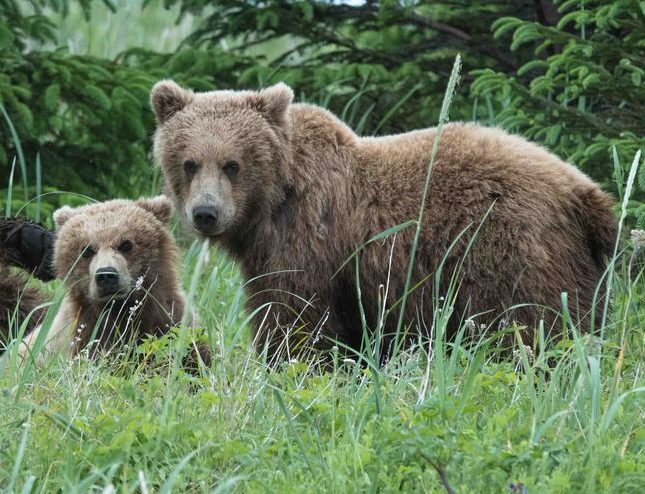
The Department of the Interior has reopened the comment period on a proposed another rule to overturn the prior administration’s rule that barred baiting of brown bears on two million acres of public lands in the state’s Kenai National Wildlife Refuge. Photo by Dacia Doroff/iStock.com212SHARES
With a proposal to permit the killing of brown bears over bait in the Kenai National Wildlife Refuge, the U.S. Fish and Wildlife Service (USFWS) has “gone rogue.” The USFWS and its parent agency, the Department of the Interior, are way over on the dark side when it comes to the killing of charismatic wildlife by America’s trophy hunters.
A public comment period has reopened on the USFWS proposal to allow trophy hunters to lure Kenai’s brown bears to their deaths with rotting piles of pastries and donuts. This plan also attempts to overturn the ban on brown bear baiting that we and other groups are currently in federal court defending.
The USFWS proposal would also remove a requirement for federal trapping permits that prohibit the use of steel-jawed leghold traps with serrated or spiked jaws, ban the setting of traps within one mile of public roads, and require periodic trap checks to ensure that a trapped animal is not left to suffer for weeks on end.
You would think that Kenai, as a “national wildlife refuge,” would be managed as a place where America’s native wildlife would be safe and protected, not persecuted and killed for fun and trophy parts.
The situation is still worse when you consider that bear baiting is dangerous for people as well. Bait piles can habituate bears to human scents at campgrounds, picnic areas and trails, increasing the likelihood of bear-human encounters at these sites. Who needs that kind of reckless management from a government agency?
The only people who want to see this proposal go through are trophy hunters who kill animals for souvenirs. Most Americans do not support or approve of such needless killing. Brown bears, especially, are a much beloved and a major tourist draw for Alaska. During this month’s “ Fat Bear Week,” hundreds of thousands of Americans watched online as bears in the Katmai National Park stuffed themselves the natural way before going into hibernation for winter. More than 600,000 enthralled fans voted for their favorite chunky bruin (and congratulations to 747 on your win!). Needless to say, rotting donuts were not on the menu.
When the USFWS first proposed this rule last June, at about the same time that the agency finalized another terrible rule authorizing some of the cruelest killing practices known to humankind on Alaska’s federal lands, more than 30,000 of you wrote to voice your opposition.
With a new comment period, we have another opportunity to make sure that this agency-gone-rogue hears from many more Americans about the kind of management they want for federally owned lands that are home to charismatic wildlife species. Please let the USFWS know where you stand on this issue before the comment period closes on November 9 and do spread the word among your friends.
The USFWS has also scheduled a virtual public hearing on the proposed rule for October 26 at 4:00 pm Alaska Daylight Time (8:00 pm EST), and you may wish to join that. Let’s take that extra step together, to send the message loud and clear that Americans do not approve of the wanton killing of brown bears by such debased methods and for such frivolous purposes.
Pressure from Wildlife Protection Organizations Results in Felony and Misdemeanor Charges
LOS ANGELES, CA—A thorough investigation and sustained pressure from California-based Project Coyote, along with support from PETA, have resulted in Los Angeles District Attorney Jackie Lacey filing two criminal charges against Richard Wallem. The District Attorney found that Mr. Wallem committed felony animal cruelty and misdemeanor use of an illegal trap when he trapped a coyote pup in the Valley Village neighborhood adjacent to North Hollywood on the Fourth of July weekend this year, then failed to check the illegal leghold trap for over 24 hours.
Avideo released on Project Coyote’s YouTube pageshows in graphic and tragic detail the coyote pup struggling desperately to get free of the trap in the brutal summer heat. Despite the help of a local teen who discovered the terrible scene after hearing cries of distress, the unfortunate young coyote suffered irreparable…
Updated 6:59 AM ET, Tue October 20, 2020Seven people were arrested in a flying squirrel trafficking operation.
(CNN)At least seven people have been arrested and charged in an “elaborate organized enterprise” to smuggle Florida’s flying squirrels — protected wildlife in the state — and sell them, investigators announced Monday.Up to 10,000 traps were set up across the state to capture the flying squirrels and as many as 3,600 of the animals were shipped overseas within three years “to be sold as exotic pets for hundreds of thousands of dollars,” the Florida Fish and Wildlife Conservation Commission (FWC) said in a news release.
Wildlife Photographer of the Year winners revealed, with tiger image scooping top prizeThe investigation started last year after the commission received an anonymous tip about people illegally trapping flying squirrels in one Florida county, the release said. The animals were illegally captured by poachers across several counties and sold to a dealer. The animals were then laundered through the business of the dealer, “who claimed they were captive bred,” the commission said.Officials said buyers would travel from South Korea to purchase the flying squirrels from the dealer, and the animals would then be driven to other parts of the country before being exported to Asia.Content by Trend MicroThis service keeps your computer running smoothlyThe internet really has opened up a whole new world. Literally. Anytime you open up your laptop, you have an entire globe’s worth of information at your fingertips.Investigators also learned the Florida suspects trafficked other animals as well, including protected freshwater turtles and alligators, the commission said.
Millions of wild animals are killed or injured unintentionally each year in the US. Here’s how you can help“Wildlife conservation laws protect Florida’s precious natural resources from abuse. The concerned citizen who initially reported this activity started an investigation that uncovered a major smuggling operation,” Maj. Grant Burton, FWC Investigation’s section leader, said in a statement.“These poachers could have severely damaged Florida’s wildlife populations.”More arrests are expected, officials said.
The elk are a main attraction in Point Reyes National Seashore, north of San Francisco. But ranchers who share the park say the elks’ numbers create problems.
Known for its seaside bluffs and dense summer fog, Point Reyes National Seashore is a landscape of rolling coastal prairie blending into forests and marshlands, a sanctuary for hundreds of plants and animals and a destination for migrating birds and marine life.
Just a one-hour drive from San Francisco, the 71,000-acre peninsula serves as a haven for native California species like snowy plovers, red-legged frogs, coho salmon and tule elk.
The tule elk are one of the primary attractions of the park, which sees over 2 million visitors annually, and they can be easy to spot in the zones where they’re preserved.
The elks’ beauty and majesty is hard to miss; one frequent visitor to the park described their strange, high-pitched bugle as “otherworldly.” Once on the brink of extinction, tule elk were reintroduced into Point Reyes in 1978. Now, hundreds of elk live in three herds throughout the park.
But Point Reyes is also home to about 20 ranches that have operated in the park since the mid-1800s. And the tule elk are at the center of a major battle between ranchers, who say the elk are overpopulated and disruptive to their operations, and animal and environmental activists, who think that ranching has degraded the land, leaving it to resemble a “lunar landscape,” as one activist said. The park, the activists argue, should prohibit ranching and preserve the land entirely as wilderness to protect the elk and other species.
Tule elk were reintroduced into Point Reyes National Seashore in 1978, and now exist in three distinct herds in the park. Credit: Julia Kane/InsideClimate News
Conflict between ranchers and environmentalists is not uncommon in the West, where wildlife and agriculture often collide. Wild horses in Utah compete with cattle for resources; black-tailed prairie dogs in Wyoming are shot and poisoned by ranchers who consider them “pests”; and wolves, reintroduced in western states in the 1980s, are often blamed by ranchers for killing livestock.
The tule elk in Point Reyes have virtually no natural predators, so management of their population is left up to the National Park Service, which is in the process of implementing a wildlife management plan that includes killing elk in one of the three herds to control their numbers, a process known as culling.
One of the prime considerations for how to manage the tule elk is how their numbers affect the ranchers, who sold their land to the government when the park was established in 1962. Many stayed on the land and continued ranching under renewable five-year permits.
Environmental groups sued the National Park Service in 2016 for planning to extend leases for the ranchers from five to 20 years without analyzing the environmental impact, as required under the National Environmental Policy Act. The groups reached a settlement agreement in 2017 that required the park service to solicit public input and amend its 1980 general management plan with an Environmental Impact Statement before issuing any 20-year leases.
The park service considered six alternatives for its amended plan, ranging from eliminating ranching in the park altogether—an option favored in over 90 percent of the 7,600 public comments submitted to the agency—to the plan the park service says it prefers, which includes extending ranchers’ leases and limiting the population of the Drakes Beach herd of elk to 120 animals to prevent them from eating cattle feed, bothering cows and causing other disturbances. If the population were to exceed 120, the park service would begin culling. At the end of 2019, there were 138 tule elk in the Drakes Beach population.
On Sept. 18, 2020, the park service released its final Environmental Impact Statement, officially announcing its decision to go with its preferred option. That initiated a 30-day waiting period for the park service to conduct its final consultations with other agencies. That period ends on Sunday, after which a “Record of Decision” can be issued, finalizing the amended management plan and allowing leases to be extended and culling to begin.
A Serengeti of Wildlife
Wildlife biologist and California Director at Western Watersheds Project Laura Cunningham likes to picture what the Point Reyes peninsula might have been like 500 years ago: filled with huge herds of tule elk grazing on lush green coastal prairies while coho salmon swam in the creeks and pods of whales passed by off the coast.
“I imagine it as a place of just riches of biodiversity,” she said. “It must have been just a Serengeti of wildlife.”
Tule elk are a native species in California found nowhere else in the world. Credit: Julie Kane/InsideClimate News
In the late 1800s, tule elk were thought to no longer exist, hunted into extinction by settlers. But in 1874, a rancher discovered a herd of fewer than 30 tule elk on his land near Bakersfield, California. The herd was preserved, and now 5,700 tule elk live in about 22 herds around the state.
In 1978, 10 tule elk were introduced into Point Reyes National Seashore, fenced in at Tomales Point on the northernmost end of the peninsula to keep them off ranches. Twenty years later, 28 elk from the Tomales Point herd were relocated to Limantour Beach, about 20 miles south of Tomales Point on the east side of Drakes Estero, a large estuary in the center of the peninsula, establishing a second, free-ranging herd. From there, several of the elk migrated to Drakes Beach, on the west side of Drakes Estero, where a third herd of tule elk in Point Reyes now live.
The 2020 Environmental Impact Statement addresses how to manage the Limantour Beach and Drakes Beach herds, including the Drakes Beach culling plan.
The National Park Service looked into moving the elk somewhere else before settling on a lethal solution for reducing the population, said Melanie Gunn, park service outreach coordinator for Point Reyes National Seashore. The park service considered relocating individuals from the Drakes Beach herd to somewhere outside of Point Reyes, but tule elk within the park are known to have Johne’s Disease—a highly contagious and fatal bacterial infection that occurs among ruminant animals. The symptoms of the disease often do not appear until several months after an animal is infected. The elk could not be relocated without risking the spread of the disease to herds outside the park. Tule elk may have caught the disease from cattle in Point Reyes, and they can only be effectively tested for it after death.
When culling does begin—and it will, unless the Record of Decision does not come through—it will be conducted by the National Park Service and other conservation officials to ensure that genetic diversity and sex ratio are taken into account when selecting which indivudal elk to kill, especially considering the entire population descended from fewer than 30 individuals.
“It will be specific, not random,” Gunn said.
Elk Trouble
Driving through the ranching district—22,000 acres designated as a national historic district on the National Register of Historic Places—the smell of cow feces is distinctive. In some parts of the park during mid-October, scrub grass coats the landscape in a golden brown color; in other parts, hundreds of cattle stand on muddy land devoid of much vegetation.
Ranchers operate in the park under one of two types of leasing agreements: a special permit that limits their tenancy to five years, or a so-called reservation of use and occupancy, which gives ranchers use of the land for up to 25 years or, in some cases, for as long as the rancher is alive.
Bill Niman, who operates a beef ranch with about 300 cattle at the southern end of Point Reyes, has a lease that extends for the rest of his life. The deal is similar to ownership, in that he pays property taxes and maintains his facilities, but has some restrictions; for example, he can’t sell the property.
Bill Niman operates a regenerative beef ranch of about 300 cattle in the south end of Point Reyes. Credit: Julie Kane/InsideClimate News
Niman and his wife Nicolette Hahn Niman, a former environmental lawyer and the author of a book defending small-scale, grass-fed beef farms, practice rotational grazing on their land. The couple move their cattle from one patch of land to another to allow time for the land to rest between grazing periods. This keeps the landscape full of diverse plants and helps the soil sequester carbon, they said.
“What we’re trying to do is mirror nature and manage the land in the way that nature would if humans were not interfering,” Niman said.
Located just north of Bolinas on the south end of the park, far from any tule elk herd, Hahn Niman said they don’t have an issue with elk on their ranch, thanks to park management.
But on some ranches, elk consume grass and supplemental cattle feed, like hay and alfalfa. Some ranchers have reported elk eating this supplemental food, but “it has not yet been identified as a significant or widespread problem,” the final Environmental Impact Statement said.
And Hahn Niman said she has heard about cases of elk creating more serious disturbance, with dozens of the animals entering barns and eating cattle feed, or acting aggressively toward cows. She spoke publicly on behalf of ranchers during the 2016 lawsuit.
“[Ranchers] have had a number of their heifers that have been injured or even had to be put down because they were mounted by large male tule elk,” Hahn Niman said. “It’s weird stuff like this that I didn’t understand until I talked directly with ranchers involved.”
She emphasized that ranchers love seeing tule elk and other wildlife in the park. Ranchers, she said, wanted the park to be established, and without the ranchers, the land, so near the Bay Area, would have instead been developed into prime real estate. But without wolves and bears and hardly any mountain lions, she said, the elk have to be managed and their population needs to be controlled.
“You don’t have the robust population of natural predators that once existed here; they’re almost entirely gone,” she said. “The only remaining predator really is the human.”
A Banned Volunteer
Diana Oppenheim volunteered for three years in Point Reyes National Seashore—a place she calls “literal magic.” She guided a monthly group that would start the day removing invasive species from the park’s sandy coastal dunes, and then led the group in a yoga class on the beach.
Oppenheim said she was shocked when she started to hear rumors that the National Park Service was planning to cull the Drakes Beach herd.
“I was a very heavily involved volunteer; I was there all the time and I didn’t know this was happening,” Oppenheim said. “There was a big lack of public awareness around this issue, and I felt like if people knew, we could change the course of what was going to happen.”
Diana Oppenheim (left) leads demonstrators in Point Reyes National Seashore. The group of nearly 300 protested the National Park Service’s plan to cull animals in the Drakes Beach tule elk herd. Courtesy of Diana Oppenheim
She started ForElk.org to increase awareness of the park service’s management plan, putting up tables at grocery stores and farmers’ markets and approaching visitors at the park. Soon, Oppenheim was organizing protests. In August 2019, the park service opened its 45-day public comment period.
As the momentum of the movement accelerated, Oppenheim also made her views clear on her social media accounts. The National Park Service, she said, asked her to remove all references to her working as a volunteer in Point Reyes, in order to protect the agency’s neutrality on the issue. When she refused, Oppenheim—once named the park’s “volunteer of the year”—was banned from volunteering in Point Reyes National Seashore, she said.
“That only fueled my fire,” Oppenheim added.
In late September, she and other activists in the Bay Area banded together to organize a demonstration. Nearly 300 people showed up to protest the culling plan and call for the ranches to be removed from the park.
“They’re going to actually kill these elk that have been brought back from extinction in order to appease these ranchers,” Oppenheim said.
A Crucial Role
The purpose of Point Reyes National Seashore—stated at the top of the legislation that created it—is to “save and preserve, for purposes of public recreation, benefit and inspiration” the undeveloped seashore.
Nowhere, activists say, does it mention the preservation of ranching. In fact, said Jack Gescheidt, an activist with the TreeSpirit Project, ranching is contradictory to the park’s purpose.
“You can either have large scale dairy and cattle operations in an area, or a national park,” he said, “you can’t have both.”
Gunn, however, disagreed. She said the park and the ranches have coexisted since the park’s establishment in 1962, and they will continue to do so.
In 2019, a congressional statement said multi-generational ranching is important economically and ecologically in Point Reyes and is “fully consistent with Congress’s intent for the management of Point Reyes National Seashore.”
Ranching, Gunn said, has been recognized by Congress as being “part of the fabric of Point Reyes National Seashore. It’s part of our responsibility to maintain.”
Hahn Niman said ranching can and should coexist with all wildlife in Point Reyes through regenerative practices.
“Ranching should be minimizing the use of chemicals and should be always attentive to mirroring natural systems,” she said, adding that ranchers should be “creating a vibrant space here for countless wild animals that are in fact living here.”
Tule elk nearly went extinct after they were hunted to just about 30 in the late 1800s. Now, thousands of elk live in about 22 herds throughout California. Credit: Julie Kane/InsideClimate News
Elk biologist Julie Phillips said that tule elk are a vital part of the Point Reyes ecosystem, and can be considered a keystone species, because plants in the ecosystem rely on them to disperse seeds and maintain the native environment.
Phillips—who is opposed to ranching in Point Reyes—said she has observed native grasses return and landscapes restored after tule elk have been reintroduced in other areas around California.
If cattle are removed from Point Reyes, Phillips said, tule elk “will help restore that degraded land, and the elk will play a critical role in bringing back native habitat.”
Unlike so many species that went extinct after European settlement, tule elk got a second chance at survival. In an era where climate change is threatening to demolish Earth’s ecosystems, Oppenheim said, a biological hotspot like Point Reyes should be easy to protect.
“We’re facing a severe loss of biodiversity on the planet,” Oppenheim said, and preservation “should be a no brainer in some of the most protected lands of the world.”
She added: “Point Reyes is a gem and should absolutely be protected and restored.”
North Dakota’s Game and Fish Department is offering license refunds to more than 9,000 deer hunters due to an outbreak of disease in western North Dakota.
State wildlife officials in August began documenting deer deaths due to epizootic hemorrhagic disease — commonly called EHD.
“Loss of deer to this disease appears to have extended into October and covers a large area of western North Dakota,” saidBruce Stillings, big game supervisor for the department.
Compiling hard data on case numbers is difficult because most of the evidence is anecdotal from landowners, but the department has received more than 100 reports, according to state Wildlife Chief Jeb Williams.
The agency is offering refunds to hunters with whitetail licenses in 12…




 Seven people were arrested in a flying squirrel trafficking operation.


