


(CNN)Arizona Democrat Rep. Raúl Grijalva has tested positive for coronavirus, his office confirmed Saturday.
View original post 310 more words
There’s a range of possibilities for how much the earth will warm. A new study narrows the likely window by the largest margin in decades.

The basic mechanics of climate change are simple: Carbon dioxide in the atmosphere traps heat. More carbon dioxide means more heat is trapped across the Earth, causing it to warm up.
But scaled up over the entire planet, these physical processes interact in a myriad of complex and sometimes unexpected ways. The Arctic reflects sunlight back into space. Clouds in some circumstances trap heat, and in others, they cool the region beneath them. Forests store a big chunk of carbon, but they’re being burned, cut down, and dying off from warming. The ocean soaks up a huge amount of heat and carbon…
View original post 1,860 more words
JULY 31, 2020
https://phys.org/news/2020-07-canadian-ice-caps-scientific.html
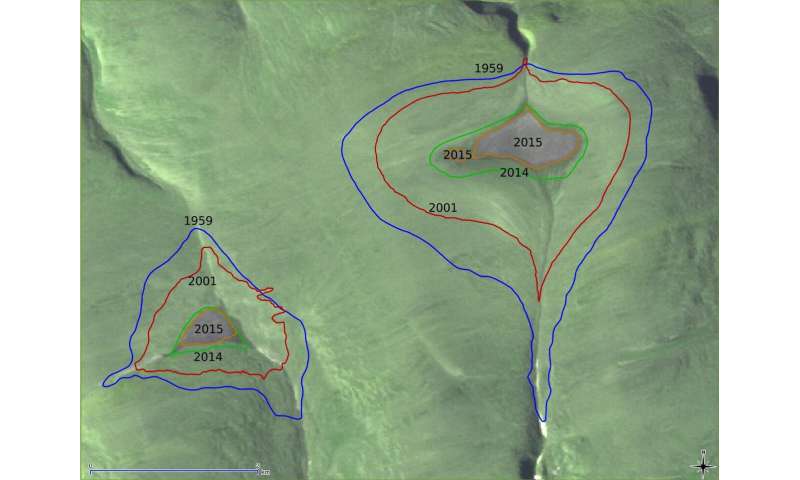
The St. Patrick Bay ice caps on the Hazen Plateau of northeastern Ellesmere Island in Nunavut, Canada, have disappeared, according to NASA satellite imagery. National Snow and Ice Data Center (NSIDC) scientists and colleagues predicted via a 2017 paper in The Cryosphere that the ice caps would melt out completely within the next five years, and recent images from NASA’s…
View original post 605 more words
The family role of the rooster is nowadays less well known to most people than the motherhood of the hen. The charm of seeing a rooster with his hens appears in Chaucer’s portrait of Chanticleer in The Canterbury Tales:
This cock had in his princely sway and measure
Seven hens to satisfy his every pleasure,
Who were his sisters and his sweethearts true,
Each wonderfully like him in her hue,
Of whom the fairest-feathered throat to see
Was fair Dame Partlet. Courteous was she,
Discreet, and always acted debonairly.

In ancient times, the rooster was esteemed for his sexual vigor; it is said that a healthy young rooster may mate as often as thirty or more times a day. The rooster thus figures in religious history as a symbol of divine fertility and the life force. In his own world of chickendom, the rooster – the cock – is a father, a lover, a brother, a food-finder, a guardian, and a sentinel.
Aldrovandi extolled the rooster’s domestic virtues:
He is for us the example of the best and truest father of a family. For he not only presents himself as a vigilant guardian of his little ones, and in the morning, at the proper time, invites us to our daily labor; but he sallies forth as the first, not only with his crowing, by which he shows what must be done, but he sweeps everything, explores and spies out everything.
Finding food, “he calls both hens and chicks together to eat it while he stands like a father and host at a banquet . . . inviting them to the feast, exercised by a single care, that they should have something to eat. Meanwhile he scurries about to find something nearby, and when he has found it, he calls his family again in a loud voice. They run to the spot. He stretches himself up, looks around for any danger that may be near, runs about the entire poultry yard, here and there plucking up a grain or two for himself without ceasing to invite the others to follow him.”
A nineteenth-century poultry keeper wrote to his friend that his Shanghai cock was “very attentive to his Hens, and exercises a most fatherly care over the Chicks in his yard. . . . He frequently would allow them to perch on his back, and in this manner carry them into the house, and then up the chicken ladder.”

A less happy ambivalence appeared in a soft-colored gray and white rooster I named Ruby when he was brought to our sanctuary as a young bird by a girl who swore he was a hen. Following me about the house on his brisk little legs, even sleeping beside me on my pillow at night, Ruby grew up to be a rooster. In spite of our close relationship during his first months of life, once he became sexually mature, Ruby’s attitude toward me changed.
In the yard with the other chickens, he showed no disposition to fight. He didn’t attack other birds or provoke antagonisms. He fit in with the existing flock of hens and roosters, but toward me and other people he became compulsively aggressive. As soon as I (or anyone) appeared in the yard, Ruby ran from wherever he was and physically attacked us. Having to work in the yard under his vigilant eye, I took to carrying a bottomless birdcage and placing it over him while I worked. When finished I would lift it off him and walk backward toward the gate with the birdcage in front of me as a shield.
What I saw taking place in Ruby was a conflict he couldn’t control, and from which he suffered emotionally, between an autonomous genetic impulse on the one hand, and his personal desire on the other to be friendly with me. He got to where when he saw me coming with the birdcage, he would walk right up and let me place it over him as if grateful for my protection against a behavior he didn’t want to carry out. Even more tellingly, he developed a syndrome of coughs and sneezes whenever I approached, symptomatic, I believed, of his inner turmoil. He didn’t have a respiratory infection, and despite his antagonism toward me, I never felt that he hated me but rather that he suffered from his dilemma, including his inability to manage it.
My personal experience with our sanctuary roosters confirms the literature I’ve read about wild and feral chickens documenting that the majority of roosters do not physically and compulsively attack one another. Chickens maintain a social order in which every member of the flock has a place and finds a place. During the day our roosters and hens break up into small, fluctuating groups that are somewhat, but by no means, rigidly territorial. Antagonisms between roosters are resolved with bloodless showdowns and face-offs. The most notable exception is when a new rooster is introduced into an existing flock, which may provoke a temporary flare up, but even then, there is no predicting.

Last year I placed newcomer Benjamin in a yard already occupied by two other roosters, Rhubarb and Oliver and their twenty or so hens, and he fit in right away. Ruby won immediate acceptance when I put him outside in the chickenyard after living in the house with me for almost six months. In dealing with Ruby I found an unexpected ally in our large red rooster Pola, who was so attentive to me, all I had to do was call him, and he bolted over from his hens and let me pick him up and hold him. I have a greeting card photograph of Pola and me “crowing” together, my one hand clasped over his swelled-out chest, my other hand holding his claw, in a duet I captioned “With Heart and Voice.”
Playfully, I got into the habit of yelling “Pola, Help!” whenever Ruby acted like he was ready to come after me, which worked as well as the birdcage. Hearing my call, Pola would perk up, race over to where Ruby was about to charge, and run him off with such cheerful alacrity it was as if he knew this was our little game together. I’d always say, “Thank you, Pola, thank you!” and he acted very pleased with his performance and the praise I lavished on him for “saving” me. He stuck out his chest, stretched up his neck, flapped his wings vigorously, and crowed triumphantly a few times.
Roosters crow to announce their accomplishments. Even after losing a skirmish, a rooster will often crow as if to compensate for his loss or deny its importance or call it a draw. Last summer as I sat reading outside with the chickens, I was diverted by our two head roosters, Rhubarb and Sir Valery Valentine, crowing back and forth at each other in their respective yards just a few feet apart. It looked like Sir Valery was intentionally crossing a little too far into Rhubarb’s territory, and Rhubarb kept dashing at him to reinforce the boundary.
There was not a hint of hostility between them; rather the contest, I decided as I watched them go at it, was being carried out as a kind of spirited mock ritual, in which each rooster rushed at the other, only to halt abruptly on his own side of the invisible buffer zone they apparently had agreed upon. At that point, each rooster paced up and down on his own side, steadily eyeing the other bird and crowing at him across the divide. After ten minutes or so, they each backed off and were soon engrossed in other activities.

Roosters are so energetic and solicitous toward their hens, so intensely focused on every aspect of their social life together that one of the saddest things to see is a rooster in a state of decline due to age, illness or both. An aging or ailing rooster who can no longer hold his own in the flock suffers severely. He droops, and I have even heard a rooster cry over his loss of place and prestige within his flock. This is what happened to our rooster Jules – “Gentleman Jules,” as my husband fondly named him – who came to our sanctuary in the following way.
One day I received a phone call from the resident of an apartment building outside Washington, DC, saying that a rooster was loose in the complex and was being chased by children who were throwing stones at him. After two weeks of trying, she managed to lure the rooster into the laundry room and called me to come get him. Expecting to find a cowering and emaciated creature needing to be carefully lifted out of a corner, I discovered instead a bright-eyed perky, chatty little fellow with glossy black feathers.
I drove him to our sanctuary and set him outside with the flock, which at the time included our large white broiler rooster Henry, and our feisty bantam rooster, Bantu, who loved nothing better than sitting in the breeze under the trees with his two favorite large brown hens, Nadia and Nadine.
Jules was a sweet-natured rooster, warm and affectionate to the core. He was a natural leader, and the hens loved him. Our dusky brown hen Petal, whom we’d adopted from another sanctuary, was especially devoted to Jules. Petal had curled gnarly toes, which didn’t stop her from whisking away from anyone she didn’t want to come near her; otherwise she sat still watching everything, especially Jules. Petal never made a sound; she didn’t cluck like most hens – except when Jules left her side a little too long. Then all of a sudden, the silent and immobile hen with the watchful eye let out a raucous SQUAWK, SQUAWK, SQUAWK, that didn’t stop until Jules had lifted his head up from whatever he was doing, and muttering to himself, ran over to comfort his friend.

Two years after coming to live with us, Jules developed a respiratory infection that with treatment seemed to go away, but left him weak and vulnerable. He returned to the chickenyard only to find himself supplanted by Glippie, with whom he had used to be cordial, but was now dueling, and he didn’t have the heart or strength for it. His exuberance ebbed out of him and he became sad; there is no other word for the total condition of mournfulness he showed. His voice, which had always been cheerful, changed to moaning tones of woe. He banished himself to the outer edges of the chickenyard where he paced up and down, bawling so loudly I could hear him crying from inside the house.
I brought him in with me and sought to comfort my beloved bird, who showed by his whole demeanor that knew he was dying and was hurt through and through by what he had become. Jules developed an abdominal tumor. One morning our veterinarian placed him gently on the floor of his office after a final and futile overnight stay. Jules looked up at me from the floor and let out a low groan of “ooooohh” so broken that it pierced me through. I am pierced by it now, remembering the sorrow expressed by this dear sweet creature, “Gentleman Jules,” who had loved his life and his hens and was leaving it all behind.
The journey from birth to death in the life of chickens follows a rhythm ordained by Nature, just like any other animals’ journey. In the case of male chickens, male chicks grow up to become roosters within 4 to 6 months’ time.
In Nature, a rooster lives up to 8, sometimes even 15 years of age. However, the egg industry, disregarding natural laws, justice, and ethics, systematically kills male chicks immediately after they are born.
Why? Because male chicks do not lay eggs. Basically, they are of no *use* in commercial egg production, apart from a certain number required for breeding flocks. In India, eggs are deemed “vegetarian,” but actually, every egg has two victims – the hen and the little male chick deliberately crushed inside a grinder because he cannot profit the industry. The breeding flocks of hens and roosters are also victims since they, too, are slaughtered within two years of life.
Please watch this minute-long PETA video, according to which, worldwide, around 7 billion male chicks are destroyed each year by the egg industry.https://www.youtube.com/embed/7uw5c5kSVr4?enablejsapi=1&autoplay=0&cc_load_policy=0&iv_load_policy=1&loop=0&modestbranding=0&rel=1&fs=1&playsinline=0&autohide=2&theme=dark&color=red&controls=1&Male Chicks Are the Forgotten Victims of the Egg Industry I Courtesy of PETA

“Over the years, we’ve had several egg-industry roosters in our sanctuary. In the U.S., they are almost always the White Leghorns, representing the type of hens most used for commercial egg production. They are very nice, friendly birds. This is Luce, who was rescued by UPC member Laurie Melichar. Every year in the United States, a quarter of a billion of these beautiful male chickens are buried alive or ground up alive by the egg industry as soon as they are born. These birds represent 250 million more reasons each year to go – and stay – vegan.”
Dr. Karen Davis

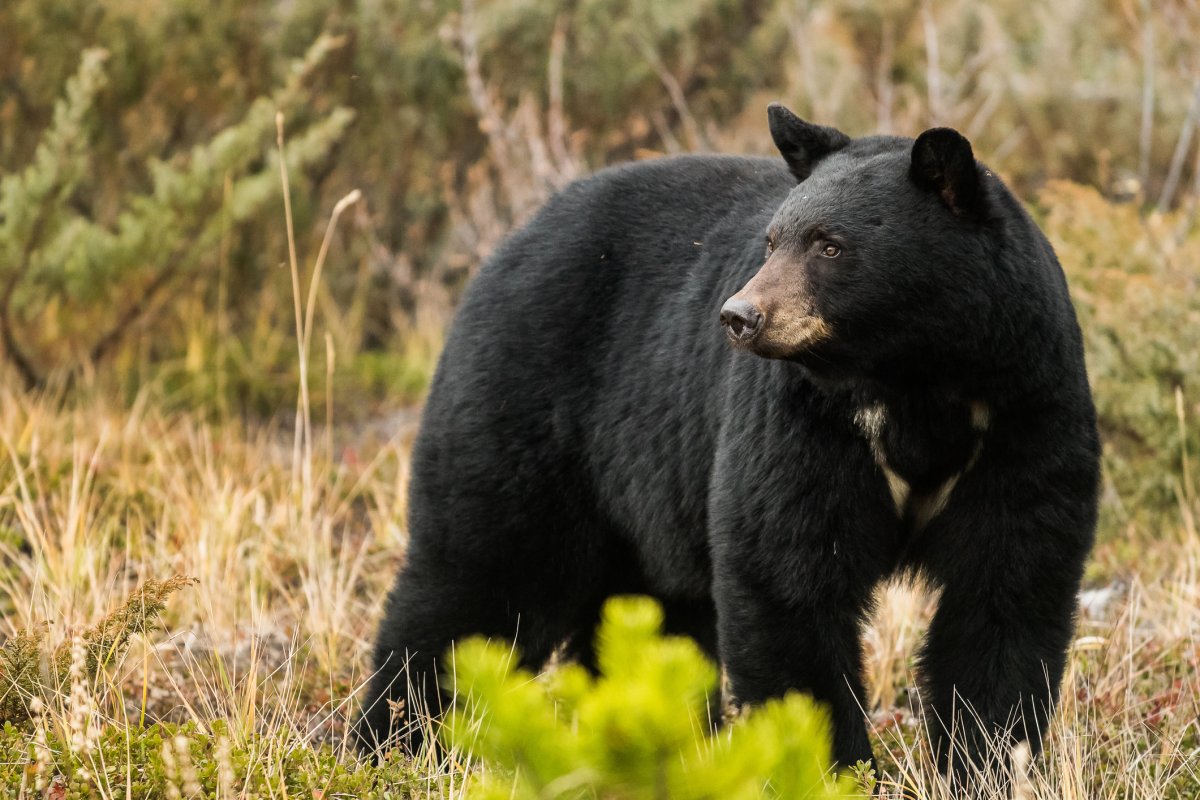
The pilot project was introduced in 2014 after the annual hunt was cancelled in 1999. The pilot was expanded in 2016.
“Ontario is home to a healthy bear population,” stated Yakabuski. “The province will continue to monitor black bear populations, harvest results…
View original post 237 more words
ByGreg Davis Global NewsPosted July 31, 2020 12:08 pm

Descrease article font size-AIncrease article font sizeA+
The province of Ontario is introducing an annual fall harvest of the double-crested cormorant as a step to protect fish stocks and natural habitat.
In Fenelon Falls on Friday morning, John Yakabuski, Minister of Natural Resources and Forestry, announced that the hunting season will run annually from Sept. 15 to Dec. 31, beginning this year.
Yakabuski says Ontario has a healthy and sustainable cormorant population. The fish-eating bird — which consumes up to a pound a fish a day — is known for its droppings called guana which can kill trees and other vegetation in which they nest and roost. They are notorious for destroying traditional nesting habitats of other colonial waterbirds.
READ MORE: Ontario government proposes full return of annual spring black bear hunt
“We’ve heard concerns from property owners, hunters and anglers, and commercial fishers about the kind of damage cormorants have caused in their communities, so we’re taking steps to help them deal with any local issues,” Yakabuski said. “In large amounts, cormorant droppings can kill trees and other vegetation and destroy traditional nesting habitats for some other colonial waterbirds, so it’s critical that we take action to strike a healthy balance in local ecosystems.STORY CONTINUES BELOW ADVERTISEMENT
Following public consultations, the province has made changes to its initial proposal so as not to interfere with waterway users and other migratory birds.
“We listened to those who provided comments about the cormorant hunting proposal, and as a result, we are introducing only a fall hunting season to avoid interfering with recreational users of waterways and nesting periods for some migratory birds,” Yakabuski said. “We have also reduced the maximum number of cormorants a hunter can take to 15 a day, which is a similar limit to one for federally regulated migratory game birds such as mourning doves, snow and Ross’s geese, rails, coot and gallinules.”
Laurie Scott, MPP for Haliburton-Kawartha Lakes-Brock, says cormorants have been a growing problem on Sturgeon Lake and Balsam Lake in her riding. “They have covered islands with their guano, killing trees and vegetation,” Scott said.
“We’re listening to local residents who have voiced their concerns and asked for additional tools to address the issue.”TWEET THIS
Last year, the ministry and partner agencies surveyed cormorant colonies across the Great Lakes and select inland lakes in Ontario. Based on nest count surveys, the province says there are an estimated minimum of 143,000 breeding cormorants in 344 colonies across the province.
The province says combined with historical data, trends suggest that cormorant populations are increasing in Lake Ontario, Lake Erie, and Lake Superior and are stable on the St. Lawrence River and Lake Huron.STORY CONTINUES BELOW ADVERTISEMENThttps://8f291139c8c942b58d8e426919dedfa0.safeframe.googlesyndication.com/safeframe/1-0-37/html/container.html
“Growing up in North Bay and spending many summers fishing on Lake Nipissing, I have seen firsthand the issues that cormorants have caused in some local areas,” said Mike Harris, parliamentary assistant to Yakabuski.
READ MORE: ‘What they’re doing is potentially illegal’: Kingston MPP wants investigation into Bill 197
“A new fall hunting season will help communities manage cormorant populations where they have negatively impacted natural habitat and other waterbird species.”
The Ontario Federation of Anglers and Hunters applauds the bird harvesting announcement.
“We are pleased to see a provincial government finally take action to control overabundant cormorant populations to help protect Ontario’s ecosystems,” said executive director Angelo Lombardo. “We are encouraged to see that the MNRF has made adjustments to the original proposal in response to concerns expressed by the OFAH and others.”
The Ontario Commercial Fisheries’ Association echos the sentiment.
“We strongly support the government’s decision to introduce a fall hunting season, which will help to control damaging cormorant populations,” said Jane Graham, executive director. “Our position has not been to seek the extinction of cormorants from Ontario but for the management of cormorants to promote a balanced ecosystem, which is in the best interests for all Ontarians.”
The province says hunters will be responsible for appropriately identifying their target and ensuring they are harvesting only double-crested cormorants. Cormorants can be consumed but if not, the province says the harvested birds must be disposed of properly.

In a major win for wildlife in Montana, WildEarth Guardians recently settled our lawsuit against the U.S. Department of Agriculture’s Wildlife Services, after the federal program agreed to severely curtail its slaughter of native wildlife and the use of cruel tools such as snares, traps, and poisons in Montana.
For those unfamiliar with Wildlife Services, this multimillion-dollar federal program annually kills an average of about 1,500,000 native wildlife species nationally. Relying on taxpayer dollars for its killing campaigns, Wildlife Services often uses costly methods such as “aerial gunning” to launch preemptive strikes on thousands of native carnivores—before there has been any actual conflict with humans or livestock.
In Montana alone, over just the past three years, Wildlife Services has reported killing 152 wolves, four grizzly bears, 52 mountain lions, 18 black bears, 320 foxes and more than 20,000…
View original post 390 more words
 GETTY IMAGES
Vietnam has banned the import of wildlife and wildlife products to reduce the risk of new pandemics.
The move also bans wildlife markets for such items, including online sales.
Vietnam has previously been accused of turning a blind eye to the sale of products such as pangolin scales and rhino horns often used in traditional medicine.
Scientists have long warned that the wildlife trade can be an incubator for disease.
The origins of the current Covid-19 pandemic are thought to lie in the wildlife trade, with the disease emerging in bats and jumping to people via another, as yet unidentified, species, which could…
View original post 260 more words
Jul 28, 2020,12:40am EDT
Melissa Cristina MárquezContributorScienceI write about the latest, exciting research on sharks worldwide!
Since the dinosaurs have roamed our planet, there have been sharks. These predators, swimming beneath our ocean’s waves, have survived numerous mass extinctions over the course of our planet’s history, and seem to have evolved to survive anything… except their most formidable opponent yet: us. For most people, an ocean full of sharks is their worst nightmare. But for those who study these animals, the reality of dwindling shark numbers is theirs.

Sharks face a staggering number of threats such as overfishing and bycatch, habitat destruction and degradation, climate change, plastic pollution, and illegal shark finning. In one of the largest collaborative projects yet, the impact these threats have had on our global shark populations has been made glaringly obvious: nearly 20% of the world’s sharks have vanished from reefs thought to be teaming with life.
Coral reefs were once renowned for being abundant with sharks, but these animals have been targeted by both legal and illegal fishers so that today many reefs see few, if any, individuals. By taking sharks out of these highly complex ecosystems, it has triggered a phenomenon called “mesopredator release,” where other large predatory fish will increase in abundance and feed on herbivores. If you’re a fisher, having more of these large fish (that you generally fish for) sounds like an awesome trade! But herbivorous fish are a vital component of this habitat, eating algae that would otherwise overwhelm and potentially kill young corals.ADVERTISINGRecommended For You
The study, published in the journal Nature, includes over 100 scientists working together to go through 15,000 hours of underwater video from 371 reefs in 58 countries, states and territories to show that sharksare absent on many of our coral reefs. In fact, this new research from Global FinPrint shows they are functionally extinct — which means they are so rare in certain areas they can no longer fulfill their role in the ecosystem. Since 2015, the Global FinPrint team — which is led by researchers at Florida International University (FIU) — has used underwater cameras to pinpoint specific strongholds for sharks and rays.


