Exposing the Big Game

Forget Hunters' Feeble Rationalizations and Trust Your Gut Feelings: Making Sport of Killing Is Not Healthy Human Behavior

Exposing the Big Game

Mass Extinction Event Caused by Erosion of the Ozone Layer

Exposing the Big Game's avatarThe Extinction Chronicles

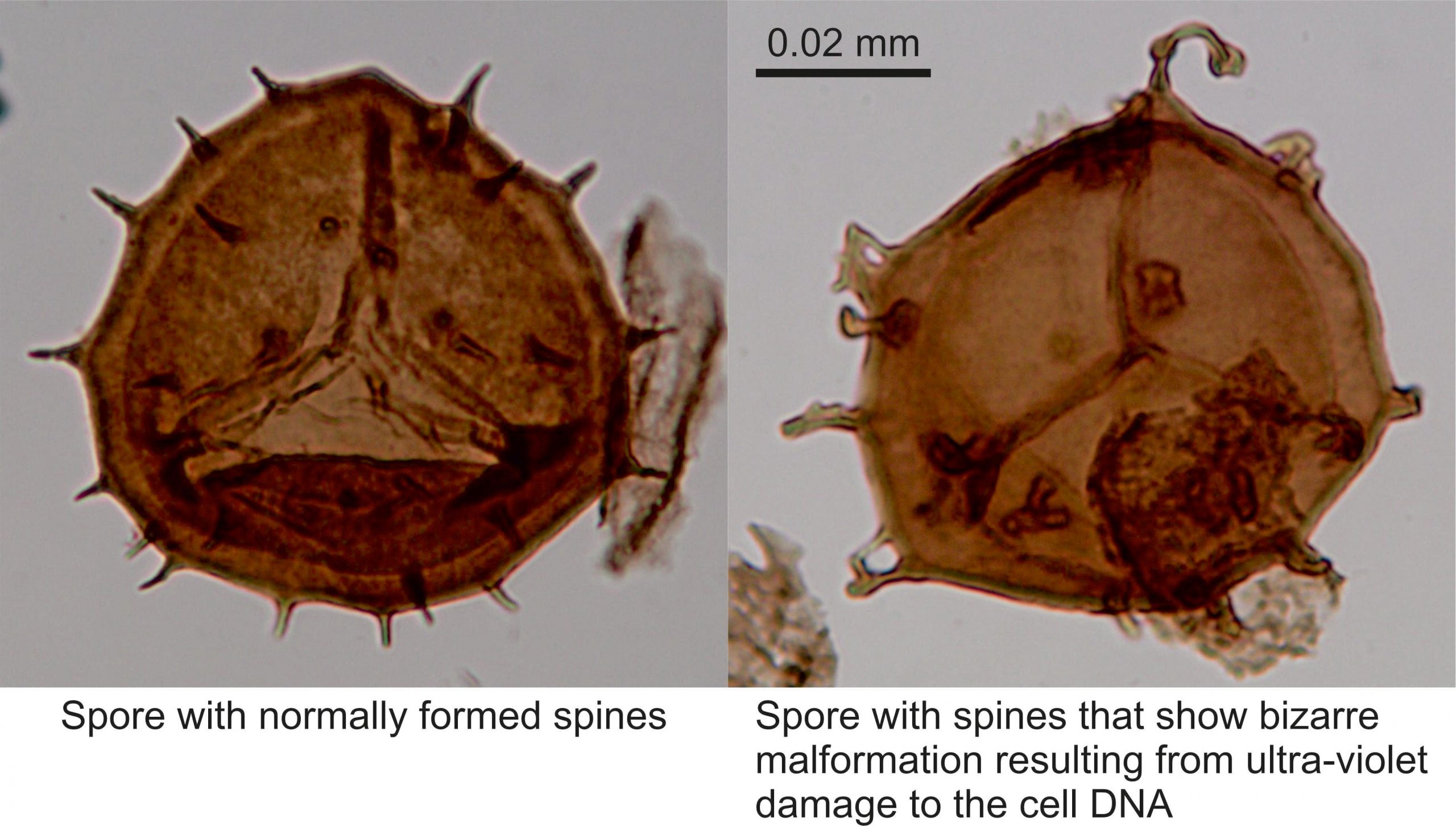
East Greenland Spores Comparison

Normal and malformed spores from East Greenland. Credit: John Marshall

Researchers at the University of Southampton have shown that an extinction event 360 million years ago, that killed much of the Earth’s plant and freshwater aquatic life, was caused by a brief breakdown of the ozone layer that shields the Earth from damaging ultraviolet (UV) radiation. This is a newly discovered extinction mechanism with profound implications for our warming world today.

There have been a number of mass extinction in the geological past. Only one was caused by an asteroid hitting the Earth, which was 66 million years ago when the dinosaurs became extinct. Three of the others, including the end Permian Great Dying, 252 million years ago, were caused by huge continental-scale volcanic eruptions that destabilized the Earth’s atmospheres and oceans.

Now…

View original post 884 more words

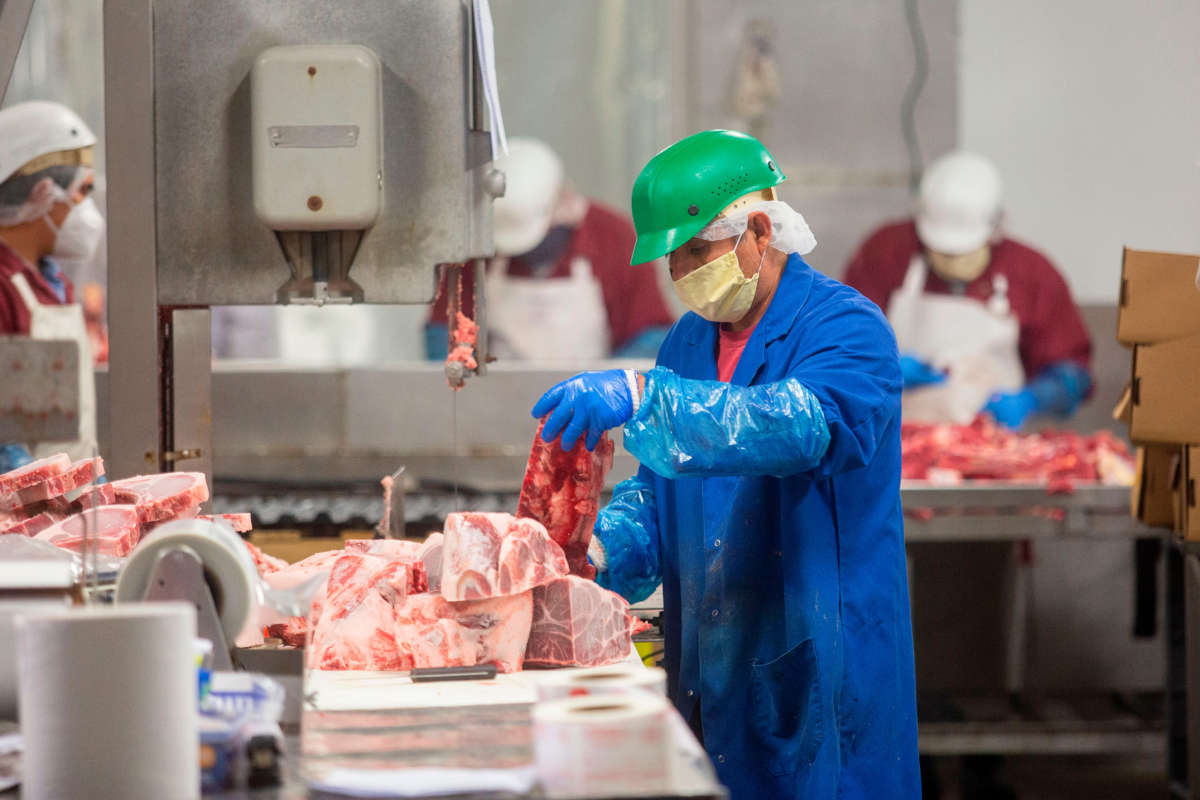
Trump Demanded Meat Plants Stay Open, COVID Cases Have Now Tripled

President Donald Trump issued an executive order in late April requiring all meat processing plants in the U.S. to remain open, despite reports of coronavirus infections and related deaths being prevalent at a number of the plants.

Since that order was issued, the number of COVID-19 cases that have been identified at meat plants across the country has likely tripled, according to estimates from a nonprofit watchdog group.

At the time of Trump’s executive order, the Centers for Disease Control and Prevention (CDC) had identified around 5,000 employees across 20 meat processing plants who had contracted COVID-19, and 17 workers at those plants who had died from the disease. In spite of concerns about the disease spreading at these and other locations, the president issued his order, utilizing the Defense Production Act to classify processing plants as essential infrastructure.

The executive order prevented local governments and health officials from enforcing plant closures in the event of an outbreak and it’s now apparent that the disease has indeed spread at these meatpacking locations since the order.

More than 100 plants across the country have seen a high number of cases of COVID-19. The Food & Environment Reporting Network (FERN), a nonprofit journalism watchdog group dedicated to food and agricultural issues, estimated in a report published last week that 17,000 workers may have now contracted the disease, with at least 66 COVID-related deaths recorded among employees at meat processing plants.

In light of this, other organizations are demanding the federal government take a more proactive approach toward limiting the spread of COVID-19. Citing the large numbers of workers at meat processing plants contracting coronavirus, the Center for Food Safety produced a petition in which it demanded the U.S. Department of Labor’s Occupational Safety and Health Administration (OSHA) issue new emergency standards to protect employees’ health.

“Protecting workers in meatpacking plants is important not just for the workers, but also for our food safety,” the organization wrote in its letter. “Unprotected and sick workers are more likely to make mistakes, making it more likely that tainted meat gets onto store shelves. The last thing we need during this pandemic is a major foodborne illness outbreak.”

There are a number of reasons why meatpacking plants could be hotbeds for COVID-19. Workers typically stand close together, often shoulder-to-shoulder, on the assembly line. Many workers aren’t wearing protective gear at this time either, as it slows down their pace of work, while the companies themselves have admitted to struggling to find the necessary protective equipment for their workers, even after Trump’s executive order was issued.

Colder temperatures in the plants may also be helping the virus linger longer on surfaces or in air particles, and ventilation systems may be spreading coronavirus throughout the buildings.

Among the U.S. population in general, it’s feared that coronavirus will likely continue to spread even more than it already has, as several states begin transitioning away from stay-at-home orders that were previously issued.

As of Tuesday this week, the nation surpassed 100,000 deaths from COVID-19, and one estimate forecasts that 30,000 more Americans could die from the disease by Independence Day. Many health experts agree that a second wave of cases is likely to come about as states reopen businesses and other public areas.

On Pandemics, Pork Chops and Chicken Nuggets

I’ve wasted too much time lately combing the news for an answer to a crucial question about pandemics like Covid-19: Are they inevitable?

Newscasters and the scientists, doctors and politicians they interview rarely venture beyond daily counts of the stricken to explain why we have pandemics. I suspect it’s because the answer is harder to stomach than the horror of the pandemic itself.

Animals humans raise for food are typically the intermediary hosts of viruses between the wildlife in which they arise – e.g. bats and wild birds – and humans. Consequently, pandemics are a price we pay for eating animals and otherwise using them.

Comedian and political commentator Bill Maher came close to getting it right during the pithy New Rules segment of his April 10 show when arguing for naming Covid-19 the Chinese virus because it seemingly jumped to humans in China’s “wet markets” where live fish, poultry and mammals – including exotics like bats, raccoon dogs and civet cats – are slaughtered on site to satisfy the palate of some Chinese for fresh and exotic meats.

Maher was correct that Chinese wet markets might be culpable for a number of lethal human virus outbreaks, including SARS coronavirus in 2003 and H7N9 Avian flu in 2013.

However, Maher’s initial foray into the origin of pandemics overlooked the uncomfortable fact that Americans’ insatiable taste for animal meat was at the root of other killer virus outbreaks. The H1N1 swine flu of 2009 emerged from a pig confinement operation in North Carolina and was a mutated descendant of a swine flu virus that sprang from U.S. factory farms in 1998. And, even though Chinese chicken farms are credited with the deadly H5N1 bird flu outbreak of 1997 (which killed 60 percent of infected humans), just five years ago a similar bird flu broke out in U.S farms, prompting the slaughter of tens of millions of chickens and turkeys.

Recall also that the 1918 Spanish flu that killed over 50 million people worldwide sprang from farms in Kansas, possibly via pigs or sheep, before transmitting around the world via WWI U.S. soldiers.

To his credit, Maher subsequently course-corrected in an April 24 New Rules segment, proffering that “factory farming is just as despicable as a wet market and just as problematic for our health” and “torturing animals is what got us into this mess.”

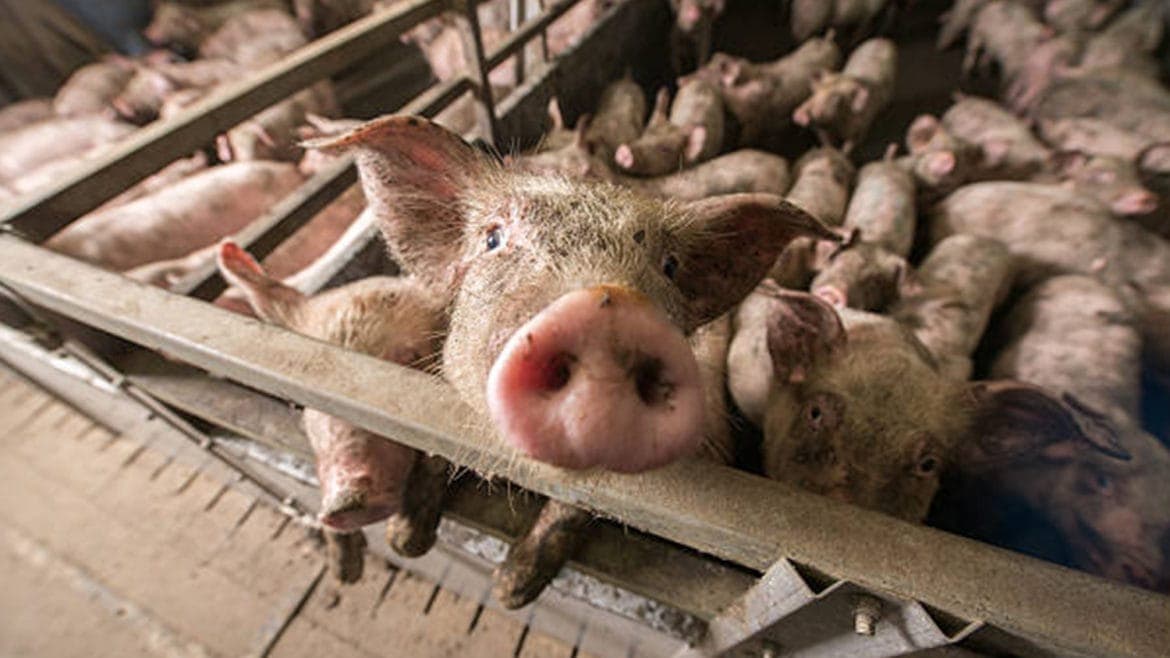
U.S. factory farms provide 99% of Americans’ meat, dairy and eggs and are ideal breeding grounds for infectious diseases because of the crowded (and unspeakably inhumane) conditions in which animals are kept. Hence, an overwhelming preponderance of medically important antimicrobials sold nationally are used in food-producing animals.

A hard to swallow truth: Factory farms are America’s cultural equivalent of China’s wet markets.

Many virus pandemics have much to do with society’s dietary choices. Plants do indeed get viruses, but genetic studies provide no evidence that plant viruses are causative agents of disease in humans. A pandemic from eating lentils and broccoli seems highly unlikely.

Humans readily accept the suffering animals endure to satisfy our appetite for meat, and pandemics are just one of the painful costs to us. Others include cardiovascular disease, diabetes, antibiotic resistance, global warming, rainforest destruction and aquifer depletion.

For those who believe that only meat can provide adequate protein to fuel our brains and bodies, consider that Socrates was vegetarian and Patrik Baboumian, dubbed “strongest man on earth,” is vegan.

An athletics documentary available on Netflix, The Game Changers, is an eye-opening starter for doubters that a plant-based diet can sustain optimal health.

Historically, epidemics and pandemics have led to important advances in public health, like widespread understanding of the germ theory, improved sanitation, penicillin and vaccinations. What will Americans learn from Covid-19?

Will we rethink the decades-long erosion of the social safety net, including lack of universal healthcare and opposition to guaranteeing all workers a living wage? Will we reconsider the true value to society of so-called “unskilled” workers, like supermarket checkers, who put themselves at risk now every time they show up for work? And what does it say about our priorities that meat factories are being forced to continue to operate despite high rates of Covid-19 infections among the workers?

Both history and science tell us that, unless we do something different, the next pandemic is somewhere just around the corner. This is driven home by study findings just published in April of six new coronaviruses discovered in Myanmar bats.

My hope is that the global heartache and societal disruptions from Covid-19 will spur a conversation that reaches deeper than blaming pandemics on wet markets and factory farming, but rather confronts humanity with the very real connection between pandemics and eating animals.

Why a 17% emissions drop does not mean we are addressing climate change

A chimney in an industrial area of Sydney emits vapour June 22, 2009. Australia's government, facing Senate defeat of key emission trading laws, vowed on Friday to bring its climate-fighting regime to the upper house a second time, opening the door for a possible snap election.        REUTERS/Tim Wimborne    (AUSTRALIA ENERGY POLITICS ENVIRONMENT IMAGES OF THE DAY) - RTR24WOS
‘The COVID-19 pandemic is only a wake-up call.’
Image: REUTERS/Tim Wimborne
  • Restrictions imposed as a result of coronavirus have seen emissions fall.
  • They offer an insight into the significant changes that will be needed to bring emissions down to mitigate the worst effects of climate change.
  • Long-term action and thinking is needed.

The global COVID-19 quarantine has meant less air pollution in cities and clearer skies. Animals are strolling through public spaces, and sound pollution has diminished, allowing us to hear the birds sing.

But these relatively small and temporary changes should not be mistaken for the COVID-19 pandemic actually helping to fix climate change. Quite the contrary: the pandemic that made the world stop offers a glimpse of the deep changes in lifestyles and economic structures that we need to implement if we are to effectively mitigate the worst of climate change.

The short-term effects are not in doubt. A new study in Nature Climate Change led by scientists from the University of East Anglia and Stanford has found that daily global CO₂ emissions in early April 2020 were down 17% compared to the mean level of emissions in 2019.

This finding backs up an earlier report from the International Energy Agency (IEA) which found that CO₂ emissions from fossil fuel combustion – globally, the main source of greenhouse gas emissions – in the first three months of 2020 were 5% lower compared to the same period last year.

But the short-term and long-term effects of pollution are different things, and a few months without driving or flying will do little in the long run. Climate change is caused by rising concentrations of greenhouse gases in the atmosphere. Quarantine measures have affected emissions of these gases in the short term, and many places have seen a drop in air pollution. But these measures were not enough to curb the overall concentration in the atmosphere, which is still increasing. Why? Because molecules of these gases stay in the atmosphere for a long time: methane for around 12 years, for instance, and carbon dioxide for up to 200 years.

What’s the World Economic Forum doing about climate change?

Emissions declined, but it won’t last

The new Nature climate change study predicts that if some restrictions are kept throughout the whole of 2020 annual emissions reductions would reach 7.5%.

emissions carbon dioxide environment climate change coronavirus
Daily CO2 emissions fell sharply.
Image: Carbon Brief

This would, in theory, be great news for the environment, especially if we could maintain it for years to come. After all, in order to meet the Paris Agreement target of limiting global warming to 1.5℃, we need to reduce global CO₂ emissions by 7.6% per year between 2020 and 2030.

But this level of emissions reduction will not last unless economic activity remains depressed. And as lockdowns end and people return to work, emissions will inevitably rise once again – this happens as activity resumes after every economic downturn, including the financial crisis of 2008.

Keeping economic activity depressed to April 2020 levels is not a feasible long-term strategy. But we could use this opportunity productively to steer our societies towards a new paradigm that truly addresses the core issue of the climate conundrum.

We need to restructure our economies

Fossil fuels are the basis of our economies. Our energy systems are built around them and surprisingly little has changed since the first oil shocks in 1973. Back then, coal, oil and gas accounted for 87% of the world’s total primary energy supply, while in 2017 these fossil fuels still accounted for 81%. Over that same period, the total amount of energy supplied more than doubled.

Yes, there is lots of new renewable energy, but this has been deployed alongside fossil fuels, rather than replacing them. All over the globe, there are still plans to build new coal-fired power plants and oil & gas infrastructure. Even countries like Norway, where fossil fuels count for only about 30% of the total energy supply and almost all electricity comes from hydropower, still often rely heavily on fossil fuel profits to fund welfare systems and pension schemes.

If we are to truly progress towards a low carbon economy, we must address the roots of the problem. For instance, how can we encourage further divestment from fossil fuels if the sector is still among the most secure and profitable investments? Or how can we build clean energy systems if we keep subsidising fossil fuels? Despite promises to phase out these tax breaks and other incentives, the richer G20 countries still provided US$127 billion in subsidies to coal, oil and gas in 2017 (remarkably, that figure excludes Saudi Arabia).

And how can we resume activity without “going back to normal”? We need long-term recovery strategies that value nature as the overarching framework within which we all exist, not a mere economic resource. To date, several post-pandemic recovery plans include generous help to the fossil fuel sector with no strings attached.

The pandemic is no climate change panacea. We now know that we can act collectively and adopt measures that significantly curb emissions – in the short term at least. But long-term change does not come about directly as a result of a crisis, but from consistent action changing what caused the crisis in the first place. The COVID-19 pandemic is only a wake-up call: we still have a lot of work to do.

Why I’m An Animal Rights Activist When There Is So Much Human Suffering In The World

Don’t waste coronavirus tests on those already showing symptoms. There’s a smarter way.

Exposing the Big Game's avatarThe Extinction Chronicles

The virus that causes COVID-19 can circulate in our bodies unnoticed for days. Testing the symptom-free is key to breaking the chain of transmission.

Dr. Jeremy Samuel Faust and Dr. Harlan Krumholz
Opinion contributors

Universal testing in the United States may be on the way, but it is not around the corner. Acknowledging that regrettable reality means that, in the meantime, we have to decide how to allocate wisely our scarce testing resources. Unfortunately, with limitations on testing we seem to be testing the wrong people for SARS-CoV-2, the virus that causes COVID-19.

Most authoritative sources, including the Centers for Disease Control and Prevention, recommend testing people with symptoms. Though that sounds reasonable, it leads to squandering our testing resources on people who we already know are probably infected. Moreover, with high false negative rates from some of the tests, even a negative test in someone with…

View original post 1,010 more words

Whales are left to themselves as watchers stay at home

There are pros and cons to COVID-19’s impact on whales — less boat traffic, but also less research.

“The whale watching industry is pretty unique in this part of the world,” Mark Malleson of the Center for Whale Research says. “We cover so much area and … have so many eyes out there.”

This story was originally published by Hakai Magazine and is reproduced here with permission.

In late April, residents of Nanoose Bay on southeastern Vancouver Island, British Columbia, gathered on the shoreline of a local park to observe a juvenile gray whale. For several days, they watched and waited, and were occasionally rewarded for their patience when mist erupted from the ocean surface like compressed air exploding from a giant barrel. The whale would take a deep breath, arch its barnacled back, and dive out of sight.

The sightings were brief, but memorable — not just because they happened to them, but because they didn’t happen to anyone else. On a normal day, the gray whale would have been shadowed by commercial whale watching boats. COVID-19 has changed all that.

The pandemic has constrained vessel traffic around the world, probably to the benefit of whales. Ship strikes can kill or injure, while underwater engine noise and a vessel’s physical presence can disrupt whales’ ability to feed, rest, socialize, navigate, and communicate. “Generally, less noise resulting from a reduction in all manner of vessel traffic right now is probably not a bad thing for the whales,” says John Ford, a whale researcher emeritus with Fisheries and Oceans Canada (DFO).

“Generally, less noise resulting from a reduction in all manner of vessel traffic right now is probably not a bad thing for the whales.”

Commercial whale watching is not immune to COVID-19. The whale watching fleet from British Columbia and Washington state totaled about 138 vessels in 2019, according to Soundwatch, a program of the Whale Museum in Friday Harbor, Washington, which monitors vessel compliance in the San Juan Islands. That represents more than 500,000 customers annually.

But the pandemic has left the fleet docked.

In April, the Canadian government announced that all passenger vessels with a capacity of more than 12 passengers are prohibited from engaging in nonessential activities, including whale watching, until at least June 30.

Since then, the industry has conducted talks with Transport Canada aimed at getting the fleet back on the water, with the potential for British Columbia, perhaps through the Ministry of Health, deciding when to green-light commercial whale watching. The industry is putting together a blueprint for how that might happen, including staff training, frequent sterilization of vessels, and the wearing of face masks.

Meanwhile, whales in the Salish Sea are enjoying a rare respite from tourists and repeated boat traffic. That includes endangered southern resident killer whales, whose numbers have dropped from 98 in 1995 to an estimated 72 individuals.

The Pacific Whale Watch Association, representing Canadian and American companies in the Salish Sea, says the downside to COVID-19 extends beyond their lost revenues.

Every day the fleet is idled due to the pandemic, scientists cannot benefit from a GPS-based app developed by the industry in 2019 that provides real-time information on when and where whales are sighted. “That cannot be replicated by science, even on a good day,” says association spokesman Kelley Balcomb-Bartok.

Brad Hanson, a researcher with the Northwest Fisheries Science Center, is among more than 20 scientists who have received permission to access the app’s data for specific study periods. “It is much more efficient,” he says. “I don’t like to go out and spend a lot of time searching for whales.” Such data can also help to track a sick whale or identify larger trends in whale numbers and species in the Salish Sea.

Mark Malleson has a foot in both camps: he is a veteran captain for Prince of Whales in Victoria, and does contract work for DFO and the Center for Whale Research in Washington State, mainly taking identification photos of killer whales. He documented the first fin whale in the Juan de Fuca Strait in 2005. “The whale watching industry is pretty unique in this part of the world,” he says. “We cover so much area and … have so many eyes out there.”

“Absolutely, there is going to be less data. Whether or not the absence of those data would compromise our efforts or understanding … long-term, I’m not sure.”

Individual whale watching companies also support conservation organizations through a variety of initiatives, including donating one percent or more of ticket sales or a fixed donation such as $2 per ticket, and offering free seats or free charters of vessels for education, fundraising, or research purposes.

One major beneficiary is the Center for Whale Research, founded by Balcomb-Bartok’s father, Ken Balcomb. The center receives up to $30,000 per year from whale watching companies, evidence of the intertwining of whale commerce and whale conservation. On the Canadian side of the border, the Vancouver-based Pacific Salmon Foundation reports that whale watching companies contributed about CAN $105,000 to the organization in donations and gifts in kind in 2019.

All of which offsets — but does not eliminate — the industry’s impact on whales.

“We need to embrace what’s best for the southern residents while still having a viable economy,” asserts Balcomb-Bartok. “I can’t say we are benign. It is a factor. Let’s find the best balance.”

The absence of data from the whale watching fleet comes at a time when whale researchers also struggle to get onto the water due to the pandemic.

Thomas Doniol-Valcroze, head of DFO’s cetacean research program on the west coast, says research by government organizations such as his own and the National Oceanic and Atmospheric Administration has largely ground to a halt. Physical distancing can be problematic for boat crews, while going for fuel and handling study equipment carries the risk of contamination. Fieldwork by small organizations may still continue, he says, including using drones to document whales’ physical condition. Hydrophones are also collecting data on underwater sound levels resulting from reduced vessel traffic.

As for the whale watching industry’s contribution, he says: “Absolutely, there is going to be less data. Whether or not the absence of those data would compromise our efforts or understanding … long-term, I’m not sure.”

Ultimately, all manner of vessels, whether they contribute to research or not, can be disruptive to whales, Doniol-Valcroze concludes.

“Everybody who is honest knows that when you’re out there — whether you are a researcher or whale watcher or anything else — you’re having an impact on these animals. It all comes down to whether it’s worth the impact or not.”

It makes you wonder what the whales would say. A question left to humans to debate.

Larry Pynn is a veteran environmental journalist who has received some 30 awards for his newspaper and magazine writing, including eight Jack Webster Awards. Email High Country News at editor@hcn.org or submit a letter to the editor.

“What Are We Fighting About?” 9th Circuit Hears Yellowstone Grizzly Bear Delisting Case

Exposing the Big Game's avatarExposing the Big Game

May 20, 2020

|

Louisa Willcox

 Court hearings over the fate of grizzlies have always made me nervous, and the one on May 5th was no exception. For the second time in ten years, a three-judge panel of the 9th Circuit Court of Appeals heard oral arguments on whether or not Yellowstone grizzlies should be protected under the Endangered Species Act (ESA). The future of Yellowstone’s bruins rests upon whether or not this panel upholds a 2018 order issued by Montana District Judge Dana Christensen to restore endangered species protections for the Yellowstone population.

My throat tightened when Judge Andrew Hurwitz asked: “What are we fighting about here?” The answer has more to do with morality and compassion than it does with legal technicalities. And the question deserves to be examined in light of three decades of court battles over Yellowstone grizzlies – battles that I’ve watched from a…

View original post 3,117 more words

“What Are We Fighting About?” 9th Circuit Hears Yellowstone Grizzly Bear Delisting Case

May 20, 2020

|

Louisa Willcox

 Court hearings over the fate of grizzlies have always made me nervous, and the one on May 5th was no exception. For the second time in ten years, a three-judge panel of the 9th Circuit Court of Appeals heard oral arguments on whether or not Yellowstone grizzlies should be protected under the Endangered Species Act (ESA). The future of Yellowstone’s bruins rests upon whether or not this panel upholds a 2018 order issued by Montana District Judge Dana Christensen to restore endangered species protections for the Yellowstone population.

My throat tightened when Judge Andrew Hurwitz asked: “What are we fighting about here?” The answer has more to do with morality and compassion than it does with legal technicalities. And the question deserves to be examined in light of three decades of court battles over Yellowstone grizzlies – battles that I’ve watched from a front-row seat.

First, some context. The panel’s hearing capped a legal dispute that has raged for the past three years over whether endangered species protections for the Yellowstone bear should be stripped. A final ruling is expected in the next several months. At issue is whether management authority should be turned over to the states of Idaho, Wyoming and Montana – states that plan to kill more bears, including by trophy hunting.

The hearing was surreal because the federal government had already conceded defeat, agreeing with the plaintiffs that the US Fish & Wildlife Service (the Service) needed to step back and analyze how delisting Yellowstone’s bears would affect recovery of grizzlies in other nearby populations. In another example of legal arcana, grizzlies in the more robust population around Glacier Park, as well as in the Selkirks and Cabinet-Yaak, are considered part of the “remnant.”

Judge Hurwitz was justifiably confused by the fact that federal lawyers were demanding the Court’s precious time to contest what seemed an uncontested issue, asking: “Is there anybody in this case who doesn’t think the remnant shouldn’t remain listed? Tell me what we’re fighting about if everybody agrees the remnant should remain listed.”

Department of Justice attorney Joan Pepin, who represented the Service, agreed but then dodged, asking the court to narrow the scope of Christensen’s ruling to give the agency maximum “flexibility.” Pepin doth protest too much, I thought.

So what was this hearing about anyway?  In a word: Wyoming.

What are We Fighting About? Wyoming and State Management

I have no doubt that Wyoming led the charge into the 9th Circuit. Indeed, for the last three decades, Wyoming Game and Fish (WGF) Department has spearheaded the fight to wrest control over managing grizzlies from the federal government.

So it was hardly surprising to see Wyoming’s attorney, Jay Jerde, presenting arguments on behalf of intervenors that included Idaho and — tellingly — the NRA, Safari Club, and livestock organizations.

Like me, Jerde has gotten grizzled during the many years he’s contested management of Yellowstone bruins. But his age-worn tune hasn’t changed: “the bear is recovered, we are the professionals, and federal management of endangered species violates state sovereignty over wildlife.  Give us the keys to grizzly bear management.”

I first heard this mantra in 1992, when WGF Director Pete Petera tried to bully the Service into delisting Yellowstone grizzlies. But Wyoming (in concert with Idaho and Montana) had begun agitating to remove ESA protections as early as 1985 when Yellowstone grizzlies were at their nadir of only a few hundred bears. The states’ zeal may seem baffling unless you consider their longstanding financial dependencies on hunters, their belief that large carnivores are part of a zero-sum competition for elk, their blind devotion to hunting, and their obsessive quest for power.

Delisting would allow the states to unleash a lethal regime on Yellowstone’s grizzly bears, exacerbating recent population declines triggered by the climate-driven loss of whitebark pine— a source of food that had been (and in some places still is) a staple of Yellowstone bears. There is little doubt that state management would push bears in this ecosystem back to the precipice they narrowly escaped only because of federal intervention under the ESA.

Nonetheless, Jerde requested that the Court reject Judge Christensen’s order in its entirety and reinstate the Service’s 2017 rule that had delisted grizzlies and triggered the current round of litigation.

Importantly, Wyoming would not have had its day in court if the Service, the Defendant in the case, had declined to appeal Christensen’s ruling. Having seen plenty of tantrums by Wyoming Game and Fish officials over the years – including threats to walk away from grizzly bear management entirely if the Service did not rush to delist – I could just imagine the drama behind the scenes that led to the federal government’s half-hearted appeal. (It should be said that the Service shares the states’ delisting agenda, but with a more civil demeanor and, sometimes, a tad more sense).

At a fundamental level, this hearing was about little more than the federal government giving Wyoming a stage to throw another fit — in front of a different audience.

But, for the grizzly, the stakes could not be higher.

Washing Dishes: Binding or Voluntary?

On behalf of WildEarth Guardians, Matt Bishop of Western Environmental Law Center addressed the threats posed by long-term genetic isolation of Yellowstone’s grizzly population. In his relisting order, Christensen had found that the government had not adequately addressed this issue, noting that the Service had “illogically cobble[d]” together studies to demonstrate that the population’s isolation was no longer a threat to the species’ continued survival.”

Bishop reinforced his conclusion, saying: “Not a single (scientific) paper has said that grizzlies are OK in the long term.”

Scientists are increasingly concerned about the century-plus isolation of Yellowstone grizzlies, which is especially worrisome given the population’s relatively small size. Out of a population of 740 or so animals, only a couple hundred can potentially breed. In the long term, geneticists believe that this is a recipe for disaster, and argue that the best solution is to reconnect Yellowstone to other grizzly bear populations. Experts also maintain that relocating grizzlies to Yellowstone from other populations is a move of last resort.

In recent years, grizzlies have been expanding westward from Yellowstone and southeast from the Northern Continental Divide, raising hopes for natural connectivity. But Bishop warned that hunting grizzlies on the ecosystem’s periphery would reverse this progress.

In response to questioning, Pepin said that the Service would consider translocating grizzlies to Yellowstone to augment genetic diversity if Northern Rockies populations did not reconnect naturally. But she did not commit the government to any course of action to address the problem.

Bishop made the case for binding rather than discretionary commitments. He got the only smile of the day from all three judges when he used the analogy of negotiating with his teenage daughter over washing the dishes: would she do what he asked or just consider the request?

Clearly, a win on this issue could boost prospects for reconnecting grizzly bear populations in the Northern Rockies, including recolonization of the vast Selway-Bitterroot ecosystem that grizzlies are just now rediscovering.

Paper vs. Real Bears and the Counting Problem

Jerde was especially worked up over the lower court’s decision regarding management of bear mortality if new methods are adopted to count bears — an issue called “recalibration.” Judge Christensen had found that future changes in methods for estimating population size could result in creating “paper bears” and allow state managers to kill hundreds more bears by using different but convenient statistical gimcrackery.  The Service can change methods, he ruled, but it must ensure that management of mortality is prudent and precautionary.

During deliberations in 2016 over the Service’s draft delisting rule, both the former Director of the Service, Dan Ashe, and former Yellowstone Park Superintendent, Dan Wenk, had raised concerns about the consequences of creating paper bears. Both were called to heel by higher-ups catering to state interests.

Jerde claimed that methods for counting bears would not change for the “foreseeable future.” But federal scientists have repeatedly stated that they will soon unveil a new method – a fact that 9th Circuit Judge Paul J. Watford echoed, saying: “There are strong indications in the very near future a new population estimator will be adopted.”

The most likely method on the horizon would almost certainly boost bear numbers by a substantial amount. If benchmarks for managing mortality are not correspondingly “recalibrated,” the states would have free rein to kill literally hundreds of bears. Due to weak post-delisting monitoring, a major drop in the population would probably not be detected in time to reverse course.  Even if problems were detected, would be no binding mechanisms to correct them. More on this later.

What We Need to Keep Fighting About: Climate Change and Dead Bears

Because the hearing focused narrowly on procedural and jurisdictional issues, the most critical and immediate threats to Yellowstone’s bears — climate change and unsustainable bear deaths — did not come up, although the Court could consider these issues given that they are amply covered in written briefing materials.

This Court is no stranger to the threats posed to Yellowstone’s grizzlies by climate change. In fact, climate change had been front and center in litigation over a previous attempt to delist Yellowstone grizzlies in 2007.  The 9th Circuit Court upheld a 2009 order by District Judge Donald Molloy to reinstate ESA protections on the grounds that the Service had failed to consider the impacts of the climate-driven collapse of whitebark pine – and had even lied about the severity of the problem.

As I listened to the hearing last week, I could not help but reflect on the previous 9th Circuit hearing during 2009. For me, a highlight from that earlier give and take was a question posed by Judge Susan Graber: “Isn’t it true that female grizzlies produce fewer cubs after years of poor whitebark pine seeds?”

True indeed – and the kind of question that you would expect a mother to ask, not to mention someone invested in understanding the science relevant to grizzly bears. It was also true that, by 2009, a mountain pine beetle outbreak unleashed by a warming climate had killed over 70% of Yellowstone’s whitebark pine, making every year a poor year for seed crops.

These forests have continued to succumb to beetles and an introduced pathogen called white pine blister rust, while the terrible consequences have become increasingly clear. Pepin’s dismissal of any negative effects arising from loss of whitebark pine was hardly surprising given that the government has spent millions of taxpayer dollars during the past ten years attempting to paper over the threat posed to grizzlies by climate change.

Since losing in court, government researchers funded by the Service have produced more than a dozen narrowly focused publications with an overt partisan spin designed to bolster the case for delisting. Virtually all of this research relied on impenetrable models, flawed assumptions, faulty logic, and data that the government tenaciously hides. Their conclusions? Bears are omnivores (no kidding), and dandelions and ants are great substitutes for calorie-rich pine seeds. (Really?)

Government models notwithstanding, grizzlies have not been faring well. Resourceful bears have been compensating for the losses of pine seeds by seeking out other high-calorie foods, largely in the form of meat. In a trend I would not have predicted a decade ago, bears are increasingly predating on cows and scavenging elk meat left by big game hunters. Learning that the sound of a gunshot can be a dinner bell, bears are mixing it up with hunters in contests that grizzlies typically lose. Today, conflicts with hunters and livestock producers have replaced conflicts over garbage and human attractants as the leading causes of grizzly bear deaths.

Shattering Records of Grizzly Deaths

The death toll reflects these changes. Between 2015 and 2018 grizzly bear deaths shattered previous records — in a population that has been flatlined for nearly 20 years. What is particularly disturbing is that in 2018 eleven deaths were listed as “Under Investigation” for possible poaching. This unprecedented spike occurred just one year after Yellowstone grizzlies were delisted. As has been documented elsewhere, removal of protections was perhaps construed by some people as tacit permission to unleash a personal vendetta against bears.

Not surprisingly, the deaths exceeded the government’s thresholds of allowable mortality during 2015-2018. Mortality limits are one of the very few standards that were included in the Service’s 2017 delisting rule — and it matters given that excessive human-caused deaths helped land the bear on the endangered species list in the first place.

According to the delisting rule, if allowable limits are breached two years in a row, bear managers are supposed to do something. But they have not even admitted to a problem.

Interestingly, starting in 2015, the Interagency Grizzly Bear Study Team, charged with keeping mortality records, stopped reporting on whether thresholds were breached. You can figure this out for yourself by scrutinizing the Study Team’s annual reports, but it’s complicated. The point is that managers may have no clue they have a problem.

In fact, that seems to be the case. At a recent meeting of Yellowstone grizzly bear managers, a Committee charged with investigating how human-grizzly bear conflicts might be reduced erroneously claimed that “grizzly mortalities are below threshold.”

As numbers of grizzly bear deaths mount, the population is at a tipping point.  And our climate will almost certainly continue to warm, with worsening consequences for bears. Models show that we are likely to lose army cutworm moths, another staple food for Yellowstone grizzlies that has, for now, picked up some of the slack left by dead whitebark pine. Moths rely on alpine flower nectar, but as tundra migrates off the top of the mountains during the next century, moth habitat will disappear. Berries are expected to decline too. These losses will likely prompt grizzlies to continue foraging closer to people, with predictable results.

Although the 9th Circuit may not rule on these issues, the fight over climate change and its impacts on bears will not end any time soon.

What Could Have Been: Adequate Regulatory Mechanisms

During the hearing I found myself staring at Chief Judge Sidney Thomas’ mug shot on the Court’s home page and thinking about his role ten years ago in the decision to keep grizzlies protected. With Judge Graber he had served on the panel that upheld Judge Donald Molloy’s finding regarding whitebark pine. However, two out of the three judges on the panel (Graber and Tallman) over-turned Molloy’s finding that post-delisting regulatory mechanisms were not adequate to maintain the population because they were not binding.

In dissenting with his colleagues, Judge Thomas wrote: “There is not a single federal or state law or regulation that provides a means for enforcing the [Conservation] Strategy’s mortality standards. Rather, if the grizzly population becomes threatened, the agency is to review the situation and call a committee meeting. And that only occurs if the mortality limits are exceeded for at least two years.

The Service’s reliance on voluntary action is contrary to law. … Good intentions are not rules of law. Unenforceable aspirational goals are not regulatory mechanisms. Promises to monitor, review, and convene committees do not satisfy the statutory requirement.”

He agreed with Molloy who wrote: “The majority of the regulatory mechanisms relied upon by the Service — the Conservation Strategy, Forest Plan amendments, and state plans — depend on guidelines, monitoring, and promises, or good intentions for future action. Such provisions are not adequate regulatory mechanisms when there is no way to enforce them or to ensure that they will occur.”

Molloy also took aim at the government’s “damn the torpedoes” approach to delisting – an approach that has not changed in the intervening decade.

As Matt Bishop described, post-delisting plans are still built on a quicksand of promises. I am not alone in thinking that the fight over grizzlies today would be less ferocious if the government had adopted binding regulations along with mechanisms to trigger corrections should problems arise.

Parenthetically, Molloy and Thomas are both Montanans — born, raised and educated in the state. Christensen, who was appointed to the seat on the United States District Court for the District of Montana that was vacated by Molloy, went to law school at the University of Montana and has lived in Montana since 1976. Could it be that living in a state where you are likely to rub shoulders with wildlife managers offers special insights into how grizzlies might be managed?

I am reminded of a day, years ago, when I overheard another federal judge, also from Montana, say to an attorney: “you know, I don’t know why you would ever trust the states with the grizzly.”

Touché.

Of Commonsense and The Court of Public Opinion

No matter what the 9th Circuit decides, this will not be the Court’s last word about the bear. After Pepin conceded that there would likely be opportunity for further judicial review, Judge Mary Schroeder dryly noted: “I am sure of that.”

Still, litigation is always a roll of the dice. For decades, we have been relying on lawyers to save the Yellowstone grizzly from doom. They have been remarkably successful, but leaning too hard on lawyers is a dangerous game – and why I have a knot in my stomach and my well-washed fingers crossed.

We have long needed to take this fight to the court of public opinion. To address the current crisis, we need to strengthen law enforcement and improve coexistence practices. There is no lack of ideas or expertise on this front. Since 1991 bear managers have produced numerous reports containing detailed recommendations, many related to reducing numbers of hunter- and livestock-related conflicts. Few have been comprehensively implemented, largely because of insufficient funding, courage, and political support.

Reducing conflicts between bears and people is not something we should be fighting over, but rather a commonsense win-win solution.

We can also do more politically. We can ask our representatives to support the Tribal Heritage and Grizzly Bear Protection Act sponsored by Congressman Raul Grijalva (D-AZ). The bill would ban trophy hunting and protect grizzlies for their ecological and cultural values. It would also guarantee Native American Tribes a role in conserving and managing the grizzlies that many Tribes consider to be sacred. Moreover, many Tribes have legal claim to lands where grizzlies could be recovered, including substantial areas that could reconnect existing populations.

Reform of state wildlife management is also increasingly important. The numbers of people who value wildlife for intrinsic reasons are climbing at the same time that hunter numbers are dropping. More and more, the public is demanding that state managers protect wildlife for its own sake, rather than for hunting. (I have written about this complicated issue here and here.) More practically, we need to provide financial and other incentives for state agencies to serve the broader public interest, not a well-heeled minority of hunters and ranchers who have been driving the states’ “damn the torpedoes” approach to grizzly bear management.

After thanking the bear’s devoted lawyers one more time, there is a lot we can do right now for grizzlies, including giving them more space and more compassion. We also need to make our governments accountable and worthy of our trust. Ultimately, how we manage grizzlies in their last refuges in Yellowstone and the Northern Rockies is a measure of who we are. Are our hearts big enough to keep grizzlies in our midst?

You can listen to the May 5th 9th Circuit court hearing here.

Missouri proposes opening its small black bear population to trophy hunters

Exposing the Big Game's avatarCommittee to Abolish Sport Hunting Blog

Calendar Icon May 27, 2020

Missouri has proposed a hunting season on its small and still-recovering population of black bears, who were once nearly wiped out because of overhunting and logging, which decimated their habitat.

The Missouri Department of Conservation estimates that there are now approximately 540 to 840 bears in the state. But some studies show that those numbers may be inflated. And even if there are as many bears as the MDC claims, it’s still not a large number.

Missouri has no good reason for allowing such a hunt. Bears self-regulate their own populations because of limited food availability and slow reproduction. There have also been minimal bear-human conflicts in the state, and these are entirely preventable.

Fact is, the only reason the…

View original post 544 more words