Trophy hunters shoot more than 10,000 bears every year by targeting the unsuspecting animals as they gorge on bait piles left out to lure them within range. It happens in national forests and on national wildlife refuges, and it even occurs on national preserves managed by the National Park Service. This is outrageous.
The animals, lured with heaps of rotting food, don’t have a chance. They are ambushed while their heads are buried in human-scented garbage.
This isn’t hunting. It’s awful for the bears, and it’s also a threat to hikers and others who use our public lands.
The Don’t Feed the Bears Act of 2025 (H.R. 4422), introduced by Rep. Shri Thanedar, would end this shameful practice on federal lands. It’s backed by more than 75 organizations, including hunters, conservationists, and animal welfare advocates.
➤ Send a message today to your federal lawmakers urging them to support this bipartisan effort to end bear baiting on public lands.
Together, we can stop this reckless practice and restore ethics and safety to wildlife management on our most cherished landscapes.
?Take future action with a single click. Log in or Sign up for FastAction
Prefix (Optional)First NameLast NameStreet AddressPostal CodeCityState/Province- State -AKALARAZCACOCTDCDEFLGAHIIAIDILINKSKYLAMAMDMEMIMNMOMSMTNCNDNENHNJNMNVNYOHOKORPARISCSDTNTXUTVAVTWAWIWVWYASFMGUMHMPPRPWVIAAAEAPEmailMobile Phone (Optional)
By submitting your cell phone number you are agreeing to receive periodic text messages from Animal Wellness Action. Message and data rates may apply. Text HELP for more information. Text STOP to stop receiving messages.
CPW is doing a statewide survey to gather your ideas and concerns about how Wildlife Managers can best manage the mule deer herds in our state. Survey results support plans that are in place for 10 years.
Scientists look at the following when making a plan for managing the deer population:
deer herd size
herd health
hunting license numbers
“Some of the things that we’re interested in hearing about are how people interface with deer, if they view them as wildlife viewers or landowners, and then what kind of concerns they see moving forward, and that really depends on people’s perspectives, and that’s what we’re trying to gain right now,” said Julie Stiver, a Senior Biologist for CPW.
CPW’s South East Region, which includes Colorado Springs, currently manages five mule deer herds.
If you are looking to weigh in, you can fill out the survey on CPW’s website. The deadline is September 19.
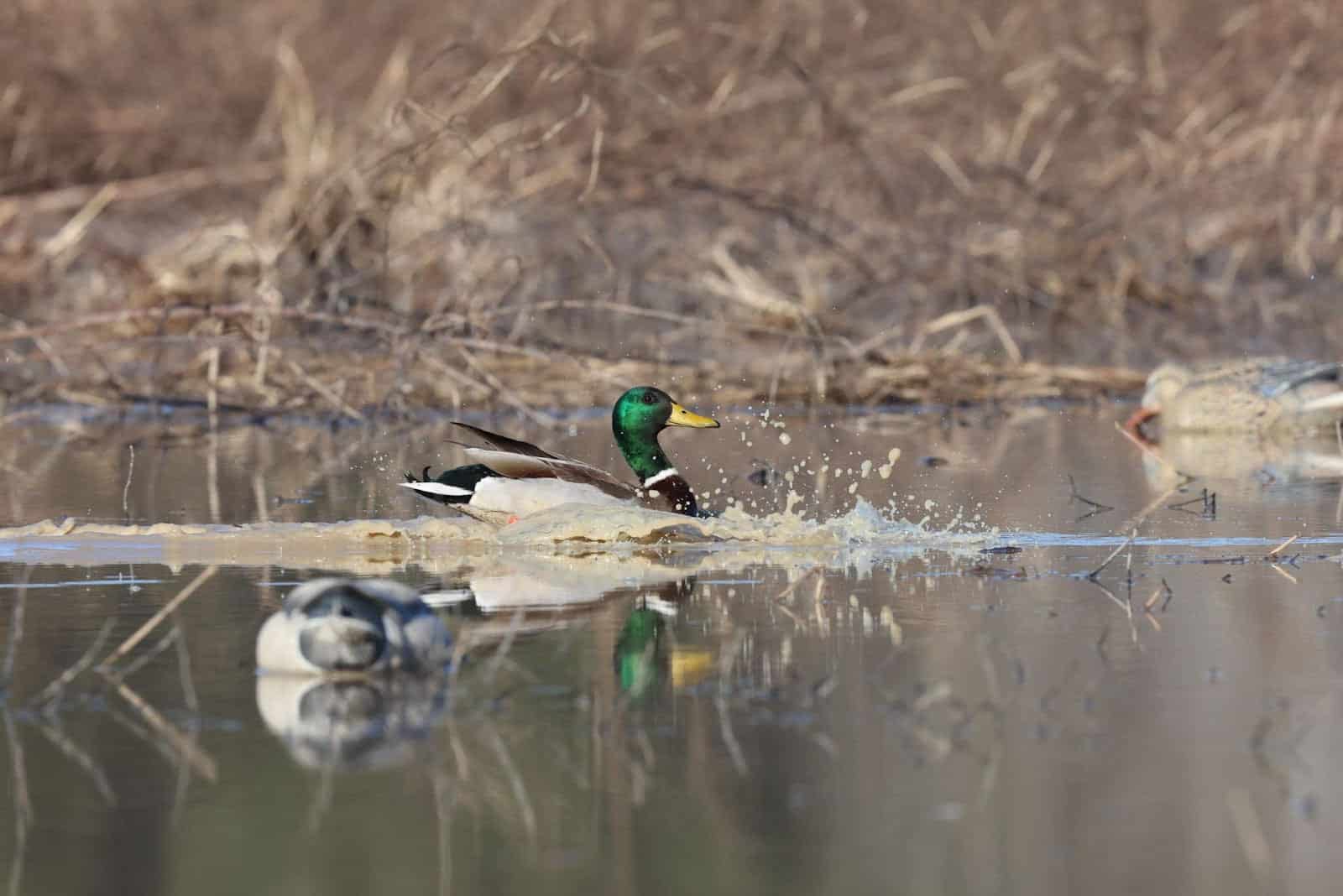
LITTLE ROCK — The U.S. Fish and Wildlife Service formally released its annual Waterfowl Population Status report for the 2025 survey year on Tuesday, and hunters may see a familiar tone to last year’s report. According to the report, an estimated 34 million ducks were present in the traditional survey area across Canada and the northern U.S. earlier this summer. This is virtually identical to population estimates from 2024 (4 percent below the long-term average), which dictated the 2025-26 waterfowl hunting season frameworks.
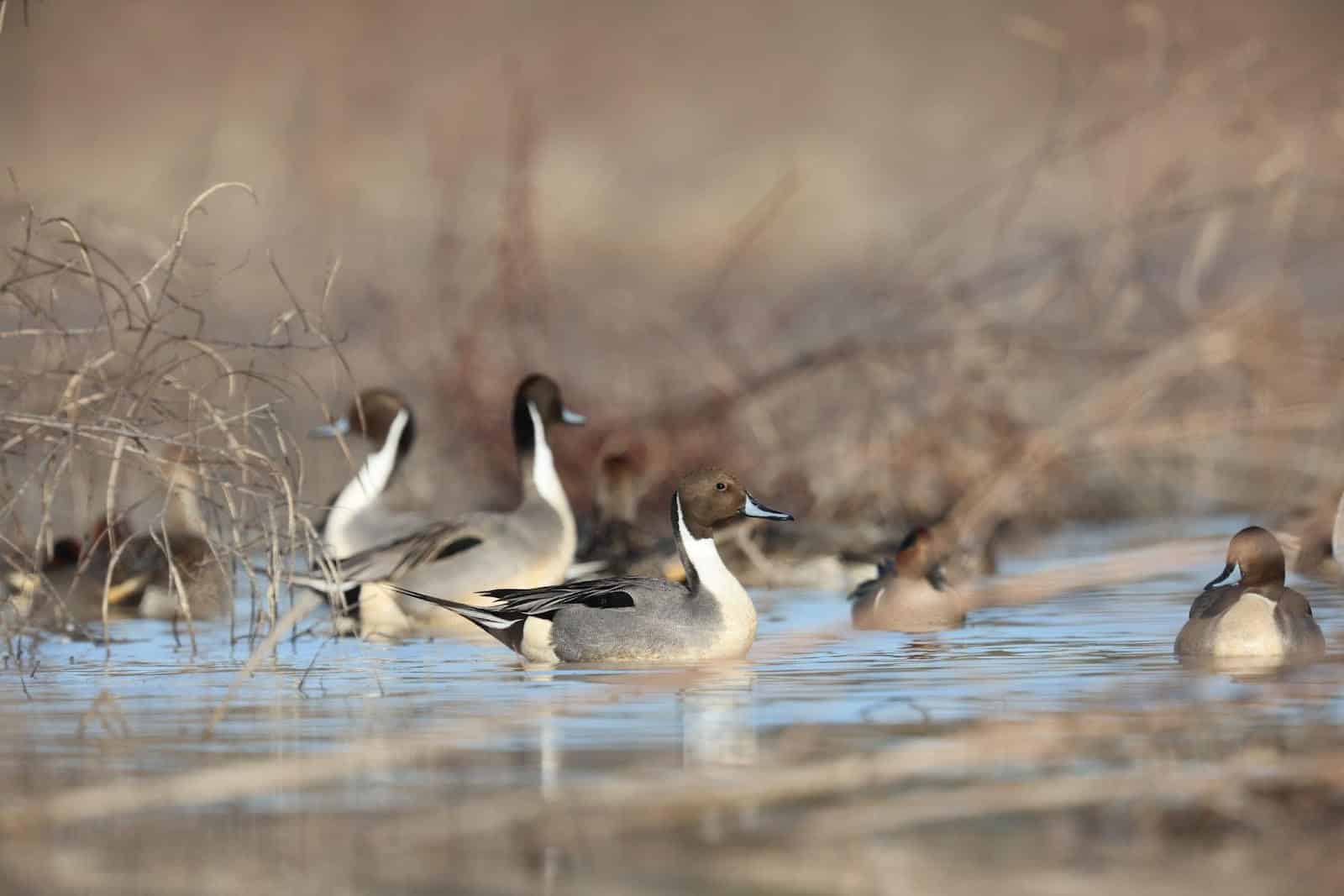
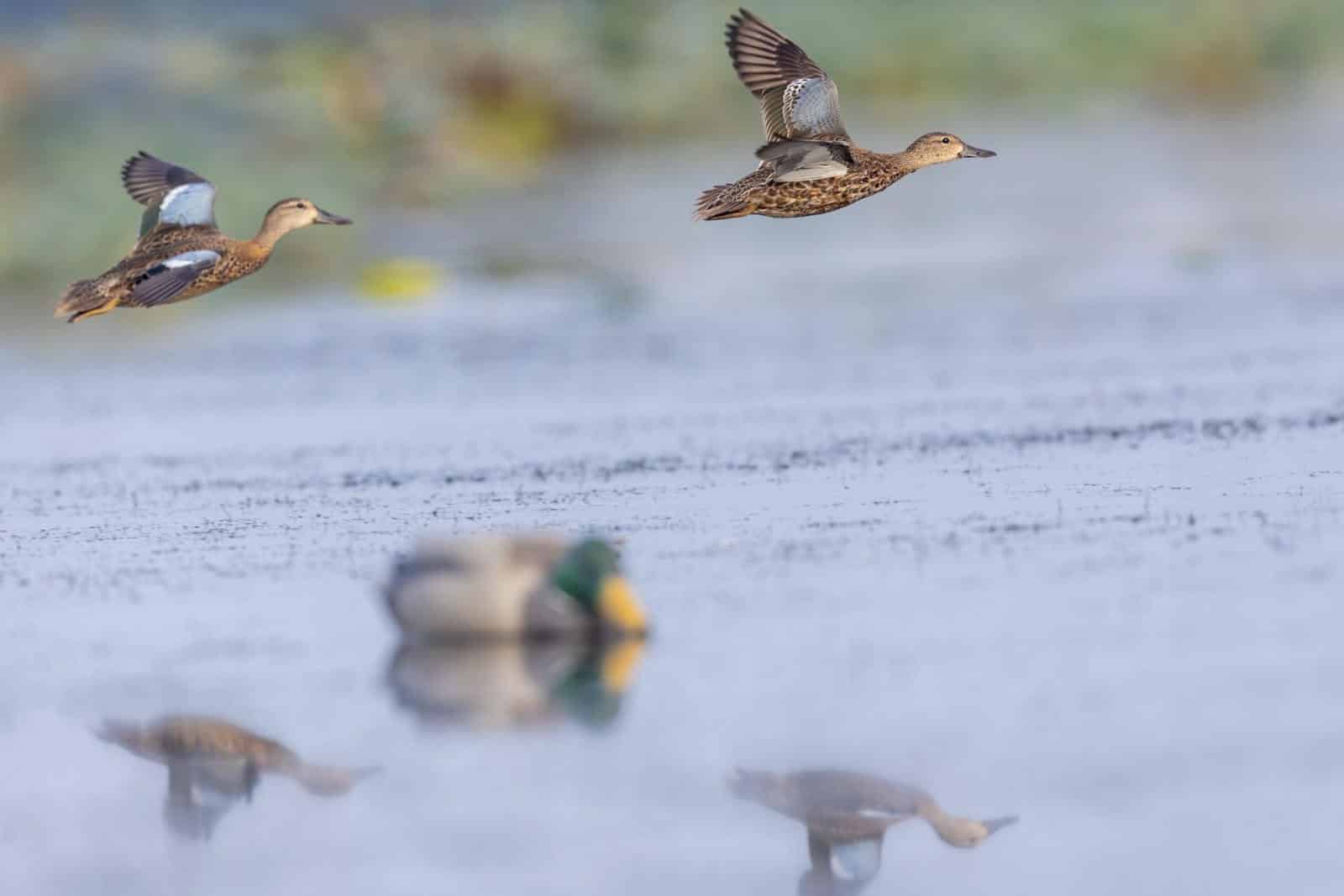
The mallard population, which is of particular interest to Arkansas duck hunters, followed the trend of total duck numbers, remaining unchanged from last year’s count of 6.6 million. Northern pintails saw a 13 percent increase from last year with 2.2 million birds estimated across the survey area. The blue-winged teal population also remained unchanged from last year, still below the threshold for a 16-day teal season, so hunters should expect another nine-day season in next year’s framework.
Early reports of extremely dry conditions throughout the breeding grounds were confirmed in the report, which indicated a 19 percent decrease of ponds throughout the survey area. The hardest hit area of the traditional survey area was in the north-central U.S., which saw ponds decrease by as much as 34 percent from last year’s survey. Estimates of ponds in prairie Canada remained similar to last year’s counts, which were 27 percent below the long-term average.
The numbers from this year’s surveys will be used to set the 2026-27 season frameworks, and the adaptive harvest matrix for next year offers a liberal hunting season framework at the federal level for the 2026-27 season.
“Long-term data collected since 1995 has shown both higher and lower pond counts and population estimates and the liberal framework of 60-day seasons have been in place throughout that time,” Arkansas Game and Fish Commission Waterfowl Program Coordinator Brett Leach said.
According to USFWS reports, this year’s mallard estimate is very similar to the 6.75 million-bird estimate in 2005. That year still saw liberal frameworks, and the population still increased dramatically in the next few years, following favorable conditions on the breeding grounds.
“Hunter harvest can play a role in overall populations, but it’s not as large of a factor as habitat on the breeding grounds during nesting season,” Leach said. “Shorter seasons and smaller bag limits in modern hunting frameworks can help when populations are at critical levels, but supporting wetland habitat where it counts far outweighs any small reductions in hunting mortality modified seasons may offer.”
“It’s also important to keep in mind that many other factors come into play throughout Arkansas’s duck season, and these numbers do not necessarily indicate a ‘good’ or ‘bad’ hunting season,” Luke Naylor, Arkansas Game and Fish Commission Chief of Wildlife Management, said. “The driving factors for duck abundance in Arkansas are the timing and amount of flooded habitat on the state’s landscape and the timing of freezing temperatures and weather events in states north of us in the Mississippi Flyway.”
Naylor also warns hunters to enter into the 2025-26 hunting seasons with a bit of perspective on the total population. Mallards are still 17 percent below their long-term average population, and nearly half of the population counted during 2015, when observers estimated a record 11.6 million mallards.
“This shouldn’t be taken as gloom and doom, but some hunters have memories of the early 2000s and again in the 2010s, when those record-high duck populations were nearly twice what they are today,” Naylor said. “We’ve seen higher duck population and pond counts than this year’s reports, but we’ve also seen worse, and the ducks rebounded when habitat conditions were favorable.
“Given the best science available, duck populations are still sufficient to support continued liberal seasons,” Naylor added. “But the fact remains that mallard population estimates are half what they were only a decade ago. No doubt hunters will feel those impacts and likely see fewer ducks.”
AGFC Director Doug Schoenrock doubled down on the importance of habitat, both in Arkansas and in the breeding grounds, to the state’s waterfowl-centered culture.
“We’re fortunate that the duck population is similar to last year, but wetland habitat remains a major concern, both in Arkansas and on the breeding grounds,” Schoenrock said. “We can’t control the weather, but we can control having the right habitat in place when conditions are favorable. There’s no magic bullet or easy fix; it takes dedication, hard work and many partnerships in both the private and public sector to keep habitat on the ground. We’re dedicated to continuing those partnerships and continuing Arkansas’s duck hunting heritage.”
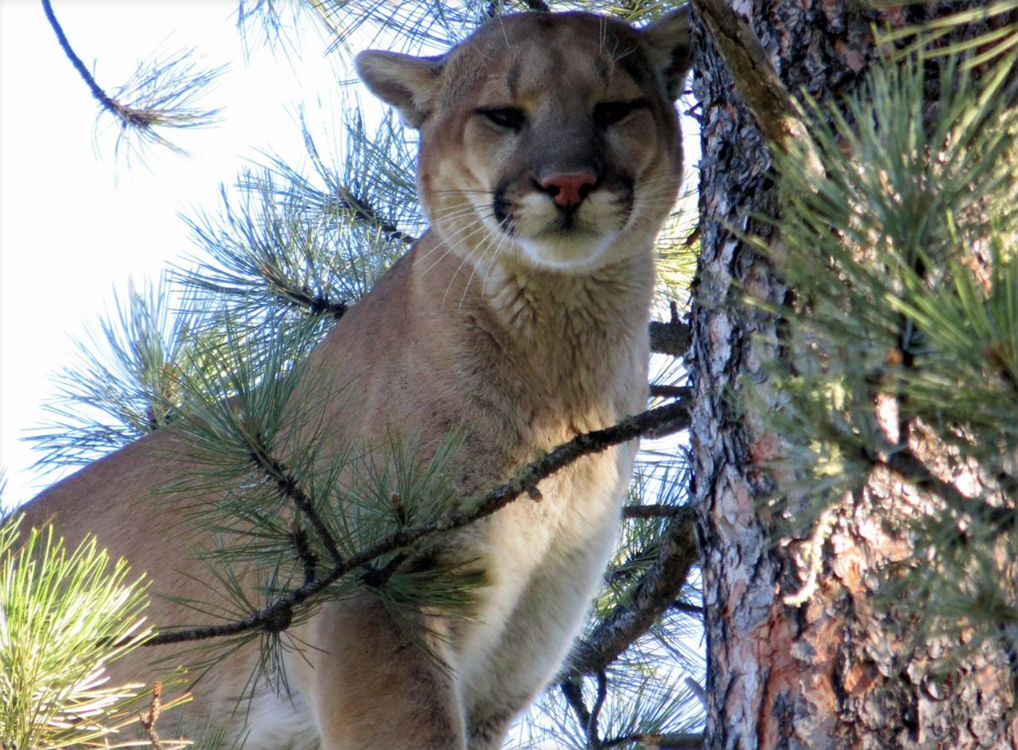
A mountain lion in South Dakota’s Black Hills. (Courtesy of SD Game, Fish and Parks)
The commission overseeing wildlife management in South Dakota approved a proposal Thursday in Rapid City to expand the area where dogs can be used for hunting mountain lions.
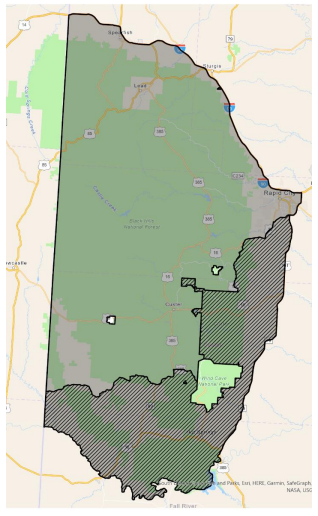
The decision by the Game, Fish and Parks Commission increases the area within the Black Hills where hunters can use scent-tracking hounds to chase mountain lions up trees. The expansion includes areas in the eastern and southern Hills.
The rule change also removes the requirement for hunters without dogs to obtain an access permit in addition to a hunter’s license to hunt mountain lions in Custer State Park.
The annual harvest limit remains capped at 60 mountain lions or 40 females, whichever is reached first.
Dog-assisted mountain lion hunting will be expanded from the lighter-shaded areas into the darker-shaded areas of the Black Hills. (Courtesy of SD Game, Fish and Parks)
The decision to expand the area for dog-assisted hunting follows months of debate and hundreds of submitted comments over the role of dogs in lion management. Another roughly 30 people spoke during Thursday’s hearing.
Supporters of the new rule said that expanding dog hunting opportunities will improve mountain lion management. Hunters with dogs have an approximately 50% success rate, while hunters without dogs have less than 4%. They said the move will help the state meet its population objectives and ensure that problem lions attacking livestock are killed.
A report issued this year by the Department of Game, Fish and Parks says the latest mountain lion population estimate for the Black Hills is 393, but also says mountain lion population estimates “often have low precision.” Averaged over multiple years, the department said, the population generally stays within the management objective of 200 to 300.
Supporters also said hunting with dogs and chasing lions up trees allows hunters to get close and better identify the sex and age of lions before deciding to shoot them. They said fewer lions would also increase the mule deer population in the southern Hills, where hunters complain of low numbers.
“Mountain lion numbers are too high in the Black Hills. So are coyote numbers. The deer population is trending down,” wrote Jordan Schneider of Rapid City.
Opponents said hunting with dogs undermines the principle of fair chase — giving the animal an opportunity to escape — and reduces opportunities for hunters without dogs. Others called the practice inhumane and said the proposal was not based on science.
“This is not a real ‘hunting sport,’ but a cruel and unethical event,” wrote Leisa Bailey of Vermillion.
Commission Chair Stephanie Rissler, who spoke in favor of the proposal, said the move will help manage problem lions without increasing permit numbers or the harvest limit.
The final vote was 7-0, with one commissioner, Travis Theel, recusing himself. During the public comment period, state Rep. Tim Goodwin, R-Rapid City, alleged that Theel, who runs a guided hunting service in the Black Hills, and Commissioner Travis Bies, who owns land near the Black Hills, had conflicts of interest. Bies did not recuse himself, saying his land is not in the affected area.
Mountain lions were nearly eradicated from South Dakota by the early 20th century due to bounties and unregulated hunting. After lions recolonized the Black Hills in the 1980s, the state established a hunting season in 2005.
The association positively assesses the proposed stricter measures, such as higher age limits, mandatory psychological assessments, and longer waiting periods for firearm purchases, as an important step towards violence prevention.
However, President Madeleine Petrovic stated that it was incomprehensible that hobby hunters were exempt from regular psychological aptitude tests. Cases such as the triple murder in Annaberg in 2023 demonstrated that there is also a risk of gun violence in the hunting environment.
Tierschutz Austria also points to scientific studies that suggest a connection between animal cruelty and subsequent violence against humans. Criminological and psychological studies show that those who intentionally torture animalshunting , are significantly more likely to engage in violent behavior toward humans – particularly in the areas of domestic violence, child abuse, and grievous bodily harm. The organization therefore calls for convictions for animal cruelty to also result in preventive weapons bans. Furthermore, such offenses should be mandatorily reported to weapons authorities and recorded in a central risk database.
Anyone who mistreats animals poses a risk to society. The protection of humans and animals must be considered together – and consistently protected by law, says Petrovic.
Avian flu has recently been confirmed at commercial turkey farms in North Dakota and South Dakota. (Scott Bauer/Agriculture Research Service, USDA)
Avian flu has hit turkey farms in North Dakota and South Dakota, the first cases in commercial flocks in the United States since early July.
The U.S. Department of Agriculture’s Animal and Plant Health Inspection Service on Aug. 28 confirmed an outbreak of highly pathogenic avian influenza in Faulk County in northeast South Dakota. The outbreak meant 55,400 birds were killed to prevent the spread of the disease.
It is the first case in a U.S. commercial flock since July 2, when the avian flu was confirmed at a game bird facility in Lancaster County, Pennsylvania.
The North Dakota Department of Agriculture said Wednesday that bird flu had been confirmed Saturday at a turkey farm in Dickey County, near the South Dakota state line.
“After a quiet summer, it’s not unexpected that we have another case of HPAI as birds are gathering to begin the fall migration,” North Dakota Agriculture Commissioner Doug Goehring said in a news release.
Dr. Ethan Andress, state veterinarian in North Dakota, said 60,000 birds had to be destroyed in Dickey County.
Andress said that because large flocks of waterfowl, such as snow geese, are not yet migrating south over the Dakotas, it may be an indication that the virus was spread from local waterfowl.
Avian influenza exists in many wild birds and can be transmitted by contact with infected birds or through infected food and water.
The federal Centers for Disease Control and Prevention says the public health risk is low but notes that avian flu also has spread to dairy cattle and humans with one human death.
In August, the avian flu also was confirmed at a live-bird market in Los Angeles County, California, and in backyard birds in St. Lawrence County, New York, according to the USDA.
The poultry industry has been combating different strains of avian influenza since 2020, according to the CDC.
Two fishermen saw their commercial fishing licenses revoked following extensive and repeated violations in California’s lobster and Dungeness crab fisheries. California Department of Fish and Wildlife photo.
Listen to this article
3 min
The California Fish and Game Commission has permanently revoked the commercial fishing licenses and permits of two fishermen following extensive and repeated violations in the state’s lobster and Dungeness crab fisheries.
At its meeting in June, the Commission acted on recommendations from the California Department of Fish and Wildlife (CDFW) to revoke the commercial fishing license and lobster operator permit of Christopher James Miller, 68, of Santa Barbara, and the commercial fishing license and Dungeness crab permit of Ronald Ghera, 45, of Fortuna.
According to CDFW, Miller’s violations spanned over a decade and included abandoning 156 lobster traps in waters off Santa Barbara and the Northern Channel Islands. Additional infractions included leaving traps in the water after the season had closed, failing to retrieve baited traps, and submitting inaccurate catch records.
Ghera was cited for abandoning 94 crab traps after the 2023 season and 74 after the 2024 season. He also failed to service traps within the required 96-hour window, did not submit mandatory reports, and used untagged traps and buoys that were improperly marked.
Abandoned traps can pose significant threats to marine mammals and other wildlife, and may also lead to shortened fishing seasons, impacting law-abiding fishers who rely on these fisheries for their livelihoods, CDFW said in press release.
“The majority of people who fish commercially are law-abiding and care about our fisheries,” Nathaniel Arnold, Chief of the CDFW Law Enforcement Division, said in a statement. “There are a few individuals, however, who choose to partake in commercial poaching. These individuals will eventually be caught and will likely lose the privilege to commercially fish in this state through either criminal or administrative actions.”
This isn’t an isolated case. In October 2023, the commission revoked the license of one fisherman and virtually suspended another for repeated violations such as trap abandonment and fishing in protected areas. One received a five-year permit suspension, and another had a lifetime revocation.
Miller has a long string of fishing violations. In 2024, he pled guilty to falsifying commercial fishing records, harvesting lobster out of season, and abandoning at least 156 commercial lobster traps around Santa Cruz Island and the Santa Barbara Harbor — his third commercial lobster poaching conviction since 2014.





 Exposing the Big Game

