Public-Land Hunting: How to Adapt to the Changing Landscape
Reply


Monday, September 15, 2025
The Wisconsin Department of Natural Resources (DNR) is reminding hunters and residents to help protect the state’s deer herd by following baiting and feeding bans. Even in counties without restrictions, the agency urges the public to avoid these practices to reduce the risk of spreading disease.
Baiting refers to placing substances such as food, grains, salts, minerals, or scented materials to attract wild animals for hunting. Feeding is defined as placing materials to attract or feed wildlife for non-hunting purposes, including recreational or supplemental feeding, except for what is allowed for birds and small mammals.
Both activities cause deer to gather in unnatural numbers at concentrated sites, which can accelerate the spread of chronic wasting disease (CWD). The disease is passed through direct contact between infected and healthy deer or indirectly through contaminated environments.
CWD is an incurable neurological disease affecting deer, elk, moose, and caribou. It is caused by abnormal proteins, called prions, that damage the nervous system. Infected animals shed these prions in saliva, urine, feces, and blood. Once present, the prions can persist in the soil for years, making it easy for healthy deer to become exposed and difficult to contain outbreaks.
To reduce these risks, state law requires the DNR to enact baiting and feeding bans in any county where CWD has been confirmed in wild or captive deer, as well as in neighboring counties within 10 miles of a positive case. By statute, bans remain in effect for three years when CWD is found within a county and two years in adjoining counties.
If additional cases are detected during that period, the ban resets, extending restrictions another two to three years.
Exceptions are allowed for feeding birds and small mammals, provided feeders are placed within 50 yards of a home and designed to prevent deer access.
For details on current regulations and a county-by-county map of active bans, visit the DNR’s Baiting and Feeding Regulations webpage.
Photo Credit: pexels-jim-fawns

24.1K Followers
Story by Dom McAndrew
• 7mo •
2 min read
First US case of H5N9 bird flu strain found in California
MERCED COUNTY, Calif. (KSEE/KGPE) – The country’s first case of H5N9 bird flu has been identified in Merced County, California, officials say.
This H5N9 strain, which was identified earlier this month, is different from the H5N1 strain that had already been documented in multiple cases across the U.S. According to the Centers for Disease Control and Prevention, there have been more than 60 people who have been sickened and one person who was killed by H5N1.
1 Gram Gold Bar – NO Assay Package

Central Valley dairy farmers concerned with avian flu spread
In a notification, the World Organisation for Animal Health confirmed that the strain detected in Merced County is a new strain in the country. The investigation began on Nov. 23, 2024, and it was confirmed on Jan. 13 that “this is the first confirmed case of HPAI H5N9 in poultry in the United States.”
The USDA Animal and Plant Health Inspection Service (APHIS), in conjunction with State Animal Health and Wildlife Officials, are conducting comprehensive epidemiological investigations and enhanced surveillance in response to the HPAI related events.World Organisation for Animal Health
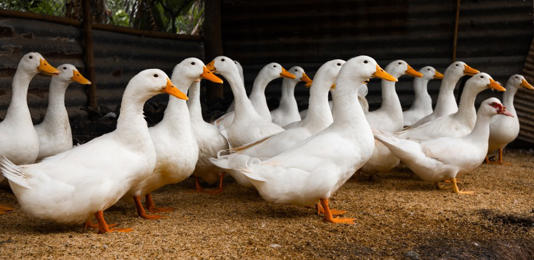
This strain of H5N9 was found in a commercial duck premises in Merced County. The specific location of the facility was not officially released.
The announcement states that control measures have been undertaken in an attempt to contain the virus, including control of movement, surveillance and quarantine. The report from the World Organisation for Animal Health also stated that a total of 118,954 birds were killed in December after state officials quarantined the affected area.
Dickies Mens Long Sleeve Flex Performance Coverall Dark Navy Large
Bird flu is primarily spread by wild birds such as ducks and geese as they migrate. While it is fatal to a variety of animals, those species can generally carry it without getting sick, which offers the virus a chance to mutate and thrive.
The virus can be spread through droppings or any interaction between farm-raised poultry and wild birds. It’s also easily tracked into a farm on someone’s boots or by vehicle.
Unlike previous outbreaks, the one that began in 2022 didn’t die out in high summer temperatures.
The virus found another new host when dairy cattle started getting sick last March. That creates more opportunities for the virus to linger and spread and unlike poultry, cattle aren’t slaughtered when they get sick because they rarely die from bird flu.
Nearly all of the people infected with bird flu worked around sick animals. Health officials haven’t yet found evidence of the disease spreading from person to person.
 Exposing the Big Game