For the Animals: A Tribute to Animal Rights Activist Keith Mann
Reply

A bill proposed by Councilmember Harvey Epstein would outlaw the sale of sticky boards that doom furry critters to a slow, painful death.
by Benjy Sachs March 16, 2026, 5:00 a.m.

Our nonprofit newsroom relies on readers like you to power investigations like these.
Join the community that powers NYC’s independent local news.
After years of hard-fought battle, the city may finally be entering an era of rat harmony — or closer to it.
Newly elected Councilmember Harvey Epstein (D-Manhattan) recently introduced a bill to outlaw the sale of glue traps aimed at mice and rats in the city. The traps are small boards covered with an adhesive that ensnares the critters.
Animal-rights advocates argue that the traps are inhumane, as they cause a slow death for trapped rodents, and can be unsafe for pets and children.
“The way glue traps work is harmful not just to the animals but to family pets and society at large,” Epstein said.
The lawmaker, whose district spans the East Village and the Lower East Side, introduced a similar bill during his seven years as a state assemblymember in Albany.
The call for mercy toward rats comes at a time of heightened contempt for the city’s most reviled rodents.
Vigilantes and even dogs hunt for rats by night. Mayor Eric Adams famously declared a “war on rats,” then appointed a “rat czar” to combat the scourge. He instituted a policy of filling rat burrows with carbon monoxide. As a mayoral candidate, Curtis Sliwa called for feral “cat colonies” to catch them.
Adams’ efforts made something of a dent on the city’s rat population, data shows.

March 16, 2026

March 16, 2026

March 16, 2026

March 16, 2026
The containerization of trash and implementation of a composting program contributed to a 20% decline in rat sightings from 2024 to 2025, according to the Department of Sanitation and data on 311 calls.
New Yorkers have coexisted with rats for centuries, but the relationship has always been fraught. In the fight, rats have numbers on their side; according to the book “Rats: Observations on the History and Habitat of the City’s Most Unwanted Inhabitants,” one pair of the four-legged creatures has the potential to create “15,000 descendants in a year.”
Yet, Epstein argues that the city should implement less violent methods to keep the rats at bay, such as containerization and sealing holes in apartments.
“I think what we’ll do is reduce the population,” he said. “We’ll coexist with them like we coexist with other wildlife.”

Another sponsor of the bill, Councilmember Farah Louis (D-Brooklyn), said she is more concerned with glue traps being risks to humans and pets.
“Sometimes children or pets get caught in the trap,” she said. “That’s the reason why I supported the bill.”
Animal rights groups such as PETA hailed the bill’s introduction, while a spokesperson for Voters for Animal Rights called glue traps cruel and ineffective.
“It is slowly growing as a movement,” spokesperson Laura Tartaglia said, noting a trend of jurisdictions, such as Ulster County, forbidding the sale of the controversial adhesive boards or considering doing so. “I think people see that this is just unethical.”
Even professional rodent killers see the trap as a sticky wicket. Gene Miller, owner of Broadway Pest Services in Midtown agreed that using them is cruel.
“Once a mouse is caught on a glue board, they basically die of starvation,” Miller said. “I’m the owner of this company and I don’t agree. I think it’s bad.”
Miller also doesn’t find the traps very effective.
“If we put out hundreds of traps,” the exterminator said, “we would only catch a few [rodents].”
Miller still sells glue boards, though. He said his customers like to see them because they give the appearance of a no-holds-barred approach. So every pest control service uses them, creating a rat race to the bottom.
“If other companies are going to use glue boards and I’m not, then I have to explain to my clients why.”
Scientists said approximately 60 marine mammals are currently being tested for suspected influenza infection across multiple laboratory systems.Bird Flu Outbreak in California Spreads to Other Animals | NTD
By
Bird Flu Outbreak in California Spreads to Other Animals | NTD
Published: 3/14/2026, 11:13:34 PM EDT
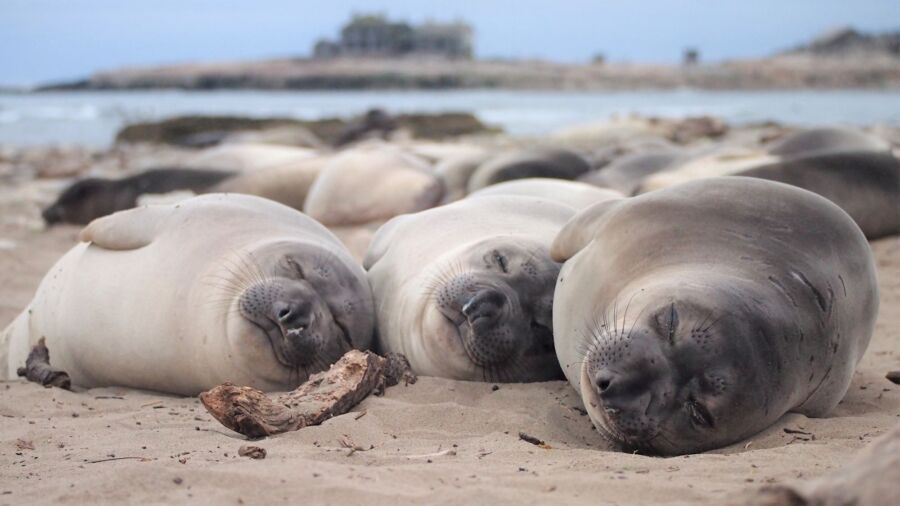
A deadly strain of bird flu has swept through a colony of northern elephant seals at a Northern California state park, killing dozens of marine mammals and jumping to at least two other species, including the endangered southern sea otter. Scientists are calling the dilemma a troubling and fast-moving outbreak.
The virus, highly pathogenic avian influenza H5N1, was first detected in mid-February at Año Nuevo State Park in San Mateo County, where weanling elephant seal pups were spotted convulsing and dying along the shoreline. Since then, it has claimed the lives of roughly 47 seals—pups and large adult males alike—and has now been confirmed in a sea otter and a California sea lion, according to wildlife researchers and public health scientists who held a media briefing on March 12.
In all, laboratory testing has confirmed H5N1 infection in 16 elephant seals. But the true scope of the outbreak is almost certainly larger. Scientists said approximately 60 marine mammals are currently being tested for suspected influenza infection.
“We know there are more animals with signs of infection that we have sampled that are being tested across the different laboratory systems,” said Christine Johnson, director of the EpiCenter for Disease Dynamics at the UC Davis Weill School of Veterinary Medicine’s One Health Institute. “There are likely more animals that will be updated on in the coming weeks.”
The first alarm was raised on Feb. 19 and Feb. 20, when researchers observed multiple newborn elephant seal pups dead or having seizures at Año Nuevo. UC Santa Cruz scientists quickly collected samples from seven sick and dead animals and sent them to UC Davis, where initial tests confirmed influenza A subtype H5. The USDA’s National Veterinary Services Laboratory subsequently confirmed the presence of the highly pathogenic H5N1 strain.
In the weeks that followed, the virus spread—or at least revealed itself—in new species and new locations. On Feb. 26, UC Santa Cruz researchers discovered a dead southern sea otter. A postmortem examination conducted by the California Department of Fish and Wildlife confirmed H5N1 on March 5. Days later, on March 9, the USDA confirmed the virus in an adult male California sea lion found dead near Año Nuevo on Feb. 27 by the California Academy of Sciences.
Johnson said the multi-species spread was not a surprise. “It’s not at all unusual that this outbreak is impacting additional species, like we are seeing in the new cases with a sea otter and a sea lion,” she said. “H5N1 outbreaks affect a wide range of birds and mammals, and these animals all share the near-shore ecosystem. It is especially tragic when infections impact less-common species like the southern sea otter.”
Patrick Robinson, director of the Año Nuevo Reserve at UC Santa Cruz, painted a picture of what researchers have witnessed on the ground. The death rate among large adult male elephant seals—animals that virtually never die on beaches in normal years—has been strikingly abnormal. Meanwhile, pup mortality is running roughly four times higher than the same period last year.
Drone surveys of elephant seals on the Farallon Islands, off the coast of San Francisco, suggest the toll there may be even worse—approximately three times higher than mortality observed along the shoreline at Año Nuevo, Robinson said.
There is, however, one silver lining. Adult female elephant seals appear to have been spared. About 80 percent of the females had already departed the area on their foraging migration before the outbreak began in mid-February. “To date, no female elephant seals have been observed to be symptomatic or dead,” Robinson said.
While all confirmed cases remain within San Mateo County, scientists have detected infections slightly north and south of Año Nuevo in dead animals found on public beaches, raising concern the virus may be expanding its footprint.
The risk of H5N1 transmission to humans remains very low, scientists said. Still, the public is urged to stay away from sick or dead marine mammals and to keep pets at a distance. Dead or distressed marine mammals on the West Coast can be reported to the NOAA Fisheries West Coast Region Stranding Hotline at (866) 767-6114.
 Exposing the Big Game