Andy Rouse captured antics of Kenyan family of elephants – SWNS
An award-winning wildlife photographer believes he may have found the world’s happiest elephant family—and his pics will make you feel all warm inside.
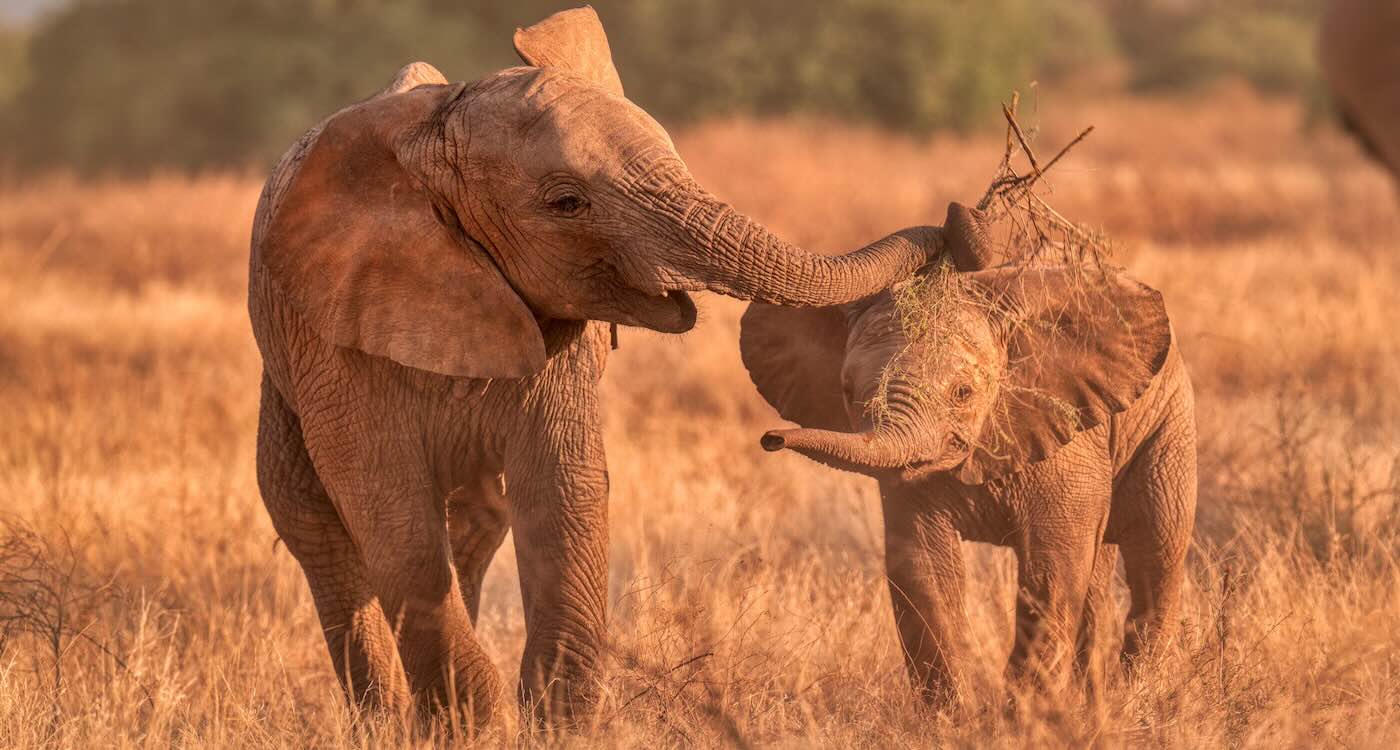
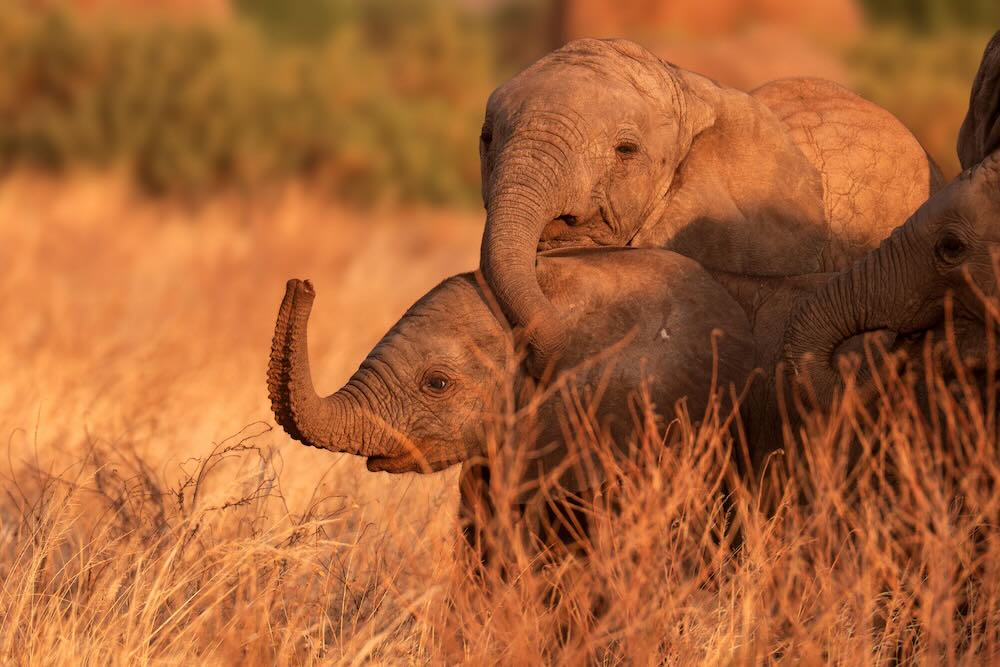
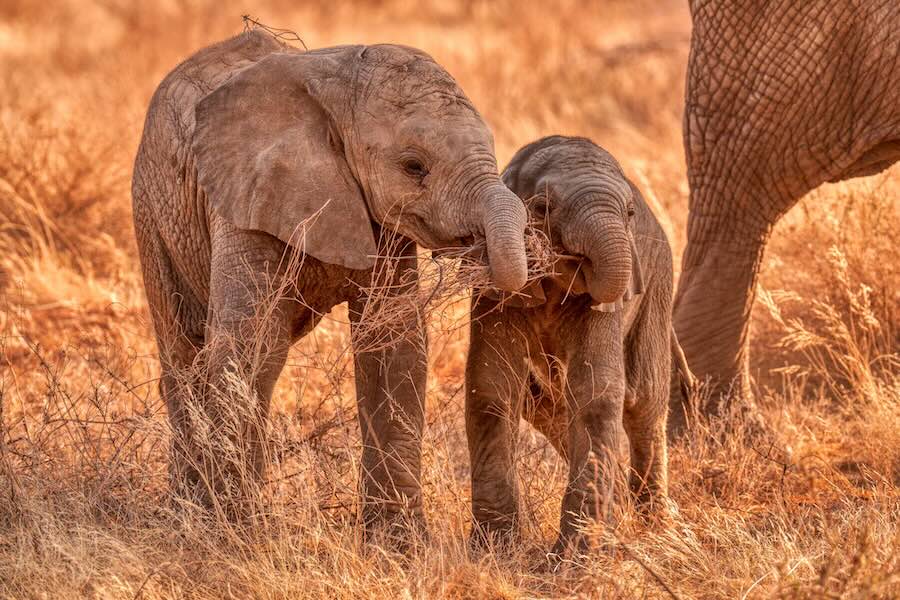
Andy Rouse documented the African herd in Kenya and described the playful young calves that were fascinated with branches.
In the setting sun, the British tour guide shot pics of the small elephants while they played tug-of-war and ran toward Andy’s vehicle pretending to charge it.
“I lead safari tours several times a year and love going to Samburu in Kenya because the elephants there are special,” he told SWNS news agency.
“They are very very relaxed and, because of this, the herds will let you get very close to them and will pass close to vehicles without any issues.
“I am completely relaxed with the incredible elephants of Samburu. On this occasion we found a large breeding herd with several youngsters less than 3 months old, who were very playful.
Andy Rouse / SWNS
“We positioned the vehicle well ahead of them so the matriarch had time to get used to us and felt comfortable.
“It’s so important when you work with elephants—as I have done for all of my 25-year career—that you understand them and work within their tolerances.
“The female and the herd settled around us grazing. The calves took it upon themselves to create havoc, chasing birds, doing mock charges to our vehicle and playing tug-of-war with branches.
“Their antics made us laugh out loud.”
Andy Rouse / SWNS
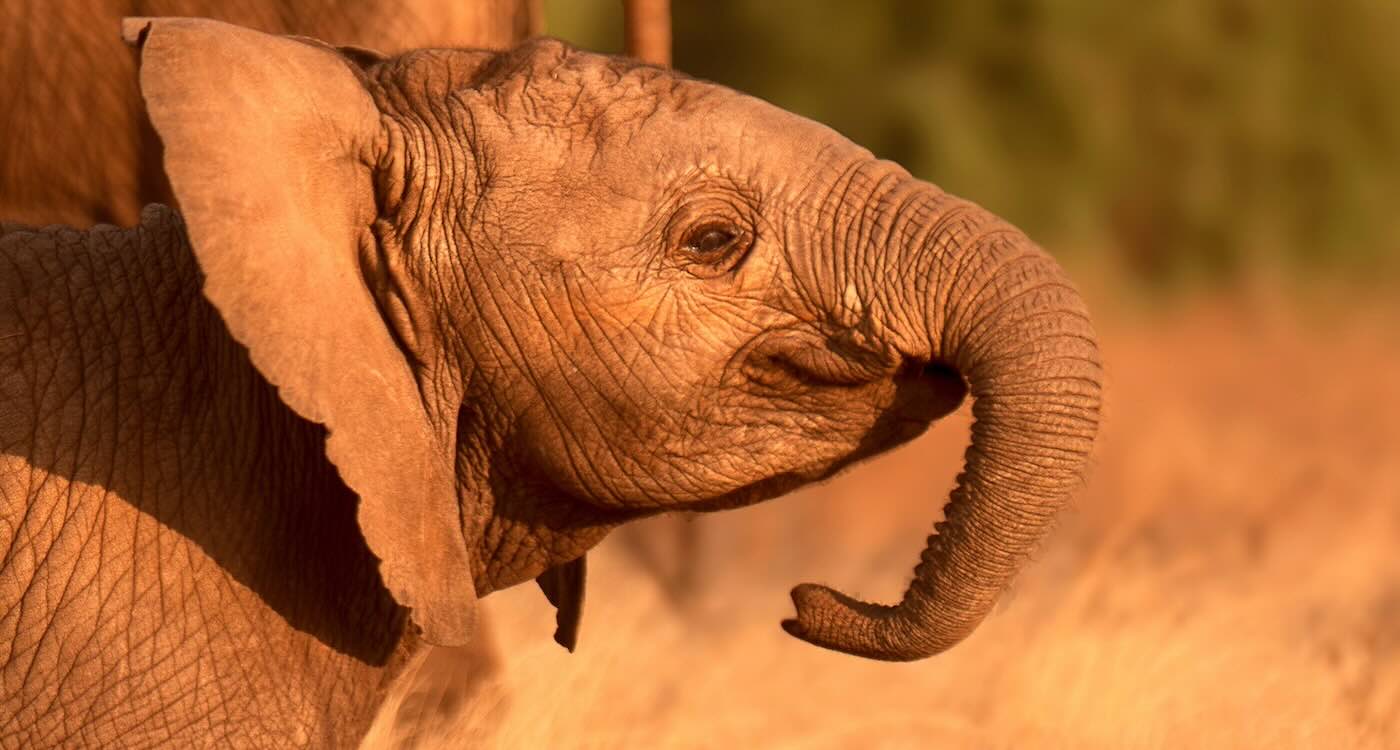
“Young elephants are lovable idiots and I so love working with them.
“The thirty minutes that we spent with this herd was all the more special as I had my 10-year-old daughter on her first safari.
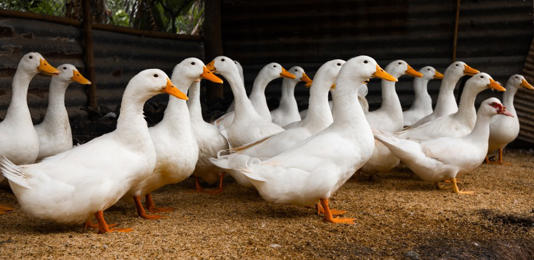
Prepare for the Wisconsin waterfowl seasons opening soon.Photo credit: Wisconsin DNR
MADISON, Wis. – The Wisconsin Department of Natural Resources (DNR) reminds hunters to prepare for the opening of the regular goose and duck hunting seasons in September.
Regular Goose Season
The regular goose season opens on Sept. 16 statewide, and the daily bag limit is three Canada geese for the first portion of the season. During the holiday hunt, the daily bag limit increases to five birds in the Southern and Mississippi zones. Wisconsin’s regular goose season dates vary by zone, so hunters should know which zone they plan to hunt.
If hunting Canada geese during the regular Canada goose season, a Regular Canada goose permit is required.
The regular Canada goose season structure is as follows:
Northern Zone – Sept. 16 to Dec. 16
Southern Zone – Sept. 16 to Oct. 12, Oct. 18 to Dec. 7 and Dec. 20 to Jan. 2, 2026
Mississippi Zone – Sept. 16 to Oct. 12, Oct. 18 to Dec. 7 and Dec. 20 to Jan. 2, 2026
Regular Duck Season
The regular duck season structure is as follows:
Northern Zone – Sept. 27 to Nov. 25
Southern Zone – Oct. 4 to 12 and Oct. 18 to Dec. 7
Open Water Zone – Oct. 18 to Dec. 16
The daily bag limit statewide is six ducks, including no more than:
Four mallards, of which two may be hens.
Three pintail
Three wood ducks
Two black ducks
Two redheads
Two canvasbacks
For species of ducks not listed, such as teal and ring necks, the combined total with all other species may not exceed six ducks. Hunters are allowed five mergansers, of which two may be hooded mergansers.
Per U.S. Fish and Wildlife Service regulations, the daily scaup bag limit by zone is as follows:
Northern Zone – 2 scaup/day, Sept. 27 to Nov. 10 and 1 scaup/day, Nov. 11-25
Southern Zone – 1 scaup/day, Oct. 4 to 12, Oct. 18 to 23 and 2 scaup/day, Oct. 24 to Dec. 7
Open Water Zone – 2 scaup/day, Oct. 18 to Dec. 1 and 1 scaup/day, Dec. 2 to Dec. 16
License Requirements
Licenses and stamps required for duck hunting include a Wisconsin small game license, a Wisconsin waterfowl stamp and a federal migratory bird stamp. The federal duck stamp costs $25 and can be purchased at a U.S. Post Office or via Go Wild or a DNR license vendor for an additional $3.50 surcharge. The purchase will be noted on their license, but the stamp itself will arrive in the mail later.
Harvest Information Program (HIP)
Waterfowl and other migratory bird hunters must register each year with the federal Harvest Information Program and may receive a survey regarding their harvests. HIP registration is free and can be done at the time of license purchase or added later if a hunter decides to pursue migratory game birds.
State licenses and stamps, permits and HIP registration are all available through Go Wild.
Highly Pathogenic Avian Influenza (HPAI)
Waterfowl can be infected with the avian influenza virus without showing signs of disease. The DNR recommends the following precautionary measures:
Avoid handling sick or found dead birds.
Prevent dogs from contacting sick or found dead birds.
Wear rubber gloves when handling game.
Field dress in ventilated areas.
Always wash hands and equipment thoroughly with soap and water.
This strain of HPAI has not been shown to pose a food safety risk. However, hunters should always ensure proper handling of game meat, and harvested birds should be cooked to an internal temperature of 165 degrees Fahrenheit. Do not let hunting dogs consume any raw game meat or found dead birds.
Per- And Polyfluoroalkyl Substances (PFAS)
The DNR also reminds hunters who hunt on Green Bay that a new PFAS advisory is in place for harvested mallards and wood ducks. More information on current PFAS advisories can be found on the DNR’s PFAS Consumption Advisory webpage.
More information on waterfowl hunting, including how to find places to hunt, Learn To Hunt opportunities and regulations, can be found on the DNR’s Waterfowl Hunting webpage.
More than 400 vultures died in a spate of poisoning events in and near South Africa’s Kruger National Park in May and June this year.
André Botha, co-chair of the Vulture Specialist Group at the IUCN, says more than 2,000 vultures have been poisoned in the wider Greater Limpopo Transfrontier Conservation Area (GLTFCA) since 2015, and other raptors and predators have also died.
Observers have noted an increase in hunting and snaring of species such as impala for the bushmeat trade, with poachers frequently leaving poison-laced carcasses behind to deliberately kill carnivores or vultures.
Botha and others stress that urgent action is needed to rein in poisoning and wildlife crime in the GLTFCA, particularly preventative engagement with communities.
See All Key Ideas
A spate of poisoning events this year has killed more than 400 vultures in and near South Africa’s Kruger National Park.
In May, 49 vultures died after feasting on a poisoned giraffe carcass. A similar incident soon afterward killed 123 vultures, the vast majority critically endangered white-backed vultures (Gyps africanus). Later that same month, another incident, in the nearby Lionspruit Game Reserve, claimed the lives of more than 100 vultures. In late June, a further 127 vultures along with seven crocodiles and a black-backed jackal died after a buffalo was laced with poisoned in Kruger.
These events caused a media stir, but they also only tell part of the story, says André Botha, co-chair of the Vulture Specialist Group at the IUCN, the global wildlife conservation authority. Since 2015, more than 2,000 vultures have been poisoned in Kruger National Park and the wider Greater Limpopo Transfrontier Conservation Area (GLTFCA).
“The media spin placed on the most recent of these incidents seems to totally ignore this fact and the lack of coordinated action to address this challenge by the statutory institutions, especially on the South African side,” Botha says.
A mass poisoning incident claimed the lives of 120 vultures in Kruger National Park in May this year. Image courtesy of the Endangered Wildlife Trust.
The GLTFCA spans a conservation area of roughly 35,000 square kilometers (13,500 square miles) — an area that straddles the borders of South Africa, Mozambique and Zimbabwe, and includes protected areas like Kruger, Limpopo and Gonarezhou national parks.
Data from the African Wildlife Poisoning Database, operated by the Endangered Wildlife Trust and the Peregrine Fund, suggest around 2,410 vultures have died from poisoning in the GLTFCA in the past decade — 1,928 of those in the South African side of the area. Data from SANParks, the government agency that manages South Africa’s national parks, suggest approximately 694 vultures have been killed by poisoning in Kruger National Park since 2017.
Botha says the largest concentration of incidents has occurred in the northern part of Kruger, and that the true number of vultures killed over the past decade may be even higher.
Poaching and poisoning are not new to the area, which has been beset by both rhino and elephant poaching. But recent trends suggest increased targeting of vultures, according to multiple experts.
Another vulture poisoning incident in May killed more than 100 vultures. Image courtesy of Vulpro.
Kerri Wolter, CEO of Vulpro, a vulture conservation nonprofit, says these events are part of an organized strategy by poachers to rid the landscape of vultures as they can act as an early warning for rangers. “What’s alarming about these incidents that have happened of late is that there were no body parts removed,” she says. “One has to assume that it’s related to the poachers actually trying to get rid of and eradicate vultures in our skies.”
This poisoning also affects numerous other species, with experts noting a shift toward carnivore poisoning and poaching in recent years in Kruger and the wider GLTFCA.
Across the GLTFCA, approximately 53 lions have been killed by poison since 2015, compared to 12 the previous decade. According to data from the Endangered Wildlife Trust, 30 lions died from human-linked causes in Kruger in the last two years alone; 10 were caught in snares and 14 poisoned. Other species swept up in this crisis include numerous species of raptors, hyenas and leopards.
Experts underline that the ripple effects of such events across the ecosystem can be large, as vultures play a key role as scavengers in the region, cleansing the landscape of carcasses. This year’s vulture poisoning incidents occurred during the breeding season, which means the true number of casualties is likely higher, Wolter says: “Vultures are late to mature and only lay one egg a year, so to lose breeding pairs is catastrophic.”
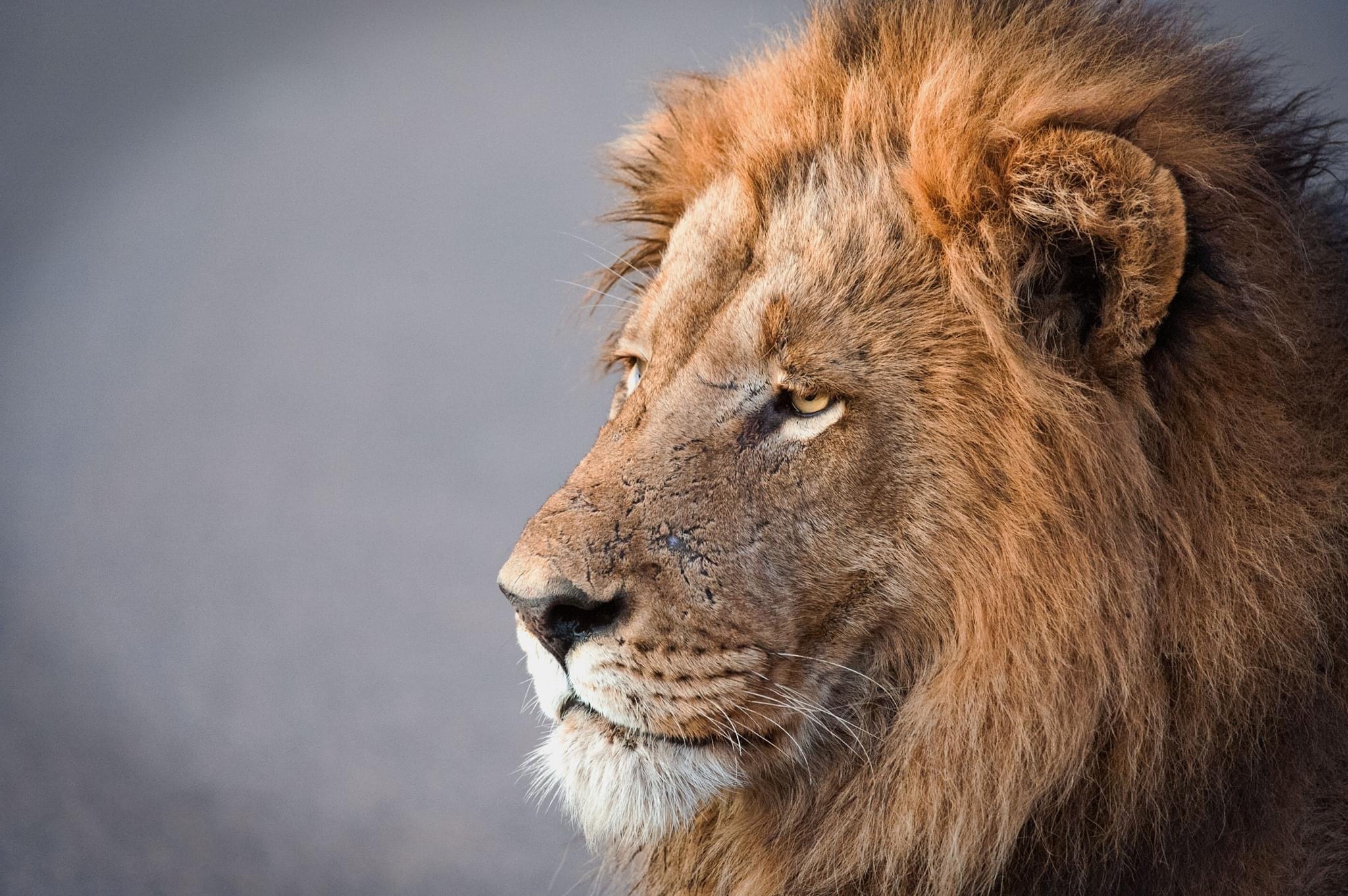
A male lion in Kruger National Park. Carnivores are also impacted by poisoning in Kruger and the wider GLTFCA. Image courtesy of Marnus Roodbol/Endangered Wildlife Trust.
Rising carnivore casualties
Commercial hunting of species such as impala or bushbuck for the bushmeat trade has led to increasing numbers of carnivore casualties, with experts noting an uptick in hunting and snaring since the COVID-19 pandemic. After harvesting a carcass for meat, poachers often lace it with poison to deliberately kill carnivores or vultures, Botha says. “That’s sort of what’s been going on the last five years.”
That’s played a part in a notable decline in lion populations in the northern part of Kruger, according to research by EWT. “You have two scenarios with lion poisoning. You have a direct targeting of lions, and then you have almost like the bycatch or by accident,” says Marnus Roodbol, EWT’s lion project manager.
“The most mortalities we’ve had the last couple of years has been through snaring, where they put out snares to catch bushmeat.”
When hunters find a lion in their traps, he says, they harvest the body. Multiple lion parts — including stomach fat, claws, teeth, tails and paws — are taken for the local and international wildlife trade, where they’re often used in traditional medicine.
“Poisoning is not a new trend. It’s been ongoing for quite some time,” says Annette Hübschle, a researcher at the University of Cape Town. In 2018, she carried out a baseline assessment of poisoning in the GLTFCA that identified key drivers of poisoning. Back then, her finding was that human-wildlife conflict was one of the biggest issues, often in reaction to carnivores preying on livestock. At the time of her research, vultures were rarely targeted deliberately, but were among the worst-hit species.
Hübschle urges caution in attributing the recent vulture poisoning in Southern Africa to traditional medicine. While in some cases vulture parts have been harvested, likely for muthi, the local practice of traditional medicine, her research hasn’t found that this plays a significant role in this region.
She also points out that ready access to pesticides facilitates the poisoning. This makes it not only a wildlife conservation issue, but also something that directly impacts human health. Last year, nearly two dozen schoolchildren died in South Africa and hundreds more people fell ill due to food contaminated with pesticides, including aldicarb, an agricultural pesticide frequently detected at vulture poisoning incidents.
“These horrendous [vulture] poisonings in the last few weeks are also shining a limelight on this intersection that it’s not just wildlife that are impacted, but usually people are involved, and there are impacts on humans and their livelihoods as well,” Hübschle says, adding there’s little knowledge of poison supply chains and how they operate across Southern Africa.
An impala in Kruger National Park. Since the COVID-19 pandemic, experts note an increase in bushmeat hunting that’s having a knock-on effect as snares and poisons target other species, including big cats. Image courtesy of the Peace Parks Foundation.
Raising alarm on vulture poisoning
In some ways the poisoning incidents this year are outliers, as in the previous 12 months or so, it seemed as though there was a shift away from targeting birds in the Greater Kruger area, according to John Davies, project coordinator of raptor conservation and research at EWT. “If a trend goes one way, it doesn’t mean that trend doesn’t reverse back again.”
In some parts of Southern and West Africa, demand for vulture parts is a driver of poisoning, but no evidence has emerged that hunting the raptors for traditional medicine was behind the recent spate of incidents. This is alarming for some observers trying to understand what else could have prompted a wave of targeted poisonings.
The primary reason is most likely poachers’ efforts to evade detection by law enforcement officials, according to Isaac Phaahla, communications manager at Kruger National Park.
“It is still uncertain as to whether this is being done to distract the rangers from other illegal activities (such as syndicated and commercial wildlife meat poaching), or to get access to body parts and derivatives from poisoned scavengers for selling,” he wrote in an email. “In these cases, the vulture carcasses have been left intact, leaving one to assume that the primary reason is most likely evading detection from law enforcement officials.”
Vultures in Kruger National Park. As scavengers, vultures are greatly impacted by poisoning. They’re also targeted in what is known as sentinel poisoning, as they can alert rangers to poaching activity. Since 2015, more than 2,400 vultures have died due to poisoning in the GLTFCA. Image by David Berkowitz via Flickr (CC BY 2.0).
If it’s not yet certain what’s caused a spike in vulture poisoning deaths, it is clear that if the trend continues, it will be catastrophic. In 2018, Campbell Murn, head of conservation, research and education at the Hawk Conservancy Trust, and others modeled the impacts on vultures of low and high levels of poisoning associated with poaching in Kruger National Park. The worst-case model — based on a major incident that causes levels of mortality seen in the Kruger poisonings this year occurring once every two years — would see populations of vultures plummet to local extinction in as little as five decades.
The poisoning situation today is far worse than that worst-case model, Murn says. “The next six months are going to be really telling in terms of what happens with this trajectory,” he adds.
Botha says he’s hopeful that the high profile of poisoning created by the recent incidents will result in concrete action from the authorities. But experts also underline that urgent action is needed to rein in poisoning and wildlife crime in the GLTFCA, moving beyond the reactive response that prevails today. “The biggest thing that’s lacking is the preventative engagement with communities,” Botha says.
Ogada, D., Botha, A., & Shaw, P. (2015). Ivory poachers and poison: Drivers of Africa’s declining vulture populations. Oryx, 50(4), 593-596. doi:10.1017/S0030605315001209
Mashele, N. M., Thompson, L. J., & Downs, C. T. (2021). Uses of vultures in traditional medicines in the Kruger to Canyons Biosphere Region, South Africa. Journal of Raptor Research, 55(3), 328-339. doi:10.3356/JRR-20-36
Murn, C., & Botha, A. (2017). A clear and present danger: Impacts of poisoning on a vulture population and the effect of poison response activities. Oryx, 52(3), 552-558. doi:10.1017/S0030605316001137
The Wisconsin Department of Natural Resources (DNR) is reminding hunters and residents to help protect the state’s deer herd by following baiting and feeding bans. Even in counties without restrictions, the agency urges the public to avoid these practices to reduce the risk of spreading disease.
Baiting refers to placing substances such as food, grains, salts, minerals, or scented materials to attract wild animals for hunting. Feeding is defined as placing materials to attract or feed wildlife for non-hunting purposes, including recreational or supplemental feeding, except for what is allowed for birds and small mammals.
Both activities cause deer to gather in unnatural numbers at concentrated sites, which can accelerate the spread of chronic wasting disease (CWD). The disease is passed through direct contact between infected and healthy deer or indirectly through contaminated environments.
CWD is an incurable neurological disease affecting deer, elk, moose, and caribou. It is caused by abnormal proteins, called prions, that damage the nervous system. Infected animals shed these prions in saliva, urine, feces, and blood. Once present, the prions can persist in the soil for years, making it easy for healthy deer to become exposed and difficult to contain outbreaks.
To reduce these risks, state law requires the DNR to enact baiting and feeding bans in any county where CWD has been confirmed in wild or captive deer, as well as in neighboring counties within 10 miles of a positive case. By statute, bans remain in effect for three years when CWD is found within a county and two years in adjoining counties.
If additional cases are detected during that period, the ban resets, extending restrictions another two to three years.
Exceptions are allowed for feeding birds and small mammals, provided feeders are placed within 50 yards of a home and designed to prevent deer access.
First US case of H5N9 bird flu strain found in California
MERCED COUNTY, Calif. (KSEE/KGPE) – The country’s first case of H5N9 bird flu has been identified in Merced County, California, officials say.
This H5N9 strain, which was identified earlier this month, is different from the H5N1 strain that had already been documented in multiple cases across the U.S. According to the Centers for Disease Control and Prevention, there have been more than 60 people who have been sickened and one person who was killed by H5N1.
In a notification, the World Organisation for Animal Health confirmed that the strain detected in Merced County is a new strain in the country. The investigation began on Nov. 23, 2024, and it was confirmed on Jan. 13 that “this is the first confirmed case of HPAI H5N9 in poultry in the United States.”
The USDA Animal and Plant Health Inspection Service (APHIS), in conjunction with State Animal Health and Wildlife Officials, are conducting comprehensive epidemiological investigations and enhanced surveillance in response to the HPAI related events.World Organisation for Animal Health
This strain of H5N9 was found in a commercial duck premises in Merced County. The specific location of the facility was not officially released.
The announcement states that control measures have been undertaken in an attempt to contain the virus, including control of movement, surveillance and quarantine. The report from the World Organisation for Animal Health also stated that a total of 118,954 birds were killed in December after state officials quarantined the affected area.
Bird flu is primarily spread by wild birds such as ducks and geese as they migrate. While it is fatal to a variety of animals, those species can generally carry it without getting sick, which offers the virus a chance to mutate and thrive.
The virus can be spread through droppings or any interaction between farm-raised poultry and wild birds. It’s also easily tracked into a farm on someone’s boots or by vehicle.
The virus found another new host when dairy cattle started getting sick last March. That creates more opportunities for the virus to linger and spread and unlike poultry, cattle aren’t slaughtered when they get sick because they rarely die from bird flu.
Nearly all of the people infected with bird flu worked around sick animals. Health officials haven’t yet found evidence of the disease spreading from person to person.

 Prepare for the Wisconsin waterfowl seasons opening soon.Photo credit: Wisconsin DNR




 Exposing the Big Game