Bird flu has claimed its first Australian sea lion and dolphin. How does the virus get into these animals?
Reply

By Jackie Ourada  , Managing editor Nebraska Public Media
Sept. 14, 2026, 1:02 p.m. · 4 min read
Western Nebraska hunters navigating changed landscapes after wildfire year | Nebraska Public Media

Nebraskans’ camouflage hunting attire isn’t blending into some of the state’s charred landscapes this fall.
It’s been nearly six months since two mammoth wildfires tore through the Panhandle and southwestern Nebraska. The Morrill Fire and Cottonwood Fire scorched more than 700,000 combined acres in mid-March. And it’s been even more recent that the South Fork Fire tore through 40,000 acres in northwestern Nebraska – at one point threatening Fort Robinson, Nebraska’s largest state park.
As hunters return to those fields this fall, they’re sifting through a variety of field conditions, according to the Nebraska Game and Parks Commission. Hunter Baillie, the Northwest District supervisor for Game and Parks’ Wildlife Division, said the wildfire aftermath could impact deer harvest counts, but he expects numbers to remain the same overall for other animals like elk and pronghorn antelope.
“There’s probably a potential impact of harvest during the deer season on our public areas,” Baillie said. “There’s going to be deer – I imagine just not as many. Some folks may just not hunt some of those areas, also.”
September is also the time for mourning dove hunting and grouse hunting.
Rick Arnold, a Game and Parks wildlife biologist based near Crawford said parts of the burned South Fork Fire area vary considerably. Recent rainfall has created flash flooding through parts, while some of the most drought-stricken areas are still barren.
“We’re starting to green up pretty well on the Peterson Wildlife Management Area,” Arnold said. “Fort Rob is doing so-so, and then the north side of that burn is still pretty bare. I think we’re in a D4 (extreme) drought in the southwestern corner of Dawes County – just pretty miserable, honestly. Sioux County is really crispy. Has been since the South Fork Fire.”
The Nebraska Game and Parks Commission is warning hunters that do venture out to be cautious of the recovering landscape. Some trees may appear green and alive but are actually nearing mortality and could fall the next time a strong wind gust rips through.
“They look like they’re alive. They’re green on the top, but you go to the backside of the tree – where that wind swirled on the backside and burned half of that tree off – and it’s severely compromised. It’s just essentially green off its reserves, and eventually it’s going to die,” Arnold said.
There may also be deep holes created by fires in trees’ rootballs, creating craters of ash. And large sections of fencing that separated public and private lands still need to be reconstructed. Hunters will have to be mindful of not crossing into private land if they’re hunting through public areas.
Arnold predicts the overall public hunting area around Fort Robinson may not garner as much hunting interest this year compared to hunting on private lands, but monitoring by the Game and Parks employees shows animals are still in those areas, despite the charred grounds.
“I think it’s going to be pretty discouraging when folks show up and it’s a burned landscape. It’s not green, lush pine trees. There’s areas where it’s scorched earth. But you know, running trail cameras and checking water tanks – those deer, elk and turkeys… Everything’s moving and utilizing the burn area. Maybe just not at the densities they did,” Arnold said.
Other parts of Nebraska that were burned earlier this year are recovering fairly well six months later. Baillie was just out hunting on ground that was torched from the Morrill Fire in the Sandhills.
“It’s still not what everyone wants it to be for sure, but we hunted the Crescent Refuge, and we observed over 40 mule deer within that area,” Baillie said. “So it’s good to see wildlife using that area.”
The wildlife experts said all the burned areas may bring a better landscape for animals – and subsequently, for hunting – in just a few years.
“There’s potential for long-term impacts that are positive, especially when you’re talking wildlife,” Baillie said. “It modifies the plant communities. It changes the plant diversity, increases the amount of forage, the broadleaf plants, shrubs.”
Improvement will vary depending on the areas, Baillie and Arnold said. Some of the open grasslands are already seeing lush, green fields return. But some of the areas that had denser tree regrowth in the last several decades may take more time to recover. But the two expect a better hunting landscape if the late summer and early rains cooperate.
“We’ve been through this in 2006. We’ve been through it in 2012,” Arnold said. “We’ve had some banner fire years in the Pine Ridge and elsewhere, but some of that 2012 footprint [made] the best mule deer habitat we have. It’s created more open stands, more woody browse. The mule deer are more visibility-dependent, whereas whitetails are more of that close canopy, more of a forested landscape, if you will.”
Get the latest from around Nebraska delivered to your inbox
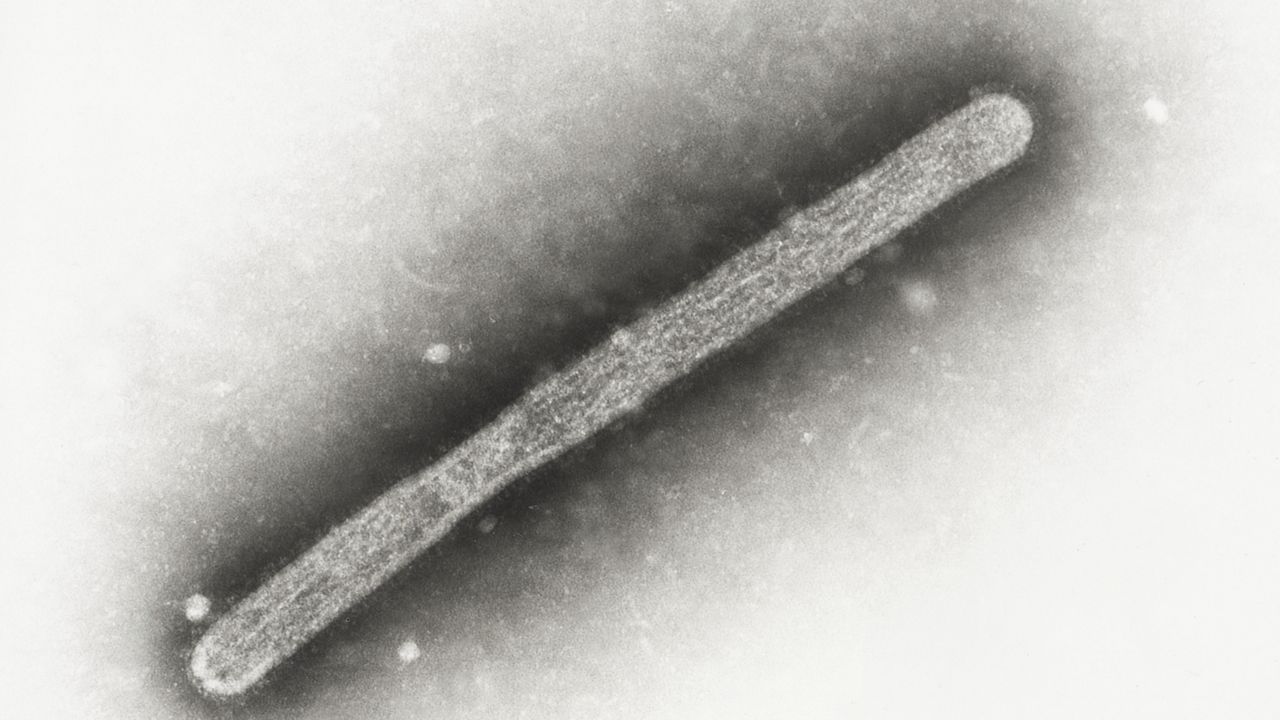
(Cynthia Goldsmith, Jackie Katz/CDC via AP)
HEALTH
BY Rachel Ryan Wisconsin
PUBLISHED 12:46 PM ET Sep. 15, 2026
BARRON COUNTY, Wis. — Avian flu has been found on a commercial poultry farm in Barron County, according to the Wisconsin Department of Agriculture, Trade and Consumer Protection.
There is a total of 79,088 birds on the farm, which is now being quarantined and depopulated.
It’s the first case of avian flu in a poultry flock in the state since March and the fifth this year. All the previous cases were found in southern Wisconsin.
Four of the five cases in 2026 were in commercial farms, two in Jefferson County, one in Walworth County, and now the new one in Barron County.
One of the five was found in a backyard flock in Dane County.
In Barron County alone, there have been 12 cases of avian flu since 2022. The 2026 case is the first since 2024.
The highly contagious sickness has been circulating in North America since Dec. 2021. It’s often fatal to domestic poultry and is caused by influenza type A viruses, according to DATCP.
It can be spread when coming in contact with an infected bird or “commingling with wild birds or their droppings, equipment or clothing worn by anyone working with the animals.”
Avian flu found in commercial poultry flock in Barron County

