16 Sep 2025Africa
CommentsShare article https://news.mongabay.com/2025/09/poisoning-crisis-could-drive-vulture-extinction-in-south-africas-kruger-region/
- More than 400 vultures died in a spate of poisoning events in and near South Africa’s Kruger National Park in May and June this year.
- André Botha, co-chair of the Vulture Specialist Group at the IUCN, says more than 2,000 vultures have been poisoned in the wider Greater Limpopo Transfrontier Conservation Area (GLTFCA) since 2015, and other raptors and predators have also died.
- Observers have noted an increase in hunting and snaring of species such as impala for the bushmeat trade, with poachers frequently leaving poison-laced carcasses behind to deliberately kill carnivores or vultures.
- Botha and others stress that urgent action is needed to rein in poisoning and wildlife crime in the GLTFCA, particularly preventative engagement with communities.
See All Key Ideas
A spate of poisoning events this year has killed more than 400 vultures in and near South Africa’s Kruger National Park.
In May, 49 vultures died after feasting on a poisoned giraffe carcass. A similar incident soon afterward killed 123 vultures, the vast majority critically endangered white-backed vultures (Gyps africanus). Later that same month, another incident, in the nearby Lionspruit Game Reserve, claimed the lives of more than 100 vultures. In late June, a further 127 vultures along with seven crocodiles and a black-backed jackal died after a buffalo was laced with poisoned in Kruger.
These events caused a media stir, but they also only tell part of the story, says André Botha, co-chair of the Vulture Specialist Group at the IUCN, the global wildlife conservation authority. Since 2015, more than 2,000 vultures have been poisoned in Kruger National Park and the wider Greater Limpopo Transfrontier Conservation Area (GLTFCA).
“The media spin placed on the most recent of these incidents seems to totally ignore this fact and the lack of coordinated action to address this challenge by the statutory institutions, especially on the South African side,” Botha says.

The GLTFCA spans a conservation area of roughly 35,000 square kilometers (13,500 square miles) — an area that straddles the borders of South Africa, Mozambique and Zimbabwe, and includes protected areas like Kruger, Limpopo and Gonarezhou national parks.
Data from the African Wildlife Poisoning Database, operated by the Endangered Wildlife Trust and the Peregrine Fund, suggest around 2,410 vultures have died from poisoning in the GLTFCA in the past decade — 1,928 of those in the South African side of the area. Data from SANParks, the government agency that manages South Africa’s national parks, suggest approximately 694 vultures have been killed by poisoning in Kruger National Park since 2017.
Botha says the largest concentration of incidents has occurred in the northern part of Kruger, and that the true number of vultures killed over the past decade may be even higher.
Poaching and poisoning are not new to the area, which has been beset by both rhino and elephant poaching. But recent trends suggest increased targeting of vultures, according to multiple experts.

Kerri Wolter, CEO of Vulpro, a vulture conservation nonprofit, says these events are part of an organized strategy by poachers to rid the landscape of vultures as they can act as an early warning for rangers. “What’s alarming about these incidents that have happened of late is that there were no body parts removed,” she says. “One has to assume that it’s related to the poachers actually trying to get rid of and eradicate vultures in our skies.”
This poisoning also affects numerous other species, with experts noting a shift toward carnivore poisoning and poaching in recent years in Kruger and the wider GLTFCA.
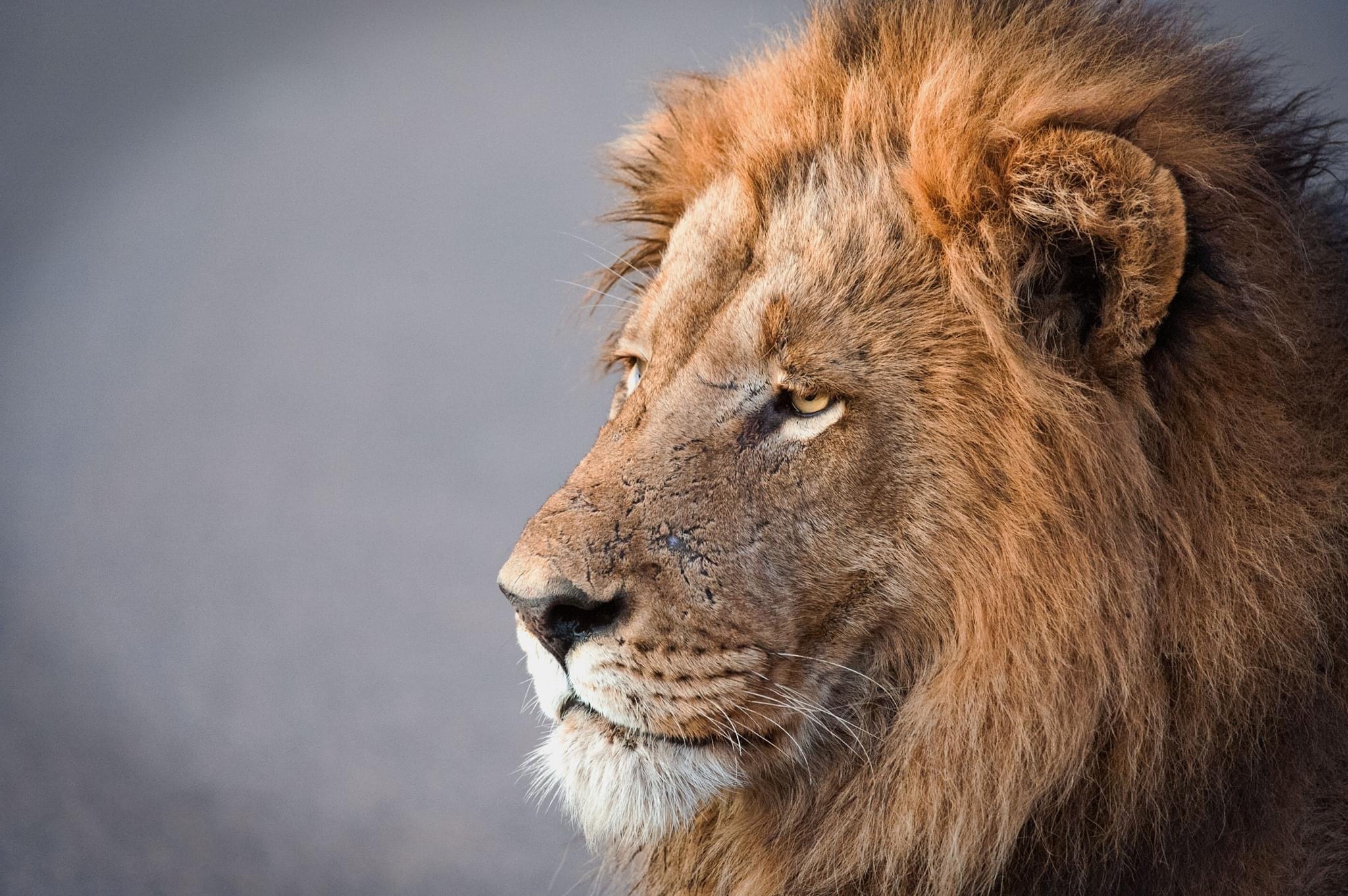
Across the GLTFCA, approximately 53 lions have been killed by poison since 2015, compared to 12 the previous decade. According to data from the Endangered Wildlife Trust, 30 lions died from human-linked causes in Kruger in the last two years alone; 10 were caught in snares and 14 poisoned. Other species swept up in this crisis include numerous species of raptors, hyenas and leopards.
Experts underline that the ripple effects of such events across the ecosystem can be large, as vultures play a key role as scavengers in the region, cleansing the landscape of carcasses. This year’s vulture poisoning incidents occurred during the breeding season, which means the true number of casualties is likely higher, Wolter says: “Vultures are late to mature and only lay one egg a year, so to lose breeding pairs is catastrophic.”
Rising carnivore casualties
Commercial hunting of species such as impala or bushbuck for the bushmeat trade has led to increasing numbers of carnivore casualties, with experts noting an uptick in hunting and snaring since the COVID-19 pandemic. After harvesting a carcass for meat, poachers often lace it with poison to deliberately kill carnivores or vultures, Botha says. “That’s sort of what’s been going on the last five years.”
That’s played a part in a notable decline in lion populations in the northern part of Kruger, according to research by EWT. “You have two scenarios with lion poisoning. You have a direct targeting of lions, and then you have almost like the bycatch or by accident,” says Marnus Roodbol, EWT’s lion project manager.
“The most mortalities we’ve had the last couple of years has been through snaring, where they put out snares to catch bushmeat.”
When hunters find a lion in their traps, he says, they harvest the body. Multiple lion parts — including stomach fat, claws, teeth, tails and paws — are taken for the local and international wildlife trade, where they’re often used in traditional medicine.
“Poisoning is not a new trend. It’s been ongoing for quite some time,” says Annette Hübschle, a researcher at the University of Cape Town. In 2018, she carried out a baseline assessment of poisoning in the GLTFCA that identified key drivers of poisoning. Back then, her finding was that human-wildlife conflict was one of the biggest issues, often in reaction to carnivores preying on livestock. At the time of her research, vultures were rarely targeted deliberately, but were among the worst-hit species.
Hübschle urges caution in attributing the recent vulture poisoning in Southern Africa to traditional medicine. While in some cases vulture parts have been harvested, likely for muthi, the local practice of traditional medicine, her research hasn’t found that this plays a significant role in this region.
She also points out that ready access to pesticides facilitates the poisoning. This makes it not only a wildlife conservation issue, but also something that directly impacts human health. Last year, nearly two dozen schoolchildren died in South Africa and hundreds more people fell ill due to food contaminated with pesticides, including aldicarb, an agricultural pesticide frequently detected at vulture poisoning incidents.
“These horrendous [vulture] poisonings in the last few weeks are also shining a limelight on this intersection that it’s not just wildlife that are impacted, but usually people are involved, and there are impacts on humans and their livelihoods as well,” Hübschle says, adding there’s little knowledge of poison supply chains and how they operate across Southern Africa.

Raising alarm on vulture poisoning
In some ways the poisoning incidents this year are outliers, as in the previous 12 months or so, it seemed as though there was a shift away from targeting birds in the Greater Kruger area, according to John Davies, project coordinator of raptor conservation and research at EWT. “If a trend goes one way, it doesn’t mean that trend doesn’t reverse back again.”
In some parts of Southern and West Africa, demand for vulture parts is a driver of poisoning, but no evidence has emerged that hunting the raptors for traditional medicine was behind the recent spate of incidents. This is alarming for some observers trying to understand what else could have prompted a wave of targeted poisonings.
The primary reason is most likely poachers’ efforts to evade detection by law enforcement officials, according to Isaac Phaahla, communications manager at Kruger National Park.
“It is still uncertain as to whether this is being done to distract the rangers from other illegal activities (such as syndicated and commercial wildlife meat poaching), or to get access to body parts and derivatives from poisoned scavengers for selling,” he wrote in an email. “In these cases, the vulture carcasses have been left intact, leaving one to assume that the primary reason is most likely evading detection from law enforcement officials.”

If it’s not yet certain what’s caused a spike in vulture poisoning deaths, it is clear that if the trend continues, it will be catastrophic. In 2018, Campbell Murn, head of conservation, research and education at the Hawk Conservancy Trust, and others modeled the impacts on vultures of low and high levels of poisoning associated with poaching in Kruger National Park. The worst-case model — based on a major incident that causes levels of mortality seen in the Kruger poisonings this year occurring once every two years — would see populations of vultures plummet to local extinction in as little as five decades.
The poisoning situation today is far worse than that worst-case model, Murn says. “The next six months are going to be really telling in terms of what happens with this trajectory,” he adds.
Botha says he’s hopeful that the high profile of poisoning created by the recent incidents will result in concrete action from the authorities. But experts also underline that urgent action is needed to rein in poisoning and wildlife crime in the GLTFCA, moving beyond the reactive response that prevails today. “The biggest thing that’s lacking is the preventative engagement with communities,” Botha says.
Banner image: A white-backed vulture in Kruger National Park. This critically endangered species is often a victim of poisoning incidents. Image by Brendan Ryan via Flickr (CC BY-NC-SA 2.0)https://news.mongabay.com/2024/11/vulture-poisonings-in-the-serengeti-alarm-conservationists/embed/#?secret=u41xjvigik#?secret=K2QOlqLEkp https://news.mongabay.com/2024/02/endangered-vulture-species-nesting-in-ghana-is-rare-good-news-about-raptors/embed/#?secret=x0PwjZFeoE#?secret=uIBxtM3eIQ https://news.mongabay.com/2024/06/action-plan-to-save-west-african-vultures-targets-threat-from-belief-based-use/embed/#?secret=SeLdzj4T1x#?secret=n16IiEp0HJ
Citation:
Ogada, D., Botha, A., & Shaw, P. (2015). Ivory poachers and poison: Drivers of Africa’s declining vulture populations. Oryx, 50(4), 593-596. doi:10.1017/S0030605315001209
Mashele, N. M., Thompson, L. J., & Downs, C. T. (2021). Uses of vultures in traditional medicines in the Kruger to Canyons Biosphere Region, South Africa. Journal of Raptor Research, 55(3), 328-339. doi:10.3356/JRR-20-36
Murn, C., & Botha, A. (2017). A clear and present danger: Impacts of poisoning on a vulture population and the effect of poison response activities. Oryx, 52(3), 552-558. doi:10.1017/S0030605316001137