Men accused of hare coursing in Cambridgeshire attend court
Reply

Reading Time:3 minutes
Listen
Further Reading
Discover MORE stories on
related topics
discover more stories from
Browse other locations
China
Asia
North America
Middle East
Europe
Russia and Central Asia
Oceania
Africa
Americas and Caribbean
NEWSLETTEREvery Monday
Pressing stories and in-depth analysis from the Asia region.
By submitting, you consent to receiving marketing emails from SCMP. If you don’t want these, tick here
By registering, you agree to ourT&CandPrivacy Policy
Before you go
scmp poll
Published: 9:30am, 13 Sep 2025Updated: 1:35pm, 13 Sep 2025
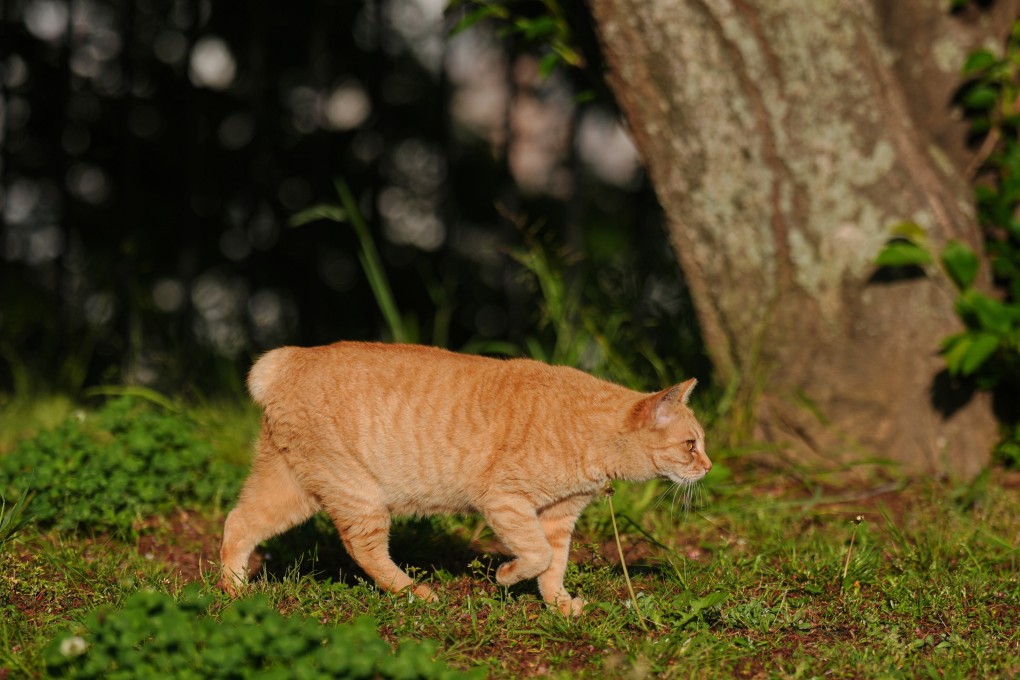
Police in southern Japan are investigating what animal welfare advocates fear is a pattern of deliberate cruelty, after at least 10 stray cats were found with a leg amputated and left untreated.
The first case surfaced roughly a year ago in Niihama, Ehime prefecture, where a stray was spotted with a front leg severed just above the knee. Since then, similar injuries have been reported on multiple cats in the area, with the most recent victim brought to a veterinary clinic in August.
Kaoru Matsuo, a volunteer at the Ehime Dog and Cat Association, has been treating the injured animals and coordinating rescue efforts with local residents. She believes the wounds are too clean and consistent to be accidental.
“When cats are involved in traffic accidents or caught in hunters’ traps, their legs are still often partially connected,” she told Ehime Broadcasting Corp. “But the cats that we have treated had their legs completely torn off.”
The local hunting association has assured police that no traps for boars have been set in the area recently, while experts have also ruled out attacks by wild animals on the grounds that the cats all appear to have suffered virtually identical injuries.
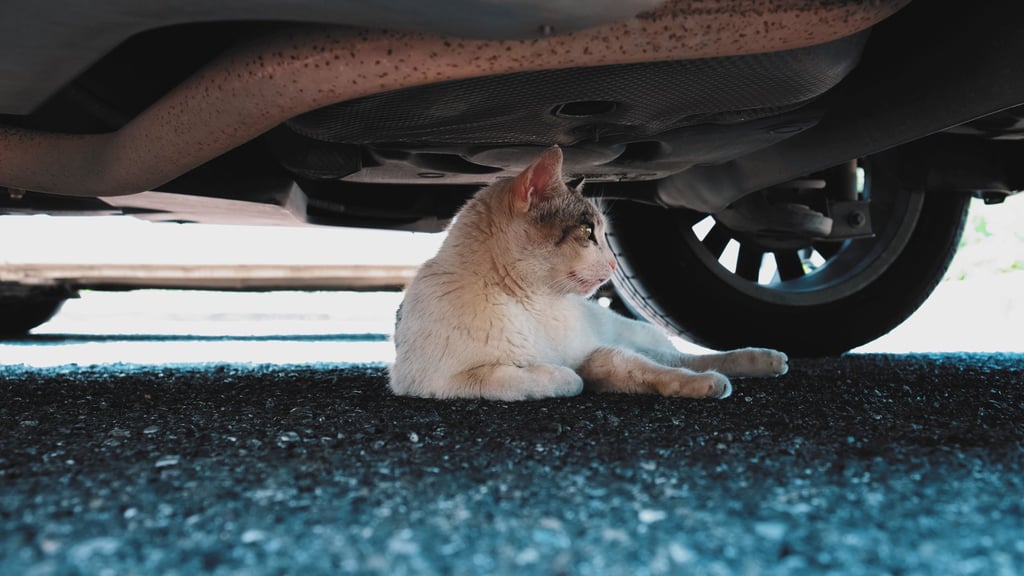
At least three other cats with amputated legs have been reported in the area, according to Matsuo, suggesting it is very likely they are being deliberately harmed.
In a message to the perpetrator, she said, “Please stop taking lives or harming animals for the purpose of mischief or abuse.”
Ren Yabuki, founder and director of the animal welfare NGO Life Investigation Agency, believed that this case and others like it were linked to discontent with Japanese society and factors ranging from financial hardship to stress and distrust of politics could have been a trigger for the offender.
“If this is not an accident but deliberate abuse, the perpetrator may be attempting to convey a message to society,” he told This Week in Asia. “They might cut off just one leg without killing the cat, release it back into the town and then secretly watch for it to be discovered.”
“This likely correlates closely with the increasing number of people diagnosed with mental disorders or similar symptoms within Japan, as well as with social anxiety,” he said.
Yabuki also blamed the proliferation of the internet for animal cruelty as “it facilitates the gratification of impulses to abuse others or to have others witness one’s abusive behaviour”.
“The internet enables the casual sharing of abusive acts and the acquisition of misguided validation,” he said.
The Niihama cases appear to reflect a broader and disturbing trend.
In March, police in Matsuyama City – also in Ehime prefecture – arrested 23-year-old Akimasa Sato on suspicion of violating Japan’s Animal Welfare Act. Sato allegedly tortured multiple cats both in his home and in a public park, including setting some on fire.
A similar case drew headlines abroad in August, when police in Sliema, Malta, arrested 31-year-old Japanese national Satoshi Okamura on charges of mutilating and killing cats.
Local authorities identified Okamura using security camera footage, which showed him committing the acts in public spaces. He resisted arrest, according to the Times of Malta, and is scheduled to be sentenced on Monday.
Okamura, who works as a game developer, has provoked widespread outrage among Malta’s Japanese expatriate community, who have raised more than €12,000 (US$14,075) for animal welfare organisations in response.

03:41
Survivors of Japan’s deadly earthquake struggle to pick up the pieces over a month since disaster
Survivors of Japan’s deadly earthquake struggle to pick up the pieces over a month since disaster
An online petition demanding the “maximum penalty” for Okamura – five years in prison and a €50,000 fine for each of the seven cats he killed – has also gained momentum.
“Animal Guardians Malta and all the people signing this petition are humbly demanding justice for each cat tortured by Satoshi Okamura,” the petition read, rejecting the possibility of probation or a suspended sentence.
One supporter commented on the petition: “As a fellow Japanese, I feel deeply ashamed. This cruel act is unforgivable and I demand the maximum penalty.”
Another added, “Deliver a sentence with a firm message: animal cruelty is unacceptable and will not be tolerated.”
Japanese government statistics show a record 181 violations of the animal welfare law in 2023 – the highest since data collection began and part of a sharp upwards trend over the past 15 years.
In 2010, when such figures were first compiled, just 33 people were arrested or referred to prosecutors for animal abuse. Most cases were reported by neighbours, while others were flagged by veterinarians or animal welfare groups.
Cats were the most frequent victims of abuse in 2023, accounting for 97 cases, followed by 65 involving dogs. There were also incidents of abuse involving horses, cows, ferrets and turtles. Many of the pets were abandoned, while others were not fed or were deliberately injured or killed.
Bob Irwin and animal rights organisations say Mike Holston – AKA ‘The Real Tarzann’ – should be deported from Australia
Joe HinchliffeTue 9 Sep 2025 23.38 EDTShare https://www.theguardian.com/australia-news/2025/sep/10/steve-irwin-father-bob-condemns-videos-influencers-wrestling-wild-crocodiles-calls-for-bigger-penalties
Online content creators who engage in “reckless stunts” with crocodiles should have so-called “dickhead legislation” thrown at them, and international influencers that do so in Australia should be “booted out the door”, Bob Irwin says.
The father of the late “Crocodile Hunter”, Steve Irwin, and lifelong crocodile advocate issued the rare statement after Queensland authorities confirmed they were investigating US influencer Mike Holston – who goes by the online moniker “The Real Tarzann” – for wrestling with wild crocodiles.
Irwin said he and colleagues gave the colourful nickname to the legislation – brought in to Queensland last year in an effort to crack down on dangerous crocodile interactions – after becoming increasingly concerned by “a runaway train” of online content “encouraging and glorifying harmful wildlife interactions”.
“And that’s because that’s exactly what content creators like the Real Tarzann are in my books – dickheads,” Irwin said. “Because anyone who harms wildlife for fun, is.”
Environmental legal advocates backed Irwin’s criticism, saying wildlife protection laws needed widespread reform for the digital age and that influencers who post videos of themselves handling native animals should face aggravated offences to combat the “Steve Irwin factor gone wrong”.
Animal rights organisations also said Holston should be deported for two posts in which he jumps on top of and restrains a freshwater and a juvenile saltwater crocodile.
The Queensland environment department issued a statement on Tuesday which said it was “actively investigating two videos circulating on social media”, which Holston has indicated were shot in Cape York.
The statement said the maximum penalty for interfering with a saltwater crocodile is $37,500, with an on-the-spot fine of $8,345.
Sign up: AU Breaking News email
“These actions are extremely dangerous and illegal, and we are actively exploring strong compliance action including fines to deter any person from this type of behaviour,” the statement said.
But Irwin said it was past time regulators enforced stricter laws against feeding and interfering with crocodiles Queensland enacted last September and “throw the book at these people”.
“The repeated line from our regulators [of] ‘we are investigating’ in response to these incidents is wearing thin,” he said.
“The message is only going to sink in when we see these so-called influencers held to account and understand that 15 million followers don’t make you exempt from the laws that protect our wildlife.
“It’s disappointing to understand that not one person has been prosecuted in Queensland since the new legislation was introduced.”
Crocodile advocate, Amanda French, pointed out that just weeks after Queensland’s new laws came into force, a Western Australian influencer filmed herself throwing a cooked chicken to a four-metre saltwater crocodile called Clyde. In July a Canadian influencer filmed himself wrangling a freshwater crocodile. The department said it could not pursue the first case for lack of evidence and was investigating the second.
“Freshies”, as they are known in north Queensland, are smaller and generally less aggressive and dangerous than their “saltie” cousins, which are the largest reptiles and one of the most dangerous creatures on Earth. Handling both species in the wild is illegal without proper authorisation and permits due to their protected status and the high risk of injury to both the animal and the handler.
French said a roughly $8,000-on-the-spot fine was an increase on previous reported statements and would hurt “a guy fishing in the wrong spot” but said it might not be enough to deter popular influencers.
“That’s a walk in the park for someone like that who is prepared to fly out to Australia, get as much content travelling around as he can and put it out on Instagram, TikTok, Facebook, YouTube,” she said.
French began working at Australia Zoo to organise its Steve Irwin Day after the death of the beloved croc wrangler in 2006 and went on to co-found the Community Representation of Crocodiles group. She wrote a book – The Last Crocodile Hunter – with Bob Irwin, with whom she remains “really close”.
French said she and Irwin feared they were witnessing the Crocodile Hunter’s legacy gone awry.
“[Steve Irwin] was the original influencer, there’s no doubt about that,” she said. “But there was no social media back then, there was no ability for people to go, ‘Hey, I’m going to go and do that, and monetise my account, and get that dramatic footage and I’ll be rewarded’.”
Holston has spoken about being inspired by Irwin, and French said social media feeds were thick with would-be influencers handling wildlife in what many claim are “educational” videos.skip past newsletter promotion
Sign up to Breaking News Australia
Free newsletter
Get the most important news as it breaks
Enter your email addressSign up
https://www.google.com/recaptcha/api2/anchor?ar=1&k=6Le7mFsrAAAAAD07aRCTHZe9u0EfvOiNe8Y0DMMV&co=aHR0cHM6Ly93d3cudGhlZ3VhcmRpYW4uY29tOjQ0Mw..&hl=en&type=image&v=44LqIOwVrGhp2lJ3fODa493O&theme=light&size=invisible&badge=bottomright&anchor-ms=20000&execute-ms=15000&cb=2eshbmfkgbcqPrivacy Notice: Newsletters may contain information about charities, online ads, and content funded by outside parties. If you do not have an account, we will create a guest account for you on theguardian.com to send you this newsletter. You can complete full registration at any time. For more information about how we use your data see our Privacy Policy. We use Google reCaptcha to protect our website and the Google Privacy Policy and Terms of Service apply.
after newsletter promotion
“That is not education,” French said. “It is glorifying illegal, harmful activity to our wildlife. “And the difference is: Steve Irwin had a permit.”
Such permits, she said, were hard to get and came with strict oversight.
French said wildlife protection laws must “get with the times” to deter this unintended “copycat effect”.

Among those long championing reform is Kirstiana Ward, who leads the early legal intervention team at the Environmental Defenders Office in Cairns.
Ward began advocating for strengthened laws to crack down on social media videos of wildlife interactions in earnest in early 2023 when a man was filmed stripping down to his budgie smugglers and entering a river known and signed as crocodile habitat in north Queensland with his rottweiler for a swim. The dog was attacked and killed within seconds by a 4.2-metre croc, which authorities later shot dead.
She had sought for last year’s crocodile interaction reforms to include “post and boast” laws.
Ward said she was conducting a review on wildlife protection laws across all jurisdictions in Australia. “We’re just seeing these laws being flouted across the country,” she said.
“We are now seeing deliberate interactions with crocodiles … but we’re seeing it with wombats, the Canadians and Americans, people coming over here and interfering with our wildlife and getting glorification and fame across the world because of their social media presence.
“It is such a big story now – it is a global story and it is an ongoing story.”
Ward describes the Holston videos as “absolutely abhorrent”, noting that the crocodiles, which were smaller than him, were “terrified”.
Peta Australia’s senior campaigns adviser, Mimi Bekhechi, said the videos were “incredibly cruel”, as crocodiles and all Australian wildlife “deserve to live in peace without fear that visiting influencers will tackle and roughly handle them”.
“Peta is calling on authorities to follow the investigation through to the end, and for Mike Holston to be punished to the full extent of the law, including being deported and banned from entering Australia again,” Bekhechi said.
Holston was contacted for comment.

