Georgia deer season starts today. Key dates and rules for 2026-27
Reply

For The Win
Famous Yellowstone wolf in peril as Wyoming hunting season looms
Updated Sept. 11, 2026, 6:51 p.m. ET
*UPDATE: Yellowstone Wolf Project Leader Dan Stahler told WyoFile late Tuesday (Sept. 11) that the Mollie’s Pack has “mostly been back in the park, and that includes the pups.” If that holds true, these wolves will be off-limits to hunters.
When wolf hunting begins Sept. 15 in Wyoming, at least two hunters will be targeting a famous wolf whose pack has a storied history inside Yellowstone National Park, dating to 1995.
The 12-year-old matriarch of the Mollie’s Pack is cataloged as Wolf 1090F. The pack relocated east of Yellowstone in late spring, inside the Shoshone National Forest and beyond the protection of park boundaries.
The pack denned within Wolf Hunt Area 1. In Wolf Hunt Area 1 and 2, the combined quota is four wolves.
As we reported last month, a hunter from Texas declared via social media that he’d be in Wyoming for opening day and that “the matriarch 1090F is going down.”

More recently, a hunter from Big Piney, Wyo., was quoted by the Cowboy State Daily as saying, “If I see her, I’ll harvest her.”
Advocacy groups have tried to persuade Wyoming to cancel hunting in Wolf Hunt Area 1, so far to no avail. But the advocacy will continue even after the start of the season.

The Mollie’s Pack, originally named the Crystal Creek Pack, was renamed in 2000 in honor of Mollie Beattie, who as director of the U.S. Fish & Wildlife Service oversaw the reintroduction of wolves into Yellowstone in 1995.
Beattie died of brain cancer, at age 49, in 1996.
Worried your pet might catch bird flu? Here’s what you can do
Sally Coggins
Sep 12, 2026, updated Sep 11, 2026Share
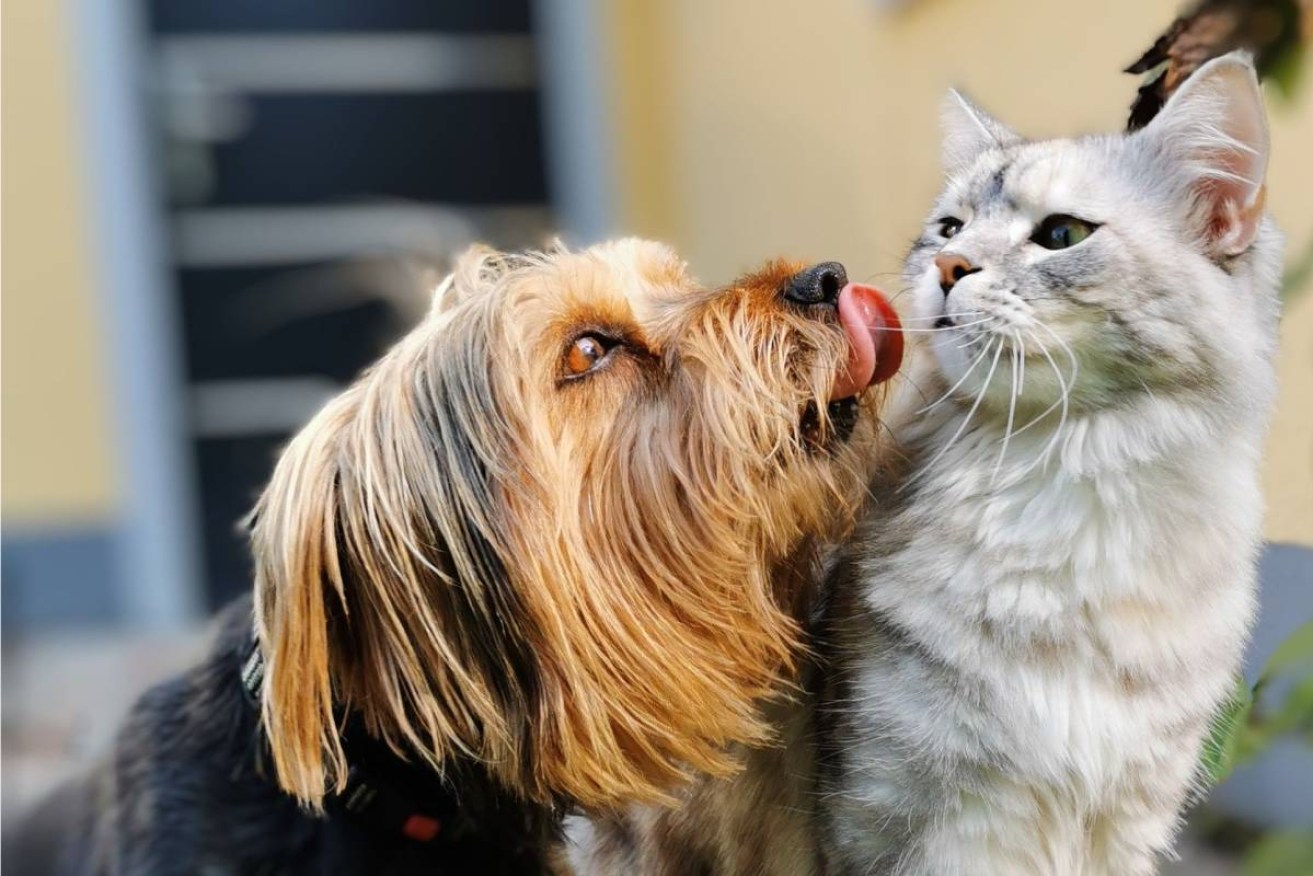
Like other animals, our pets are at risk of contracting bird flu. Photo: Pexels
As a veterinarian who studies infectious diseases in cats, I’ve been repeatedly asked whether Australia’s outbreak of the H5 bird flu poses a risk to pets. The short answer is yes.
As this lethal virus continues to infect more mammals, poultry farmers and backyard chook owners remain on high alert. But outbreaks overseas suggest pets – particularly cats – can also contract H5 bird flu and develop severe disease.
To date, Australia has not recorded any cases of the deadly H5 bird flu in pets and the risk to most cats and dogs remains very low. But if infection does happen, the consequences can be serious.
As a nation of pet owners – with 7.7 million Australian households sharing their homes with a pet – we must understand how cats and dogs may become infected, what signs to watch for and which practical measures can reduce exposure to H5 bird flu.
Cats and dogs can catch bird flu in four main ways:
H5 bird flu outbreaks abroad – including in Poland, South Korea and Belgium – suggest infected cats can deteriorate rapidly and often die within days of exposure. Dogs can also become infected but appear less vulnerable to severe sickness. Many develop only mild symptoms or none at all.
Currently, no vaccinations are available for pets, and there is limited data on whether existing influenza antivirals could be a safe and effective treatment for cats and dogs.
This means prevention is the most effective tool we have.
The early signs of H5 bird flu infection resemble those of many common animal diseases.
Infected pets may initially look unwell, develop a fever, become lethargic and go off their food. Common respiratory signs include coughing, difficulty breathing and discharge from the eyes or nose.
In cats, H5 bird flu can quickly progress and lead to serious neurological symptoms such as tremors, seizures or sudden blindness.
If your pet develops any of these symptoms, don’t arrive at your veterinary clinic unannounced. Call ahead and discuss your concerns with a vet, telling them if your pet has recently had contact with wild birds, wildlife or raw animal products.
This will allow your vet to assess your pet’s level of risk and determine the safest way to examine them.
You Might Like

Coalition’s leading culture warrior ties herself in knots on free speech

It’s taken Hanson’s overreach on Hastie to put some spine into Liberals
If your vet suspects your pet may have bird flu, they may conduct an initial assessment outside the hospital and implement additional infection control measures, such as wearing protective clothing and caring for your pet separately from other animals.
They may also consult with the government veterinarian coordinating the bird flu response in your area.
If directed to do so by the government veterinarian, your vet may collect samples – most commonly respiratory swabs similar to COVID tests – to determine whether H5 bird flu could be involved.
Currently, there is no in-house test that veterinary clinics can perform, so samples must be sent to a dedicated government laboratory for analysis.
Here are four practical steps owners can take to help keep their pets safe.
Leashing dogs and keeping cats indoors where possible will stop them from touching, scavenging or hunting infected wildlife. This also prevents pets from hunting healthy native wildlife, which need all the help they can get as this virus spreads.
H5 bird flu can be present in bird droppings, feathers, carcasses and contaminated water. Depending on environmental conditions, the virus can survive for days or even weeks. To protect your pet, bring food and water bowls inside when not in use and cover outdoor cat enclosures with roofing or tarp to keep contaminated bird droppings out. You can also shift bird baths and feeders from areas your pet frequents or remove them altogether.
H5 bird flu is likely to spread into poultry or other farmed animals, making raw animal products a potential source of infection.
Most feline cases overseas occurred when cats ate raw foods – including raw meat, unpasteurised dairy products and improperly processed pet food – later found to be contaminated with the virus. Owners should avoid feeding their pets such products. And it’s worth noting, freezing or freeze-drying food does not reliably kill or inactivate avian influenza viruses.
To avoid accidentally infecting your pet, it’s important to boost hygiene measures. This is especially true if you work with birds, wildlife or farmed poultry.
Only handle sick or injured wildlife if you are trained to do so. If you do have contact with them, wash your hands thoroughly, disinfect any equipment and change clothing and footwear before returning home.
For most Australian pets, the risk of getting H5 bird flu is extremely low. Taking some simple precautions can help keep it that way.
If you encounter sick or dead wildlife, remember to “avoid, record and report” any sightings to the Emergency Animal Disease Hotline on 1800 675 888. You can stay informed about where H5 bird flu has been detected by regularly checking the Australian government’s bird flu website and detection map.
Sally Coggins is a postdoctoral research fellow at the University of Sydney

Wyoming man Cody Roberts with the wolf he ran over twice with his snow mobile, tortured and ultimately killed.
When it comes to society’s competing viewpoints on the trophy hunting and commercial trapping of wolves, a number of angles exist. Already in the public discourse and thereby available to collective awareness, regardless of positions taken, are especially the voices of science, of ranching, of environmentalism, and of human-animal ethics. There is even the voice of the social sciences, in general, arguing for a new narrative.
This essay proposes, in addition to existing perspectives, that there needs to be a psychoanalytic one. Our “wolf management” goals attempt only to reduce the lethal “taking” of wolves, and of aiming for a wolf population that allows Canis lupus to reproduce in numbers that prevent extinction. But if one stops and thinks about it, to kill some in order to protect others is as dubious as are the concepts of “fair chase hunting” and “ethical hunting.” That is, what hunted being would find it fair or ethical to be killed just because humans have changed the rules of the hunt? All of these concepts inhere a de-sentient-ization – as I am calling it – of the wolf, beings who “perceive and feel things,” as the Oxford English Dictionary proposes. It is akin to our dehumanization of some members of homo sapiens, but even worse, in that we dehumanize only “some” members of humanity, whereas we de-sentient-alize “all” members of Canis lupus.
There is a gap in our deliberations, a hitherto societally unasked question: “What sort of person kills a wolf?” As a psychoanalyst, I will consider relevant concepts that have emerged over the 125 years, with Sigmund Freud’s founding of the discipline. Specifically, I’ll take up the factor of psychopathology, of diagnosis, as an arena that needs to become part of the public discourse, part of what we need to collectively, even if disputationally, dialogue about, and to consider what to do with from societal and political perspectives as informed by clinical ones. This paper is therein an initial foray.
When a person authorizes themself to trophy hunt or to commercially trap this iconic being, there is, in the view offered here, always a personality construction or structure, a self formation, that has gone awry, either malignantly affecting the entirety of an individual’s makeup, or a more circumscribed effect which is more localizedly damaging. I will reflect upon each of them psychoanalytically to a degree that gives the public enough information to reflectively wade into the problem.
The first type I’ll address is the most disturbed and also the most disturbing. It is that of the psychopath. It arises from profound disturbances occurring in the most vulnerable formative time of one’s life, that which is before the child’s development of language and thus to which the child can only respond by a malformation in their very personhood foundation. It is that upon which the rest of one’s entire life-orientation edifice will be built. There are, it is true, differentiated pathologies that emerge from this sketch. Some children in this situation will develop a depressive experience of life, some a schizoid one, others, for example, a paranoid or a psychotic one, based on a combination of numerous and more specific environmental provisions coupled with whatever uniqueness and potential selfhood that the child was born with. The psychopath, in particular, experienced from the parents a gross and characteristic insensitivity and violent response toward the most fundamental expressions of need. The two case examples I’ll give provide a sense of how the parent treats their child in ways that are psychopathy-generating.
A caveat: although it is elsewhere argued that diagnosing in absentia is subject to error due to its exclusion of other characteristics than here available, in this case, those objections clearly indicate a very small margin of error. And in any case, the actions of the two following persons are far more heinous toward the wolf than is the attribution of any diagnosis.
Wyoming is a state that makes it legal and even celebrated to run over coyotes and wolves with snowmobiles. Wyoming so insouciantly de-sentient-izes wild Canis lupus that they call their “sport,” of all things, “coyote-whacking.” Cody Roberts took it further. First of all, he duct-taped the mouth of his victim, a yearling female wolf. Someone who can do this, along with the rest of what I’ll describe of his actions, and do it with the glee that he did, must be conceptualized psycho-pathogenically as having been silenced in soul-killing ways from the beginning of his life. Like psychopaths do, in order to support his disenfranchisement from his developmental helplessness – and thus have a chance of maturing, Roberts projected it into another, this cursed wolf, who was made to serve in substituto as his own killed self, killed in both soul and body. He then enacted his own soul-killer, with whom he is defensively identified. Roberts’ victim was made to suffer the same senseless violence that he himself cannot recover from, cannot allow himself to think, indeed does not have the ability to consider. Fueled by the unprocessed fury that he experienced, his wrapping his victim’s mouth with duct tape rendered her as incapable as his child self was to speak out against the murderous assault. Just as Roberts’ voice was stolen from him, he stole the wolf’s from her. And then he went sadistically further.
Let’s make this perfectly clear. Roberts not only ran her down once. He turned around and did it again. He then loaded her onto his snowmobile and rode down to a bar in the small town where he lived, a bar at which the patrons mostly knew each other. He proceeded to parade the gorgeous young wolf, and to have photos and videos taken of him tormenting her, as he presented himself with what I can only call a “shit-eating grin.” At one point, he even bent over face-to-face as though to kiss her, but he jerked away when she somehow summoned the energy to attempt to strike his face, foiled only by the duct tape. She was left in a corner, laying there in obvious exhaustion and torment. After a time, he took her outside and killed her.
Wanting to be seen as a strong and fearless man, he unrealizedly showed himself to be a thug, a bully, and a coward. One person, albeit surreptitiously, disseminated photo and video accounts of this dungeon, allowing us a glance at the psychopathologies of those present. Unlike others who were imprisoned, laughing along with Roberts and participating in and condoning the monstrously abusive, this witness made his or her voice heard. We were able to see how psychopath and neurotic, addressed below, found it all just a bit of fun!
Flouting any appreciation of contributing to the best of humanity, not knowing what the best of humanity even is, is inextricably psychopathic, creating one’s own law, one’s own way of operating, and requiring others to believe that he is their guide and protector. He needs the neurotic to be the one he “guides.”
And the neurotic wants a “protector,” and is seducible by the likes of a Roberts to believe that he is such a one. A look now at our second case example will lead us naturally into a look at the gullibility of the neurotic, who in this case elected this man with 77% of the vote!
Paul Fielder, a Montana State Representative, and a promoter of the killing of wolves, has likened wolves to wasps. If wolf pups die directly or indirectly due to Fielder’s actions, he is not troubled. He says that just like the larvae who are killed when he sprays a wasp nest, so are wolf pups when their parents are killed, the pups being, to him, no more sentient or social than popular culture imagines wasps to be. While one can imagine that Fielder wanted to provoke for its own sake, he has been a frequent and very loud, very public voice for the killing and the de-sentient-ization of wolves. Like Roberts, he not only flouts compassion but also relishes being admired for that. Also like Roberts, he wants to present himself as the epitome of manhood, of strength. And he wants to be admired for that as well. In a broadly, publicly disseminated voice, he has supported Montana’s arguably genocidal actions against the wolf. He has promoted the killing of some 450 wolves in Montana, a state that provides home to perhaps 900 or so wolves. He has – with the same insouciance that Roberts shows us – presented scientifically untenable arguments for his quotas, killing by foothold traps, from which wolves sometimes attempt to escape by chewing off their trapped leg; and killing by snare traps, which strangle the wolf to death; and other means of killing. He, like others of his ilk and like those neurotics who follow him, have absolutely no compassion for the suffering caused.
Unlike the psychopath, though, the neurotic does have a capacity for empathy, a significant point that I will address.
As disclaimer or caveat, let me first be very clear that not all neurotics follow sadists. They do, however, per definitionem struggle in one way or another, to hear and to follow their own minds, though that struggle may resist consciousness. Thus, if they live in a culture in which wolf de-sentient-ization has prevailed for generations, they are vulnerable to finding validation and belonging by uncritically identifying with that very same de-sentient-ization, without realizing that they have falsely adopted the view as their own. Earliest psychical development, though it is perfect for no one, was good enough for the neurotic to develop a foundation of being that is missing in the psychopath. But it then failed them.
Subsequent to developing that foundation, we all enter the still early phase of life in which we must cohere a selfhood within the familial and then the social surround. If all goes well, we also build up, at this time, a simultaneous ability to register familial and societal rigidities or inflexible and ultimately damaging group life. And yet further, we are able to live stably within the social order while maintaining this flexibility. All of this is, of course, a very tall order, and most people do not accomplish it at the developmental time that it is all first called for. Developmental disruptions anywhere in this progression will yield neurosis, that condition in which most humans live. Few of us, in fact, ever become comfortable living without unrecognized overreliance on the values, ideals, norms, and prohibitions prescribed by others, that over-reliance itself being one way of saying what neurosis is.
As political theorist and psychoanalyst Cornelius Castoriadis understood it, democracy is best understood as a civilizational world wherein it itself generates free-thinking people, who themselves generate democracy. That is, a free world, an aesthetic world rather than an ideological one, will be peopled by those who can think for themselves. We are a long ways from that, but we will remain so if we cannot take account of what psychoanalysis has to teach us about the unconscious, and to select our respectively unique ways of responding to it. Late in his life, Freud saw hope for humankind and the world, although “in a far, far distant future.” He also, explicitly written, saw any possibility for that evolution all-inclusively transforming not only economic injustice, but also the psychical blindness.
We cannot afford for this to be a censored topic.

