Illinois ends hunting, trapping of gray fox amid population decline
Reply

Will it take the death of a child to fully ban M-44s, the indiscriminate poison land mines lurking in our great outdoors in at least 10 states? We fear it might. These cyanide-dispersing devices used by government agents to kill livestock predators have already poisoned people and killed countless dogs and nontarget wildlife. In 2023-24 alone M-44s killed over 10,000 animals. Since M-44s cannot be used safely, they are a public safety menace, and we have initiated and led national and state-level efforts to ban them since 1990. Significant progress has been made, yet now, in 2025, it is all at risk.
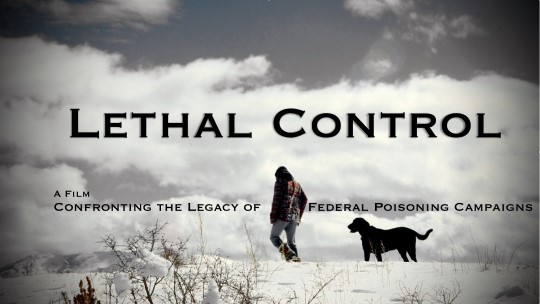
This poignant, independent documentary features some of the people we’ve worked with over the years whose lives have been forever changed by M-44 “cyanide bombs.” Once you meet them in this film, you’ll truly understand why M-44s must be banned. Watch film | Read stories about other victims
Press conference from one of our trips to the U.S. Capitol with the Mansfield family of Pocatello, ID, urging passage of Canyon’s Law, a federal bill to ban M-44 ‘cyanide bombs.’ Photo credit: Jenifer Morris Photography
In our decades-long work toward a nationwide ban on deadly M-44 cyanide devices (aka “cyanide bombs”), a turning point occured when we traveled to Washington, D.C., with the Mansfield family of Pocatello, Idaho (pictured above). The Mansfields lost their dog and almost lost their son on March 16, 2017 to an M-44 device set on a hill behind their back yard. Due to the shocking reality of their experience, and their determination to not just be victims but to create change, the Mansfield’s were very effective in our 2017 and 2019 trips to urge members of Congress to wake up to the need for federal legislation.
As of June 2025 M-44s are confirmed as still being used by the government for predator control in 10 states. They are allowed statewide in Colorado, Montana, Nebraska, Nevada, New Mexico, North Dakota, Oklahoma, Texas, West Virginia and Wyoming. The EPA also authorizes M-44 use by state agencies in Montana, New Mexico, South Dakota, Texas, and Wyoming. We continue to work toward a nationwide ban, while also pushing ahead on a state and local level to encourage local jurisdictions to lead the way. Progress is being made, as detailed below.
June 2025 – We’re pleased to announce that two bills to ban M-44s on all public lands were introduced in Congress on June 26, 2025. Nicknamed “Canyon’s Law” in honor of Canyon Mansfield, these common-sense, tax-saving, nonpartisan bills should be supported without resistance as an essential public safety measure by all elected officials. Read our press release | Help get these bills passed
U.S. House Bill
U.S. Senate Bill
SUPPORT CANYON’S LAW: You can help ban M-44 “cyanide bombs” on all public lands by urging your U.S. Senators and Representatives to support Canyon’s Law, so nicknamed in honor of Canyon Mansfield. You can call them via the Capitol Switchboard at (202) 224-3121 or copy/paste the statement below into an email using contact info at links below:
Dear _________,
Please support Canyon’s Law (H.R. 4180/S. 2179), the bill to ban M-44 “cyanide bombs” on public lands. It is common-sense, tax-saving, nonpartisan legislation deserving support as an essential public safety measure by all elected officials.
M-44 sodium cyanide-dispersing devices are used by USDA wildlife agents for controlling predators like coyotes and foxes. They are scientifically shown to be indiscriminate and counter-productive and can be replaced with a number of effective nonlethal methods. Not only do M-44s kill nontarget wildlife and endangered species, but they have killed countless family dogs, severely injured dozens of people, and permanently disabled one man and contributed to his death. Experts in the field affirm it is only a matter of time before an M-44 kills a child.
In the 2017 Pocatello, Idaho incident that received worldwide attention, 14-year-old Canyon Mansfield touched what he thought was a sprinkler head while taking a customary walk near his house. It was an M-44 device and the explosive cyanide cloud that erupted killed his dog in front of him. Canyon is only believed to have missed death due to wind direction. His case led to the naming of this bill as Canyon’s Law.
I believe the federal government has no justification for attempting to manage native predators with a device that can never be used safely. As you can see, most victims of these devices cannot even read warning signs. Please support Canyon’s Law to ban M-44s on public lands to make them safer for all.
Thank you very much for you consideration of this important bill.
Sincerely,
[Your name]
OTHER WAYS TO HELP: In addition to contacting key government leaders, we encourage you to share this webpage and spread the word to everyone you know who cares about pets, kids, wildlife, and safety in the great outdoors, urging them to take the same actions.
You can also further our efforts by making a donation to support our work, which includes raising public awareness, coordinating campaigns with other interested environmental and animal welfare organizations, and educating elected officials on why M-44s are a public safety menace and banning them is a nonpartisan issue. Any donation amount helps and is greatly appreciated. DONATE TODAY
We’ve long worked towards public lands bans, regardless of the status of federal legislation. One of the most exciting developments happened during a House Subcommittee hearing on Canyon’s Law held July 21, 2022 before House Natural Resources Subcommittee on Water, Oceans and Wildlife (WOW). Part of the testimony for the hearing included a statement from the Dept. of the Interior indicating they were open to the ban of M-44s on lands they control. We were thrilled to see this and worked to leverage it by calling for a ban on BLM lands. Here are key hearing links:
On Oct. 6, 2022 Rep. Peter DeFazio (D-Oreg) and Committee Chair Jared Huffman (D-Cal) followed up with a letter to Interior Secretary Deb Haaland requesting a ban on M-44s on lands they control (Bureau of Land Management), regardless of the status of Canyon’s Law. On June 29, 2023 over 70 conservation groups joined us in urging the Interior Department to ban cyanide bombs on public lands. Press release | Official APA petition
On Nov. 22, 2023 we were absolutely thrilled to see the Interior Department ban M-44s on 245 million acres of public lands, all lands managed by the BLM. Victory Spotlight | Our press release | Rep. Jared Huffman’s press release
On the state level bans on M-44 use on public lands happened temporarily in Colorado and Texas. Colorado banned use of M-44s on public lands in 2017, pending further study, and Wyoming banned M-44s on 10 million acres public lands in 2019, pending results of a lawsuit against USDA Wildlife Services which required a new EIS. Unfortunately, these temporary state bans did not stick.
On October 23, 2024 we submitted an official APA petition to the U.S. Forest Service and USDA, asking for an official ban on all 193,000,000 acres of national forest lands. Press Release | How you can help
Our work continues. M-44 use is utterly unacceptable. And we will not back down.
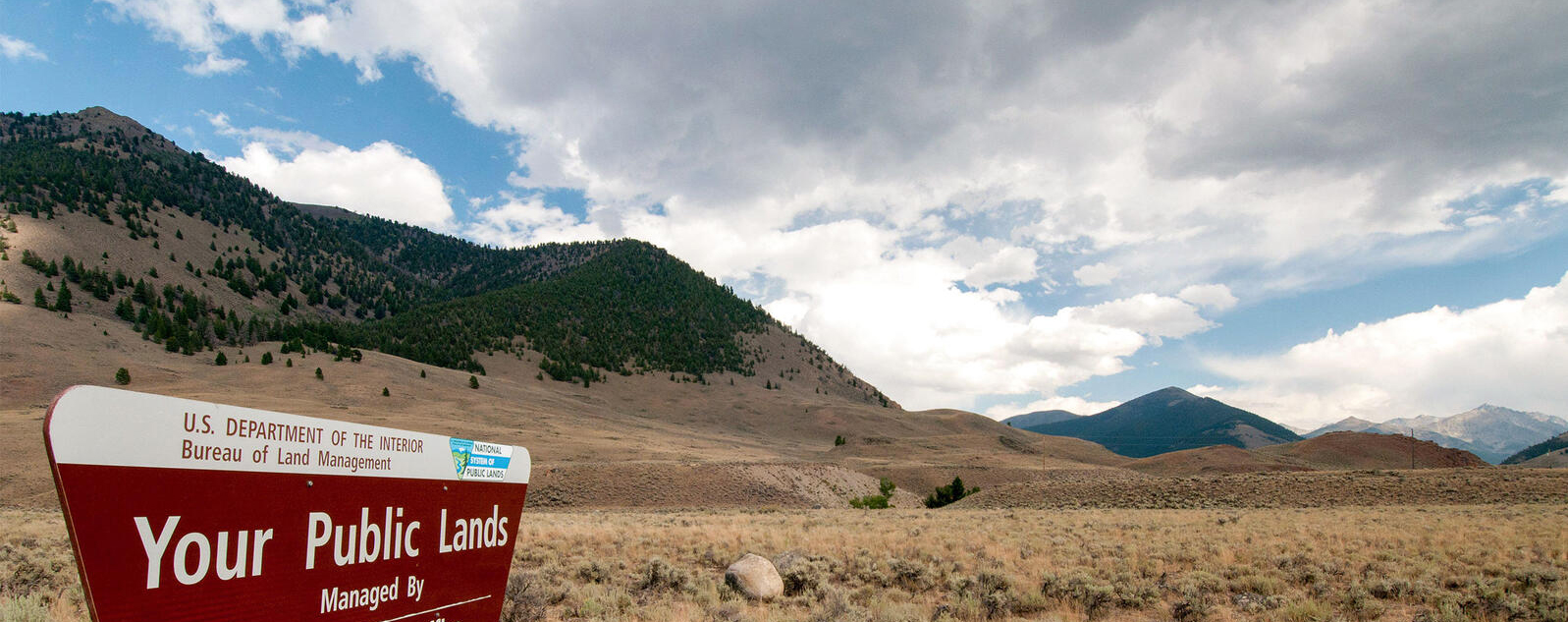
We were thrilled to announce on Nov. 22, 2023 that the U.S. Interior Department has banned the use of M-44 devices, commonly known as “cyanide bombs,” on lands administered by the Bureau of Land Managment (BLM). This includes over 245 million acres, roughly a tenth of the nation’s land mass. It means countless thousands of wild animals will not be killed on BLM lands, including endangered species. It also means people can feel free to walk their dogs on these public lands and not risk death or poisoning. This win is historic. It can and should lead to bans on all public lands, and ultimately a ban on all M-44 devices. Our work continues to this end.
After a long, high profile fight, we’re pleased to announce a strikingly good court decision in March 2020 banned M-44s statewide in Idaho. It’s a win for a great outdoors free of “cyanide bombs” and we are proud to have been a plaintiff in this landmark case. The decision locks in Idaho’s tentative moratorium on M-44s, until the agency completes a full Environmental Impact Statement (EIS), which will take a minimum of four years, and is unlikely to happen.
August 2020 brought another big Idaho win via the Mansfield family’s lawsuit against USDA Wildlife Services. Their case–arising from the 2017 wrongful killing of their dog Kasey and poisoning/potential killing of their son Canyon with an illegally placed M-44 on a hill behind their home–was about principle, not money. Due to their perseverance and determination, the Mansfield family achieved a first–they prevailed in holding the government accountable for one of countless incidents in which indiscriminate, poisonous land mines, planted in our great outdoors for “predator control,” have killed wild animals, dogs, and potentially a child. Wildlife Services admitted it was negligent. This sets a very important precedent indeed.
Kimberly JohnsonJuly 24, 2025
SHARE ARTICLE https://mercyforanimals.org/blog/california-firefigters-help-hot-cows/
Photo: Andrew Skowron / We Animals
When a transport truck broke down on a scorching day in El Dorado Hills, California, dozens of cows were left trapped inside, stuck in a metal trailer with no shade and no escape from the brutal 100-degree heat. Luckily, help arrived.
Firefighters from the El Dorado Hills Fire Department rushed to the scene and did something unexpected and deeply moving. They grabbed their hoses and began spraying water directly onto the cows to help cool them down.
Although the cows were raised for meat or dairy and likely en route to the slaughterhouse, in that moment, they weren’t seen as property or “inventory.” They were recognized for what they are: living, feeling beings who can suffer and who deserve compassion.
Transporting animals in high temperatures is not unusual. The meat industry routinely subjects animals to long, grueling journeys in all kinds of extreme weather, with minimal legal protections for the animals.
Many people don’t realize that in the United States, farmed animals are often transported for hours, or even days, without temperature control, food, water, or rest. In extreme heat, animals frequently collapse or die from heat stress. And in cold weather, they can freeze to death. Conditions are so abysmal that, according to an analysis, over 20 million animals die each year on their journeys to slaughter.
These suffering animals are mostly hidden from view. But every so often, like on that California road, the truth breaks through.
The firefighters’ response struck a chord because it reflects something so simple: When we see someone suffering, we want to help. Unfortunately, when it comes to farmed animals, most people have been conditioned to ignore our natural instincts to be compassionate. If more people saw cows and other farmed animals the way these first responders did—in need of help and worthy of kindness—imagine how different the world could be.
The best way to help animals like the cows in this story is to leave them off your plate. Choosing plant-based foods is a powerful way to take a stand against cruelty and support a more compassionate food system. You can also urge your Congress members to support the Industrial Agriculture Accountability Act, groundbreaking legislation that addresses some of the cruelest practices in the meat industry, including transport.
Take action for animals in transport now!
Because all animals deserve more than just a moment of mercy on a hot roadside. They deserve lives of safety and peace.
News
The animals can’t wait. Compass Group needs to show how they’ll follow through on their commitment.Read More
NewsPlant-Based
In what the Westminster Police Department described as an “unfortunate, difficult, and unusual situation,” two cows scheduled for slaughter were shot after escaping a farm. The cows were reportedly being prepared for the butcher when they escaped their Maryland farm and charged into a residential neighborhood. One cow briefly entered a strength-and-conditioning gym. The gym’s […]
Posted: Jul 31, 2025 / 03:17 PM EDT
Updated: Jul 31, 2025 / 03:17 PM EDT
SHARE https://www.mywabashvalley.com/news/illinois-news/illinois-stops-gray-fox-hunting-season-indefinitely/
SPRINGFIELD, Ill. (WTWO/WAWV)— The hunting and trapping season for gray fox is being closed effective immediately.
This is due to surveys and preliminary results of current research, all indicating a substantial decline in the distribution and abundance of the species over the last decade. Though Illinois isn’t known for harvesting a large number of grey foxes, the closure of the season hopes to put less pressure on the animal. The Illinois Department of Natural Resources said it plans to continue annual surveys and evaluate the population in the state.Two men charged for illegal deer hunting in Vigo County
On June 30, the governor of Illinois passed a law that changed the language of the Illinois Wildlife Code, allowing DNR to open the hunting season by administrative rule. The bill was a DNR initiative with backing from conservation groups and legislators, and they were able to file for the closing of the season on July 9.
Most research shows that the decline in the population is most likely due to diseases such as canine distemper and competition from other canids like coyotes. Though hunters don’t seem to be the major cause, most hunting groups are in support of letting the species grow.
 Exposing the Big Game