Study shows trans­mission of bird flu in wild bobcats across New York

A study shows the spread of avian flu has now reached wild bobcats. (Spectrum News 1 Photo, File)

HEALTH

BY Mark Goshgarian New York State

PUBLISHED 5:08 PM ET Mar. 27, 2025

Researchers from Cornell University have released the results of a new study that shows the spread of avian flu has now reached wild bobcats and has also claimed the life of one that was part of the study.

“They’re this cryptic species that we don’t know much about,” said Jennifer Bloodgood, wildlife vet, New York State Wildlife Health Program. “You don’t see them a lot when you’re outside. It was a surprise to us and kind of a warning of what this could mean for their populations.”

Leaders with the state’s Wildlife Health Program, who have found avian flu in other mammals like skunks and squirrels, worked with licensed trappers to sedate and capture 16 bobcats for the study.

Before releasing them back into the wild, researchers placed a GPS-equipped collar on them that eventually falls off, and also collected blood and other biological samples.

“To look at dead and sick animals and look for diseases in those animals to identify potential new diseases or trends in existing diseases,” said Bloodgood.

Researchers noted one of the bobcats died weeks into the study from the virus, after not having been initially exposed at the onset.

The collars of the others were found scattered in areas across the state, including Buffalo and Albany.

“So I think it’s really important to monitor this disease and see what’s going on so that we can protect ourselves and our pets,” said Bloodgood. 

Bloodgood advises keeping kids away from dead animals, wearing gloves and a mask before disposing of it or calling the Department of Environmental Conservation (DEC) to report it.

“That lets us know what’s going on in the wild, and whether we should respond or test that animal so we know about more what’s going on,” said Bloodgood.

Core bobcat hotspots across the state continue to be the Adirondack, Catskill and Taconic mountains, yet have also expanded into Central and Western New York, as well as the Southern Tier.

Researchers say the marten, a type of weasel, is next on the list for testing.

Trump’s response to bird flu could be the defining test of his second term 

by Gene Baur, opinion contributor   – 03/29/25 9:00 AM ET

Video Player is loading.

This is a modal window.

HLS playlist request error at URL: https://dcs-vod.mp.lura.live/vod/p/master.m3u8?encp=P3n5tDy35nDqkq_kqsXVNQ:GS3Li2GDi9j69jvpnTwLY71qSnxyMmqU9Ve4Zjt6Y7o4Tvngexh7h9mFr6kqpx3BvlBKzyOB0kC7K3rlgzA1ran_4oDMabnp0hRrlXvWsri1eZyfSaPV8iTD2LMoyd_wzFaj9lZUz-4wvax6PvmfCB3CTpSCythfNjK1–rR94fJiT4rcizK14njnVDbEUWfxd1pHR1T9bAuRs-Nhz0uRYAUTvVYfE-tHCFq8OYS_hvnPZProxWJPvHsrd31xy-6ZDE44MJfdWNoXGtBp9iDjLYRr2CEagJSu69CBudliviJqSDC5rHDfMSOyiYaka9gLACQ_JMIZLeYUtBepsAczwZbg59vQH75KArCqpfWw_BZV2t-RaHdGoArfvOaJFu3MY6qO3VeHA1Hxuj4LwZyF9qbAZqw2K-nt1waCLEE3Xo&anvtrid=b494096642d690073771b0544d4479e4&anvauth=tb=0~te=1743272144~sgn=229b6e81d703246ded4fc03d945367bd17fee4da3955a897969dc4f50fdd6300&t=1743272054.

https://instaread.co/player?article=trumps-response-to-bird-flu-could-be-the-defining-test-of-his-second-term&publication=thehill&article_url=https%3A%2F%2Fthehill.com%2Fopinion%2Fhealthcare%2F5220002-united-nations-bird-flu&version=1743271200000

It’s been five years since the start of a zoonotic COVID-19 pandemic that killed millions of people. Now, the United Nations is urging member governments to take coordinated action to address the “unprecedented” spread of highly pathogenic bird flu — a threat to health, food security, biodiversity and more. The world has reached an inflection point, another chance to do what is needed to prevent a health crisis.  

This will either be remembered as the moment we failed to save lives or the moment we finally reckoned with the dangers of factory farming and our mass exploitation of animals. 

The warning from the U.N.’s Food and Agriculture Organization came on March 17, the same day the a new U.S. outbreak of dangerous H7N9 bird flu was reported. Since it first emerged in 2013, the strain has a nearly 40 percent mortality rate in humans, translating to 616 human deaths in China.

Despite troubling signs that the virus is mutating and could become more transmissible, the U.S. Department of Agriculture’s $1 billion strategy to fight bird flu is likely to create more danger, as the federal agency funnels $400 million into factory farms as reimbursements for chickens lost. In so doing, it is propping up the very industry fueling the spread of zoonotic disease.  

Since early 2022, nearly 170 million farmed birds have died or been killed in the U.S. due to bird flu outbreaks, equivalent to roughly half the country’s human population. Just since last year, 70 human cases have been reported, the majority of which resulted from direct exposure to livestock. Three came from unknown sources. 

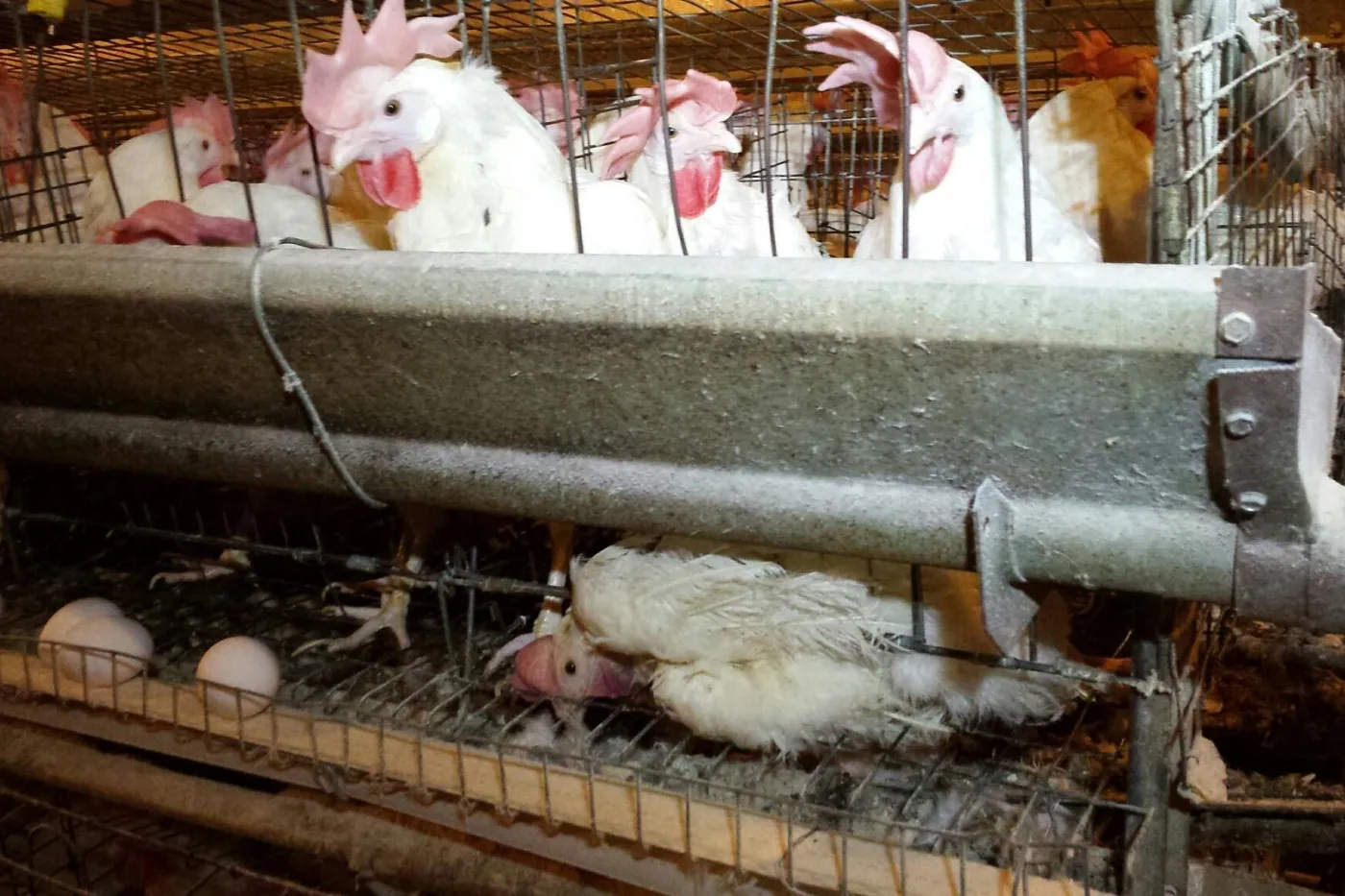
We already know that 75 percent of emerging human pathogens are zoonotic. Thus, by farming animals in the billions, we are playing with fire. Factory farms confine thousands of animals into unsanitary facilities, where workers are often left unprotected from disease.  

Up Next – TESLA TARGETING-00:07

While some have blamed wild birds for the presence of bird flu on large-scale farms, it is more likely that failures to prevent diseases from spreading on farms are the real culprits. Furthermore, research has shown that ventilation systems on factory farms may be fueling airborne transmission of bird flu; scientists are currently tracking wastewater from these intensive operations as a potential avenue for the virus’s spread. The hazards of factory farms themselves are compounded by the clearing of forests for animal agriculture, which diminishes planetary resilience and pushes humans and wildlife into ever closer contact and toward a higher risk of disease transmission.  

Rather than protecting the public, the U.S. government remains focused on bolstering corporations and lowering egg prices, which, according to a recent report, have likely been artificially inflated by agribusiness titans taking advantage of consumers. 

As the USDA bails out animal agriculture and Health and Human Services Secretary Robert F. Kennedy Jr. suggests that the nation allow bird flu to spread through its poultry industry, it is critical that a country in which 99 percent of all farmed animals are kept on factory farms begin taking this escalating threat seriously. 

To protect the health of animals and humans, the Trump administration should quickly shift support away from factory farming in favor of a safer and more sustainable plant-based food system. Otherwise, we could be reflecting on an even deadlier pandemic five years from now.  

As Mark Twain said, “History doesn’t repeat itself, but it often rhymes.” 

Gene Baur is president and co-founder of Farm Sanctuary, the world’s premier farm animal sanctuary and advocacy organization, and author of the books “Farm Sanctuary: Changing Hearts and Minds About Animals and Food” and “Living the Farm Sanctuary Life.” 

Egg prices plunging as bird flu subsides and shortages dissipate

  • facebook (opens in new window)
  • twitter (opens in new window)
  • linkedin (opens in new window)
  • email (opens in new window)

https://graphics.axios.com/hermesv2/2025-03-28-1345-average-wholesale-price/index.html?initialWidth=787&childId=av-hermesv2/2025-03-28-1345-average-wholesale-price-AJQXR&parentTitle=Egg%20prices%20chart%3A%20Why%20eggs%20are%20dropping%20but%20could%20rise%20with%20Easter%2C%20bird%20flu&parentUrl=https%3A%2F%2Fwww.axios.com%2F2025%2F03%2F28%2Feaster-egg-prices-go-downData: U.S. Department of Agriculture; Chart: Axios Visuals

Egg prices are suddenly plunging as the bird flu begins to wane and imports surge to fill the gap.

Why it matters: A massive outbreak of avian influenza has wiped out more than 166 million chickens since 2022, leading to sporadic egg shortages and price hikes.

  • It’s also turned into a political issue with Republicans and Democrats arguing about who’s to blame — and President Trump taking credit for the decline in prices in recent weeks.

By the numbers: The average wholesale price of a dozen eggs was $3 Friday, down 8% from $3.27 on March 21, according to U.S. Department of Agriculture data released Friday.

  • It’s down 63% from a record $8.15 in the Feb. 21 report.

The big picture: Retail prices, which typically trail wholesale, are beginning to drift downward as well.

  • “It was only four weeks ago that we were at the highest price the market had ever seen,” Brian Moscogiuri, a global trade strategist at Eggs Unlimited, told Axios. “So it just takes time for those lower prices to be passed along.”
  • Purchasing restrictions and slowing consumer demand also “placed significant downward pressure on the market,” Ryan Hojnowski, with price-reporting service Expana, told Axios.

State of play: Inventories are recovering amid a sudden and largely unexplained slowdown in bird flu cases. The Trump administration has also taken steps to boost egg imports to combat higher prices.

Threat level: The U.S. lost more than 12% of its caged egg-laying hens from Jan. 1 to March 21, according to the USDA.

  • Yes, but: The bird flu outbreak has vacillated in the last three years and could quickly spike again.

What’s next: This is traditionally one of the highest demand periods for eggs, with eggs playing a big part of Easter traditions and Passover.

  • This year, Easter is April 20, while Passover starts April 12.
  • Agricultural Secretary Brooke Rollins warned on March 11 that the Easter season has “the highest price for eggs” and prices could “inch back up.”

The intrigue: Ironically, as egg prices are coming down, coffee prices are poised to spike by double digits, Reuters reports.

  • Roasters are in talks with retailers about passing on significant price increases after wholesale prices of arabica coffee doubled in the past year.
  • facebook (opens in new window)
  • twitter (opens in new window)
  • linkedin (opens in new window)
  • email (opens in new window)
Go deeper

Mar 7, 2025 –Business

USDA ending Easter egg inventory report as bird flu continues

Store display that says eggs with a few dozen eggs in the display and shelves that are empty
The USDA’s seasonal Easter egg inventory reports are being discontinued. Photo: Eric Thayer/Bloomberg via Getty Images

The USDA will discontinue its Easter season egg inventory reports, just weeks before the spring holiday, as the bird flu continues to ravage the nation’s supply of eggs.

Why it matters: The highly pathogenic avian influenza has intensified in recent months, which has caused prices to spike and led to shortages.

Go deeper (1 min. read)

  • facebook (opens in new window)
  • twitter (opens in new window)
  • linkedin (opens in new window)
  • email (opens in new window)

Mar 13, 2025 –Business

Trump claims credit for falling egg prices but no relief for shoppers yet

Cartons of eggs at store
The average price of eggs increased more than 10% in February, federal data shows. Photo: Scott Olson/Getty Images

Wholesale egg prices are starting to drift lower amid signs that the bird flu is easing, but don’t expect to find lower prices at grocery stores yet.

Why it matters: Even as President Trump is claiming victory, his administration is acknowledging that the upcoming Easter holiday could cause prices to jump again.

Go deeper (2 min. read)

  • facebook (opens in new window)
  • twitter (opens in new window)
  • linkedin (opens in new window)
  • email (opens in new window)

Feb 26, 2025 –Business

Egg prices could rise by 41.1% this year, USDA estimates

All eggs were sold out at a Florida Target store with empty shelves where eggs usually are
Stores are selling out of eggs regularly leading to empty shelves. Photo: Kelly Tyko/Axios

The price of eggs is expected to rise by 41.1% this year as the bird flu continues to rip through the nation’s agricultural economy, the federal government projected in a new report.

Why it matters: That’s more than double the 20% increase predicted in January.

Go deeper (2 min. read)