Behind the scenes: The science that confirmed Australia’s first H5 bird flu case
Reply

Published 7 September 2026
Print this page
Presented to the House of Parliament pursuant to Section 3 of the Animal Welfare (Sentience) Act 2022
This is the government’s formal response to the Animal Sentience Committee’s views on animals as sentient beings in relation to the Glue Traps (Offences) Act 2022, published on 13 March 2026. The government appreciates the Committee’s validation that due regard for animal welfare was properly considered at the time the legislation was passed and express our thanks to the Committee for its conclusions and recommendations, which have been carefully considered.
This government is committed to improving animal welfare. Our animal welfare laws aim to recognise animal sentience and protect animals from unnecessary suffering and cruelty. Glue traps are widely recognised as an inhumane method of rodent control and licensed use in England is permitted in only exceptional circumstances.
This response addresses the conclusions and recommendations made by the committee in its report. It relates to England only as responsibility for animal welfare is devolved to the devolved governments and legislatures in Scotland, Wales and Northern Ireland.
The Committee made three conclusions and recommendations which overlap to some degree and will therefore be responded to together: The Animal Sentience Committee considers that the original intention of the 2022 Act – to achieve due regard for the welfare of affected animals – would be better achieved via a coordinated sale ban applied across the UK.
The Animal Sentience Committee considers that the continued sale of glue traps has the effect of placing people at significant risk of breaking the law by using them in a way that would be contrary to the 2022 Act.
In light of the recent change in the United Kingdom Internal Market act, the Animal Sentience Committee recommends that, for government to achieve due regard to the welfare of affected animals, consideration is given to the even application of a ban on the sale of glue traps capable of rodent capture across the UK.
The government is aware that despite the severe restriction on use of glue traps in England, they can still be found being sold, quite lawfully, through searching online and in certain retail outlets such as some independent hardware stores.
Responsibility for animal welfare is devolved and when the Glue Traps (Offences) Bill was progressing through Parliament in 2021/22, Defra was advised it was not practical to ban the sale of glue traps in England as they could still be purchased and used elsewhere in the UK. There were, at that time, no restrictions on glue traps in Scotland, Wales or Northern Ireland.
As the Committee’s report highlighted, earlier this year the UK Government used Parliamentary time to grant an exclusion to the UK Internal Markets act 2020 as requested by the Scottish Government to allow it to ban the sale and/or the possession of glue traps in Scotland. This ban came into force on 1 July 2026.
As things now stand, there are different rules for each component part of the UK. In Northern Ireland there is no ban on use or sale of glue traps, whereas in Scotland, where there was until very recently no restriction on use or sale, there is now a ban on both. In Wales, there is a complete ban on use of glue traps but, similarly to England, no ban on sale. England has a ban on use but permits tightly controlled deployment of glue traps via a licensing regime which allows professional pest controllers to use them in exceptional circumstances where public health or safety is at risk and there is no other satisfactory solution, for example in the cockpit of an aeroplane or hospital theatre.
The government recognises the merit in the Committee’s recommendation of implementing a coordinated sale ban and it is being considered.
As noted above, a ban on use and sale of glue traps has only just come into force in Scotland. It seems sensible to wait until its effectiveness can properly be gauged but once an assessment can be made, a wider ban on sale may become a feasible option for further reducing illegal use across the UK.
However, while Defra works collaboratively with its counterparts in Scotland, Wales and Northern Ireland, the UK Government respects and supports devolution and the Secretary of State cannot compel Ministers to make changes to glue trap legislation as it applies in those nations. It is right for respective governments in Wales and Northern Ireland to undertake their own analysis of the situation and make decisions on legislative changes to their own timelines. The Glue Traps (Offences) Act 2022, which regulates glue traps in England, does not contain any powers to introduce a sale ban; a new, primary legislative vehicle would be required to ban sale of glue traps in England. This means Defra would have to find a suitable legislative opportunity to take this measure forward but, to reiterate, a ban on sale/possession across the UK may become feasible if Ministers in the UK Government, Welsh Government and/or the Northern Ireland Assembly deem it necessary and wish to further legislate at a suitable juncture.
A co-ordinated ban on sale would also be relevant to the Committee’s conclusion that the current legislation places people at significant risk of breaking the law. The government does note its work undertaken in 2022 (introduction of the act) and 2024 (it’s coming into force) to achieve widespread media coverage and ensure that businesses, pest controllers and members of the public were made aware of the change in legislation.
Defra continues to engage with stakeholders to ensure those they represent remain aware of and compliant with the law but it recognises some members of the public may be confused when encountering glue traps remaining, perfectly legally, on sale either online or in a hardware store. Any unlicensed use of glue traps would of course be illegal and, as with all wildlife management, anyone undertaking pest control has a responsibility to ensure they are complying with the law.
The risk of breaking the law should be much lower in circumstances where a professional pest controller is employed as many people and businesses will opt to use one that is a member of a professional body. The British Pest Control Association (BPCA) represents more than 750 member organisations and has over 3,500 affiliates, and the National Pest Technicians Association (NPTA) represents over 1,100 members across the UK. The BPCA and NPTA remind their members of the law relating to glue traps.
Prior to the implementation of the Act, many professional pest controllers may have used glue traps in a wide range of circumstances, such as in supermarkets, restaurants and bars. As glue traps are now strictly regulated under a licensing regime allowing use only in exceptional circumstances, the government is confident they are complying with the law and shifting to other, more humane methods of control. This suggests the number of glue traps used by professional pest controllers will have reduced markedly. Defra also notes that market-leading suppliers have been removing glue traps from sale in England since 2022 and promoting more humane alternative methods of pest control instead. Most national DIY and hardware chains appear to have ceased selling glue traps as well. Online retailers such as Amazon and eBay have policies in place to prohibit sale; and the British Independent Retailers Association has published advice for retailers to prevent glue traps from being sold for illegal use.
The government acknowledges that opportunities do remain for people to legally purchase glue traps in England. It recognises this remaining legal sale of glue traps is problematic and welcomes the Committee’s recommendations. At the same time, for the reasons set out above and in the current absence of a ban on sale, it is also confident the number of glue traps deployed across England by amateur and professional pest controllers has been significantly reducing in the years since the Glue Traps (Offences) Act 2022 was introduced.
| Paul ShapiroSep 7 |
Thirty years ago, when I was 17, this photo was taken of me at the 1996 Labor Day pigeon shoot in Hegins, Pennsylvania.
The blood on my shirt came from a wounded pigeon I picked up. A spectator subsequently assaulted me while trying to take her from me; fans at the shoot preferred to rip the injured birds apart themselves for fun. (One spectator even entertained his friends by biting the head off a pigeon who’d been shot but wasn’t dead.) I was able to get the shot bird I picked up to a veterinarian, but her gunshot wounds ultimately proved fatal.
Today, for the first time in three decades I put on the same shirt again in that bird’s memory. I’ve never washed it, so her blood is still on the shirt.
I remain deeply grateful to my former long-time boss Heidi Prescott and to the many others (see here, here, and here as examples) who’ve devoted themselves to exposing and ending this cruelty. Heidi still works tirelessly to end the barbarity of pigeon shoots as a lobbyist in Pennsylvania.
But 30 years later, live-pigeon shoots are still held in Pennsylvania (here’s a club that regularly hosts them), the only state where they routinely occur. Captive birds are launched into the air and shot as living targets for entertainment.
An excellent book, Our Kindred Creatures, about the birth of the American animal protection movement, details how pigeon shoots were one of the top campaigns waged by animal advocates in the 19th century. In other words, animal protectionists have crusaded against this stain on humanity in the 19th, 20th, and 21st centuries. Yet like the bloodstain on my shirt, pigeon shooting still persists.
There’s just so much work for animals to be done. It’s time to ban pigeon shoots once and for all.
Mule deer populations are “languishing” in parts of Wyoming, but with archery season underway, hunters say record trophy bucks are still out there. After an unusually mild 2025-2026 winter, many deer stayed fat and growing larger antler racks.
September 05, 20265 min read
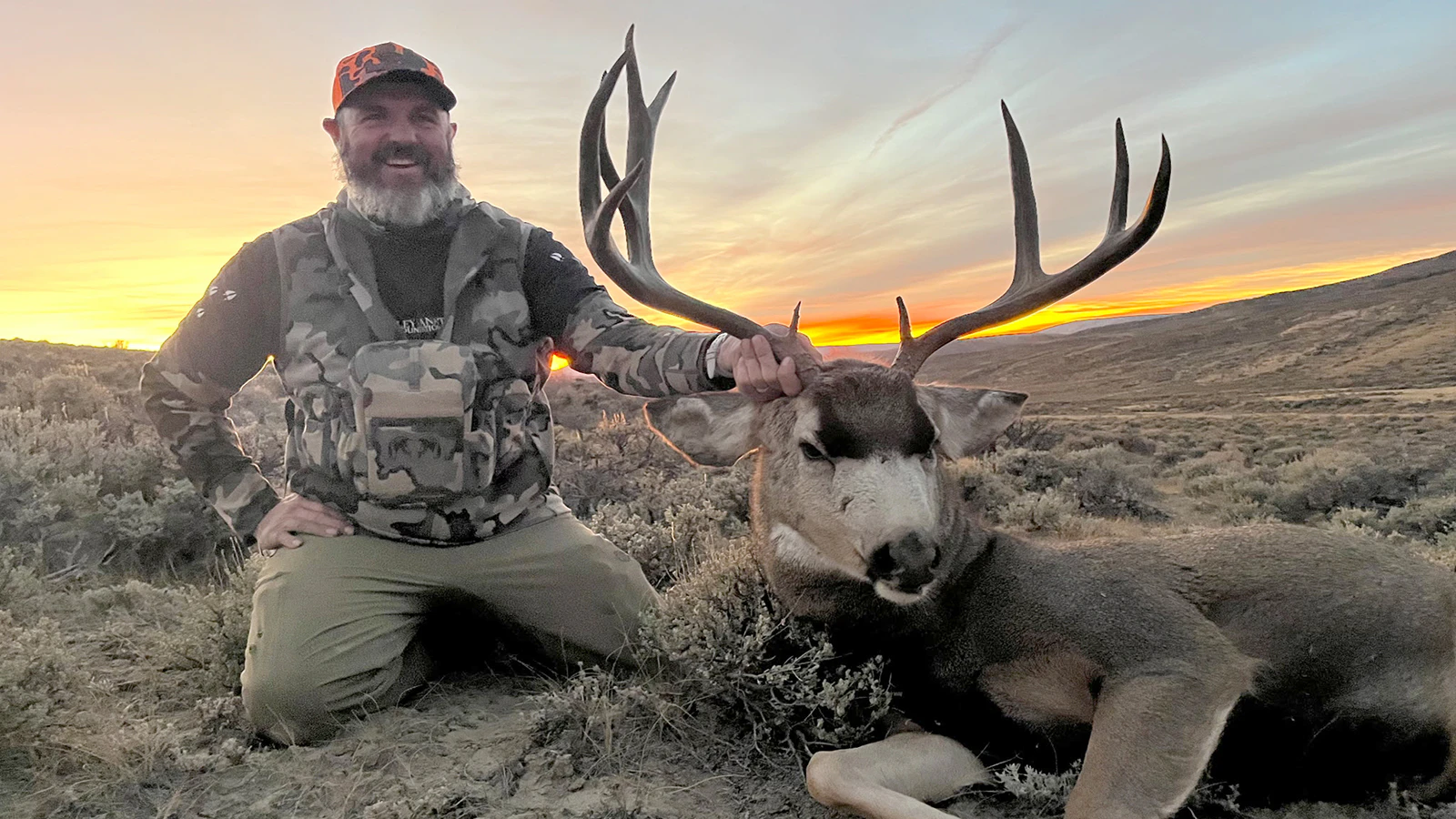
Wyoming’s 2026 deer season could be a matter of quality over quantity in some parts of the state, amid rumors that the vaunted Wyoming Range mule deer herd might once again be producing the sort of monster bucks for which it’s famous.
Overall, mule deer hunters have reason to be cautiously optimistic going into the season, according to the Wyoming Game and Fish Department’s hunting forecast.
Some early archery deer seasons opened Tuesday. Most rifle season will kick off in mid-October.

The Wyoming Range mule deer herd is one of the most treasured. It produced the state’s most famous mule deer in the late 1980s and early 1990s — Popeye, Morty, and Goliath — gigantic bucks still well-remembered.
That herd was one of the hardest-hit during the devastating 2022-2023 winter. It lost thousands, including that year’s entire fawn crop.
Avid hunter Zach Key lives in La Barge and keeps close taps on the herd. He’s a co-founder of the Wyoming Range Hunting and Fishing Expo conservation group.
While deer numbers are still down, the herd seems well on the way to recovery, he told Cowboy State Daily.
“The deer quantity is down, but the quality is definitely better this year,” he said.
After an exceptionally mild winter, many deer likely still retained some fat going into spring and were able to “pour more nutrition” into antler growth, Key said.

Scouting reports from local hunters indicate a good number of large bucks, including some in true trophy class, in the 200-inch and up range, Key said.
That’s according to the Boone and Crockett trophy scoring system. It’s based on length and circumference measurements taken at several points along a deer’s antlers, which are compiled for the score.
“A lot of people are seeing some really solid bucks; I think some absolute hammer bucks are going to be killed this year,” he said.
Game and Fish forecasts “modest increases in opportunity” for hunters in the Green River and Pinedale regions.
“Hunters willing to put in the time and effort should be rewarded with an opportunity to harvest a trophy-class mule deer buck from abundant public lands in the Pinedale region,” according to Game and Fish.
Mule deer numbers in the Sheridan region have been trending down since 2019 because of poor range conditions, drought, disease, and hard winters, according to Game and Fish.

On public land, more hunters might be competing for fewer deer.
Hunting seasons for 2026 are similar to the previous year. Antler point restrictions are in place for 2026 in some hunt areas. Hunters should expect difficult access to private lands and some overcrowding on accessible public lands, according to Game and Fish.
Hunter Frank Bilek of Buffalo said he’s not worried about finding a buck this year.
He likes to hunt on public land in the mountains above Buffalo.
“I’ve seen enough deer around here to see a difference from last year,” he told Cowboy State Daily.
He said the secret to hunting in the area is to put in the miles and go farther in and higher up than other hunters might be willing.

He likes hunting in the timber along the edges of large meadows, hoping to catch deer moving through in the morning or evening.
It might take more time and effort to find a huge buck this year, Bilek added.
“I haven’t seen super-impressive bucks” that were more common in years past, he said. “The super bucks are going to be harder to find because there are not as many of them and more hunters.”
In the Lander region, which includes the deer hunt areas around Riverton, the mule deer population has been “languishing,” according to Game and Fish.
Even so, the department opted to lift point restrictions in some hunt areas there.
“Antler-point restrictions were lifted this year to provide more harvest on proportionally high buck numbers and to potentially guard against the spread of CWD (chronic wasting disease). Hunters will have opportunities for similar harvest success as in past years — mostly with young bucks,” according to Game and Fish.

Jason Crotteau of Riverton said he usually doesn’t hunt mule deer in the area. Instead, he and his wife go for white-tailed deer on private property where they have access permission.
“Where we go, we’ve never had an issue,” finding deer, he told Cowboy State Daily.
While mule deer hunting in Wyoming is almost entirely bucks only, either buck or doe white-tailed deer can be shot in some general tag hunting areas, Crotteau said.
That increases the odds of getting venison in the freezer, he said.
“All of the deer we’ve taken in the last three years, they’ve been fat, and it’s been really good meat,” he said.

