Ohio Department of Agriculture: Bird flu confirmed in Portage County backyard flock
Reply

Brazil ruins the environment to make it easier to host a conference about solving climate change.
By Matthew Gault Published March 12, 2025 | Comments (17)

This November, the United Nations will descend on the city of Belém, Brazil in an attempt to solve climate change. The 2025 United Nations Climate Change Conference, or COP30, will bring 50,000 people to the city. Brazil cut down portions of the Amazon rainforest to build a four-lane highway and make it just a little easier for those 50,000 people to arrive.
As reported by the BBC, the state government of Pará cleared out eight miles of Amazon rainforest to build the highway. The BBC’s article has pictures of the clear-cut forest floor where logs have been piled up along a stretch of road that will soon hold concrete and passing cars.
Forests, in general, and the Amazon Rainforest, in particular, are instrumental in fighting rising global temperatures. André Aranha Corrêa Do Lago, a career Brazilian diplomat who is heading up the COP30, eloquently made the case for forests in a letter he published earlier this week that laid out his vision for the conference, the climate, and the world.
00:04
02:08
Read More
“When we get together in the Brazilian Amazon in November, we must listen to the latest science and re-evaluate the extraordinary role already played by forests and the people who preserve and rely on them,” Do Lago wrote.
Local resident Claudio Verequete lives near the highway and previously made a living harvesting açaí berries. Those trees are gone now, cut down to make way for the UN Climate Conference. “Our fear is that one day someone will come here and say: ‘Here’s some money. We need this area to build a gas station, or to build a warehouse.’ And then we’ll have to leave,” he told the BBC.
The highway cuts across the forest, cutting off access to animals and people who have lived in the forest for generations. What was once a whole area will soon be two halves blocked by pavement. Verequete told the BBC his village won’t even have an onramp to the highway. They will just live abutting its looming noise-blocking walls. Scientists and conservationists, those who know the extraordinary role of the Amazon well, told the BBC they fear the new highway will devastate the local ecology.
Pará has wanted to build a highway to Belém, a city with more than two million people, since 2012. But environmental protections around the Amazon rainforest have always prevented it. In a perverse twist of fate, the upcoming climate conference has given the state the authority to build infrastructure to support it. And so the Amazon was felled. The highway will be called Avenida Liberdade or “Liberty Avenue.”
Avenida Liberdade is part of a much bigger infrastructure project that Pará hopes will revitalize Belém. It’s spending $81 million to expand the airport and build a five-million-square-foot park. The city is building multiple hotels, and organizers are planning to sail high-capacity cruise ships into the city’s port to house people who can’t find room in the hotels.
Belém was chosen on purpose. This is the first U.N. climate conference that will be held in the Amazon, an important natural wonder that’s instrumental in regulating the planet’s temperature. Brazilian President Luiz Inacio Lula da Silva campaigned on protecting the forest and, early in his tenure, did slow down deforestation. But it hasn’t stopped, and Lula has even endorsed projects such as allowing oil companies to do exploratory drilling at the mouth of the Amazon river.
“Forests can buy us time in climate action in our rapidly closing window of opportunity,” Do Lago said in his letter. “If we reverse deforestation and recover what has been lost, we can unlock massive removals of greenhouse gases from the atmosphere while bringing ecosystems back to life.”
He’s right. Too bad his country just cleared eight miles of Amazon Rainforest to make way for the conference he’s preparing for in this letter.
In addition to layoffs and hiring freezes, a ‘God squad’ can effectively veto ESA protections for endangered species
Tom PerkinsTue 11 Mar 2025 11.00 EDTShare https://www.theguardian.com/us-news/2025/mar/11/trump-wildlife-agencies-species-extinction
Donald Trump’s administration, backed by House Republicans and Elon Musk’s Doge agency, are carrying out an attack on the Endangered Species Act (ESA) and federal wildlife agencies that, if successful, will almost certainly drive numerous species into extinction, environmental advocates warn.
The three-pronged attack is designed to freeze endangered wildlife protections to more quickly push through oil, gas and development projects, opponents say.
In recent weeks, the US president has said he will assemble a “God squad”, or committee empowered to effectively veto ESA protections for species on the brink of extinction. Meanwhile, in part at the behest of Musk’s so-called “department of government efficiency”, hundreds of US Fish and Wildlife staff have been laid off, and hiring freezes implemented on hundreds more seasonal workers whom advocates say are critical to ensuring some species’ survival.
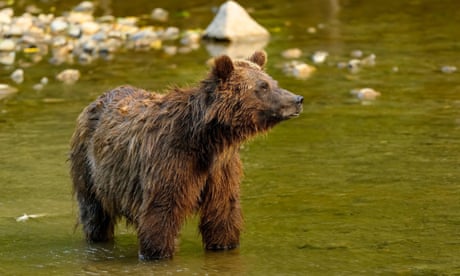
In the US House, Republicans recently held a hearing on the ESA and the Marine Mammal Protection Act, claiming the legislation needs to be revised to allow industry projects to be approved more quickly.
Wildlife advocates are girding for a fight in which species’ existence hangs in the balance.
“Scientists warn that we’re in an extinction crisis, and we ignore that at our own peril,” said Noah Greenwald, the endangered species director at the Center for Biological Diversity. “As America’s wildlife dwindles, Elon Musk is swinging his wrecking ball at the skilled and dedicated people fighting to save our plants and animals from extinction. It’s beyond idiotic.”
Congress passed the ESA in 1973, and it has saved bald eagles, grizzly bears and American alligators from extinction, among other species. Some environmentalists say it’s among the nation’s strongest environmental laws because it’s explicit, and sets clear deadlines for federal agencies to act to protect species. The law also requires most federal initiatives to ensure the action or project doesn’t threaten protected species.
Nearly 99% of species listed as endangered under the law have survived, Greenwald said, and the law rarely derails energy or development projects.
Still, the ESA’s robust provisions “drive industry bananas” and the law has long been a GOP target, said Drew Caputo, an attorney with the Earthjustice non-profit who has litigated on issues involving endangered species.
“Industry cannot stand that their ability to profit is sometimes limited by the need to protect wildlife that has been on earth for millions of years,” Caputo said. GOP and industry attacks, including bills that attempted repeals and revisions in recent years, have “failed spectacularly”, he added.
But the “God squad” could present the biggest threat so far.
“It can behave as god and decide what species exist and which don’t,” Caputo said.
The squad, officially called the Endangered Species Committee, includes seven federal agency leaders, who, in the rare instances in which a federal action of significant public or economic interest comes into irresolvable conflict with the ESA, each vote on whether the project’s benefits outweigh the protected species’ wellbeing. If five of the seven votes are in favor of a project proceeding, it moves forward, which could drive species to extinction.
The “God squad” has only been convened three times, and the only project on which it overrode the ESA was a dam, but the plans included meaningful provisions that helped at-risk cranes survive.
However, Trump seems to be proceeding without regard to the law’s protocols, and ordering action outside the squad’s scope, advocates say. In one executive order, he directed the squad to meet quarterly instead of after the petitioning process had played out, as the law requires. When there are no projects to consider, the squad should “identify obstacles to domestic energy infrastructure” related to the ESA, another order states.
“He can’t just say: ‘I hereby undo the Endangered Species Act,’” Greenwald said. “There are really specific processes for how that works.”
The president may use the squad to divert water from northern to southern California at the expense of endangered salmon, Caputo said.
Meanwhile, Doge’s cuts to the federal workforce, and Trump funding freezes, are already directly affecting staffing and the solvency of projects to preserve red wolves in North Carolina, ‘akikiki birds in Hawaii, and black-footed ferrets. Greenwald said staff at the fish and wildlife service have learned that the initial cuts that affected hundreds of jobs are just the beginning, and that Trump is planning to cut 40% of the staff.
“What Doge is doing will result in species going extinct,” Greenwald said.
On Thursday, the GOP representatives on the US House Committee on Natural Resources attempted to chart a new course of attack in which they claimed that the US supreme court’s June reversal of the Chevron doctrine that stripped power from regulators also required the ESA to be reformed and made clearer.
“There is no denying that, after half a century, both laws need improvement, and the committee intends to do just that,” Harriet Hageman, the committee chair and Wyoming US representative, said. “Changes to the statutes will significantly improve the regulatory process.”

But Caputo called the rightwing Chevron claim “legal nonsense”. He said the GOP is specifically targeting the ESA’s deadlines for federal agencies to act to protect species, as well as a provision that only allows science and the species’ survival to guide decisions. Republicans also want economic impact on industry to be factored in to the equation, Caputo said.
There’s a chance some reforms could get through with Democratic support. Congress last year passed two out of eight bills that would have weakened the law, but Joe Biden vetoed them.
But the act remains popular among the nation’s public, and that could pressure lawmakers, Caputo said.
“The industry agenda is unpopular, but the right still keeps trying,” Caputo said. “The harsh reality is that extinction means forever. People understand that.”
 Exposing the Big Game