Petitioners urge Samia Suluhu to halt trophy hunting of elephants

By Esther Dianah | 10mos ago

Dr Festus Ihwagi, Senior scientist and Research policy lead at Save The Elephants and Dr Paula Kahumbu CEO of Wildlife Direct during a press conference in Nairobi on August 12, 2024. [Edward Kiplimo, Standard]

As part of celebrations to mark World Elephant Day, a global coalition of scientists and conservationists yesterday presented the Tanzanian government with a petition signed by over 500,000 people, calling for an end to the trophy hunting of elephants along the country’s border with Kenya.

The petition, which has been gathering signatures since March 2024, was delivered to the Tanzanian High Commission in Nairobi and State House Tanzania during a press conference held at a Nairobi hotel.

The petition comes in response to a controversial move by Tanzanian authorities to issue hunting permits for “super tuskers” within the Greater Amboseli-West Kilimanjaro elephant population. In the last eight months alone, five of these iconic elephants were hunted and killed in northern Tanzania. More permits are expected to be issued, raising concerns about the future of these rare creatures.

While the management of elephants within Tanzania’s borders is recognized as a sovereign duty, scientists and conservationists highlighted the shared nature of the Amboseli-West Kilimanjaro elephant population, which has been protected under a bilateral agreement between Kenya and Tanzania for the past three decades.

“The loss of these elephants is not just a blow to elephant populations but to our collective efforts in conservation,” said Cynthia Moss, founder of the Amboseli Trust for Elephants.

The petition underscores the significant ecological and economic value of the Amboseli-West Kilimanjaro elephant population, which represents a unique genetic reservoir that transcends national borders. The recent surge in hunting incidents follows the issuance of a new hunting quota in 2022 to Kilombero North Safaris, ending a 30-year period during which no elephant hunting was reported in the area.

The last time such a tragedy occurred was in 1994 when four well-known elephants-RBG, Sleepy, Saibulu, and Oloitipitip-were killed by trophy hunters on the Tanzanian side of the border. This sparked an international outcry and led to a moratorium on trophy hunting of this transboundary elephant population, agreed upon by both nations in 1995.

The new hunting permits pose a grave threat to the survival of the largest cross-border elephants in Africa. The Amboseli ecosystem is now home to only 10 elephants with tusks weighing around 45kg each. Experts warn that the continued hunting of super tuskers could lead to their extinction within the next three years.

“The recent killings of super-tuskers is particularly concerning due to the rarity and special role these older males play in elephant society,” stated Joyce Poole, Scientific Director of Elephant Voices.

Although Kenya banned hunting in 1977, it is still legal in Tanzania. Hunting companies can obtain licenses on behalf of clients.

by Taboola

The petition, hosted on the international campaign site Avaaz, has garnered support from more than 50 African conservation organizations. The consortium is urging Tanzanian authorities to work closely with their Kenyan counterparts to protect this shared natural heritage.

“We urge President Ruto of Kenya and President Samia Suluhu of Tanzania to meet and agree on the immense scientific and economic value of preserving these cross-border elephants,” said Paula Kahumbu, CEO of WildlifeDirect.

Winnie Kiiru of the Elephant Protection Initiative and Mpala Research Centre echoed these concerns, stating, “The killing of these iconic elephants for ‘sport’ is morally troubling and economically short-sighted.”

Meanwhile, in Kenya, the elephant population has more than doubled in the last 30 years but this progress continues to be slowed down by challenges, including habitat loss, climate change, and poaching.

The Kenya Wildlife Service (KWS) says the elephant population has seen a remarkable recovery, growing from 16,000 in 1989 to over 36,280 as per the 2021 National Wildlife Census.

Stay informed. Subscribe to our newsletterBy clicking on the SIGN UP button, you agree to our Terms & Conditions and the Privacy Policy  SIGN UP

“However, in recent times, we have witnessed a rise in elephant mortalities due to human-elephant conflict, driven by increased intolerance stemming from negative interactions,” said KWS director general Erustus Kanga as the country marked World Elephant Day yesterday.

Stay Informed, Stay Empowered: Download the Standard ePaper App!

“Elephants are integral to our ecosystems, yet their survival increasingly hinges on our ability to foster harmonious coexistence between humans and wildlife.”

Kanga said KWS is committed to finding sustainable solutions that benefit both elephants and the communities they share the land with.

“We encourage all conservation areas to engage in simple, low-cost activities in collaboration with stakeholders and local communities,” he added.
Beavers were brought to the desert to save a dying river. 6 years later, here are the results.

Their engineering feats are pretty dam incredible.

Evan Porter

07.01.25

beavers, beaver dam, animals, wildlife, ecosystem, nature, earth, sustainability, deserts, waterways, rivers, pollution, climate change

Canva Photos

Can outsider beavers save this dried up river?

It’s not easy being a river in the desert under the best of circumstances. The ecosystem exists in a very delicate balance, allowing water sources to thrive in the harsh conditions. These water sources in otherwise extremely dry areas are vital to the survival of unique wildlife, agriculture, and even tourism as they provide fresh drinking water for the people who live nearby.

But man-made problems like climate change, over-farming, and pollution have made a tough job even tougher in some areas. Rivers in Utah and Colorado that are part of the Colorado River Basin have been barely surviving the extremely harsh drought season. When the riverbeds get too dry, fish and other aquatic creatures die off and the wildfire risk increases dramatically.

About six years ago, one team of researchers had a fascinating idea to restore the health of some of Utah’s most vulnerable rivers: Bring in the beavers.

beavers, beaver dam, animals, wildlife, ecosystem, nature, earth, sustainability, deserts, waterways, rivers, pollution, climate change

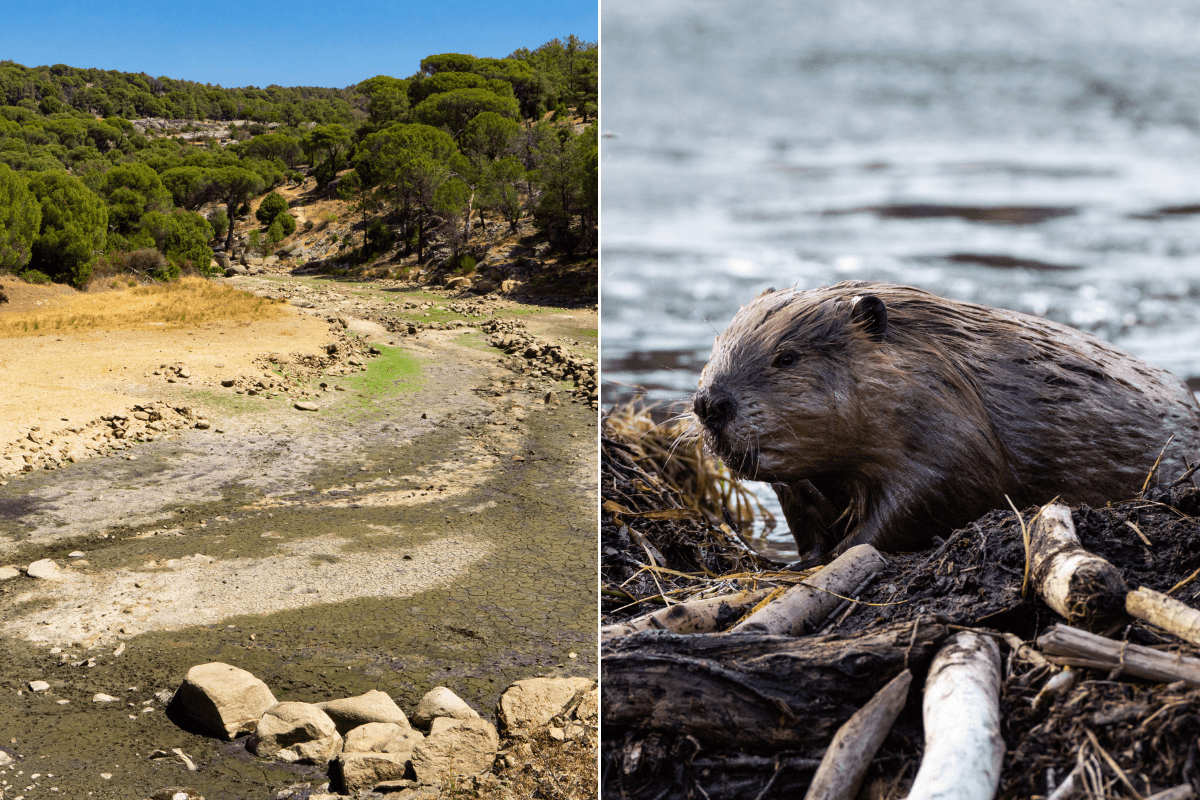
Beaver in water.Photo by Svetozar Cenisev on Unsplash 

In 2019, master’s student Emma Doden and a team of researchers from Utah State University began a “translocation” project to bring displaced beavers to areas like Utah’s Price River, in the hopes of bringing it back to life.

Why beavers? It just makes dam sense! (Sorry.)

Beaver dams restrict the flow of water in some areas of a river, creating ponds and wetlands. In drought-stricken areas, fish and other wildlife can take refuge in the ponds while the rest of the river runs dry, thus riding out the danger until it rains again.

When beavers are present in a watershed, the benefits are unbelievable: Better water quality, healthier fish populations, better nutrient availability, and fewer or less severe wildfires.

It’s why beavers have earned the title of “keystone species,” or any animal that has a disproportionate impact on the ecosystem around them.

Doden and her team took beavers who were captured or removed from their original homes due to being a “nuisance,” interfering with infrastructure, or being in danger, and—after a short period of quarantine—were brought to the Price River.

Despite the research team’s best efforts, not all the translocated beavers have survived or stayed put over the years. Some have trouble adapting to their new home and die off or are killed by predators, while others leave of their own accord.

But enough have stayed and built dams since 2019 that the team is starting to see the results of the effort. In fact, beaver projects just like this one have been going on all over the state in recent years.

 https://www.youtube.com/embed/9-L___3vV9s?rel=0 – YouTube  www.youtube.com  

The water levels in the river are now the healthiest they’ve been in years. The fish are thriving. Residents of Utah are overjoyed at the results of the experiment.

A column in The Salt Lake Tribune from 2025 (six years after the beaver translocation began) writes that the revitalization of the Price River “helped save our Utah town.”

Sponsored Content

Are you sitting down? Southwest is switching to Assigned Seating.

By Southwest Airlines

“A tributary of the Colorado River, the Price River runs through downtown Helper. On a warm day, you’re likely to find the river filled with tourists and locals kayaking, tubing and fishing along its shore. A decade ago, it was hard to imagine this scene—and the thriving recreation economy that comes with it—was possible.”

Of course, it wasn’t JUST the beavers. Other federal water cleanup investments helped remove debris, break down old and malfunctioning dams, and place tighter regulations on agriculture grazing in the area that depleted vital plant life.

But the experts know that the beavers, and their incredible engineering work, are the real MVPs.

beavers, beaver dam, animals, wildlife, ecosystem, nature, earth, sustainability, deserts, waterways, rivers, pollution, climate change

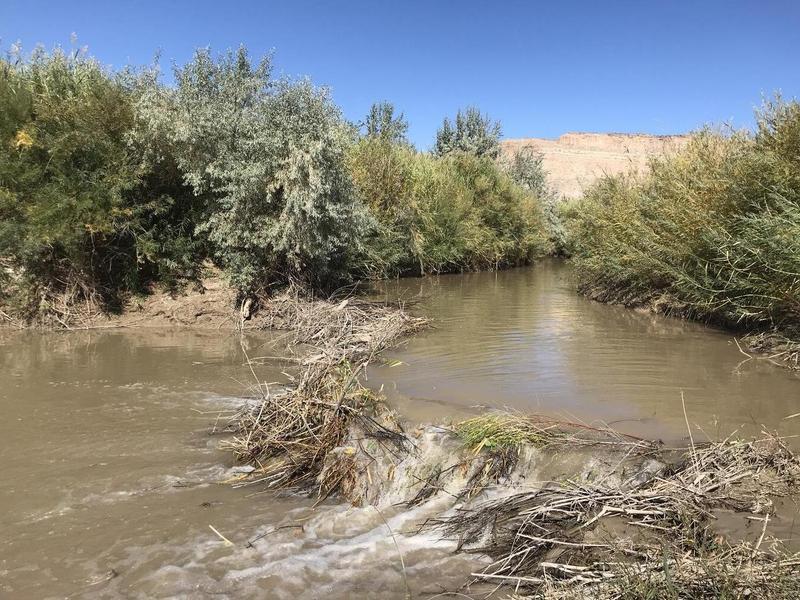
An actual beaver dam on the now-thriving Price RiverPublic Domain

In other drying, struggling rivers in the area, researchers are bringing in beavers and even creating manmade beaver dams. They’re hoping that the critters will take over the job as the rivers get healthier.

Utah’s San Rafael river, which is in bleak condition, is a prime candidate. In on area of the river, a natural flood inspired a host of beavers to return to the area and “riparian habitat along that stretch had increased by 230%, and it had the most diverse flow patterns of anywhere on the river,” according to KUER.

It’s hard to believe that beavers nearly went extinct during the heyday of the fur trapping industry, and continued to struggle as they were considered nuisances and pests. Now, they’re getting the respect they deserve as engineer marvels, and their populations have rebounded due to better PR and conservation programs.

To that I say…it’s about dam time!