After 11 more bears killed, judge orders stop to Alaska predator control program
Reply

by Nick PerkinsMay 15, 2025

YELLOWSTONE, Wyo. — Yellowstone National Park staff trapped and killed an 11-year-old grizzly bear on Wednesday.
That’s according to a release from the park, which stated that the bear “repeatedly sought out human food sources in developed areas of the park.”
According to the release, the 400-pound grizzly bear overturned several bear-resistant dumpsters and gained access to human food and trash.
Advertisement

30
This happened near Old Faithful, the Nez Perce Picnic Area and the Midway Geyser Basin parking lot.
“In addition to developing a strategy to flip over 800-pound dumpsters, the bear also uprooted smaller bear-resistant trash cans from their concrete bases to gain access to human food and garbage,” the release states. “As a result, the bear became increasingly food-conditioned and posed a risk to public safety in one of the busiest areas of the park. The decision to kill the bear was made to ensure public safety and reduce the chances of other bears becoming habituated to human food.”
The release notes that the last time a grizzly bear was killed in a management action in Yellowstone was in September 2017. That bear was damaging tents and accessing human food near Heart Lake.
Advertisement
about:blank
“It’s unfortunate that this bear began regularly seeking out garbage and was able to defeat the park’s bear-resistant infrastructure,” says Yellowstone Bear Management Biologist Kerry Gunther. “We go to great lengths to protect bears and prevent them from becoming conditioned to human food. But occasionally, a bear outsmarts us or overcomes our defenses. When that happens, we sometimes have to remove the bear from the population to protect visitors and property.”
The release states that the park provides bear-resistant food storage lockers in all campgrounds and food storage devices in all backcountry campsites. It also offers bear-resistant garbage cans and dumpsters throughout the park, in accordance with the park’s bear management plan.
“Yellowstone reminds all visitors that utilizing these bear safety measures remain crucial in ensuring public safety and preventing wildlife from developing dangerous habits,” the release states.
Advertisement
about:blank
To learn more about Yellowstone National Park’s Bear Management program, visit the Yellowstone National Park website.
Officials are offering $20,000 for information about dolphin, originally found intact but later with its head removed
Guardian staffThu 15 May 2025 08.19 EDTShare
Wildlife officials in North Carolina are offering a reward of $20,000 for information about the decapitation of a dolphin on a remote coastal island.
The 8ft-long dolphin was initially found, intact, on Lea-Hutaff Island in the state by a member of the public. When staff from the marine mammal stranding team from the University of North Carolina Wilmington arrived a few days later to investigate, they found the animal’s head had been removed.
“This animal was intentionally decapitated, a violation of the Marine Mammal Protection Act. The remote location where the dolphin was found adds to the difficulty of investigating this incident and cause of death,” said the National Oceanic and Atmospheric Administration Fisheries’ office of law enforcement in a statement.
It added that an initial health assessment of the dolphin showed the animal was likely carrying Brucella, a bacteria that causes the infectious disease brucellosis and can be passed on to humans through direct contact.
Anyone convicted of mutilating the dolphin could face a fine of up to $100,000 and up to a year in jail.
Lea-Hutaff Island is a remote and undeveloped barrier island north of the city of Wilmington and is only accessible by boat. The island is a haven for turtles, as well as shorebirds, wading birds, waterfowl and marsh birds during their nesting, migration and wintering seasons.
By
Published May 15, 2025, 9:48 a.m. ET2/2

https://nypost.com/2025/05/15/science/orcas-abandoned-in-shuttered-marine-park-filmed-in-algae-infested-pool/
https://cds.connatix.com/p/plugins/cnx.bridge-1.0.9-compressed.htmlThe video player is currently playing an ad. You can skip the ad in 5 sec with a mouse or keyboard
France’s last two captive orcas were filmed stranded in an algae-infested marine park near Cannes months after the park closed, leaving the fate of the marine mammals uncertain.
Animal activists have circulated footage of the killer whales’ plight in the hopes that the French government will rehome them before it’s too late.
“The orcas need to be removed from dangerous conditions that are posing significant risks to their health and safety,” pleaded Marketa Schusterova, co-founder of the animal advocacy group TideBreakers, which shared the heartbreaking video, South West News Service reported.

Marineland Antibes reportedly shuttered on Jan. 5, in line with France’s bans on dolphin and whale shows enacted in 2021, leaving the two orcas, Wikie, 23, and her 11-year-old son, Keijo, trapped inside their pens along with 12 dolphins.Skip Ad
Heartrending aerial footage shows the cetaceans languishing in algae-choked pools in a derelict stadium, like a scene out of a post-apocalyptic SeaWorld.


“The situation in Marineland Antibes is an emergency and needs worldwide attention,” lamented Schusterova. “These are the last two remaining orcas in captivity in France and they should be moved quickly.”

Unfortunately, campaigns to rehouse the majestic beasts have so far fallen flat with French authorities, who are blocking efforts to transfer the animals to a marine zoo in Japan.
Meanwhile, Spanish authorities rejected a proposal to move the animals to Loro Parque marine park in Tenerife, claiming that the facility — which is already home to four orcas — did not have enough space to “house the specimens in optimal conditions,” BBC reported.

Lori Marino, president of the Whale Sanctuary Project, is currently campaigning to have Wikie and Keijo rehomed to their site in Nova Scotia, Canada, which she feels could be the “only option left.”
While their previous rehoming plea was rejected by France’s ministry of ecology earlier this year, the group has re-upped the bid to move them to said sanctuary, which they claim will give them more space to roam than the usual pool.

The team reportedly has experts from a whale sanctuary that was designed to house Keiko — the orca who starred in the 1993 family movie “Free Willy.”

“If you don’t even have a site, you’re years away from being a viable sanctuary,” said Marino, arguing why the Nova Scotia location might be the only viable choice. “We have a whole crew who know how to build and run a sanctuary.”
She added, “They have done it before, and I think we are the only team who has any experience in doing this.”
Time is reportedly running out for the stranded mammals.
Managers at Marineland, which is still legally responsible for the animals until they can be rehomed, stressed that Wikie and Keijo “must leave now” for their own welfare.
“Marineland reaffirms the extreme urgency of transferring the animals to an operational destination,” they declared.
Unfortunately, releasing Wikie and her son into the wild is not an option, as they were “both born in captivity” and therefore would likely not survive long, according to Schusterova.
“After entertaining the public for years, we should still provide them with a clean and safe environment to live out their remaining years,” she said.
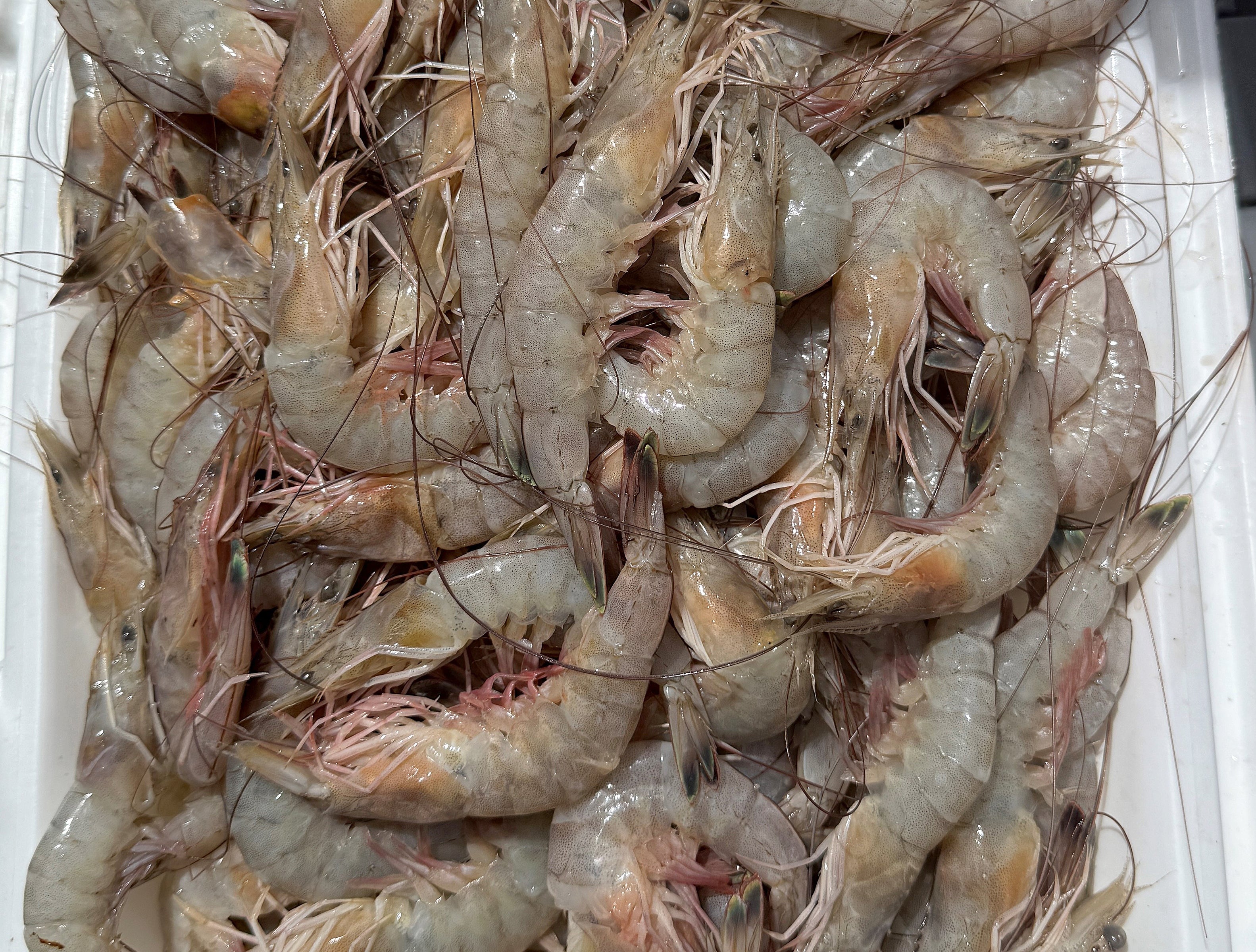
A $200 increase in the seafood dealers license will go to Sweet Grown Alabama to promote Alabama seafood. Photo by David Rainer
May 15, 2025
By DAVID RAINER, Alabama Department of Conservation and Natural Resources
Severe weather last weekend hindered travel across the state, which limited the number of Alabama Conservation Advisory Board (CAB) members who were able to meet at Troy University for the second CAB meeting of the year.
Being one member short of a quorum to conduct any official business, the CAB members were apprised of what had occurred affecting the Alabama Department of Conservation and Natural Resources (ADCNR) since the March meeting.
Conservation Commissioner Chris Blankenship updated the Board on the latest session of the Alabama Legislature. He thanked Deputy Commissioner Ed Poolos and Charlanna Skaggs, ADCNR’s General Counsel, and the legal staff for their work during the session.
Commissioner Blankenship highlighted several bills that were considered this year, including HB1 that dealt with a license increase for seafood dealers in the state.
“HB1 was introduced by Rep. (Chip) Brown (Hollinger’s Island),” he said. “It added $200 to the seafood dealer’s license, and that money was initially going to go to the Department of Public Health for seafood testing. Our Department, the Department of Agriculture, the Alabama Grocers’ Association, and others were able to work with Representative Brown and Senator Sessions so that $200 added to the seafood dealers license will now go to the ‘Sweet Grown Alabama’ program under the Department of Agriculture and Industries to promote Alabama seafood.”
HB437 dealt with developing a shark warning system. Commissioner Blankenship said the original language would have made it difficult to implement. Compromise legislation was passed, and ADCNR will implement a workable shark warning system in the next few months so that if a verified, unprovoked attack occurs, a warning system will be in place to inform the public.
SB64 dealt with aquatic nuisance plants and the removal of those plants from the waterways if they are cut off.
“If people or companies cut a nuisance plant down in the water, they have to remove and not leave them in the water to rot,” Commissioner Blankenship said.
SB171 prohibits the use of motorized vehicles, including ATVs, off-road vehicles and scooters, on submerged lands, such as creeks and streams, and below navigable waters. Violations are classified as Class C misdemeanors.
HB509 was legislation that dealt with deer breeders across the state. The legislation was strongly opposed by ADCNR and numerous national and state wildlife organizations.
“It passed last week with an amendment that we negotiated where we will not go in any deer breeder facilities that are in a CWD (chronic wasting disease) zone and kill deer for testing without a link to a positive somewhere else in the facility,” Commissioner Blankenship said. “There was also a section in that legislation that requires us by March 1, 2026, to work with the industry and others, like the Wildlife Society, the Alabama Wildlife Federation, universities, the state veterinarian and our staff to develop a method to be able to allow movement of deer from deer breeders in a CWD zone to facilities outside the zone if they meet certain criteria we will establish by rule.
“I want to recognize the work done on this bill by the members of this CAB, the hunting public, the Alabama Wildlife Federation, The Wildlife Society, the Boone & Crockett Club and the Teddy Roosevelt Conservation Partnership and many others. There were many groups that were advocates for the Department concerning that legislation that got it to a place we could live with.”
Commissioner Blankenship said good news also came out of the legislative session with the passing of HB186 that set the appropriations for executive, legislative and judicial agencies of the state.
“The budget for the Department of Conservation and Natural Resources will be $458.7 million dollars, the largest budget we’ve ever had,” he said. “That includes $6 million from the General Fund for capital improvements. Before two years ago, we had never received any money from the General Fund. This is the third year, and we have received $18 million total to do infrastructure work on shooting ranges, state lakes, State Parks projects and the (M. Barnett Lawley) Forever Wild Field Trial Area. We appreciate the support from the Legislature.
“We also received $1 million for implementation of the State Wildlife Action Plan. I had the opportunity to go down (Friday) with (CAB) Chairman (Joey) Dobbs, Deputy Chief of Staff of the Governor, Brooks McClendon, and others, and we released a whole bunch of indigo snakes in Conecuh National Forest. More than 325 indigo snakes have been released through that program. The goal of these stocking releases is to get this species delisted from the Endangered Species Act.”
Alabama has so many trails that the Year of Alabama Trails will run through 2026. Photo by Billy Pope
Commissioner Blankenship also updated the Board on the numerous boating access projects completed or underway.
“We’ve got plenty of work underway,” he said. “The Weeks Bay Ramp parking is under construction. We cut the ribbon at the County Road 6 Ramp in Baldwin County that was funded through GOMESA. It was a $7 million project that was very well done. The Billy Goat Hole Ramp on Dauphin Island is under construction. The Chocolatta Bay Ramp parking will soon be done on the Causeway in Mobile. We have a ribbon cutting planned for McCarty’s Ferry Ramp on June 10. We recently finished the Highway 77 Ramp in Rainbow City.”
Commissioner Blankenship highlighted the fact that Alabama Tourism will be celebrating the Year of Alabama Trails for the next two years.
“ADCNR has more than 500 miles of trails in our State Parks System and close to 400 miles of trails in Forever Wild property for hiking, biking, horseback riding, canoeing, kayaking and other uses,” he said. “This will be the emphasis of our marketing over the next two years, promoting the trails on our ADCNR properties. I appreciate the work our staff and partners do in building and maintaining those trails.”
State Lands Director Patti McCurdy gave an update on hunting leases that State Lands manages for various state agencies for an additional revenue source.
“One of the ways we try to drive revenue off those land assets is through a five-year hunting lease that we offer to the public by auction,” McCurdy said. “We’re offering leases on 140 properties that stretch across 32 counties.”
McCurdy urges anyone interested to go to www.outdooralabama.com/2025HuntingLeaseAuction for details on the auction process.
Commissioner Blankenship also took the opportunity to bid farewell to Chuck Sykes, Wildlife and Freshwater Fisheries Director, who will become Executive Director of the Council to Advance Hunting and the Shooting Sports on July 1.
“I appreciate the work that Chuck has done and the friendship we’ve had over the last 12-plus years,” Commissioner Blankenship said. “Just to mention a few of his accomplishments and things that have happened under his tenure, one of those is the implementation of the SOA program. The Special Opportunity Area hunts were something that was brand-new for Alabama, and that has gone over extremely well. He also proposed extending the deer season to February 10 and using science to do that. He and his staff looked at populations across the state, and some deer start rutting activity earlier. And the season was extended to February 10 for most of the state, based on the rut and the science that our staff has done. That was big change.
“Another thing he’s done is propose the use of Forever Wild for matching funds for the Pittman-Robertson money, adding about 50,000 acres for public hunting. That was a huge change and has been very successful. He was also president of AFWA (Association of Fish and Wildlife Agencies) over the last year. He’s been very important in terms of national leadership on issues that are important to us in Alabama and the national level.”
Sykes has expanded shooting sports opportunities with range construction ramping up. He also expanded the waterfowl opportunities.
“We spend more money on duck hunting and duck habitat than ever before,” Commissioner Blankenship said. “Changes were made to turkey season and to the alligator season to give people more opportunities to hunt.
“Whether you like or dislike the changes in the Department over the past 12 years, I think you’d have to say that Chuck always had the long-term health of the resource as the guiding factor in recommendations to the CAB, to the Commissioner and internal decisions of Wildlife and Freshwater Fisheries. And that is what we want from all our directors, to do what’s best for the resource.”
During public testimony, two people asked the Board to consider moving the start of turkey season earlier in March. Board member Jeff Martin asked Sykes to address that situation.
Sykes explained that if he had a choice, the season wouldn’t start until April 1, and the reason people complain about turkeys not gobbling is because of hunters.
“I respectfully disagree because I hunted in Choctaw County the last day of the season (May 8) and heard five turkeys gobble,” Sykes said. “I called up two at 10 o’clock that were gobbling like 2-year-olds on opening day, whatever opening day is.
“Hunting pressure curbs gobbling, not the time of the year, at least not in May. Just because it’s May doesn’t mean the turkeys quit gobbling. I had not hunted those two properties all year, and the turkeys were fresh. They worked like they were supposed to. The reason turkeys quit gobbling is, one, they’re in somebody’s freezer, or they’ve been shot at, spooked or whatever, and they just quit. Pressure dictates gobbling, not the time of year in March, April and May.”
Sykes said they need to put their personal preferences aside and do what’s best for the resource.
An additional CAB meeting has been scheduled for Thursday, May 29 at the Alabama Department of Agriculture and Industries, Richard Beard Auditorium, 1445 Federal Dr., in Montgomery, Alabama. The meeting will begin at 10:30 a.m. Because public comment was received at the May 10 meeting, no public comment will be accepted at the May 29 meeting
On the agenda will be hunting seasons and bag limits as well as recommended changes by the Marine Resources Division regarding saltwater fishing.
###
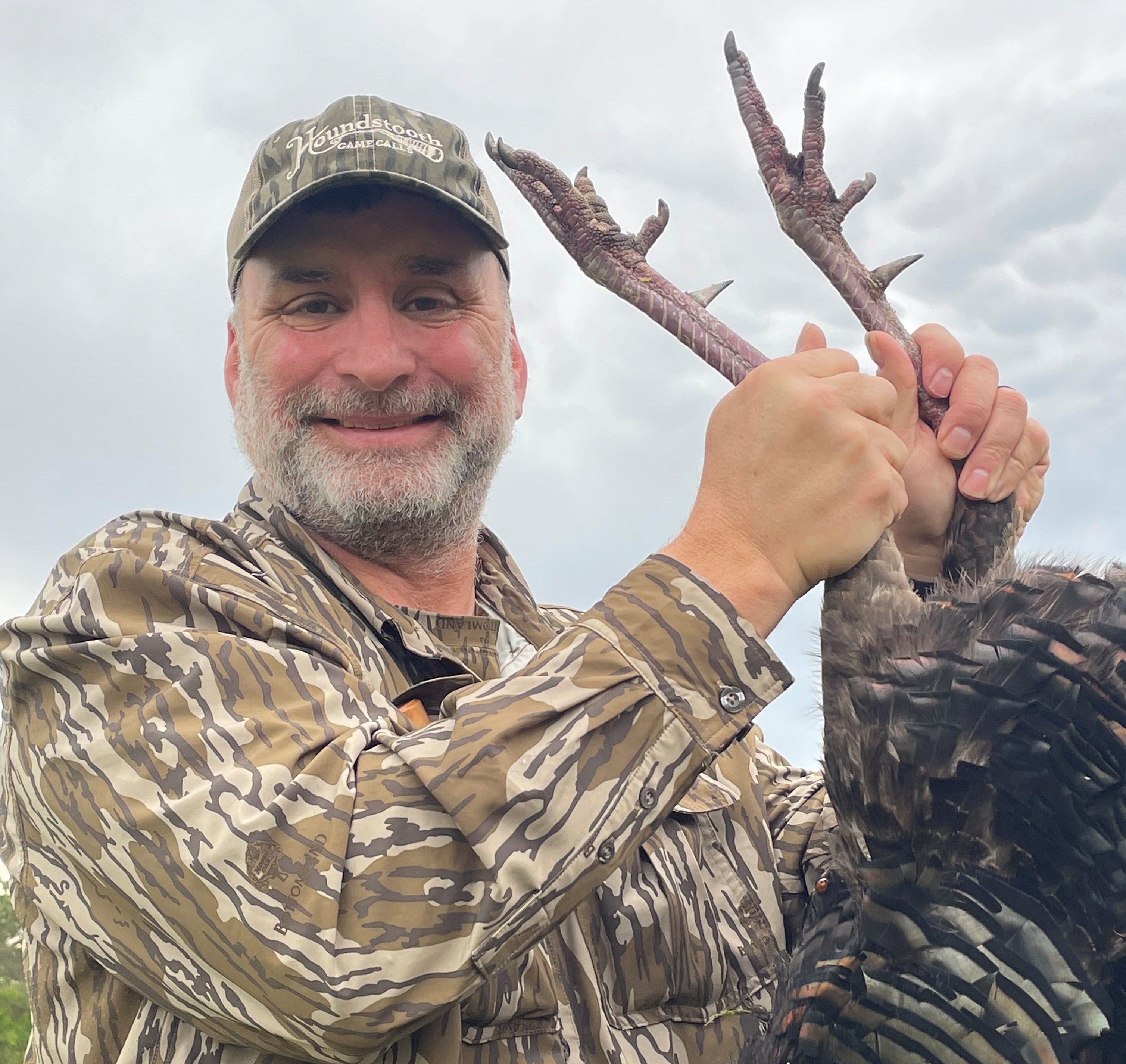
Chuck Sykes will leave ADCNR on July 1 to become Executive Director of the Council to Advance Hunting and the Shooting Sports. Photo courtesy of Chuck Sykes

