Enter Maryland’s Black Bear Hunting Lottery — and Let a Bear Live
Reply


11 Aug 2026Asia
There’s no conservation motive or benefit behind the Uzbekistan government’s recent releases of more than 2,000 captive-bred Asian houbara bustards across its desert regions, according to an expert on the threatened species.
The government has touted the releases over the past three months as a wildlife restoration effort, but Nigel Collar, a conservation biologist at BirdLife International, suggested the birds are meant to serve as quarry for hunting parties.
“In reality both areas [where they were released] are hunting concessions for Gulf State falconers and these are birds being put out in the wild simply to provide ‘sport,’” Collar, who also co-chairs the Bustard Specialist Group at the IUCN, the global wildlife conservation authority, told Mongabay by email.
“[T]here is no conservation strategy related to these releases, because they are not intended for conservation except in the sense that they can absorb some of the hunting pressure on wild populations,” he added.
Neither Falcon Hunting Solutions LLC nor Uzbekistan’s National Committee on Ecology and Climate Change, both involved in the releases, had responded to Mongabay’s requests for comment by the time this story was published.
The Asian houbara (Chlamydotis macqueenii) is listed as vulnerable to extinction on the IUCN’s Red List. It migrates between Central and South Asia and the Middle East, and is hunted intensively across this range.
Uzbekistan released nearly 900 of the birds in the Aral Sea region of Karakalpakstan in May this year, followed by some 670 birds in June, according to statements from the National Committee on Ecology and Climate Change. An additional 778 birds were released in July in the Navoiy region.
The released birds were all raised at breeding centers in the United Arab Emirates, the government statements note. They add the releases were carried out under the supervision of specialists from the committee and “Falcon Hunting Solutions” LLC. The latter, according to its website, focuses on “trophy hunting development as an ecotourism segment of Uzbekistan.”
The statements also say the birds’ release into the arid ecosystems of Karakalpakstan and Navoiy contributes to the restoration of ecological balance and the conservation of the region’s unique biodiversity.
“There are already wild houbara in both regions, so it would not be a reintroduction but a reinforcement,” Collar said.
He added the releases “will not contribute to any knowledge” since no information is being gathered on the baseline population of the birds, how many are hunted, what levels of hunting would be acceptable, or what reinforcement would be appropriate.
Collar said the fundamental threats to the species remain entirely unaddressed. These include an 800-kilometer (500-mile) overhead power line across the birds’ desert habitats, which poses severe collision risks.
He said long-term survival requires running power lines underground, reducing human contact during rearing, and implementing the Convention on Migratory Species’ (CMS) Bustards Multispecies Action Plan approved by signatory countries, including Uzbekistan.
Banner image: An Asian houbara bustard in Talagang tehsil, Punjab, Pakistan. Image by Sahibzada tariq hameed via Wikimedia Commons (CC BY-SA 4.0).
Uzbekistan’s houbara releases serve hunting, not conservation, expert says
Volunteers are on the lookout for sick birds as outbreak shatters ‘fairytale belief’ that disease would not reach Australia
Kat WongMon 10 Aug 2026 11.00 EDTShare
Bird enthusiast Jean Turner hoped avian flu would never arrive at her doorstep.
At her home on Kangaroo Island in South Australia, bossy fairy wrens chirp at her from the deck, grey currawongs clumsily fall into her bird bath, and fluffy, hooded plover chicks emerge from speckled eggs in front of her binoculars.
But online, images of Argentinian coastlines strewn with dead seal pups and researchers lining up rows of dead seabirds on Antarctic islands offered a warning of what could come.
So when South Australia confirmed its first case of the deadly H5 bird flu strain, just over 200km away at Robe on the Limestone Coast, Turner was prepared to become a different kind of birder.
“We had this fairytale belief that maybe we wouldn’t get it here,” she says.
“But it’s here and now things are going to get harder and more confronting.”
She is one of more than 120 volunteers who have signed up for the Bird Observers Network, which allows birders to contribute to the state’s bird flu response.
The partnership between the South Australian government, Conservation Council SA, Birds SA and Birdlife Australia trains volunteers to identify and report sick birds that may be showing signs associated with H5 bird flu.
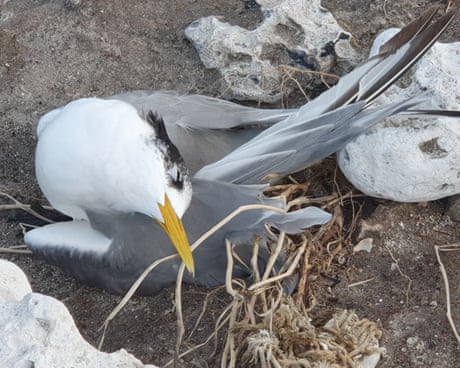
Since the network’s first session, Turner has already reported a sick greater crested tern, which was resting at the edge of a flock.
While the other birds shuffled or flew around as she tried to get a better look, the sick animal didn’t respond.
“It was standing on the jetty, trembling and swaying a bit,” Turner says.
“It didn’t look well, it just looked really miserable.”
Compared with the non-bird-obsessed general public, birders can offer greater detail when reporting potentially infected birds, says Steven Langley, the president of Birds SA.
They can often recognise species more accurately, use their binoculars to observe possible abnormalities within a flock, and notice when birds they might see on their routine walks go missing.
“We all just want to be able to do whatever we can to make a difference,” Langley says.
“When you see these distressing images from overseas, you’re implanting them into your mind and onto the places and the birds that you have got a great deal of affection for.”
Volunteers generally don’t receive further correspondence after they’ve made a submission, but multiple crested terns found on Kangaroo Island have been tested and returned confirmed positive results for H5 bird flu since Turner’s report.

Eric BarkerOutdoor and Environmental Editor
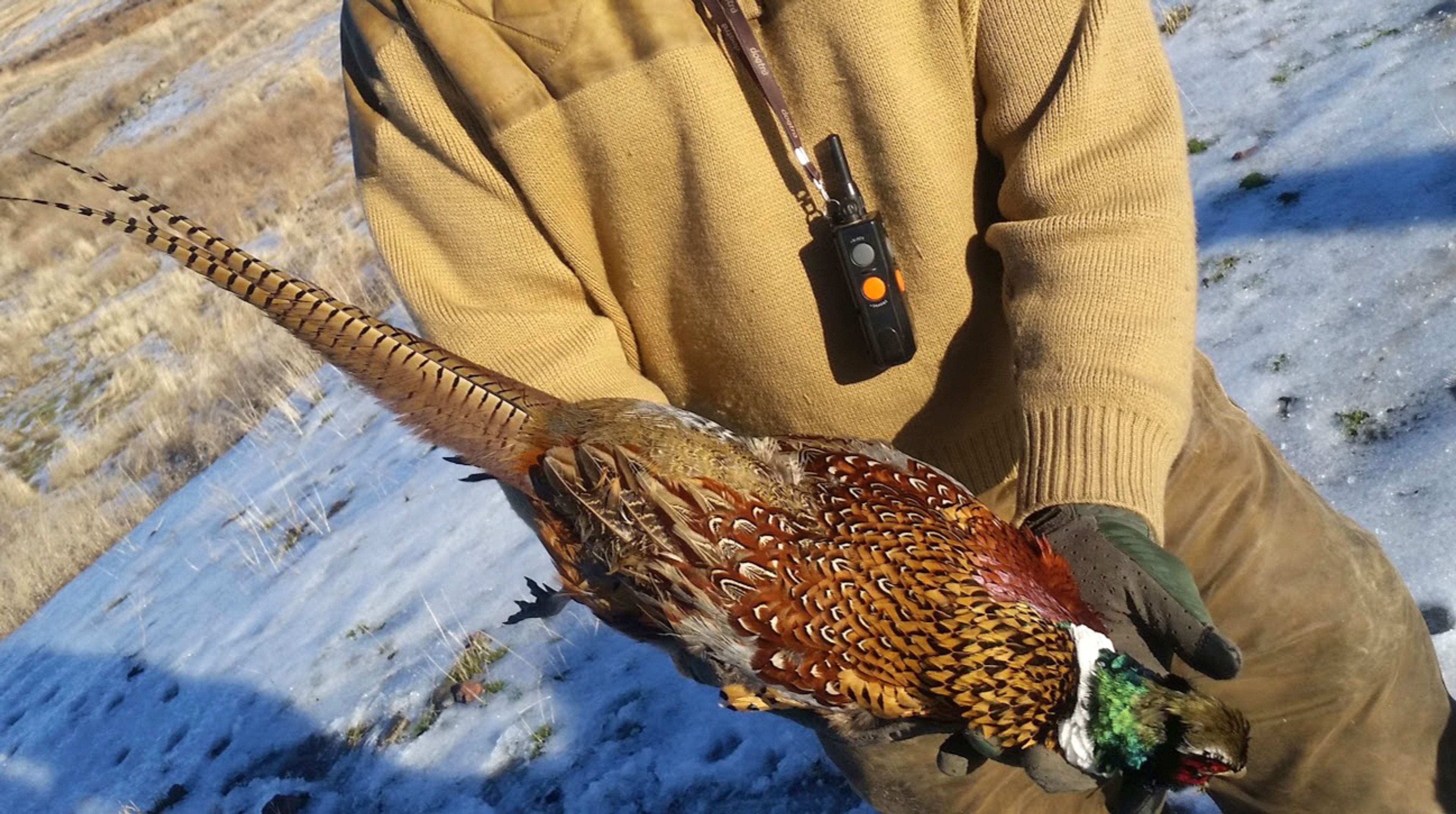
A hunter displays a pheasant.Tribune/Eric Barker
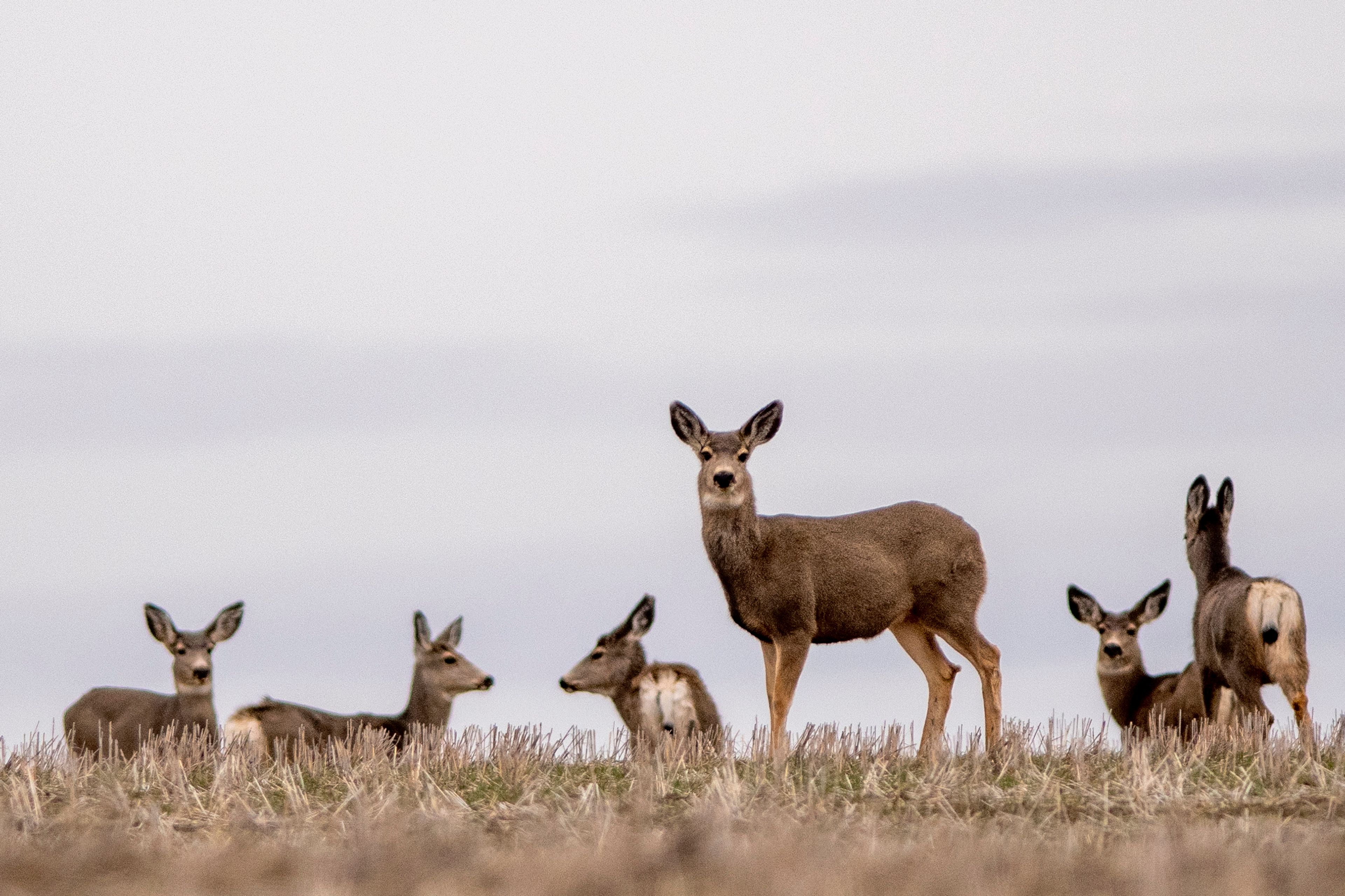
Mule deer does graze in wheat stuble of eastern Washington in this photo from 2021. The Washington Department of Fish and Wildlife is in floating possible hunting rule changes and plans to share the ideas with the public. Pete Caster/Tribune
The Washington Department of Fish and Wildlife will share potential changes to hunting rules that the agency may develop into full proposals to be vetted during its three-year, season-setting process.
Wildlife managers will explain dozens of potential rule changes and answer questions during a series of online public meetings starting Tuesday.
“We wanted to take this opportunity to thoroughly discuss details about the hunting rule changes we are considering with members of the public,” said Anis Aoude, the department’s game division manager in a news release. “After reviewing over 1,000 comments in an earlier public comment opportunity, WDFW has narrowed it down to about 60 proposals we are considering for this three-year season setting. We have not yet determined which of those potential proposals will move forward for the formal rule making process, and public input now can shape which proposals we consider.”
The agency will take public comments on the candidate proposals in a separate online process.
The recommendations were made by agency staff, partners, advisory groups and members of the public. They will be unveiled on the agency’s rule-making website Monday at bit.ly/4fJ8xo7 which will also include links to the public meetings and public comment surveys. Aoude said they include things like changing boundaries of hunts, adding or subtracting an early or late hunt or changing rules governing hunting methods. He said making some mule deer and elk hunts on the east side of the state permit only instead of over-the-counter is not included.
Daily headlines, straight to your inboxRead it online first and stay up-to-date, delivered daily at 7 AMDo not fill this fieldSign Up
“We still have some work to do on that,” he said.
Candidate changes that make the cut and are developed into formal proposals will be unveiled late this year or in January. Another public comment period will be held then. The Washington Fish and Wildlife Commission will decide which proposals are adopted into the 2027-29 hunting rules, but it could delegate some or all of it to Fish and Wildlife Director Kelly Susewind.
All of the informational meetings will be held from 6 to 8 p.m. via Zoom. The first on Tuesday will cover deer, elk and moose. A meeting on Wednesday will cover waterfowl. A meeting on turkey, upland game birds, small game, carnivores and furbearers will be held Aug. 17.

