Bird flu, feared as a possible pandemic, poses growing risk to people as pathogen spreads, scientists warn
Reply

By Ethan Covey
All but one case of people infected with highly pathogenic avian influenza (HPAI) A(H5N1) virus in California have occurred in dairy workers who were exposed to sick cows, according to a new CDC report.
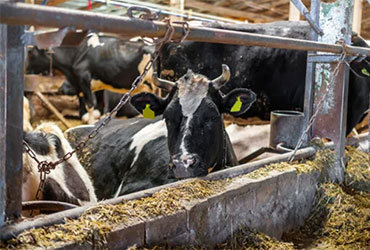
Findings from the report highlight the continued need for investigating influenza-like illness or conjunctivitis in workers who have occupational exposure to animals infected with the HPAI A(H5N1) virus (MMWR Morb Mortal Wkly Rep 2025;74[8]:127-133).
ADVERTISEMENT
The first human case of HPAI A(H5N1) virus in California was identified in September 2024. From Sept. 30 through Dec. 24, 2024, 38 people in the state received a positive test for the virus. Of these, 37 were determined to be dairy farm workers who were confirmed to have had contact with infected cows.
The final case occurred in a person younger than 18 years of age who had an undetermined exposure. This case represents the first pediatric case of HPAI A(H5N1) infection identified in the United States. The child had mild respiratory symptoms and otitis media, was prescribed oseltamivir, and recovered quickly.
“These findings reinforce individuals with occupational exposure to infected or potentially infected animals are at increased risk for infection and should follow safety measures, including proper PPE [personal protective equipment] use,” Paul Prince, a CDC spokesperson, told Infectious Disease Special Edition.
ADVERTISEMENT
Mr. Prince stressed that the threat of HPAI A(H5N1) to individuals in the United States remains minimal.
“There is no known human-to-human transmission identified in the U.S., and the overall immediate risk to the public remains low,” he said. “Individuals exposed to infected animals or certain environments—such as people who have occupational or recreational exposures—are at increased risk of infection.”
Apr. 22 06:00 am JST 15 CommentsSHIMONOSEKI
A commercial whaling ship left a western Japanese port Monday for the Sea of Okhotsk to hunt 25 fin whales.
The crew of the ship, which left Shimonoseki port, plans to start hunting fin whales in the exclusive economic zone, north of the northern island of Hokkaido, from Friday and is set to return to port in Sendai in northeastern Japan in June.
Four such trips are planned in fiscal 2025 through next March, and the crew hope to catch a total of 229 fin and other whales, one less than the number caught the previous fiscal year.
Japan resumed hunting whales for commercial purposes in 2019 after formally withdrawing from the International Whaling Commission.
As an IWC member, Japan had halted commercial whaling in 1988 but continued to hunt whales for what it called research purposes, a practice criticized internationally as a cover for commercial whaling.
Betty Lin-Fisher, USA TODAY
Mon, April 21, 2025 at 11:53 AM PDT
5 min read433

Scroll back up to restore default view.
Children and families were expected to use 30,000 real eggs at the White House Easter Egg Roll on April 21 as retail egg prices remain higher than normal and egg supplies continue their recovery amid a bird flu crisis.
Wholesale egg prices have continued to drop, as they have since mid-March, but the steep decreases have not yet fully been reflected at the grocery store. The eggs used at the White House event were donated by farmers and are not in sizes meant for retail and grocery channels, the American Egg Board said.
The annual White House tradition dates back to 1878 when Rutherford B. Hayes issued an order that allowed children to roll eggs down the White House lawn after banning them from using the White House grounds as a playground two years earlier.
The White House South Lawn is opened once a year for families and children chosen in an online lottery to roll colorfully painted eggs and join in other activities. President Donald Trump, in remarks during the roll, said about 42,000 guests were expected throughout the day.
Advertisement
Families with children under 13 joined Trump, the first lady, White House staff and their families for the 147th edition of the egg roll.
In a new controversial twist that has raised ethics concerns, the 2025 egg roll is the first iteration of the tradition to be open to corporate sponsorships. The decision led some Trump opponents to suggest it is an ethics violation. Proceeds from companies that paid for their names to be attached to the event benefit the nonprofit White House Historical Association, the lead organizer of the egg roll.
The country’s largest tech companies make up some of the corporate sponsors, according to a list released by the White House, including Amazon, Meta and YouTube.
What the Trump administration means for your wallet: Sign up for USA TODAY’s Daily Money newsletter.
NBC News reported that the egg roll would use real eggs even as bird flu continues to cause supply constraints that have sent prices soaring.
Advertisement
“They were saying that for Easter, ‘please don’t use eggs. Could you use plastic eggs?’ I say we don’t want to do that,” NBC quoted Trump as saying in early April.
The Cool Down
Stop Moisturizing Crepe Skin! Tighten Skin With This DIY Trick InsteadMiami MD・
Bankrate
Playstation Lifestyle
The 30,000 real eggs, or 2,500 dozen, are donated every year by egg farmers represented by the American Egg Board.
In a news release, American Egg Board President and CEO Emily Metz said the eggs for the White House event would “not create additional strain on the nation’s egg supply or egg prices.”
The eggs represent a small percentage of the nearly 9 million dozen eggs, or 108 million eggs, sold at retail stores each day, Metz said.
“Additionally, the eggs used for the White House Easter Egg Roll will be in sizes small and medium, which are not meant for the retail and grocery channels,” she said.
The price of eggs has continued to be volatile, even as wholesale egg prices in recent weeks have declined and demand for eggs increased with the Passover and Easter holidays. The rise in prices and supply constraints have been largely driven by the outbreak of highly pathogenic avian influenza, or bird flu.
Advertisement
But egg prices at the grocery store, prices reported in some data reports like the consumer price index and prices on the wholesale market don’t always match, USA TODAY reported.
For instance, the latest consumer price index, released April 10 by the U.S. Bureau of Labor and Statistics, shows the highest price for a dozen large grade A eggs since the price hikes began.
But that price and the CPI cost of eggs overall, which was up 5.9% in March, may not accurately reflect the drop in wholesale prices that started in the middle of the month. The index is an average of data collected through the month and retail prices were higher at the beginning of March, one expert said.
Additionally, retailers may not have dropped prices of eggs proportionately with the drop in the wholesale egg market, which may have to do with retailers wanting to take advantage of worries about scarcity to keep prices high, particularly with the demand for Easter, some experts say.
According to the CPI, the average U.S. city price of a dozen large Grade A eggs at retail stores, not seasonally adjusted for March, was $6.23. That’s up from $5.90 in February and $4.95 in January.
Advertisement
In the latest weekly report from the U.S. Department of Agriculture on April 18, the average wholesale price of loose, white large shell eggs was $3.14 a dozen, up slightly from $3.08 a dozen reported on April 11 but lower than the $3.26 a dozen reported April 4.
Egg crisis: Why are egg prices so volatile?
The CPI is a lagging indicator, and it takes some time for wholesale prices to be reflected in the grocery store, industry experts have told USA TODAY. Plus, some retailers are using pricing strategies to keep egg prices elevated or aren’t reducing prices to match lower wholesale costs as quickly as other goods, some said.
How much you pay for eggs varies widely depending on where you live. Data gathered by USA TODAY shows the prices on April 21 at several retail stores in Wildwood, Missouri, a suburb of St. Louis, for instance, are lower than the U.S. city average reported in the March CPI, released April 10.
Advertisement
Prices for a dozen large Grade A eggs at an Aldi, Costco, Kroger, Target, Sam’s Club, Walmart and Whole Foods on April 21 ranged from a low of $4.19 at Whole Foods to a high of $5.49 at Aldi. The Whole Foods price was taken from the grocer’s website, and the Aldi price was from Instacart. Instacart prices are set by the grocer. The high and low prices match the prices gathered April 10.
Contributing: John Heasley, James Powel, Joey Garrison and Bart Jansen
Betty Lin-Fisher is a consumer reporter for USA TODAY. Reach her at blinfisher@USATODAY.com or follow her on X, Facebook or Instagram @blinfisher and @blinfisher.bsky.social on Bluesky. Sign up for our free The Daily Money newsletter, which will include consumer news on Fridays, here.
This article originally appeared on USA TODAY: Why were 30,000 real eggs used at the White House egg roll?


