Ninth Circuit: Forest Service lawfully approved cattle grazing lands, despite risks to endangered wolves

Over environmental advocates’ objections, a panel of judges ruled the U.S. Forest Service didn’t violate federal law by failing to consider the effects of livestock on the endangered Mexican gray wolf population.

Matt Simons / February 11, 2025
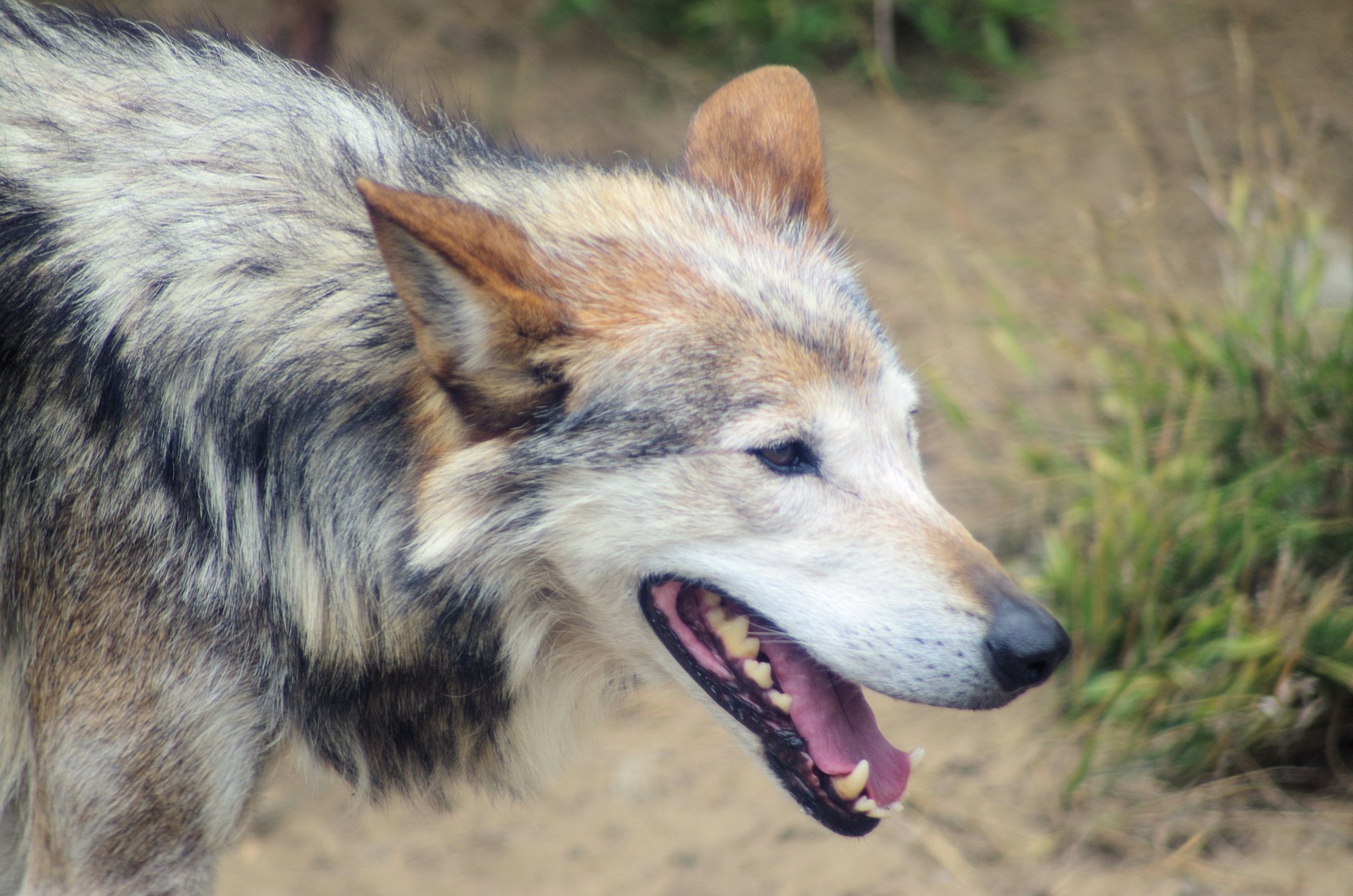
A Mexican Gray Wolf roams about its enclosure in the San Francisco Zoo on July 15, 2018. (Photo by Michael Fraley, CC BY 2.0, via Flickr)

(CN) — The U.S. Forest Service acted lawfully when it authorized a cattle grazing project in New Mexico and Arizona, despite activists’ claims that it could impact the endangered Mexican gray wolf population in the area, the Ninth Circuit ruled Tuesday, upholding a lower court decision.

The three-judge panel rejected claims by the Western Watershed Project that the Forest Service didn’t look hard enough at the effects of the livestock grazing on the Mexican gray wolf, whose wild population is just over 250 in the United States.

Rather, the panel said in its unsigned opinion, the federal agency thoroughly considered those issues and “reasonably concluded” that the proposed grazing was “not likely to adversely affect the subspecies.”

For one, the judges said, the proposed grazing area did not have documented Mexican gray wolf packs, dens, rendezvous sites or territories, and nearly all the grazing allotments had no reported wolf sightings or instances of wolf-livestock conflict.

Additionally, the Mexican gray wolf population within the area nearly doubled between 2016 and 2020, despite higher levels of grazing than those authorized by the Stateline Project — a fact the Forest Service’s attorneys leaned on during oral arguments a week before the decision.

“Given these facts, plaintiffs have not shown that Forest Service’s conclusions were ‘unreasonable,’” the panel wrote.

Cindy Tuell, the Arizona and New Mexico director for Western Watersheds Project, called the court’s decision disappointing.

“Mexican gray wolves are one of the most endangered species that we have in southern Arizona and New Mexico. They desperately need more protections, and one of the biggest threats to the wolf is livestock grazing,” Tuell told Courthouse News.

The nonprofit environmental conservation group is concerned that increased grazing in the area could threaten the recovery of the endangered Mexican gray wolf by disrupting the populations of its prey, which depend on the same grass for food. The group sued the Forest Service in 2021 over the grazing plan, known as the Stateline Project, which was approved in 2019 and began in 2020. After losing summary judgment in late 2023, it appealed to the Ninth Circuit.

Western Watersheds, Tuell said, was suing over the Forest Service’s lack of action just as much as it was grazing land’s approval.

The conservationists say the Forest Service violated the National Environmental Policy Act by failing to produce an environmental impact statement that fully analyzed the effects grazing might have on the fledgling wolf population in the Greater Gila Bioregion — an area spanning the central portion of the Arizona-New Mexico border that is home to at least 26 sensitive species.

“It’s the Forest Service’s job to tell the public and the judges what the threat is. It’s not the public’s job to do that science,” Tuell said.

Because the current population is descended from just seven wolves, the group says any potential removals or killings due to conflict with grazing livestock would be devastating to the species’ genetic diversity, which is already dangerously low.

Though Western Watersheds lost its appeal, Tuell found a silver lining. “You know, the Forest Service started doing a much better job at this right after we filed our first lawsuit on this case,” she said.

The U.S. Forest Service declined to comment on the lawsuit.

The panel of judges behind the decision included U.S. Circuit Judge Bridget Bade, a Donald Trump appointee, as well as U.S. Circuit Judges Richard Clifton and Jay Bybee, both George W. Bush appointees.

Should Wyoming still permit ‘whacking’ after man paraded wounded wolf through local bar?

Trevor Hughes, USA TODAY

February 20, 2025 at 2:25 PM

A year after a Wyoming man shocked the world by carrying a wounded wolf into a rural bar and letting buddies snap selfies with it, state lawmakers are considering whether to toughen animal cruelty laws.

The incident in Daniel, Wyoming, last year drew international condemnation and sparked death threats after the man ran the female wolf over with a snowmobile, duct-taped its muzzle shut and dragged it into the Green River Bar in a shock collar at the end of a leash. He later killed it.

Wyoming state officials fined the man $250 ‒ not for torturing the animal but instead for possessing live wildlife ‒ because state law permits people to use snowmobiles or ATVs to chase and then run down wolves, coyotes and other predator animals in a process known as “whacking.”

“It’s a practice that needs to stop,” state Rep. Mike Schmid, a Republican who grew up near the bar, told USA TODAY Thursday. “It’s painting all hunters in a bad light.”

Covered in its winter coat, a coyote walks along a creek in Yellowstone National Park in Wyoming in this 2017 file photo.

Wolves and coyotes are widely disliked in Wyoming, largely because they kill livestock, or game animals like elk and deer that hunters would prefer to shoot themselves. Under existing state law, it’s legal to run down predators under almost any circumstances in large portions of the state.

While Schmid is trying to ban the practice of “whacking” entirely, lawmakers are also considering a separate measure requiring anyone who runs over a predator on public land to kill it cleanly, rather than letting it suffer and die.

Schmid said as a kid, he chased his fair share of coyotes on snowmobiles, but was always taught to dispatch them with a bullet. He said the practice is less common than it once was, but still happens mostly in the western part of Wyoming where deep snows fall on federal lands. His proposal includes an exemption for ranchers targeting predators on private property.

Polls conducted on behalf of both wildlife advocates and hunting groups indicted broad support for banning “whacking,” and animal-rights groups are frustrated lawmakers haven’t yet acted. While a legislative committee approved the “clean kill” measure on Thursday morning, Schmid’s more comprehensive bill appears to have died.

“It should have been a slam-dunk issue,” said Kristin Combs, executive director of Wyoming Wildlife Advocates. “I can appreciate the fact that people need to protect their livestock. But they don’t need to be committing torture.”

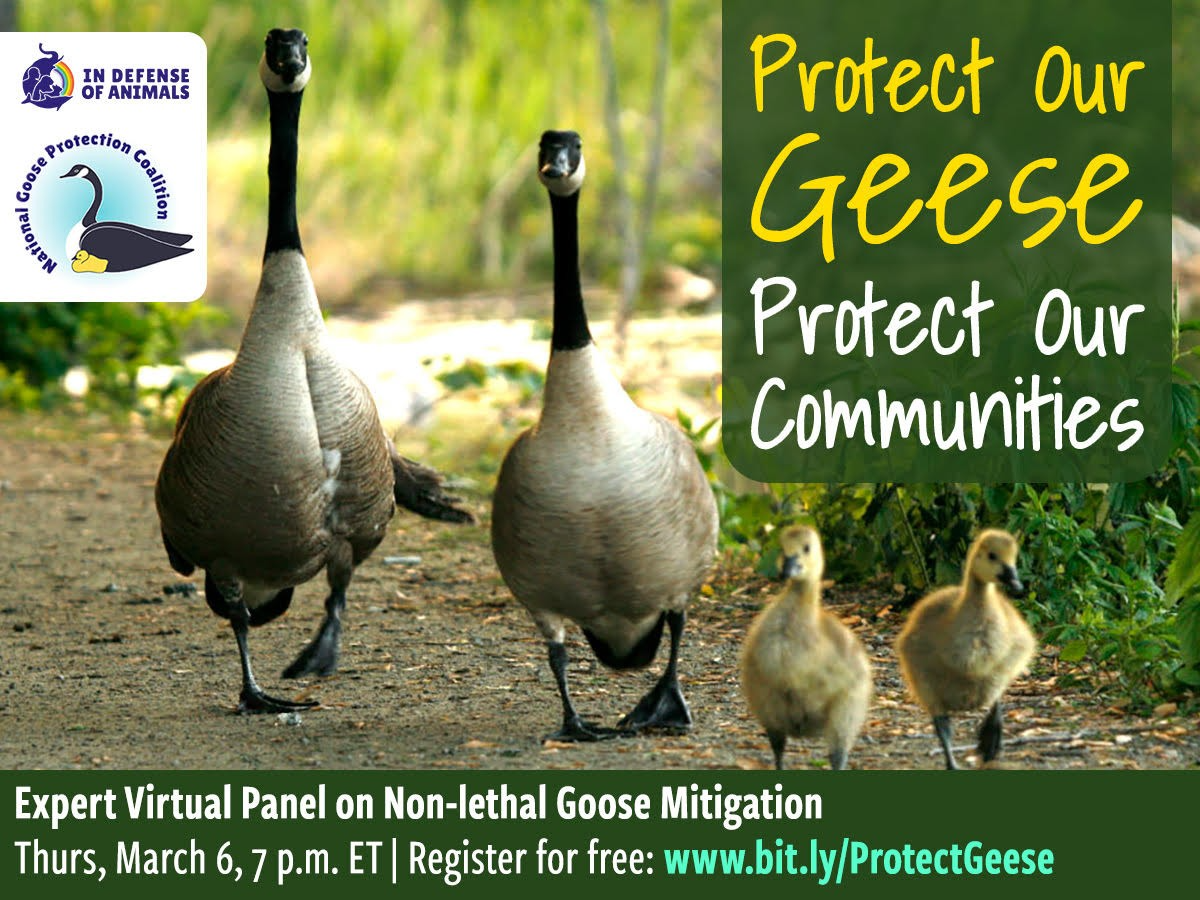
Please attend the Canada Goose webinar

Protect Our Geese, Protect Our Communities 

Free Webinar: Hosted by In Defense of Animals’ National Goose Protection Coalition

Important: The Michigan DNR and USDA have decided to gas all Canada geese removed from area lakes and businesses in 2025. This barbaric practice must be stopped. We need your help to promote humane alternatives.

What: Expert Virtual Panel on Non-lethal Goose Mitigation

When: Thursday, March 6, 7 p.m. ET

Register: Welcome! You are invited to join a webinar: Protect Our Geese, Protect Our Communities: Expert Panel on Humane Goose Mitigation Solutions. After registering, you will receive a confirmation email about joining the webinar.

Welcome! You are invited to join a webinar: Protect Our Geese, Protect O…In Defense of Animals’ National Goose Protection Coalition is honored to host a free webinar featuring humane go…

Discover:

·  Humane Goose Deterrent Products: Companies showcase products designed to deter geese without harming them.

·  Guest Speakers:

o   Experts in water quality discuss the impact of geese on local environments.

o   Leaders from goose advocacy groups across the country share effective goose mitigation strategies.

Why Attend?

·  Gain insight into humane solutions to prevent conflicts with geese.

·  Support ethical practices to coexist with wild animals.

·  Connect with others who care about protecting both our wildlife and our communities.

Who’s Invited?

·  Michiganders who care about wild animals and our environment.

·  Property owners, business owners, and residents interacting with geese.

·  Anyone interested in learning about non-lethal wildlife mitigation.

Together, we can make a difference. Let’s create a compassionate and sustainable future for wild animals in Michigan!