Americans grapple with egg shortage as bird flu devastates flocks
Reply

By
Christine Rousselle, Fox News
Published Jan. 24, 2025, 2:23 p.m. ET20 Comments
Bird flu outbreak affecting egg prices
00:00
/
00:35

Americans around the United States are heading to grocery stores and noticing that many egg shelves are nearly empty or empty, period.
“You can’t get eggs anywhere, I mean anywhere,” Fox News host Jesse Watters said on “Jesse Watters Primetime” on Wednesday evening, Jan. 22. “I can only get the bad ones that just are not yellow and aren’t fluffy.”
In New Jersey, said Watters, “you just can’t get the good, pasture-raised, nice, organic eggs.”
“So Donald Trump, before you settle the drone issue, we need eggs,” said Watters. “And we need them fast.”
00:01
03:58
Eggs are indeed in short supply and Watters’ favorite pasture-raised eggs are even harder to find.
“The national egg supply has been strained due to Highly Pathogenic Avian Influenza — also known as HPAI or bird flu — which is devastating to egg farmers,” Emily Metz, president and CEO of the Chicago-based American Egg Board, said in a statement provided to Fox News Digital.

The nonprofit organization provides resources for “national category-level egg marketing,” according to its website.
The U.S. alone lost more than 40 million laying hens to bird flu in 2024, said Metz.
While the entire country is experiencing egg shortages to some degree, Metz said it is worse in states with laws requiring that grocery store eggs be “cage-free.”
The states of Arizona, California, Colorado, Massachusetts, Michigan, Nevada, Oregon and Washington all have this legislation, according to CageFreeLaws.com, which tracks cage-free legislation by state.
“Supply disruptions may be more pronounced [among] retailers and in states that exclusively sell cage-free eggs due to impacts from HPAI on cage-free farms, which were disproportionately affected late last year,” Metz told Fox News Digital.

About 40% of laying hens in the U.S. are “cage-free,” she said.
Of birds lost to bird flu, more than half of these birds are cage-free, Metz added. “It’s important to know that bird flu does not discriminate based on farm size or housing environment. The disease is carried by wild birds,” she said.
Once a laying hen tests positive for bird flu, the entire flock is culled to prevent spread, according to the Centers for Disease Control and Prevention (CDC).
“When an egg farm is impacted with HPAI, it must go through multiple steps with government approvals before it can repopulate new flocks, a necessary process that can take six months to a year,” further adding to the supply issues, Metz said.

Egg production, she said, is “both complex and time sensitive,” she said.
“What we know right now is that our system is strained — and HPAI remains a clear and present risk to poultry flocks,” Metz said.
“The volume of eggs sold at retail has been up year-over-year for 22 consecutive months, and we’re just coming out of the highest demand season of the year — the winter holidays — when egg sales increase significantly due to holiday baking and entertaining,” Metz said.
Also impacting the U.S. egg supply is increased demand.
Despite these challenges, Metz said there is reason to be hopeful for the future.
“The good news is that egg farmers have a lot of experience working together to move eggs across the country to where they’re needed most — and that’s exactly what they’re doing now,” she said. 20
What do you think? Post a comment.
“Keeping their birds safe and healthy is every egg farmer’s top priority, and they are working around the clock to protect their birds, replenish supply and keep those eggs coming.”
Fox News Digital reached out to Costco for comment, where customers have noticed recent egg shortages. Many local grocery stores across the country also have seen supplies shrink and prices rise.
Srividya Maganti 01/21/25
The grizzly bear will continue to be protected under the Endangered Species Act, but the recovery of the species still remains at risk.
When the Biden administration announced earlier this month that grizzly bears would continue to be protected under the Endangered Species Act, it seemed like a resounding victory for conservationists. But the fine print tells a much more nuanced story.
Instead of continuing blanket protection to a species that is slowly recovering from being pushed to the brink of extinction, the new rules only protect grizzlies in the Northern Rockies and Washington, and also create more exemptions for the bears to be legally killed.
And, with the incoming Trump administration likely to favor ranchers who want to see the species delisted, the future of the grizzly hangs in the balance. Advocates like Thomas Mangelsen will have to keep on fighting to protect the species at a time when human-bear interactions are on the rise.
Mangelsen, a prominent wildlife photographer, has perhaps the most intimate insight into the lives of grizzly bears out of anyone in the world. He’s spent nearly two decades of his life documenting, photographing, and filming these bears, including one of the most famous: Grizzly 399, a female frequently seen roaming roadside areas — often with her cubs — in the Greater Yellowstone area.
Before the US Fish and Wildlife Service (USFWS) released its updated plan on the listing and management of the grizzly bear under the Endangered Species Act (ESA), Mangelsen talked to WhoWhatWhy about what makes these creatures, the largest bears in the contiguous United States, so special.
The photographer-turned-activist reminisced on the moments in which he has witnessed the tenderness of Grizzly 399’s motherhood and the challenges the species faces to survive in today’s complicated world.
“She only had one cub about 10 years ago called Snowy. It got run over by a car at dusk,” Mangelsen recalled. “Then she went out to the highway, picked up the little carcass, took it into the woods, laid it down, and ran up and down the highway like a crazed person: moaning, groaning, slobbering, standing, and looking like his death didn’t quite register.”
In October, at 28 years old and with at least one yearling cub called Spirit — whom Mangelsen named — Grizzly 399 was also killed in a vehicle collision. Their deaths highlight the challenges at the intersection between human development and the natural world.
* * *
Grizzly bears were added to the endangered species list in 1975 when, as a result of aggressive hunting and habitat loss, their population had dwindled from their peak pre-1800 numbers of around 50,000 to 136.
Since then, environmental groups thwarted two attempts of the USFWS to delist the grizzly. Both times, in 2007 and 2017, activists challenged the decisions, and, citing an inadequate recovery of the species, federal courts sided with them.
It is worth noting that a Republican was in the White House each time USFWS tried to delist the bears. And though the Biden administration kept the species protected under the ESA, the specifics of the decision elicited a mixed reaction among conservationists.
The January 8 proposal for managing grizzlies under the ESA combines the formerly separated recovery zones in the Northern Rockies into a single “distinct population segment.” Importantly, only grizzly bears within this area would be protected by the ESA, a change of course from the 1975 rule, which has since protected grizzlies in all the lower 48 states.
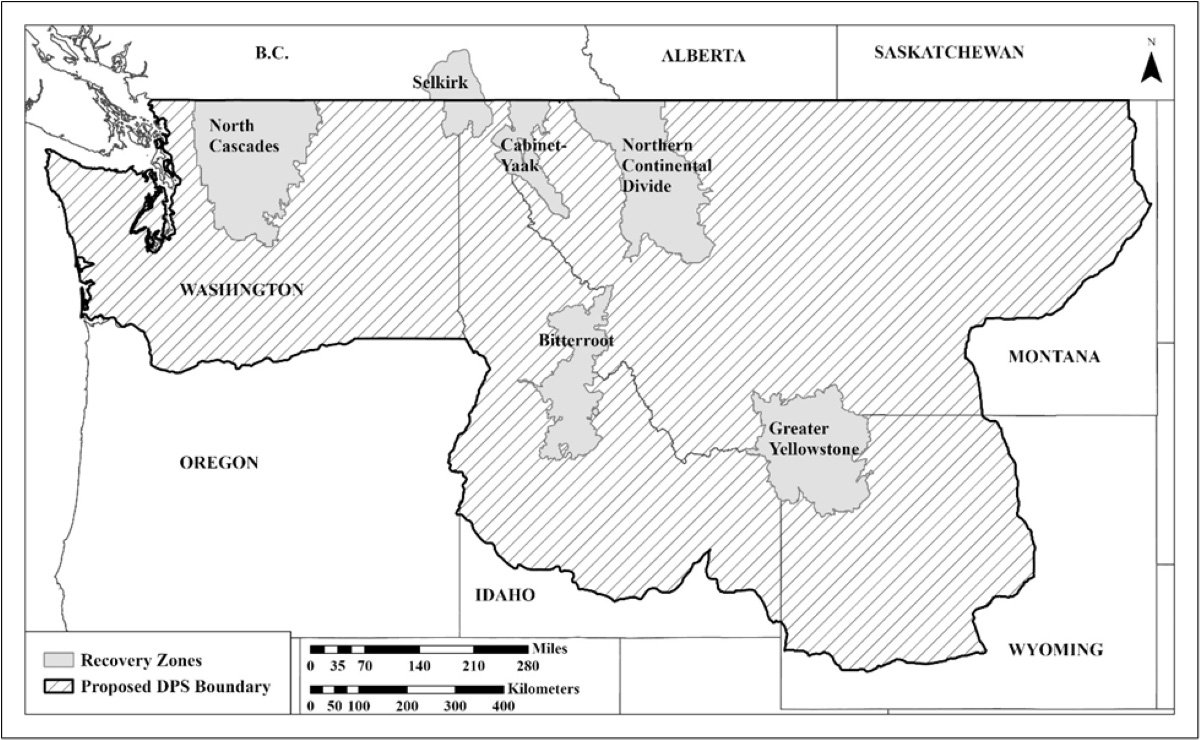
Further, the plan grants management agencies and landowners “greater flexibility and tools” to kill grizzly bears for research and conflict management.
USFWS had revisited the issue after Wyoming, Montana, and Idaho requested the bears to be delisted. In each of these states, human-grizzly conflicts are on the rise and ranchers, who have lost livestock to grizzlies, are a powerful interest group. Proponents of delisting the bears also argue that the species has achieved a recovery, with its population in the contiguous US having reached close to 2,000.
And it seems unlikely that they will accept the decision made by the outgoing administration without a fight.
Republican officials have already voiced their grievances, claiming that the updated plan was a political decision that “disregards the science” proving the species’ successful recovery.
On the other hand, some environmental advocacy organizations, while lauding that the bears were not delisted altogether, expressed disappointment in the decision to remove ESA protections outside the Northern Rockies and Washington, and voiced concerns that the new rules will result in increased grizzly mortality even in protected areas.
So, what does the future look like for grizzlies? A closer look at the science and stakes behind the updated plan from the USFWS could provide some answers.
While proponents of delisting claim that keeping the bear protected under the ESA is a decision not rooted in science, most scientists themselves disagree.
“Recovery is more than just numbers of bears,” stated Christopher Servheen, president and board chair of Montana Wildlife Federation and former grizzly bear recovery coordinator for the USFWS.
For a species to achieve long-term viability and resilience, it must have a significant level of genetic diversity, which occurs through well-connected populations. Grizzly bear geneticists believe that there must be a unified population of grizzlies in the Northern Rockies with a population of closer to 5,000 bears to ensure the long-term success of the species.
Until now, the USFWS operated on its 1993 grizzly bear recovery plan, which focused on achieving increasing population numbers and “did not consider long-term genetic health and population connectivity,” according to its own report. It is these outdated recovery criteria that proponents of delisting cite when they say that the bear has recovered and should be delisted.
The updated plan, which designates a unified population zone of grizzlies that focuses on protecting the bears in important connectivity areas reflects advancements in conservation science made over the last 30 years.
“The call for a larger population throughout the Northern Rockies was backed by a tremendous amount of science,” said Nick Gevock, campaign organizing strategist for the Northern Rockies region of the Sierra Club. Acknowledging the need for connectivity in species recovery was a significant victory, he added.
Delisting advocates have also argued that an increased presence of the bears outside established recovery zones is a sign of population connection and recovery.
She added that the rule also allows people who are not associated with a professional agency to kill conflict grizzlies, and it allows these bears to be killed without first trying nonlethal measures, like relocation.
That is a false assertion, according to Adam Rissien, reWilding manager at WildEarth Guardians, a nonprofit that protects and restores the wildlife of the American West.
Climate change is affecting the abundance and distribution of the whitebark pine, huckleberries, and other food sources of the grizzly, said Rissien. As a result, the bears are leaving their established recovery zones in search of food.
Under the new plan for grizzly management, stakes are high for both the bears and for those living in grizzly habitats.
While grizzly advocates are celebrating the establishment of a unified, protected population of grizzlies, some are disappointed with the removal of protections of bears in the rest of the lower 48 outside the Northern Rockies and Washington.
Currently, the grizzly bear does not reside outside this region within the contiguous US, but by removing protections for grizzlies outside this region, some conservationists believe the USFWS is “essentially giving up on returning grizzlies to much of their historic range.”
Lizzy Pennock, carnivore coexistence attorney at WildEarth Guardians, added that the plan’s boundaries leave out important regions for grizzly recovery in Oregon.
Additionally, within the protected region, the plan permits increased killing of grizzlies in certain situations, for example when they hunt livestock.
“Under the new rule, USFWS would hand out lethal kill permits to individuals for livestock conflicts” explained Pennock.
She added that the rule also allows people who are not associated with a professional agency to kill conflict grizzlies, and it allows these bears to be killed without first trying nonlethal measures, like relocation.
Even under prior protections with stronger restrictions around so-called management killings, many livestock owners or hunters that accidentally came across a grizzly bear and killed it were not being held liable for violating the ESA, according to Rissien.
The deadliest year for grizzlies since their listing on the ESA was 2024, with at least 90 bear deaths in the Northern Rockies caused by humans. According to USFWS data, between 2002 and 2022, 838 grizzlies in the four major ecosystems in the lower 48 have died due to human causes. And management-related killings and removals are the primary cause of grizzly bear deaths.
Another major concern for Pennock and other environmental advocates is that states could be allowed to kill bears without federal approval.
“These are the states that wanted to delist the bears, that want a grizzly bear trophy hunting season, and that have loosened trapping and hunting laws for other carnivore species to drive those populations into the ground,” she explained.
Additionally, land development, a primary and increasing threat to grizzly recovery, according to Servheen, exacerbates the likelihood of human-grizzly conflicts. And under the new management plan containing greater allowances for the lethal management of such conflicts, grizzly mortality could be compounded.
Some environmental advocates are concerned that this could jeopardize the already fragile recovery of species.
“Grizzly bears reproduce very slowly. The loss of a single cub can set back population growth significantly,” explained Rissien.
But in permitting more grizzlies to be killed during conflicts, the USFWS says it “recognizes the need for greater flexibility and responsiveness on private lands and areas where grizzly bear populations are impacting private landowners and livestock producers.”
Colter Brown, a member of Montana’s ranching community and the director of Northern Ag Network, a radio network covering agricultural news in Montana and Wyoming, vouches for the fact that livestock owners have been encountering more grizzly bears, and further from the bears’ established ecosystems.
“Now, they’re reaching places like Lewistown and Garfield County, which are about 250 miles and 90 miles from the Rocky Mountain Front,” he said.
This means increasing conflicts between ranchers and bears. One such incident stands out to Brown in particular.
“Some folks in Choteau lost 25 head of sheep in two nights because a sow was teaching her cubs how to hunt,” he described. “They didn’t even eat the lambs that they killed.”
Balancing the interests of grizzly recovery with those of livestock owners is ultimately a question of the sanctity and significance of wildlife on public lands, according to Gevock.
He has found that some of the largest proponents of delisting grizzlies are ranchers with livestock that grazes on public lands.
However, not only are there livestock loss compensation programs, but ranchers pay extremely low prices to graze their livestock on public lands, Gevock said.
“What are we giving up to accommodate a handful of ranchers on our public lands?” asked Gevock. “They are getting grass for pennies on the dollar for their livestock. They are compensated for their losses to carnivore species. And yet we continue this attack on this species to accommodate them.”
But Brown argued that loss compensation is not as high as the price of the animals, and does not cover other expenses like nonlethal measures to deter grizzlies, such as guard dogs, range riding, carcass removal, electric fences, and night penning sheep.
Republicans have vowed to continue the push to delist the bear under the incoming Trump administration, with Rep. Harriet Hageman (WY) reintroducing legislation to remove the grizzly from the ESA.
Servheen also fears “that politicians in Congress will insert language to delist grizzlies into other legislation like budget bills, and thus go around the legal requirements of the ESA.” He says that such a “political delisting” of grizzlies would reverse the recovery that has been built over the last 40 years.
If the grizzly is eventually delisted, the species would face a barrage of new threats to their survival.
For example, they would become a target for trophy hunters, which could also spell catastrophe for the recovery of the species.
“This is the second slowest reproducing mammal in North America,” explained Gevock. “So from a genetic diversity and population recovery standpoint, trophy hunting could undo decades of conservation work very quickly.”
Servheen believes that one of the most significant threats delisted grizzlies would face is inadvertent killing through wolf trapping, wolf neck snaring, and black bear hound hunting in grizzly habitats.
Conservationists also worry about the prospect of states managing grizzlies if they are delisted, pointing to the state management of gray wolves — also seen as threats to livestock — after their regional removal from the ESA as a troubling precedent.
Following the delisting of wolves, states “have implemented some of the most unethical — candidly — disgraceful practices imaginable: baiting, snaring, night vision hunting, unlimited bag limits,” said Gevock. “Things that look like an eradication effort from the 1800s.”
“If bears are delisted, the state politicians will do to grizzly bears what they are currently doing to wolves,” said Servheen. “Idaho wants to reduce wolves 90 percent — 1,500 to 150 — and Montana wants to reduce wolves 62 percent — from 1,200 to 450. Grizzly bears do not have the resilience to survive this level of killing if they are delisted.”
A more harmonious future between humans and grizzlies may depend on collective efforts to mitigate grizzly threats to livestock losses and public safety.
Gevock points to successful bear safety programs in Blackfoot Valley, MT, where residents secure waste, fence off bear attractants, use range riders to protect livestock, and pick up livestock carcasses.
Communities in this area have implemented these programs for over 25 years, resulting in a reduction of human-grizzly conflicts by 93 percent, according to Gevock.
Mary Cochenour, senior attorney at Earthjustice, believes that the story of Grizzly 399, who resided near the city of Jackson Hole, is “proof positive” of the potential for the coexistence of human and grizzly interests.
“There are videos of 399 walking through downtown Jackson in the middle of the night with her four cubs…She could have very easily been attracted to garbage and such, but the community always pulled together and worked really hard to remove those attractants in order to keep her safe from those,” explained Cochenour.
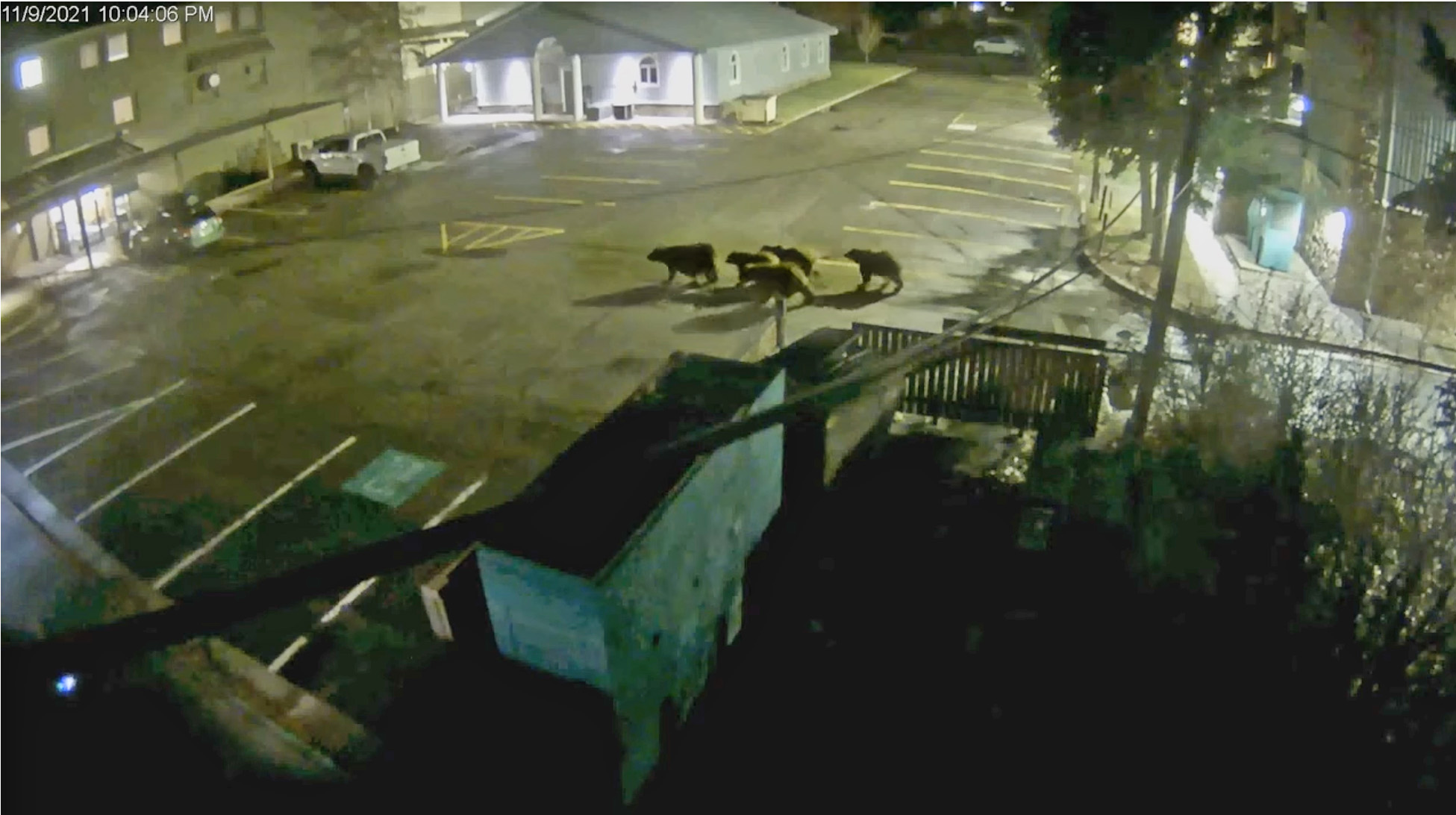
Others emphasize the necessity of a deeper appreciation of the grizzly bear’s value to ecosystems and economies.
As a keystone species, grizzlies have a disproportionately beneficial impact on the biodiversity of their habitat. And studies find that the presence and conservation of the grizzly leads to significant benefits for local economies. One estimates that grizzly bears in Yellowstone National Park bring in $6.9 million annually.
* * *
In his decades of following the bears and encountering visitors who come just to see the bears in Yellowstone and Grand Teton National Parks, Mangelsen has met visitors even in recent years who very rarely get to encounter grizzly bears. He recalled:
About five years ago, I saw 399 and two of her cubs feeding. And there were these three van loads of kids, between eight and 12 years old. One of them came up to me and asked me to sign his copy of Grizzlies of Pilgrim Creek. And his teacher said, “You know, Tom, we’ve been to Mount Rushmore and Glacier Park and Yellowstone. And now we’re here on our way home. And these are the first bears we’ve seen. These kids will remember this for the rest of their lives because they may never see a bear again.”
Mangelsen believes that stripping grizzlies of protections robs people of these rare moments that forge a bond with nature — experiences already vanishing in today’s world.

