2 cats die from suspected bird flu traced to raw milk
Reply

by Jason T Fisher, The Conversation
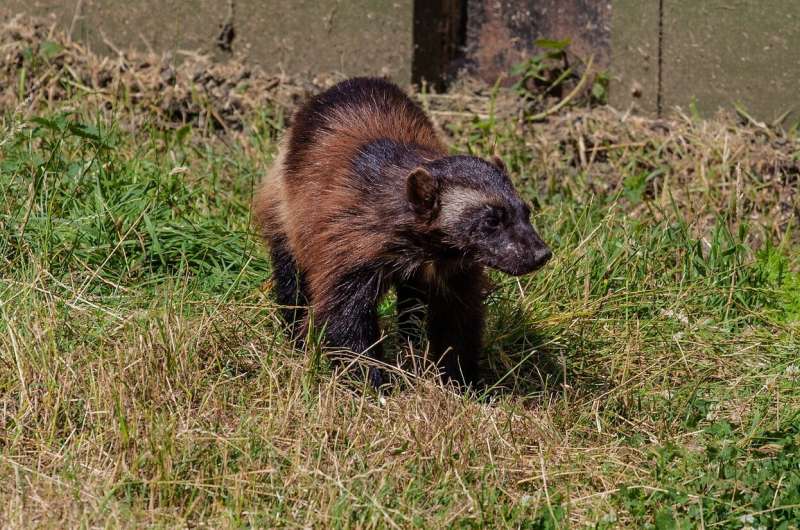
You never forget encountering your first wolverine. Mine was on the top of Grande Mountain outside Grande Cache, Alta., on a brilliant winter morning. It roared at me from the thick alpine bushes, then fled unseen into the wilderness. That exhilarating encounter was rare and is becoming rarer as Alberta and British Columbia’s wolverine populations rapidly decline.
Why do wildlife populations decline? Of all the things we do to nature, direct mortality—through hunting, trapping and fishing—lands the hardest blows. We often take too much, unaware of how much pressure populations can withstand.
In eastern Canada, past unrestricted trapping eliminated wolverines from the Maritime provinces, Québec and most of Ontario. In Alberta, the government has recently eliminated restrictions on how many wolverines, lynx, otters and fishers can be harvested in a year.
The rationale given was that too little is known about these species to justify a limit, and that unlimited trapping can provide the data needed to measure sustainability.
Both of these assertions are dangerously incorrect.
Recent research has shed considerable light upon the health of wolverine populations—and the prognosis is bleak. Wolverines are under threat from climate change and landscape changes due to resource extraction, an issue especially notable in petroleum-rich Alberta.
Both, however, are overshadowed by the impact of trapping and hunting, which poses the single greatest threat to wolverines.
Population sustainability is measured by growth rate. A growth rate of one means the birth rate exactly replaces deaths, keeping the population stable. A rate above one indicates growth, below one means declines. In ideal conditions with no hunting and trapping, wolverines can muster a population growth rate of about 1.1. That means that after replacing their parents, only one new wolverine for every 10 adults is an “extra” offspring to fill empty territories.
This is where trapping and hunting impacts the population.
Human trapping activities compound natural deaths from predation, starvation and accidents. Wolverines live at very low population densities, so each one that is killed has an outsized impact upon overall population health. Indeed, trapping that exceeds even just one extra wolverine per 10 adults will drive the population down.
A trapper taking more than one wolverine on a trapline is either removing an overlapping (mating) male and female, or a mother and child. Both cases ensure there will be no more wolverines in that area in the near future.
Until recently, the limit in Alberta was one wolverine for any registered trapline—an already dangerously high rate. The removal of this limit may push an already threatened species to the breaking point.
A synthesis across multiple North American studies showed that all trapped wolverine populations were declining, a fact supported by recent studies in the Rocky Mountains and boreal Alberta.
What’s more, new soon-to-be-published research that I led shows there may be less than 1,000 wolverines left in the entire province of Alberta. Only about a quarter of those are breeding females. In short, Alberta has few “extra” wolverines.
To say that wolverine trapping limits are without sound evidence is to blatantly ignore that evidence.
Discover the latest in science, tech, and space with over 100,000 subscribers who rely on Phys.org for daily insights. Sign up for our free newsletter and get updates on breakthroughs, innovations, and research that matter—daily or weekly.Subscribe
The other claim was that trapping is needed to gather data for sustainability efforts. This is incorrect—trapper data cannot on its own measure sustainability.
A trapped animal tells you where a wolverine was when it was killed, not how many are left. Moreover, past trapping rates are no measure of future population health. In fact, it is just the opposite. Trapping is one of the best predictors of wolverines’ decline.
A metric to gauge the success of a harvest that is still somewhat commonly used is the “catch per unit effort” (CPUE) formula. CPUE aims to assess the amount of catch measured against the effort required. However, it has been recognized as highly problematic for some time.
Trapper effort varies with pelt price, gas price, snow conditions, the trapper’s personal priorities and many other factors. These factors introduce year-to-year variation that limit CPUE’s ability to reflect actual population sizes. This is especially the case for wolverines.
Additionally, young males are more likely to be trapped than adults or females, making trapping success a poor measure of sustainability. It is survival of adult females, and the odds that the female’s baby makes it to adulthood, that determine a population‘s sustainability. At the same time, trappers sometimes misidentify the sex and age of the animals they catch.
Without mandatory sample submission and professional analysis for each trapped animal, reported data are prone to error. Finally, and most importantly, none of this trapping data tells you anything about how many animals exist, their natural morality and their breeding rates.
https://googleads.g.doubleclick.net/pagead/ads?gdpr=0&us_privacy=1—&gpp_sid=-1&client=ca-pub-0536483524803400&output=html&h=135&slotname=8188791252&adk=2329133447&adf=2053027255&pi=t.ma~as.8188791252&w=540&abgtt=6&fwrn=4&lmt=1734042375&rafmt=11&format=540×135&url=https%3A%2F%2Fphys.org%2Fnews%2F2024-12-alberta-restrictions-wolverine-disaster-declining.html&wgl=1&uach=WyJXaW5kb3dzIiwiMTUuMC4wIiwieDg2IiwiIiwiMTMxLjAuMjkwMy44NiIsbnVsbCwwLG51bGwsIjY0IixbWyJNaWNyb3NvZnQgRWRnZSIsIjEzMS4wLjI5MDMuODYiXSxbIkNocm9taXVtIiwiMTMxLjAuNjc3OC4xMDkiXSxbIk5vdF9BIEJyYW5kIiwiMjQuMC4wLjAiXV0sMF0.&dt=1734030600830&bpp=2&bdt=2526&idt=2067&shv=r20241210&mjsv=m202412040102&ptt=9&saldr=aa&abxe=1&cookie=ID%3D99381b150347a4b4%3AT%3D1734030601%3ART%3D1734032212%3AS%3DALNI_MZq0mMp1czLWDbBoGdjIe7MDY8noQ&gpic=UID%3D00000f7366a638a1%3AT%3D1734030601%3ART%3D1734032212%3AS%3DALNI_Mai2EeCfBqmBMHz0wANksfYUHj0dg&eo_id_str=ID%3D2d1e7c39e4d44ea4%3AT%3D1734030601%3ART%3D1734032212%3AS%3DAA-AfjagSvF7ZgxFcBuvNUGGbe7q&prev_fmts=0x0%2C1521x710%2C540x135%2C1005x124&nras=3&correlator=4547175988540&frm=20&pv=1&rplot=4&u_tz=-480&u_his=2&u_h=864&u_w=1536&u_ah=816&u_aw=1536&u_cd=24&u_sd=1.25&dmc=8&adx=395&ady=4547&biw=1521&bih=710&scr_x=0&scr_y=1710&eid=31089324%2C31089327%2C31089340%2C95347445%2C95345967&oid=2&psts=AOrYGsk4jBijFoBamLHFVV3tSibh-tOYO6ApM12X8qhtll-x-9QCB8zT1WyvEXDkaRXkPBXRY_mEu-7PWZfHggp8eYkirp_p91bWjEmp5scqHiptEOKsHw%2CAOrYGsljk1A5gA1l-mnTGOAnmjVehvYN_YFW7o5vMKbAFym7BnU8D7MnpoqrYWiW0wIEg7nvTTZIcB4XHG23tb0PV_lhYVin&pvsid=1115386199446054&tmod=316533322&wsm=1&uas=3&nvt=1&ref=https%3A%2F%2Fwww.google.com%2F&fc=1920&brdim=0%2C0%2C0%2C0%2C1536%2C0%2C1536%2C816%2C1536%2C710&vis=1&rsz=%7C%7CpeEbr%7C&abl=CS&pfx=0&fu=128&bc=31&bz=1&td=1&tdf=2&psd=W251bGwsbnVsbCxudWxsLDNd&nt=1&ifi=3&uci=a!3&btvi=3&fsb=1&dtd=M
Science offers several non-invasive and non-destructive methods for studying living wolverine populations.
Tools like camera traps and DNA hair traps have been successfully used across the globe to survey wolverine populations and estimate breeding success. Population models provide reliable estimates of sustainability. Genetic methods identify individuals and sex, and help us understand how wolverine populations are connected across vast distances, a crucial factor for ensuring wolverines’ long-term survival.
Certainly, involving trappers in management is important, and mandatory harvest reporting combined with biological research has generated the very best example of a wolverine sustainability study worldwide. With collaboration and sound science, we can achieve the shared goal of keeping wolverines on the landscape for generations to come.
Otters, lynx and fishers are also on the list for unlimited trapping in Alberta. Although their populations are likely greater—and the immediate impacts of harvest less dire—than wolverines, the same arguments still apply. Past learnings from the Atlantic cod collapse have shown that as a commodity becomes more valuable, harvest levels will increase.
As trapping opportunities open up in Alberta and trapping efficiency increases, those managing these populations should well remember the lessons of the collapse of cod.
A truly conservative approach to wildlife management is not to live without limits, but to limit consumption so that future generations have access to the same resources we currently enjoy. Unlimited wolverine trapping will not last long, and other furbearers will likely follow the same fate if we ignore the science and allow unrestricted trapping.
Provided by The Conversation
This article is republished from The Conversation under a Creative Commons license. Read the original article.
Explore further
Rare wolverine spotted in California is 2nd confirmed specimen in a century
By
Megan Barton, publisher, Cody Enterprise, Dec. 4
Trapping season is underway in Wyoming and now is as good of time as any to make sure you know what you’re doing, ethically and legally.
In short, trapping is not for the faint of heart. To manage a successful trapping season you must endure the weather, hike into areas of land that go untouched by human interaction for a good majority of the year and then harvest the trapped animal. However, the end result is not guaranteed and can end up being quite the headache for most.
Legally, you must check your traps regularly. As “quick kill” devices, snare traps must be checked at least once per week, according to Wyoming Game and Fish, to ensure the probability of the animal’s suffering or having to endure the cold temperature is slim. However, ethically and morally, most trappers check these types of traps every 24-48 hours. The most commonly used traps are foothold or “restraining traps” which require a 72 hour check.
Each trap must be labeled. Your information, name, address, phone number, must be present and/or your trapper identification number on each individual trap. This is required should Game and Fish have to contact the trapper.
Additionally, you must obtain a Wyoming furbearing trapper’s license and educate yourself on the areas in which trapping is allowed.
On the other side of this sport, it is illegal to tamper with traps of any sort and could result in a fine.
Trapping does uphold a good bargain. For your time and effort, which are required, you could walk away with a decent paycheck. Again, not guaranteed. On top of that, wildlife conservation comes into play. Trapping plays a part in predator control and helps maintain the balance of the system throughout the year.
Though trapping is not respected by many, it is a way of life for a number of people in our community.
As we all live in an area that is heavily trapped, we should take the time to educate ourselves on the dos and don’ts of trapping, the impact it has on our wildlife and why it’s needed in our community.

