Mobile City Council to consider allowing hunting dove, quail
Extreme weather: We haven’t seen the worst yet
Zim suspect nabbed for ‘illegal hunting’
You Have to See This Disturbing Photo of RFK Jr. and a Dead Baby Bear
Edith Olmsted
Mon, August 5, 2024 at 7:43 AM PDT
https://www.yahoo.com/news/rfk-jr-deranged-dead-baby-144352071.html
1 min read1.1k
Robert F. Kennedy Jr. posed for a shocking photograph with a dead bear cub he’d picked up on the side of the road in 2014, shortly before dumping its carcass in Central Park.
A photo published in The New Yorker Monday shows Kennedy sitting in the back of a car, with his hand placed in the mouth of a deceased bear cub. The animal is visibly bloodied from its accident, and Kennedy’s face appears contorted with phony anguish at the bite.
When asked about the photograph, Kennedy told The New Yorker, “Maybe that’s where I got my brain worm.”
After showing his furry find off to his friends, Kennedy brought the cub’s body to Manhattan, where he proceeded to mutilate it to make it appear like it’d been killed by a cyclist, according to The New Yorker.
Before the story broke Monday, Kennedy posted a video on X, in which he said that he thought the dead bear would be “funny for people” and “amusing for whoever found it or something,” he said, because of a recent spate of bike accidents in New York City.
Kennedy said he’d originally intended to take the bear cub home, skin it, and keep its meat but had run out of time before having to go to the airport.
Kennedy, who is running as an independent candidate for president of the United States of America, was polling at 5.5 percent Monday, according to Project 538.
How Factory Farming Ends
The fight against the meat industry has been rocky. Can it be won?

What if we told you that there is a simple way for humanity to slash climate-warming emissions, help prevent the next pandemic, and simultaneously eradicate one of the most significant moral atrocities of our time — one that nearly all of us bear some responsibility for?
We’re talking, of course, about factory farming. In 2024, it’s hardly a secret that the billions of animals raised for food are treated abysmally. They are, to name just a few standard industry practices, caged, mutilated without pain relief, and intensively bred to the point that they live in chronic pain and even struggle to stand up, before being slaughtered, often painfully.
The sheer scale of this system defies comprehension. Every year, humans kill 80 billion land animals — 10 times more than there are people on Earth — and an even larger, poorly tracked number of fish.
If the cost to animals wasn’t bad enough, industrial animal agriculture also spells peril for us: It fuels antibiotic resistance and zoonotic disease threats that keep scientists up at night. It’s a massive environmental liability, emitting what researchers estimate is between 14 percent and 20 percent of global greenhouse gas emissions and devouring more than one-third of the planet’s habitable land.
Processing Meat
A newsletter analyzing how the meat and dairy industries impact everything around us.Email (required)Sign Up
Yet factory farming is only expanding its reach around the globe, despite decades of animal advocacy striving to stop it, because it’s the most efficient way to produce lots of meat for a world of 8 billion people.
We think there’s a better way. This week, Future Perfect is publishing How Factory Farming Ends, a package of stories on the past and future of the movement against factory farming; its struggle to change our culture, politics, and palates; and how it might yet make real progress. This series is supported by Animal Charity Evaluators, which received a grant from Builders Initiative.
Some stories delve into the animal rights movement’s fraught relationship with the climate and public health communities, and the prospects for building meaningful coalitions. Others scrutinize the animal rights movement from its 19th-century glory days, when vegetarianism was popular among utopian social reformers, to its present-day alienation from other progressive causes, to the messy, often maddening but essential legacy of People for the Ethical Treatment of Animals (PETA).
https://imasdk.googleapis.com/js/core/bridge3.656.2_en.html#goog_1373481403
https://imasdk.googleapis.com/js/core/bridge3.656.2_en.html#goog_1373481404
https://imasdk.googleapis.com/js/core/bridge3.656.2_en.html#goog_1373481405
https://cds.connatix.com/p/plugins/cnx.bridge-1.0.8.html
Our hope is that these stories will challenge policy leaders and the broader public to imagine a kinder, saner, truly sustainable food system.
—Marina Bolotnikova, deputy editor, Future Perfect

Humanity is failing one of its greatest moral tests
The long, maddening, glorious, vital fight against factory farming.
By: Marina Bolotnikova

The world’s most powerful environmental groups help greenwash Big Meat’s climate impact
Organizations such as the World Wildlife Fund are laundering Big Meat’s propaganda. At what cost?
By: Kenny Torrella

If the left is serious about saving democracy, there’s one more cause to add to the list
Animal rights must become a core issue for progressives.
By: Astra Taylor and Sunaura Taylor

Ditching factory farming can help prevent another pandemic
The neglected environmental and health benefits of fighting Big Meat — for humans.
By: Jonathan Safran Foer and Aaron Gross

You’re wrong about PETA
The nonprofit is a punchline. It’s also forced the world to face factory farming, animal cruelty, and our own hypocrisy. Coming Thursday, August 8.
By: Jan Dutkiewicz

Vegans are radical. That’s why we need them
Society is at war with animals. Vegans are the dissenters. Coming Thursday, August 8.
By: Jishnu Guha-Majumdar

I’m a Black vegan. Why don’t you see more of us?
People of color are more likely to be vegan. But the animal rights movement still has a white face. Coming Thursday, August 8.
By: Noella Williams

American government built the meat industry. Now can it build a better food system?
The plant-based protein movement goes to Washington. Coming Friday, August 9.
By: Kenny Torrella

19th-century animal rights activists had a lot of moxie. Here’s how to get it back.
The meat industry took away your food options and made activists the enemy. It doesn’t have to be that way. Coming Friday, August 9.
By: Crystal Heath

The animal rights movement was once locked in bitter debate. Now it’s getting things done.
A short history of effective animal advocacy. Coming Friday, August 9.
By: Kelsey Piper
Credits
Editorial Lead: Marina Bolotnikova
Project Managers: Marina Bolotnikova and Elizabeth Price
Editors: Marina Bolotnikova, Izzie Ramirez, Dylan Scott, Bryan Walsh
Story Format Editor: Izzie Ramirez
Reporters: Marina Bolotnikova, Jan Dutkiewicz, Jonathan Safran Foer, Aaron Gross, Jishnu Guha-Majumdar, Crystal Heath, Kelsey Piper, Astra Taylor, Sunaura Taylor, Kenny Torrella, Noella Williams
Art Director: Paige Vickers
Artists: Mark Harris, Sue Coe
Style & Standards/Fact-checkers: Colleen Barrett, Elizabeth Crane, Anouck Dussaud, Kim Eggleston, Melissa Hirsch, Kelsey Lannin, Caitlin PenzeyMoog, Sarah Schweppe
Audience/Comms: Bill Carey, Gabby Fernandez, Shira Tarlo, Kelsi Trinidad, Amani Orr
Editorial Director: Bryan Walsh
Special Thanks: Nisha Chittal, Oshan Jarow, Lauren Katz, Swati Sharma, Paige Vega, Elbert Ventura
This series is supported by Animal Charity Evaluators, which received a grant from Builders Initiative.
Animal apocalypse: Deadly bird flu infects hundreds of species pole-to-pole
6 Aug 2024GlobalPlanetary Boundaries
- The world is currently seeing the fastest-spreading, largest-ever outbreak of H5N1, a highly contagious, deadly strain of avian influenza. Scientists say this virus now presents an existential threat to the world’s biodiversity, with the risk to humans rising as it continues to leap the species barrier, reaching new host species.
- H5N1 has already impacted at least 485 bird species and 48 mammal species, killing seals, sea otters, dolphins, foxes, California condors, albatrosses, bald eagles, cougars, polar bears and a zoo tiger. Since it broke out in Europe in 2020, this virus has spread globally. Carried by birds along migratory pathways, it has invaded six continents, including Antarctica.
- This current H5N1 animal pandemic (or panzootic) was caused by humans: A mild form of avian flu carried by wild birds turned deadly when it infected domestic poultry. Many industrial-scale poultry farms adjoin wetlands where migrating birds congregate, facilitating rapid spread.
- The toll on some bird and mammal populations has been devastating. With continued outbreaks, some imperiled species could be pushed to the brink, with wildlife already fighting to survive against a changing climate, disappearing habitat and other stressors.
See All Key Ideas
Brown skuas and south polar skuas, two gull-like species that nest in Antarctica, are sometimes called the “pirates of the Southern seas.” These migratory seabirds are fierce, competitive predators that hunt or scavenge anything, from eggs and adult birds to seafood, mammals or garbage.
“They’re really tough animals — and they’re dying,” says Antonio Quesada, director of the Spanish Polar Committee.
He gravely recounts why this season’s field work in the Antarctic was like no other: A lethal strain of avian flu, H5N1, breached this fragile ecosystem in February. Only a handful of specially trained researchers were allowed onshore in outbreak sites, garbed in hazmat suits to prevent contagion and spread.
The true scale of the event is still unknown, but reports were grim. In the Falkland Islands, H5N1 killed 10,000 black-browed albatross and ravaged a gentoo penguin colony. Scientists discovered a mass skua die-off: 50 carcasses littered a Beak Island nesting colony of 130.
Quesada has rarely seen a single dead skua in 20 years’ work in Antarctica. “They’re an indicator species. If they’re dying, what does it mean for other birds?” he asks.
The threat posed by H5N1 extends far beyond the frozen South. Few people realize that the world is currently gripped in another serious pandemic — or, to be exact, a panzootic, the animal equivalent. This virus has now infected more than 500 bird and mammal species.


The world’s animals in trouble
Since it emerged in 2020 in Europe, this “Highly Pathogenic Avian Influenza (HPAI)” strain has blazed a trail of death across the planet, the largest outbreak in history. The virus is both lethal and unusually transmissible, jumping between birds, mammals and livestock with frightening agility.
Experts say the threat to humans is rising. Many countries are increasing surveillance and developing or buying vaccines. Cases are ticking up in the U.S.: Four people contracted the virus from cows and 10 others caught it from chickens.
Meanwhile, it continues to devastate wildlife, including many endangered animals, says Chris Walzer, executive director of health at the nonprofit Wildlife Conservation Society. As of March, H5N1 had leapt the species barrier to infect some 485 types of bird and at least 48 mammal species, according to United Nations estimates. Many of these species had never been diagnosed with avian influenza before.
The disease has infiltrated even the most remote regions on six continents. When a polar bear in Alaska succumbed in 2023, it marked the first detected mammal death from avian flu in the Arctic. Thus far, only Australia and the Pacific Islands have been spared. And the virus is still on the move, spreading to new hosts as it evolves and picks up genes from other bird flu strains.
Victims have died in staggering numbers, especially animals that congregate in large groups like pinnipeds. The virus swept along South America’s Atlantic and Pacific coastlines, slaying more than 30,000 sea lions in 2022-23. It then killed some 17,000 Southern elephant seal pups on Argentina’s Península Valdés — the species’ largest die-off ever.
H5N1 has been carried worldwide by migrating birds. But new research shows that this current strain (dubbed clade 2.3.4.4b) can now spread directly between mammals, with frightening implications. It seems that “H5N1 viruses are becoming more evolutionarily flexible and adapting to mammals in new ways,” the study’s authors write, which “could have global consequences for wildlife, humans, and/or livestock.”
Walzer warns, “H5N1 now presents an existential threat to the world’s biodiversity.”


A human-caused problem
It’s important to understand that this panzootic “is a man-made problem,” says Vincent Munster, who heads the Virus Ecology Section at the U.S. National Institute of Allergy and Infectious Diseases.
Avian flu is not uncommon in wild birds, particularly in its natural hosts: ducks, geese, gulls, terns, swans and other waterfowl. They carry a low pathogenic form, a mild virus that may be asymptomatic. It spreads seasonally, when multiple species congregate at migration stopover sites or cluster together to nest.
But when avian flu spills over into poultry, it can morph into a highly contagious, fatal virus.
The current panzootic began when this H5N1 strain jumped from domestic poultry back into wild birds — which happened because of modern livestock production methods. Humans further facilitated spillover by destroying wetlands, which crowds migrating birds into small scraps of habitat, often with poultry farms nearby.
When farms encroach wetlands, it creates the perfect interface for this type of virus, Walzer says. It’s a veritable petri dish of opportunity for avian flu to swap genes and mutate into potentially more virulent or transmissible strains. This environment allowed the virus to infect chickens, geese and ducks –– and jump back into the wild in a virulent form.
“The emergence of Highly Pathogenic Avian Influenza is a direct result of commercial, large-scale poultry farming,” Munster says. There are more than 34 billion chickens on Earth, according to Food and Agriculture Organization estimates.
The U.S. Delmarva Peninsula offers a prime example of farm-wetland overlap. It’s both a migratory stopover and a wintering ground along the North American flyway on the nation’s Mid-Atlantic coast. It’s also the site of a $4.4 billion poultry industry that raised 600 million chickens in 2023. H5N1 has hit there — and across the globe. In Cambodia, for example, farmers that raise their ducks and geese in wetlands have also seen outbreaks.
The virus is now spreading among cows, infecting at least 171 herds in 13 U.S. states. It thrives in udder cells, and RNA from H5N1 has been found in milk.
Another serious concern: H5N1 has not petered out between spring and fall migrations, like avian flu normally does. It’s now endemic in Europe and North America. When that happened, Walzer says, “people began worrying that it’s not going to go away anymore.”
It has flared for four years straight now, with wild birds currently carriers, reservoir hosts and victims of the virus.


Super-evolution: A brief history of a deadly global scourge
H5N1 isn’t new. In 1996, a goose in China’s Guangdong province may have been “patient zero” for the current strain, which spread among the flock and passed to wild birds. The virus then morphed into a severe respiratory disease that infected 18 people and killed six in Hong Kong. That outbreak ended after 1.5 million chickens were slaughtered.
Next came a “viral chatter” phase. Viruses don’t just break through species barriers. As they change, they make periodic forays into other species, sometimes over years. In most cases, these ventures are unsuccessful. Unless a virus can enter cells and replicate, it circulates harmlessly.
Flu viruses mutate rapidly as they acquire genes from other viruses: mixing, matching, reassorting and adapting, says Colin Ross Parrish, a virologist at Cornell University’s College of Veterinary Medicine. Each genetic mutation creates a new building block for evolution: Genetic sequences are cellular instructions. They help a virus evade immunity in a host, determine how it causes infection, how it spreads and much more.
Avian influenza’s eight-section genome offers numerous opportunities to reassort its genetics, not unlike a Las Vegas slot machine –– and in 2003, it hit a viral jackpot. Avian flu mutated to successfully spill back from poultry into wild birds, launching the current panzootic.
Fast forward to 2020 when H5N1 appeared in its current form in European birds and then successfully infiltrated new species, including mammals. It quickly spread to Africa and the Middle East, as it was carried long distances along migratory flyways. Humans helped by selling and shipping infected poultry across national borders.
The virus crossed the Atlantic, reaching U.S. and Canadian shores in late 2021. Soon, mallards and swans were dying in the U.S. Midwest, bald eagles died nationwide, seals perished in Maine, as did bobcats in Wisconsin and raccoons in Washington and Michigan, to name just a few of the many losses.
The virus then aggressively invaded South America, targeting birds and sea mammals. Genetic studies on dead seabirds, a dolphin and a sea lion in Peru shed light on H5N1’s movement and adaptations. Researchers discovered that in the U.S., the Eurasian strain added genes; in this form, it expanded its repertoire of hosts and raged like wildfire through large seal and sea lion colonies.
H5N1 finally reached both poles. Outbreaks continue to arise nearly everywhere.


Portrait of a global killer
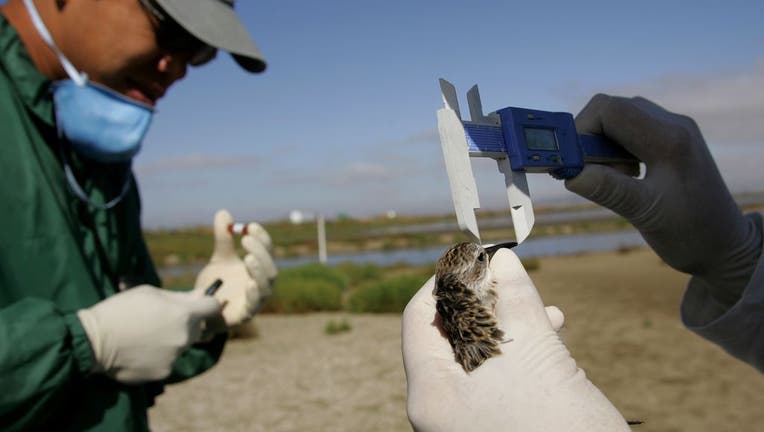
Proximity is a big factor in how viruses spread, as the world learned during the COVID pandemic. Sharing a home or gathering in large groups poses a huge H5N1 risk, says Amandine Gamble, an infectious disease ecology expert at Cornell University’s College of Veterinary Medicine. To understand where birds go and how they spread H5N1, she is collecting genetic material from various species in the Falkland Islands and outfitting them with tracking devices to follow their movements.
Regardless of the location, the virus triggers a systemic infection in birds. They may become lethargic, sneezing, coughing, gasping for air or experiencing intestinal issues. The virus also invades the brain. Sick birds may become disoriented, uncoordinated, stumbling, swimming or walking in circles, trembling or jerking their necks before keeling over dead. Some suddenly die without showing any sign of illness. Survivors may pass the virus to others.
Mammals experience many of the same symptoms as birds, but postmortems have also revealed pneumonia and bleeding in the heart, liver and other organs. Autopsies of 55 mammals showed that the most commonly afflicted part of the brain was the frontal lobe, which explains the movement and cognitive symptoms.
The genie is out of the bottle, says Waltzer. He emphasizes that the length of the outbreak, as well as the amount of the virus in the environment, is unprecedented. “The sheer global distribution of this virus,” he notes, “is underestimated everywhere — as well as the breadth of ecosystems that are being impacted.”
Researchers are deeply concerned by the effects of this red-alert virus: “High pathogenicity H5N1 is a real, tangible threat to wildlife, of a magnitude and scale never seen before,” says Marcela Uhart, who heads the Latin American program at the University of California Davis’ One Health Institute.
On a United Nations situation update map, swaths of the world seem untouched, but that is likely because some regions have little or no monitoring for avian influenza, Walzer notes. For example, experts suspect there is vast underreporting in Africa. Many countries have slim resources, so pathogen hunters target the deadliest human threats: malaria. Ebola, Lassa fever and other infectious diseases.
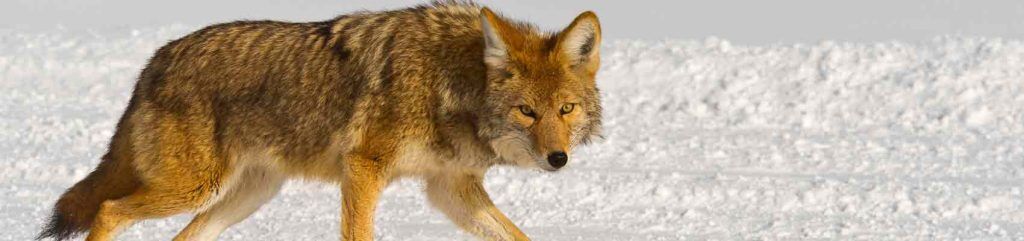
Carnivores, including coyotes, can contract H5N1 by eating infected carcasses. Image © Steve Winter.
Incomprehensible carnage
Many pathogens, including avian influenza, are zoonotic: They jump between wildlife, livestock and humans. In recent decades, zoonotic diseases have emerged and spread at accelerating rates. They are frequently fatal and have no cure.
As humanity encroaches on wild areas, people, livestock and wildlife come into into unnatural proximity, exposing all to germs they have no immunity to — like avian influenza –– and leave wild animals with ever-shrinking habitat. Add poaching for the illegal wildlife trade, bushmeat hunting, and rapidly changing climate, and it’s no surprise that many species are in serious danger of extinction.
H5N1 is the newest threat. “The number of different species being infected is quite profound,” says Emily Denstedt, a health program adviser with the Wildlife Conservation Society.
Wild birds are among the most affected animals. This is a major change: previous H5N1 strains primarily attacked poultry. At least 485 bird species from 25 classifications have been infected, including puffins, pelicans peregrine falcons, owls, toucans, parrots, bald eagles, warblers, finches and many others.
However, seabirds are by far the hardest hit. H5N1 “super-spreader” events in the U.K. offer sobering examples of the carnage wrought by this virus, though there’s no way to accurately count the casualties.
Nesting colonies are now notably emptier in many locations. In Scotland — home to 60% of the world’s great skuas — breeding numbers have plummeted by three-quarters since 2021. Some 16,000 gannets died and the population in Wales dipped to precarious lows not seen since the 1960s. Rangers discovered more than 660 dead Arctic tern chicks in England.

During the spring of 2022 in Africa, thousands of birds perished, particularly along the East Atlantic Flyway migration route in Senegal and The Gambia.Later that year, South Africa lost at least 28 African penguins –– a tragedy for these endangered birds.
In the U.S., the virus struck Lake Michigan’s Caspian terns, killing 62%. In early 2023, pelicans littered Peruvian beaches; more than 40% of the population died. At least 20 critically endangered California condors perished in Arizona, endangering their perilous recovery from just 22 birds in 1987.
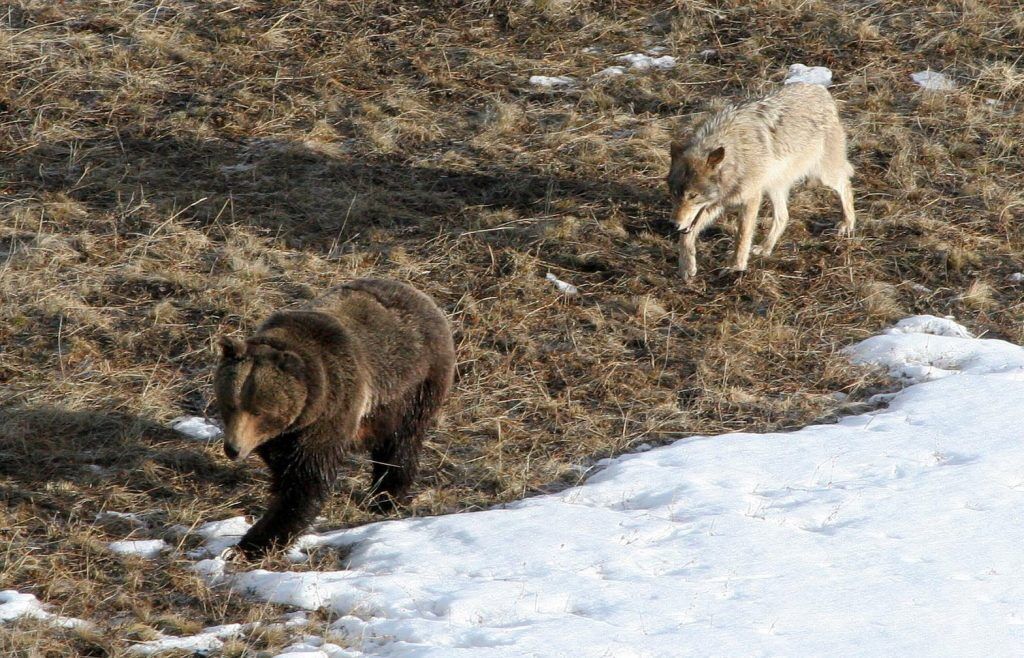
So far, seals and sea lions are the only mammals dying en masse. However, the sheer number of affected mammals is worrying, ranging from grizzly bears, lions, pika, cougars, cows and dolphins to domestic dogs and cats, racoons, foxes, sea otters and a zoo tiger. Six dead walruses were discovered in Svalbard in 2023, some 965 kilometers (600 miles) from the Arctic Circle.
Uhart explains the broader collateral damage: All species play a role in maintaining healthy ecosystems, and big losses reverberate throughout the entire community. She offers pinnipeds as an example. As top predators, seals, sea lions and walruses keep prey species in check. Without them, previously constrained species multiply, may expand their ranges and displace other animals.
“We almost wiped out pinnipeds in the past, hunting them for their fur and their blubber, and they are only now recovering after years of protection,” Uhart says. “We can’t let a disease put them at risk again.”
There may be other, less obvious effects on wildlife. Birds that sicken and survive probably won’t fledge young, Munster says, and birds that breed in large colonies may not thrive in smaller groups. Walzer notes that we humans and our monitoring systems are really bad at detecting these more subtle decreases in populations, “And suddenly, they’re gone.”
Washington tribe rescinds offer of gray wolf donation to Colorado, CPW will search for new source
Dr. Stefan. Ekernas, the director of field conservation with the Denver Zoo Conservation Alliance, reacts to the wolf sighting on a Colorado Corridors Project camera last month.


By: Aidan Hulting
Posted 7:46 PM, Aug 02, 2024
and last updated 7:46 PM, Aug 02, 2024
DENVER — Colorado Parks and Wildlife (CPW) has hit a snag in the roadmap to reintroduce gray wolves to Colorado.
Ten wolves were reintroduced in Grand and Summit counties in December 2023, and one died of an apparent mountain lion attack. CPW has confirmed at least one pup.
CPW had entered an agreement with the Confederated Tribes of the Colville Reservation to capture and help send up to 15 wolves to Colorado.
Those wolves would have been delivered between December 2024 and March 2025.
00:01
02:00
Read More
https://imasdk.googleapis.com/js/core/bridge3.656.2_en.html#goog_181324202
https://imasdk.googleapis.com/js/core/bridge3.656.2_en.html#goog_181324204
https://imasdk.googleapis.com/js/core/bridge3.656.2_en.html#goog_181324212
https://cds.connatix.com/p/plugins/cnx.bridge-1.0.8.html
According to CPW, this agreement has been rescinded. Joseph Livingston, statewide public information officer for CPW, confirmed that the offer was rescinded.
Livingston said while the offer is off the table, CPW is hopeful to continue to work with the tribe in the future and does not close the door to future conversations about reintroduction.
“Naturally, the decision made by the Colville Business Council and the Tribal Government and Natural Resources Committees is disappointing, but we have a strong relationship with the Confederated Tribes of the Colville Reservation and hope to continue these conversations in the future,” said CPW Director Jeff Davis. “We will continue working with other potential sources for wolves to further our efforts to restore wolves to Colorado. We are not contemplating halting our implementation of the plan and will continue in our efforts to restore a sustainable population of wolves to the state while avoiding and minimizing impacts to our critically important agricultural industries and rural communities.”

Colorado’s wolf conflict coordinator and ranchers work to find common ground
When asked what caused this change, CPW said it had to do with tribal relations.
“The council and the Tribal Government and Natural Resources Committees expressed some concerns regarding tribal relations that we will continue addressing with the Tribe, and we have every expectation that we can and will move forward together to maintain and grow our tribal relationships inside and outside of Colorado,” said Livingston.