Morrison County appeal to track down deer poacher who also shot at properties
Reply

By chrisco2 August15, 2024 Featured Content, Hunting 0 Comments
Guidelines for Unit 2 Wolf Hunters and Trappers
(Ketchikan) – The Alaska Department of Fish and Game (ADF&G), Division of Wildlife Conservation is reminding Unit 2 wolf hunters and trappers that sealers will collect the following samples from each harvested wolf:
The skin sample will be used for genetic analyses, muscle for diet analyses, and the foreleg bones will allow us to estimate age structure of harvested wolves.
Good examples
Additionally, ADF&G is reminding hunters and trappers that per regulation, all wolves taken in Unit 2 must be sequentially numbered or marked by the hunter, the hunter must call the ADF&G Ketchikan office at (907)225-2475 within 7 days of take to report the date and location of take, and all hides must be sealed within 15 days of take.
What does this mean for wolf hunters and trappers?
Precise information on when and where individual wolves were harvested helps in calculating a more accurate wolf abundance estimate for Unit 2. Please provide a GPS point for harvest locations or describe harvest location relative to a well-known landmark or road feature such as, “head of Klakas Inlet” or “junction of US Forest Service roads 3000 and 3030”. If there is no obvious land feature near where a wolf was harvested, use the closest known feature and distance from that feature such as, “one mile southwest of Honker Lake near the head of an unnamed stream.”

Supporters and opponents of a ballot measure that would ban mountain lion and bobcat hunting in Colorado are arguing over the financial impacts of the proposal after a conservative-leaning think tank released a study on the topic this week.
The Common Sense Institute projected the change in hunting regulations — if approved by voters in November — would cost Colorado Parks and Wildlife millions of dollars annually.
But the group proposing the measure, Cats Aren’t Trophies, is calling foul on that math.
“It’s really just pseudoscience,” said Samantha Miller, the campaign manager for the group.
The Common Sense Institute report claims, based on 2023 data, the state would lose around $410,000 and $15,000 annually in mountain lion and bobcat hunting license sales, respectively. Those, combined, represent less than 0.4% of the revenue for the agency’s wildlife operations.
The analysis goes on to foresee a significantly greater loss in revenue if the mountain lion population increases due to the lack of hunting, ultimately diminishing game populations like elk and mule deer.
“The dynamic impact ranges from $3.6 million to $5.8 million — 9 to 14 times larger — when accounting for lost elk and mule deer permit revenue affected by an increase in mountain lion population,” according to the think-tank study, which references predicted annual impacts.
The authors came to that figure by assuming the mountain lions that wouldn’t be hunted would kill at least one elk or deer per week, resulting in a loss of hunting license sales for those animals.
While the impact on decreasing mountain lion and bobcat hunting licenses is accurate, the second calculation is flawed, said Erik Molvar, a wildlife biologist with the Western Watersheds Project and an advocate for Initiative 91.
“You cannot assume that because you will have more mountain lions on the landscape, that you will have fewer mule deer and fewer elk,” he said.
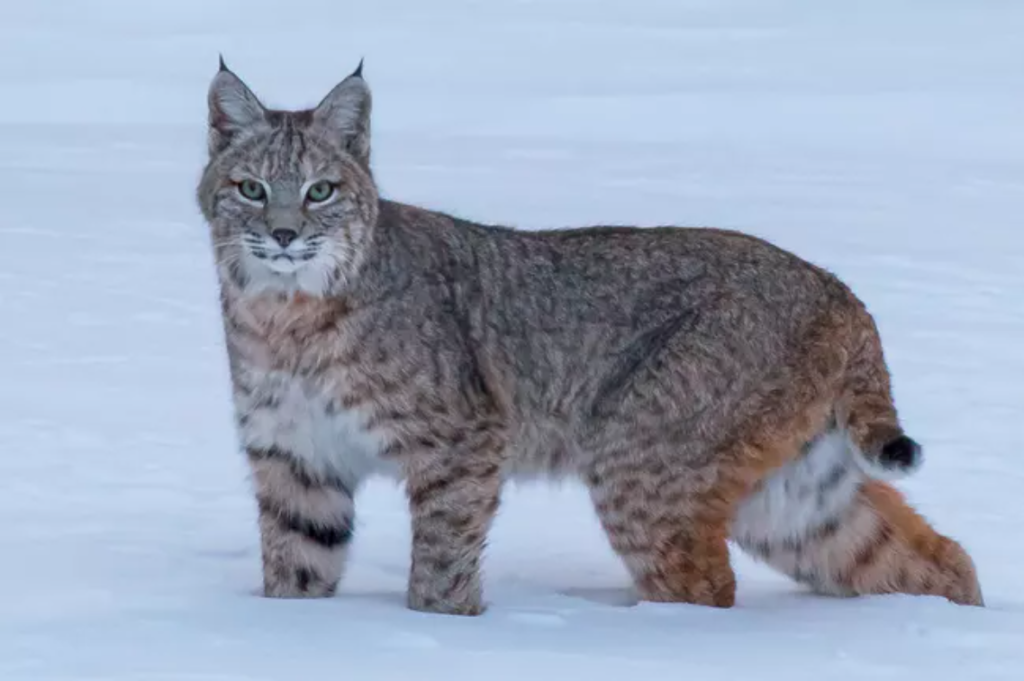
DJ Summers, an author on the Common Sense Institute report, said it was the organization’s assumption that those elk and deer kills would impact the overall species’ populations.
Parks and Wildlife is prohibited from taking a position for or against the initiative and declined to comment on the study that looked at budget impacts, said Travis Duncan, a spokesperson for the agency.
The state agency is an enterprise agency, meaning it’s almost entirely funded by fees, such as those from hunting tags, rather than taxes.
In 2023, there were nearly 30,000 elk hunted and about 500 mountain lions. Mountain lion hunting season, which has an annual cap set by Parks and Wildlife, is between November and March.
The initiative was approved for the November ballot earlier this month after proponents turned in enough signatures from registered voters to require a vote on the topic.
Initiative 91 reads, in part: “The voters of Colorado find and declare that any trophy hunting of mountain lions, bobcats, or lynx is inhumane, serves no socially acceptable or ecologically beneficial purpose and fails to further public safety.”
If approved by a majority of voters, those who violate the measure would be guilty of a Class 1 misdemeanor, punishable by up to a year in jail, a fine of up to $1,000 or both. They could also be subject to a five-year suspension of their wildlife license.
The initiative makes exceptions for killing the wild cats to defend a person, livestock, or pets. It also makes exceptions for depredating animals and accidents, such as vehicle and animal collisions.
Opponents of the measure and initiative have argued that biologists and wildlife experts at Parks and Wildlife should be left to manage the populations and hunting permits.
The Common Sense Institute study was one of several the think-tank plans to produce on Colorado ballot issues.
“We did this because we wanted to follow the wolf introduction that happened last ballot,” said Summers, one of the study’s authors. “We knew simply that this would be something that gets a lot of people’s attention.”
Other items that have been approved for the ballot relate to property taxes and abortion access.
Elliott Wenzler is the Western Slope politics reporter for The Aspen Times and its sister publications in Glenwood Springs, Vail, Steamboat Springs, Summit County, and Grand County.

