5 people from Bancroft convicted of hunting licence tag offences
Reply


Irish StarFollow
63.1K Followers
Story by Alex Shipman & John O’sullivan
• 1h • 3 min read

Both Thomas Matthew Crooks’ home and car were reportedly laden with explosives© The Express
Reports indicate that the man who attempted to assassinate Donald Trump was found with explosives in his vehicle and at his residence. Twenty-year-old Thomas Matthew Crooks – whose photos were released earlier – was fatally shot after discharging rifle shots at the ex-president during a gathering in Butler, Pennsylvania on Saturday.
Certificates of Deposit (CDs) Rates7.6% High Yield CD! Find High CD Interest Rates Now
The New York Times has been informed by sources that upon searching Crooks’ car, authorities discovered two explosive devices, and they suspect a third was located at his home. Fresh information is surfacing about the gunman, a resident of Bethel Park, Pennsylvania – a community situated roughly an hour and 15 minutes drive from Butler.
According to two law enforcement officials, who disclosed information to the Associated Press, it’s believed that the firearm was an AR-style rifle, purchased by his father over six months ago, reports the Express US. The FBI is currently piecing together how Crooks came into possession of the weapon and his underlying motive. He is the primary subject of the ongoing investigation, as stated by officials.
A police cordon has been established around the vicinity of the assailant’s home, nestled in the hilly suburbs of working-class Pittsburgh.
 Related video: Trump’s Murder Bid: Who was Sniper Thomas Matthew Crooks, Which Weapon He To Shoot Trump | Watch (Oneindia (Video))
Loaded: 58.64%Play

Current Time 0:58
/
Duration 3:24Quality SettingsCaptionsFullscreen

Trump’s Murder Bid: Who was Sniper Thomas Matthew Crooks, Which Weapon He To Shoot Trump | WatchUnmute
0
More videos
Crooks’ political affiliations remain ambiguous; while he was registered as a Republican voter in Pennsylvania, campaign finance documents reveal a $15 donation to a progressive political action committee on January 20, 2021, the day President Joe Biden took the oath of office.
Pennsylvania court records show no criminal history for him. In a post on Truth Social, Trump expressed his belief that “it was God alone who prevented the unthinkable from happening” amidst the crowded rally.
Following a heartfelt plea, he uttered: “Thank you to everyone for your thoughts and prayers yesterday, as it was God alone who prevented the unthinkable from happening.”
For all the latest news straight to your inbox, sign up for our FREE newsletters here.
Keeping his composure, he added: “We will FEAR NOT, but instead remain resilient in our Faith and Defiant in the face of Wickedness. Our love goes out to the other victims and their families.”
Certificates of Deposit (CDs) Rates7.6% High Yield CD! Find High CD Interest Rates Now
He didn’t forget those wounded when he mentioned: “We pray for the recovery of those who were wounded, and hold in our hearts the memory of the citizen who was so horribly killed.”
In his final note to unity, he declared: “In this moment, it is more important than ever that we stand United, and show our True Character as Americans, remaining Strong and Determined, and not allowing Evil to Win.”
Wrapping up his message with optimism and forward-looking words, he stated: “I truly love our Country, and love you all, and look forward to speaking to our Great Nation this week from Wisconsin.”
July 11, 2024
https://newatlas.com/biology/seabirds-foraging-hurricanes/
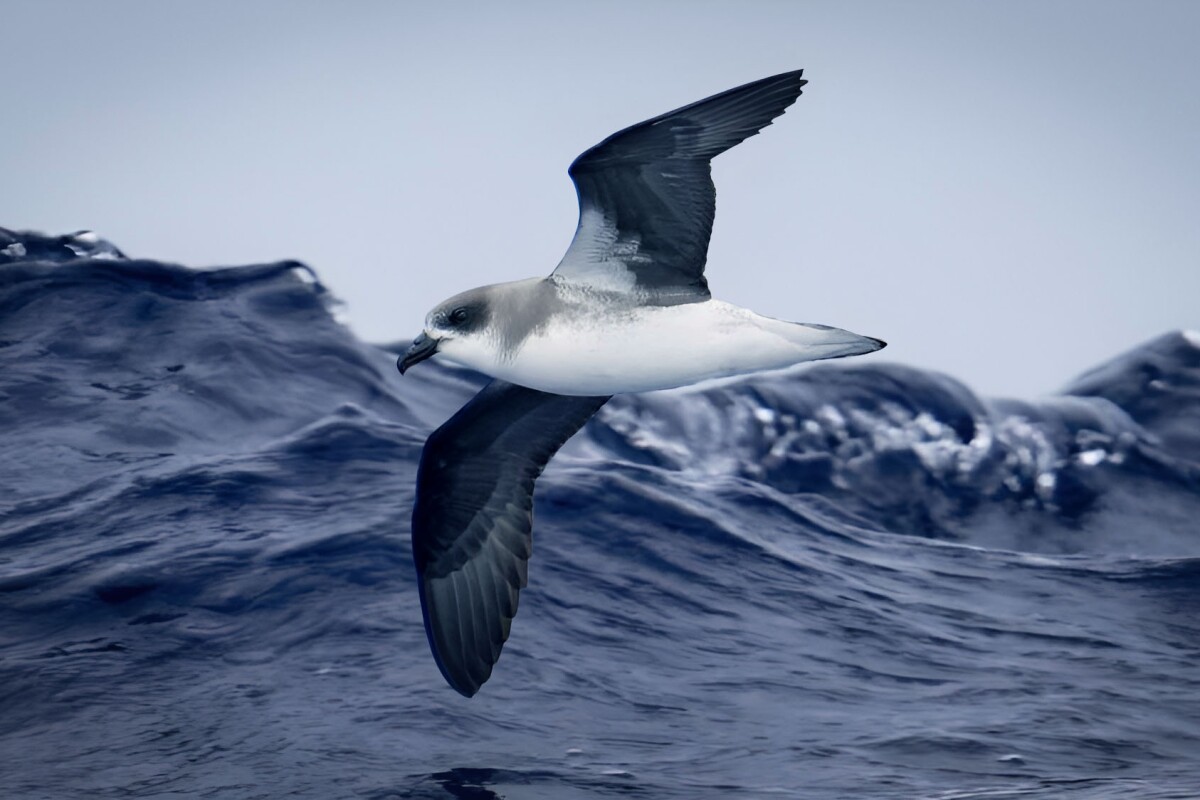
The Desertas petrel has learnt to exploit storms
Kirk Zufelt/WHOI
VIEW 1 IMAGES
A daredevil seabird species has learnt to harness the insane power of hurricanes, seeking out storms over the ocean to ‘ride’ them for their own benefit. It’s the first time this behavior has been observed, and now has scientists wondering if it’s far more widespread in the avian world.
In October last year, we reported on the case of a streaked shearwater that had embarked on a thrilling 700-mile (1,130-km) ride on a typhoon, revealed in great detail thanks to a GPS tracker. Scientists at the time thought it may have been taken by surprise by the storm, unable to escape the intense winds that flung the bird 15,000 feet (4,500 m) above its regular flying range.
MORE STORIES

Astronauts may soon be drinking their own “pee water” via real-world stillsuits

New microwave process could let astronauts make bricks out of moon dust
But this new groundbreaking report from the Woods Hole Oceanogeaphic Institution (WHOI) upends that hypothesis, with the pelagic Desertas petrel seabirds flying towards hurricanes like Helen Hunt chasing down tornadoes in Twister.
“Initial studies suggested that seabirds either circumnavigate cyclones or seek refuge in the calm eye of the storm. However, the Desertas petrels we tracked did neither; instead, one-third of them followed the cyclone for days, covering thousands of kilometers,” said lead author Francesco Ventura at WHOI. “When we saw the data, we nearly fell off our chairs. This is the first time we have observed this behavior.”
The pigeon-sized petrels (Pterodroma deserta), which nest on Portugal’s Bugio Island, off western North Africa, will spend weeks at sea in a foraging frenzy that takes them on a 7,500-mile (12,000-km) round trip across the Atlantic Ocean. But because they can’t dive that deep, they tend to have to wait until nighttime for fish, squid and crustaceans to appear closer to the water’s surface. And this is where the hurricanes come into play.
“We correlated the birds’ locations with intensifying storm conditions, including waves up to eight meters (26 ft) high and wind speeds of 100 kilometers (62 miles) per hour,” said Ventura. “Upon encountering strong winds, the birds reduced ground speed, likely by spending less time in flight to avoid injury to their wings. In addition, the wakes of the storms provided predictably favorable wind conditions with higher tailwind support than alternative routes. Impressively, none of the birds we tracked were harmed by the storms and there was no incidence of nest desertion.”
The high winds and rough seas bring cooler, deep-sea water to the surface, and an increase in chlorophyll due to this mixing, which ramps up phytoplankton abundance, bringing with it the fish, squid and crustaceans that feed on it. This results in a seafood buffet for the birds, meaning far less time and energy invested in feeding.
“The cyclones present a highly valuable foraging opportunity for Desertas petrels because the storms churn up mesopelagic prey from deep within the vertical column, giving the seabirds an easy meal at the surface,” said Ventura. “While storms are typically seen as destructive, particularly in coastal areas, our research reveals that functional perturbance driven by storms can create new opportunities. We’re advancing our understanding of how petrels navigate the open ocean to find food.”
It’s the first time this sort of collective storm-surfing behavior has been recorded, and it’s a big win for scientists who have long struggled to study how hurricanes and other intense weather fronts impact birds at sea.
“It’s striking how well the birds know how to exploit the large-scale wind conditions over the North Atlantic for their travels,” said Caroline Ummenhofer, a scientist at WHOI. “When you overlay the petrels’ foraging trips on top of average winds, it’s a very close match.
“As we’ve now discovered, Desertas Petrels follow hurricanes where prey have accumulated closer to the surface in the wakes of the storms,” added Ummenhofer. “We now have a fresh perspective on hurricanes’ impact on marine ecosystems through the eyes of an apex predator.”
It’s a remarkable glimpse at wildlife adaptation, as the birds essentially game the system for their benefit.
“This study provides valuable insights into the resilience and foraging strategies of pelagic seabirds in the face of extreme weather events,” said Ummenhofer.
The study was published in the journal Cell Biology.
Updated January 24, 2024 | Reviewed by Lybi Ma
THE BASICS
This post is in response to If You Love Pets, Why Do You Eat Pigs? By Zoe Weil M.A., M.T.S
We can build a more peaceful and healthy world right now, so let’s start eating for the future we want today. A more compassionate world is just a meal away. —Zoe Weil
Source: Jeshoots/Pexels
Zoe Weil, founder of the Institute for Humane Education, wrote a thought-provoking essay that raises an important question that radiates into many others. It made me come to realize, once again, that choosing a plant-based diet—a vegan ethic—isn’t radical but rather an intelligent personal choice that has wide-ranging positive effects including our health and well-being and the health of our planet.
Zoe is correct when she writes, “Our relationship with animals is full of contradictions,” and one of her underlying messages asks us to consider how we deal with the cognitive dissonance associated with treating companion animals in far more compassionate ways than so-called food animals. She also correctly notes, “Vegan diets are easier than ever, and we can speed the process of building a more compassionate world.”
article continues after advertisement
Here are some of the issues at hand.
How do people who eat meat deal with cognitive dissonance? Zoe relayed this story to me, and I know of many similar ones. She wrote, “When I was in Costa Rica with a group, one woman said that our night watching turtle hatchlings crawl to the ocean by moonlight was the highlight. She was so careful not to hurt a little turtle. Meanwhile, every meal she ate was meat, dairy, and eggs.”
I also know people who say, “Oh, I know animals suffer, but I love my steak.” Many don’t want to talk about this paradoxical ethical dilemma and continue to eat animals knowing they’re consuming misery. They offer weak excuses such as “I just can’t stop eating meat even when I think about the misery for which I’m responsible.” Sure they can, it’s not all that difficult.
Choosing to eat meat can be very ethically and emotionally challenging. As Zoe writes, “Eventually, I came to understand that my choices had consequences and that when I allowed my desires to eclipse my values by eating animals, I was actively participating in the suffering of those I claimed to love.”
Some people conveniently “unmind” animals and ignore their feelings and the nonhumans become “things.” They not only deny sentience to the animals they consume but also deny that non-animal alternatives are readily available, even “fake meats.” it’s sad to ponder that “demand for animal products is projected to increase by 50 percent from 2013 to 2025, and 70 percent by 2050″ (Moses Seenarine, Meat Climate Change)
When Dr. Jane Goodall is asked what she thinks about animal factories, she responds with three words: “Pain, fear, death.” Factory farms are one of the most unethical developments in human history. During their years of confinement billions and billions of animals suffer. At the same time, this is in principle one of the easiest ethical issues to resolve; we can shift toward a plant-based diet. She also stresses that we need to take action now, not when it’s more convenient.
article continues after advertisement
The important point, supported by a good deal of research, is that we and our planet would greatly benefit from choosing plant-based diets. They’re easy to come by and very tasty. But what if meat-eating became a thing of the past? Experts begin to imagine a time when eating animals is a thing of the past. In her challenging book titled Once Upon a Time We Ate Animals: The Future of Food, futures-anthropologist Roanne van Voorst “offers a clear and compelling vision of what it means to live in a world without meat. Simply put, it means a lot and everyone can benefit from “going plant-based.”
It might take some people longer than others, but that’s okay as long as the movement is in that direction. People who have already made that choice can work with others who haven’t and be role models for what is possible, and many would argue is necessary, for their own and our planet’s health and well-being. The more people who make this choice the more mainstream it will become, and we can only hope that the words “radical” or “extreme”—the words I’ve heard described for my dietary choices—drop out of conversations about the food people choose to eat.
Our meal plans, lifestyles, and relationships we have with other animals surely are not sustainable and future generations will pay a huge price for our indiscretions. We and other animals are suffering from how we live and who we choose to eat right now, and time isn’t on our side. Let’s give future generations the best chance they have to continue to enjoy our planet, which currently needs all the help it can get. Let’s not steal their futures from them because of our harmful choices, we can begin to change immediately and rather easily.
References
Vegan Entanglements: The Far-Reaching Webs of Speciesism; The Vegan Evolution: Transforming Diets and Agriculture; Who We Eat Is a Moral Question: Vegans Have Nothing to Defend.
You Are What You Eat: A Twin Experiment. Netflix. December 20, 2024. “Identical twins change their diets and lifestyles for eight weeks in a unique scientific experiment designed to explore how certain foods impact the body.”
Jane Goodall. ‘We Need Not Just Talking. We Need Action’: The Biggest Moments From the TIME100 Dinner in Davos, January 2024.
Jane Goodall and Koen Margodt. Essay on Factory Farms: Reasons for adopting a plant-based diet. January 2024.
Samira Soltanieh et al. Plant-based diet and COVID-19 severity: results from a cross-sectional study. BMJ Nutrition, Prevention & Health, 2024.
Zoe Weil. I Loved a Sheep and I Also Loved Lamb Chops. Until I Realized the Two Were Not Compatible. Common Dreams, January 21, 2023.
Corbin Bolies
Sun, July 14, 2024 at 10:14 AM PDT·2 min read
https://www.yahoo.com/news/trump-gunman-loner-wore-hunting-171402155.html

A former Bethel Park High School classmate of Donald Trump shooter Thomas Crooks described him on Sunday as a “loner” who was often bullied in school.
The classmate told CBS affiliate KDKA that Crooks also often wore hunting outfits to school. He provided the affiliate with photos of Crooks in school wearing a Bethel Park High School hoodie.
NEW: These photos show the gunman in a classroom in high school & on the school bus. Provided to me from the classmate in my previous tweet. These photos are 2022 and pre 2022 at Bethel Park high school @KDKA pic.twitter.com/4gNyBaMVRS
— MEGHAN SCHILLER (@MeghanKDKA) July 14, 2024
Another former classmate, Michael Dudjak, told NBC News Crooks was “on his own a lot,” though he didn’t witness any bullying firsthand. He said he was with other former high school classmates on Saturday and they were all “in shock” over Crooks’ attack on Trump.
“It’s definitely terrifying for someone you went to school with to commit such a heinous act… that’s the craziest thing about it when it entered my brain,” Dudjak told NBC. “You were in the same class as this person two years ago.”
Crooks graduated from Bethel Park High School in 2022, where he earned a $500 award for achievements in math and science, according to a Bethel Park Journal report. The Bethel Park School District told KDKA it would cooperate with law enforcement officials in their investigation.
Crooks was killed by law enforcement on Saturday after he launched multiple shots from an AR-15-style at Trump during his rally in Butler, Pennsylvania. The president’s ear was grazed and one rally attendee was killed. Two other attendees were critically injured.
Crooks’ motive has remained unclear, and officials have not yet determined whether his political profile—a registered Republican who once made a donation to a Democratic group—contributed to his attack. The FBI identified Crooks by analyzing his DNA, officials told KDKA, as he did not have any identification on him.

