Karaoke contest funds Hunt for Hunters with Disabilities
Reply

A clutch of new suspected cases has experts worried about the spread of local transmission through vulnerable native species.
Andrew Stafford
AAP
1 Min Read
26 Jul 2026
Updated
26 Jul 2026
Save
(Source: 7NEWS)
Video Player is loading.
This is a modal window.
Error Code: PLAYER_ERR_TIMEOUT
Session ID: 2026-07-28:726ad7efe88736826e50d11c Player Element ID:bc-video-6401986433112-0OKClose Modal DialogClick to unmuteA dead seabird found on Moreton Island has tested positive for avian influenza, marking Queensland’s first suspected case of bird flu.
Seven new suspected bird flu cases have been detected in a native species, placing the poultry industry on high alert.
The greater crested terns found in South Australia have been sent for testing for confirmation amid fears of a local transmission.
The seven birds were found in SA’s southeast, including five at Southend.
Of the five birds collected from Southend, four were sick and one was dead.
While Australia has 20 confirmed cases across SA, Western Australia, NSW and Queensland, only one has been discovered to date in an Australian native, non-migratory bird species.

3 Min Read
13 Jul 2026
South Australia’s primary industries minister, Clare Scriven, said that while there had been no detections in poultry or the broader agricultural industry, the sector was on high alert.
“There is a very high possibility that it will eventually get into poultry,” she told reporters in Adelaide.
“What we have been focused on with industry is that they will be as prepared as possible.”
Federal Agriculture Minister Julie Collins said at this stage there had been no mass mortalities and the risk to human health remained low.
“The states and territories have been doing an enormous amount of triaging and testing right across the country and we have obviously had these detections all along the coast at this point in time.”
Greater crested terns are a common and widely distributed species on the Australian coastline.
They are approaching the breeding season, which increases the risk of transmission as the birds gather in close-knit colonies of thousands.

2 Min Read
08 Jul 2026
“We need to focus on the surveillance and monitor what’s happening in those populations,” SA chief veterinary officer Skye Fruean told reporters in Adelaide on Monday.
“Until we get to the point of it being confirmed that we have local birds spreading it between each other, the situation doesn’t change.”
She said it was impossible to stop the spread of the disease within wild birds, with containing it the only option.
idfg-cliess
Monday, July 27, 2026 – 8:27 AM MDT
From tags sales to general season openers, here’s a partial list of what’s happening in August.
From tags sales to general season openers, there’s a lot happening in Idaho during August that you should be aware of. Staying in the loop can be the difference between applying for that coveted controlled hunt tag and watching from the sidelines.
Be sure to stay up to date on all Fish and Game happenings. Here are some important dates you should know to help you plan.
8/1 – DEADLINE to purchase controlled hunt tags (except unlimited and January hunts) (Learn more)
8/3 – ON SALE: Sage-grouse and sandhill crane tags at 10 a.m. MDT (Learn more)
8/5 – OPEN: Second application period for deer, elk, pronghorn, and fall bear controlled hunts
8/5 – ON SALE: Leftover early-season controlled hunt tags at 10 a.m. MDT
8/6 – ON SALE: Second tag and returned tag sale at 10 a.m. MDT
8/10 – DEADLINE to apply for second Super Hunt drawing
8/15 – CLOSED: Second application period for deer, elk, pronghorn, and fall bear controlled hunts
8/18 – OPEN: Fall Chinook salmon season (Learn more)
8/25 – ON SALE: Leftover controlled hunt tag sale at 10 a.m. MDT (if available)
8/30 – OPEN: General archery season for deer and elk in most of the state
8/30 – OPEN: Cottontail rabbit, snowshoe hare seasons; fall turkey season in most of Idaho; forest grouse season
8/31 – DEADLINE: Art submissions for 2027 IDFG hard card licenses (Learn more)
Note: Hunters, anglers and trappers should always double check the seasons and rules booklets to confirm opening and closing dates, as well as restrictions and rules pertaining to individual species.
Scientists warn ‘greatest risk to civilisation’ coming sooner than thought

532.5K Followers
Story by Claudia Trotman & Jane Lavender
• 15h •
2 min read
An aerial view of a devastated cityscape is depicted. In the background, several ruined buildings emit plumes of smoke, suggesting a catastrophic event. The foreground is cluttered with debris and rubble, and an electrical pole stands amidst the wreckage. The sky above is overcast, with the setting sun casting a warm, hazy light over the scene.© Getty Images/iStockphoto
Scientists have issued a stark warning about when humanity could begin to see the collapse of civilization – and the clock is ticking faster than we think.
Previously, Elon Musk claimed that declining birth rates pose the “greatest risk to the future of civilisation.” Currently, the fertility rate in the US hovers at 1.62, a figure that appears to trouble Elon. As of 2022, the UK registers even lower at 1.57. Research suggests nations need a fertility rate of 2.7 children per woman to sustain population levels.
Flowers – Be Happy Bouquet – Regular
From You Flowers·Sponsored


Experts are now cautioning that within just two decades, we could be staring down the barrel of societal collapse. Previously, academics thought roughly 2.1 was adequate to ward off long-term extinction. However, the research team contended the original calculation didn’t adequately factor in crucial elements such as mortality rates, sex ratio distribution, the reality that some adults choose not to have children, and natural fluctuations in family size. It comes after the late Professor Stephen Hawking predicted the exact date of the apocalypse.
• Woman who ‘died for 8 minutes’ claims she saw the afterlife and ‘knows what happens when we die’
• Isaac Newton’s 1704 doomsday prophecy predicted year the world would end
Musk, who regularly claims to be “banging on the baby drum” has been sounding the alarm on this alleged crisis for years. He claimed it would become “the biggest problem the world will face in years,” reports the Daily Star.
He added that declining birthrates would also trigger fewer workers, mounting debt, overstretched healthcare and pension systems. He even suggested it might spark complete social chaos.
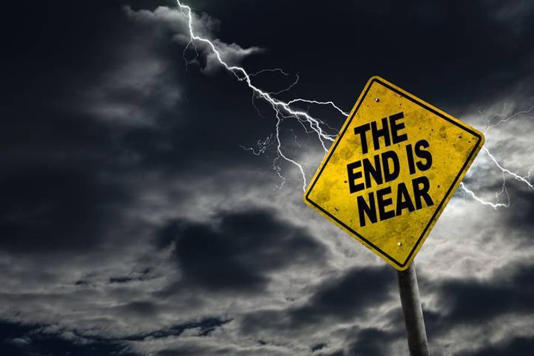
A yellow warning sign against a stormy sky with a lightning bolt in the background, displaying the text© Getty Images/iStockphoto
Diane Cuaresma, one of the study’s authors, said in the report: “Considering stochasticity [unpredictability] in fertility and mortality rates, and sex ratios, a fertility rate higher than the standard replacement level is necessary to ensure sustainability of our population.” Related video: NASA-backed doomsday warning from Stephen Hawking could happen soon (The Mirror US)
about:blank

NASA-backed doomsday warning from Stephen Hawking could happen soon
Hawking made chilling predictions about the planet’s future, including a
Video Player is loading.
More videos


 GENWhy would I bring kids into this? The belief driving population collapse
 DailymotionNew report says Earth’s population may peak at 9B by 2050
The research team emphasized that maintaining population sustainability requires consistently achieving specific fertility targets each year. They contend that languages, ancestral lineages, diversity and cultural heritage all depend on meeting these demographic thresholds.
In their paper published in the journal Plos One, the researchers noted: “The underpopulation crisis has been a serious threat to the sustainability of developed countries.”
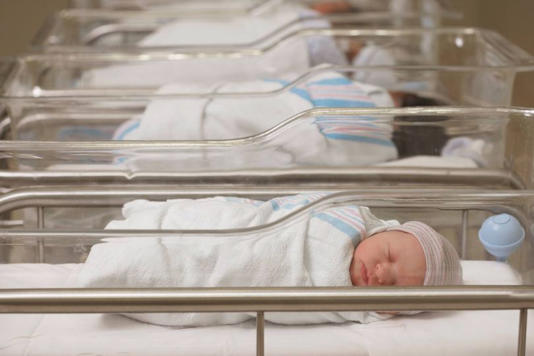
Several newborns are lying in incubators, which are enclosed in transparent glass enclosures, arranged in a row.© Stoke Sentinel
They added: “The worldwide total fertility rate – the number of children per woman – has dropped from 5.3 in the 1960s to 2.3 in 2023.”
Currently, the Republic of Korea has the world’s lowest fertility rate at just 0.87. BBC News reports that specialists point to high living expenses, intense workplace expectations, and increasing desires for better work-life balance as contributing factors.
Flowers – Bright Days Ahead Bouquet – Regular
From You Flowers·Sponsored
In the UK, birth rates have fallen dramatically over the past ten years. Latest figures connected to the ‘baby bust’ reveal that some boroughs have seen a 60% decline in women having babies since 2013.