End Brutal Trophy Hunting — Save Russia’s Majestic Wildlife
Reply

1 of 5 |
https://apnews.com/article/morgan-spurlock-dies-246036b526cdeaf55f7d1335461775a5
FILE – Filmmaker Morgan Spurlock participate in the BUILD Speaker Series to discuss the film, “Go North”, at AOL Studios on Wednesday, Jan. 4, 2017, in New York. Spurlock, an Oscar-nominee who made food and American diets his life’s work, famously eating only at McDonald’s for a month to illustrate the dangers of a fast-food diet, has died. He was 53. (Photo by Evan Agostini/Invision/AP, File)Read More
2 of 5 |
FILE – Morgan Spurlock poses at the Los Angeles premiere of his film “Super Size Me,” Thursday night, April 22, 2004, in the Hollywood section of Los Angeles. Spurlock, an Oscar-nominee who made food and American diets his life’s work, famously eating only at McDonald’s for a month to illustrate the dangers of a fast-food diet, has died. He was 53. (AP Photo/Mark J. Terrill)Read More
3 of 5 |
FILE – Filmmaker Morgan Spurlock arrives at the premiere of “Pom Wonderful Presents: The Greatest Movie Ever Sold” in Los Angeles on Wednesday, April 20, 2011. Spurlock, an Oscar-nominee who made food and American diets his life’s work, famously eating only at McDonald’s for a month to illustrate the dangers of a fast-food diet, has died. He was 53. (AP Photo/Matt Sayles, File)Read More
4 of 5 |
FILE – Director Morgan Spurlock from the film “Focus Forward” poses for a portrait during the 2013 Sundance Film Festival at the Fender Music Lodge on Jan. 21, 2013 in Park City, Utah. Spurlock, an Oscar-nominee who made food and American diets his life’s work, famously eating only at McDonald’s for a month to illustrate the dangers of a fast-food diet, has died. He was 53. (Photo by Victoria Will/Invision/AP, File)Read More
5 of 5 |
FILE – Morgan Spurlock of the CNN series “Inside Man” poses at the CNN Worldwide All-Star Party, on Friday, Jan. 10, 2014, in Pasadena, Calif. Spurlock, an Oscar-nominee who made food and American diets his life’s work, famously eating only at McDonald’s for a month to illustrate the dangers of a fast-food diet, has died. He was 53. (Photo by Chris Pizzello/Invision/AP, File)Read More

BY MARK KENNEDYUpdated 8:38 AM PDT, May 24, 2024Share
NEW YORK (AP) — Documentary filmmaker Morgan Spurlock, an Oscar nominee whose most famous works skewered America’s food industry and who notably ate only at McDonald’s for a month to illustrate the dangers of a fast-food diet, has died. He was 53.
Spurlock died Thursday in New York from complications of cancer, according to a statement issued Friday by his family.
“It was a sad day, as we said goodbye to my brother Morgan,” Craig Spurlock, who worked with him on several projects, said in the statement. “Morgan gave so much through his art, ideas, and generosity. The world has lost a true creative genius and a special man. I am so proud to have worked together with him.”
Spurlock made a splash in 2004 with his groundbreaking film “Super Size Me,” which was nominated for an Academy Award. The film chronicled the detrimental physical and psychological effects of Spurlock eating only McDonald’s food for 30 days. He gained about 25 pounds, saw a spike in his cholesterol and lost his sex drive.
ADVERTISEMENT
“Everything’s bigger in America,” he said in the film. “We’ve got the biggest cars, the biggest houses, the biggest companies, the biggest food, and finally: the biggest people.”
In one scene, Spurlock showed kids a photo of George Washington and none recognized the Founding Father. But they all instantly knew the mascots for Wendy’s and McDonald’s.
The film grossed more than $22 million on a $65,000 budget and preceded the release of Eric Schlosser’s influential “Fast Food Nation,” which accused the industry of being bad for the environment and rife with labor issues.
Spurlock returned in 2019 with “Super Size Me 2: Holy Chicken!” — a sober look at an industry that processes 9 billion animals a year in America. He focused on two issues: chicken farmers stuck in a peculiar financial system and the attempt by fast-food chains to deceive customers into thinking they’re eating healthier.
ADVERTISEMENT
“We’re at an amazing moment in history from a consumer standpoint where consumers are starting to have more and more power,” he told The Associated Press in 2019. “It’s not about return for the shareholders. It’s about return for the consumers.”
Spurlock was a gonzo-like filmmaker who leaned into the bizarre and ridiculous. His stylistic touches included zippy graphics and amusing music, blending a Michael Moore-ish camera-in-your-face style with his own sense of humor and pathos.
“I wanted to be able to lean into the serious moments. I wanted to be able to breathe in the moments of levity. We want to give you permission to laugh in the places where it’s really hard to laugh,” he told the AP.
After he exposed the fast-food and chicken industries, there was an explosion in restaurants stressing freshness, artisanal methods, farm-to-table goodness and ethically sourced ingredients. But nutritionally not much had changed.
“There has been this massive shift and people say to me, ‘So has the food gotten healthier?’ And I say, ‘Well, the marketing sure has,’” he said.
Not all his work dealt with food. Spurlock made documentaries about the boy band One Direction and the geeks and fanboys at Comic-Con. One of his films looked at life behind bars at the Henrico County Jail in Virginia.
ADVERTISEMENT
With 2008’s “Where in the World is Osama bin Laden?” Spurlock went on a global search to find the al-Qaida leader, who was killed in 2011. In “POM Wonderful Presents: The Greatest Movie Ever Sold,” Spurlock tackled questions of product placement, marketing and advertising.
“Being aware is half the battle, I think. Literally knowing all the time when you’re being marketed to is a great thing,” Spurlock told AP at the time. “A lot of people don’t realize it. They can’t see the forest for the trees.”
“Super Size Me 2: Holy Chicken!” was to premiere at the Sundance Film Festival in 2017 but it was shelved at the height of the #MeToo movement when Spurlock came forward to detail his own history of sexual misconduct.
He confessed that he had been accused of rape while in college and had settled a sexual harassment case with a female assistant. He also admitted to cheating on numerous partners. “I am part of the problem,” he wrote.
ADVERTISEMENT
“For me, there was a moment of kind of realization — as somebody who is a truth-teller and somebody who has made it a point of trying to do what’s right — of recognizing that I could do better in my own life. We should be able to admit we were wrong,” he told the AP.
Spurlock grew up in Beckley, West Virginia. His mother was an English teacher who he remembered would correct his work with a red pen. He graduated with a BFA in film from New York University in 1993.
He is survived by two sons — Laken and Kallen; his mother Phyllis Spurlock; father Ben; brothers Craig and Barry; and former spouses Alexandra Jamieson and Sara Bernstein, the mothers of his children.
Cat Ellis
Wed, May 22, 2024 at 1:28 AM PDT·2 min read
https://www.yahoo.com/lifestyle/hikers-mob-moose-selfies-yellowstone-082837577.html

An adult moose can weigh over 2,000lb and move at speeds up to 25mph, so you don’t want to get on their bad side – especially not for a photo.
On a recent visit to Yellowstone, one hiker filming a herd of moose in Round Prairie was surprised to spot two of the huge animals chasing after a park visitor who had chosen to get a little too close, and was sprinting to escape.
Moose attacks are rare, but the animals can charge if they or their young are threatened, and are particularly likely to lash out if dogs are nearby since they cannot differentiate between a domestic dog and a wolf.
This particular incident was captured by Leah Hilton and shared this week via Instagram account TouronsOfYellowstone, which calls out careless behavior at US National Parks, often involving wildlife. Other close calls have included people taunting elk, harassing bison, and even chasing bears, all of which are federal crimes punishable by a hefty fine or even jail time.
The National Park Service (NPS) warns visitors that animals at Yellowstone are wild and can be unpredictable, no matter how calm they may seem in the moment. The best and safest place to view them is from within a car, and you should always stay at least 25 yards (23 meters) away from bison, moose and elk.
Moose are naturally more inclined to be inquisitive rather than aggressive, but they can attack people if they feel threatened, with serious consequences. They tend to react particularly strongly around dogs, which they see as wolves.
Last year, a woman was charged and knocked down by a cow moose while walking her dog in the Rocky Mountains. As Associated Press reported, the animal headbutted and trampled her as she walked her pet on a wooded trail. She was taken to hospital for treatment, having been stomped on “several times”.
“If a moose thinks a dog is a threat it’s going to react to it, and that’s normal for a moose,” said Kara Van Hoose, a spokesperson for Colorado Parks and Wildlife.
View comments (240)
 A bison and a calf trot down a road in Yellowstone National Park on Aug. 6, 2018. | Chuck Wing, Deseret NewsApproaching wild animals can be very dangerous. Even those that appear docile and friendly can quickly turn on people and attack.A recent video of tourists at Yellowstone National Park highlights why this advice should be followed and the importance of maintaining a safe distance from wild animals.The footage, taken by a park guest from a safe distance, shows a herd of bison passing through the park while a man seated on a nearby bench remains still. The situation escalates when another group of tourists approaches and obstructs the herd’s path.Someone in the video can be heard saying, “Oh, I don’t think that’s wise.”The bison become agitated and charge at the tourists. Fortunately, the tourists manage to get out of the way in time.https://www.youtube.com/embed/VchqjFCvPJQ?feature=oembedAccording to USA Today, nobody was injured in the exchange.Yellowstone National Park is home to thousands of free-roaming bison. It has the largest population on public lands, per the park’s website.Male bison can weigh up to 2,000 pounds, while females can reach up to 1,000 pounds. These animals can be aggressive and are capable of running up to 30 miles per hour.The park’s guidelines emphasize the unpredictability of its wildlife. Yellowstone says that, “The animals in Yellowstone are wild and unpredictable, no matter how calm they appear to be. The safest (and often best) view of wildlife is from inside a car. Always stay at least 100 yards away from bears and wolves, and at least 25 yards away from all other animals, including bison and elk.” View comments (3)https://cc92085fa519f57f787eb7ff735222a7.safeframe.googlesyndication.com/safeframe/1-0-40/html/container.htmlhttps://cc92085fa519f57f787eb7ff735222a7.safeframe.googlesyndication.com/safeframe/1-0-40/html/container.htmlhttps://cc92085fa519f57f787eb7ff735222a7.safeframe.googlesyndication.com/safeframe/1-0-40/html/container.html
 With the recent string of orcas attacking boats and the nickname of “killer whale,” not to mention their endangered status around the world, one would likely think to stay away from one in the wild. One man in New Zealand recently decided instead to go for a swim with a male orca and his calf. But rather than jump in and swim alongside them, he belly flopped from a boat onto the orca’s in a stunning display caught on video.Now, the man is facing consequences for his actions. According to The Standard, the 50-year-old man has been fined $600 after flopping stomach-first onto the marine mammal. The incident happened in Davenport, Auckland back in February after his friends encouraged him to do it. “I touched it!” he yelled after he came down on the orca.Hayden Loper, an investigator with the New Zealand Department of Conservation, explained in a statement just how bad of an idea it was.”This is stupid behavior and demonstrates a shocking disregard for the welfare of the orca. It is extremely irresponsible,” Loper said. “Orca are immensely powerful animals, and this really could have ended horribly – with either the startled whale being injured, or the man responsible being harmed by the aggravated animal.”He pointed out that the man’s behavior was “a very clear breach of the Marine Mammals Protection Act,” noting that “orca are classified as whales under conservation legislation and it is illegal to swim with whales, or disturb or harass any marine mammal.”https://www.youtube.com/embed/MnVAealCUhMIt’s probably best to admire Lolita from afar. View comments (778)https://cc92085fa519f57f787eb7ff735222a7.safeframe.googlesyndication.com/safeframe/1-0-40/html/container.htmlhttps://cc92085fa519f57f787eb7ff735222a7.safeframe.googlesyndication.com/safeframe/1-0-40/html/container.html
 A guide who leads hiking excursions in Yellowstone National Park on Tuesday shared a “quiz” image via X, asking:“Can you find the lone bison and the three grizzly bears from this picture from Yellowstone National Park?”It’s not a difficult quiz for those who blow up the image. (Answer provided below.)https://platform.twitter.com/embed/Tweet.html?dnt=true&embedId=twitter-widget-0&features=eyJ0ZndfdGltZWxpbmVfbGlzdCI6eyJidWNrZXQiOltdLCJ2ZXJzaW9uIjpudWxsfSwidGZ3X2ZvbGxvd2VyX2NvdW50X3N1bnNldCI6eyJidWNrZXQiOnRydWUsInZlcnNpb24iOm51bGx9LCJ0ZndfdHdlZXRfZWRpdF9iYWNrZW5kIjp7ImJ1Y2tldCI6Im9uIiwidmVyc2lvbiI6bnVsbH0sInRmd19yZWZzcmNfc2Vzc2lvbiI6eyJidWNrZXQiOiJvbiIsInZlcnNpb24iOm51bGx9LCJ0ZndfZm9zbnJfc29mdF9pbnRlcnZlbnRpb25zX2VuYWJsZWQiOnsiYnVja2V0Ijoib24iLCJ2ZXJzaW9uIjpudWxsfSwidGZ3X21peGVkX21lZGlhXzE1ODk3Ijp7ImJ1Y2tldCI6InRyZWF0bWVudCIsInZlcnNpb24iOm51bGx9LCJ0ZndfZXhwZXJpbWVudHNfY29va2llX2V4cGlyYXRpb24iOnsiYnVja2V0IjoxMjA5NjAwLCJ2ZXJzaW9uIjpudWxsfSwidGZ3X3Nob3dfYmlyZHdhdGNoX3Bpdm90c19lbmFibGVkIjp7ImJ1Y2tldCI6Im9uIiwidmVyc2lvbiI6bnVsbH0sInRmd19kdXBsaWNhdGVfc2NyaWJlc190b19zZXR0aW5ncyI6eyJidWNrZXQiOiJvbiIsInZlcnNpb24iOm51bGx9LCJ0ZndfdXNlX3Byb2ZpbGVfaW1hZ2Vfc2hhcGVfZW5hYmxlZCI6eyJidWNrZXQiOiJvbiIsInZlcnNpb24iOm51bGx9LCJ0ZndfdmlkZW9faGxzX2R5bmFtaWNfbWFuaWZlc3RzXzE1MDgyIjp7ImJ1Y2tldCI6InRydWVfYml0cmF0ZSIsInZlcnNpb24iOm51bGx9LCJ0ZndfbGVnYWN5X3RpbWVsaW5lX3N1bnNldCI6eyJidWNrZXQiOnRydWUsInZlcnNpb24iOm51bGx9LCJ0ZndfdHdlZXRfZWRpdF9mcm9udGVuZCI6eyJidWNrZXQiOiJvbiIsInZlcnNpb24iOm51bGx9fQ%3D%3D&frame=false&hideCard=false&hideThread=false&id=1792944940198264906&lang=en&origin=https%3A%2F%2Fwww.advnture.com%2Fnews%2Fhikers-mob-moose-photos-yellowstone-doesnt-go-well&sessionId=7da1f50b6788322e3c72267a7ee3e60e242c9f6c&siteScreenName=Yahoo&theme=light&widgetsVersion=2615f7e52b7e0%3A1702314776716&width=550pxBut Douglas Scott’s images from this encounter are interesting because they show a momma grizzly bear with yearling cubs in a seemingly peaceful coexistence with a nearby bison.“The bison was pretty alert, but there were no issues, as bears rarely, if ever try to attack a full-grown bison,” Scott, who runs The Outdoor Society, told FTW Outdoors. “The cubs were definitely were curious about it, occasionally stopping their grazing and watching the bison.”
 Grizzly bear family walks around bison. Photo: Douglas ScottScott tweeted a second image from the encounter, which shows the bear family walking around the bison, with the bison standing and alert.“Do you see all three grizzlies?” Scott asked his followers. “The bison certainly did.”Scott said the encounter occurred northeast of the Fountain Paint Pots boardwalk on May 10 at 5 p.m.
 Grizzly bears (left) and bison at the edge of a meadow. Photo: Douglas ScottMay is an excellent month for viewing grizzly bears and bison in Yellowstone National Park, as both species are often in close viewing range with youngsters in tow.Story originally appeared on For The Win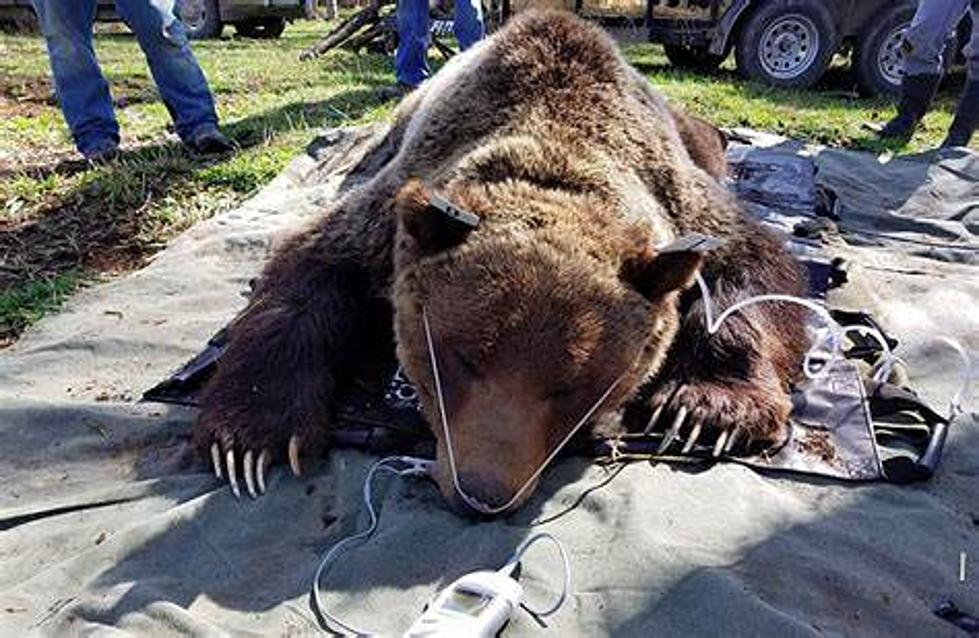
https://missoulacurrent.com/grizzly-hunting-trophy/
Missoula CurrentPublished: May 23, 2024An old, female grizzly was relocated to the North Fork of the Flathead drainage in 2019. (Montana FWP)
Mike Bader
A final decision on the petitions to remove the grizzly bear from the list of threatened species and the protections of the Endangered Species Act (delisting) may come in June or early July. Currently, authority over grizzly bear management is vested in the U.S. Fish & Wildlife Service. If the petitions are approved, management will be turned over to the states.
26.1K
Biden hosts Kenya’s William Ruto for CEO summit as part of state visit
Both Montana and Wyoming would have trophy hunts for grizzly bears. Wyoming would begin immediately and Montana in five years. But what would stop the politicians once they’ve achieved control over the bears?
Keep in mind that all grizzly bear hunting is trophy hunting. There is no subsistence hunting for bears in the lower 48. People do not eat bear meat and Montana hunting regulations do not require black bear hunters to eat the meat. To the contrary, hunters of elk, deer and other species can be fined if they waste the meat. Grizzly bear hunting is for the trophy and the thrill of shooting a grizzly bear.
Montana might use private citizens to remove bears with a history of management or habituation. This is not hunting. Since most bears with a management history are radio-collared, hunters might be directed to the bear’s location. This is not ethical or fair chase nor would it be allowed for any other animal.
The states also intend to arbitrarily limit where grizzly bears may be, even where they are in excellent habitat on public lands such as the Missouri Breaks with over one million acres of public lands and Wilderness. Hunting tags may be issued in specific areas to limit grizzly bear distribution to Wilderness and National Parks, which are not large enough to support viable populations. It’s the antithesis of wildlife habitat connectivity.
Montana Fish, Wildlife & Parks (FWPs) earned a reputation as being the leading state wildlife management agency in the U.S. and has been highly trusted by the public. Unfortunately, political interference is tarnishing this reputation. The Montana Fish & Wildlife Commission used to have professional biologists as members including Chairs Dr. Gary Wolf and Dr. Bob Ream. No more. There is not a single biologist on the Commission, whose members are all appointed by the Governor.
Moreover, the legislature enacted many laws governing wildlife management that retired FWPs biologists and others have warned are extreme, unsporting and threaten stable populations of wildlife. This pervasive influence led FWPs to produce a statewide management plan for grizzly bears that reads like a trophy hunting plan. Many justifications are offered for trophy hunting grizzly bears, but few if any for not doing it.
The political override of state biologists is affecting Montana’s wildlife heritage from elk on down the line. In Wyoming the Cody Roberts wolf torture episode, which Wyoming Fish & Game sat on for five weeks, further erodes confidence in state management of carnivores and predators. Trust must be re-earned and that takes time.
If you oppose the trophy hunting of grizzly bears then you must also oppose removing the grizzly bear from the protections of the Endangered Species Act because that would immediately enable unsustainable trophy hunting. Relisting a species is almost unheard of and takes much time that the grizzly bear does not have.
There is no ordinary hunting of grizzly bears. It is trophy hunting plain and simple. Please consider contacting the U.S. Fish & Wildlife Service and tell them no delisting and no trophy hunting of grizzly bears. In the Search box, enter FWS-R6-ES-2022-0150, which is the docket number for this action.

