Texas exotic hunts are dangerously unregulated
Reply


EXCLUSIVE
Will Moseley‘s getting some support from a fellow hunter … claiming the “American Idol” star was totally justified to sick dogs on a hog he hunted — he says it’s just the way hunters live.
Cameron Hanes — an author and hunter whose goal is to become the “Ultimate Predator” — spoke with TMZ … and, he’s defending Will Moseley’s hunting methods.https://amp-includes.tmz.com/article/3a589703-264c-4d2c-8d75-dd278e5cca57/block/40f38e30f37a0d48837902db5c11c4c4/iframe.html#amp=1
HUNTERS CARE ABOUT ANIMALSTMZ.com
CH tells TMZ … hogs are an invasive species, and hunters need to take them down. Cam adds the best way to hunt them is with dogs, so he’s got no issue with Hanes using them in the vid he posted a couple years back.
Hanes adds hogs destroy farmers’ land and — while he understands non-hunters might not feel comfortable with the necessity — Cam says there’s really no other option.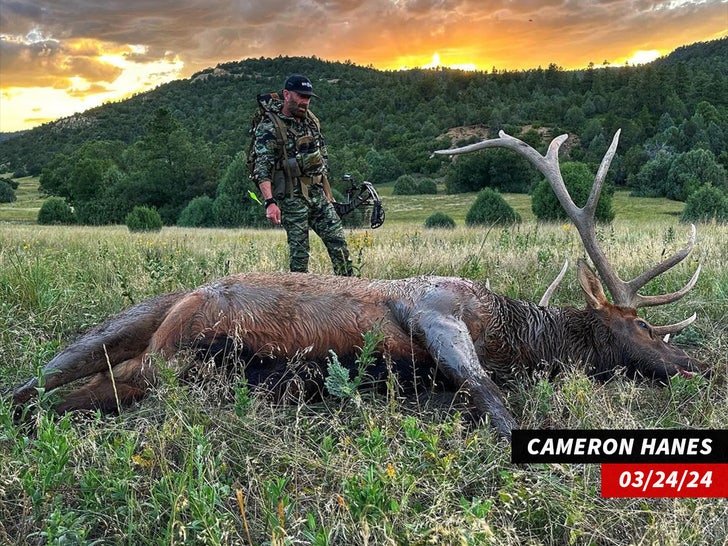
Instagram/@cameronhanes
In fact, Cameron says he hunts hogs — among numerous other animals — and, he even gives us a look at the snacks he makes from the animal.
The bowhunter — who has nearly 2 million Instagram followers, BTW — says he’s got great respect for the animals he hunts, and, like PETA, he’s also got great respect for animals. It sounds like Cam views hunters and PETA as two sides of the same coin.https://amp-includes.tmz.com/article/3a589703-264c-4d2c-8d75-dd278e5cca57/block/c450e3408adedab45fc1fa5db65fc6b9/iframe.html#amp=1
THE HUNT IS ON
FWIW … Cam tells us he’d absolutely go hunting with Moseley — who stirred up an online frenzy when a video of his infamous hog hunt surfaced online. Many called on fellow ‘AI’ fans to vote WM out.
Moseley advanced to the Top 7 Monday … but, all the negative scrutiny may end up dooming his chances in the long run.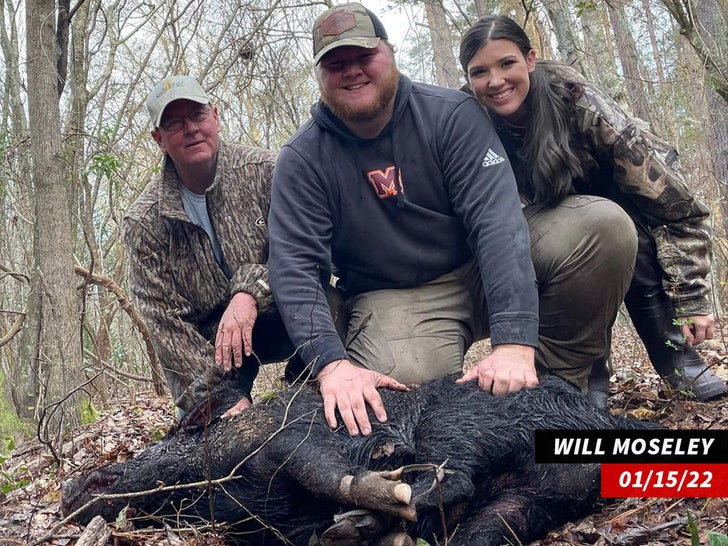
Instagram/@willmoseleymusic
But, Cameron Hanes is saying viewers need to look beyond the vid … and understand this is simply the hunter’s way.
May 5, 2024 — 7.30pmSave
ShareNormal text sizeLarger text sizeVery large text size
Advertisement
Listen to this article
6 min
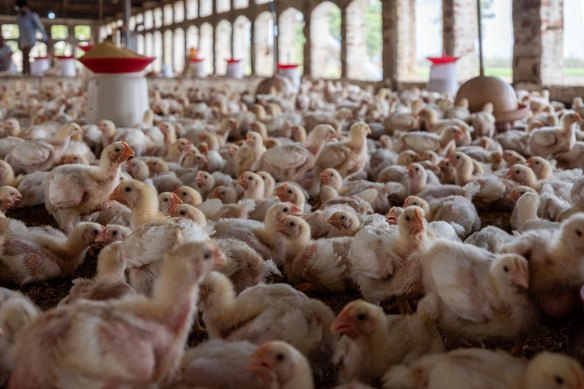
Australia is the last continent free from a virulent strain of bird flu that has killed an unprecedented number of animals, led to the culling of half a billion poultry birds and sparked “enormous concern” within the World Health Organisation about a leap into humans, after a Texan man fell ill with the virus.
Speculation that the problem variant, called clade 2.3.4.4b, has spread between cows in the US has sparked fear the disease is getting closer to posing a serious pandemic threat to humans.
The risk of the virus gaining the ability to spread between people is very low, but the scenario could be devastating. Based on 889 human infections since 2003, the disease has a 52 per cent mortality rate.
“For some reason, in the last five years [avian flu] has become supercharged,” Professor Michael Ward, chair of Veterinary Public Health at the University of Sydney, said. “It’s exponentially increased in terms of these spillover events and the dynamics of it have certainly shifted up a gear.”
Spillover events refer to when a virus leaps between species.
A mild form of bird flu circulates naturally in waterfowl, mostly ducks and geese. But when this low pathogenic form of the virus infects domestic poultry flocks it can mutate into a deadly, highly pathogenic version of the virus and spill back over into wild birds.
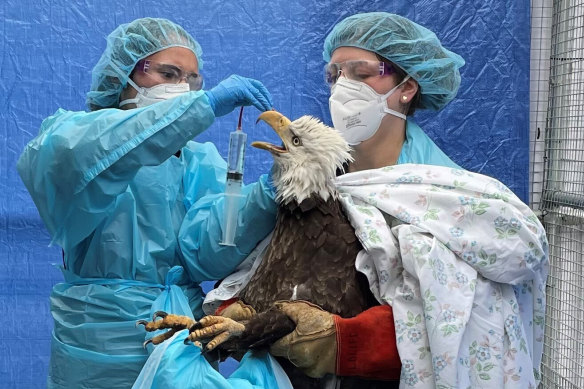
Clade 2.3.4.4b probably emerged in this way in 2021 and now the world is in the grip of a bird flu panzootic – an animal pandemic.
Advertisement
Scientists have reported horrific scenes of South American beaches littered with the bodies of 17,400 elephant seal pups. The virus has killed polar and grizzly bears, decimated Peruvian pelican populations and infected bottlenose dolphins, lions and skunks.
The virus has ripped through the world’s largest northern gannet colony in the UK, killing 70 per cent of the population and turning survivors’ eyes from blue-white to black. Scientists don’t know why.
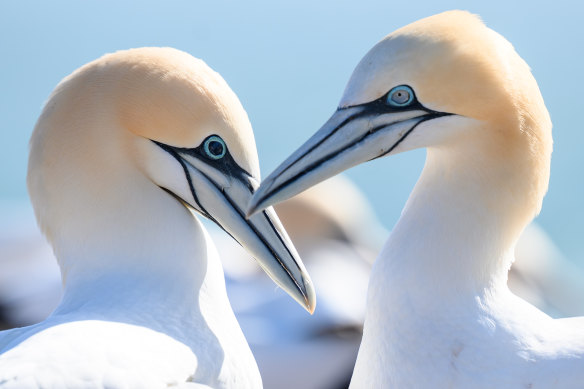
And, for the first time, bird flu has spread to Antarctica, where it could have a catastrophic effect on penguins and seals.
“These viruses seem to now be jumping into mammals and back into birds, which we haven’t really seen before,” Ward said. “The more often that happens, the more likely it is that at some point, these viruses are going to start picking up undesirable characteristics that then would allow them to transmit from human to human. The cattle example in the US is sort of going down that path.”
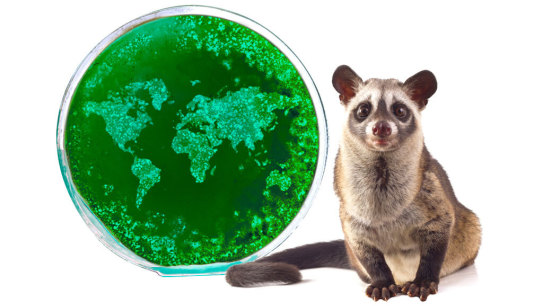
On March 25, US officials announced the virus had infected a herd of dairy cows in Texas, the first cases of avian flu in cattle. A month later, at least 34 herds across nine states were sick with the flu.
New genomic analysis shows the strain was circulating undetected in cows since early January and may have gained at least one adaption linked to viral spread in mammals.
Amid the cow outbreak, a dairy farmworker fell ill with the virus which, unusually, manifested as conjunctivitis. The strain was not one that could pass on to another person and the man recovered.
But the incident prompted WHO’s chief scientist, Dr Jeremy Farrar, to say he held enormous concern about a scenario in which the virus “evolves and develops the ability to infect humans and then, critically, the ability to go from human to human”.
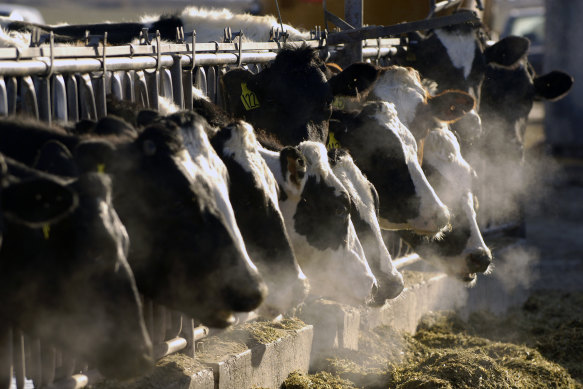
Infection in pigs could be particularly dangerous because they’re “mixing vessels” that can catch strains of human and bird flu, Ward said.
In a coinfected pig, “one virus could pick out characteristics from the other,” Ward said. “That sort of situation can set up one of these super viruses that has that ability to transmit much more easily.”
Despite the concern, humans are still a “dead end” host for bird flu. The virus has never achieved sustained transmission between humans and it remains a bird-adapted disease, said Dr Frank Wong, a bird flu expert for WHO from the CSIRO’s Australian Centre for Disease Preparedness.
“There’s still no conclusive evidence that cattle were spreading it to each other through a respiratory infection,” Wong said. “When you sample the cattle, the viral load is mainly in mammary glands, the udders and in milk, and not in the respiratory tract of cows.”
The virus may have spread between cows through unsterilised milking equipment or feed, not in an airborne manner like COVID-19, limiting its potential to take off as a human pandemic.
Australia remains a hold-out for the disease, Wong said, because of strict biosecurity laws and the fact the continent isn’t a major stopover for the species of migrating ducks and geese that carry the virus. But a Department of Agriculture, Fisheries and Forestry report recently upgraded the risk of highly pathogenic bird flu arriving in Australia to high. The report said migratory shorebirds, shearwaters and nomadic waterfowl were species that could bring the virus to Australia.
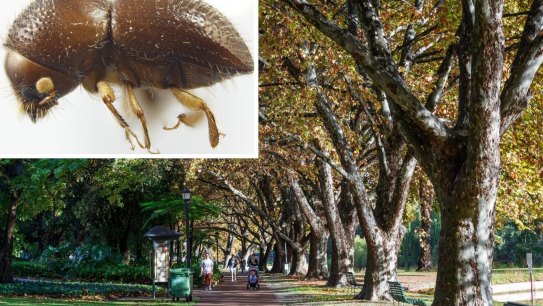
The first sign of the disease here, Wong said, would probably come from a mass die-off of wild birds or from a suddenly ill backyard chicken flock. Detection of the virus in poultry would trigger a swift “stamping out” measure, or culling of affected flocks, which is how authorities stamped out eight previous outbreaks of the disease.
DAFF investigates mass bird die-offs and also conducts general surveillance of wild bird faeces to test for the virus’s presence. Wong’s lab checks if positive samples are of the exotic, problem variant or the low pathogenic strain that naturally circulates.
The clade behind the latest worldwide outbreak has never been detected in Australia.
By
Social Links forRyan King
Published May 5, 2024, 11:14 a.m. ET
https://imasdk.googleapis.com/js/core/bridge3.639.0_en.html#goog_708319577
0 seconds of 30 secondsVolume 0%
Ad 1 of 2.
South Dakota Gov. Kristi Noem stood by a passage in her upcoming book in which she chided that President Biden’s troubled dog Commander should “say hello to” Cricket, the 14-month-old dog that she recalled shooting.


Noem stressed that Commander, who was removed from the White House last fall following dozens of biting incidents, had presented safety issues to staffers and Secret Service agents.
“Joe Biden’s dog has attacked 24 Secret Service people. So how many people is enough people to be attacked and dangerously hurt before you make a decision on a dog,” Noem told CBS’ “Face the Nation” on Sunday. “That’s the question that the President should be held accountable to.”

The Republican governor ducked a question from moderator Margaret Brennan about whether she was saying “he should be shot.”

