Comments on the Strategic Plan for Pheasant Stocking to Enhance Hunter Recruitment are Open Through Today 7/25/26
Reply

Pennsylvania Outdoors Columnist
July 23, 2026, 6:29 p.m. ET
Pennsylvania snake handler bitten by rattlesnake in southwestern Pa.
An experienced Pennsylvania snake handler just realized he crossed a safety guideline when he was bitten by a timber rattlesnake and hopes others will learn from his experience.
Mark Kline, 31, Central City, said he shouldn’t have been doing what he did on July 11 while hunting for venomous snakes on Mount Davis in southern Somerset County.
He was hunting for the slithering reptiles with his brother Rian and was having good luck seeing plenty of rattlesnakes.
They were walking around a rocky area where they found more than a dozen snakes. He then spotted a nice yellow-phase timber rattlesnake hiding in some rocks.
“I took my hook and I kept trying to coax her out. I couldn’t really get her. I know better than to do what I did,” he said.Need a news break? Check out the all new PLAY hub with puzzles, games and more!Go Outdoors PA: Snake hunter explains why we need these reptiles in Pennsylvania

More: If you find a young or injured animal, here’s how and when to respond
In the heat of the moment, “I reached down and grabbed her, trying to work her backwards with my hand because I was far away from her head. I started working her back and as soon as she started to loosen up, I saw her head come out from the other side. She nailed me on the back side of the finger,” he explained.
When Kline saw the blood, he told his brother he was bitten and to call 911. They were about 900 yards from the nearest road and started walking out. “It felt like a bee sting, like I knew something bad happened,” he said.
By the time they made it to the road, he was thankful the Addison Volunteer Fire Department had arrived and then arranged a landing zone for a medical helicopter.

“I started to feel tingles. I was tingling in my mouth, toes and fingers, like the pins and needles feeling,” he said. His brother said he started slurring his speech, too. “I could feel my throat started to close up,” he said.
He was flown by helicopter to Conemaugh Medical Center in Johnstown where he was treated with a variety of medicines for a week before being released, including being treated for an allergic reaction.

The bite on his ring finger on his right hand caused his hand and arm to swell. As of July 22, he was still having trouble with his finger and his doctors are concerned it may not heal.
“It’s probably going to be removed,” Kline said.
He works in a coal mine as a roof bolter and believes he’ll probably miss a month of work while he recovers.
Looking back, he said he learned from his short lapse in judgement.
“I never thought I would have been bit, I’ve handled a couple hundred of them,” the avid outdoorsman said. “It was just this one time, I knew better. I’ve handled enough of them that I thought I was quick enough. So I wasn’t,” he said about the fast strike. He said he has yelled at his brother for doing the same thing in the past. “I knew better.”
Before that mishap, he said it’s been a good year to see snakes. He and his brother have also been in several counties like Potter, Cameron, Elk and Cambria looking for rattlers.
“We’ve been all over hunting them,” Kline said. “My brother said he’s never seen as many as we’ve seen this year.”
In some rock outcroppings, he said there would be large numbers of snakes out in the sun.
“They’re just laying there like a spaghetti pile,” he said.
Snake hunting is a hobby he likes to do. He remembers when he first was able to handle one and had the snake’s head safely in a clear tube.
“I caught my first one and it was on. I just enjoyed it a lot,” he said.
However, for the time being, he doesn’t believe he’ll be looking for more snakes until next summer.
“If I wasn’t worried about my finger right now, I’d probably be out looking for them,” he said.
He doesn’t kill snakes, including the one that bit him.
“The more I handle them and actually seeing what their nature is, I don’t think I actually have it in my heart to keep one. If I do, it’s got to be something 6 foot or 7 foot, it’s going to have to be massive,” he said and doubting that he would kill one that size.
“In order for a snake to get that big, it’s been around for a long, long time. I don’t want its life to end with me,” he said.

He likes seeing how the snakes differ from each other.
“They have real vibrant colors, some of them,” he said. He also likes their rattles on their tails and how they use it to communicate. “If they rattle, they see you and usually start retreating. They don’t want to be bothered.”
For people concerned about snakes, he said, there’s simple advice.
“If you see one, give it space,” he said. “They’re not there to hurt you. They are there doing their deal.”
In his situation, he said it wasn’t the snake’s fault as he was trying to move her.
“She was scared. She did what she was supposed to do. You can’t fault a snake for protecting itself,” he said. “It doesn’t know my intentions.”
When he does safely get a snake with his long hooks, they place the head in a clear tube and check it out, including taking measurements and documenting the number of scales and rattles.
The World Population Review organization monitors the number of venomous snake bites each year in every state in the country. They report Pennsylvania has an average of 64 victims a year.
The Pennsylvania Fish and Boat Commisssion regulates snakes and reports there are 21 species of snakes found in Pennsylvania. Three species — timber rattlesnakes, copperhead and the eastern massasauga — are venomous. The massasauga are only found in Venango and Butler counties in Pennsylvania.
A permit is required to hunt, take, catch, kill or possess timber rattlesnakes and Eastern copperheads.
The venomous snake permit fee for residents is $31.97 per year and the fee for non-residents is $61.97 per year. People also need a Pennsylvania fishing license, too. The handling season for snakes this year is June 13 through July 31.
If you encounter a snake, the agency agrees with Kline and recommends people give the reptile a wide berth to let it or yourself to move along. If you are bitten by a poisonous snake, you should go to a hospital immediately.
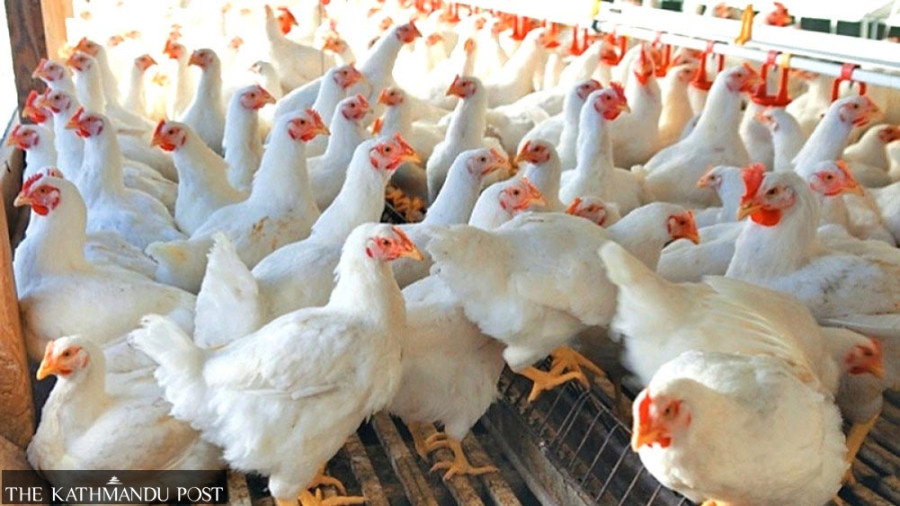
The government has compensated 104 affected farmers after culling more than 835,000 birds, while officials say fresh claims could require another Rs100 million.
Published at : July 23, 2026
Updated at : July 23, 2026 11:25
Kathmandu
Bird flu outbreaks have affected 162 poultry farms across Nepal over the past four months, with the government distributing more than Rs507 million in compensation to affected farmers, according to the Department of Livestock Services.
The department said compensation totalling Rs507.1 million has been deposited into the bank accounts of 104 affected farmers and poultry farms.
Senior Veterinary Officer Mukul Upadhyay said the Ministry of Agriculture, Forests and Environment allocated Rs500 million for compensation at the end of the last fiscal year, and the entire amount has already been disbursed. The department has been allocated Rs20 million for compensation during the first four months of the current fiscal year.
Upadhyay said additional claims are expected, and the department estimates it will require around Rs100 million more to meet compensation payments.
“Since mid-July, all test results have been negative,” he said. “Farmers are receiving compensation, and we expect infections to continue declining.”
He clarified that compensation is provided only for birds culled by the government as part of disease control measures, not for birds that die from the infection.
“Not every affected farm is eligible for compensation,” Upadhyay said. “In many cases, birds die before culling takes place. Compensation is paid only for birds destroyed by the government.”
According to the department, authorities culled 835,563 birds to contain the outbreaks. They also destroyed 1,225,536 eggs and 264,213 kilograms of poultry feed.
Bird flu was first confirmed in the last fiscal year 2025-26 on February 16 in Sundarharaicha-4 and Urlabari-8 of Koshi Province. By the end of the fiscal year, the disease had spread to 162 farms across 12 districts.
Bhaktapur recorded the highest number of infected farms, with 45 outbreaks. Kathmandu reported 32 affected farms, followed by Kavrepalanchok with 27, Sunsari with 23, Lalitpur with 15, Morang with 11 and Jhapa with four. Cases were also confirmed in Chitwan, Nawalparasi West, Bara and Mahottari.
The highest number of birds was culled in Sunsari, where authorities destroyed 285,531 birds. A further 135,158 birds were culled in Bhaktapur, 111,407 in Kathmandu and 104,659 in Morang.
The Kathmandu Valley and neighbouring Kavrepalanchok together accounted for 119 confirmed outbreak sites.
Under the Bird Flu Control Regulation (Fourth Amendment), 2017, owners are entitled to compensation of up to 75 percent of the assessed value of birds, poultry products and related materials destroyed under official disease control measures.
The Standards for Relief for Items Destroyed During Bird Flu Control, 2022 provide that each district forms a compensation committee chaired by the chief district officer. The committee assesses losses, determines compensation rates and authorises payments. Compensation is available only when birds and related materials are destroyed under the committee’s supervision.
Tilchandra Bhattarai, a member of the Nepal Poultry Federation, said he received around Rs100 million in compensation after authorities culled 150,000 chickens at his farm in Sunsari.
“My total losses were between Rs180 million and Rs200 million,” Bhattarai said. “The compensation arrived only recently. It will certainly provide some relief to the business.”
Although the outbreak has largely been brought under control, the Department of Livestock Services warned that the risk of further infections remains.
The department identified several major risk factors, including poultry farms located near tall trees that attract wild birds, farms situated close to wetlands, poor compliance with biosecurity standards, unrestricted movement of vehicles and visitors, and the reuse of egg crates without proper disinfection.
 Brian Whipkey
