Blobby creatures washed up on West Coast beaches during marine warming, sucking up energy
Reply

BY
KITTY BLOCK AND SARA AMUNDSON
SHARE https://www.humanesociety.org/blog/washington-state-cosmetics-animal-testing-sales-ban
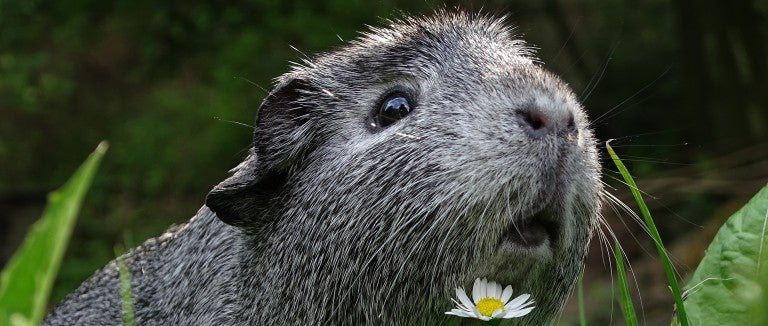
Guinea pigs, as well as rabbits, mice and rats, are typically used for the painful testing of cosmetics ingredients.
Pixabay
Last week, Washington became the 12th U.S. state to pass a law to ban the sale of cosmetics newly tested on animals. This is a win for all the guinea pigs, rabbits, mice and rats who will never have to suffer through painful testing, including having cosmetics chemicals forced down their throats, dripped into their eyes or smeared onto their skin. If the animals don’t die during the experiments, they are typically killed by asphyxiation, neck-breaking or decapitation without any pain relief.
Washington’s ban follows similar laws passed in California, Hawaii, Illinois, Louisiana, Maine, Maryland, Nevada, New Jersey, New York, Oregon and Virginia. These state laws closely mirror the provisions of the federal Humane Cosmetics Act, a bill we have championed for years; we urge U.S. House Energy and Commerce Chairwoman Cathy McMorris Rodgers to move the federal bill forward, especially now that her home state has passed such a law.
Already, 45 countries have passed laws to limit or prohibit animal testing for cosmetic products, many in direct response to our global campaign.
It’s not only immensely cruel to force animals to suffer through these tests, but also totally unnecessary. Thousands of ingredients that have a history of safe use can already be used for formulating products such as mascaras and shampoos. Not only that, but modern technologies have also given us advanced options for testing: Human cell-based tests and sophisticated computer models can replace outdated animal tests. We’ve said it before, and we’ll keep saying it until the paradigm finally shifts: These non-animal technologies are often faster, less expensive and more reliable predictors of human safety.
Through passing this ban, Washington lawmakers acted in a way that is consistent with their citizens’ interests in avoiding being complicit in animal cruelty when purchasing cosmetic products and in promoting testing practices that are more likely to keep them safe.
Many cosmetics companies are already embracing our vision for a humane world where animal testing for cosmetics is eradicated, including industry heavyweights Lush, Unilever, Procter & Gamble, Avon and L’Oreal who have stood alongside us in our global campaign. In addition, several companies selling cosmetics in Washington provided testimony in support of the state’s ban, including Lush Cosmetics, rue Santé and Thrive Causemetics.
It is especially significant that the Humane Cosmetics Act has the endorsement of the Personal Care Products Council, the trade association representing 90% of the U.S. cosmetics industry, in addition to more than 400 companies that have individually signed on to support this legislation. In a real sense, public policy in the U.S. trails behind the philosophy and actions of the corporate sector involved.
At this point, the question is no longer about whether cosmetics animal testing should end in the U.S.—it’s now as simple as, what are we waiting for?
Tell your legislators to support the Humane Cosmetics Act. Support our work to end cosmetics animal testing and other forms of animal cruelty by making a donation.
Sara Amundson is president of the Humane Society Legislative Fund.
March 20, 2024 11:23 AM
https://www.mprnews.org/story/2024/03/20/goat-contracts-bird-flu-on-minnesota-farm
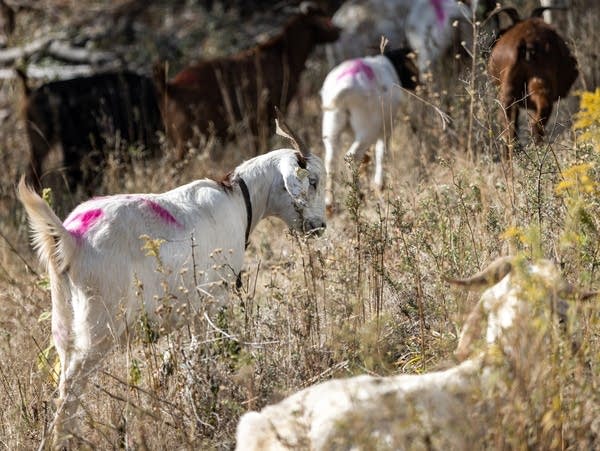
Young goats on a Stevens County farm recently tested positive for the highly pathogenic avian influenza virus, according to the Minnesota Board of Animal Health.
The agency said the detection is the first known U.S. avian influenza infection in domestic ruminants, which include cattle, sheep and goats. But a state official said the finding is not cause for alarm.
“I think this probably reflects more a case of an immune-compromised individual. Specifically, these were young goats approximately a week of age, their immune systems weren’t very strong yet and they were exposed to a pretty heavy viral burden,” said State Veterinarian Brian Hoefs.
Earlier this month the owner notified the Board of Animal Health about unusual deaths of young goats. A backyard poultry flock on the same farm was depopulated in February after testing positive for avian influenza. The goats and poultry shared space and a water source.
Your gift today creates a more connected Minnesota. MPR News is your trusted resource for election coverage, reporting and breaking news. With your support, MPR News brings accessible, courageous journalism and authentic conversation to everyone – free of paywalls and barriers. Your gift makes a difference.
Hoefs said 10 carcasses were tested and five were positive for the highly pathogenic avian flu virus.
“This finding is significant because, while the spring migration is definitely a higher risk transmission period for poultry, it highlights the possibility of the virus infecting other animals on farms with multiple species,” said Hoefs.
Hoefs said tests showed the virus had not changed to become adapted to mammals, so there is little risk it spread to other animals.
Samples from the adult goats were negative for HPAI and no additional sick goat kids have been reported on the farm since March 11, according to the BAH.
“Our colleagues at the national level are telling us that this is likely a limited incident,” said Hoefs. “But the message is biosecurity, biosecurity, biosecurity. We want to make sure that we are preventing any similar exposures.”
Hoefs urged backyard poultry flock owners to keep poultry from contact with wild birds or livestock.
Avian influenza has been previously diagnosed in other mammals including skunks, dogs and cats. Animals with weakened or immature immune systems are at higher risk of contracting disease, officials said.
More than six million domestic turkeys and chickens in Minnesota have died as a result of avian influenza since the outbreak began in early 2022.
The USDA has tracked more than 200 detections of HPAI in mammals across the country.
Officials said the risk to the public is extremely low, and any risk of infection is limited to people in direct contact with infected animals. Officials said during the current outbreak, there have been no cases of people in the United States sickened after contact with mammals infected with the virus.

