Hunters killed 2,920 black bears last year in Pennsylvania, none in Bucks County
1

Default Mono Sans Mono Serif Sans Serif Comic Fancy Small CapsDefault X-Small Small Medium Large X-Large XX-LargeDefault Outline Dark Outline Light Outline Dark Bold Outline Light Bold Shadow Dark Shadow Light Shadow Dark Bold Shadow Light BoldDefault Black Silver Gray White Maroon Red Purple Fuchsia Green Lime Olive Yellow Navy Blue Teal Aqua OrangeDefault 100% 75% 50% 25% 0%Default Black Silver Gray White Maroon Red Purple Fuchsia Green Lime Olive Yellow Navy Blue Teal Aqua OrangeDefault 100% 75% 50% 25% 0%Nadia is enjoying her forever family after being rescued from a coyote trap. (Credit: Adams County SPCA)
Published: Feb. 26, 2024 at 8:51 AM PST|Updated: 4 hours ago
https://www.live5news.com/2024/02/26/nadia-dog-adopted-weeks-after-being-caught-coyote-trap-shot-leg
GETTYSBURG, Pa. (Gray News) – A dog that was shot in the leg and caught in a coyote trap has been adopted.
The Adams County SPCA rescued Nadia after finding her caught in a coyote trap. After getting a closer look at her, they found that she had been shot about three weeks before getting trapped. Because of the gun shot wound, she had to have her front right leg amputated.

The organization says it has been an “amazing journey” watching Nadia come out of her shell.
“She truly is one of the nicest dogs we have ever had here!” Adams County SPCA said in a Facebook post.

Nadia is now going to a home with three other great Pyrenees friends with whom to spend the rest of her life.
“She will be spoiled rotten for the rest of her life and she deserves that!” Adams County SPCA said.

Congratulations to Nadia on finding a forever home.
Fears for penguin colonies after the discovery of the highly contagious H5N1 virus in two dead skuas
The age of extinction is supported by

@phoeb0Mon 26 Feb 2024 09.27 ESTShare
Bird flu has reached mainland of Antarctica for the first time, officials have confirmed.
The H5N1 virus was found on Friday in two dead scavenging birds called skuas near Primavera Base, the Argentinian scientific research station on the Antarctic peninsula.
Additional suspected cases have been reported in brown skua, south polar skua and kelp gull in Hope Bay, also on the Antarctic peninsula, according to data from the Scientific Committee on Antarctic Research.
“This discovery demonstrates for the first time that the highly pathogenic avian influenza virus has reached Antarctica, despite the distance and natural barriers that separate it from other continents,” said a Spanish government report on Sunday.
These are the first confirmed cases on the continent itself, which shows the virus is spreading in the region, most likely via migratory birds. This H5N1 outbreak is thought to have killed millions of wild birds globally since 2021, and has spread to every continent except Oceania.
Avian flu reached the wider Antarctic region in October last year when it was reported on sub-Antarctic islands. The virus was first detected on the British overseas territory of South Georgia and the South Sandwich Islands, about 1,000 miles (1,600km) away from the continent of Antarctica. It was also found in the Falkland Islands, which is 600 miles north-west of South Georgia.
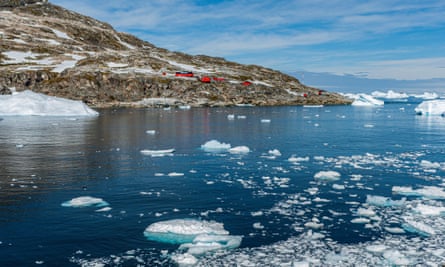
Initially it was reported in birds such as gulls, skuas and terns, but has since been found in albatross, penguins and southern fulmars. It has also spread to Antarctic mammals, with mass deaths of elephant seals and fur seals. The virus is also ripping through wildlife populations in the Arctic. In December, it was confirmed that the first polar bear had died of H5N1.
“There are many reports now of highly pathogenic avian influenza (HPAI) affecting several species in the Antarctic regions this season,” said Matthew Dryden from the UK Health Security Agency. “It may not have been reported on the Antarctic mainland until now because of the difficulties of accessing and sampling wildlife [there].”
The dead birds from mainland Antarctica were found by Argentinian scientists and sent to scientists from the Centro de Biología Molecular Severo Ochoa in Madrid, who were working at the Spanish Antarctic base on Deception Island.
“The problem is how long is it going to take before it transmits to other species like penguins. We need to monitor that,” said Antonio Alcamí, a researcher from the Spanish National Research Council who works at the Centro de Biología Molecular Severo Ochoa CSIC, who is based at the Spanish Antarctic base and tested the carcasses. “I’m afraid I think it probably will transmit into penguins. The skuas live pretty close, and so there are many opportunities for transmission, but we will see.”
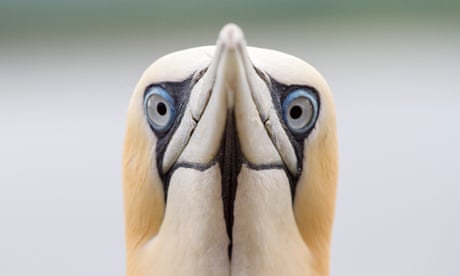
Previous outbreaks in South Africa, Chile and Argentina have shown that penguins are susceptible to the virus. Since H5N1 arrived in South America, more than 500,000 seabirds have died of the disease, with penguins, pelicans and boobies among the most heavily affected.
Researchers wrote in a pre-print research paper in November last year: “If the virus does start to cause mass mortality events across penguin colonies, it could signal one of the largest ecological disasters of modern times.”
Diana Bell, the emeritus professor of conservation biology at the University of East Anglia, said the news was “sadly not surprising, given its previously reported presence on Antarctic islands in birds and elephant seals. It seems unlikely that the penguins there will not be infected.”
Dryden added: “Biosecurity is important so that humans are not exposed to the virus. HPAI can rarely infect humans but close, prolonged contact is required.”
While a number of wildlife sites had been closed to tourists to limit spread of the virus, Dryden said, little else could be done to stop it spreading. “Nothing more can be done to limit transmission in wildlife and the outbreak will have to resolve naturally.”
Find more age of extinction coverage here, and follow biodiversity reporters Phoebe Weston and Patrick Greenfield on X for all the latest news and features

