Names Please! – We Need To Find These Fox Killers
Reply

California has a growing number of wolves, and they’ve been attacking cattle at such a rate that the state’s compensation fund for ranchers is running out of money. Unlike Wyoming, ranchers there can’t kill wolves.
January 25, 20245 min read
https://cowboystatedaily.com/2024/01/25/unlike-in-wyoming-california-ranchers-cant-touch-wolves/
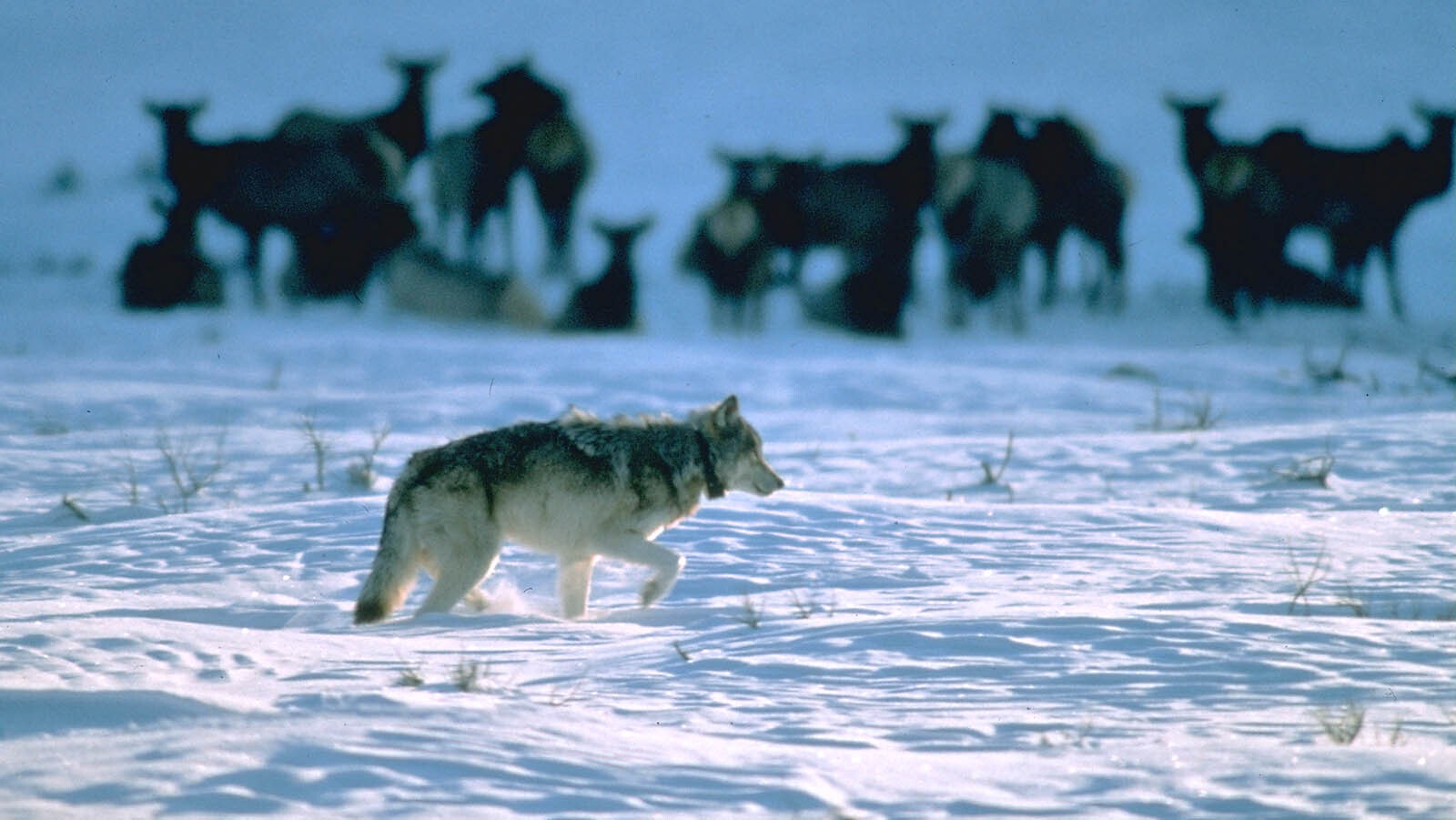
In stark contrast to how Wyoming ranchers can manage predatory wolves, If ranchers in California see them attacking their cattle, they can do little more than watch, and a state fund to compensate them for their losses is running out of money.
“You can see a wolf attacking, killing and eating one of your calves. Not only could you not kill it, you could not injure it in any way,” Kirk Wilbur, vice president of government affairs for the California Cattleman’s Association, told Cowboy State Daily.
That’s the polar opposite of wolf policy throughout much of Wyoming, where wolves can be shot on sight at any time.

Wolves started trickling into California from Oregon about a decade ago, and the northern part of the state now has an estimated 42 wolves in several established packs.
California launched a $3 million wolf livestock compensation pilot program in 2021, but it’s running out of money, according to the California Department of Fish and Wildlife (CDFW).
“To date, the Department of Fish and Wildlife has received a total of 102 grant applications for the CDFW Wolf Livestock Compensation Interim and Pilot Program that are projected to exhaust the current fund,” the agency recently announced.
The cattleman’s association will lobby the California Legislature to replenish the fund. But given the state’s projected $38 billion budget deficit, “it’s a tricky proposition this year,” Wilbur said.
“There are a lot of programs that are having their funding zeroed out, or their funding cut,” he said. Replenishing the depredation fund “is something we are interested in pursuing. We’re cognizant of that big, $38 billion elephant in the room.”
The first documented wolf in recent memory in California was a lone radio-collared male, “wolf OR-7,” that came in from Oregon in 2011, Wilbur said.

California started formulating a wolf management plan, calling together representatives of various interest groups, including ranchers, hunters and conservationists.
“The process began in 2012. At that time, it was called a ‘wolf management plan,’ but it ended up being called a ‘wolf conservation plan,’” Wilbur said.
In 2013, there was a push to list wolves as an endangered species under both federal and state regulations, he said. That was finalized in June 2014.
“By that time, OR-7 had returned to Oregon,” Wilbur said. “There were actually no known wolves in California at the time that wolves were designated as an endangered species here.”
More wolves started coming south from Oregon, and by 2015 had established the first known pack in California.
“In a matter of about a decade, we’ve had a significant increase in the wolf population, and that has come with significant livestock depredation,” Wilbur said.
So far, established wolf packs have stuck mostly to the northern part of California. One lone radio-collared wolf, “OR-93,” wandered as far south as the Santa Barbra area, he said.
That wolf was stuck and killed by a car in Kern County, California, where Bakersfield is the county seat.
Even if federal protection is lifted – as it has been in Wyoming, Montana and Idaho – wolves will still be listed as endangered under California law, and thus still essentially untouchable, Wilbur said.
That leaves California ranchers with even more limited recourse than Colorado ranchers now have.
Wolves were reintroduced to Colorado in December and remain a federally protected species there, meaning that the public can’t hunt or shoot them, as they can in Wyoming.
However, under the Centennial State’s wolf management plan, agents from Colorado Parks and Wildlife (CPW) have the option of killing wolves in cases of extreme attacks on livestock.
In California, even CDFW agents can’t kill wolves for preying on cattle, Wilbur said.
The only circumstances under which a wolf could be killed in California is if it posed an immediate threat to human life or safety, “such as if a wolf were trying to attack your child,” he said, and there haven’t been any reports of such incidents.
But should any of those newly reintroduced Colorado wolves cross over into Wyoming, ranchers north of the state line won’t hesitate to shoot them on sight.
California’s livestock depredation program has “three prongs,” Wilbur said.
One is direct compensation for losses, or repayment for the fair market value of each livestock animal confirmed to have been killed by wolves. There were 21 confirmed wolf depredations in 2023.
“Confirmed depredations are much lower than actual depredations,” Wilbur said.
The second prong compensates ranches for expenses related to nonlethal wolf deterrents, such as range riders.
And the third is for other negative effects of wolves being near cattle. Such things as cows having decreased conception rates or aborting their calves because of stress caused by the proximity of the predators, Wilbur said.
Applications for compensation are retroactive back to 2021. It’s likely that a flood of recent applications for the third category of compensation – other negative effects of wolves – is what’s pushing the fund to its limits, Wilbur said.
Even in the face of a monster state deficit, Wilbur said his organization and others are going to keep pushing for more money.
The state owes that to its ranchers, he said.
“As long as they have made the policy choice to designate wolves as a fully-protected species, then they ought to compensate ranchers for the impacts of that fully-protected species,” he said.
Staff Writer
7 HOURS AGO

As I step among poop-covered rocks toward the plateau of a small island in the Galápagos, a part of me rejoices. Not only am I about to see the archipelago’s famed blue-footed boobies for the first time, but the sight of guano everywhere, and birds to make fresh batches, serves as a reminder: The ongoing avian influenza outbreak has not yet ravaged this picturesque place.
Ghostly, leafless Palo Santo trees and saltbushes sprinkle the island, surrounded by boulders in varying shades of red-tinged black and brown. White splotches of guano splattered on rocks are hard to miss against this arid landscape on North Seymour Island in November, the tail end of the dry season. The poop’s sources are similarly difficult to overlook.
The island is known for hosting a large colony of magnificent frigatebirds (Fregata magnificens), some of which hang suspended in the air above tourists’ heads as we disembark from a dinghy and scramble up the rocky path. As I admire the birds’ fabulous red throat sacs — which males inflate like balloons to attract females — I hope that none deposit excrement on my head.

A short walk along a dusty trail brings us to, in my opinion, the stars of the show, blue-footed boobies (Sula nebouxii). The dopey looking birds show no sign of fear even as we cluster around their nests eagerly snapping photos.
That I had the chance to visit these birds on North Seymour at all — amid all their poop — was a relief after traveling more than 5,000 kilometers for a vacation in Galápagos National Park. Just two months before, at the end of September, news broke that deadly avian influenza had reached the archipelago.
Headlines and summaries of the latest Science News articles, delivered to your email inbox every Thursday.Sign Up
The virus’ presence posed a grave threat. The islands are home to birds like the Galápagos penguin that are found nowhere else in the world. National park and government officials closed some islands to tourists to protect endemic seabirds — an understandable tactic that left me selfishly thinking about the possibility of not getting to see iconic birds up close. To track the virus, “we have eyes watching the whole archipelago,” wildlife veterinarian Gustavo Jiménez-Uzcátegui of the Charles Darwin Foundation told Science in September.
The concern is warranted. Outside the Galápagos, the global bird flu panzootic has been destructive. (Panzootics are the animal equivalent of human pandemics.) It’s unclear why the archipelago has so far escaped the worst of avian influenza, Jiménez-Uzcátegui told me when we met in the island town of Puerto Ayora. Also unknown are the effects the outbreak could permanently imprint on bird populations and the ecosystems that they’re a part of around the globe.
“Most people have no idea that we are in the middle of a wildlife emergency, an animal pandemic, and that this may be the nail in the coffin for some species,” says Michelle Wille a viral ecologist at the Peter Doherty Institute for Infection and Immunity in Melbourne, Australia, who studies avian influenza. “It’s very concerning.”
While the viral variant behind the outbreak emerged in Europe in 2020, the outbreak itself didn’t take off until late 2021. Since then, avian flu has likely killed millions of wild birds (SN: 3/6/23). In Peru, hundreds of thousands of wild birds have died. Places like Russia and Canada have documented tens of thousands of deaths. In the United States, roughly 9,000 wild birds have tested positive for avian flu, some of which were reported after being killed by hunters.
In October, bird flu arrived in the Antarctic region for the first time when unexplained mortality of brown skuas on Bird Island was pinned on the virus.
But birds aren’t the only animals in the flu’s crosshairs. “If you can imagine thousands of dead birds, you can imagine how this is an ‘all day buffet’ for scavengers,” Wille says. Avian predators all over the world, including bears and foxes, have tested positive. Marine mammals such as seals and sea lions that swim with or eat infected birds have experienced mass die-offs. In the Arctic, a polar bear died in October after contracting the virus. And on January 11, researchers confirmed that elephant and fur seals in South Georgia, a sub-Antarctic island, had been infected.
By the time of my trip in mid-November, fears of birds dying en masse in the Galápagos hadn’t yet come to fruition. To date, there have been just 34 confirmed flu infections in red- and blue-footed boobies, Nazca boobies, frigatebirds and tropicbirds.

That the global outbreak is happening at all is a chapter in a predictable story, says Nichola Hill, a disease ecologist at the University of Massachusetts Boston. And the virus’s incursion into some mammals is “absolutely on track with being the worst-case scenario you could have imagined for this.”
Researchers have long understood that avian influenza viruses — which normally cause mild disease in waterfowl like ducks — can turn deadly after spreading and evolving on poultry farms (SN: 9/2/05). Close relatives of the virus responsible for the ongoing panzootic have been “simmering away” in Eurasia for more than a decade, Hill says. “And now in the last three years, it’s had major consequences for wildlife.”
For now, researchers are focused on documenting the sheer scale of avian and mammalian deaths. “We will probably not know the true extent of this for years to come,” Wille says. The ripple effects on ecosystems will likewise take years to unravel.
Death rates vary among bird species. Waterfowl such as ducks are key spreaders of bird flu and have at least some built-in protection from the virus. Because their immune systems have coevolved with influenza viruses, the animals have a “head-start on immunity” compared to other animals, Hill says. Meanwhile, birds like bald eagles and red-tailed hawks that don’t have such a long history with influenza are “just getting hit really hard.”
That disparity has Hill wondering how long it might take for infections to become less deadly, as wild birds develop immunity against the virus. Her lab aims to explore how birds’ immune systems have coevolved with avian flu, including which parts of the immune response are crucial for preventing the virus from running rampant and causing death in some species.
As of now, Wille says, there are no signs that the panzootic is slowing down. But there are glimmers of hope.
In October, researchers announced some early results from a bird flu vaccine trial in California condors. After 10 birds had received two doses of the vaccine, six of them had antibody levels high enough to provide at least partial protection against death. “If it works, it demonstrates that we may be able to limit the impact on highly endangered species,” Wille says.
Why avian flu has been less “aggressive” in the Galápagos compared with most everywhere else — and whether it will stay that way — remains a big question, Jiménez-Uzcátegui says. But he has one intriguing hypothesis.
“The unique difference from the other parts [of South America], like Peru, Ecuador,” he says, “is the habitat.”

Flu in both people and birds tends to largely be a cold-season disease (SN: 1/11/23). Last year, El Niño arrived in the Galápagos, bringing warmer than average waters to the islands’ part of the Pacific Ocean. Normally, the climate pattern reduces the marine food supply, affecting many of the animals that swim in the waters around the islands. The more moderate temperatures may have also made it harder for avian flu to spread, Jiménez-Uzcátegui says.
Piecing together the relationship between the local climate and influenza infections could help determine if Jiménez-Uzcátegui’s hunch is correct. He and his team also hope to examine the immune systems and genetics of birds that call the archipelago home. For now, though, researchers and officials continue to keep an eye out for influenza on the islands.
On the heels of the COVID-19 pandemic, it’s easy to center humans in worries about infectious diseases, especially because influenza outbreaks can be devastating (SN: 10/27/21). But my visit to Galápagos National Park — a truly special place for nature lovers — underscored that wild birds around the globe are enduring the worst flu outbreak yet. And despite small signs of hope in these iconic islands, the virus’s impacts could reverberate for years to come.

