13 year old killed in hunting accident identified
Reply

[Dexter was a vocal vegan and advocate for animal rights throughout his life. In a 1995 interview with The Vegetarian Times, he said his diet was an extension of his nonviolent beliefs. “There is a connection between how you live life and how you treat others,” …excerpt from the last paragraph.]
https://www.cnn.com/2024/01/22/us/dexter-king-death-martin-luther/index.html
By Olivia LaBorde and Zoe Sottile, CNN
3 minute read
Updated 3:33 PM EST, Mon January 22, 2024
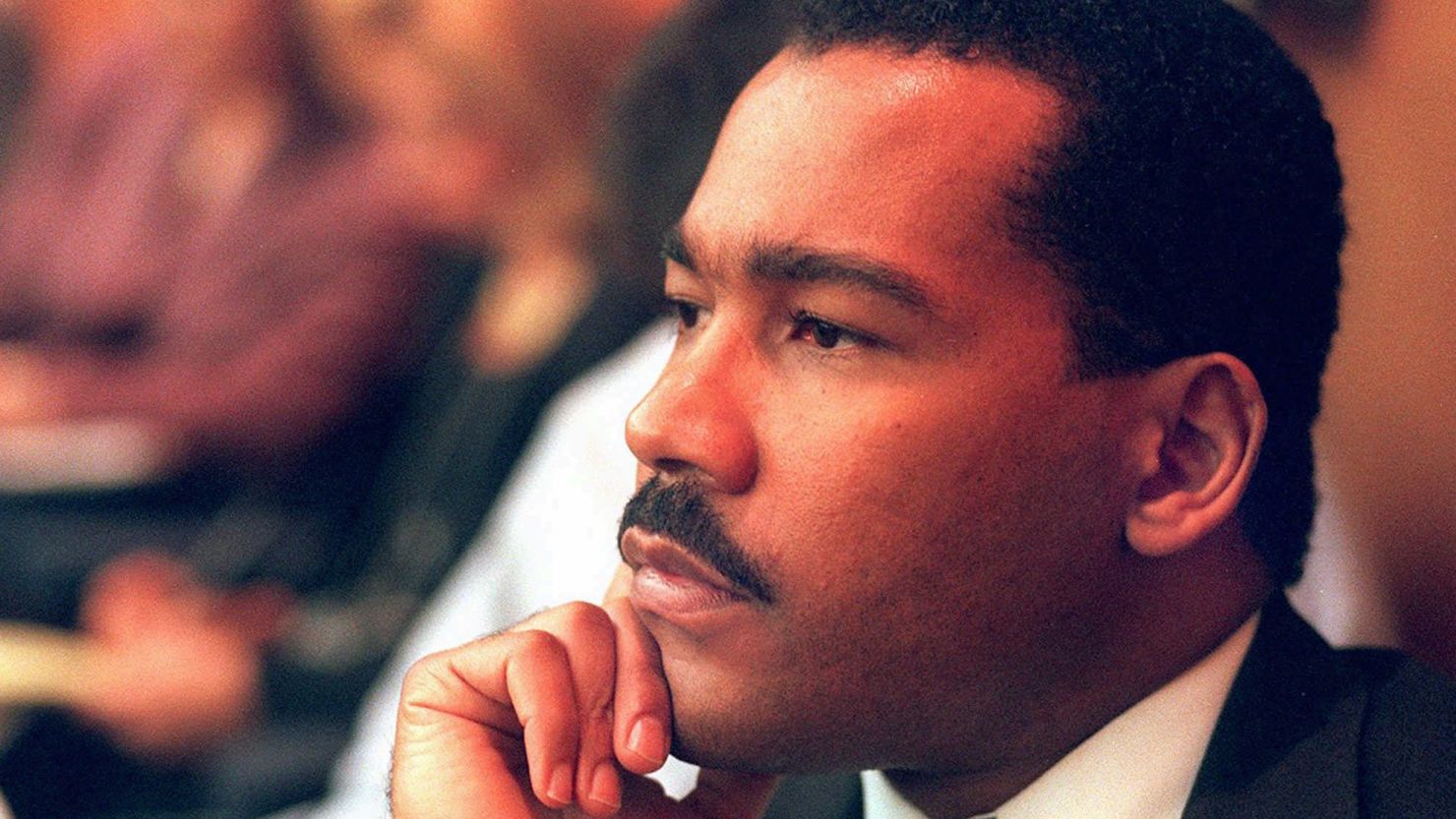
Dexter King, son of the late civil rights leader Martin Luther King Jr., in Jackson, Tennessee on August 29, 1997.Helen Comer/Pool/The Jackson Sun/APCNN —
Dexter Scott King, the youngest son of Dr. Martin Luther King Jr., has died, according to statements from his family and the King Center.
The King Center confirmed in a statement the 62-year-old civil rights activist died Monday after a battle with prostate cancer.
The third child of Dr. and Mrs. Coretta Scott King was married to Leah Weber King since 2013.
Weber King said in a statement from the King Center, “He transitioned peacefully in his sleep at home with me in Malibu.” She added, “He gave it everything and battled this terrible disease until the end. As with all the challenges in his life, he faced this hurdle with bravery and might.”
RELATED ARTICLE9 places where you can walk in MLK Jr.’s footsteps
Dexter’s older brother Martin Luther King III said in a statement, “I am deeply saddened to share that my brother, Dexter Scott King, has passed away. The sudden shock is devastating. It is hard to have the right words at a moment like this. Please keep the entire King family in your prayers, and in particular Dexter’s wife, Leah Weber.”
The Rev. Al Sharpton said he was “heartbroken to hear that Dexter King left us this morning, but I was comforted by the knowledge he is reunited with his parents and sister.”
Dexter’s mother, Coretta Scott King, died in 2006. His sister Yolanda Denise King died in 2007.
Atlanta Mayor Andre Dickens also expressed his condolences to Dexter’s family. “His profound and unwavering love for his family positioned him as a guardian of his father and mother’s legacies,” the mayor said of Dexter in a news release.
“Dexter held various titles—Morehouse Man, humanitarian, Civil Rights activist, and even actor. However, above all, he was a devoted family man,” he said.

Coretta Scott King (L), widow of civil rights leader Martin Luther King Jr., passes the Olympic Flame to her son Dexter Scott King on July 19, 1996, in Atlanta.Michel Gangne/AFP/Getty Images
A graduate of Morehouse College, Dexter worked as chairman of The King Center for Nonviolent Social Change, a nonprofit started by Coretta Scott King in the wake of her husband’s assassination, and president of the King Estate, according to King Center representatives.
Dexter had no children.
Dexter was just seven years old when his father was assassinated. He told CNN he had been watching TV with his older brother when a news flash interrupted, announcing his father had been shot in Memphis.
“It was a very chaotic and traumatic period,” he said.
Dexter previously told CNN bearing his revolutionary father’s name could be both a blessing and a curse.
After his father’s killing, some people would tell young Dexter they expected him to follow his father’s path, he said in 2003.
“People would say, ‘I want you to be just like your father,’ or ‘You should be a minister,’” he said.
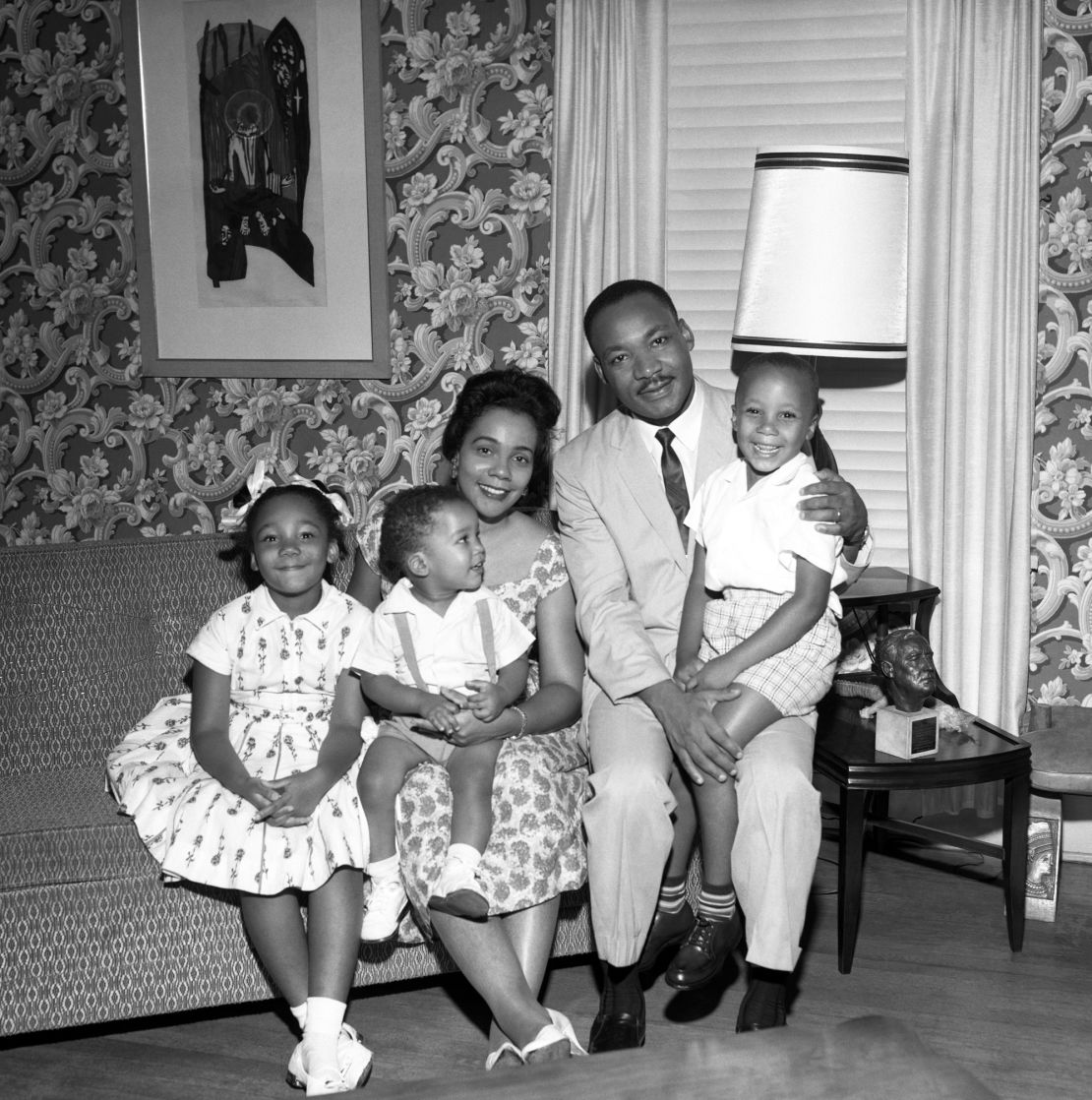
Martin Luther King Jr. poses for a family portrait with his daughter Yolanda Denise King, son Dexter Scott King, his wife Coretta Scott King and son Martin Luther King III at their home in Atlanta in July 1962.TPLP/Archive Photos/Getty Images
Dexter’s career has intertwined with his father’s legacy, cowriting a book, “Growing Up King: An Intimate Memoir,” and even acting as his father in a 2002 film, “The Rosa Parks Story.”
In addition to continuing his father’s civil rights work, Dexter was a vocal vegan and advocate for animal rights throughout his life. In a 1995 interview with The Vegetarian Times, he said his diet was an extension of his nonviolent beliefs. “There is a connection between how you live life and how you treat others,” he told the magazine. “It starts with the individual.”
This story has been updated with additional information.
Share https://www.wyff4.com/article/south-carolina-truck-driver-chicken-sting-heist/45972360

Updated: 11:17 PM EST Nov 28, 2023Infinite Scroll Enabled
Social Media Executive Producer
https://imasdk.googleapis.com/js/core/bridge3.614.1_en.html#goog_485882284
The latest breaking updates, delivered straight to your email inbox.Your Email AddressSUBMITPrivacy Notice
SUMTER COUNTY, S.C. —
A truck driver carrying a load of chickens from South Carolina to Georgia has been arrested and charged with a chicken heist, according to officials.
Christopher Thomas, 55, of Florence, was hired by Pilgrim’s Pride to deliver approximately 41,000 pounds of frozen chicken valued at approximately $80,000 to two locations in Milton, Georgia, according to the Sumter County Sheriff’s Office.
Advertisement
Investigators believe Thomas sold part of the load of chicken he was transporting in various locations, and they believed he was in the process of selling more when deputies performed a traffic stop on Saturday.
With the help of a tip, a Sumter County Sheriff’s Office investigator was able to arrest Thomas with the assistance of a Lee County Sheriff’s Office investigator and Lee County deputies.
Following the tip, deputies went to where Thomas had agreed to meet a buyer.
For more news, weather 24 hours a day- Download the WYFF News 4 app: Apple | Google Play
When Thomas arrived, deputies turned on their blue lights for the traffic stop.

Teens order pizza to vacant SC apartment; then shoot, kill delivery driver, police say
After confirming that the truck and its contents was the truck in question, Thomas consented to a search of the truck.
Investigators found pallets inside the truck loaded with cases of the stolen frozen chicken from Pilgrim’s Pride, officials said.
Thomas was arrested and charged with breach of trust with fraudulent intent of a value of $10,000 or more.
He was arrested with about seven pallets loaded with 215 cases of chicken weighing 8,000 pounds remaining from the 41,000 pounds he started with, officials said.
They believe Thomas sold about 33,000 pounds of chicken.
Thomas was taken to the Sumter County Sheriff’s Office Detention Center and is being held on $50,000 bond, officials said.
If found guilty, Thomas can spend up to 10 years in prison.