Hunter injured in hand, chest after accidental shooting, officials say
Reply

Some 20.9 million birds were culled in infected domestic flocks from October through December to prevent the spread of highly pathogenic avian influenza (HPAI).
By Staff Author
and
https://www.agriculture.com/nearly-80-million-birds-die-in-almost-two-years-of-bird-flu-8422689
Published on January 5, 2024
:max_bytes(150000):strip_icc():format(webp)/Chickens-poultry-farm-GettyImages-172865885-58b6ffe75f9b58604670f80c.jpg)
One-fourth of U.S. losses to bird flu in outbreaks that began in early 2022 were recorded in the past three months, when the viral disease staged a resurgence, according to USDA data released on Thursday. Some 20.9 million birds were culled in infected domestic flocks from October through December to prevent the spread of highly pathogenic avian influenza (HPAI).
Bird flu hit egg farms so severely in 2022 that egg prices soared 32% above the 2021 average, the largest increase for any of the food categories tracked by the USDA during a year of high food inflation. With flocks rebuilt, egg prices rose only marginally in 2023 and are forecast to fall 12% this year.
“HPAI was confirmed in egg layers in November 2023 for the first time since December 2022. Price impacts of the outbreak will be monitored closely,” said USDA economists two weeks ago.
A total of 79.7 million domestic birds, mostly egg-laying hens and turkeys being raised for human consumption, have died from HPAI or in eradication efforts since the first confirmed outbreak on Feb. 8, 2022. Since then, the disease has been confirmed in 1,059 flocks in 47 states. Because bird flu can wipe out a flock quickly, standard practice for agricultural officials is to kill all the birds in an infected flock and monitor nearby farms in an effort to prevent the spread of the virus.
Some owners of large poultry operations have received millions of dollars in indemnities for the loss of flocks due to HPAI in 2022 and 2023. Rembrandt Enterprises in Iowa received $17.3 million, Cold Spring Egg Farm in Wisconsin received $12.1 million, and Sunrise Farms in Iowa received $6.6 million, according to California veterinarian Crystal Heath, who filed a public records request for the information. “Killing animals is big business — a big taxpayer-subsidized business. You are paying for it whether you eat animals or not,” said Heath on social media.
USDA press aides were not immediately available to discuss HPAI indemnities or modifications to the department’s HPAI database, which is now focused on recent outbreaks, especially those occurring in the past 30 days.
“While it also includes summary data compiled since the outbreak began, looking at cases confirmed over the last 30 days provides the best picture of how the virus is currently impacting U.S. birds,” said the Animal and Plant Health Inspection Service, which compiled the database. “We expect the number of cases to ebb and flow as the level of virus continues to change in different areas based on wild bird movement.”
HPAI is most prevalent during the cold months. Officials say the disease is spread by migratory waterfowl. They advise owners to keep their flocks away from wild birds and to follow biosecurity practices, such as changing footwear, to prevent accidental contamination of bird housing. The ongoing HPAI outbreak is the worst U.S. animal disease event ever and is far larger than the 2014-15 outbreak that killed 50 million birds in commercial flocks.
The cultural forces that fueled our success now threaten to end it.
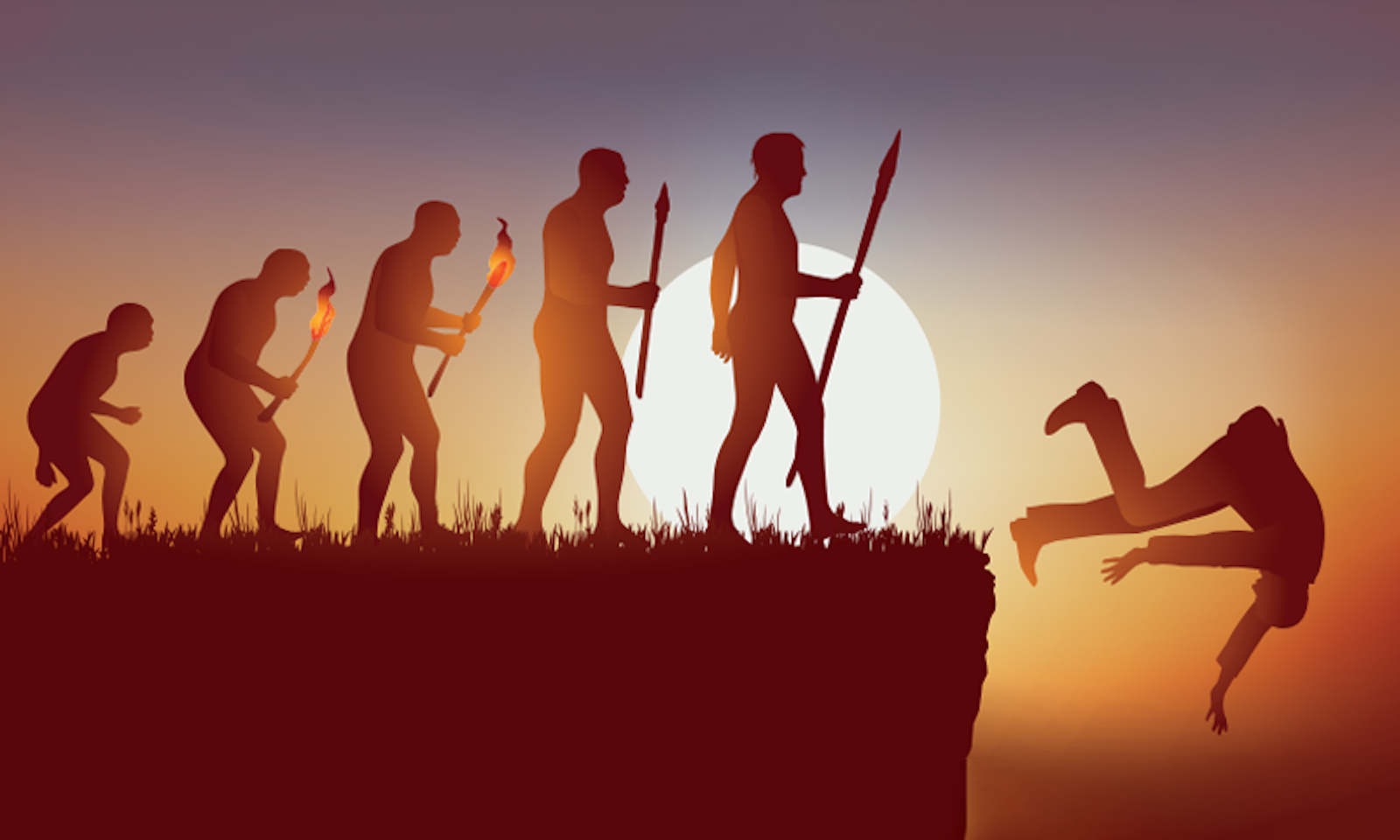

Evolution has led humans into a dark corner, according to a new study. We bonded into groups to solve local problems. Sometimes we shared our solutions with neighboring groups, and they shared theirs with us. The spread of knowledge was a good thing. Culture led to cooperation.
But the scale and impact of human groups has kept growing, and the finite resources of Earth have not. Competition for resources has escalated, and global governance doesn’t appear to be in our nature. The authors’ conclusion is not a hopeful one: “Ours is a bleak reading of the possibilities of the future of environmental management and human evolution on Earth.”
https://imasdk.googleapis.com/js/core/bridge3.609.1_en.html#goog_1235269150
4.2M
278
Behind the FDA Panel Endorsements of the Moderna, J&J Boosters
Next
Stay
Nautilus Members enjoy an ad-free experience. Log in or Join now .
I asked Tim Waring of the University of Maine professor, a coauthor of the study, what gives.
As you say in your paper, over the past 100,000 years or so, human adaptation to the environment has been driven by culture. How has this contributed to our current predicament?
ADVERTISEMENT
Nautilus Members enjoy an ad-free experience. Log in or Join now .
In order to understand how the Anthropocene could emerge from an evolutionary perspective, you look at the span of human history, and you have to ask the question: What makes us unique?
We see two strong themes. One is culture, our ability to react to the environment, and then to pass on the socially learned information or behavior we’ve accumulated, to modify and improve it, test it, and pass it on again. So that gives us cultural inheritance, which we have used to adapt more rapidly to the environment than other species.
The second major theme is that we don’t just adapt individually, we do it in groups. Because of the way we share information and cooperate, we’re really good at exploiting our shared knowledge as a group to do better than other species can. To not just capture one buffalo, but capture many. To divide up our labor and do agriculture.
Humans come preloaded genetically and culturally with the willingness to go in on risky endeavors.
ADVERTISEMENT
Nautilus Members enjoy an ad-free experience. Log in or Join now .
Why can’t we use this capacity to transcend the current crisis?
My previous research—and my research generally—focuses on trying to understand when humans come together to share limited environmental resources. We do that all the time. In fact, that is one of the ways that I argue we’ve dominated the planet. But one of the common factors that determines whether we will succeed at solving environmental challenges, according to my prior research, is scale. The resource in question has to be available at a scale where a group of humans can manage it. If it’s too big, we fail. So, for example, ocean fisheries are too big for any one individual nation to control because they are global and every other nation is also harvesting them.
Another factor that has historically made it possible for us to solve environmental challenges is that many individual populations are separately trying to solve the problem at the same time. So one group fails and another group succeeds or succeeds a little bit, and other groups observe this, so we can learn and adapt culturally as a group from the solutions that are out there and improve on them. For example, our modern systems of canal irrigation and reservoirs, with complex dams and gates, didn’t emerge overnight. Some groups copied what other groups had done and improved it and improved it again over a long, long period of time. But there is only one global system on Earth.
Another major challenge is that if you look at managing the biosphere, it’s an extremely complicated thing to do, really technically demanding and complex. But we don’t have a global society or government than can manage it. If we wanted to tax carbon globally, there’s no government that can say, “Yeah, we’re taxing carbon globally.”
ADVERTISEMENT
Nautilus Members enjoy an ad-free experience. Log in or Join now .
Is there anything that gives you hope that we can break out of this evolutionary trap?
Even though the cooperation dynamics do not look good, the fact is that humans come preloaded genetically and culturally with the willingness to go in on risky endeavors with groups of people and to cooperate with them even when the outcome is unknown. We do that again and again. We’re also pretty intelligent. But we have to solve this on the first go, and usually it takes us multiple tries to solve big environmental problems.
We don’t have time for multiple tries.
We don’t have enough time. And we don’t have neighboring planets to learn from. If we were able to look at Mars and say, “Wow, Mars did a terrible job with their atmosphere, let’s not do that,” that would really help. 

