Female hunters share tales of sexism
Reply

Posted December 22, 2023 | Reviewed by Lybi Ma
“The message we are getting is that if we don’t take care of nature, it will take care of us.” —Elizabeth Maruma Mrema, deputy executive director of the United Nations Environment Programme

Source: By Pixabay on Pexels
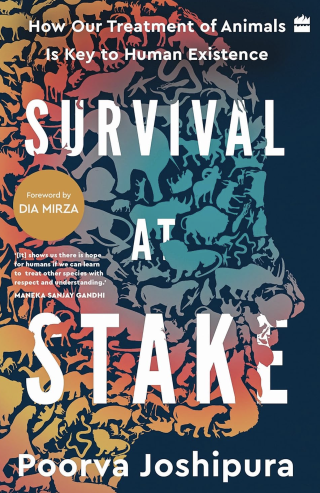
There is no doubt that human animals and nonhuman animals share numerous common traits and that the well-being of both are closely connected.1 Poorva Joshipura’s book Survival at Stake: How Our Treatment of Animals Is Key to Human Existence examines this connection. Many of us agree with her view: “If we reject speciesism—the belief in human superiority—and accept that we are animals, too, irrevocably interconnected to other species, from the largest elephant to the smallest bee, and a part of, rather than holding dominance over, nature, we can take the necessary steps towards the betterment of all the planet’s inhabitants.” What harms “them” (nonhumans) harms us.
Marc Bekoff: Why did you write Survival at Stake?
Poorva Joshipura: While things are changing, when I tell people I help animals, their common response is that we should tackle human problems first. I believe animals are inherently worthy of respect. But with each question I have answered, I have been reminded that many people do not realize that the well-being of humans and other animals is intertwined. That’s the gap in understanding Survival at Stake seeks to fill.
Source: HarperCollins Publishers With Permission
For example, animal agriculture is driving the climate catastrophe along with various forms of pollution and antibiotic resistance, SARS originated in a wildlife market as COVID-19 likely did, and HIV and Ebola are thought to have been transmitted to humans who hunted other primates. Now, law enforcement experts tell us cruelty to animals is often a precursor to rape and other violent crimes against humans.
We have limited time to effectively change our current damaging course.
MB: How does your book relate to your background and general areas of interest?
PJ: I have worked in different capacities for various People for the Ethical Treatment of Animals global entities for nearly a quarter of a century. This has included work in the US, UK, Europe, India, and Jordan. It has also involved working as an undercover investigator, mainly visiting facilities using animals for food and experimentation.
article continues after advertisement
Survival at Stake is my second book. My first book, For a Moment of Taste, describes in detail how animals in India specifically are treated for meat, eggs, and dairy. Per UN estimates, India was set to overtake China in April 2023 as the world’s most populous country. According to a recent report, 38 percent of Indians are vegetarian, but that still leaves an enormous population larger than the size of almost every country that eats meat, and most consume dairy.
MB: Who do you hope to reach with your book?
PJ: I suggest what governments and industries should do to be more at peace with nature for everyone’s sake. They must recognize and demonstrate through their policies and decisions that humans, other animals, and the environment are interdependent. I could rail against the powers that be for endorsing damaging systems and policies. But governments and industries are made up of individuals; these steps focus on you and me.
While I hope to influence the decisions of policymakers and corporate CEOs, this is for individuals—what individuals can do to help animals, thereby helping ourselves. The simplest and most important action of which is treating animals as we would like to be treated ourselves.
MB: What are some of the major topics you consider?
PJ: Our treatment of animals is linked to key crises affecting us today like pandemics and epidemics, climate catastrophe and pollution, antibiotic resistance and other threats to public health, and even violent crime. We too are animals.
Today, ethologists confirm many resemblances between humans and animals, from whales to even invertebrate creatures like bees. They describe these and other animals as sentient, intelligent beings who express emotional states.
Research reveals that bees appear to dream, chickens are clever and even cunning, pigs can be taught to play video games, and fish form friendships. Animal behaviorists also tell us that cows grieve and that octopuses experience emotional pain and videos on the internet show that dogs risk their own lives to save that of a loved one.
By establishing similarities between humans and animals, I hope readers will be less surprised that the well-being of animals is intertwined with our own.
MB: How does your book differ from others that are concerned with some of the same general topics?
PJ: News of how animal agriculture worsens the climate crisis hits the headlines although it should do so far more often considering what’s at stake. Survival at Stake takes a comprehensive approach toward how our treatment of animals affects us. That is, not just for food, but for other uses like clothing, experimentation, and entertainment.
article continues after advertisement
MB: Are you hopeful that as people learn more about the plight of other animals, we can treat them with more kindness, compassion, dignity, and respect?
PJ: I certainly am. I believe all animals have an inherent worth—but animal rights also matter as do human rights and planetary health. As Elizabeth Maruma Mrema, deputy executive director of the United Nations Environment Programme, said in response to the COVID-19 pandemic, “The message we are getting is that if we don’t take care of nature, it will take care of us.”
References
Poorva Joshipura is the author of For a Moment of Taste: How What You Eat Impacts Animals, the Planet and Your Health (2020). She is the Senior Vice President of International Affairs for People for the Ethical Treatment of Animals (PETA) Foundation UK, through which she oversees numerous global PETA entity operations and projects. She is the former chief executive officer of PETA India and the former director of PETA UK. Early in her career, she also worked in various capacities for PETA US. She is a member of the board of directors for PETA India and the former co-opted member of the government body Animal Welfare Board of India. (Also see.)
1) One of the major goals of the One Health initiative is to have people recognize the close connection between our treatment of other animals and our health. “One Health is a collaborative, multisectoral, and transdisciplinary approach—working at the local, regional, national, and global levels—to achieve optimal health outcomes recognizing the interconnection between people, animals, plants, and their shared environment.” Also see Saving Animals, Saving Ourselves: What Harms Them Harms Us.

More than 2 million birds in California were euthanized during the week after their flocks became infected with avian influenza, according to USDA data from Dec. 13-19.
The outbreaks nearly doubled the number of birds affected in backyard and commercial flocks in California.
Detections of highly pathogenic bird flu were made in seven separate instances during that span.
The largest was on Dec. 13 at a Merced County commercial egg operation, where 1.36 million birds were killed.
Other detections in California, according to state and USDA data were: a Merced County commercial broiler production on Dec. 13 (183,100 birds); a San Joaquin County commercial duck breeder on Dec. 13 (6,000 birds); a Sonoma County commercial table egg layer facility on Dec. 18 (498,000 birds); a Sonoma County poultry flock on Dec. 18 (39,000 birds); a Sonoma County duck meat farm on Dec. 19 (3,500 birds); and a backyard non-poultry flock in Lassen County (30 birds).
During the same week, Idaho had one instance of avian influenza, on Dec. 15 in Latah County, where a backyard chicken flock of 200 birds was euthanized.
Oregon also had one instance, in Clatsop County on Dec. 14, with 30 non-poultry birds in a backyard flock.
Benton County, Oregon also had a recent detection in a non-poultry backyard flock of about 50 birds on Dec. 20.
Washington had no new cases of avian influenza during the week of Dec. 13-19.
California also had two outbreaks recorded on Dec. 20, according to the USDA.
Digital subscription only $5/mth
One was a commercial table egg layer with 243,000 birds, and the other was a commercial turkey meat farm with 74,000 birds. Both were in Merced County.
Highly pathogenic avian influenza has been spreading across the world since February 2022 and is widespread in wild birds.
Since the start of the global outbreak, California has had 4.55 million birds euthanized in 55 instances of bird flu in flocks — 33 in commercial operations, and 22 backyard flocks, according to USDA data as of Dec. 21.
Washington has had 1.02 million birds killed after detections of avian influenza in one commercial operation and 44 backyard flocks.
Oregon has had 756,000 birds euthanized, with infections in two commercial entities and 35 backyard flocks.
Idaho has had 10,500 birds killed and bird flu has been detected in one commercial flock and 34 backyard flocks.
According to USDA figures on Dec. 21, 77.2 million birds have been affected by avian influenza detections in 1,044 flocks in 47 states. Of those, 441 flocks have been commercial operations.
Avian influenza does not affect poultry meat or egg products, which remain safe. HPAI is also considered low risk to human health, according to the U.S. Centers for Disease Control.
According to the World Health Organization, the avian flu outbreaks pose ongoing risk to humans as the virus has infected mammals more closely linked to people than birds.
Woman dies within a week of falling sick, as Cambodia faces a spike in avian influenza in humans after an eight year hiatus
Sarah Newey, GLOBAL HEALTH SECURITY CORRESPONDENT, IN BANGKOK and Mech Dara IN PHNOM PENH21 December 2023 • 12:41pm

Chem Seavmey’s family are still in shock. One Sunday morning, the 21-year-old woke up slightly breathless, struggling with a fever and cough. A week later, she was dead.
“I did not expect this, it was so quick,” Chem’s brother-in-law, Sok Reth, told the Telegraph. “She just got worse and worse … Although the doctors tried to help, she still passed away. I am very, very regretful and sad … it was too quick for us.”
On November 26, at a hospital in the capital city three hours from home, Chem became the third person to die from bird flu in Cambodia this year. The country has seen a spike of infections after an eight year hiatus, with six of the 12 human H5N1 cases detected in 2023 reported here, according to the World Health Organization.
“Southeast Asia has always been a bit of a hotspot… but it’s hard to say why Cambodia has seen cases this year,” said Dr Bolortuya Purevsuren, an avian influenza expert at the World Organisation for Animal Health in Bangkok. “Any new human case is always a concern, wherever it unfolds.”
These cases hold crucial clues for scientists and health officials analysing pandemic threats. Tracing how Chem caught H5N1 can help sculpt strategies to reduce the likelihood of future spillovers, while scrutinising samples of the virus that killed her allows virologists to track how the pathogen is changing – and whether the threat to humans has risen.
“Will bird flu cause the next pandemic? Who knows,” said Dr Purevsuren. “But it’s critical to have strong surveillance to monitor trends in wild birds and poultry, quickly identify signals of cases in humans, and then investigate every one that is detected.”

It was infected poultry that passed H5N1 to Chem – a “gentle, quiet” person who loved reading and playing with her nieces and nephews – according to interviews with her family, local officials and epidemiologists.
The 21-year-old, who was also a keen cook, lived with her sister’s family in Dang Tong district in southern Cambodia, some 80 miles south of the capital Phnom Penh and close to the border with Vietnam.
In early November, ducks and chickens in Chem’s village suddenly started to drop dead. Unaware it was bird flu which killed them, eight of the families which lost poultry shared the carcuses with their neighbours to eat.
“They did not inform us about the deaths because it seemed normal to them,” said Ney Norn, a village leader. “They have not heard about [bird flu] for so long and do not pay attention to this disease, so they eat them.”
Among those affected were Chem’s neighbours. While they buried the smaller birds, they kept and shared the larger chickens for food because they “did not want to waste them”, according to Chem’s brother-in-law, Mr Reth.
He’s not exactly sure when – Mr Reth and his wife often work in the capital Phnom Penh – but Chem was given, cooked and ate one of these chickens. Soon, she fell sick.
Initially, Mr Reth didn’t think much of it; Chem had a history of underlying respiratory issues. Usually “she got medicines and recovered quickly… but this time it was different”.
According to a WHO situation report, the 21-year-old developed symptoms including a cough, fever and shortness of breath on November 19. She was sent to hospital in the capital four days later as her condition deteriorated. There, she tested positive for H5N1.
“It is likely that she was heavily, heavily exposed to the virus,” said Professor Munir Iqbal, head of the Avian Influenza Virus group at the Pirbright Institute in the UK, who’s team sequence human samples from across the globe. “People are regularly exposed to H5N1, but cases where people become sick are still rare. Viral load is a significant factor.”

Across the globe, 882 people have contracted H5N1 avian influenza since 2003, including 461 who died. For the last few years, human infections have actually been relatively limited – 2023 has seen the highest toll since 2016, though the total remains far lower than the 145 cases detected in 2015, a record high.
But for Chem’s family, the diagnosis was a shock.
“We had very difficult feeling and did not expect this disease because it has never happen in this area,” said Mr Reth.
“[Chem had] hesitated to go to hospital [because] she was afraid of needles… but then [when she arrived] the doctor told us that it is a very helpless situation, because the virus has eaten a large part of [the] anatomy of lungs. He [said he] would try his best to treat her [and] we spend everything to treat her.
“But since we arrive at the hospital, doctors could not help her. She died like we all fall asleep,” Mr Reth added. “We miss her … I am full of regret about losing [my sister-in-law].”
Chem was not the only person to catch the pathogen in the village; surveillance teams deployed after her positive test result found a four-year-old also infected. On November 25 the toddler – who had a fever, cough and rash – was sent to an isolated hospital ward for treatment.
Sim Han, the village chief, said the child’s family – who lived close to Chem – had been nervous about eating the sick poultry.
“But the kid was infected because after the mother had buried the chicken, the kid went to dig it up and played with it,” Mr Han said. “When the team asked the family, firstly they tried to hide it. But since the kid was also [in a] serious condition, they confessed it.”
The toddler is recovering, but the village is scarred.
“Now no one dares to eat [sick poultry], and they only bury or burn them,” said Mr Han.
So far in Cambodia this year, despite a major scare in February, there have been no signs of human to human transmission. Instead, experts say these cases and deaths reiterate the need to focus on public education – especially in rural regions and backyard farms.
“The cases all had contact with infected birds,” said Dr Purevsuren. “It shows the importance of biosecurity on commercial farms but also in backyard chickens.”
In Chem’s village, leaders said public awareness campaigns had taken place. But they have limits in rural Cambodia, where poultry is critical for both income and sustenance – culling initiatives can hit households hard.
“Often in our country when chickens get sick, [people] cook and eat them and it is fine,” said Toek Chat, a local police chief. “So some of our people are not worried about this… they [are] hesitant to cooperate with us to eliminate their chicken. It is very difficult for our people, because they do not want to kill their chickens.”
Since the village confirmed cases, though, there has been little opposition. Local health officials have sprayed disinfectant across the area, burned and buried hundreds of birds, and launched a renewed public health education campaign.
Others said the rapid detection and response also shows the surveillance system is working.
“We do not know why there is an increase in cases,” said Dr Filip Claes, a member of the Emergency Center for Transboundary Animal Diseases at the Food and Agriculture Organization, based in Bangkok.
“But it still happens around the major festivals in Cambodia, a time where we know the exposure to poultry increases,” he told the Telegraph. “Detection [and] surveillance systems [may] now be better at picking up cases.”
Across the globe, there have been concerns this year that the enormous recent outbreak in wild birds and poultry could provide new opportunities for the highly pathogenic H5N1 strain to mutate to better infect humans – especially because mammals from elephant seals in the Antarctic to mink in Spain have died.
But in Cambodia, it is a slightly older strain of H5N1 that has been circulating, said Prof Iqbal. And so far, analysis has picked up no signs that the virus has shifted to become more transmissible in humans.
“Current evidence does not show that the virus can infect humans, in Cambodia or elsewhere,” he said.
“But tomorrow? You never know, the virus may change. Which is why we have to report these cases and analyse these cases closely.”
Protect yourself and your family by learning more about Global Health Security
Zoe Rosenberg and Raven Deerbrook are charged with conspiracy and trespassing. The case involves a June 12 incident at Petaluma Poultry.| 12
Animal welfare activist Zoe Rosenberg is arrested on a warrant by Sonoma County sheriff’s deputy Joel Auerbach, after a rally and subsequent march in response to the sentencing of animal welfare activist Wayne Hsiung in Sonoma County Superior Court in Santa Rosa, Thursday, Nov. 30, 2023. (Kent Porter / The Press Democrat)
Gift this articleto a friend
THE PRESS DEMOCRAT
December 22, 2023, 1:20PM
Updated 8 hours ago
A judge ordered an animal welfare activist Friday to stay away from three Sonoma County poultry farms and upheld stricter conditions imposed on a co-defendant in a trespassing case that arose as avian bird flu spread across the region.
Judge Karlene Navarro ordered Raven Deerbrook to stay 100 yards from Petaluma Poultry, Reichardt Duck Farm and Sunrise Farms, all in southern Sonoma County.
Deerbrook could also be subjected to search and seizures, but won’t wear an ankle monitor like her co-defendant, Zoe Rosenberg, who also appeared in court Friday.
Deerbrook’s defense attorney Evan Zelig argued Rosenberg is a member of Direct Action Everywhere, the animal welfare group at the center of the alleged incursions. Deerbrook, however, is just an associate and has cooperated with officials to attend court proceedings.
“She has been to court. She will continue to come to court if required to do so,” Zelig told Navarro.
Each defendant is charged with five felony counts of conspiracy and one misdemeanor count each of trespassing, petty theft and tampering with a vehicle related to a June 12 incursion at Petaluma Poultry.
ADVERTISEMENT
Join the conversation
Have your say.Leave a comment below and let us know what you think.
https://imasdk.googleapis.com/js/core/bridge3.609.1_en.html#goog_1970670102
Neither has entered a plea in the case. Their next court appearance is Jan. 19
Rosenberg’s attorney, Kevin Little, argued Friday she poses no public safety risk and the ankle monitor is unnecessary.
“Clearly, Miss Rosenberg is not a flight risk,” he told Navarro, who later said conditions could be revisited in 90 days or following a preliminary hearing.
Sonoma County Deputy District Attorney Matthew Hobson disagreed. He stressed both defendants are linked to DXE, which has targeted local poultry farms with demonstrations, including organized incursions, “and will not stop.”
Defendants and their supporters argue they are rescuing birds from farms where they allege the conditions are inhumane. They justify their aggressive approach by citing California law that allows animals in distress to be rescued.
Hobson said Rosenberg trespassed onto Reichardt Duck Farm in November even as DXE’s co-founder, Wayne Hsiung, stood trial in a conspiracy and trespassing case involving Reichardt and Sunrise farms.
“It’s a slap in the face,” Hobson told Navarro.
Friday’s case relates to an alleged incursion on June 12, but prosecutors say strict release conditions are necessary because activists routinely come onto properties.
Concerns about any future demonstrations have been heightened in the county’s poultry belt amid the rapid spread of deadly bird flu in the region.
Since Thanksgiving, nearly 1.1 million birds in Sonoma County have been euthanized due to virus outbreaks on at least seven sites.
Sonoma County agriculture leaders say an incursion at one of those sites last month was within the incubation period of the virus later detected there the week of Thanksgiving. Activists have not been charged and have denied any involvement in the outbreak.
Rosenberg and Deerbrook’s defense attorneys also have batted down suggestions that either are responsible outbreaks of avian flu. The case of alleged trespassing in which they are charged was in June, months before any outbreak.
“There is no nexus whatsoever,” Zelig said.
Rosenberg was arrested Nov. 30 following Hsiung’s sentencing and last appeared in court Dec. 14, when Navarro issued the release conditions.
Also arrested on Nov. 30 were DXE members Rocky Chau and Conrad de Jesus, who were suspected of felony conspiracy and misdemeanor trespassing.
They appeared before Judge Laura Passaglia, who ordered them to return Feb. 29 to learn if their cases would be charged or dismissed.

Published on December 22, 2023
By BNO News
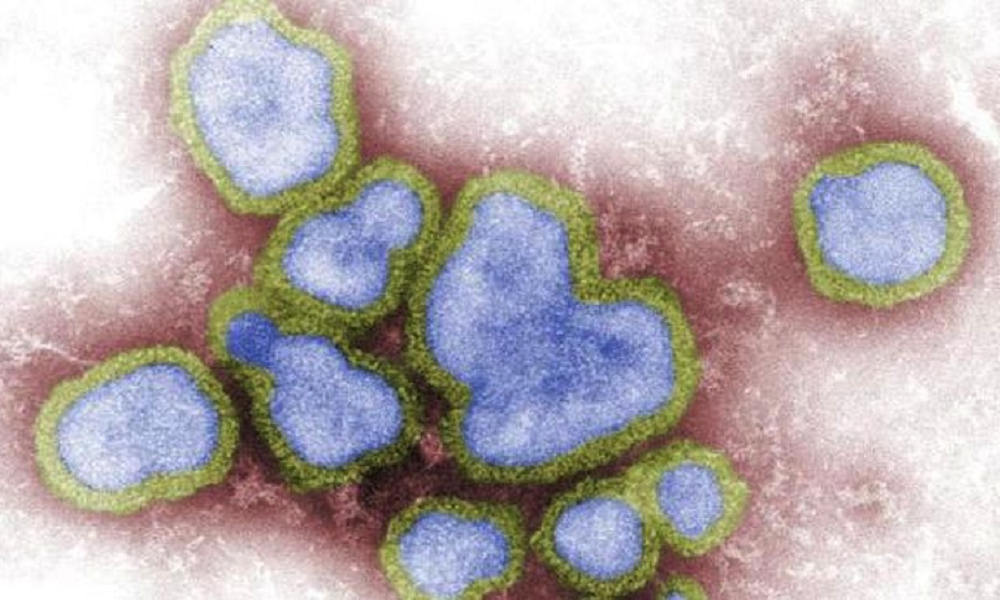
Micrograph of avian influenza, also known as bird flu (Credit: CDC/F.A. Murphy)
A woman in central China has died after testing positive for H5N6 bird flu, raising the number of human cases this year to seven, officials say. H5N6 is a strain for which experts have called increased surveillance.
The latest case involves a 33-year-old woman from Bazhong City in Sichuan province, about 1,240 kilometers (770 miles) southwest of Beijing, according to Chinese health officials.
The Chinese government often takes weeks or months to report new cases, which also happened this time.
The woman, whose identity was not released, fell ill on October 22 after visiting a live poultry market. She was admitted to a local hospital two days later and died after weeks of treatment, on November 14.
ARTICLE CONTINUES BELOW THE PLAYER
https://imasdk.googleapis.com/js/core/bridge3.609.1_en.html#goog_1653333851
Only 90 people have ever been diagnosed with H5N6 bird flu since the first confirmed case in 2014, but most cases were found during the past few years. Seven cases were publicly reported this year, all from China.
Click here for a list of all human cases to date.
H5N6 bird flu is known to cause severe illness in humans of all ages and has killed at least 39% of those infected, including children and young adults. The outcome in most of the other cases remains unclear as only nine people are known to have recovered.
There are no confirmed cases of human-to-human transmission though a woman who tested positive in 2021 denied having contact with live poultry.
1 of 6


Hunting with hounds was once an integral part of country life across the UK


The well-organised saboteurs use radios and satellite mapping to follow the hunts


Saboteurs try to distract the dogs with loud cries and by spraying lemongrass to confuse their sense of smell


Even drones are used


Defenders of foxhunting say it is essential to control fox numbers


Trail hunting, where hounds follow a scent, has been banned in Scotland and England and Wales may follow
Emerging from woods in a quiet corner of rural England, a small band of anti-foxhunting campaigners have just one goal: to confuse the pack of dogs chasing a fox and prevent its death.
These “hunt saboteurs” regularly gate-crash meetings across the country in what has become a fierce clash of cultures.
“Kermit to Animal, are you receiving?” crackles the radio from one old Toyota 4X4 to another, each with their own codename.


Savings Pro
![Exotic Rice Hack Torches Belly Fat [Like Magic]](https://images.revcontent.com/revcontent/image/fetch/f_jpg,q_50,h_315,w_420,c_fill,g_faces:auto/pg_1/https://media.revcontent.com/content/images/6584ec38a8ca07-03640117.jpg)
doctors-health-quest-secrets

Daily News

Dotmalls

Dr. Kellyann
The field sport of foxhunting, in which a pack of hounds chases and kills a fox accompanied by riders on horseback, was once an integral part of country life.
But the use of dogs to hunt wild animals has seen outlawed in England and Wales since 2004.
Trail hunts, which allow packs of dogs to follow a route artificially laid with fox scent, are allowed.
But critics say they are used as a cover for fox hunts to continue as before.
They say dogs still chase and kill live animals on these hunts, with organisers then claiming it was accidental.
Hunters counter that they comply with the law and that it is the saboteurs who are illegally interfering with their monitoring activities.
Today the saboteurs’ target is the Thurlow Hunt in rural Suffolk, eastern England.
Armed with maps on their phones and drones overhead, around 20 saboteurs exchange information over their radios about the position of the riders, taking care not to risk driving the fox back towards the pack.
Spotting a saboteur, one rider — dressed in a traditional red huntsman’s jacket — looks unhappy and turns back.
The barks of the dogs echo in the distance and hunt members including children on ponies gallop past.
“We don’t want to lose sight of them,” says Angela Vasiliu of the North London Hunt Saboteurs.
The saboteurs try to distract the dogs with loud cries and by spraying lemongrass to confuse their sense of smell.
If they fail to put them off and a fox is killed, at least they hope to gather evidence for prosecutions under the 2004 law.
Video taken by the hunt saboteurs led to the conviction of one member of the Thurlow Hunt in 2019, with the footage showing hunt members and saboteurs fighting over a fox’s remains during the traditional Boxing Day hunt on December 26, 2017.
Despite the ban, hunt saboteurs like Philip Walters insist that foxes are still being illegally hunted.
A senior police chief earlier this year said he believed unlawful foxhunting was “prolific” in the UK.
Matt Longman, the national police spokesman on foxhunting, even urged police forces to work with “volunteers” monitoring hunts to learn how to gather the sort of evidence that leads to successful prosecutions.
The Thurlow Hunt association stresses that it only “conducts lawful trail hunting activities to comply with the Hunting Act and constantly assesses its procedures to ensure best practice is carried out”.
And it complains of harassment and false accusations by the saboteurs, calling them “animal rights extremists”.
In Scotland, the devolved government in Edinburgh this year introduced a ban on trail hunting.
The UK’s main opposition Labour party has pledged to follow suit in England and Wales if it wins the next general election.
Clashes between hunt members and saboteurs can often turn ugly — with accusations from both sides.
“Why, when hunt saboteur monitors turn up, are some hunts so violent if they haven’t got anything to hide?” asks Walters, also from the North London group, who says he has received death threats.
“I’ve had dead rats sent to me in the post, I’ve had dead foxes left on my car’s windscreen,” he said.
According to Polly Portwin, campaign director at the Countryside Alliance, which works to protect rural traditions, around 25 hunts out of the 200 that are active are being targeted by saboteurs, who claim 600 members.
Defenders of foxhunting say it is essential to control the number of foxes in the countryside and is more humane than shooting or poisoning.
After hours running through muddy woods, paths and fields, the saboteurs in Thurlow finally take a rest and restore their flagging energy levels with vegan sausage rolls and chocolate brownies.
They say they saw six or seven foxes that day but are hopeful they fulfilled their mission — to make sure that no fox is killed – because they did not see any dog with traces of blood on it.
spe/gmo/har/phz/gv

(Photo by Amy Macleod courtesy of Glacier National Park Conservancy)
Humans tend to see the world with mankind as the most important species on the planet.
That concept has been reinforced through any number of ancient myths, particularly one that claims humans “have dominion over” all creation.
But of course the actual “web of life” has many, many more strands than the rather newcomers of the human race. The great wisdom of the Endangered Species Act, now 50 years old, is to consider and maintain all the strands.
We have, and continue to, extirpate plants and animals for a huge variety of reasons. In the past, those reasons mostly concentrated on fulfilling the basic necessities of life as perceived at the time.
We hunted and fished for meat and hides, killed dangerous predators from fear and self-preservation, destroyed entire ecosystems to replace them with the plants and animals we desired.
Now, however, the destruction caused by the human race has gone far beyond the practices of the past. Now, we don’t extirpate entire species for our immediate needs, we extirpate them with the vast amounts of pollution we produce to fulfill desires that go far beyond our basic needs.
And that’s where the Endangered Species Act comes into play because it challenges us to consider what reasons are actually important enough to threaten, endanger and extirpate our fellow inhabitants on the planet we call home.
While Montana still has virtually all of the native species that were present when the Lewis and Clark Expedition traveled through 200 years ago, many are increasingly hanging on by an ever-thinner thread.
The fluvial Arctic grayling that once populated the entire Upper Missouri drainage has now been reduced to a mere handful, struggling with chronic irrigation dewatering and ever warmer temperatures in their shrinking redoubt of the Upper Big Hole River. But less than 300 exist and they may not make it through another summer of low flows. Yet, due to resistance by myopic politicians, these beautiful native fish have been precluded from the protections and recovery of the Endangered Species Act.
Or how about the Glacial Stone Flies that rely on and are only found in the highest, coldest drainages of Glacier National Park whose chances of survival look grim as those glaciers disappear at an astounding rate?
Then there are wolverines, the newest addition to the Endangered Species List. What possible reason could humans have for continuing to trap and kill wolverines? We surely don’t eat them and the concept of trapping and killing species on the brink of extinction merely for their fur should be left in the dustbin of history.
Now saved from trapping, the greatest challenge for wolverines — and the rest of us — is the climate crises ravaging the planet. Wolverines need deep snow in which to build their dens, store food and raise their kits. And as is all too evident, humans have utterly failed to heed the decades old warnings from scientists that our atmospheric pollution is out of control and the impacts are stacking up faster than ever.
The examples are legion — in the forests, mountains, rivers and oceans species are disappearing as what has been called “the Sixth Great Extinction Event” continues at an accelerating pace.
In the end, it comes down to the “web of life.”
Our arrogant and ignorant politicians falsely believe humanity can continue to survive without all the other strands.
But it’s increasingly clear that as go the endangered species, sooner rather than later, so, too, go we — which is why the Endangered Species Act is more important and necessary now than ever.
George Ochenski is a longtime Helena resident, an environmental activist and Montana’s longest-running columnist.

