Default Mono Sans Mono Serif Sans Serif Comic Fancy Small CapsDefault X-Small Small Medium Large X-Large XX-LargeDefault Outline Dark Outline Light Outline Dark Bold Outline Light Bold Shadow Dark Shadow Light Shadow Dark Bold Shadow Light BoldDefault Black Silver Gray White Maroon Red Purple Fuchsia Green Lime Olive Yellow Navy Blue Teal Aqua OrangeDefault 100% 75% 50% 25% 0%Default Black Silver Gray White Maroon Red Purple Fuchsia Green Lime Olive Yellow Navy Blue Teal Aqua OrangeDefault 100% 75% 50% 25% 0%McNair has a long road to recovery and will possibly need surgery. He said he’s grateful his family knew where to find him.
“It’s always good to tell whoever you’ve got that you’re hunting with or your family where you’re going. She knew where I was at and the area I’d be at,” said McNair. “And of course she also knew that sometimes I stay until it gets completely dark, and then I’ll come out.”
“So, it wasn’t nothing unusual for me to be out past dark.”
After being taken to the hospital, McNair was told he had a small brain bleed, as well as multiple broken ribs and back fractures.
His family has set up a GoFundMe to help with future medical costs. To support the McNair family, click HERE.
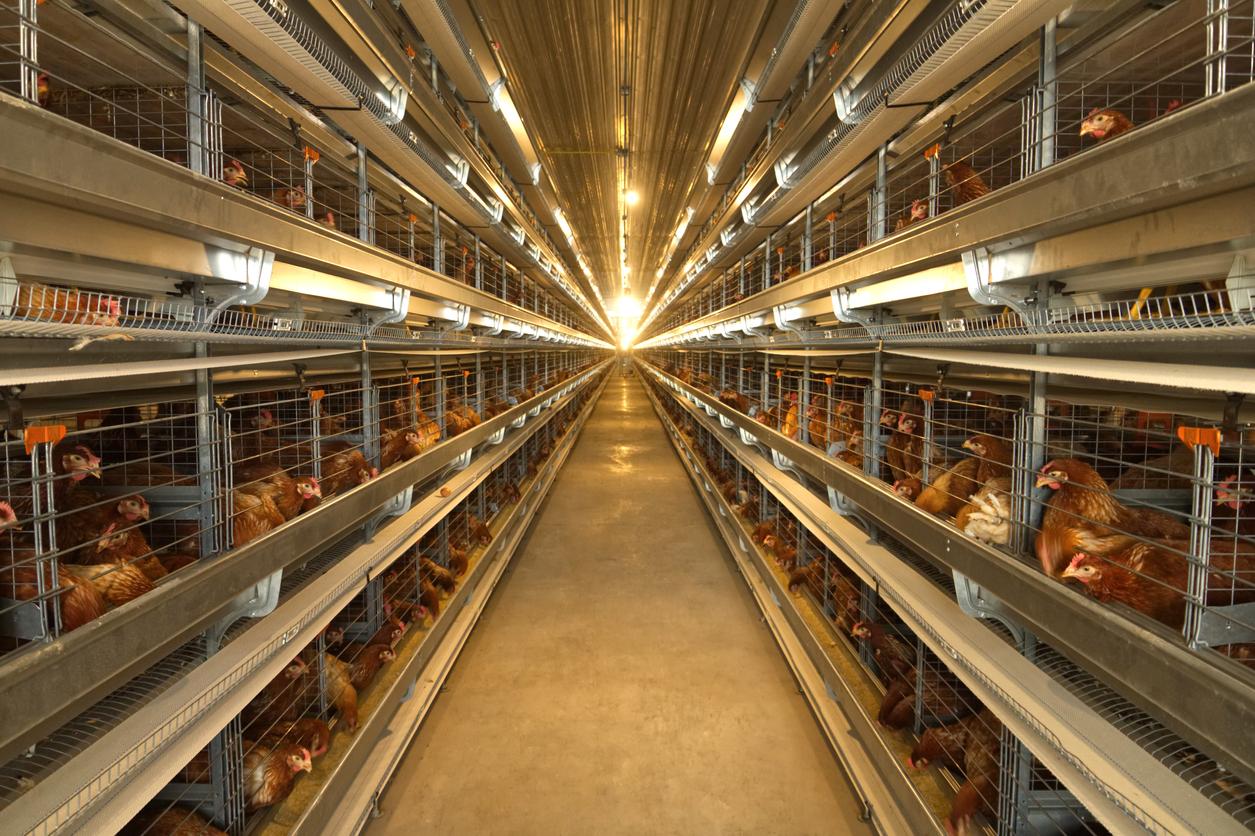
Over the past week, highly pathogenic avian flu outbreaks struck poultry flocks in 12 states, hitting seven more commercial farms, including one in California that houses more than 1.3 million layers, the US Department of Agriculture (USDA) Animal and Plant Health Inspection Service (APHIS) said in its latest updates.
Detections of the H5N1 virus started ramping up in early October, with the events exacting an especially high toll on layer facilities and turkey farms in multiple parts of the country. Last month, outbreaks led to the loss of more than 8 million birds, and so far this month poultry owners have lost more than 7.2 million birds.
Since the outbreaks began in early 2022, poultry outbreaks across 47 states have wiped out a record 75.4 million birds, according to APHIS.
Layer and turkey farms continue to feel brunt
In the most recent outbreaks, California is the latest state to report an event at a large layer farm, which occurred in Merced County. Outbreaks also struck a broiler producer in Merced County and a duck breeding operation in San Joaquin County.
Two other states reported new outbreaks involving layer farms—a location in Kansas’ Rice County that houses 700,000 birds and a site in Ohio’s Darke County that has 560,000 birds.
Minnesota and South Dakota reported more outbreaks on turkey farms, and New York reported an outbreak at a game bird producer that has 4,200 birds.
Also, seven states reported more detections in backyard flocks, including Alabama, Arkansas, Colorado, Idaho, Missouri, Minnesota, and Oregon.
More outbreaks in Asia and Europe
Meanwhile, over the past week, several countries have reported fresh H5N1 outbreaks in wild birds and poultry, according to the latest notifications from the World Organization for Animal Health (WOAH). Germany, China, and Moldova reported detections involving wild birds.
Among locations reporting outbreaks at commercial farms, Taiwan reported a detection of the 2.3.4.4b clade—currently circulating widely across multiple parts of the globe—at a layer farm. The virus also struck more facilities in Germany and Hungary.
Karen Davis died at age 79 on November 4, 2023. I lost a dear friend, but the animals lost one of their fiercest advocates and protectors ever in history. Karen was a towering one-of-a-kind combination of incredible compassion, intellect, passion, vision, and boundless energy, all coalesced into a multifaced gem of a human being. Her work changed things for animals forever, and her legacy will live on forever.
Karen was a pioneer, speaking, writing, and advocating brilliantly and effectively for chickens, turkeys, ducks, geese, and other birds, who are the most exploited and abused of all the land animals we humans torture, and kill because we like to eat their bodies and their eggs or drink their milk. In the United States alone, we kill approximately nine billion chickens for their flesh and torture 305 million for their eggs each year. Karen Davis became their champion, advocating and fighting for them as no one had ever done, publicizing and making them and their lives worthy of importance, respect, and dignity.
Karen’s own story was unique. She received a doctorate in English Literature from the University of Maryland, and a promising academic career ahead. But in one of those existential moments that can deeply unsettle us about the roles of coincidence versus fate in shaping the trajectory of our lives, an unexpected encounter with a crippled abandoned chicken changed Karen’s life forever, and the lives of countless animals. Profoundly moved by this little chicken, whom she named “Viva,” Karen gave up academia, constructed a sanctuary for rescued chickens, and founded United Poultry Concerns in 1990. She went on to become a respected expert on poultry issues, lecturing and creating podcasts, and was interviewed often in the press and on television. She wrote many books exposing the unspeakable lives and deaths of domestic fowl, with harrowing data and beautifully written biographies of these animals, and as a lover of good food and a fierce vegan advocate, she wrote wonderful vegan cookbooks as well. She testified as an expert witness, organized and led many protests and demonstrations for these birds, including at the White House. From her contact with the chickens and other birds at her sanctuary as it grew over the years, she learned and wrote knowledgeably about the personalities and high levels of cognitive and social functioning of these birds, whom she nurtured and adored. .
Karen never lost her love of literature. We would often trade stories about books we were reading, and she shared quotes from o many authors she knew and loved. Perhaps partly from her deep knowledge of literature, Karen was also a keen student of the human psyche and human behavior, as well as that of other animals, and as a psychologist and psychoanalyst, I found her insight profound. Karen knew about “absent referents,” as we erase the animal from our discourse, as if “eggs” or “milk” fall from the sky, instead of being the products of animals we torture and kill. She would point out the differing psychological impact of instead of saying we were eating “a chicken wing” or “a chicken leg” we would say, in truth, that we were eating “a chicken’s leg” or “a chicken’s wing.” Try it yourself and see the difference. In impact.
And when Karen was working on her book More Than A Meal: The Turkey in History, Myth, Ritual, and Reality, she asked my ideas on psychological factors in our traditional Thanksgiving rituals. I pointed to our eager roasting of a beheaded bird, the patriarchal positioning of the family around the turkey centerpiece, the intimations of child abuse and sexual abuse as the turkey lay on the platter, legs up, waiting to be violated, the violent carving and dismembering of a body, the normalized violence of each person spearing, cutting, chewing, and swallowing the bodies of the slaughtered birds. Karen understood all of this.
There have been many courageous figures throughout history who have advocated passionately for animals, eloquently and bravely defying the prevailing ideologies of hierarchy and domination. From Pythagoras, Plutarch, Porphyry and Ovid in Classical Antiquity on through the centuries they spoke, flowering especially in the 19th Century, when vegetarianism and anti–vivisectionism flourished through the efforts of Geroge Bernard Shaw, Mahatma Gandhi, Mary Wollstonecraft and Percy Bysshe Shelly, Henrry Salt,, Annie Besant, Francis Powers Cobbe, and others who decried the abuses of animals and advocated for their rights. If our planet survives to have a history written in the future, Karren Davis will be up there with them, as a human being of enormous courage, often braving ridicule and mockery, who defied the cruel prevailing ideology of human domination, breaking new ground to fight fiercely and passionately on behalf of the voiceless for what is right and moral.
United Poultry Concerns will continue and carry forward Karen’s magnificent work: https://www.upc-online.org/
Deborah Tanzer, Ph.D. is a psychologist and psychoanalyst in New York City. She is the author of Why Natural Childbirth? A Psychologist’s Report on the Benefits to Mothers, Fathers, and Babies, and has written widely on psychoanalysis, feminism, social justice, and animal rights. She is currently writing a book about the psychological connections between human violence and human treatment of animals throughout the centuries.