Scientists are sounding the alarm about a dangerous problem that will soon affect 2 billion people — here’s what to know

1.3k

Laurelle Stelle

https://news.yahoo.com/scientists-sounding-alarm-dangerous-problem-123000792.html

Sat, July 8, 2023 at 5:30 AM PDT·2 min read

As the world has gotten hotter, more people are exposed to dangerously high temperatures each year. Recent findings published in Nature Sustainability show that without policy changes, the world will heat up enough by the end of the century that more than 2 billion people will live in life-threatening hot climates, as Science Hub reported.

What’s happening?

So far, the world’s average temperature has risen by just under 1.2 degrees Celsius (about 2 degrees Fahrenheit) above preindustrial level due to human activity, according to Science Hub. The Paris Agreement — an international treaty to limit heat-trapping gases produced by each country and stop the world from getting hotter — proposed to cap the increase at 2.7 degrees Fahrenheit.

However, the new study found that with the current laws, population growth, and environmental conditions, the world will likely reach about 4.8 degrees Fahrenheit above the preindustrial benchmark, per Science Hub.

The researchers then looked at which areas would be most affected if the temperature increased to that level. They defined “unprecedented heat” zones as areas where the average temperature throughout the year, counting all seasons, is 84.2 degrees Fahrenheit or higher.

Science Hub reported that 40 years ago, only 12 million people worldwide lived in regions with temperatures surpassing that heat. Today, thanks to the warming we’ve already experienced, about 60 million people are affected.

The study found that by 2100, 2 billion out of the world’s projected population of 9.5 billion will live in areas with an average temperature higher than 84.2 degrees Fahrenheit. The most affected areas will be countries around the equator, noted Science Hub: India, Nigeria, Indonesia, the Philippines, and Pakistan.

Why is this heating worrisome?

The hotter the world gets, the more heat waves, droughts, and wildfires we experience. As Science Hub reported, studies have also linked the rising heat to everything from more contagious diseases to lower labor efficiency and more conflict between people.​

“That’s a profound reshaping of the habitability of the surface of the planet, and could lead potentially to the large-scale reorganization of where people live,” study author Tim Lenton, director of the Global Systems Institute at the University of Exeter, told ScienceAlert.

What’s being done?

Science Hub reported that if the global community reaches the goal set by the Paris Agreement, the affected population would be limited to half a billion people instead of 2 billion.

In the meantime, individuals can protect themselves from heat waves with these tips for cooling off.

Join our free newsletter for cool news and cool tips that make it easy to help yourself while helping the planet.

NOAA’s plan to slow boats ignites whale of a fight

By Rob Hotakainen | 07/07/2023 01:18 PM EDT

A North Atlantic right whale mother and calf.

A North Atlantic right whale mother and calf are seen Jan. 19, 2021, in waters near Wassaw Island, Ga. Georgia Department of Natural Resource/AP Photo

Capt. Fred Gamboa has led fishing trips off the New Jersey coast for the last 17 years, but he fears he will soon lose many customers if required to slow down his boats to meet new federal requirements to protect one of the most endangered whales in the ocean.

Gamboa, a charter boat operator from Point Pleasant, N.J., charges $4,800 to take people on an 18-hour tuna fishing trip 100 miles from shore. Under a new rule proposed by NOAA Fisheries, he’d have to travel at a top speed of roughly 11 ½ mph for part of the year, as opposed to his normal cruising speed of 30 to 40 mph.

“It would take nine to 10 hours to get out there — no customer would ever pay for that trip,” he said.

Advertisement

Gamboa, 56, and thousands of other boaters along the Atlantic coast are lobbying Congress to block NOAA’s plan. But NOAA officials say that forcing boats to slow down during certain times of the year is a matter of survival for the North Atlantic right whale, which are particularly vulnerable to collisions.

Boaters and the recreational fishing industry have flexed their political muscle by winning key allies from a growing chorus of NOAA critics on Capitol Hill, but they’re opposed by a united front of green groups that want the agency to act quickly before any more whales — there are only an estimated 340 whales now remaining — are killed by vessel strikes.

“We need seasonal slowdowns to protect right whales in danger zones, just like we have lower speed limits to protect children near schools,” said Jane Davenport, senior attorney with Defenders of Wildlife.

Gamboa said the plan makes no sense for one simple reason: With the whales rapidly disappearing, they’ve become so rare that he has never even encountered one.

Capt. Fred Gamboa.
Capt. Fred Gamboa, a charter boat operator from New Jersey, fears that new boating speed limits proposed by NOAA would hurt his business. He’s shown here with one of his catches. | Photo courtesy of Fred Gamboa

“I’ve yet to see one, and I have thousands of trips under my belt,” he said.

Gamboa said he expects Congress to stop NOAA because the plan “would just devastate the coastal economy.” Like many other boaters, he believes the odds of him ever hitting a right whale are incredibly remote.

Gib Brogan, campaign manager for the conservation advocacy group Oceana, said boaters are downplaying the overall risk to the whales.

“That may be the case for any individual boat, but if you multiply that by the number of boats that are out there, it adds up pretty quickly to an unacceptable risk,” he said.

NOAA’s proposed rule would expand on existing requirements by reducing the maximum speed limit for commercial and recreational boats of 35 feet or larger to 10 knots — or roughly 11 ½ mph — in designated zones along the Atlantic coast from Massachusetts to Florida.

The restrictions, which currently apply to boats larger than 65 feet, would be in effect for up to seven months per year in some places. But Brogan noted that nearly all of the slow zones would have no impact between Memorial Day and Labor Day, the most popular time for boating, when most of the whales are in Canada.

Those assurances have provided little solace to recreational fishermen and boaters, who fear that NOAA could impose other speed zones in the Gulf of Mexico and along the West Coast if the agency’s current plan succeeds. NOAA already is taking comments on a petition seeking a year-round 10-knot speed limit in waters along the Florida coast, in a zone stretching roughly from Pensacola to Tampa, to protect endangered Rice’s whales.

Frank Hugelmeyer, CEO of the National Marine Manufacturers Association, which represents the recreational boating industry, said the proposed rule for the Atlantic coast marked “the greatest restriction of public access to our nation’s cherished waterways in our time,” adding that it would force boaters to travel at “the speed of a bicycle.”

In defending the plan, NOAA Fisheries chief Janet Coit said there had been 14 lethal strikes since 2008, including at least five that involved boats of less than 65 feet.

Coit said the new speed limits are needed to preserve the dwindling population. The agency declared an “unusual mortality event” in 2017 after more than 20 percent of the population died, either from getting sick, injured or killed. Researchers now say the whales are dying faster than they reproduce, with fewer than 70 reproductively active females left in the population of just 340 whales.

“Vessel strikes and entanglements are driving the population’s decline — urgent action is needed to address these threats and to prevent extinction,” Coit told a House panel last month.

NOAA plans to finalize its new rule by December after reviewing more than 90,000 public comments, but environmental groups said the agency is dragging its feet.

Brogan said the speed limits need to take effect before this fall to protect the whales as they begin their annual seasonal migration. Each year, the whales move from their feeding grounds off Canada and New England, destined for the warmer waters of South Carolina, Georgia and Florida to give birth and take care of their calves before heading back north.

“The whales need protection,” he said. “And they need the protection in place before the fall, particularly to protect the mothers as they’re heading south.”

Earlier this year, Brogan said there was “blood on NOAA’s hands” after the agency rejected an emergency request to protect the whales from speeding vessels and a 20-year-old adult male whale was found dead off Virginia Beach. A necropsy later determined that the animal had died from a traumatic blunt force injury consistent with a vessel strike.

But Brogan said he believes the agency won’t let that happen again. He said NOAA’s proposed rule is based on sound science and that slowdown zones would closely follow the migratory pattern of the right whales, allowing most boaters to go faster during summer months.

“NOAA has a strong basis for action,” he said. “They’ve done their homework.”

‘High hopes for improving technology’

Close-up of a series of propeller cuts on the left side of a dead right whale calf's head.
A series of propeller cuts on the left side of a right whale calf’s head are seen. The 1-month-old calf was found dead on the beach in Anastasia State Park in St. Augustine, Fla., on Feb. 13, 2021. | Florida Fish and Wildlife Conservation Commission/Fish and Wildlife Research Institute/Flickr

Many opponents in Congress hope to put the rule on hold until NOAA finds a way to use improved technology to detect whales and avoid collisions — technology the agency says isn’t yet available.

Rep. Garret Graves (R-La.) said NOAA relied on people who are not boaters and who “don’t understand this issue” to draft the rule.

At a hearing before the House Natural Resources Subcommittee on Water, Wildlife and Fisheries in early June, he told his colleagues that he had recently gone fishing 80 miles offshore but that he wouldn’t have made the trip under the new rule.

“It would take me about seven hours to get out to this spot going at 10 knots. … What’s going to happen is that most boaters aren’t going to go,” Graves told his colleagues. “I tell you: I wouldn’t have gone out.”

Instead of slowing down all boats, Graves said NOAA should use technology that would allow “real-time monitoring” of the whales.

Coit said the agency plans to spend $82 million from funds it received under last year’s Inflation Reduction Act to expand its monitoring programs, but she said the agency currently has no such technology to do the job.

“We have high hopes for improving technology, but right this moment we don’t have existing technology that can track and monitor and detect and avoid vessel strikes sufficient to prevent the fatalities,” she said.

Rep. Harriet Hageman (R-Wyo.) called NOAA’s plan “an unprecedented attack on outdoor recreation” and said the Biden administration could better protect right whales by ending its support for wind energy.

“The construction and operation of the multiple wind energy projects in the Atlantic Ocean and their obsession with global warming will ultimately make it impossible to protect the right whales and other species because they refuse to acknowledge that their cure is not only wrongheaded but so environmentally destructive,” she said.

Rep. Anna Paulina Luna (R-Fla.) said the rule could affect up to 63,000 registered boaters and threaten 340,000 jobs.

“I think that it’s kind of an elitist perspective to propose a rule that’s going to actually hurt people,” she said, adding that “a human being is obviously more important than an animal.”

And Rep. Bruce Westerman (R-Ark.), chair of the full House Natural Resources Committee, called the rule an example of “what happens when you get a bureaucratic administrative state that’s out of control.”

“If there’s a job lost over this rule, it should be the jobs of the people at NOAA that are proposing the rule,” he said.

A day after the hearing, the plan encountered even more resistance in the Senate, when the co-chairs of the Congressional Sportsmen’s Caucus — Joe Manchin (D-W.Va.) and John Boozman (R-Ark.) — teamed up on a bill that would prevent NOAA from acting until “technological solutions” are used to better track whales.

Manchin, who’s also the chair of the Senate Energy and Natural Resources Committee, called the plan “yet another example of dangerous federal overreach that would place unnecessary burdens on our seasonal fishermen, boat manufacturers and the coastal economies that rely on them.”

On June 23, Georgia Republican Rep. Buddy Carter introduced a similar bill that would not allow NOAA to spend any money to implement its rule until technology was developed and deployed to track the whales.

Rep. Jared Huffman (D-Calif.), ranking member of the Water, Wildlife and Fisheries Subcommittee, said current federal law requires NOAA to protect the whales and that the agency doesn’t have an option to grant requests to “give us a few more years to try to figure out alternatives.”

He said NOAA could always revisit its rule if “technology ripened” in coming years.

Huffman also said he was confused “by what seems like a bit of a split personality disorder” among Republicans who want to see offshore wind development halted because of unproven concerns about seismic surveying for the industry hurting whales, but otherwise oppose efforts that could save other whales from dying.

But he said there was one important point that everyone agreed with: “No one disputes that the right whale is on the brink of extinction.”

‘They don’t have enough science’

North Atlantic right whales interact at the surface on Cape Cod Bay near a research vessel.
North Atlantic right whales interact at the surface on Cape Cod Bay near a research vessel from the International Fund for Animal Welfare on March 27 off the coast of Massachusetts. | Robert F. Bukaty/AP Photo

Gamboa, the owner of Andreas’ Toy Charters, said that speed can also be important in saving human lives.

While his two boats — a 44-footer and a smaller 31-footer — travel at the normal cruising speed of 30 to 40 mph, Gamboa said he can hit a top speed of more than 70 mph if necessary. And he said that needs to happen when bad weather strikes and it’s crucial to get back to shore quickly.

Gamboa, who’s also a licensed U.S. Coast Guard mariner, said NOAA’s speed limits would make it impossible for his business to operate for at least a third of the year. He estimated that he’d have to cancel at least 70 trips, costing him roughly $140,000 per year, which would force him to sell his boats.

Gamboa offers customers a range of fishing options: While the 18-hour trip tops the list at $4,800, people can also take shorter trips to fish for striped bass, sea bass or fluke, paying $1,000.

He said boats drive the economy in Point Pleasant, bringing customers to restaurants and bars and always fueling the demand for more fish. And he said it’s a place where people enjoy “really fast boats,” as evidenced by the popular powerboat races and the running of the Offshore Grand Prix in June.

“Our town is basically built on the water and tourism,” Gamboa said.

With so much at stake for coastal communities and opposition growing, he figures NOAA ultimately will be forced to abandon its proposal.

“I just think they don’t have enough science and have not done enough research to make such a drastic ruling,” he said.

NOAA encountered similar arguments last month when a federal appellate court sided with Maine lobstermen who challenged a rule that would have required them to use new fishing gear to prevent entanglements with right whales. Lobstermen said NOAA had overestimated their industry’s risk to the whales by “cherry-picking the science and using unsupported assumptions” to change its rule.

Gamboa said that while there’s no question that saving whales is important, the federal government needs to take a broader view of the economic damage.

“I am committed to protecting whales,” Gamboa said. “But I am also for my business.”

Last ditch attempt to block battery-cage egg imports

© Vaibhav Parihar/Adobe Stock© Vaibhav Parihar/Adobe Stock

https://www.fwi.co.uk/livestock/poultry/layers/last-ditch-attempt-to-block-battery-cage-egg-imports

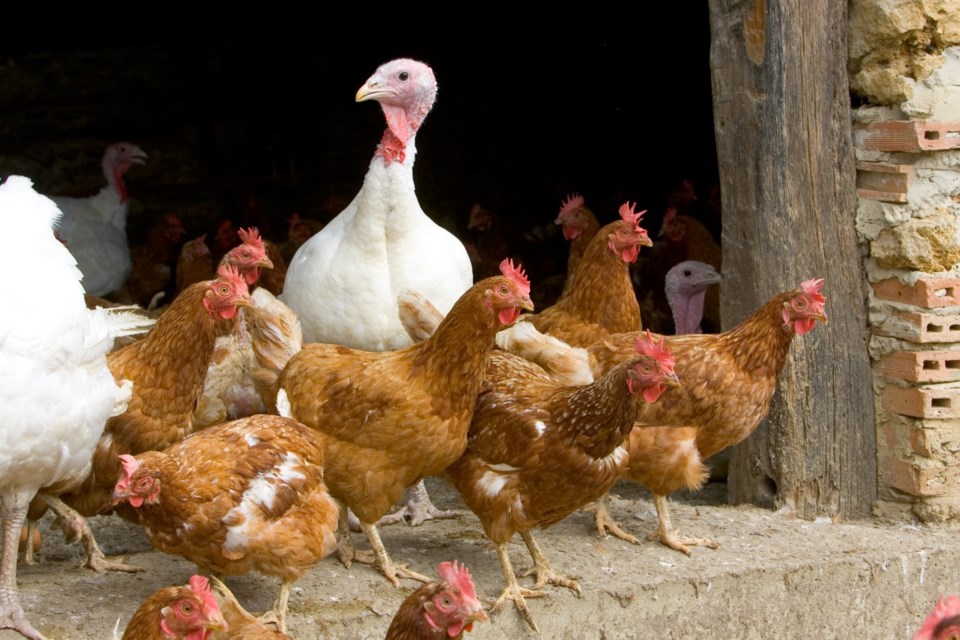
With the government expected to rubber-stamp its next big trade deal on 16 July, the British Egg Industry Council, Compassion in World Farming and the RSPCA are demanding a rethink on its decision to exclude eggs as a sensitive product.

Under the terms of the recently agreed Comprehensive and Progressive Agreement for Trans-Pacific Partnership (CPTPP) – which will open up trade with 11 countries across the globe – import tariffs on eggs and egg products will be phased out over a 10-year period.

See also: What the CPTPP free-trade bloc could mean for UK agriculture

But no consideration is being given to the type of systems used, meaning eggs may be imported from countries such as Mexico that use conventional battery cage systems, illegal in the UK since 2012.

Such imports would undercut British egg producers, who operate to world-leading standards of animal welfare under the British Lion Code of Practice.

‘Unbelievable’ 

BEIC chief executive Mark Williams said: “It is almost unbelievable that the government would let consumers down like this.

“To rubber-stamp a deal which effectively sanctions the importation of eggs from conventional [battery] caged systems is not only counterintuitive, but it also completely undermines the countrywide standards that are adhered to by the UK egg industry.

“It is incumbent on the government to review the position of eggs and egg products to ensure they are granted sensitive status before the CPTPP deal is signed on 16 July.”

Explore moreKnow How

Visit our Know How centre for practical farming advice

Nick Palmer, head of Compassion in World Farming UK, added that, without adequate tariffs to allow only eggs produced to UK standards to be imported, the doors would be wide open for powdered and liquid eggs from countries with lower animal welfare standards.

While UK retailers say they are committed to sourcing only Lion shell eggs for retail sale, it is the 20% of eggs used for egg products that are most at risk.

‘No change’

But the Department for Business and Trade insists nothing is changing with regards to UK standards.

“The UK has not lowered our food, animal welfare or environmental standards in order to accede to CPTPP, and there is absolutely nothing in the agreement which would require us to lower these standards,” said a spokesman. 

The department also explains that all agri-food products must comply with UK import requirements in order to be placed on the UK market, whether they are subject to tariffs or not.

This may include some products produced to different animal welfare or environmental standards, which has always been the case and includes products from the EU and other longstanding trading partners.

All egg imports will continue to comply with existing UK import standards and labelling requirements.

All shell eggs sold in retail and at wholesale in the UK must be marked with their method of production or with “non-UK Standard” or “non-EC standard”. 

We’re experiencing Earth’s hottest weather in 120,000 years, and it’s just getting started

Exposing the Big Game's avatarThe Extinction Chronicles

by: Jeff Berardelli

https://fox8.com/news/were-experiencing-earths-hottest-weather-in-120000-years-and-its-just-getting-started/

Posted:Jul 8, 2023 / 12:00 PM EDT

Updated:Jul 8, 2023 / 12:59 PM EDT

(WFLA) — It’s quite the claim: This week, Earth broke an unofficial record for its hottest day in 120,000 years.Actually, the Earth broke that record three times— on Monday, Tuesday, and Thursday, according to the University of Maine’s Climate Reanalyzer.

El Niño(a natural cycle) is just getting started. As it gets stronger, and adds more heat to Earth’s system, this summer will continue to set new all-time global records for hot days. And along with that, many other records will be shattered as well.

But no matter how hot it gets, the summer of 2023 will soon be considered a “cool” summer in a couple of decades amid the steady drumbeat of human-caused climate heating.

ADVERTISINGEl Niño is coming: How it could impact winter conditions in Ohio

View original post 648 more words

‘Death coming out of the ocean’: Red tide killing California sea lions, dolphins

Exposing the Big Game's avatarThe Extinction Chronicles

Veterinarians scramble to save hundreds of sea lions in distress on shore as beach-goers watch in horror

Amanda Lee Myers

USA TODAY

https://www.usatoday.com/story/news/nation/2023/07/08/california-red-tide-sickens-dolphins-sea-lions/70389766007/

0:34

1:08

https://imasdk.googleapis.com/js/core/bridge3.579.0_en.html#goog_1397808584

Jalapeñothe sea lion turned up on a crowded California beach in a daze, experiencing seizures and heavily pregnant.

Instead of giving birth in a remote location like sea lions prefer, Jalapeñohad her pup on Southern California’s Hermosa Beach on a busy Saturday, surrounded by throngs of curious onlookers.

After the pup emerged, Jalapeñorolled lethargically into the surf, on the verge of dying.

Two weeks later, things are looking up for both Jalapeñoand her pup. Although severely sickened by a historically bad algal bloom off the coast of California, the mother and baby sea lions have been receiving around-the-clock treatment at theMarine Mammal Care Centerin Los Angeles.

Jalapeñoscrambled to scarf down every fish that one of her caretakers was throwing into her pen…

View original post 1,148 more words

Dust from the Sahara Desert is bringing more heat to Tampa Bay

Exposing the Big Game's avatarThe Extinction Chronicles

In addition to rising temperatures, the dust clouds are expected to bring more vivid sunsets, meteorologists say.

https://www.tampabay.com/weather/2023/07/07/sahara-desert-dust-cloud-tampa-bay-heat-florida-sunset-dry-air/

The sun sets over the Crystal Beach pier in Palm Harbor on June 30. Sunsets soon could be even more stunning than usual in Tampa Bay. Meteorologists say Sahara Desert dust clouds are blowing across the Atlantic Ocean and making their way to Florida, where they are expected to bring higher temperatures, more vivid sunsets and a decreased chance of tropical storm formation this weekend.
The sun sets over the Crystal Beach pier in Palm Harbor on June 30. Sunsets soon could be even more stunning than usual in Tampa Bay. Meteorologists say Sahara Desert dust clouds are blowing across the Atlantic Ocean and making their way to Florida, where they are expected to bring higher temperatures, more vivid sunsets and a decreased chance of tropical storm formation this weekend.[DOUGLAS R. CLIFFORD | Times]

By

PublishedYesterday|UpdatedYesterday

ADVERTISEMENT

It’s not smoke from Canadian wildfires, and it’s not exactly a dust storm.Dust from what meteorologists call the Saharan Air Layeris on track to reach Florida this weekend, bringing hot and dry weather to the Tampa Bay area.

Floridians may remember similar dust clouds thatblew in during past summers.

The layer of…

View original post 313 more words

Vladimir Putin Sends Nuclear Bombers to Arctic Base Ahead of NATO Summit, Raising World War 3 Fears

Exposing the Big Game's avatarThe Extinction Chronicles

Radar Online

Radar OnlineFollow

Story by Joshua Wilburn•34m ago

Radar Online

Vladimir Putin Sends Nuclear Bombers to Arctic Base Ahead of NATO Summit, Raising World War 3 Fears

Was this content a good use of your time?

Your feedback will help us improve the product

mega©Radar Online

In a recent demonstration of its military might, Russian PresidentVladimir Putinsent two nuclear bombers on a 12-hour war game to an Arctic base, sparking concerns of escalating tensions and the possibility ofWorld War 3,RadarOnline.comhas learned.

According tothe Daily Star, Lieutenant-GeneralSergey Kobylash, commander of Russian long-range aviation, confirmed that two supersonic White Swan Tu-160nuclear bomber planesand two strategic missile-carrying Tu-95MS planes participated in the exercise, landing in the Arctic circle.

Mega©Radar Online

The Tu-160s arrived at the Sovetskiy airfield in theKomi Republicin western Russia, while the Tu-95MS planes flew to…

View original post 262 more words

A Deadly Neurotoxin Is Making Sea Lions Aggressive Towards People In California

These animals are not normally violent towards humans but they are being sickened by a deadly neurotoxin.

DR. RUSSELL MOUL


Science Writer

clockPublishedJuly 7, 2023

comments4Comments

share150Shares

A sea lion swims above the camera with its back against the surface.
Sea lions across California are at risk from a deadly blooming algae that’s producing a neurotoxin. Members of the public are being advised to keep their distance. Image credit: Andrea Izzotti/Shutterstock. 

Under normal circumstances, seeing a sea lion on the beaches of California would be a pleasant experience. These animals are social and gregarious and are the most abundant species of pinnipeds on this coast. However, beach goers are now being warned to keep an eye out for unusual behavior among these marine mammals as a toxic algae bloom could be making them more aggressive. 

https://imasdk.googleapis.com/js/core/bridge3.579.0_en.html#goog_1244748664

https://imasdk.googleapis.com/js/core/bridge3.579.0_en.html#goog_1628998740

https://imasdk.googleapis.com/js/core/bridge3.579.0_en.html#goog_787823318Top Stories00:3901:06What's Actually Beneath All The Polar Ice?Spider Mites Mate Faster By Helping Females Out Of Their Dead Skin SuitsAn Internal Ecological Crisis Is Unfolding Inside Our GutsThe True Nature Of Dark Matter Might Be Found With Gravitational WavesEarth’s Inner Core Has A Surprisingly Complex TextureHow Do Black Lights Make Things Glow?Internet Figures Out Which Muppets Are Predators And Which Are Prey Based On Their EyesExplosions And Implosions Generate Heat, But Could Either Vaporize A Human?Tiny Extinct Penguin Was One Of The Smallest To Ever Walk The EarthAncient Egyptians Measured The First Hour, And Changed How We Related To TimeMassive Heat-Emitting Mass Discovered Buried Under The Surface Of The MoonInternet Figures Out Which Muppets Are PredatorsAnd Which Are Prey Based On Their Eyes

Visitors and locals are being asked to avoid any sea lions that exhibit strange behavior, such as swinging their heads back and forth, foaming at the mouth, or showing seizure activity, as they are likely suffering from domoic acid toxicity

What is Domoic Acid?

Domoic acid is produced by an algae called Pseudo-nitzschia australis, a phytoplankton that releases this neurotoxin during certain harmful algal blooms. When enough of the toxin accumulates in the systems of small prey, like sardines and anchovies, they can pass it onto the animals that feed on them – especially sea lions. Once ingested, the toxin attacks the brain and heart, causing seizures and heart failure. Normally, the toxin will be flushed from the animal’s body over a period of time, but repeated exposure can lead to permanent effects and death. 

The phytoplankton responsible grows when coastal ecosystems provide the most favorable conditions, such as when upwelling occurs, bringing typically deep-water nutrients to the surface which proliferate growth. This tends to occur during seasonal transitions between spring and fall, but it is possible that climate change and El Niño are driving this latest bloom.

Under normal circumstances, late June is a time when sea lions travel to the beaches of Channel Islands, near Los Angeles, where they will have their pups. But this year their journey has coincided with this deadly bloom. 

The current crisis 

At the moment, marine mammal rescue teams are receiving up to 300 reports a day of sea lions behaving strangely, and around 150 have been found dead. Dozens of dolphins have also been found dead due to the toxin.

Experts are warning people to stay away from the animals and not to interfere with them at all. 

When called to a suspected site with an infected animal, rescuers will establish a perimeter around it to allow for monitoring while also explaining to the public what the situation is. For the safety of everyone, including the sea lions, people are required to stay a minimum of 15 meters (50 feet away). This is a bit longer than the length of the average school bus in the US. 

This is the worst domoic acid event to date, according to Alissa Deming, a vet at the Pacific Marine Mammal Center in Orange County. It has led some sea lions to become violent if they are approached by humans. 

According to the California Marine Mammal Stranding Network, “Visual signs of domoic acid observed by CIMWI volunteers included: disorientation, lethargy, bulging eyes, impaired locomotion (unable to get out of surf), debilitated cognitive ability (unaware of surroundings, agitation), rhythmic head bobbing and weaving, uncontrollable body movements, grand mal seizures, being unresponsive, and continued degradation of these health signs as well as lack of spontaneous recovery and sudden death.”

Domoic Acid can also affect humans if they consume it. This causes what is called Amnesic Shellfish Poisoning (ASP), which is caused by eating contaminated shellfish. ASP can lead to sickness, diarrhea, dizziness, headaches, disorientation, and short-term memory loss. In severe cases, an intoxicated person can experience seizures, weakness, paralysis, and even death. 

This is one of the reasons why it is important to maintain marine coastal systems and to limit climate change. This will help protect ecological diversity, but it will also protect us. 

“Marine mammals are sentinels of ocean health, meaning they can alert us to potentially dangerous environmental changes in the ocean”, California Marine Mammal Stranding Network explained. “Sick and stranded marine mammals warn us about changing ocean conditions. Marine mammals that have been poisoned by domoic acid help protect human health by demonstrating the need for screening shellfish and other seafood for biotoxins.”

https://www.iflscience.com/a-deadly-neurotoxin-is-making-sea-lions-aggressive-towards-people-in-california-69726

Illegal dog fights

NWHSA's avatarNORTH WEST HUNT SABOTEURS

8th July 2023

Many thanks to UK Animal Cruelty Files – (UKACF) for posting this article.

Illegal dog fights have soared by almost a half since Covid, fuelled by a sickening stream of online videos.

The RSPCA was called to 330 fights last year compared to 226 in 2019.

And this year numbers are on track to be even higher with 149 savage encounters recorded up to May 2023.

The fights – some reported to be worth up to £50,000 – pit dog against dog until one dies or can no longer fight.

They are said to attract heavy betting and guns and drugs are often found at the secret venues.

Ian Muttitt, a chief inspector with the RSPCA, said research shows a third of 18 to 24-year-olds have watched animal cruelty online.

He added: “Investigators routinely pick up on people viewing and sharing fight material on platforms such as…

View original post 280 more words

Brownsea Island: Bird flu confirmed after 600 birds found dead

Exposing the Big Game's avatarThe Extinction Chronicles

  • Published11 hours ago

Share https://www.bbc.com/news/uk-england-dorset-66131865

Brownsea Island nature reserve
Image caption,Avian flu is spread by close contact with an infected bird, whether it is dead or alive

Bird flu has been confirmed at a nature reserve where 600 birds have been found dead in recent weeks.

Brownsea Island in Poole Harbour, Dorset, has been closed since 16 June while tests were carried out.

The results from the Department for Environment Food and Rural Affairs (Defra) confirmed it was avian flu.

Dorset Wildlife Trust said it would “potentially have a serious impact on future populations” as most of the birds found dead were chicks.

ADVERTISEMENT

The charity said the outbreak happened at the height of the breeding season at the reserve “when hundreds of Sandwich terns, common terns and black headed gulls come to Poole Harbour and nest on the islands in the Brownsea lagoon”.

Brownsea Island nature reserve
Image caption,Brownsea Island in Poole Harbour has been closed since…

View original post 99 more words