Bear hunters in Florida paid $2K to opt out of killing
Reply

Daily Sun Report, Dhaka
Published: 12 Dec 2025, 07:02 PM

Photo: Daily Sun
A A
The rapidly increasing indiscriminate hunting of birds across Bangladesh has become a major catastrophe for the country’s biodiversity, environment and ecosystem.
To protest this alarming situation, a photowalk, birdwatching session and local awareness programme was organised on Friday, at Newvision Ecocity, near Kalatia in Keraniganj by wildlife photographers, birdwatchers and nature enthusiasts.
Participants from different walks of life joined the event with the goal of raising awareness among local communities about the devastating impacts of bird hunting.
During the programme, they observed more than 50 species of birds, including Black Bittern, Black-crowned Night Heron, Cormorants, various species of Warblers, Baya Weavers, Scaly-breasted Munia, Chestnut Munia, Brahminy Kite, and many others.
They also demanded effective initiatives to stop rampant bird hunting across the country.
According to the organisers, from migratory birds like the Greylag Goose to local species like the Night Heron and Black Bittern, none are safe from hunters anymore.
If birds are unsafe even in Dhaka city, the situation in remote regions is far more terrifying.
Sylhet, Rajshahi, Rangpur, Kurigram, Naogaon, Natore, Sirajganj, Pabna, Chattogram, and almost every region of the country are witnessing a surge in bird hunting.
Environmentalists fear that without immediate national-level intervention, environmentally vulnerable Bangladesh will move toward faster ecological collapse.

Tareq Anu, world traveler and member of Bangladesh Bird Club, said, “Hunting wild birds means harming ourselves. The day birds disappear from the Earth, humans will follow. Let’s stop bird hunting together.”
Adnan Azad, convener of Bangladesh Animal Welfare Association (BAWA), said, “Indiscriminate killing of birds and wildlife is equivalent to destroying nature. Both local and migratory birds are our natural assets—they must be protected.”
Documentary filmmaker of “Birds of Dhaka: The Sky is Shrinking” and NatSave General Secretary Asker Rusho, said, “From my early childhood I saw many hunting incidents, but after started bird photography, my perspective changed completely. In rural areas, hunting has become epidemic, if we do not work together now, hunters will wipe out Bangladesh’s birds.”
Founder of Bird Life of Bengal Nisorg Ami, said, “People are becoming more educated and urbanized—yet bird hunting is not decreasing. If the last bird disappears, nothing will remain but regret.”

Wildlife photographer Siamiyat Khan Ziko (Chalan Beel region) said, “In Pabna, Sirajganj, and Natore, bird hunting has reached alarming levels. Law enforcement and local involvement are essential.”
Admin of Bangladesh’s largest bird photography group Birds Bangladesh, Shahriar Kabir Rushdi, said, “Nets, guns, poison-baits, glue—everything is being used. From Haor area to Coastal belt, nowhere the birds are safe. We have laws, but no implementation. In addition to stopping bird hunting, we must also be vocal about stopping the use of electric nets to protect crops.”
To protect the environment and future generations, public awareness, enforcement of law, community participation, and national resistance are now urgently required to stop bird hunting.
IPB News | By Rebecca Thiele
Published December 9, 2025 at 3:12 PM EST
Listen • 1:12
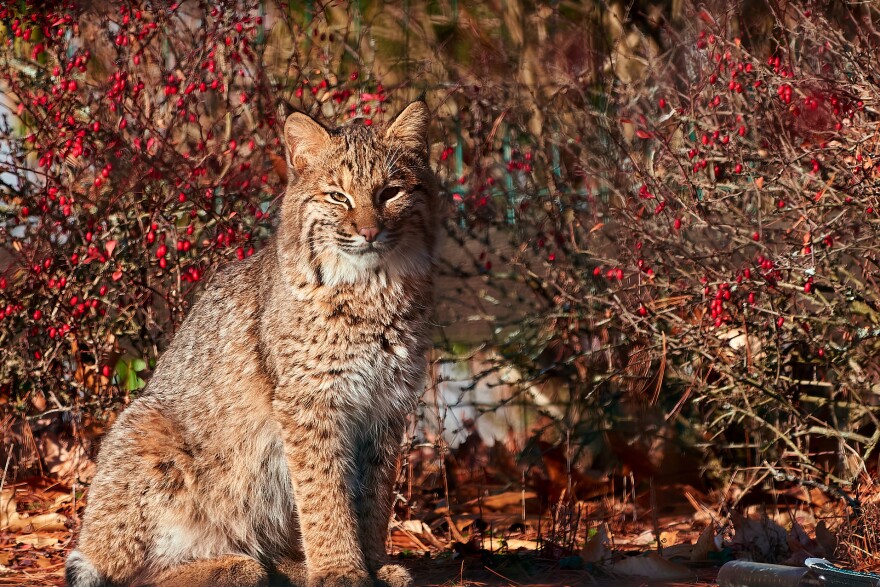
Indiana’s first bobcat season in decades is already over, but the work to gather data on bobcats in the state has just started.
Data from the season could settle a long debate between trappers and wildlife advocates about how many bobcats are in Indiana. Trappers say bobcats are plentiful enough to hunt, but wildlife advocates disagree.
The Indiana Department of Natural Resources recently ended Indiana’s bobcat season early after trappers caught the state’s quota of 250 bobcats. The season was supposed to run from early November to late January, or until a quota was reached.
That might indicate Indiana has a healthy population of bobcats.
Geriann Albers is the furbearer and gamebird program leader for the DNR. She said the DNR needs more information to say for sure — like how many traps people set out over how many days.
“It’s even more important to know how much effort people were expending to get there. Because that gives us a feel for people were having to work really hard to catch a bobcat or actually, it was pretty easy — the bobcats were probably doing pretty well and people were catching them really fast,” Albers said.
Albers said most people who trapped bobcats this season were Indiana residents trapping on private land.
The DNR plans to survey people with bobcat licenses in the coming weeks and release its findings from the season in the spring or summer.
 Exposing the Big Game