We’re facing the worst bird flu crisis
Reply

If you value these stories, please consider subscribing.
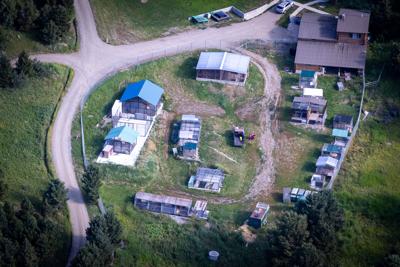
Federal officials terminated the license of Animals of Montana this month, a notorious wild animal exhibitor that for years has racked up dozens of state and federal animal welfare violations.
The Bozeman-based group has transported exotic animals around the country for use in films and staged wildlife photography.
The Oct. 16 decision from the U.S. Department of Agriculture terminates Animals of Montana’s wild animal exhibition license under the Animal Welfare Act.
RELATED NEWS: – Rep. Burchett: Mental Health is the Problem, Not Gunsmenuvolume_off volume_up
Next
Stay


volume_off
-6:07
sd
share
closed_caption
fullscreen
Auto (360p)
225p
360p
Subtitles Off
Subtitles EN

RELATED NEWS: – Rep. Burchett: Mental Health is the Problem, Not Guns
Rep. Tim Burchett, a Republican from Tennessee, Joins Bloomberg Radio to talk about the new House Speaker, the Supplemental Spending Bill, and George Santos possibly being kicked out of the US House. He spoke on “Bloomberg Radio.”
Rep. Burchett: Mental Health is the Problem, Not Guns
Government and politics |
6:35

House to Vote on $14 Billion in Aid for Israel
Business |
4:06

SoFi Raises Revenue Forecast for 2023
Business |
6:50

Covid Inquiry: Ex-government aide set messages to disappear
General news |
2:16

Suella Braverman slams pro-Palestine ‘hate marches’
General news |
0:47

Braverman: AI could enable criminals to share child abuse
General news |
0:50

Braverman: Terror threat level remains at ‘substantial’
General news |
1:23

Higher Prices Aren’t Scaring Away McDonald’s Customers
Business |
1:18

How Rithm’s $720 Million Bid for Sculptor Came Together
Business |
3:23

Rithm CEO on Winning Support to Buy Sculptor
Business |
7:13
Troy Hyde, owner of Animals of Montana, declined to comment on the federal license termination.
People for the Ethical Treatment of Animals asked the USDA in June to remove the federal license.
The termination comes two years after the Montana Supreme Court upheld Montana Fish, Wildlife and Parks 2017 decision to terminate the group’s wild animal menagerie state permit, which is used by places exhibiting bears, large cats and other carnivores for commercial purposes.
PETA’s Captive Wildlife Advocacy Specialist Alex Baldwin said the federal termination is important because it means Hyde can’t simply move his business to another state.
“The federal Animal Welfare Act covers regulated animals on the national level,” Baldwin said in a Friday interview. “So if Hyde were to try to move to another state and try to start again with a clean slate, he legally cannot do that.”
The federal termination is also permanent this time, Baldwin added. Hyde had his Animal Welfare Act license previously suspended for two years over violations of the Endangered Species Act and Lacey Act in 2000. He renewed the license after the two year period.
In 2012, an employee of Animals of Montana was fatally mauled by a captive grizzly bear while cleaning its enclosure. The death sparked an investigation of the business by FWP, which found 22 separate violations that resulted in the permit’s termination.
https://shopper.flipp.com/static/1.4.16/latest
FWP spokesperson Morgan Jacobsen said Friday those violations included transporting animals out of state without a permit and failing to provide animals with clean drinking water and sanitary living conditions.
Court documents shed light on the other violations, including failing to padlock dangerous animals’ cages including the bear, coyote, lynx, leopard and wolf cages, and directing a member of the public to use a weed whacker to control a tiger during a photoshoot.
According to documents, cages remained unsecured and unclean, resulting in the permanent escape of a fisher, a small carnivore in the weasel family.
The 2021 Montana Supreme Court decision upholding the FWP permit suspension ordered Hyde to close the Animals of Montana business and no longer exhibit the animals. He was allowed to keep one grizzly bear named Adam until the end of its life.
The status of the other animals is unclear, which at one point included dozens of Canadian lynx, gray wolves and grizzly bears. FWP officials said Friday they were unsure where or if the animals had been relocated.
Hyde said in a phone call Friday that he no longer had exhibition animals and they had been relocated “all over the country” years ago when Animals of Montana closed. When asked, he declined to provide details as to specific states or organizations where the animals were relocated.
An USDA inspection of Animals of Montana in February 2023 noted the business was still holding 22 animals, including 12 Canadian lynx, two fishers, seven gray wolves and one grizzly bear.
According to FWP, Hyde also has held a state permit to operate a fur farm separate from the exhibition business. On Friday, Hyde said the permit was still active.
PETA’s Baldwin said while the USDA decision only impacts the wild animal exhibition permit and not the fur farm permit, it’s still something that the animal rights activists are “keeping a close eye on.”
“Operating a fur farm is problematic just by the nature of that industry, but also the fact that he has such a long history of animal welfare violations… we just worry quite a bit about the well-being of those animals that are still in his care,” Baldwin said.
24 grizzly bears have died or have been discovered dead in the Greater Yellowstone area so far this year, with eight so far being killed for livestock depredation.
This number also includes a bear that drowned in an irrigation canal.
The latest grizzly bear death occurred earlier this month, when a 20-year old bear was killed by Montana wildlife agent because it kept preying on livestock. The total of bear euthanized due to livestock depredation is now eight, with six bears being killed in Wyoming.
The remaining grizzlies were either struck by vehicles, were put down because they became too conditioned to humans or human food sources or they starved to death.
One bear in the 2023 total was a grizzly that died in 2019 or 2020, but was found this year in Wyoming’s Grass Creek Range on land managed by the Bureau of Land Management.
Of the total grizzly bear deaths, five are still under investigation with the no causes of death listed by the United States Geological Survey.
The United States Geological Survey leads the Interagency Grizzly Bear Study Team, which includes the Wyoming Game and Fish. They monitor grizzlies throughout the Greater Yellowstone Area in Idaho, Montana and Wyoming.
For more information on the grizzly bear mortality statistic, visit the United State Geological Survey website.
by Jim Robertson C.A.S.H. President

PHOTO © JIM ROBERTSON
Each fall, elk, those colossal members of the deer family second only to moose in mass, go into rut–a fitting term for their mating season, indicative of the bulls’ one-track mind at the time. Their obsessive behavior includes bugling and strutting while showing off to the weary cows, and when challenged by another well-antlered bull, posturing and occasionally sparring. Although their showy racks of antlers appear to be lethal weapons, contestants are seldom hurt, and never intentionally. The same two bulls locking horns during the rutting season were likely inseparable pals throughout the previous spring and summer, and will be again once the breeding season is over. The elk rut is a rank-establishing ritual, proven, over many millennia, beneficial to the herd. It’s a contest with simple rules: the biggest, oldest bulls, usually with the most impressive antlers, have two or three weeks to round-up as many cows as possible for their harem and breed with each of them as they go into estrus, while the younger bulls try to lure a few away and start a party of their own.
Autumn in elk country would not be complete without the stirring sound of solicitous bulls bugling-in the season of brightly colored leaves, shorter days and cooler nights. Nothing, save for the clamor of great flocks of Canada geese, trumpeter swans or sandhill cranes announcing their southward migration, is more symbolic of that time of year. And just as any pond or river along their flyway devoid of the distinctive din of wandering waterfowl seems exceedingly still and empty, any forest or field now bereft of the bugling of bull elk feels sadly deserted and lifeless.
Yet there are broad expanses of the continent, once familiar with these essential sounds of autumn, where only the blare of gunfire resounds. By the end of the Nineteenth century, a great wave of humanity blowing westward with the force of a category 5 hurricane—leveling nearly everything in its destructive path—had cut down the vast elk herds, leaving only remnants of their population in its wake. Today, a different kind of rite rings-in the coming of autumn over much of the land. Following in the ignoble footsteps of those who hunted to extinction two subspecies, the Mirriam’s and the Eastern elk, nimrods by the thousands run rampant on the woodlands and inundate the countryside, hoping to relive the gory glory days of the 1800s.
While the awe-inspiring elk rut spectacle is going on, Elmers (elkhunters) polish their barrels or rosin up their bows (or whatever the heck archery hunters do), to gear up for their chosen form of thrill-kill—assuming elk have not already been driven locally to extinction from over-hunting in their neck of the woods. Traditionally, elk hunters will spend copious amounts of time and money drowning themselves in alcohol to get their blood up in preparation for the sacrificial event of trying to slay the mighty, majestic beasts.
To the detriment of the entire elk species, the individuals most highly prized by these trophy seekers are always the biggest bulls (with, of course, the most impressive antlers). This sort of discriminatory culling runs contrary to natural selection and is effectively triggering a reversal of evolution by leaving only the “weak and scrawny” (as Newsweek magazine referred to them in a recent article on the subject) to pass on their genes. The phenomenon can be seen in any hunted species, but is especially evident among the “lordly game” (as President Theodore Roosevelt dubbed them), the antlered and horned animals. After more than a century of Teddy-type trophy hunters messing with natural selection, today’s elk, bighorn sheep and others (whose heads you most often see disgracing the walls of empty-hearted halls) cannot boast the antler spread, horn curl—or quality of genes—of their ancestors.

Photo © Jim Robertson
The mechanism that allowed for so many of North America’s native species to be slaughtered with such abandon in centuries past was a common form of speciesism: species favoritism. Would-be ranchers wanted to do away with any wild grazers who might compete with their cows and eliminate any predators who might naturally turn to their domestic calves or sheep in the absence of accustomed prey. Problem is, this ecologically short-sighted conduct resulted in severely diminished biodiversity (a fact that should be an embarrassment to inheritors of this abused land). Unfortunately, blundering behavior persists to this day. Instead of admitting to the mistakes of the past, the 5% who still hunt are paying homage to the ruinous ways of the 1800s—sometimes using bows or black powder muskets to make their “sport” more challenging.
The slaying of wildlife has now become a perverse pastime for people who call themselves sportsmen. But far from sporting, the game of stalking, shooting and skinning animals is driven by a selfish and sinister intent. The sport hunter’s motive is comparable to that of a rebuked child who torments a puppy to gain a sense of power and control. No matter how hunters and trappers try to rationalize or justify their actions, their stated objectives—recreation, the need for sustenance or a civic duty to keep animal populations in check—are all red herrings. There are less destructive ways to get your kicks, healthier and less costly sources of nourishment than cholesterol-laden rotting flesh, and nature—left to its own devices—doesn’t need a manager. Nonetheless, “management” of wildlife “resources” is the modus operandi for state and federal agencies, which are virtually always staffed by sport hunters.
Laws against cruelty to innocent victims are crafted by people who rely on their sympathies for the victims and their emotional attachments to the innocents. Those who can feel empathy and have compassion for the other creatures of this planet should be the ones making decisions concerning their welfare. But wildlife law-makers habitually side with the nearest (and squeakiest) animal exploiters.
Since they’re hunters themselves, state and federal wildlife “managers” are both delegates and lackeys for the hunting industry. They would have us believe the preposterous party line that hunting helps animals—they won’t continue to live unless we kindheartedly kill them. This is particularly outrageous in light of how many species have been wiped off the face of the earth, or nearly so, exclusively by human hunting. The most infamous of these atrocities is the hunting of plains bison to near extinction in the 1800’s. During that same period, over-zealous hunters completely killed off the once amazingly abundant passenger pigeon and Eskimo curlew (both killed en mass and sold by the cartload for pennies apiece).
The fact that shooting non-human animals is accepted as sport in this day and age puts our very society at risk. It’s well-known that—as in the cases of mass murderer Richard Speck, serial killer Jeffery Dahmer and a host of others—animal cruelty often leads to crimes against humans. And unless one is starving or under attack, violently ending the life of a healthy animal is cruelty.
No caring person should be expected to tolerate the mistreatment of others. So, what should you say to a hunter who tells you, “I respect your decision not to hunt, so you should respect my right to hunt.”? How about something like, “There’s a major difference between tolerating the actions of a bird watcher and those of a shotgun-toting bird-blaster.” Or, “Customs and recreation are fine until one’s hobby results in the suffering of others.” Or even, “That’s like an unrepentant slave owner asking an abolitionist to respect his right to keep people enslaved.” Just as abolitionists wanted emancipation for the slaves and suffragettes wanted women to have the vote, anti-hunters want animals left alone.
Anyone with a sense of right and wrong will eventually find that intolerance is sometimes the only humane position to take. Intolerant is what Japanese whalers label anti-whaling groups or non-whaling nations when they question their “right” to harpoon and butcher whales or trap and slaughter dolphins. South Koreans who literally torture dogs to death and boil cats alive—in the belief that doing so makes them taste better and/or improves their medicinal value—call humane activists intolerant when they oppose those barbaric customs. And European or American producers of foie gras scream intolerance when animal advocates work to end the brutal and bizarre practice of shoving a pipe down the throats of geese and ducks and force feeding them until their liver swells or their stomach bursts—whichever comes first.
Members of a civilized society should not be afraid to take a stand against cruelty to non-human animals (who are fully capable of suffering) in the same way they oppose cruelty toward humans. Without a doubt, any effort to abolish sport hunting is ultimately taking a stand against animal cruelty.
The preceding includes excerpts from Exposing the Big Game: Living Targets of a Dying Sport, by Jim Robertson.

