Elmer’s Code of Ethics
Reply

by Jim Robertson C.A.S.H. President

PHOTO © JIM ROBERTSON
Each fall, elk, those colossal members of the deer family second only to moose in mass, go into rut–a fitting term for their mating season, indicative of the bulls’ one-track mind at the time. Their obsessive behavior includes bugling and strutting while showing off to the weary cows, and when challenged by another well-antlered bull, posturing and occasionally sparring. Although their showy racks of antlers appear to be lethal weapons, contestants are seldom hurt, and never intentionally. The same two bulls locking horns during the rutting season were likely inseparable pals throughout the previous spring and summer, and will be again once the breeding season is over. The elk rut is a rank-establishing ritual, proven, over many millennia, beneficial to the herd. It’s a contest with simple rules: the biggest, oldest bulls, usually with the most impressive antlers, have two or three weeks to round-up as many cows as possible for their harem and breed with each of them as they go into estrus, while the younger bulls try to lure a few away and start a party of their own.
Autumn in elk country would not be complete without the stirring sound of solicitous bulls bugling-in the season of brightly colored leaves, shorter days and cooler nights. Nothing, save for the clamor of great flocks of Canada geese, trumpeter swans or sandhill cranes announcing their southward migration, is more symbolic of that time of year. And just as any pond or river along their flyway devoid of the distinctive din of wandering waterfowl seems exceedingly still and empty, any forest or field now bereft of the bugling of bull elk feels sadly deserted and lifeless.
Yet there are broad expanses of the continent, once familiar with these essential sounds of autumn, where only the blare of gunfire resounds. By the end of the Nineteenth century, a great wave of humanity blowing westward with the force of a category 5 hurricane—leveling nearly everything in its destructive path—had cut down the vast elk herds, leaving only remnants of their population in its wake. Today, a different kind of rite rings-in the coming of autumn over much of the land. Following in the ignoble footsteps of those who hunted to extinction two subspecies, the Mirriam’s and the Eastern elk, nimrods by the thousands run rampant on the woodlands and inundate the countryside, hoping to relive the gory glory days of the 1800s.
While the awe-inspiring elk rut spectacle is going on, Elmers (elkhunters) polish their barrels or rosin up their bows (or whatever the heck archery hunters do), to gear up for their chosen form of thrill-kill—assuming elk have not already been driven locally to extinction from over-hunting in their neck of the woods. Traditionally, elk hunters will spend copious amounts of time and money drowning themselves in alcohol to get their blood up in preparation for the sacrificial event of trying to slay the mighty, majestic beasts.
To the detriment of the entire elk species, the individuals most highly prized by these trophy seekers are always the biggest bulls (with, of course, the most impressive antlers). This sort of discriminatory culling runs contrary to natural selection and is effectively triggering a reversal of evolution by leaving only the “weak and scrawny” (as Newsweek magazine referred to them in a recent article on the subject) to pass on their genes. The phenomenon can be seen in any hunted species, but is especially evident among the “lordly game” (as President Theodore Roosevelt dubbed them), the antlered and horned animals. After more than a century of Teddy-type trophy hunters messing with natural selection, today’s elk, bighorn sheep and others (whose heads you most often see disgracing the walls of empty-hearted halls) cannot boast the antler spread, horn curl—or quality of genes—of their ancestors.

Photo © Jim Robertson
The mechanism that allowed for so many of North America’s native species to be slaughtered with such abandon in centuries past was a common form of speciesism: species favoritism. Would-be ranchers wanted to do away with any wild grazers who might compete with their cows and eliminate any predators who might naturally turn to their domestic calves or sheep in the absence of accustomed prey. Problem is, this ecologically short-sighted conduct resulted in severely diminished biodiversity (a fact that should be an embarrassment to inheritors of this abused land). Unfortunately, blundering behavior persists to this day. Instead of admitting to the mistakes of the past, the 5% who still hunt are paying homage to the ruinous ways of the 1800s—sometimes using bows or black powder muskets to make their “sport” more challenging.
The slaying of wildlife has now become a perverse pastime for people who call themselves sportsmen. But far from sporting, the game of stalking, shooting and skinning animals is driven by a selfish and sinister intent. The sport hunter’s motive is comparable to that of a rebuked child who torments a puppy to gain a sense of power and control. No matter how hunters and trappers try to rationalize or justify their actions, their stated objectives—recreation, the need for sustenance or a civic duty to keep animal populations in check—are all red herrings. There are less destructive ways to get your kicks, healthier and less costly sources of nourishment than cholesterol-laden rotting flesh, and nature—left to its own devices—doesn’t need a manager. Nonetheless, “management” of wildlife “resources” is the modus operandi for state and federal agencies, which are virtually always staffed by sport hunters.
Laws against cruelty to innocent victims are crafted by people who rely on their sympathies for the victims and their emotional attachments to the innocents. Those who can feel empathy and have compassion for the other creatures of this planet should be the ones making decisions concerning their welfare. But wildlife law-makers habitually side with the nearest (and squeakiest) animal exploiters.
Since they’re hunters themselves, state and federal wildlife “managers” are both delegates and lackeys for the hunting industry. They would have us believe the preposterous party line that hunting helps animals—they won’t continue to live unless we kindheartedly kill them. This is particularly outrageous in light of how many species have been wiped off the face of the earth, or nearly so, exclusively by human hunting. The most infamous of these atrocities is the hunting of plains bison to near extinction in the 1800’s. During that same period, over-zealous hunters completely killed off the once amazingly abundant passenger pigeon and Eskimo curlew (both killed en mass and sold by the cartload for pennies apiece).
The fact that shooting non-human animals is accepted as sport in this day and age puts our very society at risk. It’s well-known that—as in the cases of mass murderer Richard Speck, serial killer Jeffery Dahmer and a host of others—animal cruelty often leads to crimes against humans. And unless one is starving or under attack, violently ending the life of a healthy animal is cruelty.
No caring person should be expected to tolerate the mistreatment of others. So, what should you say to a hunter who tells you, “I respect your decision not to hunt, so you should respect my right to hunt.”? How about something like, “There’s a major difference between tolerating the actions of a bird watcher and those of a shotgun-toting bird-blaster.” Or, “Customs and recreation are fine until one’s hobby results in the suffering of others.” Or even, “That’s like an unrepentant slave owner asking an abolitionist to respect his right to keep people enslaved.” Just as abolitionists wanted emancipation for the slaves and suffragettes wanted women to have the vote, anti-hunters want animals left alone.
Anyone with a sense of right and wrong will eventually find that intolerance is sometimes the only humane position to take. Intolerant is what Japanese whalers label anti-whaling groups or non-whaling nations when they question their “right” to harpoon and butcher whales or trap and slaughter dolphins. South Koreans who literally torture dogs to death and boil cats alive—in the belief that doing so makes them taste better and/or improves their medicinal value—call humane activists intolerant when they oppose those barbaric customs. And European or American producers of foie gras scream intolerance when animal advocates work to end the brutal and bizarre practice of shoving a pipe down the throats of geese and ducks and force feeding them until their liver swells or their stomach bursts—whichever comes first.
Members of a civilized society should not be afraid to take a stand against cruelty to non-human animals (who are fully capable of suffering) in the same way they oppose cruelty toward humans. Without a doubt, any effort to abolish sport hunting is ultimately taking a stand against animal cruelty.
The preceding includes excerpts from Exposing the Big Game: Living Targets of a Dying Sport, by Jim Robertson.


USA TODAYFollow
Story by Joedy McCreary, USA TODAY • 55m
WASHINGTON, DC – JULY 13: Special Presidential Envoy for Climate John Kerry waits for the beginning of a hearing before the Subcommittee on Oversight and Accountability of the House Committee on Foreign Affairs at the U.S. Capitol on July 13, 2023 in Washington, DC. The subcommittee held a hearing on “The State Department’s Climate Agenda: A Budget Overview by the Special Presidential Envoy for Climate.†(Photo by Alex Wong/Getty Images)© Provided by USA TODAY
An Oct. 25 Instagram post (direct link, archive link) shows a screenshot of an article purporting to quote U.S. Special Presidential Envoy for Climate John Kerry.
“John Kerry: ‘We Must Sacrifice Billions Of Humans To Save Planet Earth,’” the headline reads.
Start the day smarter. Get all the news you need in your inbox each morning.
It was liked more than 600 times in two days.
Follow us on Facebook! Like our page to get updates throughout the day on our latest debunks
A spokesperson for Kerry said the claim was false. It distorts comments Kerry made during a summit in August. The claim originated on a website that has previously published misinformation.
The screenshot is from an Oct. 22 story by The People’s Voice, a website known for publishing misinformation. It claims Kerry declared during an August speech in Scotland that “billions of human beings must be sacrificed in order to save planet Earth from imminent destruction.”
Borrow from Your Home, Not the Bank ($25k for $164/mo)
Kerry spokesperson Chad Houghton called the claim “ridiculous” and “obviously false” in an email to USA TODAY.
The U.S. special presidential envoy for climate gave the keynote address at the Scottish Global Dialogues in August in Edinburgh, Scotland. In his speech, he said limiting the planet’s average temperature rise to 1.5 degrees Celsius – an internationally agreed-upon goal – is possible. He also called out entities he said distort evidence of the climate emergency for political or personal gain.
But the former secretary of state did not mention anything about mass human sacrifice, according to an official transcript of his remarks posted to the State Department’s website. The word “sacrifice” does not appear in it, and the word “billion” was used only in the context of dollar amounts.
Fact check: False claim Pope Francis, Clinton pushed depopulation as climate solution

Get unlimited digital access to USA TODAY and premium Sports+ stories
One month free
Get it now
The article also includes a claim that Kerry said the greatest threat faced by humanity is “humanity itself.” But that omits critical context from Kerry’s statement. He described the threat as coming from “those seducing people into buying a completely fictitious alternative reality where we don’t need to act and we don’t even need to care.”
The People’s Voice, previously known as NewsPunch, has repeatedly published fabricated stories, many of which USA TODAY has debunked.
USA TODAY reached out to The People’s Voice but did not immediately receive a response. The social media user who shared the post could not be reached.
Lead Stories also debunked the claim.
Thank you for supporting our journalism. You can subscribe to our print edition, ad-free app or e-newspaper here.
Our fact-check work is supported in part by a grant from Facebook.
1 / 8


1
©Sepp Kipfstuhl, Alfred Wegener Institute
Aerial view of melt ponds at Greenland’s ice sheet margin at the end of June 2012.
Oct. 25, 2023 Updated Wed., Oct. 25, 2023 at 6:38 p.m.
1 of 2
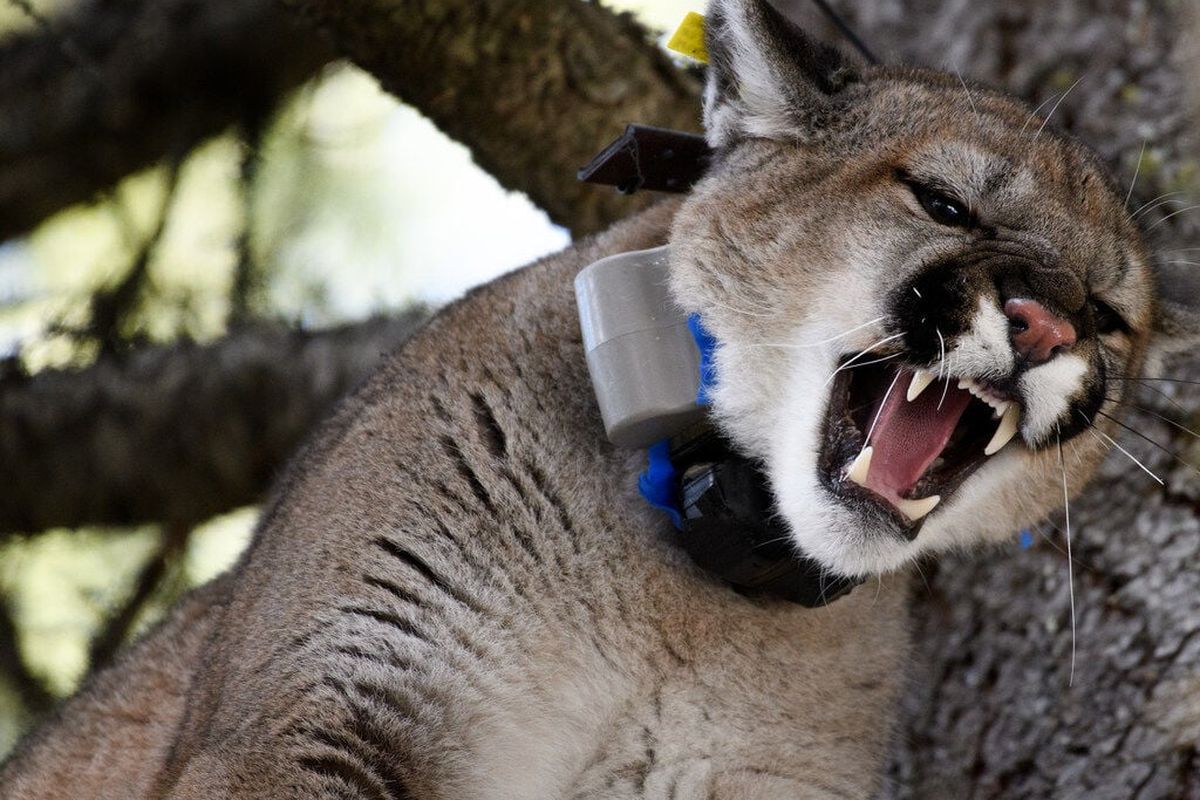
A collared cougar reacts after being treed by hounds in 2020. (Tyler Tjomsland/The Spokesman-Review)
By Michael Wright michaelw@spokesman.com(509) 459-5508
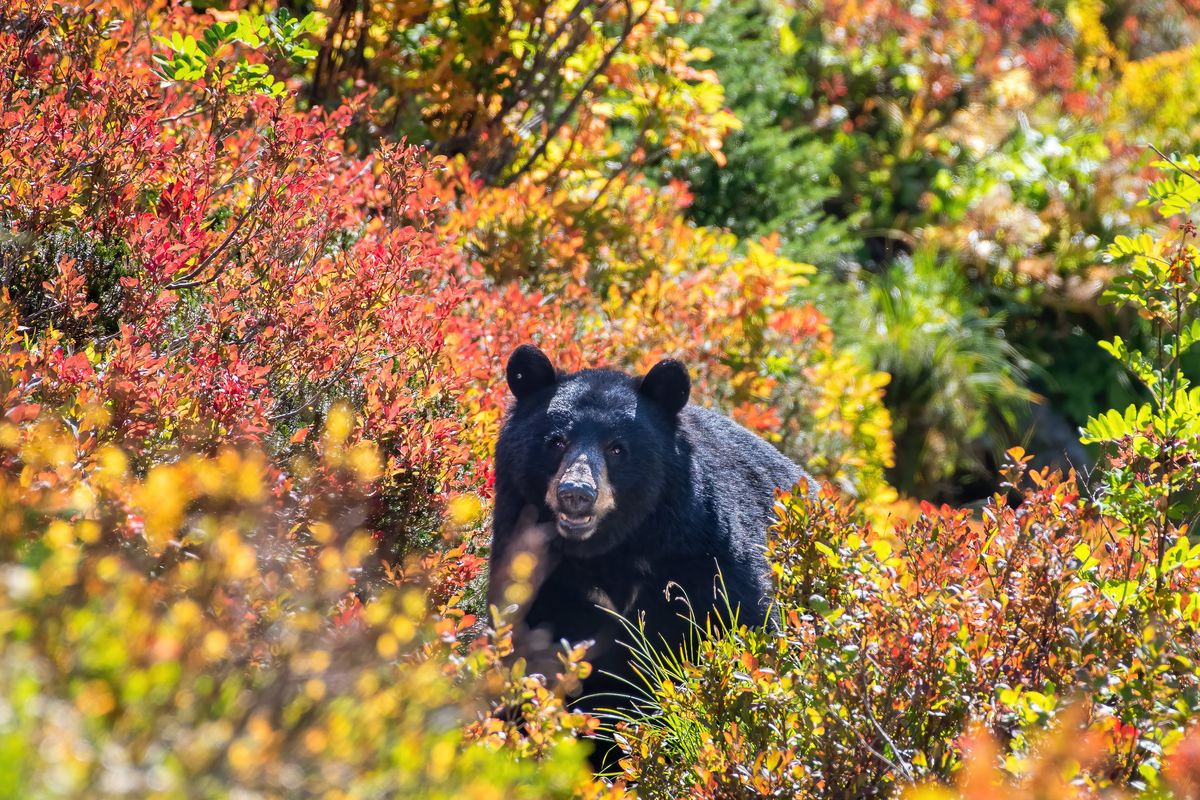
A coalition of environmental groups is urging Washington to undo some recent changes to cougar and black bear hunting rules, arguing the tweaks have led to too many of the animals being killed.
Washington Wildlife First, the Mountain Lion Foundation, the Center for Biological Diversity and the Humane Society of the United States filed a petition Wednesday asking the Washington Fish and Wildlife Commission to reverse decisions from 2019 and 2020 that expanded opportunities for hunters to kill cougars and black bears.
The changes set the bag limit for black bears at two per hunter statewide, standardized the season length and reconfigured the state’s calculation of cougar densities, which are used to set overall hunting limits. The groups argue those rules have allowed hunters to kill cougars and bears beyond sustainable levels, and that the increase threatens the health of the two species’ populations.
The petition asks the commission to shorten bear hunting season by a month, set a statewide bag limit of one bear and close cougar hunting after area-specific quotas are met.
“It’s shortsighted and unscientific to allow hunters to kill so many of Washington’s bears and cougars,” Collette Adkins of the Center for Biological Diversity said in a news release.
The commission has 60 days to respond. Staci Lehman, a spokesperson for the Washington Department of Fish and Wildlife, which the commission oversees, said the agency has not had time to review the petition in depth, and will look at it more thoroughly in the coming weeks. The commission will confer with WDFW wildlife staff and take it up at a meeting within the 60-day window.
Predator hunting has been a point of controversy for the commission over the past few years, as wildlife advocates have pushed for more protection for animals like bears and cougars while others argue the populations are doing fine, and that hunting is an important management tool.
In 2022, the commission voted to end Washington’s permit-only spring black bear hunting season. The decision was controversial, and commissioners have rejected multiple petitions seeking to restore that season.
Brian Lynn, a spokesperson for the Sportsmen’s Alliance, said in a statement that the petition filed Wednesday is “more agenda-driven hyperbole from animal-rights groups that want to end all hunting in Washington.”
“Each of these groups implores the use of science, but when science supported a spring bear season, they rejected it out of hand so blatantly that the biologist left,” Lynn said. “The WDFW is losing good biologists over the ideologically driven, non-scientific decision making these organizations are pushing.”
In 2019, the commission increased the bear bag limit from one to two bears per hunter in Eastern Washington and made Aug. 1 to Nov. 15 the standard season length statewide. Before the change, rules varied between Washington’s nine bear management units – five had seasons that started Aug. 15 or later, and five had a bag limit of one.
Lengthening the season and increasing the limit resulted in 50% more bears being killed by hunters, peaking in 2022 with hunters killing more than 2,200 bears, according to the petition. The groups argue that’s a problem because black bears face threats from climate change, and that increased hunting could lead to a serious population decline.
In 2020, the commission voted to change how it sets cougar hunting guidelines, which are based on estimated densities of the big cats. The guidelines set a range of allowable cougar kills for individual game management units.
The commission’s change directed WDFW to use the median density instead of the average and count only 2-year-old and older cougars toward the guidelines. The petition says that raised the number of cougars that could be killed each year by more than 50%, and it argues the move ignored science that indicated the populations couldn’t handle that much hunting pressure.
The petition seeks a one-bear limit statewide, and a bear season that runs from Sept. 1 to Nov. 15. For cougars, it calls for returning to setting guidelines based on population estimates and growth rates, and counting cats of all ages toward the rules.
It also argues that the rules – which were made permanent – should be reviewed alongside the rest of Washington’s hunting seasons during the commission’s season-setting process every three years.
The commission has begun working on setting hunting seasons for 2024 to 2026. The panel’s wildlife committee reviewed recommendations from WDFW at a meeting earlier this month, and is scheduled to discuss hunting seasons again when it convenes on Thursday.
WDFW has urged the panel to leave bear and cougar regulations alone until a new game management plan is finished or the commission creates a carnivore hunting policy. But at the wildlife committee meeting earlier this month, some commissioners signaled that they wanted to at least consider reverting the bear and cougar rules to the pre-2019 structure.


