Greta Thunberg on the climate delusion: ‘We’ve been greenwashed out of our senses. It’s time to stand our ground’
Reply

The U.S. poultry industry has a dreadful secret.
https://www.huffpost.com/entry/chickens-slaughtered-conscious_n_580e3d35e4b000d0b157bf98?fbclid=IwAR05QbPa4qC5BEZuGaqQzi2u4kWRFuZ9QW380GS0-1TtZsUYVifHoDlo4_I
By Nico Pitney
Oct 28, 2016, 04:24 AM EDT
|Updated Oct 28, 2016
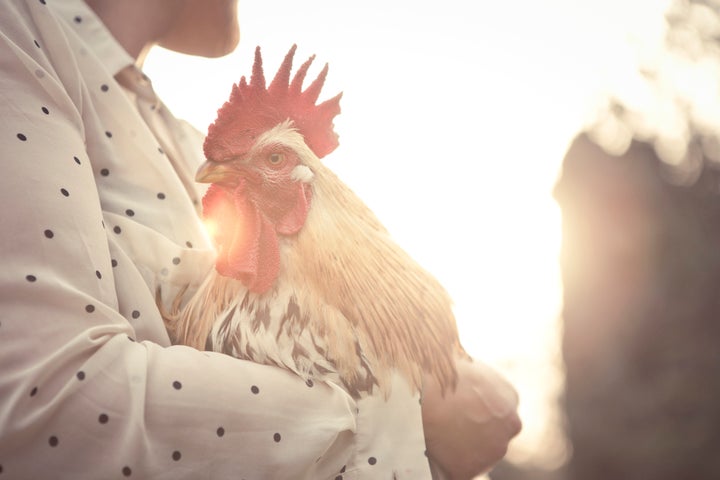
Roughly 9 billion chickens are slaughtered for food each year in the United States, and according to the poultry industry, each one of these sentient animals is mercifully stunned into unconsciousness before its neck is slit by an industrial blade.
But scientists have come to a far more ghastly conclusion. Their research shows that the method favored by U.S. poultry processors to stun the birds ― moving them through a vat of electrified water ― does not consistently render birds insensible before slaughter.
ADVERTISEMENT
As a result, scientists say, an untold number of the chickens that we eat ― hundreds of millions of them and potentially many more ― likely experience intense suffering when they are slaughtered.
Brain activity indicates that these animals may be capable of experiencing pain first when they receive a paralyzing electric shock that induces tonic muscle seizures, then when their throats are forced against a sharpened blade.
The extent of suffering is almost certainly vast. If just 1 percent of chickens raised each year in the U.S. are not effectively stunned, it means roughly 90 million animals are experiencing a violent and painful death. That’s more than the total number of dogs kept as pets in this country.
Unlike in Europe, there are virtually no U.S. regulations governing the humane slaughter of chickens. Nevertheless, following public pressure, the first major U.S. poultry producer, Perdue, pledged this year to phase out the use of electric water-baths.
ADVERTISEMENT
Now animal protection groups are pressuring Perdue’s competitors, like Tyson Foods, and large U.S. food service companies, like Aramark, to follow suit.
https://giphy.com/embed/5xKYr2yF0RAQw
Immobilized chickens are shown exiting an electric water-bath stunner. (Credit: U.S. Poultry and Egg Association)
Researchers say that a properly calibrated electric water-bath can reliably stun a large majority of birds that pass through it. But the devil is in the details.
Each water-bath has various electricity settings (for features like current, voltage, and frequency), and changes to these settings involve major trade-offs.
ADVERTISEMENT
Using a lower-frequency charge increases the chance that a bird will be stunned, but it also raises the likelihood of damage to the bird’s carcass. Lower-frequency shocks can trigger more intense muscle seizures, sometimes causing fractured bones and ruptured blood vessels. The resulting meat can be too damaged or visually unappealing to sell.
As a result, and with no animal welfare regulations to guide them, U.S. poultry companies use electric water-bath settings aimed at producing the best quality meat, not ensuring that chickens are reliably stunned.
In other words, they use higher-frequency, lower-voltage shocks, which may leave birds paralyzed (so they can be easily whisked around the processing factory line) but not always unconscious, according to an extensive record of published studies that measured chickens’ brain activity after administering shocks at different settings.
https://giphy.com/embed/118KzVQffzk6D6
Immobilized chickens have their throats cut by an industrial blade. Scientists believe many of them are conscious as it happens. (Credit: U.S. Poultry and Egg Association)
ADVERTISEMENT
No one knows how many individual chickens farmed in the U.S. might be conscious while they are slaughtered. Each processing plant uses its own water-bath settings, and none makes their settings public. Federal regulators don’t record the settings, let alone check that animals are unconscious before slaughter. Independent researchers say they are virtually never allowed to set foot in commercial processing plants.
But scientists say what little is known about standard U.S. industry practices is cause for alarm.
A review by Dr. Mohan Raj, the most widely cited researcher on this topic and an adviser to the European Union’s food safety agency, concluded, “We are aware of no direct evidence demonstrating that the electrical settings used in the United States are adequate to meet international standards for humane stunning and slaughter of poultry.”
The co-author of that review, Dr. Sara Shields, who is now a welfare specialist for Humane Society International, told The Huffington Post that the settings used by U.S. poultry companies “have not been demonstrated to actually produce an effective stun.”
Steve Wotton, a researcher at the University of Bristol’s School of Veterinary Sciences, one of the world’s leading centers for animal welfare research, said much the same. “The U.S. settings that have been reported to me and that I’ve read in published papers are far too low to stun.”
A spokesman for Tyson Foods, the largest U.S. poultry processor, told HuffPost that “proper animal handling is an important moral and ethical obligation and we take it very seriously.”
ADVERTISEMENT
But, he acknowledged, “like most of the industry, our plants currently use low-voltage electrical stunning.” The company maintains no standard electrical settings, he added, “due to variation from plant to plant.”
https://giphy.com/embed/5kGG83etQcSwE
Chickens experience a tonic seizure during the application of the electrical stun (in this footage, the stun is administered by an electrified head-only application rather than a water-bath). During a tonic seizure, “the body of the bird stiffens as muscles contract, the neck is arched, the legs are rigidly extended, rhythmic breathing stops, the eyes are wide open, and the blink reflex is absent.” Chickens at U.S. poultry facilities may be conscious during and following these seizures. (Credit: TopKip)
Welfare researchers favor an alternative approach called “controlled atmosphere killing,” whereby birds are exposed to a steadily rising concentration of gas (typically carbon dioxide) until they irreversibly lose consciousness.
More than 20 percent of chickens farmed in Europe are already stunned using controlled atmosphere killing systems, including the majority of chickens in Britain and about half in Sweden, a shift that has not led to price increases for consumers, analysts said.
ADVERTISEMENT
Even if electric stunners were perfectly effective, animal researchers say they would still be inferior because they involve several additional steps that can inflict pain on the billions of birds that are processed every year.
To prepare for the water-bath, the birds must first be removed from their transport crates, an inelegant process that can result in broken bones and wings as chickens are dropped from their crates.
Each bird is then turned upside-down and has its legs shackled into a metal conveyor. Nearly every aspect of this process causes the animals stress and pain, studies have found.
Unlike humans, chickens do not have diaphragms, so when inverted their viscera compresses their heart and lungs. Chickens also have pain receptors in their legs, and studies show the shackling process causes bruising to thigh muscles and damage to their legs.
https://giphy.com/embed/5hAGPsGjHodnG
ADVERTISEMENT
Chickens are inverted and shackled into a conveyor. (Credit: U.S. Poultry and Egg Association)
Disoriented and in pain, about 90 percent of chickens flap their wings immediately after shackling. Because the birds that we eat are very young ― just six weeks old on average ― their joints and tendons are underdeveloped, so intense wing-flapping can lead to dislocated joints, broken bones and hemorrhages of the wing tip.
Flapping can also cause birds to receive painful pre-stun shocks as their wings touch the electrified water before their heads are submerged.
Footage of birds entering electric water-baths is rare, but one such video, posted online by a water-bath manufacturer, appears to show one or more ducks receiving pre-stun shocks as they approach an electrified bath. Warning: The footage may be unpleasant for some viewers.
Some chickens manage to avoid being killed by both the water-bath and the neck-cutting, only to suffer an arguably worse fate. The U.S. Agriculture Department estimates that hundreds of thousands of birds are unintentionally boiled alive each year because they manage to survive until they reach a scalding water tank that helps loosen feathers from carcasses.
ADVERTISEMENT
Controlled atmosphere killing avoids virtually all of these problems, since birds are exposed to gas while still inside their transport crates and all of the subsequent steps are performed after they’re dead.
Gas stunning systems also produce consistently superior meat quality, analysts say, and employees enjoy better conditions. They don’t need to handle live animals, and they can work under normal lighting conditions (electric water-bath facilities are darkened to calm the birds).
Chickens make up well over 90 percent of the land animals slaughtered each year in the United States. The chickens sold for meat, known as broilers, spend their brief lives ballooning to immense proportions, over six times their natural weight, a result of intense genetic selection.
Their underdeveloped bones often cannot handle their body’s own mass, academic and industry studies have found, so many experience painful skeletal disorders, including deformed bones and bowed legs. Others barely walk or just sit stationary.
Then, after six weeks of life, it’s off to the slaughterhouse.
Hoping to build upon recent welfare advancements for egg-laying hens, prominent animal groups, including Mercy for Animals and The Humane League, this year launched the first major campaigns to improve conditions for broilers.
ADVERTISEMENT
Perdue Farms, the fourth-largest U.S. poultry company, told HuffPost it plans to have a gas stunning system installed in one of its facilities by the end of 2017, and then determine a roll-out schedule for their nine other processing plants.
Nico Pitney is a senior editor at The Huffington Post. Tips? Feedback? Email him at nico.pitney [at] huffingtonpost.com.
Wednesday, 23 August 2023, 6:26 am
Press Release: Compassion in World Farming
Without major reforms to industrial farming it will not be possible to end the spread of bird flu or reduce the risk of a global human pandemic, warns a compelling new report released today (22 Aug) by Compassion in World Farming.
The report – called Bird flu: Only major farm reforms can end it – shows that, contrary to popular belief, wild birds are typically victims of the disease rather than the cause, and it is spiralling out of control due to the rise of factory farming. This view is supported by the international Scientific Task Force on Avian Influenza, which was set up to provide governments with recommendations and guidance.
Backed by the very latest scientific evidence and illustrated with powerful images of poultry affected by bird flu around the world from We Animals Media, the report urges governments to implement a three-point action plan which includes:
Today, the animal welfare and environmental NGO has written to governments across Europe, the UK and the US urging them to work with the World Organisation for Animal Health (WOAH) and the United Nations Food and Agriculture Organization (FAO) to implement this action plan without delay.
Tens of thousands of wild birds are reported to have died from bird flu, although the true number is thought to be in the millions. Until recently, the bird flu that circulated in wild birds generally caused them little harm. But when the virus enters overcrowded factory farm poultry sheds – often carried in on workers’ contaminated shoes, clothing or equipment – it can evolve into dangerous Highly Pathogenic Avian Influenza (HPAI).
These factory farms create the ideal conditions for the spread of the disease as they give viruses a constant supply of hosts – allowing infections to spread rapidly – and for highly harmful new strains to emerge.
More than half a billion farmed birds have died or been culled globally due to bird flu since 2021. Many were broilers (meat chickens) confined in factory farms where they are crammed closely together in huge sheds, or egg-laying hens that live confined in cages around the size of an A4 sheet of paper.
Author of the report and Chief Policy Adviser at Compassion in World Farming, Peter Stevenson, said: “Bird flu is like a ticking time bomb. Unless we wake up and take urgent action to end factory farming we will simply be unable to stop its rapid spread across the globe or reduce the risk of a serious human pandemic developing.
“Cramming animals together in factory farms is not only totally inhumane, it’s creating the perfect place for bird flu and other viruses to spread and mutate into more dangerous strains. That’s why our END.IT campaign seeks to end factory farming and transform our global food system to ensure the future health of animals, people and our planet.
“Three key actions are needed to tackle this disease – vaccination, major reform of the poultry industry and an end to the factory farming of pigs. Governments around the world must implement this three-point plan without delay. If they don’t, millions more birds and other mammals are likely to suffer and die and the health of millions of people may be in serious jeopardy.”
Birds are not the only animals affected by avian flu. The disease has already spread to mammals – infecting otters, foxes, dolphins, sea lions, mink, and domestic dogs and cats, amongst others. It has also developed the ability to spread from one mink to another – something it previously had not been capable of in mammals; this makes it far more dangerous. If it develops the same ability to spread between humans, it becomes a real pandemic risk.
At least 875 people have been infected worldwide since 2003. The swine flu epidemic of 2009 and the 1918 Spanish flu outbreak, caused by a flu virus with genes of an avian origin, powerfully highlight the capabilities of zoonotic disease.
Professor Devi Sridhar, chair of global public health at the University of Edinburgh, has said: “The more chances the virus has to jump into a human and mutate, the more likely it is a dangerous strain will emerge that could set off the next pandemic.”
This view is supported by a joint statement from the UN’s Food and Agriculture (FAO), World Organisation for Animal Health (WOAH) and the World Health Organisation (WHO) in July 2023 which said: “Avian influenza viruses normally spread among birds, but the increasing number of H5N1 avian influenza detections among mammals—which are biologically closer to humans than birds are—raises concern that the virus might adapt to infect humans more easily.”
Compassion in World Farming’s END.IT campaign is building a global movement to end factory farming and transform our global food system to ensure the future health of animals, people and our planet. To sign the petition visit www.END.IT
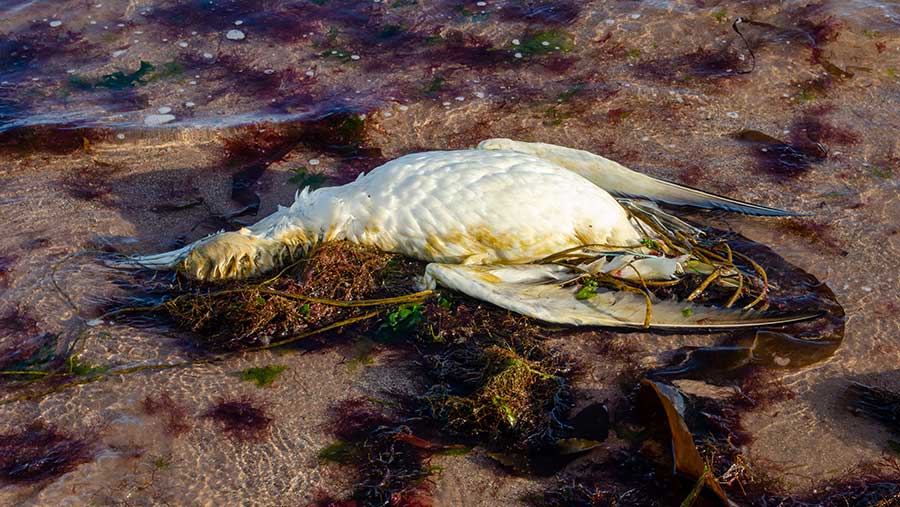 © Paul/Adobe Stock
Wild birds are being unfairly blamed for spreading avian influenza and are instead the victims of a disease caused by intensively farmed poultry, according to animal welfare group Compassion In World Farming (CIWF).
A new CIWF report, Bird flu: Only major farm reforms can end it, claims avian influenza is “spiralling out of control due to factory farming” and is demanding changes to the way chickens are reared.
See also: Guidance on avian flu with England’s chief vet
“Until recently, the bird flu that circulated in wild birds generally caused them little harm,” it suggests.
“But when the virus enters overcrowded factory farm poultry sheds – often carried in on workers’ contaminated shoes, clothing or equipment – it can evolve into dangerous Highly Pathogenic Avian Influenza (HPAI).”
The UK is currently experiencing its worst-ever outbreak of avian influenza, with almost 300 cases reported since October 2021, resulting in the compulsory slaughter of many millions of farmed or captive birds.
Globally, CIWF says more than 500m farmed birds have died or been culled since 2021 due to avian influenza.
It has therefore suggested a three-point plan which it wants governments to adopt across the world. This consists of:
Visit our Know How centre for practical farming advice
But the claims have been dismissed by poultry sector representatives, who insist that it is migratory birds that have spread the disease.
“No [commercial] bird has avian influenza when it goes onto farm,” said British Poultry Council chief executive Richard Griffiths.
“All incidents derive from outside the farm through wild bird incursion. When disease is detected, the farm population is culled, so disease is not spread.”
Mr Griffiths also suggested that conflating disease control with opinions on how food is produced in the UK was “irresponsible”.
“Our primary concern here is ensuring the health of our birds and the sustainability of a world-class food system producing nutritious and affordable food. In these times, that matters more than ever,” he said.
Representing the egg sector, British Free Range Egg Producers Association chief executive Robert Gooch said the CIWF report “flies in the face of reality on the ground”.
“Calling for less-intensive poultry systems in the UK is perverse when approximately 70% of laying hens are free-range or organic, yet these birds have to be locked up in houses most winters to prevent them being infected by wild birds.
“Wild birds are the source of bird flu, not poultry, and are a big threat to extensive, free-range production systems.”
Reuters
August 31, 202312:52 PM PDTUpdated 2 days ago
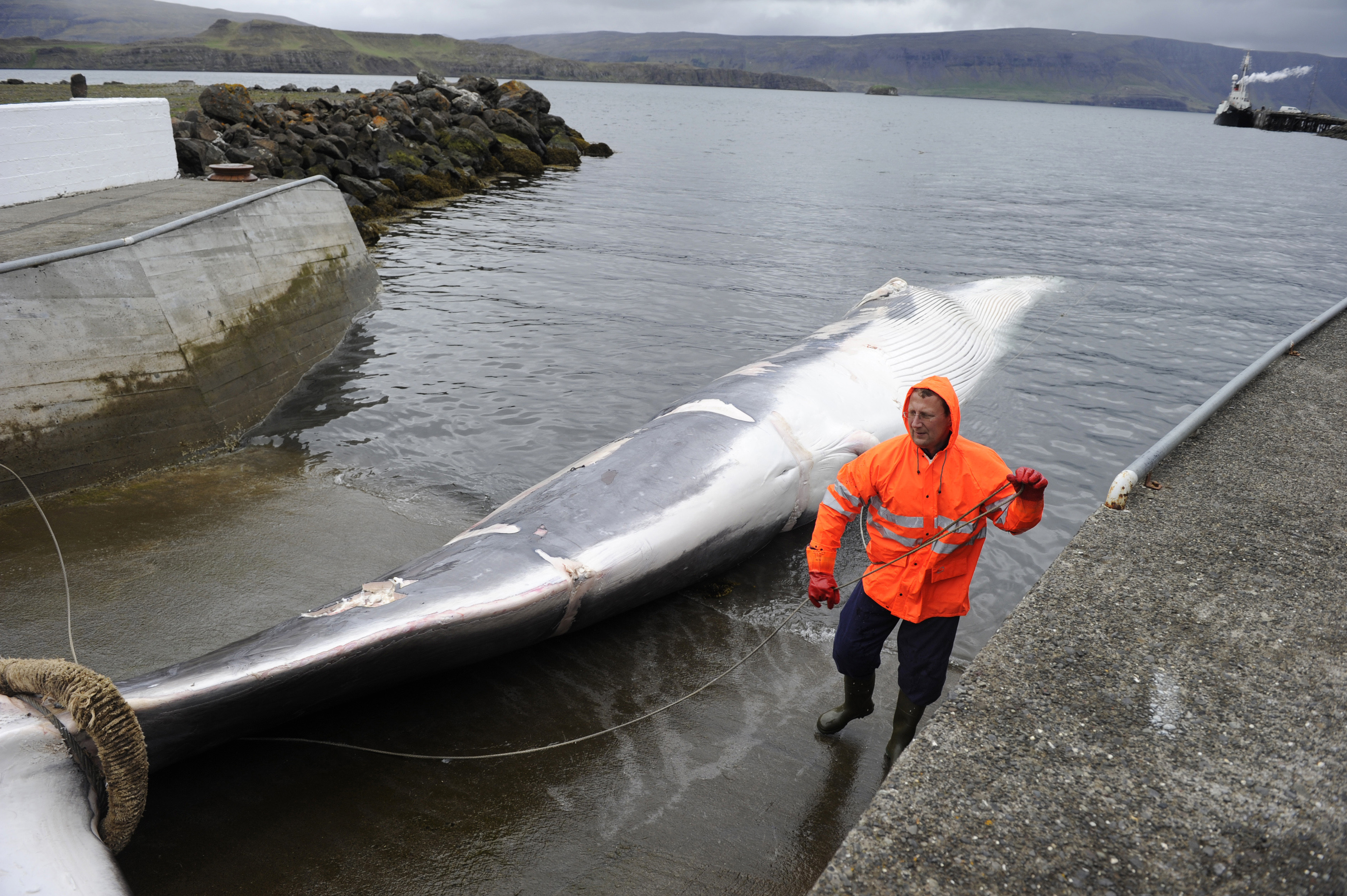
[1/2]A man stands near a finwhale being towed to a port in Reykjavik June 18, 2013. REUTERS/Sigtryggur Johannsson/File Photo Acquire Licensing Rights
OSLO, Aug 31 (Reuters) – Iceland’s government said on Thursday it will resume hunting fin whales after a two-month halt, but with new guidelines aimed at killing them as quickly as possible to reduce suffering.
Iceland resumed hunting fin whales, which can reach lengths of over 20 metres (65 feet), in 2006 after a 20-year pause.
The International Whaling Commission – a global body that oversees whale conservation – imposed a moratorium in 1986 after some species came close to extinction. Although several are still endangered or even on the brink of extinction, Iceland, along with Norway and Japan, have resumed commercial whaling.
Advertisement · Scroll to continueReport this ad
Reykjavík suspended commercial whaling in June after a government-commissioned report said that it took too long for whales to die after they were harpooned, sometimes hours, in breach of its law on animal welfare.
The hunting will be resumed after a government working group concluded that it was possible to improve the hunting methods.
“A Regulation will be issued that will include detailed and stricter requirements for hunting equipment and hunting methods, as well as increased supervision,” the Ministry of Food, Agriculture and Fisheries said in a statement.
Advertisement · Scroll to continueReport this ad
Iceland’s public broadcaster said whale hunters would be required to complete a course in whale biology, pain perception and stress.
They will be also provided with detailed instructions of how to harpoon the animals to make sure that they die quickly.
After more than a year of combating an outbreak of Highly Pathogenic Avian Influenza, afflicting poultry farms across the commonwealth, state officials said Wednesday that Pennsylvania has received the “all clear” to resume normal international poultry trade.
By
The Pennsylvania Capital-Star is a nonpartisan, nonprofit news site dedicated to honest and aggressive coverage of state government, politics, and policy. Since the launch in February 2019, the Capital-Star has emerged as a go-to source for in-depth original reporting, explainers on complex topics, features that ground policy debates, as well as progressive commentary on a range of issues. The Capital-Star is part of States Newsroom, a national 501(c)(3) nonprofit supported by grants and a coalition of donors and readers.
SUCCESSFUL FARMING’S EDITORIAL GUIDELINES
Published on August 31, 2023
:max_bytes(150000):strip_icc():format(webp)/DSC_0745-4b4cd433ac1c4348b63f53ff40ad9450.JPG)
By Cassie Miller
After more than a year of combating an outbreak of Highly Pathogenic Avian Influenza, afflicting poultry farms across the commonwealth, state officials said Wednesday that Pennsylvania has received the “all clear” to resume normal international poultry trade.
State officials announced that Pennsylvania had received the “HPAI-free” designation from The World Animal Health Organization on Wednesday, celebrating the good news for Pennsylvania’s $7.1 billion poultry industry.
State Agriculture Secretary Russell Redding praised private and governmental partnerships for seeing Pennsylvania through the outbreak, which began in April 2022.
“Pennsylvania’s coordinated, aggressive, and effective response to the hi-path avian influenza outbreak has brought us to this point,” Redding said. “Planning, coordination, and critical partnerships forged among every level of the industry, working in concert with two Pennsylvania government administrations, including the Department and PA Veterinary Diagnostic Lab System, the USDA, and Penn State Extension, have made the difference in minimizing the impact of what has been the costliest animal agriculture emergency in U.S. history.”
HI-PATH is highly contagious and can infect both birds and humans, according to the Centers for Disease Control and Prevention.
The outbreak of the current HI-PATH strain has affected 31 commercial flocks, 36 backyard flocks, and caused the loss of 4,648,240 domestic birds, according to state agriculture officials.
The last confirmed infection of the current strain of highly pathogenic avian flu in Pennsylvania was on March 17, 2023, in Lancaster County.
While farm-specific restrictions were lifted earlier this month, the commonwealth remains under “general quarantine,” with the department continuing to monitor and test for infections statewide.
Pennsylvania Capital Star is part of the States Newsroom, a network of similar news bureaus supported by grants and a coalition of donors as a 501c(3) public charity.
Sunday, August 27th 2023 – 14:17 UTC
Full article0 comments
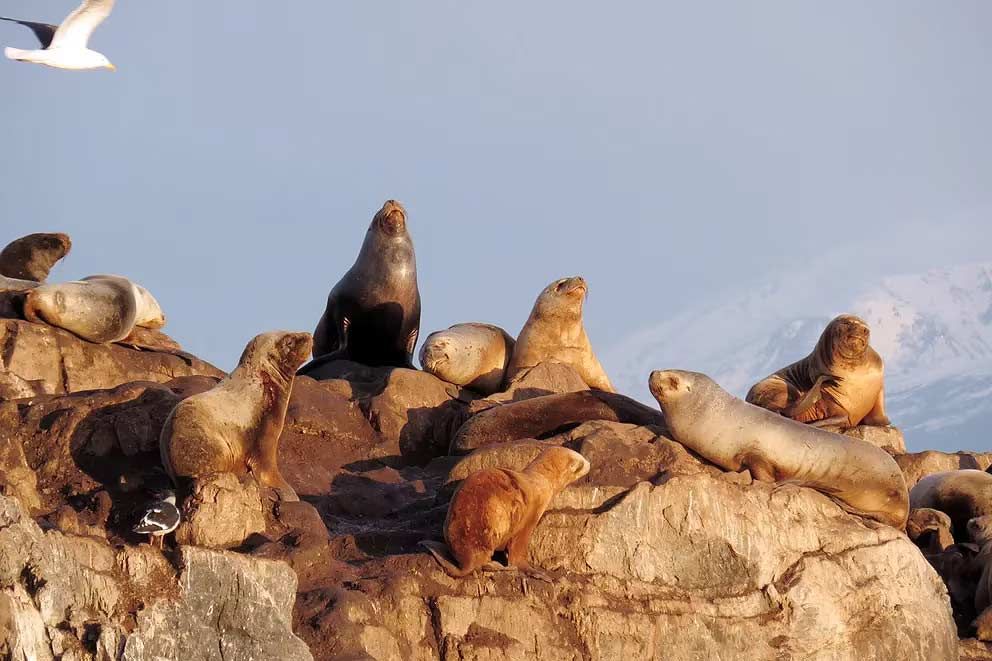

Coast Guard and port authorities in the Argentine beach resort of Mar del Plata Saturday closed the South breakwater after the National Service of Agrifood Health and Quality (Senasa) confirmed two cases of the Highly Pathogenic Avian Influenza (HPAI) H5 in sea lions in the area where 4 dead specimens were found.
A fence was to be placed to keep people from approaching the animals, while an operation was deployed to prevent pedestrian traffic along the south breakwater, it was also reported. Senasa experts are holding meetings with municipal, provincial, and national institutions along the Atlantic coast to lay out an intervention protocol for these situations.
So far, more than 30 dead sea lions have been counted on the coast of Mar del Plata. Similar situations have been reported on the Buenos Aires province’s Atlantic coast in places such as Necochea and Balnerario Orense, in addition to various locations along Argentine Patagonia (Puerto Loyola, Viedma, Tierra del Fuego). (Read also: https://en.mercopress.com/en.mercopress.com/2023/08/23/sea-lions-in-necochea-died-of-avian-flu2023/08/23/sea-lions-in-necochea-died-of-avian-flu)
Hence, Senasa issued a recommendation “not to handle dead animals or animals with suspicious symptoms” nor “visit poultry establishments or wild animal settlements after having been in contact with dead animals or animals that have presented symptoms” compatible with the malady.
In Senasa’s expert opinion, “sea lions contract the disease from sick wild birds” releasing the virus through their excretions. “In the sea lion colonies there is a lot of contact between seabirds and also with marine mammals, the fecal matter is distributed everywhere,” the agency noted.
The specialists argue that “it is a matter of research, and we are working with other countries with the same findings to determine if there were mutations of the virus that are being transmitted from mammal to mammal.”
“On Wednesday, two samples were taken at the South breakwater. Upon registering the positive cases, we asked for cooperation from the Coast Guard so that there is a sanitary control zone of 3 kilometers,” Senasa Regional Director Manuel Baldovino said.
So far, three dead sea lions yielded negative laboratory results for avian flu. But positive cases were found in Río Grande (Tierra del Fuego); in Antarctica; in the Punta Bermeja Natural Protected Area (Río Negro); in Necochea (province of Buenos Aires), and in Punta Loyola (Santa Cruz).
Senasa also explained that the recent detections in marine mammals do not affect the animal health status self-declared before the World Organization for Animal Health, where Argentina is recognized as a country free of HPAI H5 in poultry.
Late last week, Senasa confirmed that the sea lions in the Port of Quequén, Necochea, had contracted avian influenza. Other samples from 40 fur seals found dead on the beaches of the Autonomous City of Buenos Aires (CABA) “are still under analysis.”
In addition, Río Negro Undersecretary of Environment and Climate Change of Río Negro Fabián Llanos told Télam that a restriction on the beaches at Punta Bermeja was determined as a precautionary measure.
Trump’s VP remarks are a classic rope-a-dope to keep his challengers in line.
04:23 /06:10TAP TO UNMUTE
Sept. 1, 2023, 3:00 AM PDT
By Zeeshan Aleem, MSNBC Opinion Writer/Editor
Former President Donald Trump is considering former biotech executive Vivek Ramaswamy as his pick for vice president.
At least that’s how the media is interpreting Trump’s recent comments to right-wing talk show host Glenn Beck about the upstart MAGA candidate. But if you consider Trump’s comments another way, his praise for Ramaswamy’s “talent” functions as a way to disarm his opposition and incentivize an obedient pack of 2024 challengers.
Trump’s approval also doubles as a signal to the other candidates in the race that flattery could be the best way to angle for a plum job in his administration.
Beck asked Trump on Tuesday what he thought of the idea of “Vice President Ramaswamy.”
“Well, I think he’s great. Look, anybody that says I’m the best president in a generation … I have to like a guy like that, I can’t get upset with him,” Trump said in response. “But he’s a smart guy. He’s a young guy. He’s got a lot of talent. He’s a very, very intelligent person. He’s got good energy. He could be some form of something, I tell ya. I think he’d be very good. I think he’s very good, I think he’s really distinguished himself.”
“He’s starting to get out there a little bit, he’s getting a little bit controversial, I got to tell him: ‘Be a little bit careful. Some things you have to hold in just a little bit, right?’” Trump added.
Three elements stand out from Trump’s statement.
First: It’s vague and noncommittal — the closest he gets to the idea of taking on Ramaswamy is that he “could be some form of something.” That language is broad enough that it could mean that Trump’s open to putting Ramaswamy somewhere in his administration, but that could be anywhere from a Cabinet position, an advisory role, to an obscure bureaucratic gig.

AUG. 31, 202309:06
Second: When discussing his approval of Ramaswamy, Trump conditions it on Ramaswamy’s fawning behavior and his mimicry of his ideas. Ramaswamy caters to Trump’s thirst for approbation and flattery, so it’s possible that that behavior makes Trump take him seriously as a potential recruit. But Trump’s approval also doubles as a signal to the other candidates in the race that flattery could be the best way to angle for a plum job in his administration.
Not so incidentally, if all the other candidates try to stay on his good side, that will help Trump retain his dominant position in the primaries. Trump can neutralize his challengers by dangling the possibility of hiring them if they remain meek — but without ever committing to anything.
Must reads from Today’s list

Caitlyn Yaede

Emily Tamkin
Former New Jersey Gov. Chris Christie, at least, is unlikely to hold out for that possibility. In the 2016 primaries, he made a hugely surprising early endorsement of Trump in an apparent attempt to win consideration as a running mate or for some other high-level position in a future Trump administration. Trump considered the idea of Christie for Veep, but ultimately decided against it. Christie came away with nothing, even as others like former Texas Gov. Rick Perry were rewarded.
Third: The fact that even Trump (of all people) thinks Ramaswamy has too much of an appetite for controversy tells you how extreme Ramaswamy is — and suggests Trump knows better than to pick him as a running mate.
Trump revels in generating controversy himself, because he knows that it excites his base. But Trump has never liked being upstaged, and he also knows that controversy carries costs with mass appeal. While he personally might not be willing to change his behavior much, he may see a running mate who alienates even more people as a strategic liability. Consider Trump’s choice of Mike Pence for his first run — advisers and family convinced him that his best bet was a candidate who could unite the GOP. The decision was widely read as a rare moment when Trump catered to the political establishment, based on a calculation that Pence could help him appeal to the Christian right and navigate Washington more deftly.
It’s possible that Trump’s criteria for his running mate have changed. But that he’s openly saying that Ramaswamy goes too far suggests that Trump sees limitations to taking him on for Veep. That would be a judicious assessment. Ramaswamy is a smooth orator, but he has zero political experience, no sway in a battleground state that Trump needs, and his bombastic, cartoonish MAGA style is likely to further repel moderate suburban Republicans who are either suspicious of or dislike Trump. (Of course, it’s unclear at this point in his career how Trump can convince that set that he’s reformable or capable of compromise.)
Is Trump considering Ramaswamy as a vice president? It’s possible. But if you really listen to what he’s saying, the only thing we can be sure of is that he’s ensuring that his competition follows his commands.

