Default Mono Sans Mo
Dove hunting season begins Sept. 1 in Texas, expected to be active
Reply

Default Mono Sans Mo
August 30, 2023 American Chemical Society
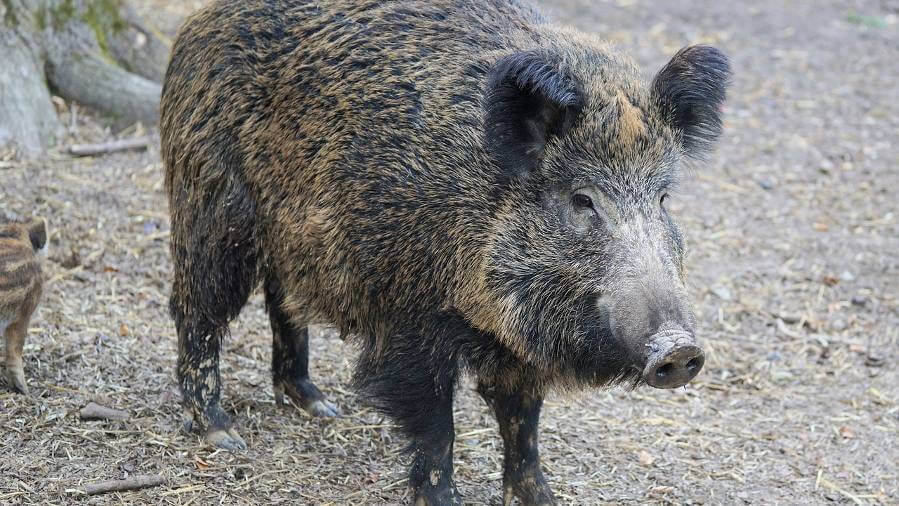
Shaggy-haired, tusked pigs roam free in the woods of Germany and Austria. Although these game animals look fine, some contain radioactive cesium at levels that render their meat unsafe to eat. Previously, scientists hypothesized that the contamination stemmed from the 1986 Chernobyl nuclear power plant accident. But now, researchers in ACS’ Environmental Science & Technology report that nuclear weapon fallout from 60 to 80 years ago also contributes significantly to the wild boars’ persistent radioactivity.
Radioactive cesium, a byproduct of nuclear weapons explosions and nuclear energy production, poses risks to public health when it enters the environment. And the environment across Europe got a large pulse of radioactive cesium contamination following the Chernobyl power plant accident 37 years ago. Most of that radioactivity originated from cesium-137, but a much longer-lived form, called cesium-135, can also be produced during nuclear fission. Over time, cesium-137 has declined in most game animals, but wild boars’ radioactivity levels haven’t changed substantially. Their meat continues to exceed regulatory limits for consumption, in some places leading to less hunting and consequently contributing to the overpopulation of the animals in Europe. Because the radioactive cesium levels haven’t changed as expected, Georg Steinhauser, Bin Feng and colleagues wanted to investigate the amount and origin of that contamination in wild boars from Germany.
https://googleads.g.doubleclick.net/pagead/ads?gdpr=0&us_privacy=1—&client=ca-pub-1680599806301730&output=html&h=280&adk=1357719125&adf=3624191003&pi=t.aa~a.1381849204~i.3~rp.4&w=702&fwrn=4&fwrnh=100&lmt=1693490644&num_ads=1&rafmt=1&armr=3&sem=mc&pwprc=8090881260&ad_type=text_image&format=702×280&url=https%3A%2F%2Fscienceblog.com%2F539434%2Fnuclear-weapons-tests-are-unappreciated-source-of-radioactivity-in-wild-boars%2F&host=ca-host-pub-2644536267352236&fwr=0&pra=3&rh=176&rw=702&rpe=1&resp_fmts=3&wgl=1&fa=27&uach=WyJXaW5kb3dzIiwiMTUuMC4wIiwieDg2IiwiIiwiMTE2LjAuMTkzOC42MiIsW10sMCxudWxsLCI2NCIsW1siQ2hyb21pdW0iLCIxMTYuMC41ODQ1LjExMSJdLFsiTm90KUE7QnJhbmQiLCIyNC4wLjAuMCJdLFsiTWljcm9zb2Z0IEVkZ2UiLCIxMTYuMC4xOTM4LjYyIl1dLDBd&dt=1693513800207&bpp=1&bdt=5168&idt=-M&shv=r20230830&mjsv=m202308300101&ptt=9&saldr=aa&abxe=1&cookie=ID%3D22fa472361c8b37f-2245f8aa0de00035%3AT%3D1693513798%3ART%3D1693513798%3AS%3DALNI_MbyEG7xv7KTQ5eHUer0RnhPUb9RlA&gpic=UID%3D00000d8f269cd0a3%3AT%3D1693513798%3ART%3D1693513798%3AS%3DALNI_Mah5u90T_3Ofa94cCy03iu7KV6h1Q&prev_fmts=0x0&nras=2&correlator=7122478141062&frm=20&pv=1&ga_vid=1521628924.1693513798&ga_sid=1693513798&ga_hid=1262197366&ga_fc=1&u_tz=-420&u_his=1&u_h=864&u_w=1536&u_ah=816&u_aw=1536&u_cd=24&u_sd=1.25&dmc=8&adx=226&ady=1567&biw=1511&bih=708&scr_x=0&scr_y=83&eid=44759876%2C44759927%2C44759837%2C31077550%2C20222282&oid=2&pvsid=2583970215208065&tmod=1826086997&wsm=1&uas=0&nvt=1&ref=https%3A%2F%2Fwww.google.com%2F&fc=1408&brdim=0%2C0%2C0%2C0%2C1536%2C0%2C1536%2C816%2C1528%2C708&vis=1&rsz=%7C%7Cs%7C&abl=NS&fu=128&bc=31&ifi=2&uci=a!2&btvi=1&fsb=1&xpc=IUAtcLllep&p=https%3A//scienceblog.com&dtd=1628
The researchers worked with hunters to collect wild boar meat from across Southern Germany and then measured the samples’ cesium-137 levels with a gamma-ray detector. To determine the origin of the radioactivity, the team compared the amount of cesium-135 to cesium-137 with a sophisticated mass spectrometer. Previous studies showed that this ratio clearly indicates sources: A high ratio points to nuclear weapons explosions, whereas a low ratio implicates nuclear reactors.
The team observed that 88% of the 48 meat samples exceeded German regulatory limits for radioactive cesium in food. For the samples with elevated levels, the researchers calculated the ratios of cesium-135 to cesium-137, and found that nuclear weapons testing supplied between 10 and 68% of the contamination. And in some samples, the amount of cesium from weapons alone exceeded regulatory limits. The researchers propose that the mid-20th century weapons tests were an underappreciated source of radioactive cesium to German soil, which was also unevenly impacted by the Chernobyl accident. Contamination from both sources have been taken up by the wild boars’ food, such as underground truffles, contributing to their persistent radioactivity. The researchers say that future nuclear accidents or explosions could worsen these animals’ contamination, potentially impacting food safety for decades, as this study shows.
https://googleads.g.doubleclick.net/pagead/ads?gdpr=0&us_privacy=1—&client=ca-pub-1680599806301730&output=html&h=280&adk=1357719125&adf=2460079723&pi=t.aa~a.1381849204~i.7~rp.4&w=702&fwrn=4&fwrnh=100&lmt=1693490644&num_ads=1&rafmt=1&armr=3&sem=mc&pwprc=8090881260&ad_type=text_image&format=702×280&url=https%3A%2F%2Fscienceblog.com%2F539434%2Fnuclear-weapons-tests-are-unappreciated-source-of-radioactivity-in-wild-boars%2F&host=ca-host-pub-2644536267352236&fwr=0&pra=3&rh=176&rw=702&rpe=1&resp_fmts=3&wgl=1&fa=27&uach=WyJXaW5kb3dzIiwiMTUuMC4wIiwieDg2IiwiIiwiMTE2LjAuMTkzOC42MiIsW10sMCxudWxsLCI2NCIsW1siQ2hyb21pdW0iLCIxMTYuMC41ODQ1LjExMSJdLFsiTm90KUE7QnJhbmQiLCIyNC4wLjAuMCJdLFsiTWljcm9zb2Z0IEVkZ2UiLCIxMTYuMC4xOTM4LjYyIl1dLDBd&dt=1693513800207&bpp=1&bdt=5169&idt=-M&shv=r20230830&mjsv=m202308300101&ptt=9&saldr=aa&abxe=1&cookie=ID%3D22fa472361c8b37f-2245f8aa0de00035%3AT%3D1693513798%3ART%3D1693513798%3AS%3DALNI_MbyEG7xv7KTQ5eHUer0RnhPUb9RlA&gpic=UID%3D00000d8f269cd0a3%3AT%3D1693513798%3ART%3D1693513798%3AS%3DALNI_Mah5u90T_3Ofa94cCy03iu7KV6h1Q&prev_fmts=0x0%2C702x280&nras=3&correlator=7122478141062&frm=20&pv=1&ga_vid=1521628924.1693513798&ga_sid=1693513798&ga_hid=1262197366&ga_fc=1&u_tz=-420&u_his=1&u_h=864&u_w=1536&u_ah=816&u_aw=1536&u_cd=24&u_sd=1.25&dmc=8&adx=226&ady=2407&biw=1511&bih=708&scr_x=0&scr_y=83&eid=44759876%2C44759927%2C44759837%2C31077550%2C20222282&oid=2&pvsid=2583970215208065&tmod=1826086997&wsm=1&uas=0&nvt=1&ref=https%3A%2F%2Fwww.google.com%2F&fc=1408&brdim=0%2C0%2C0%2C0%2C1536%2C0%2C1536%2C816%2C1528%2C708&vis=1&rsz=%7C%7Cs%7C&abl=NS&fu=128&bc=31&ifi=3&uci=a!3&btvi=2&fsb=1&xpc=acXGQh88Kg&p=https%3A//scienceblog.com&dtd=1640
The authors acknowledge funding from the Bavarian Academy for Hunting and Nature and an Alexander von Humboldt Foundation Postdoctoral Fellowship.
The radioactive wild boar origin story is featured in a YouTube Shorts by Reactions, a video series produced by the American Chemical Society and PBS Digital Studios. Watch the video here.
The paper’s abstract will be available on Aug. 30 at 8 a.m. Eastern time here: http://pubs.acs.org/doi/abs/10.1021/acs.est.3c03565
The American Chemical Society (ACS) is a nonprofit organization chartered by the U.S. Congress. ACS’ mission is to advance the broader chemistry enterprise and its practitioners for the benefit of Earth and all its people. The Society is a global leader in promoting excellence in science education and providing access to chemistry-related information and research through its multiple research solutions, peer-reviewed journals, scientific conferences, eBooks and weekly news periodical Chemical & Engineering News. ACS journals are among the most cited, most trusted and most read within the scientific literature; however, ACS itself does not conduct chemical research. As a leader in scientific information solutions, its CAS division partners with global innovators to accelerate breakthroughs by curating, connecting and analyzing the world’s scientific knowledge. ACS’ main offices are in Washington, D.C., and Columbus, Ohio.
https://phys.org/news/2023-08-mere-americans-nation-beef-significant.html
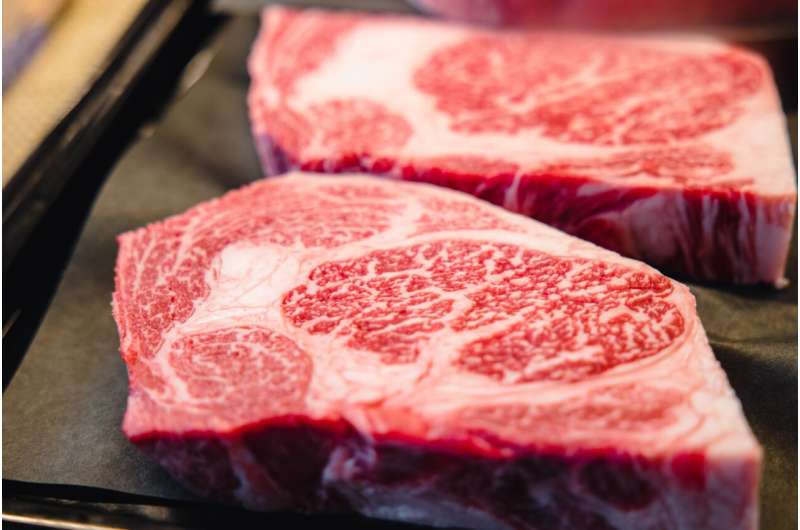
A new study has found that 12% of Americans are responsible for eating half of all beef consumed on a given day, a finding that may help consumer groups and government agencies craft educational messaging around the negative health and environmental impacts of beef consumption.
Those 12%—most likely to be men or people between the ages of 50 and 65—eat what researchers called a disproportionate amount of beef on a given day, a distinction based on the latest Dietary Guidelines for Americans, which suggest four ounces per day of meat, poultry, and eggs combined for those consuming 2,200 calories per day.
The study, published in the journal Nutrients, analyzed data from the CDC’s National Health and Nutrition Examination Survey, which tracked the meals of more than 10,000 adults over a 24-hour period. The global food system emits 17 billion tons of greenhouse gases a year, equivalent to a third of all planet-warming gases produced by human activity. The beef industry contributes heavily to that, producing eight to 10 times more emissions than chicken, and over 50 times more than beans.
“We focused on beef because of its impact on the environment, and because it’s high in saturated fat, which is not good for your health,” said the study’s corresponding and senior author Diego Rose, professor and nutrition program director at Tulane University School of Public Health and Tropical Medicine.
Rose said the study’s purpose was to assist in targeting educational programs or awareness campaigns to those eating disproportionate amounts of beef. Honing messaging around the environmental impact of beef production is crucial at a time when climate change awareness is higher than ever.
Rose said he and fellow researchers were “surprised” that a small percentage of people are responsible for such an out-sized consumption of beef, but it’s yet to be determined if the findings are encouraging for sustainability advocates.
“On one hand, if it’s only 12% accounting for half the beef consumption, you could make some big gains if you get those 12% on board,” Rose said. “On the other hand, those 12% may be most resistant to change.”
The study also found that those who were not disproportionate beef consumers were more likely to have looked up USDA’s MyPlate food guidance system.
“This might indicate that exposure to dietary guidelines can be an effective tool in changing eating behaviors, but it could also be true that those who were aware of healthy or sustainable eating practices were also more likely to be aware of dietary guideline tools,” said Amelia Willits-Smith, lead author on the paper and a post-doctoral fellow at the University of North Carolina at Chapel Hill.
Of the beef consumed on a given day, almost a third came from cuts of beef such as steak or brisket. But six of the top 10 sources were mixed dishes such as burgers, burritos, tacos, meatloaf or spaghetti with meat sauce. Some of these foods may offer an easy opportunity for disproportionate beef eaters to alter their dietary habits.
“If you’re getting a burrito, you could just as easily ask for chicken instead of beef,” Willits-Smith said.
Those below the age of 29 and above the age of 66 were least likely to eat large amounts of beef. Rose said this indicated that the younger generation might be more interested in mitigating the effects of climate change.
“There’s hope in the younger generation, because it’s their planet they’re going to inherit,” Rose said. “I’ve seen in my classes that they’re interested in diet, how it impacts the environment, and what can they do about it.”
In addition to Rose and Willits-Smith, the study’s authors include Tulane clinical assistant professor Dr. Keelia O’Malley and Tulane Masters of Public Health graduate Harmonii Odinga.
June hunt in Alaska that killed 99 bears and five wolves prompts activists to renew their call for crackdown on ‘rogue states’
Tom PerkinsThu 31 Aug 2023 06.00 EDT
The US federal government has been accused of simultaneously paying to protect endangered species while funding state-organized hunts of large, endangered predators, like gray wolves and grizzly bears, that increase the likelihood of their extinction.
A coalition of more than 35 animal welfare and Indigenous groups in late 2021 formally petitioned the US Department of the Interior to develop rules to withhold money from state agencies that fund the “slaughters”. But the department has not responded to the petition, the groups allege.
The coalition renewed their call in the wake of a June Alaska department of fish and game operation in which hunters gunned down 94 brown bears, five black bears and five wolves from helicopters. In a 23 August 2023 letter to Deb Haaland, the department of interior secretary, the coalition wrote that the “extinction crisis is not an abstraction; it is a clear and present danger and an impending catastrophe”.
It added: “The [department of the interior] is tasked with preventing extinctions, using sound science when making decisions to prevent those extinctions, and with being accountable to the entire public – not funding controversial predator-control actions for the purported benefit of a few.”
The letter also detailed the controversial “Judas wolf” tactic in which Alaska state agents put radio collars on wolves who return to their packs, which hunters then kill.
Similar hunts have been carried out in Wisconsin, Montana and Idaho, and state game agencies claim the kills are conservation efforts designed to boost thinned herds of caribou, moose, elk and other prey hunted by large predators.
In a statement to the Guardian, the interior department claimed federal money is not used for the kills. Spokesperson Melissa Schwartz said the allegation that the department funded state kills was “wildly inaccurate”.
But the coalition said the interior department’s statement is misleading. Federal money cannot be used to purchase bullets or guns for the hunts, which are paid for with state money, said Jeff Ruch, an attorney with the Public Employees for Environmental Responsibility (Peer) non-profit.
But federal funds can be used to organize the operation and monitor the results, he added.
“Our petition is to change the rules so they can look at the whole state program and whether states are doing things that undermine federal policy and should be made unfundable,” Ruch said.
The federal money that goes to state agencies with the purpose of protecting wildlife is raised through gun and fishing tackle sales taxes. As much as $1bn is distributed to state agencies via the US Fish and Wildlife Service, which is part of the interior department, and the funds make up between one-third and two-thirds of state game agency budgets, Ruch said.
The rule-making petition aims to deny federal wildlife management funding to states that carry out the kills, and give scientists and conservation groups the ability to comment if a predator kill is proposed. That condition is currently required under law but lacks an enforcement mechanism, and the proposed rule would fill that hole, Peer attorneys said.
“We’re looking for leverage for the federal government to crack down on rogue states that are doing these crazy predator kills,” said the Peer attorney Chandra Rosenthal. “This is a tool in the tool belt to exert pressure to protect endangered species.”
Though the coalition said it has not received a response to its petition, Schwartz, the interior department spokesperson, said Haaland had responded in a 2022 letter. The department would not immediately provide the letter to he Guardian but noted it is subject to a Freedom of Information Act request.skip past newsletter promotion
Sign up to First Thing
Free daily newsletter
Our US morning briefing breaks down the key stories of the day, telling you what’s happening and why it matters
https://www.google.com/recaptcha/api2/anchor?ar=1&k=6LdzlmsdAAAAALFH63cBVagSFPuuHXQ9OfpIDdMc&co=aHR0cHM6Ly93d3cudGhlZ3VhcmRpYW4uY29tOjQ0Mw..&hl=en&type=image&v=0hCdE87LyjzAkFO5Ff-v7Hj1&theme=light&size=invisible&badge=bottomright&cb=dtwqqk6494yoPrivacy Notice: Newsletters may contain info about charities, online ads, and content funded by outside parties. For more information see our Privacy Policy. We use Google reCaptcha to protect our website and the Google Privacy Policy and Terms of Service apply.
after newsletter promotion
Peer attorneys said they were unaware of the letter, and Ruch said it was “odd” that the interior department would consider a letter a “response” to a rule-making petition. Federal agencies have three options in responding to a petition – adopt it as a rule, reject it or request additional information – and the interior department has not taken any of those steps, Ruch said.
Rosenthal said Haaland has twice canceled meetings with groups within the coalition, though Schwartz said there was no record of Haaland canceling. Fish and wildlife officials who have met with the coalition said any decision on the issue would have to come from further up the command chain, Rosenthal said.
She noted the federal government has taken similar steps in the past. It has withheld road funding for states that did not enforce federally recommended speed limits, and in Minnesota the interior department withheld funds from the state’s department of natural resources over timber issues.
The groups also say predator kills do little to boost prey populations. Adrian Treves, a predator-prey ecologist at the University of Wisconsin, Madison, who sits on Peer’s board, said no proper studies exist on whether the hunts protect livestock. Rather, more studies have been conducted on how the kills affect populations of caribou, moose, elk and other wildlife, and a 2020 meta analysis of available science found little evidence that they increase populations.
Research shows two much bigger factors in herd health are weather and habitat, Treves said, but hunts are still pushed by state game agencies because “hunter perception is a big part of it, and their attitudes are typically negative toward predators”.
The hunts also seem to be more of a political and cultural issue, Rosenthal said.
“It seems like it’s part of the rightwing agenda to be able to do whatever they want on public lands, and they’re sticking it to the libs,” she said.

