Juneau, Alaska (KINY) – The Alaska Department of Fish and Game has announced that multiple regions for the subsistence Mountain Goat hunting season will be closing on July 31st due to population concerns.
The Alaska Department of Fish and Game announces the western shore of the Chilkat Inlet, from the Kicking Horse River/ Garrison Glacier south to the northern border of the Davidson Glacier (see map below) is closed to mountain goat hunting. An emergency order (R1-3-23) was issued to close the goat hunting season in this area at 11:59 pm on Monday, July 31, 2023.
The area bounded by the Canadian Border on the west, the Tsirku and Takhin Rivers on the north, the Kicking Horse River/Garrison Glacier on the east…
On Monday, as much of the country stewed in bubbling heat, a boiling milestone was hit — a buoy in Florida registered a jaw-dropping 101.1 degrees Fahrenheit water temperature.
In one of the latest developments in the ongoing bird flu outbreaks, 28domestic cats in Polandhave tested positive for the highly pathogenic avian influenza A(H5N1) virus, which has decimated global poultry populations, caused mass deaths among wild birds, and infectedmore than 40 mammalian species.
Guadalupe Pardo/AP Images
How the felines were exposed to the virus is under investigation, the World Health Organization (WHO)reported. The cats were located in different areas of Poland, and several had no access to the outdoors, where they might have been exposed to infected animals.
No humans appear to have been infected in Poland’s domestic cat outbreak. In fact, although 900 human infections with H5N1 viruses have been reported globally over the past 3 decades, infections…
Nepal’s environment minister has suggested selling licenses to hunt tigers in the country as a means of both controlling the predator’s population and raising money for conservation.
But conservationists, wildlife experts and local communities have denounced it as a “terrible idea,” saying it would endanger the tigers and their wider ecosystem, as well as violate Indigenous beliefs.
Researchers warn hunting is ineffective and unnecessary as a means of reducing human-tiger conflict, and that the tiger population may have reached its natural limit in the country anyway.
KATHMANDU — Nepal’s environment minister has suggested allowing wealthy foreigners to kill tigers for “sport,” sparking outrage from wildlife experts, conservationists and local community representatives.
Birendra Mahato raised the issue in a recent podcast interview, where he said he’d received offers from U.S. and Japanese hunters…
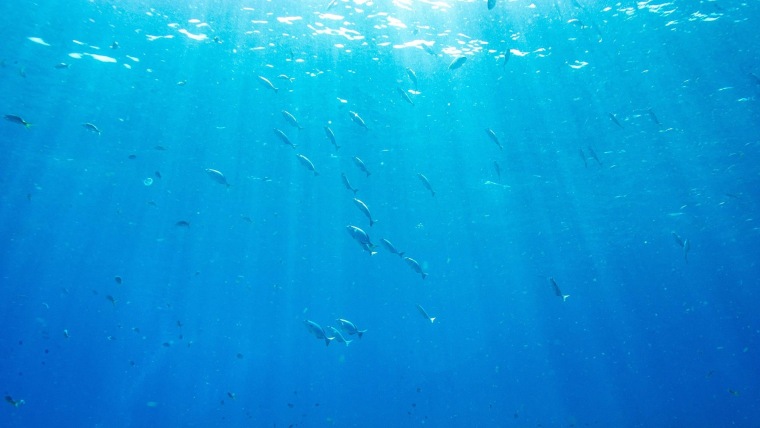
Less than a century ago, the world’s oceans were swarming with giant fish. Could we ever get them back?
A
As Stephen Palumbi looked around the deep blue water, he had the eerie impression that something wasn’t right. It was the summer of 2016 and Palumbi – a professor of marine sciences at Stanford University – was on an expedition, scuba diving to assess the state of an obscure patch of reef in the Central Pacific.
What he and his fellow researchers found was a forgotten world of astonishing abundance – grazing herds of plump parrotfish, eight-metre- high (26ft) forests of branching corals, humphead wrasse the size of baby rhinos… and sharks. So many sharks. “You couldn’t look in any direction without seeing one or two,” he says.
But there was also an atmosphere of the abnormal – a scattering of uncanny clues that this place was different. “Every time you turned around, there was something strange going on,” says Palumbi. Like a mysterious crack in the reef. Small, irregular fissures are not uncommon, except this one was in a perfectly straight line – an orderly chasm at least a mile long.
And then there was the navigation incident. Earlier, his team had been aboard the dive boat, about to drop anchor in a lagoon several kilometres from the nearest land, when the navigation system started “screaming” – according to its calculations, they had run aground. They hadn’t.
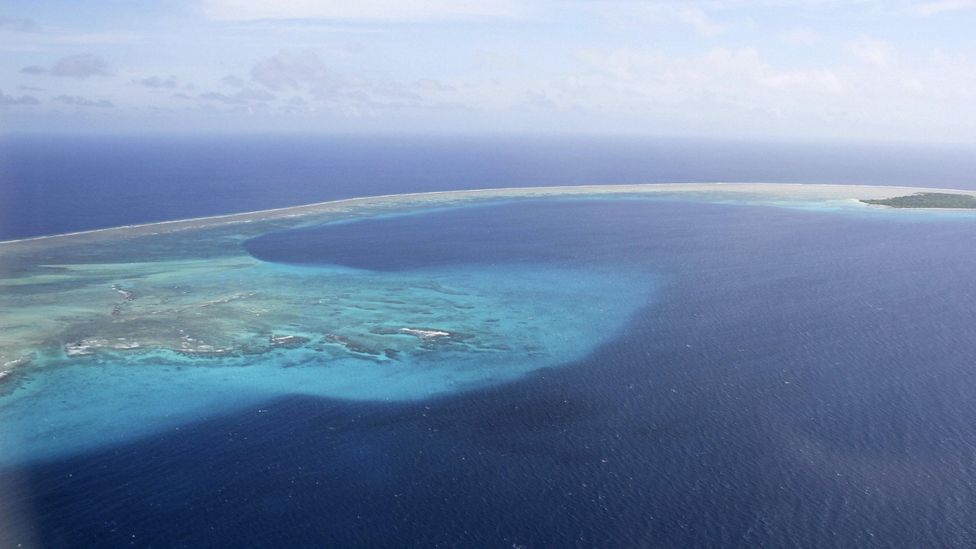
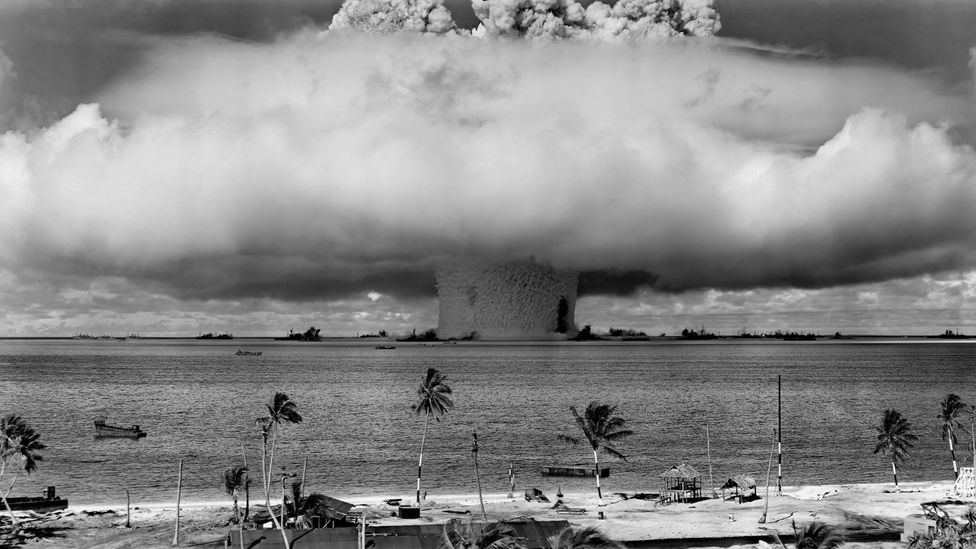
Palumbi was diving in one of the most radioactive places on Earth: the Bikini Atoll, in the Marshall Archipelago. Nearly seven decades earlier, this ring-shaped band of islands – formerly an archetypal tropical paradise – had been used to test the atomic bomb. Over 12 years in the 1940s and 50s, the US blasted its tranquil waters and those of a neighbouring atoll with 67 nuclear weapons equivalent to 210 megatonnes of TNT – more than 7,000 times the force used at Hiroshima. Palumbi’s navigation system was off because certain islands, still recorded on older maps, had been entirely vaporised by the explosions.
This dark past has left a devastating legacy for the Bikini islanders, who have been unable to return to their home ever since. But it has also created an accidental sanctuary: a place where wildlife is protected by the area’s very toxicity. For almost 70 years, there has been no fishing.
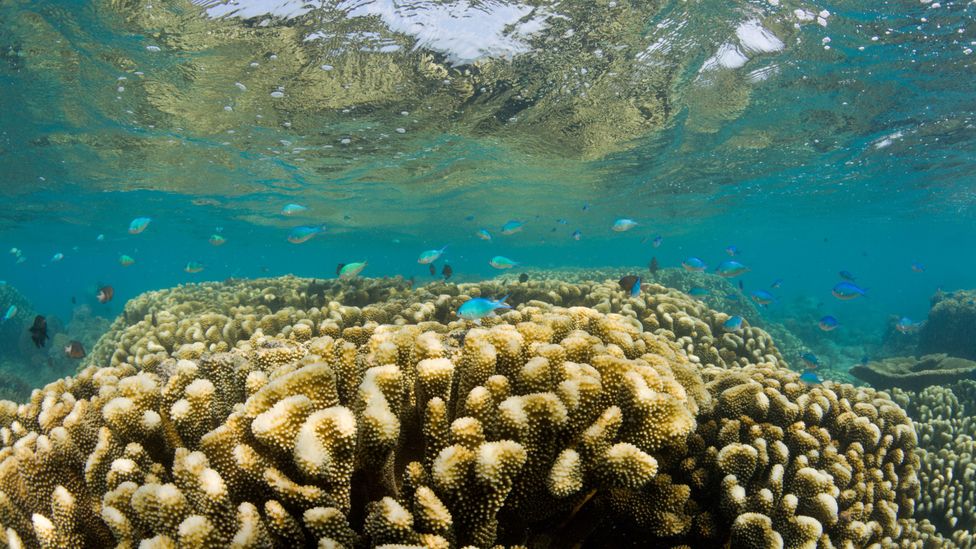
Today life in Bikini lagoon is thriving, possibly as a result of decades without fishing (Credit: Alamy)
On land, most of humanity hasn’t relied on hunting and gathering for millennia. For the average American, shooting an armadillo for dinner would be considered somewhat unorthodox.
But this is not the case for the oceans. As our population has increased, so has the amount of wild seafood we eat, and today, it makes up a significant portion of the diets of three billion people worldwide.
However, this free buffet has had radical consequences. In less than a century, once-thriving ecosystems have become deserts, one of the world’s favourite fish is nearing extinction and at the collapsed fishery in Newfoundland, up to 810,000 tonnes of cod that were historically caught each year have gone missing. In fact, humans have utterly transformed the planet’s oceans, decreasing the total biomass of fish by an estimated 100 million tonnes since prehistoric times. It’s thought that 90% of the planet’s fish stocks have already been used up.
There is a growing movement to change this. This year, the United Nations (UN) signed a historic agreement: the “high seas” treaty, which aims to protect marine life in areas of the open ocean that are not controlled by any country. This vast swathe of the Earth’s surface, which accounts for more than two-thirds of the world’s oceans, will no longer be a commons where anything goes – at least, that is the plan.
Of course, humanity isn’t aiming to stop fishing entirely. But what would the seas look like if we did decide to permanently abscond from it? Asking this simple question can provide a surprising insight into the profound impact we are currently having on the planet’s largest ecosystem – and reveal what we can do to help it recover.
A new abundance
For decades after the Bikini Atoll experiments, the islands were a place of ghosts – other than caretakers, no humans have lived there since the 1950s.
So, when Palumbi rolled off the boat into the atoll’s central lagoon in 2016, together with his colleague Elora López-Nandam – now a postdoctoral researcher at California Academy of Sciences – they had no idea what they would find. After all, even the coconuts strewn across local beaches are radioactive.
The nuclear weapons detonated at Bikini Atoll vaporised three islands (Credit: Alamy)
The pair were diving in Bravo Crater, a basin 75m (246ft) deep and 1.5km (0.9 miles) wide in the north of the island chain. The water column there is relatively low in radiation, with amounts comparable to background levels in most of the world. But the sediment on the bottom tells another story – to this day, it has high concentrations of radioactive plutonium, americium and bismuth, higher than anywhere else in the Marshall Islands. This is where, on the morning of 1 March 1954, the US conducted its largest ever thermonuclear test.
Over six decades later, Palumbi and his colleague were awed by what they saw. The centre of the crater is still relatively barren, with just a thick layer of silt. But at the edges, they found a hidden refuge, where rainbow shoals of small fish circled boulder corals the size of small cars, and the distinctive torpedo-like forms of blacktip and grey reef sharks were omnipresent.
“It’s mind-blowing,” says Palumbi. Despite battling the effects of radiation, which is thought to have created a population of mutant sharks missing their second dorsal fins, the reef was very much alive. And the fish were giants – at least, compared to those you would find in places that are regularly plundered for their fish.
This is the most obvious consequence of abandoning fishing – there would be more fish, and they would be much bigger than modern generations are used to.
A rapid response
Back in March 2006, George W Bush – the then-US president – was watching television at the White House. According to popular rumour, on the programme that day was a PBS documentary about the Northwest Hawaiian Islands, a remote archipelago in the Pacific. He was apparently so enchanted, that he immediately began looking into ways to protect them. With the help of an obscure, century-old law, he created the Papahānaumokuākea Marine National Monument – now the largest marine conservation area in the world.
Unlike vast expanses of other marine protected areas, which still allow fishing – no-take zones represent just a fifth of this category – the new reserve imposed a total ban.
The impact was almost immediate. “We started to see effects after about one and a half years,” says John Lynham, a professor of economics at the University of Hawaiʻi who specialises in ocean recovery. There was more marine life around overall, with the speediest recoveries from species that were previously harvested the most heavily, he says. Amazingly, yellowfin and bigeye tuna were among the first to respond – although they’re apex predators and adults average at least 6ft (1.8m) in length, they’re fast-growing.
Like at Bikini Atoll, other notable reprises have been total accidents. Take the advent of World War Two in September 1939. For the next six years, the North Sea was almost entirely devoid of fishing. With large, sturdy designs and clear, open decks, fishing trawlers were relatively easy to convert into minesweepers – warships that scoured the oceans for mines and discharged them. Along with the dangers posed by mines, warships and bombing to civilian fleets, this meant there were very few active fishing vessels for the entire duration of the war.
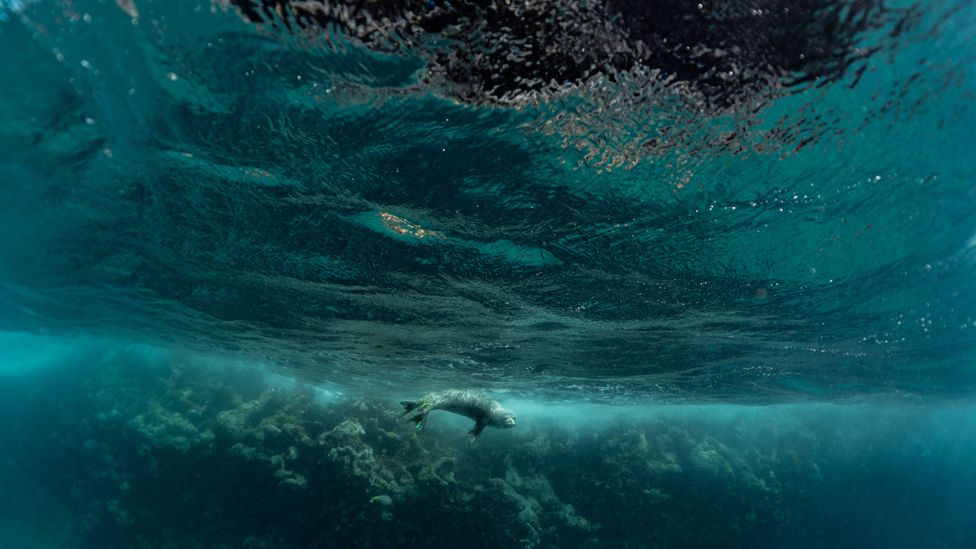
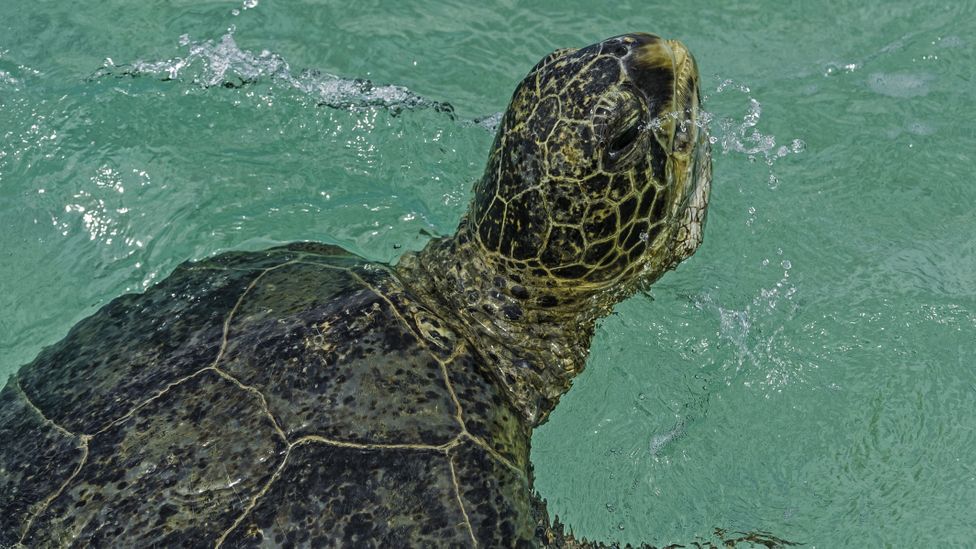
Papahānaumokuākea Marine National Monument is home to one of the rarest marine mammals on Earth, the Hawaiian monk seal (Credit: Getty Images)
Fish in the North Sea took full advantage, and their numbers exploded. The oldest individuals benefitted first. Where many would usually have been caught, they got to hang around – and eventually reproduce. This led to more babies, and in turn, a larger population in the next generation. And so on, and on, in a process that’s been compared to a Mexican wave. (Tragically, when regular operations resumed, it’s thought that the post-war abundance of fish may have contributed to a fishing boom that led to an unprecedented exploitation of their world.)
Of course, no matter how seriously humanity takes its imaginary fishing ban, some damage will never be reversed. The tragedy of overfishing means that many marine species have already vanished from the oceans forever. Even for those that remain, there are many other barriers in the way of a full recovery, from habitat loss to local extinctions.
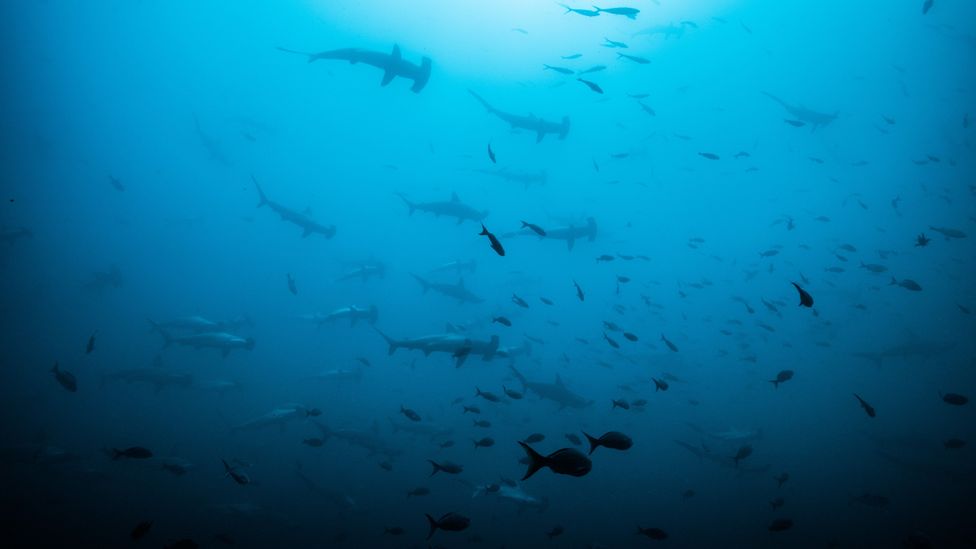
However, perhaps the most striking effect of a global moratorium on fishing would be the sharks.
A predator boom
In a corner of the Museum of Zoology in Lausanne, propped up on a pedestal, is a slightly odd-looking great white shark. With an unusually upturned snout and jaws curled into a shy smile, it contains all that remains of an individual caught in 1956. Most of the fish’s body is a model, a somewhat artistic interpretation of the real-life animal, with just her fins and teeth.
Measuring 5.9m (19.4ft) long, she was almost the size of a speed boat. But what’s particularly remarkable about this giant is where she was found: not in South Africa, Australia, Florida, or any of the usual shark-infested waters. Instead, she was apprehended near Sète, off the coast of southeast France. This was one of Europe’s last great white sharks.
In fact, it’s thought that the Mediterranean was once swarming with sharks. Hammerhead, blue, mackerel and thresher sharks lived alongside an ancient population of great whites that inhabited the area for 450,000 years. In 2010, research led by Chrysoula Gubili – a researcher at the Fisheries Research Institute, Greece – concluded that they may have originally got there when a lone female took a wrong turn.
Today there are still some large sharks lurking in the Mediterranean, including the occasional native great white – they’re endangered, with too few sightings to estimate how many. But for those shark species for whom data is available, numbers in Europe’s favourite swimming spot have declined by between 96 and 99.99% since records began in the early 19th Century.
The main beneficiaries of these absent sharks have been prey animals, particularly smaller fish. One analysis, using data stretching back to 1880, estimated that the total biomass of predatory fish in the world’s oceans has declined by two-thirds over the last century alone – while at the same time, the biomass of smaller species has increased.
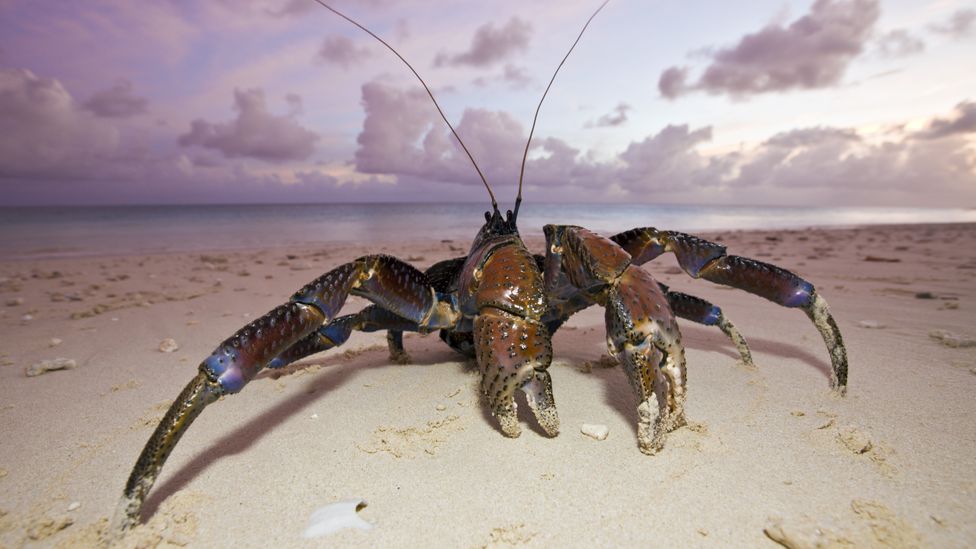
Today there is an abundance of hubcap-sized coconut crabs on Bikini Island – though the animals are radioactive (Credit: Getty Images)
In a world without fishing, Lynham believes that these lost pescatarians would soon return – at least, those that aren’t already extinct. Then we’d start to see a rebalancing of the ocean ecosystem. “There’s probably over time, going to be more top predators, and that may actually lead to lower abundances of species that they feed on,” he says. Fish that have been exploiting the absence of Mediterranean sharks might suddenly find that they are dinner.
And though most sharks are peaceful sea-puppies, with little interest in consuming humans, it’s also possible that turning away from fishing could lead to a small increase in already-low numbers of shark attacks on humans. For example, some experts believe that the success of a shark conservation programme around Long Island might have contributed to an increase in the number of bites in recent years, none of which have been fatal.
However, there would also be some more surprising consequences for the world’s oceans. One is a reduction in plastic.
A hidden benefit
Though plastic bags, cotton buds, straws, cigarettes and food packaging are starving, drowning, entangling and poisoning millions of marine animals every year – and contributing to the microplastics contaminating the food chain – the vast majority of large plastic in the oceans isn’t ordinary rubbish. It comes from fishing.
Take the North Pacific subtropical gyre – an immense system of circulating ocean currents that is home to some of the oceans’ most enchanting wildlife, with whales, sharks, sea turtles and fish. This open ocean ecosystem is over 1,000 miles (1,600km) from land. And yet, it is most famous as a trash vortex – a system that has trapped mind-boggling quantities of human rubbish, giving it another name, the North Pacific Garbage Patch.
In the absence of fishing, many other marine animals benefit too – with more food to eat, healthier habitats and a lower risk of becoming bycatch (Credit: Getty Images)
According to a study published last year, more than three quarters of the larger debris trapped in this floating rubbish pile comes from so-called “ghost” fishing gear – nets, ropes and lines that continue to prove deadly to ocean wildlife, long after they are discarded from the side of a fishing boat.
Of course, in a post-fishing world, the existing rubbish in our seas would not just disappear. For the plastic that makes it to the deepest parts of the ocean, the process of breakdown could be especially slow. According to one estimate, polyethylene may take up to 292 years to be fully degraded on the deep sea floor, while other plastic will likely last for far longer.
Over time, the amount of plastic in our seas would decrease – so long as humans didn’t compensate for it by throwing more plastic into the ocean from elsewhere. But even if we stopped polluting the oceans with this equipment tomorrow, the last fishing line wouldn’t fully degrade until the year 2623, according to the findings of another study. In the meantime, plastic pollution could continue its killing spree – currently it is thought to lead to the deaths of around a million marine animals every year.
Finally, there’s climate change.
The deep oceans are a graveyard – when larger creatures such as big fish, sharks or whales die, they sink to the bottom, where they often become entombed in anoxic sediment – a natural preservative that prevents them from decomposing fully and traps the carbon in their bodies for millennia.
But over the last century, humanity has emptied the world’s oceans of their giants. As a result, this carbon sink has not been operating at its usual capacity – and unprecedented numbers of the fish that remain in the ocean will eventually release their carbon back into the atmosphere. According to one analysis, this means fishing has released at least 0.73 billion tonnes of carbon dioxide since 1950, roughly similar to the entire emissions of Germany in 2021.
That’s not to mention the destructive power of specific fishing techniques, like trawling, which disturbs carbon-trapping sediment on the seafloor, leading to annual emissions equivalent to the entire aviation industry.
Nuclear tests at the Bikini Atoll contaminated a wide area with radiation, though the fish are now considered safe to eat (Credit: Getty Images)
A balancing act
However, Palumbi is keen to stress that a world without fishing would also have major drawbacks – particularly for those people who currently rely on the oceans for their income, staple diet or as a source of protein. “If we were only talking about oceanic mechanised industrial fishing fleets, that’s one thing. But we also have to really remember that there’s hundreds of millions of people at least that rely on very small-scale subsistence fisheries,” he says. “Fishing plays a pretty important role for a lot of people’s lives.”
One possible way out is aquaculture, which already produces more than half of the total seafood consumed today. The approach comes with many challenges – from infesting wild salmon with sea lice to the difficulty of checking up on the welfare of underwater farm animals – but many organisations, including the UN, have suggested that it could help to make our exploitation of the oceans more sustainable. (Read more from BBC Future about the most environmentally friendly seafood.)
Alternatively, just switching to more sustainable practices alone could have a staggering impact on the productivity of the oceans – with benefits for both people and wildlife. If they were adopted globally, catches could increase by 16 million tonnes – enough to feed 75 million more people – according to an estimate by the Marine Stewardship Council.
There is more good news. Unlike many of the animals our species has overexploited on land, fish have an astonishing capacity to recover. While a cheetah can only have a handful of babies at one time – with three months of pregnancy and about 18 months per litter to train them to survive – an equivalent apex predator in the oceans, such as a tuna, can produce up to 30 million eggs at a time. “Now a lot of those little eggs don’t survive, of course, but the potential for a population to rebound generation by generation [is huge],” says Palumbi.
For the moment, the idea that humanity would vacate the planet’s oceans is as unlikely as it is contentious. But if larger swathes of the world’s oceans were allowed to return to their former abundance – as with the Bikini Atoll and Marine National Monument in Hawaii – for many marine organisms, the last century could soon just be a small hiccup in the long, thriving history of their species.
This meandering red wave is the Arctic polar jet stream and it has a significant influence on weather.Image credit: NASA.
Polar vortexes play a massive role in controlling our fate, at least in terms of the bitterly cold weather we face in the winter months. As global temperatures continue tocreep up, we’re playing an increasingly dangerous game that could seriously upset this grand force of nature – the consequences of which are not totally known.
The Arctic polar vortex is a band of strong and cold winds constantly spinning in a counter-clockwise direction within the stratosphere between about 16 to 48 kilometers (10 to 30 miles) above…
A massive wildfire that almost reached Los Alamos, New Mexico, last year began as a result of a U.S. Forest Service prescribed burn, the agency admitted Monday. The Cerro Pelado Fire raced across 60 square miles and came within a few miles of the national security lab in Los Alamos before it was contained. Investigators found that the wildfire started with a burn of piles of forest debris commissioned by the Forest Service that became a holdover fire which smoldered under snow without anyone realizing for several months. New Mexico Gov. Michelle Lujan Grisham said she was “outraged over the U.S. Forest Service’s negligence that caused this destruction.”
The latest breaking updates, delivered straight to your email inbox.Your Email AddressSUBMITPrivacy Notice
SANTA CRUZ, Calif. —
“Otter 841”, which has been spotted biting and stealing surfboards several times in Santa Cruz, has been making headlines nationwide. The otter has grown to be quite the attraction for locals and visitors. But now, many are concerned about recent incidents of people harassing other sea otters in the same area.
Local Santa Cruz photographer, Mark Woodward, who has been photographing Otter 841, recently captured photos that show kayakers and paddle boarders getting close to several otters. Woodward said just in the last week, he witnessed about ten incidents. He said he saw people cause a group of otters to flee and other times when people were just 2 feet away from an otter, causing it to flee as well.
Advertisement
Experts point out that getting too close to sea otters causes them stress.
“If you’re going to move towards it, it’s going to flee and that’s going to cause them stress. And they’ll take away energy that otherwise would spend getting food, taking care of their young, managing the kelp forest, doing all the things that sea otters do,” said Dan Haifley, Board member of the Monterey Bay National Marine Sanctuary.
The Marine Mammal Protection Acts lists two levels of harassment. Level B harassments refers to acts that have the potential to disturb a marine mammal or stock in the wild.
Some locals in Santa Cruz worry about the harassment of the otters and emphasized that the Monterey Bay is their home.
“We’re the ones that have invaded their homes. And I think they should be left to be comfortable,” said Santa Cruz native, Rebecca Skaug.
The first six Republicans to qualify for the Aug. 23 presidential primary debate appear to be former President Donald Trump, Florida Gov. Ron DeSantis, former U.N. Ambassador Nikki Haley, Sen. Tim Scott, entrepreneur Vivek Ramaswamy and former New Jersey Gov. Chris Christie.ANDREW BURTON / GETTY IMAGES
And they’re off! Six Republican presidential candidates appear to have qualified for their party’s first primary debate on Aug. 23,1thanks to a pair of polls from Beacon Research/Shaw & Company/Fox Business released on Sunday that measured the preferences of likely GOP votersin IowaandSouth Carolina. Based on FiveThirtyEight’s analysis, the two surveys increased the number of total polls that can, according to the Republican National Committee’s guidelines, qualify a candidate for the stage to five.
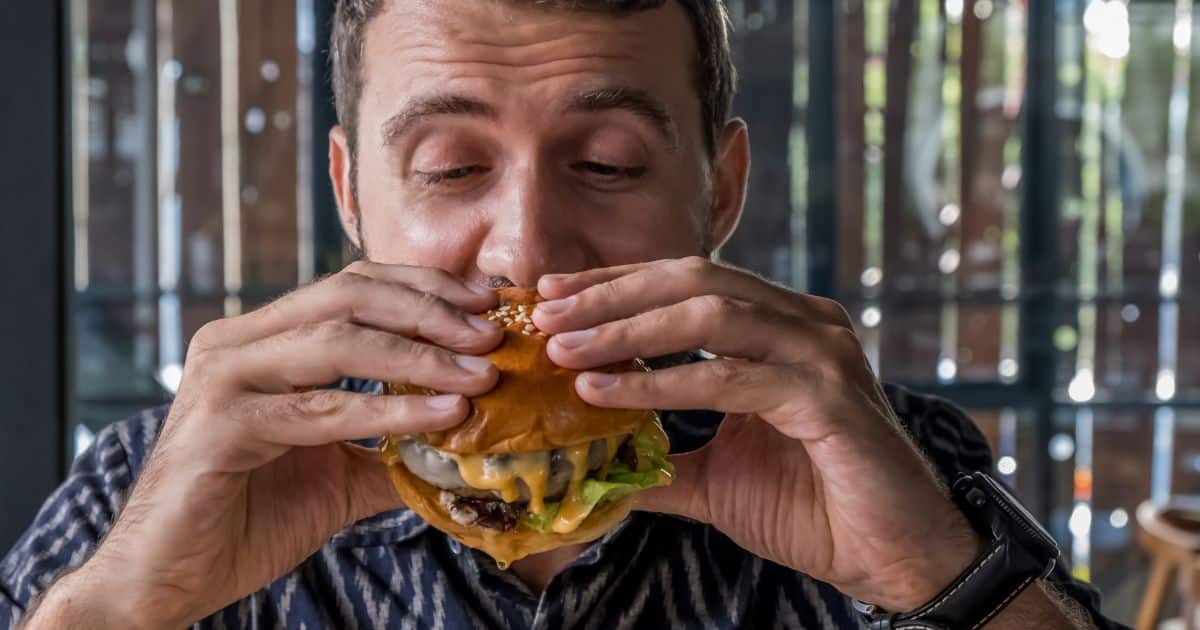
Remember when plant-based meats were cool? It was sometime around 2020; we were at home, bored, worrying about our health, the planet and the future. Enter Beyond Burger, a cholesterol-free, pea-protein patty that bleeds beet juice and requires 90 percent less water and 100 percent fewer dead cows than beef. It is the delicious, guilt-free innovation that so many of us — vegans, flexitarians and general foodies alike — were waiting for.
Sales skyrocketed. The company went public. More plant-based brands blasted into the space, and the Guardian declared plant-based meat “mainstream.” The planet, the animals and our arteries rejoiced.
But then something happened. By late 2022, early 2023, the narrative shifted. Bloomberg cried: Fake Meat Was Supposed to Save the World. It Became Just Another Fad.Forbes deemed it the Plant Based Fail, and even the Guardian wrote of “why plant-based meat’s sizzle fizzled.” Beyond Meat’s stock took a dip and Impossible Foods fired a bunch of people. Outlets like Better Home and Garden and GQ began questioning if the Impossible Whopper and other plant-meats were even good for you. How did this happen?
How did the next big thing in food modernization, climate action and harm reduction suddenly become reduced to a fake product as terrible as Twinkies and as unhealthy as, well, chicken nuggets? Who or what could possibly benefit from consumers turning their backs on products that taste like dead farmed animals, but aren’t actually made of dead farmed animals?
Take a wild guess.
Numerous food writers, business journalists and vegan commentators jumped into the media mayhem in an effort to explain the hows and whys of the so-called plant-based bust. Vox’s Kenny Torrella explained that the sector got a sales bump during the pandemic, “but the products weren’t good enough to keep most consumers coming back for more, and then inflation spiked food prices, and now here we are.” For Fast Company, Brain Kateman put it down to the usual growing pains of a newborn industry, albeit one under a massive microscope. And the Washington Post’s “climate zeitgeist reporter” Shannon Osaka posited that human psychology is simply too stubborn to fall for meat made from plants.
But all three writers, along with many others, point to one glaring, common crux: consumers finally figured out that burgers made of beans or peas have to be processed in order to meet the meaty mark.
It was as if after those initial few years of enjoying eco- and animal-friendly plant-based burgers, sausages and tenders, conscious consumers suddenly turned the packaging around and read the ingredients. There they discovered the now notorious “long list” of scary components like refined coconut oil, potato starch and sunflower lectin. And that was it for some — back to beef. It was almost as if the meat industry orchestrated the whole thing itself.
It did.
No, consumers did not just collectively come upon the realization that plant-based meats are processed. The seed for that messaging was planted early on, thanks in-part to full page ads in The New York Times and Wall Street Journal, claiming “fake meats” are full of “real chemicals,” and a TV ad broadcasted to select markets during the 2020 Super Bowl.
The $5 million commercial features a young girl in a spelling bee asked to spell “methylcellulose.” When she requests a definition, the girl is told it is a “chemical laxative” also used in “synthetic meat.” “Fake bacon and burgers can have dozens of chemical ingredients,” claims the commercial’s narrator. “If you can’t spell it or pronounce it, maybe you shouldn’t be eating it.” Viewers are then asked to visit CleanFoodFacts.com, a site run by the Center for Consumer Freedom (CCF).
The term “ultra-processed” has become a sort of dog whistle used by the meat industry to elicit suspicion of plant-based alternatives. “It is an emotive term used to symbolize highly processed products,” Unilever’s Future Health and Wellness Director Amelia Jarman said at an industry event last year. Unilever makes a large range of plant-based products, citing it as part of its sustainability goals. “The label ultra-processed is a general term with no real classification,” added Jarman. “As a nutrition scientist I have one view…Processing per se isn’t bad. What is bad is food that has no nutritional value.” (Or, in the case of red meat, food that raises your risk of several chronic diseases.)
Methylcellulose is a compound derived from plant fibers that is used to bind or thicken all kinds of foods, like bread, cake, ice cream and chocolate. It’s not scary, but the CCF is paid to convince you that it is. For the Guardian, Jessica Glenza wrote that CCF’s executive director, former tobacco lobbyist Richard Berman, is the man who “wants to convince America beef is healthier than meatless burgers.” She described him as the food industry’s “weapon of mass destruction,” who has “waged campaigns against animal welfare groups, labor unions and even Mothers Against Drunk Driving.”
CCF does not publicize its client/donor list, though the organization states on its website that it is supported by “restaurants, food companies and thousands of individual consumers,” claiming to simply advocate for an individual’s right to choose what they eat. Forbes described it as a front group for meat, tobacco and alcohol companies. A spokesperson for Impossible Foods described it as a “dark-money front group funded by Big Beef to mislead consumers and push propaganda.”
Thus, we cannot bestow the title of plant-meat pillager exclusively upon Berman. He is one part of a massive movement, backed by billions of dollars, to keep animal meat on our tables and plant-based meat back in the fads of the pandemic.
In this effort, well-funded lobby groups, including The North American Meat Institute and US Cattlemen’s Association, have in recent years targeted public policy and labeling laws to keep plant-based products at bay. Major meat companies have even funded campaigns of politicians who support such laws, and who support animal agriculture.
Protein has become politicized, with plant-based meat now prodded into an all-out culture war. And in this battle of animal versus plant meat, the pea- and bean-based versions are positioned as the food of the Left (even part of a Bill Gates globalist conspiracy).
For The New Republic, Jan Dutkiewicz and Gabriel N. Rosenberg discuss the “insipid but dangerous battlefield that meat now represents in America’s perpetual culture war. From right-wing trolls’ disparaging references to effeminate left-wing ‘soy-boys,’ to the stomach-churning embrace of hypermasculine ‘carnivore’ diets, it’s clear conservatives’ darker fantasies aren’t just about threats to a dietary staple but about threats to the liberty, bodily integrity, and masculinity of American men.”
In other words, plant-based meat is not a mere menu option for those looking to cut their eco impact, animal harm and cholesterol: it’s an affront to North American patriarchy. (Note, pioneering animal rights advocate and scholar Carol J. Adams has been calling this out for decades.)
As the tide of plant-based fandom continues to ebb and flow, just know that this is no natural rhythm. There is a man behind the curtain, many in fact, directing you and the media to that ingredients label, that website, and that full page ad telling the tale of all the processing required to turn peas into meat. It is a heavy marketing tactic, used to keep consumers from coming upon the meat industry’s own bloody secret: that there’s a process required to turn animals into meat, too. And it’s much worse.



 PublishedJuly 25, 2023
 3Comments
 1.1kShares
 Top Stories00:2401:12