Perspective: The Backlash to Plant-Based Meat Has a Sneaky, if Not Surprising, Explanation

|

Health

By Jessica Scott-Reid

July 24, 2023 – 4 min read

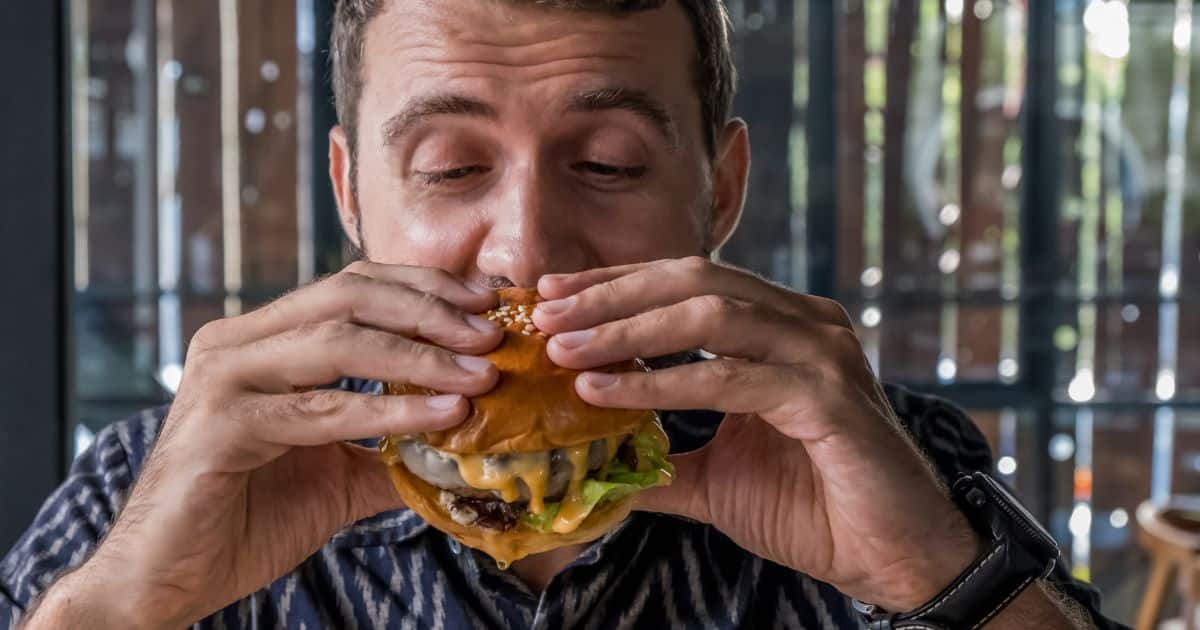
image of man eating juicy burger -- plant-based backlash

Remember when plant-based meats were cool? It was sometime around 2020; we were at home, bored, worrying about our health, the planet and the future. Enter Beyond Burger, a cholesterol-free, pea-protein patty that bleeds beet juice and requires 90 percent less water and 100 percent fewer dead cows than beef. It is the delicious, guilt-free innovation that so many of us — vegans, flexitarians and general foodies alike —  were waiting for. 

Sales skyrocketed. The company went public. More plant-based brands blasted into the space, and the Guardian declared plant-based meat “mainstream.” The planet, the animals and our arteries rejoiced.

But then something happened. By late 2022, early 2023, the narrative shifted. Bloomberg cried: Fake Meat Was Supposed to Save the World. It Became Just Another Fad. Forbes deemed it the Plant Based Fail, and even the Guardian wrote of “why plant-based meat’s sizzle fizzled.” Beyond Meat’s stock took a dip and Impossible Foods fired a bunch of people. Outlets like Better Home and Garden and GQ began questioning if the Impossible Whopper and other plant-meats were even good for you. How did this happen? 

Take action and make a difference

How did the next big thing in food modernization, climate action and harm reduction suddenly become reduced to a fake product as terrible as Twinkies and as unhealthy as, well, chicken nuggets? Who or what could possibly benefit from consumers turning their backs on products that taste like dead farmed animals, but aren’t actually made of dead farmed animals?

Take a wild guess.  

Numerous food writers, business journalists and vegan commentators jumped into the media mayhem in an effort to explain the hows and whys of the so-called plant-based bust. Vox’s Kenny Torrella explained that the sector got a sales bump during the pandemic, “but the products weren’t good enough to keep most consumers coming back for more, and then inflation spiked food prices, and now here we are.” For Fast Company, Brain Kateman put it down to the usual growing pains of a newborn industry, albeit one under a massive microscope. And the Washington Post’s “climate zeitgeist reporter” Shannon Osaka posited that human psychology is simply too stubborn to fall for meat made from plants. 

But all three writers, along with many others, point to one glaring, common crux: consumers finally figured out that burgers made of beans or peas have to be processed in order to meet the meaty mark.   

It was as if after those initial few years of enjoying eco- and animal-friendly plant-based burgers, sausages and tenders, conscious consumers suddenly turned the packaging around and read the ingredients. There they discovered the now notorious “long list” of scary components like refined coconut oil, potato starch and sunflower lectin. And that was it for some — back to beef. It was almost as if the meat industry orchestrated the whole thing itself.

It did.  

No, consumers did not just collectively come upon the realization that plant-based meats are processed. The seed for that messaging was planted early on, thanks in-part to full page ads in The New York Times and Wall Street Journal, claiming “fake meats” are full of “real chemicals,” and a TV ad broadcasted to select markets during the 2020 Super Bowl. 

The $5 million commercial features a young girl in a spelling bee asked to spell “methylcellulose.” When she requests a definition, the girl is told it is a “chemical laxative” also used in “synthetic meat.” “Fake bacon and burgers can have dozens of chemical ingredients,” claims the commercial’s narrator. “If you can’t spell it or pronounce it, maybe you shouldn’t be eating it.” Viewers are then asked to visit CleanFoodFacts.com, a site run by the Center for Consumer Freedom (CCF).

The term “ultra-processed” has become a sort of dog whistle used by the meat industry to elicit suspicion of plant-based alternatives. “It is an emotive term used to symbolize highly processed products,”​  Unilever’s Future Health and Wellness Director Amelia Jarman said at an industry event last year. Unilever makes a large range of plant-based products, citing it as part of its sustainability goals. “The label ultra-processed is a general term with no real classification,” added Jarman. “As a nutrition scientist I have one view…Processing per se isn’t bad. What is bad is food that has no nutritional value.”​ (Or, in the case of red meat, food that raises your risk of several chronic diseases.) 

Methylcellulose is a compound derived from plant fibers that is used to bind or thicken all kinds of foods, like bread, cake, ice cream and chocolate. It’s not scary, but the CCF is paid to convince you that it is. For the Guardian, Jessica Glenza wrote that CCF’s executive director, former tobacco lobbyist Richard Berman, is the man who “wants to convince America beef is healthier than meatless burgers.” She described him as the food industry’s “weapon of mass destruction,” who has “waged campaigns against animal welfare groups, labor unions and even Mothers Against Drunk Driving.”

CCF does not publicize its client/donor list, though the organization states on its website that it is supported by “restaurants, food companies and thousands of individual consumers,” claiming to simply advocate for an individual’s right to choose what they eat. Forbes described it as a front group for meat, tobacco and alcohol companies. A spokesperson for Impossible Foods described it as a “dark-money front group funded by Big Beef to mislead consumers and push propaganda.”  

Thus, we cannot bestow the title of plant-meat pillager exclusively upon Berman. He is one part of a massive movement, backed by billions of dollars, to keep animal meat on our tables and plant-based meat back in the fads of the pandemic. 

In this effort, well-funded lobby groups, including The North American Meat Institute and US Cattlemen’s Association, have in recent years targeted public policy and labeling laws to keep plant-based products at bay. Major meat companies have even funded campaigns of politicians who support such laws, and who support animal agriculture.  

Protein has become politicized, with plant-based meat now prodded into an all-out culture war. And in this battle of animal versus plant meat, the pea- and bean-based versions are positioned as the food of the Left (even part of a Bill Gates globalist conspiracy). 

For The New Republic, Jan Dutkiewicz and Gabriel N. Rosenberg discuss the “insipid but dangerous battlefield that meat now represents in America’s perpetual culture war. From right-wing trolls’ disparaging references to effeminate left-wing ‘soy-boys,’ to the stomach-churning embrace of hypermasculine ‘carnivore’ diets, it’s clear conservatives’ darker fantasies aren’t just about threats to a dietary staple but about threats to the liberty, bodily integrity, and masculinity of American men.” 

In other words, plant-based meat is not a mere menu option for those looking to cut their eco impact, animal harm and cholesterol: it’s an affront to North American patriarchy. (Note, pioneering animal rights advocate and scholar Carol J. Adams has been calling this out for decades.)

As the tide of plant-based fandom continues to ebb and flow, just know that this is no natural rhythm. There is a man behind the curtain, many in fact, directing you and the media to that ingredients label, that website, and that full page ad telling the tale of all the processing required to turn peas into meat. It is a heavy marketing tactic, used to keep consumers from coming upon the meat industry’s own bloody secret: that there’s a process required to turn animals into meat, too. And it’s much worse.   

Florida researchers rush to save thousands of corals from historic ocean heat

Exposing the Big Game's avatarThe Extinction Chronicles

Rebecca Falconer

Share on facebook (opens in new window)

Share on twitter (opens in new window)

Share on linkedin (opens in new window)

Share on email (opens in new window)

https://www.axios.com/2023/07/25/florida-coral-reef-ocean-temperatures

A diver swims around a coral reef in Key West, Florida, on July 14. Photo: Joseph Prezioso/AFP via Getty Images

The University of South Florida said Monday its researchers have transported some 1,500 coral specimens to tanks on land as “unprecedentedheat wavesand escalating water temperatures” create “a massive coral bleaching event.”

Why it matters:Coral reefs provideshelter for over 25%of ocean animals, and are economically key to over half a billion people’s livelihoods.

The big picture:Ocean temperatures surrounding South Florida and the Florida Keys are athistoric levels. Extreme sea surface temperatures hit a possible record 101°F Monday, per provisional data reported by Tampa Bay meteorologistJeff Berardelli.

View original post 414 more words

A nuclear war could wipe out all of humanity, and nobody seems to care

Exposing the Big Game's avatarThe Extinction Chronicles

The Telegraph

The TelegraphFollow

Story by Philip Johnston •1h

Harry Truman (centre) was the last man to order the dropping of a nuclear bomb. Might Putin be the next?©Provided by The Telegraph

BarbieorOppenheimerwas the weekend cinematic choice, so lacking anything pink to wear, or not in public at any rate, we opted for the Christopher Nolan biopic of the father of the A-Bomb.

It was a sobering experience, a three-hour trip through the mind-boggling weirdness of quantum physics and Oppenheimer’s tortured soul, with a cacophonous soundtrack characteristic of the director (Batman,Dunkirk,Inceptionand so on) the one downside. The events were dramatic enough without overlaying them with loud music that sometimes made the dialogue hard to hear.Three Winthrop Banks Are Paying Record High Interest Rates - See the List

Three Winthrop Banks Are Paying Record High Interest Rates – See the List

Ad

Savings Pro

Nonetheless, this is a powerful film, especially to those of…

View original post 941 more words

At infamous Indonesian market, decades of animal cruelty are finally over

By Kitty Block

July 25, 2023 0 Comments

At infamous Indonesian market, decades of animal cruelty are finally over

After years of campaigning and supporters making their voices heard, the mayor of Tomohon issued an order to end all sale and slaughter of dogs and cats and the selling of dog and cat meat at the market. Garry Lotulung/AP Images for HSI

112SHARES

It was an incredibly moving sight: My Humane Society International colleagues and their local partners marked the end of the dog and cat meat trades at Indonesia’s most infamous market, Tomohon Extreme Market, by rescuing those who would have been the final victims of this reprehensible commerce.

During the rescue, one of the dogs saved from the meat market approaches and greets an HSI responder. Garry Lotulung/AP Images for HSI

Working with the city government and the remaining traders, we were able to secure a permanent ban on the sale and slaughter of dogs and cats at the market, ensuring the safety of the animals who would have been sent to slaughter. Now, never again will another dog or cat experience the horrors that countless others have endured at this market. For the survivors, 22 dogs and three cats, we now have a chance to show them the compassion, respect and kindness they deserve. 

An HSI responder interacts with one of the dogs rescued from the meat market at the Animal Friends Manado Indonesia Care and Rehabilitation Center. Garry Lotulung/AP Images for HSI

The cruelties dogs and cats have suffered at Tomohon Extreme Market over the decades are shocking—bludgeoned with wooden bats and, often still alive, burned with blowtorches to remove their fur. Once we learned about it, walking away was inconceivable, despite how many times we were told change was “impossible.”  

But the impossible became reality on July 21. After years of campaigning and supporters making their voices heard, the mayor of Tomohon issued an order to end all sale and slaughter of dogs and cats and the selling of dog and cat meat at the market. The absolute brutality that took place there is over, forever, and so is the market’s function as a hub for traffickers in dogs and cats for the meat trade on the island of Sulawesi, where the trade flourishes and traffickers collect thousands of dogs for slaughter every week.  

The end of the dog and cat meat trades at Tomohon Extreme Market and the closure of a network of traders’ slaughterhouses there will set a vital example that campaigners elsewhere can follow, strengthening both national and regional efforts to achieve similar gains. This is an outstanding breakthrough, and I could not be prouder of our friends, colleagues and allies who have made it happen, the members of our HSI Companion Animals team and our close partners at Animal Friends Manado Indonesia. Together, we reached an accord with the six dog and cat meat traders still active at Tomohon Extreme Market; these traders operated the slaughterhouses that killed animals to supply the market stalls there and elsewhere in the city and region. The six have committed to forever cease trading, slaughter and sale of dogs and cats and their meat, and to close all dog and cat meat facilities and operations, including slaughterhouses and sales of live or butchered animals anywhere ever again. 

Lola Webber, HSI’s director of campaigns to end the dog meat trade, interacts with one of the cats rescued from the meat market at the Animal Friends Manado Indonesia Care and Rehabilitation Center. Garry Lotulung/AP Images for HSI

To call such a place “notorious,” as some travel websites did, is to invite a kind of curiosity, I suppose; tourists might feel encouraged to stroll past its stalls, witness the scene firsthand, and see the dog and cat meat on display alongside bushmeat and meat from other domestic animals. But the most accurate word to describe it, surely, is “sickening.” It was a place where humanity was lost. 

Unfortunately, the practices at Tomohon Extreme Market represent the kind of cruelty that blights public and private life in countless places all over the world. Invariably, such places are sites of moral failure, no matter the country and no matter the circumstances. It could be a fur factory farm in Finland where animals languish to supply the fashion market. It could be a fiesta in Spain where bulls are tormented, their horns set alight to amuse the crowd. It could be a sprawling intensive confinement pork factory in Iowa, whose systematic cruelty includes denying pigs their most fundamental biological and behavioral needs for as long as they are alive. Whatever the venue, whatever the context and whatever the rationale, the truth is the same. Something has gone terribly wrong in the human-animal relationship, and we are—all of us— responsible for bringing such cruelty and suffering to a halt. 

Speak out against the cruel dog and cat meat trade

Our campaign to end the kind of cruelty we saw at a critical market hub of the dog and cat meat trades highlights our continued focus on addressing the root causes of animal cruelty, regardless of the time and effort required. As our founding generation imagined, we are still willing and prepared to confront cruelty wherever it occurs and without regard for the strength, status or authority of the perpetrators. 

In Indonesia, we’ve helped to end the dog and cat meat trades in 22 jurisdictions thus far, and we’re working to secure prohibitions in other markets. Our work is far from over in the nations where these trades still flourish. But bringing down the curtain on cruelty at Tomohon Extreme Market is a big victory and a crucial precedent that will propel our fight forward, and we promise you, we’ll see that fight to the finish.  

Killing the Female:  The Psychology of the Hunt

Exposing the Big Game's avatarCommittee to Abolish Sport Hunting Blog

AUGUST 14, 2020 BY MERRITT CLIFTON

(Beth Clifton collage)

Why hunters hunt––and why far more men quit hunting now than take it up

Seán McCormack, managing trustee of the Animal Care Trust in Taiwan, recently brought to our attention “Hunting Linked To Psychosexual Inadequacy & The 5 Phases Of AHunter’s Life Of Sexual Frustration,” by Brent Lambert, published in November 2016 under the subject headings Neuroscience, Psychology, and Society by the lifestyles web site FeelGuide.com.

Observed Lambert, a prolific writer on many topics, yet better known as a Hollywood set designer, “In his 2015 book,What Is Sport: A Controversial Essay About Why Humans Play Sports, social psychologist Rob Alphaexplains how researchers with the Genetic Economic Analytics Group found the neurophysiological link betweensex and a man’s desire to hunt.

(Beth Clifton collage)

Same parts of brain activated by hunting & sex

“It turns…

View original post 4,937 more words

A weekslong heat wave will intensify this weekend and push temperatures close to 130 degrees

Exposing the Big Game's avatarThe Extinction Chronicles

share

more

https://www.msn.com/en-us/weather/topstories/a-weekslong-heat-wave-will-intensify-this-weekend-and-push-temperatures-close-to-130-degrees/ar-AA1dR0DE?cvid=4f33e68714aa49c5ec1bcafc41e260ed&ocid=winp2fptaskbarmouseenter&ei=4

CNN

CNNFollow

Story by Eric Zerkel•23h

CNN

A weekslong heat wave will intensify this weekend and push temperatures close to 130 degrees

Was this content a good use of your time?

Your feedback will help us improve the product

An already dangerous weekslong heat wave will only worsen this weekend asa heat domeintensifies and reaches peak strength over parts of the Western United States.

The heat dome is so formidable theNational Weather Service in Phoenixcalled it “one of the strongest high pressure systems this region has ever seen.” Around 100 heat records could fall today through the weekend as it intensifies, piling onto the more than 1,000 high temperature records broken in the US since June.

More than 90 million people are under heat alerts after the heat dome expanded into places like California, which is now experiencing its first extreme heat wave of the…

View original post 138 more words

Trophy hunts and poaching of Colorado’s big game need to go extinct. Hunters should show some pride.

Exposing the Big Game's avatarCommittee to Abolish Sport Hunting Blog

If hunters were good enough at fair chase, they wouldn’t need to resort to cheap tactics and breaking the law

Trish Zornio3:05 AM MDT on Jul 24, 2023

In the spirit of today’s topic, let’s cut to the chase — Colorado has a hunting problem.

According to Colorado Parks and Wildlife, the state features10 big game animals: Elk, moose, bear, mountain lions, mountain goats, Rocky Mountain and Desert bighorn sheep, pronghorn and…

View original post 810 more words

A new dangerous long-lasting heat wave could set dozens of heat records, even in notoriously hot places

Exposing the Big Game's avatarThe Extinction Chronicles

CNN

CNNFollow

Story by Jennifer Gray•4h

CNN

A new dangerous long-lasting heat wave could set dozens of heat records, even in notoriously hot places

Was this content a good use of your time?

Your feedback will help us improve the product

Editor’s Note:A version of this article originally appeared in the weekly weather newsletter, the CNN Weather Brief, which is released every Monday. You cansign up hereto receive them every week and during significant storms.

Phoenix is supposed to be hot, but the severity of the upcoming heat wave will bring a level of heat that will test even heat-hardy places and do so for longer durations than have ever been observed before.Borrow from Your Home, Not the Bank ($25k for $150/mo)

Borrow from Your Home, Not the Bank ($25k for $150/mo)

Ad

LendingTree

The heat is hitting South Texas, South Florida and the Southwest US the hardest now and through the workweek, but by…

View original post 456 more words

Cuddly terror of the seas: otter continues to harass surfers, elude capture off California coast


by HAVEN DALEY and OLGA R. RODRIGUEZ | Associated PressThu, July 20th 2023, 4:00 PM PDT

https://komonews.com/news/nation-world/cudely-terror-of-the-seas-otter-continues-to-harass-surfers-elude-capture-off-california-coast-california-department-of-fish-and-wildlifesunbathing-fan-club-crabs-evade-capture-tranquilizer-radio-transmitter

UserWay icon for accessibility widget
A sea otter in Santa Cruz has gone from entertainer to most wanted. (Courtesy: Mark Woodward Native Santa Cruz)

A sea otter in Santa Cruz has gone from entertainer to most wanted. (Courtesy: Mark Woodward/Native Santa Cruz)

A sea otter in Santa Cruz has gone from entertainer to most wanted. (Courtesy: Mark Woodward Native Santa Cruz)

Image icon

9

VIEW ALL PHOTOS

View All Photos

A sea otter in Santa Cruz has gone from entertainer to most wanted. (Courtesy: Mark Woodward Native Santa Cruz)

0

SANTA CRUZ, Calif. (AP) — A sea otter launched into the national spotlight after images of her aggressively wresting surfboards away from surfers off the coast of Santa Cruz, California circulated on social media is building a fan club as she continues to evade capture.

A team of wildlife experts with the California Department of Fish and Wildlife and the nearby Monterey Bay Aquarium have been trying to capture the 5-year-old animal, known as otter 841, since last week because they say she poses a public safety risk.

They say they want to examine her and relocate her at a zoo or aquarium —as yet to no avail.

She now has a growing fan club, with people showing up every day to get a glimpse of her spending time sunbathing on the rocky shore, diving in the water and chomping down on crabs.

Jessica Fujii, Sea Otter Program Manager at the Monterey Bay Aquarium, said the team has faced some challenges in its pursuit, including bad weather.

QuickBooksAsk the Expert: Your Financial Health is a Self-Care Practice

by Taboola

SponsoredSkip 

about:blank

The main issue is more just her ability to evade. Because this has been an ongoing effort, she is wary of those nets,” Fujii said.

Federal and state wildlife officials did not return messages from The Associated Press seeking comment Thursday on their effort to catch otter 841.

The mischievous mammal was made famous by a professional photographer who posted photos and videos on social media that show her aggressively approaching surfers and getting on top of surfboards — on at least one occasion biting and tearing chunks off a board.

They can’t throw a net over her in the water. They can’t tranquilize her because of fear of her drowning. So they really need to get hands on her,” said the Santa Cruz photographer, Mark Woodward.

The team trying to capture her has used a baited surfboard. She’s gotten on it multiple times in the past few days, according to Woodward. But as soon as a wildlife official towing the surfboard carrying her gets near the team’s boat, she dives off, he said.

The otter’s aggressive behavior is highly unusual, and the reason is unknown, federal wildlife officials said.

Aggressive behavior in female southern sea otters may be associated with hormonal surges or due to being fed by humans,” the U.S. Fish and Wildlife Service said in a statement last week.

Otter 841 was born in captivity and released into the wild in June 2020. She is tagged with her number and has a radio transmitter that officials have been monitoring to keep tabs on her.

They said it is not the first time the otter has been aggressive toward humans. She was observed approaching people in late 2021. In May 2022, she was spotted with a pup in the Santa Cruz area, and four months later exhibited similar aggressive behavior.

Meanwhile, her fans want her to be left alone.

Just leave ’em alone. Just let ’em have fun. Hasn’t bitten anybody. Roughs up the board. It’s like a dog with a chew, you know?” said Jackie Rundell, a Santa Cruz resident who on Wednesday visited the bay.

Southern sea otters, whose population dwindled to about 50 in 1938, are managed by the Fish and Wildlife Service. They are listed as threatened under the Endangered Species Act and are protected under the Marine Mammal Act and California state law.

Comment bubble

JOIN THE CONVERSATION (

0

)

Now with a population of about 3,000, sea otters play a fundamental role in maintaining healthy coastal ecosystems by preying on sea urchins that can multiply and eat their way through the kelp forests both marine creatures share, wildlife officials said.

H5N1 Bird Flu Found in Polish Domestic Cats

Exposing the Big Game's avatarThe Extinction Chronicles

CDC’s Risk Assessment for the General Public Remains Low

Español|Other Languages

 Print

https://www.cdc.gov/flu/avianflu/spotlights/2022-2023/bird-flu-polish-domestic-cats.htm

Updated July 21, 2023

July 21, 2023 – An outbreak of H5N1 bird flu in household cats was recently reported by theWorld Health Organization, underscoring that these viruses can infect and cause illness in household pets. Thirty-four domestic cats across eight provinces in Poland tested positive for avian influenza A(H5N1) virus (“H5N1 bird flu”). Many of the infected cats showed neurological signs (e.g., paralysis, seizures) and became severely ill or died. H5N1 bird flu viruses are widespread globally among wild birds and domestic poultry and have caused sporadic infections in mammals. It is important to note that a review of the genetic sequences of the viruses found in cats in Poland does not show any reason to change CDC’s risk assessment to human health, which remains low for the general public. Further…

View original post 500 more words