Temperatures in the Northern Hemisphere might be high, but on July 6, our planet will be at its farthest point from the sun this year. It’s an annual occasion called aphelion, a term that comes from the Greek words “apo” (away) and “helios” (sun), according toAlmanac.
If it seems counterintuitive for our planet to be at its farthest from the sun while you endure the summer heat, consider how Earth orbits the sun and how our planet rotates.
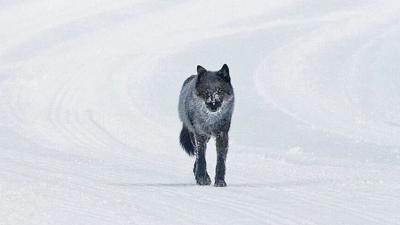
HELENA – The estimated wolf population in Montana for 2022 was 1,087 wolves, according to Fish, Wildlife, and Parks.
Officials from Montana Fish, Wildlife, and Parks are proposing to reduce the hunting quota for wolves statewide from 450 to 289, according to the department and an interview with a spokesperson.
Fish, Wildlife, and Parks officials said the wolf population has dropped in the last two years, and it believes the new quota will keep wolves at a healthy and sustainable population per state law.
“State law, set by the 2021 Montana Legislature, requires Fish, Wildlife, and Parks to reduce wolf populations in Montana to a sustainable level,” said Greg Lemon, a Fish, Wildlife, and Parks public information officer. “We believe the quota of 289 wolves will meet that statutory requirement while ensuring a healthy wolf population in the state.”
This announcement comes a year after the wolf numbers fell in 2022, according to the 2022 Fish, Wildlife, and Parks Wolf Report.
Wolf hunting regulations in Montana are controversial. In 2022 in Region 3, which borders Yellowstone National Park, hunters killed 82 wolves, the threshold which caused Fish, Wildlife and Parks to direct wolf hunters and trappers in the region to remove their equipment immediately. The threshold represented a 39% decline.
The estimated wolf population for 2022 was 1,087 wolves, according to Fish, Wildlife, and Parks. This number is down 56 wolves from 1,143 in 2021. The number of wolf packs was 181, down 10 packs from 2021. Total wolf kills for the spring and fall of calendar year 2022 were 248.
The Montana Fish and Wildlife Commission of Fish, Wildlife, and Parks will decide the quota for the 2023-24 season at its Aug. 17 meeting. Fish, Wildlife, and Parks said the proposed quota of 289 wolves statewide reflects an average of the last five years’ statewide harvest. The allowable kills would be broken up by regions: Region 1 – 120 wolves; Region 2 – 91 wolves; Region 3 – 52 wolves; Region 4 – 15 wolves; and Regions 5, 6, and 7 – 5 wolves total.
Fish, Wildlife, and Parks is proposing wolf trapping season to start the first Monday after Thanksgiving, outside of the mapped grizzly bear-occupied range. Fish, Wildlife, and Parks is proposing a floating starting date for areas inside of the mapped grizzly bear range.
Lemon said Fish, Wildlife, and Parks is proposing to set dates like the agency did last year. Throughout December, he said the staff will assess whether grizzly bears are denned using collar information as well as reported sightings to make the determination.
“Once we feel grizzly bears are mostly denned, then we’ll open areas for wolf trapping,” said Lemon. “This assessment will be done on a weekly basis and all wolf trapping will be open on Dec. 31.”
The commission said at its August meeting that it will also amend and review a draft rule language for non-lethal and lethal control methods that are consistent with the Montana Grey Wolf Conservation and Management Plan.
Human ears are damaged at a mere 85 decibels. Yet we can hear to only about 20,000 hertz, while dogs can hear between 45,000 and 65,000 hertz. Just think of the physical and emotional damage that might occur to a dog left outside to face the noise.
Not to mention that when frightened, dogs bolt, and owners may lose their best friends in the night.
“Dogs have been known to dig under or jump over fences, break tethers or even shatter windows in response to their fireworks fears,” according to Best Friends Animal Society, one of the nation’s oldest no-kill agencies.
That leaves dogs running loose, possibly to be struck by cars, picked up by strangers, even turned into local animal shelters. Anxious pet owners may face barriers in identifying and rescuing their pet.
Danger to all types of pets
Statistics show at least 40% of dogs have noise phobias, which can include fear of thunderstorms, leaf blowers, power drills and even hair dryers. But those noises are relatively constant, experts say, while fireworks are frighteningly sporadic and therefore unexpected.
“Many animals associate loud noises with danger,” said Dr. Michelle Lugones, a veterinarian with Best Friends Animal Society. “From an evolutionary standpoint they are wired to avoid perceived threats, so it’s not surprising that fireworks are distressing to many animals.”
It’s not just dogs. Cats and many other domestic and wild animals have sensitive hearing, provided by nature to find and hunt prey.
“It’s very likely that cats suffer just as much from fireworks phobia as dogs,” Lugones said. “But since cats tend to be more independent in the home and usually run and hide during fearful situations, their owners may just not realize that they are distressed from fireworks.”
Small pets such as rabbits and guinea pigs are prey species and so are easily stressed, Lugones continued, adding that “unfortunately, rabbits can even die from extreme fright especially if they have underlying illness. They may also injure themselves attempting to flee.”
Cows are social animals, Lugones said, so loud noises could spook an entire herd, while horses are also prey species that can easily become startled by fireworks.
“It may be less understood how reptiles and birds respond to fireworks, but they too have stress responses, so precautions should be taken for them,” she said.
Prepare your pet before dark
The key to helping your pet survive this frightening onslaught is being prepared, said Dr. Douglas Kratt, president of the American Veterinary Medical Association.
Tags and microchips. Be sure your pet has a well-fitting collar with current identification tags, Kratt said. If your pet has a microchip, make sure your correct contact info is recorded with the vet clinic or shelter that implanted the chip.
That way, if your pet does escape into the night, you will be able to immediately call and alert the vet or shelter about their absence.
Exercise before dark. A tired dog is a calmer dog. A happy cat is a more relaxed cat, Kratt said. Fit in some extra playtime for your cats, and take dogs out for play and exercise well before dark. Such activities burn off extra energy, thus limiting anxiety later when it’s time to sleep.
Bring all pets indoors. Don’t leave your pet outside to suffer alone. Put a dog’s crate or bed in the quietest, most enclosed room possible, Kratt said.
“Keep windows and curtains closed to further muffle sounds, and take some time to see what works best for your dog, such as lowering the lights or covering the crate with a blanket,” he said.
Cats like to go high to feel secure, so give them a covered cozy cave that is elevated off the ground, like a hut on an indoor cat tree or in a closet.
Distract your pet. Provide lots of new toys and long-lasting chews and treats. Food puzzles may also keep them distracted from the unnerving noises.
Use calming aids. Many pets respond to “thunder” shirts or blankets that wrap them in a heavy, calming cocoon. Cats and dogs often enjoy smelling species-specific pheromones. Cats can wear collars with scents that mimic the pheromone mother cats produce to calm their kittens. Dogs respond to the scent of lactating female dogs, called appropriately “dog appeasing pheromone,” or DAP.
Use calming sounds. First, muffle sounds by closing curtains and doors near your pet. Calming music, or white noise like fans or television – but not too loud – can be used to provide comfortable, familiar sounds.
Humans must stay calm, too. If you aren’t fond of fireworks either, try to remain calm around your pet anyway, Kratt said. “Our pets may look to us to see how we are reacting and be influenced by our behavior,” he said. “Try not to react too strongly to fireworks or your pets’ distress.”
Use medication as a last resort. While there is nothing wrong with turning to your vet for calming medications, experts worry that pet owners might rely on that first, without doing the behavioral modification tips above. But if you have tried all these ideas and your furry friend is still in a panic, reach out to your vet for advice.
Keep animals away from your fireworks. If your pet isn’t bothered by the noise and you plan to set off your own fireworks, be sure to keep your pet inside and secured. Some dogs may “chase after the bright moving objects and are at risk to be burned or blinded in the process,” says Best Friends Animal Society.
In addition, many fireworks also contain “substances that are toxic if ingested,” so be sure to safely store your fireworks where a pet cannot find them.
When fireworks end
The dangers for pets extend past exploding fireworks, Kratt said.
“The Fourth has some other risks for our pets, such as an abundance of unhealthy and accessible foods at parties, dangerous summer heat, and dangerous debris on the ground following fireworks displays,” Kratt said.
Before you let your pet loose in the yard the next day, check it carefully for leftover pieces and parts from exploded fireworks.
“Even if you didn’t set off fireworks yourself, debris can make its way into your yard, where curious animals may pick it up to play with or eat,” Kratt said.
Used and unused fireworks are toxic to pets, Lugones said.
“Depending on the chemicals they contain, fireworks can cause severe gastrointestinal signs such as vomiting, bloody diarrhea, abdominal pain, and foreign body obstruction,” she said. “They can also cause acute kidney failure, difficulty breathing, and seizures. If there’s any concern your pet has ingested fireworks, contact a veterinarian immediately.”
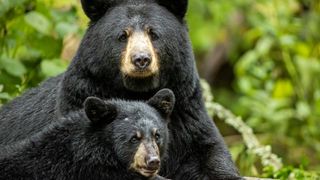
A group of tourists have been caught on camera crowding around a black bear and her two cubs at Yellowstone National Park to take pictures, with several trying to hide behind a boulder despite the fact that the bears have the high ground and can clearly see them. The mother black bear seems aggravated, standing between her young and the onlookers, facing downhill so she could easily run downhill at speed.
The incident (which you can see below) was recorded by Riley Krantz and shared via TouronsOfYellowstone on Instagram. The account documents examples of bad behavior at US National Parks, including close calls with wildlife.
There’s been a spate of incidents involving bears at Yellowstone in recent weeks, including a tourist who has been seen several times jumping out at the animals and chasing them while making gorilla noises. The National Park Service has begun an investigation, but so far he seems to have escaped identification and arrest. Deliberately interfering with park wildlife is considered harassment and is punishable with a fine or even jail time.
“Your safety cannot be guaranteed, but you can play an active role in protecting yourself and the bears people come here to enjoy,” explains the service.
Visitors are told to stay at least 100 yards (93 meters) from bears at all times, and never approach the animals to take a photo. It’s also important never to feed them, as this can lead them to become food-conditioned or habituated, and lose their natural wariness of humans. This increases the chances of a dangerous close encounter with a person. If a bear attacks a human, even if there are no serious injuries, it may be euthanized for public safety.
Food conditioned and habituated animals are also at greater risk of death or injury in other ways.
“Studies have shown that bears that lose their fear of people by obtaining human food and garbage never live as long as bears that feed on natural foods and are shy and afraid of people,” says the NPS. “Many are hit by cars and become easy targets for poachers.”
What do trophyhuntingand biodiversity credits have in common? It sounds like the start of some crass joke. Only, the punchline isn’t funny: both will destroy the planet.
Biodiversity credits
Unexpected links between the pro-trophy hunting lobby and advocates for an emerging market in biodiversity credits have highlighted the bullshitcapitalistagenda at the heart of Global North solutions to theclimateandbiodiversitycrises. Biodiversity credits place a monetary value on conservation efforts that protect or restore natural environments. Companies, governments or individuals can then buy these credits to ‘offset’ the environmental harm of their own projects and activities.
You might think the biodiversity credits and trophy hunting couldn’t have less in common and, in many ways, you’d be right. One is about the preservation of wildlife, ascribing a financial worth to ecosystems and…
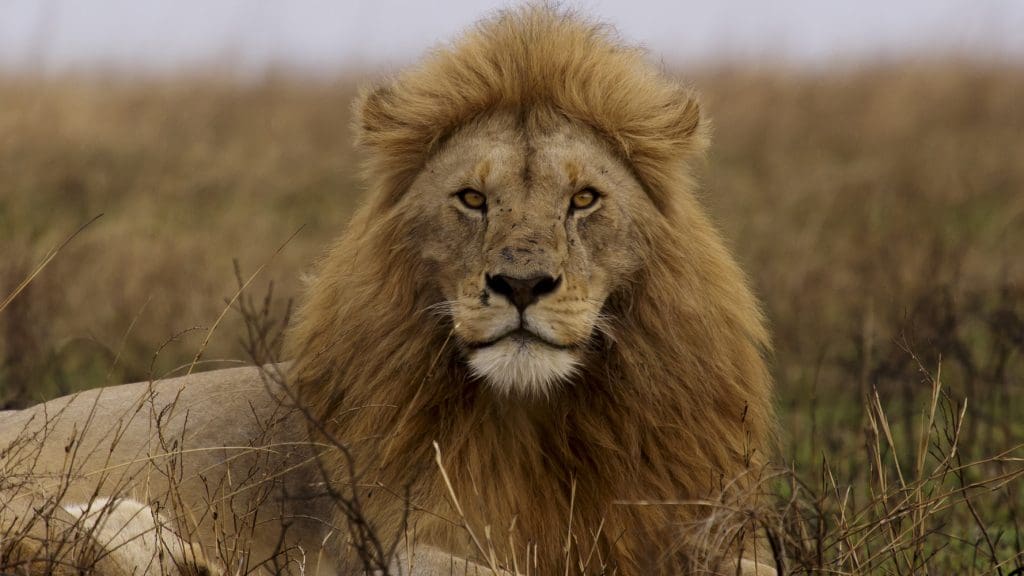
Lions are among the most iconic and charismatic animals in the world. They are revered for their strength, beauty, and social behavior.
They are also important for the balance and diversity of ecosystems, as they are apex predators that regulate the populations of their prey and competitors.
However, lions are also facing many threats to their survival in the wild.
According to the International Union for Conservation of Nature (IUCN), lions have declined by about 43% in the past 21 years, and are classified as vulnerable to extinction.
The main causes of their decline are habitat loss and fragmentation, human-wildlife conflict, poaching, and disease.
In contrast to the plight of wild lions, there is a booming industry of captive lion breeding in South Africa.
Thousands of lions are kept on farms for commercial purposes, such…
WOODWARD COUNTY, Okla. (KFOR) – The Oklahoma Department of Wildlife Conservation (ODWC) says a second wild white-tailed deer has tested positive for chronic wasting disease (CWD) in Oklahoma – this time in Woodward County.
Now, a second deer has been located about 15 miles east of Woodward in Woodward County after a landowner reported the deer behaving abnormally.
ADVERTISING
“We will be working through our response plan implementing surveillance efforts and steps to monitor and slow the potential spread of this disease. Our ultimate goal is to ensure healthy and well-managed deer with as little…
The overheating of our planet affects living things everywhere, including seals. Scientists have found that seals are losing their fur, probably as a result of rising temperatures.
Karina Acevedo-Whitehouse, a professor at the University of Queretaro in Mexico, conducted a study of 13 Guadalupe fur seals in the San Benito archipelago off the west coast of Mexico between 2017 and 2018.
She and her team found that nine of the 13 seals showed visible signs of alopecia (the scientific term for hair loss) and that all 13 of the seals had unusually brittle hair.
“Structural changes, although less severe, were detected even in samples collected from fur seals that appeared to have normal fur,” she said. “This suggests that the changes are gradual and this alopecia only appears after the fur has undergone extensive structural damage.”
After ruling out other factors, Acevedo-Whitehouse and her team concluded that the hair loss was likely a result of nutritional deficiencies caused by rising sea surface temperatures.
Average sea surface temperatures have been rising steadily for the past century and are at an all-time high. Studies have found that, in warmer conditions, seals feed on a different and less nutritious variety of squid than they usually eat, as their preferred prey begins to disappear. This, according to Acevedo-Whitehouse, probably accounts for the hair loss.
While other seals rely on heavy layers of blubber to keep warm, fur seals do not have these thick layers of fat and rely instead on their thick fur layers for insulation. Losing that fur would pose a clear and obvious danger to fur seals’ ability to continue to survive in the wild.
This is another likely example of the far-reaching consequences of overheating our planet with air pollution and planet-warming gas emissions.
Though all aspects of life are threatened, marine life is particularly damaged by changes to our planet’s climate. And since that damage often happens out of sight of humans, it goes unremarked upon too often. Recently, nearly 200 countries in the United Nations came together to sign a “High Seas Treaty” to protect oceans and their biodiversity.
Elon Musk is under fire for spreading climate misinformation on Twitter
Elon Musk, the wealthy owner of Twitter, has falsely claimed that farming has no major effect on the climate — prompting corrections from scientists and raising fears about misinformation on the influential social media platform.
In a tweet in late June, Musk said “what happens on Earth’s surface (eg farming) has no meaningful impact on climate change.” He continued that the risk of climate change came overwhelmingly from moving carbon deep underground into the atmosphere. “Over time, if we keep doing this, the chemical makeup of our atmosphere will change enough to induce meaningful climate change.”
Scientists quickly pointed out that he is wrong on two counts. First, greenhouse gas pollution from agriculture, forestry and other land use made up 13-21% of global emissions between 2010 and 2019. Second, humans have heated the planet 1.2 degrees Celsius (2.2 Fahrenheit), which has already made extreme weather events from coastal floods to heat waves stronger and more likely.
“Human activities, principally through emissions of greenhouse gases, have unquestionably caused global warming,” tweeted the International Institute for Applied Systems Analysis, a global research organization based in Austria, in response to Musk.
Musk, a public figure with 145 million followers on Twitter, who has called himself “a free speech absolutist,” has repeatedly promoted conspiracy theories since he bought the platform in October. His recent targets have included billionaire philanthropist George Soros, the frequent recipient of antisemitic abuse; Nancy Pelosi, a US politician from the Democratic Party; and investigative journalism group Bellingcat.
“I’ll say what I want to say, and if the consequence of doing that is losing money, so be it,” said Musk in an interview with US broadcaster CNBC in May after being challenged on his engagement with conspiracy theories and its effect on Twitter’s advertising revenue.
A DW request for comment sent to Twitter’s press office on June 27 received an automatically generated reply of a poop emoji. This appears to have become the social media company’s standard response to media queries since widely reported layoffs among its communication team earlier in the year.
Climate denial and abuse
The level of climate denial on Twitter has risen in the last year, according to a recent analysis published by global campaign group Climate Action Against Disinformation and misinformation researcher Abbie Richards, a fellow with the nonprofit Accelerationism Research Consortium.
Starting around July 2022, they found the number of tweets with climate denial terms rose from about 30,000 per week to about 110,000. Tweets included claims that climate change is a “scam” pushed by “globalists.”
Scientists say the level of abuse from climate deniers has also increased since Musk took over.
“I haven’t seen it to the same extent as some of my colleagues because I have an itchy block finger,” said Julia Steinberger, a professor of ecological economics at the University of Lausanne in Switzerland. She estimates she has blocked tens of thousands — if not hundreds of thousands — of climate-denying or abusive accounts. “Things have definitely gotten a lot worse since Musk took over.”
Steinberger, an author of the latest report from the UN-backed Intergovernmental Panel on Climate Change (IPCC), called Musk a climate denier in a widely shared thread hours after his tweet. Some of the replies had genuine criticisms about what counts as climate denial and what Musk meant by the word “meaningful,” she said. Many more came from climate deniers and abusive trolls.
Jordan Peterson, an influential Canadian psychologist with 4.4 million followers who describes himself as a classical liberal, said Steinberger was appropriating the suffering of Jews in the Holocaust by calling Musk a climate “denier.” Steinberger, who is the daughter of Holocaust survivor and Nobel Prize-winning physicist Jack Steinberger, said the backlash “was quite intense but manageable” until that point.
The level of abuse depends on the size of the account and the behavior of their supporters, she added. “Up to a few hundred thousand followers I can handle, but Jordan Peterson has 4 million,” said Steinberger.
Farming and climate change
Musk is also the boss of SpaceX, which makes spacecraft, and Tesla, which makes electric cars. Over the last decade, he has made several comments about the severity of climate change, which he has described as both real and catastrophic.
But in recent months, Musk has downplayed the role of agriculture and said efforts to curb pollution from farms will not help. In response to a tweet in March about Belgian farmers protesting laws to cut nitrogen emissions, he said: “I’m super pro climate, but we definitely don’t need to put farmers out of work to solve climate change. Not at all.”
Then, in June, Musk replied to an article suggesting Ireland may cull 200,000 cows to meet its 2025 climate targets with: “This really needs to stop. Killing some cows doesn’t matter for climate change.”
According to Ireland’s Environmental Protection agency, agriculture was responsible for 38% of the country’s greenhouse gas emissions in 2021. Most of that came in the form of methane from livestock and nitrous oxide from fertilizer and manure. Some scientists warn that shrinking herds in one country may grow them in others if demand for meat does not fall with supply. Still, they agree that livestock emissions are a key contributor to climate change.
“There’s no question that fossil fuel emissions are bigger, but this is a significant aspect,” said David Ho, a climate scientist at the University of Hawaii in Manoa, in the US.
World leaders promised to limit global warming to 1.5 C by the end of the century, but their current policies put it on track for nearly double that. Several studies in recent years have found the emissions from agriculture are enough to blow past the carbon budget on their own.
Global food consumption alone could add nearly 1 C to warming by 2100, according to a study published in the journal Nature Climate Change in March. More than half of the warming can be avoided by producing food better, adopting healthy diets everywhere — including more vegetables and less meat — and cutting food waste from consumers and shops, the researchers found.
Experts have stressed the need to quickly tackle emissions from agriculture. Tim Searchinger, technical director of the food program at the climate think tank World Resources Institute, said its emissions are rising so fast they are “likely to emit more carbon in 2050 than the world can accept from all human sources.”