Tribes sign historic agreements for hunting, fishing rights in Oregon

Tribes make deal with ODFW
Delores Pigsley, Chairman of the Confederated Tribes of Siletz Indians, speaks at a June 16 meeting of the Oregon Department of Fish and Wildlife.Nika Bartoo-Smith / Underscore News & ICT
facebook
twitter

175

shares

By 

  • Karina Brown and Nika Bartoo-Smith | Underscore News + ICT

This story was originally posted online at underscore.news.

Two tribes in Oregon made historic agreements with the Oregon Department of Fish and Wildlife on June 16 that affirm the rights of their members to hunt, fish, trap and gather under tribal, rather than state licenses. The agreements apply to subsistence and ceremonial activities, not commercial enterprises.

“There will be a shift where trial members already participating under a state framework will instead participate under a tribal framework,” Davia Palmeri, acting deputy director for fish and wildlife programs at ODFW, said at the June 16 meeting.

Four tribes now operate under such agreements — The Confederated Tribes of Siletz Indians,  the Confederated Tribes of Coos, Lower Umpqua and Siuslaw Indians (CLUSI), Cow Creek Band of Umpqua Tribe of Indians and the Coquille Indian Tribe.

Siletz Chairman Delores Pigsley compared the moment to one in 1977, when Siletz regained federal recognition of its sovereignty, over two decades after termination.

“This agreement is probably as meaningful as restoration itself,” Chairman  Pigsley told the commissioners.

ODFW commissioners said their goal is to forge similar agreements with all nine federally recognized tribes in Oregon. But a fifth tribal nation found out the day before the meeting that its agreement would not be brought forward.

ODFW Director Curt Melcher removed from Friday’s agenda the agency’s negotiated agreement with the Confederated Tribes of Grand Ronde, due to objections from other tribes. The Confederated Tribes of the Umatilla Indian Reservation and the Confederated Tribes of Warm Springs submitted objections to the Grand Ronde agreement. Representatives for both Umatilla and Warm Springs also testified in opposition to the Grand Ronde’s agreement at Friday’s meeting.

At the meeting, Melcher told Grand Ronde Chairwoman Cheryle A. Kennedy that the commission would bring Grand Ronde’s agreement up for approval at its next meeting in August.

“I understand your disappointment,” Melcher told Kennedy.

Later, Melcher told Underscore he is committed to that plan.

“Barring a Cascadia subduction zone earthquake or any other ginormous catastrophe, yeah, we’ll have it there,” Melcher said.

Tribes make deal with ODFW
Cheryle A. Kennedy, Chairwoman of the Confederated Tribes of Grand Ronde, appeared at a June 16 meeting of the Oregon Department of Fish and Wildlife.Nika Bartoo-Smith / Underscore News & ICT

Grand Ronde agreement delayed

Objections raised by both Austin Smith Jr., general manager of the Warm Springs branch of natural resources and Corinne Sams, an elected member of the Umatilla board of trustees and vice chair of the Columbia River Inter-Tribal Fish Commission, foreground the two tribes’ treaty rights to fish at usual and accustomed places, including Willamette Falls.

And in a June 5 letter to ODFW, Warm Springs Chairman Jonathan Smith Jr. expressed “strong opposition” to the department’s proposed agreement with Grand Ronde.

The letter outlines the rights reserved under Warm Springs’ 1855 treaty to fish off-reservation “at all usual and accustomed areas as our people have done since time immemorial.”

It’s a right that the U.S. Supreme Court has repeatedly affirmed, and one that Warm Springs, Umatilla and other tribes with treaty-reserved fishing rights actively exercise, both in terms of harvest and as leaders of work to protect and restore salmon populations and watershed health throughout the tribes’ ancestral lands.

Smith Jr. called the inclusion of Willamette Falls in Grand Ronde’s agreement with ODFW “deeply concerning.”

“At Willamette Falls, in particular, we are the lead fisheries manager on lamprey catch monitoring and escapement projects,” Smith Jr. wrote.

Grand Ronde’s treaty rights were extinguished by the federal government in the 1950s. The tribe says the 1983 restoration of their federal status as a sovereign nation reinstated those rights. That’s a contested claim.

With the Willamette Valley Treaty, 20 tribes and bands ceded the Willamette Valley to the U.S. government. This is the treaty that Grand Ronde says gives it rights at Willamette Falls. Congress ratified that treaty in March 1855.

A century later, during the Termination Era of federal Indigenous policy, the government enacted laws based on the idea that Indigenous people should assimilate into American society and give up their tribal identities, and that the rights negotiated in treaties and codified in federal laws were preventing them from doing so.

In 1954, Congress passed the Western Oregon Termination Act, ending its recognition of Grand Ronde’s tribal sovereignty (as well as Siletz, CLUSI and all other tribes west of the Cascade Mountains in Oregon). Termination unilaterally dissolved tribal membership and ended the U.S. government’s obligations toward terminated tribes, including the services guaranteed in treaties in exchange for land. Termination policies also allowed the government to seize millions of acres of tribal lands rich with minerals and timber.

Congress quickly passed 46 laws terminating 109 tribes around the United States, including 62 in Oregon — more than any other state.

Grand Ronde leaders, including Chairwoman Kennedy, fought for decades to have their recognition restored.

“There was a core of people who managed to stay in the area, but it was the cemetery — our ancestors — who really kept us together, and we kept coming back year by year and saying we’re going to do this,” Kennedy told Underscore last year. “This wrong that has been done to us, we will fight it. And in the end, restoration was achieved in 1983.”

‍The Grand Ronde Restoration Act renders the Western Oregon Termination Act “inapplicable to the tribes, and restores all rights and privileges which may have been diminished or lost under it.”

But the law also states that it “precludes the restoration of any hunting, fishing or trapping rights under this act.”

Like Siletz, Grand Ronde faced the terrible choice imposed by the consent decree.

Chairwoman Kennedy says the treaties Grand Ronde negotiated are central to her leadership today.

“The treaty-signing grandfather of mine died defending that,” Kennedy said. “How can we sit here and say, ‘Oh well, it didn’t really mean anything?’”

Smith, meanwhile, said Grand Ronde “refuses to acknowledge our sovereign and treaty-reserved interests at Willamette Falls. Our ancestors have fished, hunted and gathered around Willamette Falls and the surrounding area since time immemorial, and our members continue to do so.

“There can be no doubt that the Willamette Falls area is one of our treaty-reserved usual and accustomed areas where our members fish at sites, which have been passed down through generations for subsistence and ceremonial harvest purposes,” Smith wrote.

“ODFW should have known that the draft agreement not only implicates our sovereign and treaty-reserved fishing, hunting, and gathering interests but it carries significant risk of inter-tribal conflict between us and [Grand Ronde].”

“We do not deny that [Grand Ronde] is a victim of historical injustice like all tribes, which is why our elders supported the restoration of [Grand Ronde’s] status as a federally-recognized tribe. [Grand Ronde], however, ought not be allowed, as a matter of fairness and equity, to remedy any injustice visited upon it by the United States, the State of Oregon, or others at our expense or that of other Oregon tribes.”

Smith called for a more comprehensive process that involves all tribes whose interests coincide at Willamette Falls to be part of discussions before Grand Ronde’s agreement is approved.

Grand Ronde held two public meetings in May, which representatives from Warm Springs and Umatilla attended, according to attendance lists provided by Grand Ronde. But Smith Jr. said ODFW should have involved Warm Springs before it filed its April notice of proposed rulemaking for the draft agreement with the Oregon Secretary of State.

https://ec403f5c98e84997e24c76b2db8b7f16.safeframe.googlesyndication.com/safeframe/1-0-40/html/container.html

“As a matter of respect for the sovereignty of both tribes, ODFW should have anticipated the potential conflict and developed a process that better aligns with the rule of law, which would have included timely notice to us and a meaningful opportunity to be heard,” Smith Jr. wrote.

On Friday, ODFW Director Melcher said that is his current goal.

“We have engaged with several other tribes and we’re just trying to take a small pause to take away any criticisms of process as we bring this agreement back in August,” Melcher said. “And I don’t expect that there will necessarily be any changes to the agreement between now and August.”

Tribes make deal with ODFW
Ramil Beers, enrolled member of the Confederated Tribes of Coos, Lower Umpqua and Siuslaw Indians and Chairman Brad Kneaper’s great nephew, talks to the Oregon Department of Fish and Wildlife Commission on June 16 about what the tribe’s memorandum of agreement means to him.Nika Bartoo-Smith / Underscore News & ICT

‍Tribes to oversee fishing and hunting licensing for tribal members

Enrolled members of the Confederated Tribes of Coos, Lower Umpqua and Siuslaw Indians will now be able to participate in hunting, fishing, trapping and gathering licensed by the tribe.

“Before termination, our tribe had lifetime fishing permits,” said Ramil Beers, CLUSI tribal member and Chairman Brad Kneaper’s great nephew. “But after we got terminated, in order for our tribe to be restored, we had to leave that behind. Now we have to get our permits from people other than our own tribe. I would much rather get the permits from my tribe, where I know the money pays for restoration projects, native plant restoration and much more.”

The agreements are “a great opportunity to expand the pace and scale of habitat restoration in the areas of interest for the tribe,” said Davia Palmeri, acting deputy director for fish and wildlife programs at ODFW.

While increasing opportunities for tribal members to harvest fish and wildlife resources, these agreements will also allow the state and tribes to pool finances on cooperative restoration projects.

“The intent is to increase opportunities for tribal members to harvest fish and wildlife consistent with tribal values rather than consistent with state values, which is the case under a state fish and wildlife license,” Palmeri said.

She added that in some cases, this will mean tribal members will have hunting and fishing opportunities that other Oregonians do not have, though she does not anticipate a large increase of hunting and fishing participation, rather a shift in management and licensing from the state to the tribes.

“Our intent is that it’s a perpetual agreement that’s really defining the relationship between the department and the tribe,” Palmeri said.

For members of the Confederated Tribes of Siletz Indians, the agreement has additional meaning.

In 1980, the Siletz Reservation Act established a reservation for the Siletz tribe — in signing the act, the tribe also had to enter into a consent decree, prohibiting tribal hunting, fishing, trapping and gathering activities except as authorized under Oregon state law. In other words, the tribe had to give up the right to manage their own hunting and fishing seasons on tribal land in order to regain a reservation when the federal government restored Siletz’s federal recognition, post-Termination. The tribe is currently still bound by the rules of the consent decree.

During the same weekend as the adoption of the memorandum, the Siletz tribe hosted its annual solstice ceremony. Chairman Pigsley shared that the tribe had to buy salmon for the ceremony — with the adoption of the MOA with ODFW, next year tribal members will instead be able to go out and catch the fish for the ceremony.

Though the MOA does not renegotiate the terms of the consent decree, it allows the tribe to once again oversee fishing and hunting management for tribal members.

“We know things will never be the same as they were 70 years ago, 40 years ago. But we want to be part of whatever it is that we can do to preserve those resources to support our families,” Chairman Pigsley said. “With this agreement, those things would be revived. The subsistence would be wonderful for our tribal members and the ceremonial salmon.”

Wildfire Smoke and High Heat Have Something in Common. Guess What.

Exposing the Big Game's avatarThe Extinction Chronicles

Human-caused climate change is making extreme temperatures more common and also intensifying dryness that fuels catastrophic wildfires.

Air quality

Good

Hazardous

© Mapbox© OpenStreetMapImprove this map

  • X
  • +
  • –

Source: AirNowNote:Data is as of1 p.m. on June 28, 2023By Matthew Bloch and Bea Malsky

about:blank

Raymond Zhong

Delger Erdenesanaa

ByRaymond ZhongandDelger Erdenesanaa

  • June 28, 2023Updated12:56 p.m. ET

Between the dangerous heat baking Texas and the Southeast, and the wildfire smoke filling the skies throughout the Upper Midwest and into the Mid-Atlantic, people across a huge part of the United States have been seeking relief from the outside world in recent days.

The two threats this week aren’t connected directly. But a common factor is adding to their capacity to cause misery.

Human-caused climate change is turning high temperatures that would once have been considered improbable into more commonplace occurrences. And it is intensifying the heat…

View original post 309 more words

Putin ‘Could Kill Everyone’: Why the U.S. Military Fears Russia’s Nuclear Weapons

Story by Kris Osborn • 2h ago

1945

Putin ‘Could Kill Everyone’: Why the U.S. Military Fears Russia’s Nuclear Weapons

Was this content a good use of your time?

Your feedback will help us improve the product

Russia’s Mobile Nuclear Weapons. Image Credit: Russian Federation.© Provided by 1945

Russia’s nuclear arsenal has long been a concern for the Pentagon in terms of both sheer size and technological capacity. Indeed, Russian President Putin could launch a nuclear strike that could surely kill everyone on planet Earth if he wished – when factoring in the size of his arsenal and radioactive fallout. Winthrop: 12% Interest Savings Account Is Getting Everyone's Attention

Winthrop: 12% Interest Savings Account Is Getting Everyone’s Attention

Ad

SearchAlike

and it is now further expanding with the prospect of hypersonic nuclear weapons and new ICBM modifications enabling a single missile to carry multiple warheads. 

Sheer numbers, when it comes to Russia’s nuclear arsenal, have long been a concern both in terms of tactical and conventional nuclear weapons.

Russia’s ICBM arsenal, for instance, is growing much larger and being modernized for continued relevance. The Center for Arms Control and Non-Proliferation estimates that Russia has 306 strategic ICBMs, able to carry as many as 1,185 nuclear warheads.

The Center further specifies that both Russia’s SS-27 mod 1 (Topol-M) and SS-27 Mod 2 (Yars) are capable of carrying multiple nuclear warheads. An ICBM with multiple re-entry vehicles presents new threat dimensions as it can hold multiple targets at risk from a single ICBM. Russia also has the Sarmat SS-X-30 in development, which is slated to be larger and more lethal than previous warheads and has publicly demonstrated what could be a paradigm-changing and extremely dangerous nuclear-capable hypersonic missile called the Avangard. 

There are several critical things to consider here, one of which being the presence of sheer numbers as it can present the risk of a “bolt-out-of-the-blue” kind of attack. This is a term that refers to the possibility that an adversary could simultaneously launch a large number of ICBMs in one “salvo” to obliterate defenses and overwhelm the enemy in such a way that a response or counterattack is not possible. Should an air or sea leg of a nuclear triad be rendered inoperable as a way to counter any salvo, then the remaining deterrent is to simply ensure a corresponding massive offensive ICBM response to guarantee the destruction of the attacking country. Timing is critical here, as the targeted country would need to detect an incoming salvo quickly enough to launch its own massive salvo in response. The promise of this kind of catastrophic destruction is the foundation of strategic deterrence and the paradoxical reason why the assurance of massive destruction can actually ensure continued peace.

Related video: New details emerge on revolt in Russia (KERO 23 Bakersfield, CA)

morning after the mutiny against Russia Russian military leaders.

Loaded: 27.23%Play

Current Time 0:06

/

Duration 2:34QualitySettingsCaptionsFullscreen

KERO 23 Bakersfield, CA

New details emerge on revolt in RussiaUnmute

0

View on Watch

More videos

“Bolt-out-of-the-Blue” & The U.S. Sentinel

Sufficient numbers of effective and operational ICBMs will be critical for the U.S. nuclear deterrence posture given the scope and size of Russia’s force. The Nuclear Threat Initiative states that Russia operates a total of 466 ICBMs and submarine-launched, nuclear-capable ballistic missiles together. 

The size of Russia’s arsenal may be one reason why the U.S. Air Force plans to add as many as 400 new Sentinel ICBMs to the force as part of a massive modernization overhaul for the service’s nuclear posture. Of course the 1950s-era Minuteman IIIs, while massively upgraded and still functional, have long exceeded their anticipated service life and have been in need of replacement. Some have even expressed concern that there could be a short nuclear “readiness” gap between when the new Sentinels start to arrive at the end of the decade and the existing Minuteman IIIs become fully obsolete. 

Air Force Acquisition Executive Andrew Hunter has been clear that the Sentinel is on schedule and on time and slated to arrive in sufficient time, stressing that there will be no gap. This is perhaps why the Pentagon continues to test Minuteman IIIs in an effort to demonstrate that the U.S. has a functional and effective ground-fired nuclear deterrent sufficient to extend well into the next decade. 

Why are orcas suddenly ramming boats?

Share using EmailShare on TwitterShare on FacebookShare on Linkedin

(Image credit: Getty Images)

https://www.bbc.com/future/article/20230626-why-are-orcas-suddenly-ramming-boats

Orcas are known to be playful (Credit: Getty Images)

By Sophie Hardach27th June 2023

A group of Iberian orcas have a risky new hobby: chasing sailboats and breaking their rudders. Now scientists are finding out what’s really behind the fad.

I

In the summer of 2022, Andrea Fantini and his crew mates were sailing towards Tangier on the Moroccan coast at the start of a global regatta, the Globe40 race, when one of them suddenly shouted: “Orca! Orca!”

Fantini saw a tail in the distance, and then a huge orca rushing straight towards them. “We saw the first orca coming, then the second, then the third, and then we were surrounded by orcas,” he recalls. “There were seven orcas all around us, and they started to attack the rudder. It was super weird, and a bit scary.”

Orcas are commonly known as killer whales but are actually part of the dolphin family, and have never been known to be aggressive towards humans in the wild. Since 2020, however, the strange new behaviour of a group of them living in the waters around the Iberian Peninsula, in south-western Europe, has been baffling sailors, scientists and now a global audience. The cetaceans appear to have invented a risky new game: It involves chasing sailboats and pushing the rudders, breaking them in the process.

ADVERTISEMENT

Last week, it was widely reported that an orca had rammed a boat in the North Sea. A few days ago an orca pod “attacked” racing boats near the Strait of Gibraltar. Scientists prefer to call these clashes “interactions”, since the orcas’ intention may be playful rather than hostile (more on this later).

It’s an unprecedented phenomenon, says Alfredo López Fernández, an orca researcher at the Atlantic Orca Working Group (GTOA), which is monitoring the Iberian orcas. Historically, there have been some reports of orcas diving under boats, or slamming into them and causing them to sink. But López says those cases tended to be isolated and tied to a specific situation: “None of them is similar to what’s happening now.”

The new behaviour sees the orca touching, pushing and even pivoting boats, according to an analysis of the interactions reported in 2020. López cautions that our own perception of this may be biased. What feels like a ramming may just be the orca moving the boat or rudder with their heads and bodies “because they cannot hold things with their fingers”.

A new, ongoing research project by orca specialist Renaud de Stephanis, which involves presenting the wild orcas with dummy rudders and filming them, has revealed fresh insights into these encounters. What appears to be going on is rather than biting the rudders, the orca are pushing them with their noses until they break.

“They’re pushing, pushing, pushing – boom! It’s a game. Imagine a kid of 6, 7 years, with a weight of three tonnes. That’s it, nothing less, nothing more,” de Stephanis tells the BBC. “If they wanted to wreck the boat, they would break it in 10 minutes’ time.” He has been studying Iberian orcas since the 1990s and is the coordinator and president of Conservation, Information and Research on Cetaceans (CIRCE), a marine conservation organisation.

https://emp.bbc.com/emp/SMPj/2.49.3/iframe.html

Watch: Orcas in the Iberian Peninsula ram sailing boats

The game appears to be spreading. In 2022, there were 207 interactions, data from the working group showed, up from 197 in 2021, and 52 in 2020. Originally, they mostly happened in and around the Strait of Gibraltar, along the coasts of Portugal, Spain and Gibraltar, but the playing field has widened to include the coasts of Morocco and France. “The interactions follow the orcas’ migratory routes,” says López.

Only about 35 Iberian orcas have been identified, and the total population is thought to number fewer than 50. Of those, 15 are known to be involved in the boat encounters – it’s always the same group, says López.

According to the Cruising Association, three yachts were sunk in 2022 and 2023 after orca interactions. As Fantini says, breaking the rudder completely can open a hole, and water can rush in, sinking the boat. Even those sailing in sturdy racing boats, with back-up rudders and rescue services close by, can find the experience frightening.

It seems that they really have a project, they know what to do. They were really well organised – Andrea Fantini

“20 minutes ago we got hit by some orcas,” says Jelmer van Beek, the skipper of Dutch sailing team JAJO, in a video filmed this summer in the Atlantic Ocean to the west of Gibraltar, during a leg of The Ocean Race. “Three orcas came at us, straight at us, and they started hitting the rudder. Impressive to see the orcas, first of all, beautiful animals, but also a dangerous moment for us and the team.”

In Fantini’s encounter during last year’s Globe40 Race, the team’s underwater camera captured the orcas swimming towards the rudder. “It seems that they really have a modus operandi, they have a project, they know what to do. They were really well organised,” he says.

As part of a project supported by CIRCE and Spain’s Ministry of the Environment, Renaud de Stephanis has been intensely monitoring this group of orcas. He and his team have used a multitude of cameras – underwater, above the water, and even attached to the orca – to understand exactly what’s going on between them, and the dummy rudders. “We discovered what happens, the killer whales push the rudder with their nose, this makes the rudder break by leverage,” he says. The detailed results are not released yet, but he is hoping to share them publicly soon.Andrea Fantini and his team mates were sailing in a regatta when orcas suddenly surrounded their boat (Credit: Masa Suzuki and Andrea Fantini)

Andrea Fantini and his team mates were sailing in a regatta when orcas suddenly surrounded their boat (Credit: Masa Suzuki and Andrea Fantini)

What started this game? And what can be done to stop it?

In the fourth summer since the trend began, the mystery has still not been fully solved – but scientists are starting to get there. Here’s what we know.

Even before 2020, the orca communities in and around the Strait of Gibraltar had developed a feeding strategy that involved swimming up to tuna fishing boats to snatch the hooked fish from the lines. In 2020, nine orcas began approaching sailboats, pushing or bumping them, and at times, breaking the rudder. There were three “ringleaders” who were most involved in these interactions: an adult orca called White Gladis, and two young ones, Black Gladis and Grey Gladis. (Scientists chose a name for all interacting orcas: “gladis”, based on one of the species’ old names, “orca gladiator”). Over the years, more orcas have joined them. They have consistently focused on sailboats, rather than all types of boats, López says.

It’s not revenge. Orcas are not resentful – Alfredo López Fernández

López cautions against describing the behaviour as attacks: “They are being judged socially before we even understand what they’re doing.”

In his view, their intention is not hostile. “The orcas are not showing an aggressive attitude in all of this, even though they may break something,” he tells the BBC in an email. “We know that it’s a complex behaviour that has nothing to do with aggression (they don’t want to eat anyone, nor harm humans) nor revenge (orcas are not resentful).”

Once the rudder is broken, the orcas swim away – as they did in the case of Fantini, whose boat had two rudders: “Luckily, they broke just one. And then they went away. They disappeared,” Fantini says.

This leads to the trickiest question: what exactly is their motivation?Iberian orcas have developed a strange habit of chasing sailboats and hitting their rudders (Credit: Masa Suzuki and Andrea Fantini)

Iberian orcas have developed a strange habit of chasing sailboats and hitting their rudders (Credit: Masa Suzuki and Andrea Fantini)

The working group has come up with two hypotheses, according to López.

One might be called the “fun or fashion hypothesis”. As López puts it, it’s the idea that the orcas “have invented something new and are repeating it”. This behaviour would be more typical of young orcas, he says. In a 2021 report, the working group notes that young orcas have occasionally they have been observed approaching ships, peering at them, following their wakes and jumping on the waves they cause.

The other might be called the “trauma hypothesis”. According to this explanation, “one or more individuals had a bad experience and are trying to stop the boat in order to prevent a recurrence”, he says. In his view, this would be more in line with adult orca behaviour.

“We don’t know which one of these is correct, and even if it’s the second one, we don’t know what might have been the triggering event,” says López. However, he lists a few points that support the second, trauma-related explanation.

Firstly, White Gladis, an adult, was probably the one who started the interactions. At the time, in 2020, she was the only adult who did this, amid a group of young orcas. Secondly, in 2021 she continued the interactions even though she had her newborn daughter with her, which in his view suggests that “her drive to interact is even stronger than her protective maternal instinct”.

As for what this traumatising experience might have been, he points out that many fishing boats put their lines out at the stern of the boat, which attracts orcas, who come to inspect the lines and snap up some fish. There have been cases of orcas getting tangled in and injured by these lines. It’s possible that something like this happened to White Gladis, he believes. Meanwhile, Black Gladis had injuries that may have been caused by humans, and “we know that Grey Gladis witnessed a friend getting tangled in fishing lines in 2018”, says López.

Orcas are cultural beings and often start a fad – Lori Marino

“All of this makes us think that human activities are at the origin of these behaviours, even if it’s in an indirect way,” says López. What we can learn from their new habit is “that they are very intelligent, and that we are bothering them a lot”.

Lori Marino, a neuroscientist, cetacean expert and president of the Whale Sanctuary Project, says the “fun” theory makes the most sense to her. “These are highly intelligent and inquisitive animals and they seem to be attracted to the underside of the boats and parts that are sticking out. Orcas are cultural beings and they often will start a fad and that fad will spread through the group.”

Such cultural traditions include distinctive call types, which have been described as dialects, as well as different feeding strategies.

These different behaviours “all start as fads”, says Marino. “The fad, if it continues, can become part of their culture and be passed down from one generation to the next,” she says. Their ability to work in groups helps develop such complex fashions and traditions: “For instance, they may coordinate their behaviour to wash a seal off an ice floe or enter into different defensive swimming patterns if being chased by a predator… So the capability is there. Orcas show impressive levels of organisation in many other activities,” she says.An orca (killer whale) in the Strait of Gibraltar (Credit: Getty Images)

An orca (killer whale) in the Strait of Gibraltar (Credit: Getty Images)

Sailors and orca experts agree that it would be best for the risky trend to stop. But how?

Unfortunately, there doesn’t seem to be a sure-fire way of preventing or even shortening the interactions. The Orca Working Group recommends avoiding the orcas by checking regularly updated maps of their movements. Renaud de Stephanis’ top recommendation is also to avoid the areas where the orcas are, with the help of updated maps based on satellite-tracking the orcas – this is starting to help reduce the interactions, he says. Sailors have also tried scaring them away by banging things. However, this doesn’t seem to make much of a difference.

Trying to escape them is futile. According to the working group’s 2021 report, orcas usually swim at speeds between 8-11 knots but can reach speeds of up to 29 knots, making them hard to shake off (the boat sailed by Team JAJO, the Dutch team, was doing 12 knots when the orcas struck, and according to the sailors, the animals seemed to find the speed exciting). There is no evidence that other tricks used by some sailors, such as pouring sand on orcas to confuse them, work – and throwing things at them is not a good idea given that Iberian orcas are endangered.

Leaving the area quickly helps, says de Stephanis (not because one can out-speed an orca, but because they are less likely to follow the boat once it’s outside their preferred area).

In Fantini’s case, the orcas stayed for around 30 or 40 minutes: “It felt like forever.” The team waited until the orcas had broken the rudder and left. They knew there was no point trying to speed away: “They were very fast. Even if you try to go as fast as you can with the boat, they will always be faster. So going fast is not a solution. I don’t actually know what the solution would be. Right now, If I have to go again, I don’t know what to do.” He laughs. “Except to bring a spare rudder.”

Poland investigating bird flu outbreak among cats

Exposing the Big Game's avatarThe Extinction Chronicles

Published on June 23, 2023

ByBNO News

Credit: Erik-Jan Leusink

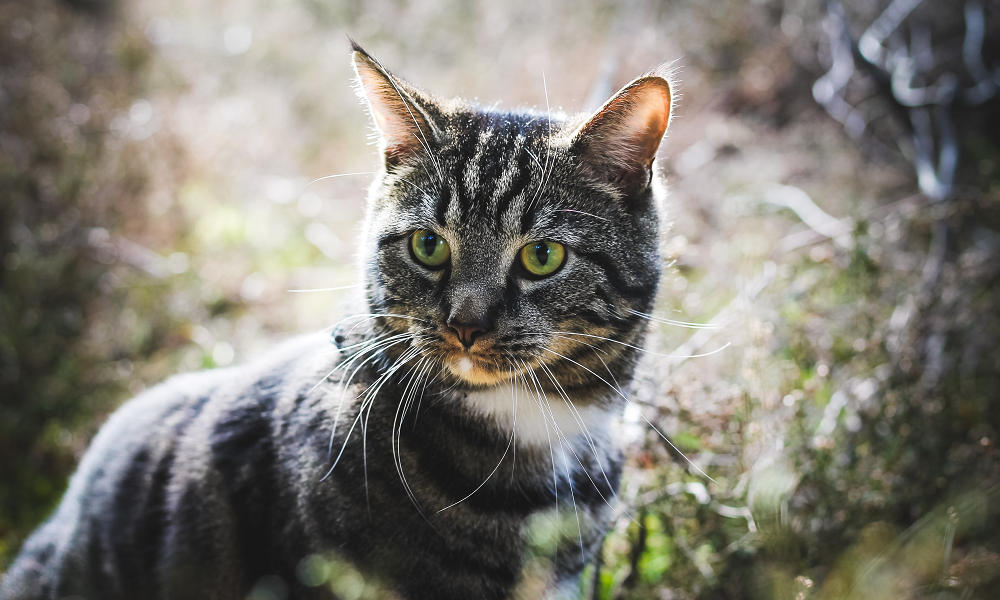
Poland is investigating the deaths of dozens of cats and some of them have been linked to H5N1 bird flu, veterinarians reported on Friday. If confirmed, it would be the first time that avian influenza has affected cats in large numbers.

Concerns were raised on Sunday when a veterinarian in western Poland reported the death of a cat which suffered from neurological and respiratory symptoms. Since then, dozens of suspected cases have been reported in different parts of the country.

The General Veterinary Inspectorate confirmed on Friday that a number of samples from the Tri-City region in northern Poland had tested positive for “influenza.” The statement did not specify the exact type of influenza.

Kasia Domanska-Blicharz, of the National Veterinary Research Institute, told local media that some of the samples had tested positive…

View original post 286 more words

Climate change: Deforestation surges despite pledges

Exposing the Big Game's avatarThe Extinction Chronicles

Share https://www.bbc.com/news/science-environment-66013854

Related Topics

Fires deforestation

By Matt McGrath & Mark Poynting

BBC News Climate & Science

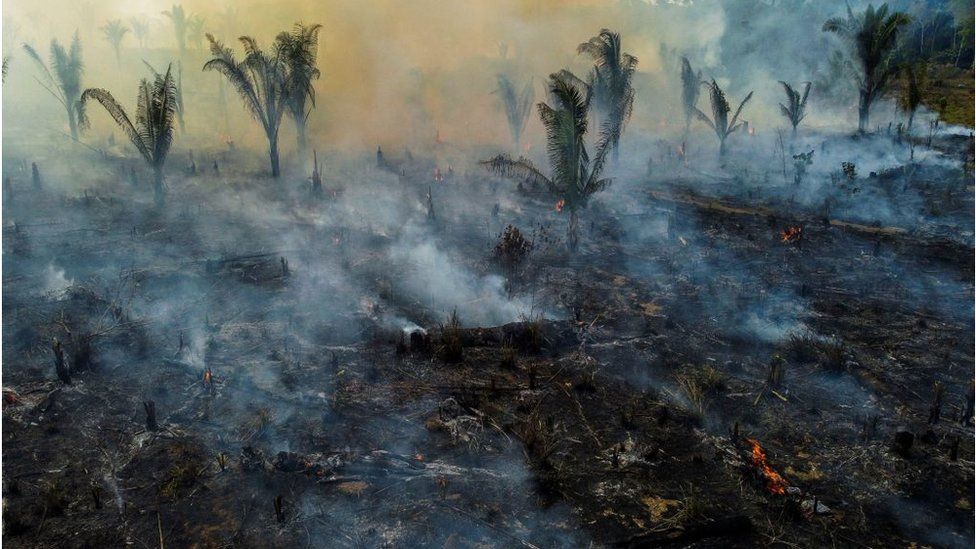
An area of tropical forest the size of Switzerland was lost last year as tree losses surged,according to new research.

It means that a political pledge to end deforestation made at COP26 by world leaders is well off track.

Some 11 football pitches of forest were lost every minute in 2022, with Brazil dominating the destruction.

But a sharp reduction in forest loss in Indonesia shows that reversing this trend is achievable.

ADVERTISEMENT

One of the key moments at the COP26 climate meeting in 2021 saw over 100 world leaders sign theGlasgow Declarationon forests, where they committed to…

View original post 946 more words

Current heatwave across US south made five times more likely by climate crisis

Exposing the Big Game's avatarThe Extinction Chronicles

Latest ‘heat dome’ event over Texas and Louisiana, plus much of Mexico, driven by human-cause climate change, scientists find

Oliver Milmanin New York

@olliemilmanTue 27 Jun 2023 04.30 EDT

The record heatwave roiling parts of Texas, Louisiana andMexicowas made at least five times more likely due to human-caused climate change, scientists have found, marking the latest in a series of recent extreme “heat dome” events that have scorched various parts of the world.

A stubborn ridge of high pressure has settled over Mexico and a broad swath of the southern USover the past three weeks, pushing the heat index, a combination of temperature and humidity, to above 48C (120F) in some places.

People work in a roof in Greenwood, Indiana, after a suspected tornado, on 25 June.

More than 40 million people in the US, including those living in the Texas cities of Houston, San Antonio and Austin, have been placed under excessive heat warnings, raising fears over…

View original post 809 more words

If Humans Went Extinct, What Would The Earth Look Like One Year Later?

Exposing the Big Game's avatarThe Extinction Chronicles

Have you ever wondered what the world would be like if everyone suddenly disappeared?

guest author image

CARLTON BASMAJIAN

Guest Author

https://www.iflscience.com/if-humans-went-extinct-what-would-the-earth-look-like-one-year-later-69510

clockPublishedJune 25, 2023

comments9Comments

share4.4kShares

End of the world
Image Credit: Edgar Huebert/Shutterstock.com

Curious Kidsis a series for children of all ages. If you have a question you’d like an expert to answer, send it tocuriouskidsus@theconversation.com.

https://imasdk.googleapis.com/js/core/bridge3.578.0_en.html#goog_1276533417

https://imasdk.googleapis.com/js/core/bridge3.578.0_en.html#goog_1986872692

https://imasdk.googleapis.com/js/core/bridge3.578.0_en.html#goog_727929860Top Stories00:3101:12Study Finds Out What Happens When Students Stop Using Pornography For A WeekIceland Suspends 2023's Whaling Season – And It's Unlikely To Return In FutureClassic MythBusters Clip Demonstrates Just How Quickly Implosion HappensWhy Lemon Juice And Sodas Can Cause False Positives In Some TestsThe JWST Has Taken This Stunning Image Of Saturn And MoreWolves Can Recognize Human Voices, Just Like DogsWhy People Would Not Sleep In The Catacombs Of Paris For $10 MillionJust A 3-Minute Activity Boosted Male Sexual Response In StudyThe Singing Sand Dunes Of Dunhuang: China's Mysterious Musical PhenomenonThis Is Why You Can Live In Hiroshima And Nagasaki But Not ChernobylThe Next Pompeii? Another Volcanic Titan Lurks In The MediterraneanPeople Are Asking Why The Titanic Didn't Implode As It SankWolves Can Recognize Human Voices, JustLike Dogs


If humans went extinct, what would the Earth look like one year later? – Essie, age 11, Michigan


Have you ever wondered what the world would be like if everyone suddenly disappeared?

What would happen to all our stuff? What would happen to our houses, our schools, our neighborhoods, our cities? Who would feed the dog? Who would cut the grass? Although it’s a common theme in movies, TV shows and books, the end of humanity is still a strange thing to think…

View original post 979 more words

A brutal heat wave is gripping Texas for a third straight week

Exposing the Big Game's avatarThe Extinction Chronicles

Warnings and advisories for excessive heat are also in place across the Southwest and parts of New Mexico, Oklahoma, Arkansas, Louisiana, Mississippi, Alabama and Florida.

TAP TO UNMUTE

Get more newson

June 27, 2023, 7:46 AM PDT/UpdatedJune 27, 2023, 9:05 AM PDT

ByDenise Chow

Punishing heat is gripping Texas for a third straight week, with tens of millions of people in other states across the South also facing scorching conditions this week. It’s a brutal heat wave that officials say “shows no signs of letting up.”

Much of Texas continues toswelter under triple-digit temperatures, and heat records across the state have been smashed in what has been a blistering start to summer. Warnings and advisories for excessive heat are also in place across the Southwest and parts of New Mexico, Oklahoma, Arkansas, Louisiana, Mississippi, Alabama…

View original post 430 more words