What do you do when wildfire smoke smothers your area?

Exposing the Big Game's avatarThe Extinction Chronicles

By

Angeli Gabriel, FOX Weather

June 7, 2023 10:25am 

Updated

Smoke from hundreds of wildfires burning in Canada has clouded NYC

https://imasdk.googleapis.com/js/core/bridge3.578.0_en.html#goog_1495008868

0 seconds of 49 secondsVolume 0%

ORIGINALLY PUBLISHED BY:

FOX Weather

While the burning blaze ofwildfiresis an obvious threat,wildfire smoke can also be hazardousas it makes outdoor air nearly unbreathable.

The harmful nature of wildfire smoke comes from the microscopic particles it contains.

According to the EPA, the particles find their way into your eyes and respiratory system, which can causehealthproblems such as burning eyes, aggravating lung and heart diseases and, in worst cases, premature deaths.

Thepeople most at riskfrom wildfire smoke are people with lung diseases, such as asthma, or heart…

View original post 941 more words

As Canada burns, smoke makes US air unhealthy and skies eerie. Is climate change to blame?

Elizabeth WeiseDoyle Rice

https://www.usatoday.com/story/news/nation/2023/06/07/see-wildfire-smoke-map-of-us-canada/70293572007/

USA TODAY

0:00

1:03

https://imasdk.googleapis.com/js/core/bridge3.577.0_en.html#goog_1988959418

Canada is on fire. On Tuesday there were more than 400 wildfires burning across the country, 238 of them out-of-control. Smoke and unhealthy air quality levels from the conflagration have blanketed multiple Canadian provinces, much of the Great Lakes region and parts of the northeastern United States.

While forest fires are a natural part of the ecosystem of Canada’s boreal forests, the size, ferocity and number of fires this year is decidedly abnormal. Most of the country is expected to be under high to extreme risk for much of the wildfire season, which stretches from May to September.

“Climate change is real and having a huge impact on Canadians right now with forest fires burning across the country,” tweeted Catherine McKenna, Canada’s former climate minister.

https://e7dbd7c420700784ad64a557ee78ec27.safeframe.googlesyndication.com/safeframe/1-0-40/html/container.html

On Monday Canada’s minister for emergency preparedness, Bill Blair, said the nation is seeing images of fires that “are some of the most severe ever witnessed in Canada.”

Here’s what to know:

How is smoke from the Canada fires affecting US air quality?

On Tuesday the federal AirNow fire and smoke map listed Albany, NY; Bennington, Vermont; Hartford, Conn.; and parts of New York City as “UNHEALTHY” and advised residents to “reduce activity or consider going indoors.”

https://e7dbd7c420700784ad64a557ee78ec27.safeframe.googlesyndication.com/safeframe/1-0-40/html/container.html

Due to the smoke in the air, “children and older adults, as well as people with heart or lung disease, should reduce prolonged or heavy exertion,” the weather service in Albany, New York, warned. “Exposure to elevated levels of fine particles such as wood smoke can increase the likelihood of respiratory symptoms in sensitive individuals and aggravate heart or lung disease.”

Canada wildfire smoke creates eerie glowing sunrises, lower temps in US

The smoky skies have helped reduce temperatures across much of the mid-Atlantic. Due to an area of low pressure that’s hovering offshore, along with an area of high pressure over Canada, a northerly flow of air was funneling the smoke south into the U.S. from Canada, AccuWeather said. This was keeping temperatures cooler than average, as the smoke filters out the blazing June sunshine.For example, the weather service in Washington, D.C., said in an online forecast discussion Tuesday that “temperatures this morning have been running 5-8 degrees cooler than forecast due to the smoke in the atmosphere.”

The smoke is even giving the sky, sun and moon some unusual colors.  

In addition to the milky, hazy skies, the wildfire smoke has created strange visual appearances of the sun and moon. Tuesday morning, the smoke “transformed the morning sunrise across parts of the East into an orange, photo-worthy haze,” AccuWeather reported.

US Air Quality Index

https://www.usatodaynetworkservice.com/tangstatic/html/usat/sf-q1a2z323ad14e2.min.html

Why are there so many fires in Canada?

Rising temperatures, prolonged droughts and changing rain patterns are making many of North America’s forests more prone to fire. Add on top of that the fact that temperatures at higher latitudes are increasing more than at low latitudes and it makes for horrific and historic levels of destruction.

https://e7dbd7c420700784ad64a557ee78ec27.safeframe.googlesyndication.com/safeframe/1-0-40/html/container.html

“We’re seeing events that are unknown in the historical record,” said Robert Scheller, a professor of forestry at North Carolina State University. “It’s hard to talk about without painting a grim picture.”

“It has been record-breakingly hot and dry across much of central and western Canada and now in recent days across eastern Canada as well,” said Daniel Swain, a climate scientist at the Institute of the Environment and Sustainability at the University of California, Los Angeles.

Conditions there are “highly anomalous,” Swain said. Typically early to mid-spring would be the peak of seasonal dryness, with late spring and summer rains coming later and causing northern forests to “green up” and become less prone to fire. “So far this year that green up has been attenuated because it’s so dry and so warm,” he said.

Is climate change to blame for the fires?

While it’s impossible to say that any one fire or any one season is specifically linked to an increasingly warm planet, the trends show a strong signal, said Scheller.

https://e7dbd7c420700784ad64a557ee78ec27.safeframe.googlesyndication.com/safeframe/1-0-40/html/container.html

READ MORE:Latest climate change news from USA TODAY

How does climate change affect you?:Subscribe to the weekly Climate Point newsletter

“We have unusually dry conditions and heat pulses in Canada,” he said.

That fits with data showing temperatures are rising faster in higher latitudes. In January, Howard Diamond, NOAA’s climate science program manager, said the global rise in temperature is unmistakable. “In some parts of the world, particularly at the higher latitudes towards the poles, the warming is much more accelerated.”

Wildfire, smoke map for US, Canada

https://www.usatodaynetworkservice.com/tangstatic/html/usat/sf-q1a2z323ad14e2.min.html

See more wildfire and smoke information and data here.

How a ‘hot drought’ is helping fuel the fires

Conditions in Canada are an example of something that has come to be called “hot droughts,” Scheller said.

“It’s not just lack of precipitation, it’s lack of precipitation plus these higher temperatures that really dry the soil and fuels out.”

https://e7dbd7c420700784ad64a557ee78ec27.safeframe.googlesyndication.com/safeframe/1-0-40/html/container.html

There have always been heat waves and there have always been droughts. What climate change adds is increased variability and increasing extremes. So in Canada, there are not only increased odds of drought but also increased odds of heat waves.

“If you roll the dice and they both come up, then you’ve got a hot drought,” Scheller said.

Does this mean the US fire season will be bad too?

Canada’s bad fire season won’t necessarily be repeated in the United States, thanks to different weather patterns further south.

There could also be a difference between higher and lower elevations, said Swain. Especially in California, which had seen heavy rain and snow in the previous six months, the legacy of the wet winter should mean a milder-than-average fire season in the mountains.

“This may be a year where there’s more fire risk in the valleys than the mountain peaks throughout the West,” he said.

https://e7dbd7c420700784ad64a557ee78ec27.safeframe.googlesyndication.com/safeframe/1-0-40/html/container.html

Lots of rain has meant plants and chaparral have grown extraordinarily well. “People have reported waist- or shoulder-high grass and brush this year when in some cases it was barely ankle high in the drought,” he said.

That means there’s a lot more fuel to burn this year than in previous years. Fire danger could emerge in July and August, possibly peaking in August and October depending on when the winter rains arrive.

US weather warnings

https://www.usatodaynetworkservice.com/tangstatic/html/usat/sf-q1a2z323ad14e2.min.html

New $99 Tac Drone Is A Must For Seniors“My grandson loved this”Daily Gadget Finds|

Ad

Get Offer

Cardiologist: Too Much Belly Fat? Do This Before BedHealthy Guru|

Ad

Watch Now

Is ED Becoming Obsolete for Senior Men? Learn More!ED|

Ad

Cardiologist In Winthrop : Belly Fat? Do This TodayThis Vegetable Will Kill Your Belly And Arm Fat Overnight!Drink This Before Bed, Watch Your Body Fat Melt Like Crazy! (Try Tonight)Health Journal|

Ad

Learn More

Weight Loss After 55 Comes Down To This Simple Greek MethodHealth Truth Finder|

Ad

You May Not Know This About ED.Dealing with ED is difficult enough. Don’t fall for these 5 myths.Giddy|

Ad

Learn More

Active Seniors: The Secret to Foot Pain Relief Finally RevealedAmRelieve|

Ad

Learn More

Incredible $89 Smartwatch Is Taking the US by StormRival|

Ad

Learn More

New Tinnitus Discovery Leaves Experts FuriousHealthy Guru|

Ad

Read More

Chuck Norris In His 80s Says Try This Once A Day For More EnergyRoundhouse Provisions|

Ad

Deal of the Day

Get $700 Off This Popular Tuft & Needle Mattress TodayREVIEWEDView DealRecommendations are independently chosen by our editors. Purchases you make through our links may earn us a commission.

Recommended

Unlimited Tomorrow is pioneering the future of prostheticsSTORY FROM SIEMENS

Create the perfect lawn, starting with our lawn trimmer blades!polaplus|

Ad

Shop Now

Cardiologist: Too Much Belly Fat? Do This Before BedHealthy Guru|

Ad

Watch Now

More Stories

Canada wildfires worsen air pollution in Midwest and northeastern USNEWS

Bags of human remains found in search for missing youthNEWS

What is a red flag warning? What to know about dangerous weather alertNEWS

Boyfriend of losing beauty pageant contestant smashes winner’s crownNEWS

Is ED Becoming Obsolete for Senior Men? Learn More!ED|

Ad

You May Not Know This About ED.Giddy|

Ad

Learn More

Cardiologist In Winthrop : Belly Fat? Do This TodayHealth Journal|

Ad

Learn More

New Tinnitus Discovery Leaves Experts FuriousHealthy Guru|

Ad

Read More

More Stories

Naples woman spots Florida panther staring back at her through glass doorNEWS

‘Rise of the Beasts’ review: ‘Transformers’ does retro nostalgia rightENTERTAINMENT

Stunned nurse: I caught ‘witches holding a carcass-eating ritual’ on my security cameraNEWS

Why you need to visit the ski town where plastic bags are bannedTRAVEL

Orcas threw a yacht around ‘like a rag doll’ and ripped off both rudders, the latest example of a killer-whale attack

Business Insider

322

Joshua Zitser

Tue, June 6, 2023 at 3:55 AM PDT·3 min read

A pod or orcas with a baby killer whale
A pod or orcas, or killer whales, with a baby orca among them.Getty Images
  • A pod of orcas attacked a yacht in the Strait of Gibraltar, ripping off both of its rudders.
  • The sailor said it felt as though the orcas were throwing the yacht around “like a rag doll.”
  • There have been 20 incidents of orca attacks in the Strait of Gibraltar in the past month alone.

A British sailor had the rudders of his yacht ripped off by orcas in the Strait of Gibraltar, the latest of several killer-whale incidents in the area in recent weeks.

Iain Hamilton is now marooned in Gibraltar, a British Overseas Territory on Spain’s south coast, after a pod of five orcas attacked his yacht, he told BBC Radio 4’s “Today” program on Monday.

He said he was sailing 20 miles west off the coast when he noticed a fin near his boat, followed by a series of increasingly jerky bumps.

“There was a very large whale pushing along the back of the boat, trying to bite the rudder,” he told BBC Radio 4, adding that the big orca, along with four smaller killer whales, repeatedly bumped against the yacht.

“Then one of them managed to take off the rudder,” he said.

Hamilton said it was “quite concerning” to be left with only one rudder, but the situation turned from bad to worse when the second rudder was torn off.

“We had no mechanism for steering the boat,” he said. Hamilton added that the orcas “pushed us around like a rag doll.”

The sailor told Radio 4 that he felt as though the orcas were being “almost playful” rather than aggressive, adding that they would have had the strength to destroy his yacht quickly if they wished to.

He also said the killer whales moved in a way that seemed “choreographed, almost, like synchronized swimming,” according to the radio broadcast.

“They seemed to be playing with the rudders, and just inadvertently rendering the boat very vulnerable and in a fairly dangerous situation,” Hamilton said in the interview.

It is unclear how the attack ended, or how the yacht got back to shore.

Hamilton went on to tell Radio 4 that the scale of orca attacks on the Strait of Gibraltar is far bigger than one might expect, referring to the Atlantic Orca Working Group’s findings that there have been 20 incidents involving killer whales in the region in the past month alone.

Insider’s Isobel Van Hagen previously reported on an incident last month in which a pod of orcas rammed a yacht in the Strait of Gibraltar.

In a post on her blog, April Boyes, who was aboard the yacht, wrote a first-hand account of the event. She described the boat filling with water as the orcas “completely destroyed” the rudder.

Researchers are trying to work out why killer whales are increasingly targeting boats near Spain, Portugal, and Morocco, with one theory pointing to a single, female orca who may have been traumatized by a previous interaction.

Read the original article on Business Insider

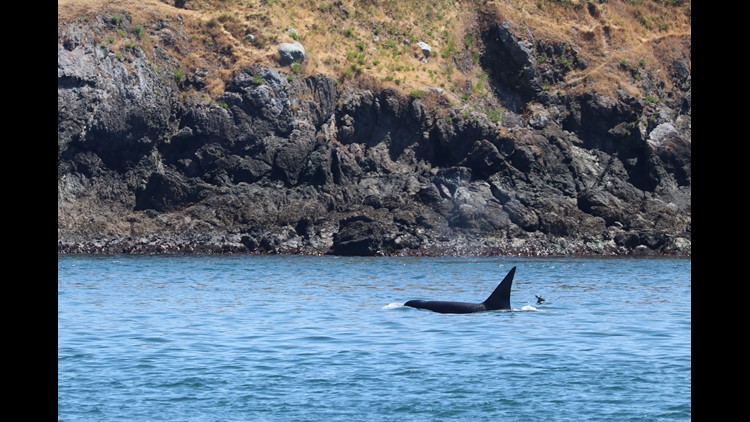
Deer swims past Bigg’s orca in photo captured at Battleship Island

The naturalist who captured the photo said the orca seemed uninterested in the deer; however, the deer was likely intimidated by the whale.

03:4631:31

Author: KING 5 Staff

Published: 4:02 PM PDT June 6, 2023

Updated: 7:02 PM PDT June 6, 2023

Facebook
Twitter


SAN JUAN COUNTY, Wash. — Photos snapped near San Juan Island show a swimming black-tail deer crossing paths with a Bigg’s orca. 

A naturalist, Sam Murphy with Island Adventures Whale Watching and the Pacific Whale Watching Association (PWWA), captured the photos on Sunday, June 4 at Battleship Island. Murphy didn’t see the deer initially, according to PWWA Executive Director Erin Gless, who shared the photos with KING 5. 

“She said that the whale swam right by and didn’t seem interested in the deer at all,” Gless wrote. “Sam didn’t notice the deer until she was looking at her pictures afterward, making for a fun surprise. Probably not enough meat/fat on a deer’s bones to tempt these whales, who are used to eating seals and sea lions, but would probably be an intimidating experience for the deer, I’m sure!” 

Deer swims past Bigg’s orca off Battleship Island

1/3×

Sam Murphy, Island Adventures Whale Watching, Pacific Whale Watching Association

Bigg’s killer whales are also known as transients, with a home range that spans from Alaska to Northern California, according to the Georgia Strait Alliance. In recent years, the whales have been spotted more and more often in the Salish Sea, with sightings reported year-round. The orcas are apex predators and hunt other marine mammals in groups, including sea lions, seals, and other types of whales, including juvenile gray and humpback whales, according to the Georgia Strait Alliance.

Deer are excellent swimmers and are known to be frequent visitors to the San Juan Islands. However, the deer population has decreased in recent years according to the Washington State Department of Natural Resources, thought to be related to a deadly adenovirus hemorrhagic disease that is believed to have reached the San Juans in 2021. However, the Department of Fish and Wildlife estimated the population could rebound relatively quickly.

Related Articles

CWD Cases Rising In Deer

Exposing the Big Game's avatarCommittee to Abolish Sport Hunting Blog

Posted By:Tyler Frielon:June 06, 2023In:News

PrintEmail

CWD Cases Rising In Deer

State officials say they are seeing an increase in the number of chronic wasting disease in the deer population.

The Pennsylvania Game Commission said they have been taken samples of nearly 10,000 deer from across the state over the last year.

Since that time, they have identified more than 400 positive cases of CWD—with more than half of those harvested by hunters.

The Game Commission says keeping surveillance on CWD cases is a top priority. CWD is a fatal neurological disease in deer and elk.

View original post

Swan Lake National Wildlife Refuge suspends waterfowl hunting program

SwanLake
Photo: Swan Lake National Wildlife Refuge

SUMNER — Due to a staffing shortage and workload demands, Swan Lake National Wildlife Refuge in Sumner is suspending its waterfowl hunting program.

Refuge manager Steve Whitson says the decrease in staff and upcoming improvement projects that require redesigning about 80% of the refuge’s infrastructure has made waterfowl hunting an incompatible use.

Managed deer, conservation order light goose, squirrel, and dove hunting programs will continue as they have in the past.  

Experts Warn Of Rapidly Changing Bird Flu Virus During Enormous Outbreak

Poultry,Suffer,From,Coryza,(snot),Disease,With,Characteristic,Swelling,In

Shutterstock/BirdFlu

KAY SMYTHENEWS AND COMMENTARY WRITER

June 05, 202311:52 AM ET

FONT SIZE:

https://f403b5aaefe026e67a26bdc1f73529aa.safeframe.googlesyndication.com/safeframe/1-0-40/html/container.html

exp-player-logo

Research published on May 29 revealed the “rapid evolution” of the highly pathogenic avian influenza virus.

Since 1996, avian flu (H5N1) has led to enormous economic losses and the mass depopulation of billions of poultry, the study authors noted in their research. In the less than 30 years since its first identification, H5N1 has spread rapidly throughout the world, and has evolved in a series of transient, phylogenetically distinct clades. So rapid is the spread that nations are now calling for the full vaccination of all poultry, according to MedicalXpress.

While the threat of H5N1 to humans is relatively low at present, the impact on birds and mammals is a cause for concern. According to the researchers “something happened” in 2021 that led the family of bird flu viruses to become significantly more infectious, and caused outbreaks to last all year, instead of just popping up sporadically.

Richard Webby, the World Health Organization’s head of the center studying influenza in animals, said the most recent outbreak is “absolutely” the largest the world has ever seen.

https://platform.twitter.com/embed/Tweet.html?dnt=false&embedId=twitter-widget-0&features=eyJ0ZndfdGltZWxpbmVfbGlzdCI6eyJidWNrZXQiOltdLCJ2ZXJzaW9uIjpudWxsfSwidGZ3X2ZvbGxvd2VyX2NvdW50X3N1bnNldCI6eyJidWNrZXQiOnRydWUsInZlcnNpb24iOm51bGx9LCJ0ZndfdHdlZXRfZWRpdF9iYWNrZW5kIjp7ImJ1Y2tldCI6Im9uIiwidmVyc2lvbiI6bnVsbH0sInRmd19yZWZzcmNfc2Vzc2lvbiI6eyJidWNrZXQiOiJvbiIsInZlcnNpb24iOm51bGx9LCJ0ZndfZm9zbnJfc29mdF9pbnRlcnZlbnRpb25zX2VuYWJsZWQiOnsiYnVja2V0Ijoib24iLCJ2ZXJzaW9uIjpudWxsfSwidGZ3X21peGVkX21lZGlhXzE1ODk3Ijp7ImJ1Y2tldCI6InRyZWF0bWVudCIsInZlcnNpb24iOm51bGx9LCJ0ZndfZXhwZXJpbWVudHNfY29va2llX2V4cGlyYXRpb24iOnsiYnVja2V0IjoxMjA5NjAwLCJ2ZXJzaW9uIjpudWxsfSwidGZ3X3Nob3dfYmlyZHdhdGNoX3Bpdm90c19lbmFibGVkIjp7ImJ1Y2tldCI6Im9uIiwidmVyc2lvbiI6bnVsbH0sInRmd19kdXBsaWNhdGVfc2NyaWJlc190b19zZXR0aW5ncyI6eyJidWNrZXQiOiJvbiIsInZlcnNpb24iOm51bGx9LCJ0ZndfdXNlX3Byb2ZpbGVfaW1hZ2Vfc2hhcGVfZW5hYmxlZCI6eyJidWNrZXQiOiJvbiIsInZlcnNpb24iOm51bGx9LCJ0ZndfdmlkZW9faGxzX2R5bmFtaWNfbWFuaWZlc3RzXzE1MDgyIjp7ImJ1Y2tldCI6InRydWVfYml0cmF0ZSIsInZlcnNpb24iOm51bGx9LCJ0ZndfbGVnYWN5X3RpbWVsaW5lX3N1bnNldCI6eyJidWNrZXQiOnRydWUsInZlcnNpb24iOm51bGx9LCJ0ZndfdHdlZXRfZWRpdF9mcm9udGVuZCI6eyJidWNrZXQiOiJvbiIsInZlcnNpb24iOm51bGx9fQ%3D%3D&frame=false&hideCard=false&hideThread=false&id=1665434038088220677&lang=en&origin=https%3A%2F%2Fdailycaller.com%2F2023%2F06%2F05%2Favian-flu-h5n1-world-health-organization-mammals%2F&sessionId=c1f80ad9fc122144a14e735cc269f4fb4e2ef623&siteScreenName=dailycaller&theme=light&widgetsVersion=aaf4084522e3a%3A1674595607486&width=550px

“That does increase the potential that even just by chance [the virus could] pick up genetic traits that allow it to be more of a human virus,” Webby noted, according to MedicalXpress. Webby also led the research published in the journal “Nature.”

In Chile, some 9,000 sea lions, penguins, otters, porpoises and dolphins have died of bird flu since the start of 2023, the outlet noted, though this figure has been called into question.

Webby said that one of the things that “scares us the most” is indications that the virus is now spreading within mammal populations. It would only take “two or three minor changes in one protein of the viruses” for it to become highly adapted to human hosts, Webby added. (RELATED: ‘It’s Just A Matter Of Time’: Scientists Issue Warning As Deadly, Ebola-Like Virus Spreads)

Another type of bird flu, H3N8, killed its first ever human in April 2023. The patient is believed to have contracted the virus due to close proximity and exposure to live poultry and wet markets in China.

More animals than ever before—92.2 billion—are used and killed each year for food

By Kitty Block

June 5, 2023 1 Comment

More animals than ever before—92.2 billion—are used and killed each year for food

More animals are raised just to be used and slaughtered than ever before. Not only is the scale of animal suffering unfathomable, but continued reliance on animal agriculture is a major source of stress on the climate. The HSUS

162SHARES

The most recent data about land animals bred, kept and slaughtered for consumption has revealed a figure higher than ever before: An estimated 92.2 billion land animals are slaughtered annually in the global food system, according to the Food and Agriculture Organization.

Not only is the scale of animal suffering unfathomable, but for years mounting research has pointed to the food system as a major source of stress on the climate. But it doesn’t have to be this way.

A team from Humane Society International will attend the United Nations Framework on Climate Change conference in Bonn, Germany, this month, to engage with negotiators, high-level officials and key stakeholders to advocate for a transformation of the global food system that we all so desperately need.

There is hope. Shifting to plant-based eating habits can reduce the greenhouse gas emissions of our food system by 49%, reduce food’s land use by 76% and reduce freshwater use by 19%. And it’s heartening to know that everyone can do their part by committing to eat just a few more plant-based meals per week.

Today’s unsustainable global food production methods and consumption habits are responsible for about one-third of all human-caused greenhouse gas emissions, and the production of animal-based foods is responsible for 57% of these emissions, nearly double that of plant-based foods. Emissions from the livestock sector account for as great a share of global greenhouse gases as the exhaust emissions from all cars, planes, trains and boats around the world combined.

The existing food system also puts enormous pressure on agricultural land and water. Meat, dairy and aquaculture production systems use the vast majority (83%) of the world’s farmland despite providing just 18% of global calories and 37% of protein. Farmed animal production has also dominated land-use change, pushing crop production and pastures into wild habitats and contributing to an alarming rate of species extinction.

Such a massive problem beckons for a global solution. Around the world, our teams are demonstrating that modest changes in consumption, procurement and spending habits can be implemented successfully at scale to address this growing crisis. For example, Sodexo Canada, one of Canada’s largest food service companies, made a nation-wide commitment to transition 20% of their current protein purchases to plant-based at more than 200 locations across the country. Similar shifts are being implemented in municipalities across Brazil. Since 2022, we have been working together with Mercy for Animals Brazil to secure and implement commitments from Brazilian cities to transition 20% of all meals served in municipal schools to plant-based offerings. These commitments will result in more than 19 million plates going from animal-based to plant-based every year, providing over 280,000 school children with healthy, sustainable meals and sparing more than 640,000 animals from suffering.

Despite compelling scientific evidence, most governments with significant animal agriculture lobbies have been reluctant to consider or implement even the most modest reforms or policies to transform our global food system. That is why we are joining climate advocates and scientists from around the world to advocate for initiatives and policies that support a just transition to a more resilient, plant-centric global food system with concrete action. We need governments to shift public procurement away from animal-based foods to more plant-based foods. We need policies that encourage the plant-based industry; we need to support and incentivize farmers to transition to more sustainable, plant-based agriculture; and we need to foster innovation and growth in developing protein alternatives such as cultivated meat.

We’ll bring this message to Bonn, to the next UN Climate Change Conference (COP28) in Dubai at the end of this year and beyond until governments and other stakeholders adopt meaningful reforms in the global food system. Animals and our planet cannot wait.

Urge world leaders to create a more resilient and more plant-centric food system.

Experts warn bird flu virus changing rapidly in largest ever outbreak

Exposing the Big Game's avatarThe Extinction Chronicles

2 days ago

https://www.newvision.co.ug/category/health/experts-warn-bird-flu-virus-changing-rapidly-162049

Webby, who is a researcher at St Jude Children’s Research Hospital in the US city of Memphis, told AFP it was “absolutely” the largest outbreak of avian influenza the world had seen.

The virus has also been detected in a soaring number of mammals, which Webby described as a “really, really troubling sign”.

AFP .

@New Vision

#Health#Bird flu virus#Poultry#Richard Webby#World Health Organization


35 views

—————–

PARIS- The virus causing record cases of avian influenza in birds across the world is changing rapidly, experts have warned, as calls increase for countries to vaccinate their poultry.

While emphasising that the risk to humans remains low, the experts who spoke to AFP said that the surging number of bird flu cases in mammals was a cause for concern.

Since first emerging in 1996, the H5N1 avian influenza virus had previously been confined to mostly seasonal outbreaks.

But…

View original post 625 more words

 Shovelnose sturgeon poaching case highlights cross-agency partnerships in effort to protect natural resources

Exposing the Big Game's avatarCommittee to Abolish Sport Hunting Blog

News release:

June 6, 2023

https://www.dnr.state.mn.us/news/2023/06/06/shovelnose-sturgeon-poaching-case-highlights-cross-agency-partnerships-effort-protect-natural-resources

Shovelnose sturgeon in many ways pale in comparison to lake sturgeon. They weigh less and aren’t nearly as long. They live much shorter lives, and they’re not as popular a target for anglers.

Nevertheless, shovelnose sturgeon are a native fish known for their flesh and roe, an important part of the ecosystem, and they are protected with conservative harvest limits to ensure their populations remain stable. Minnesota Department of Natural Resources conservation officers and conservation wardens with the Wisconsin DNR had this all in mind in the spring of 2019, when they received a tip and began looking into the potential illegal take of shovelnose sturgeon in Pool 9 of the Mississippi River.

Over the course of the next two years, officers conducted a large-scale investigation that included hundreds of hours of surveillance and documentation of a number of violations. As part of the…

View original post 418 more words